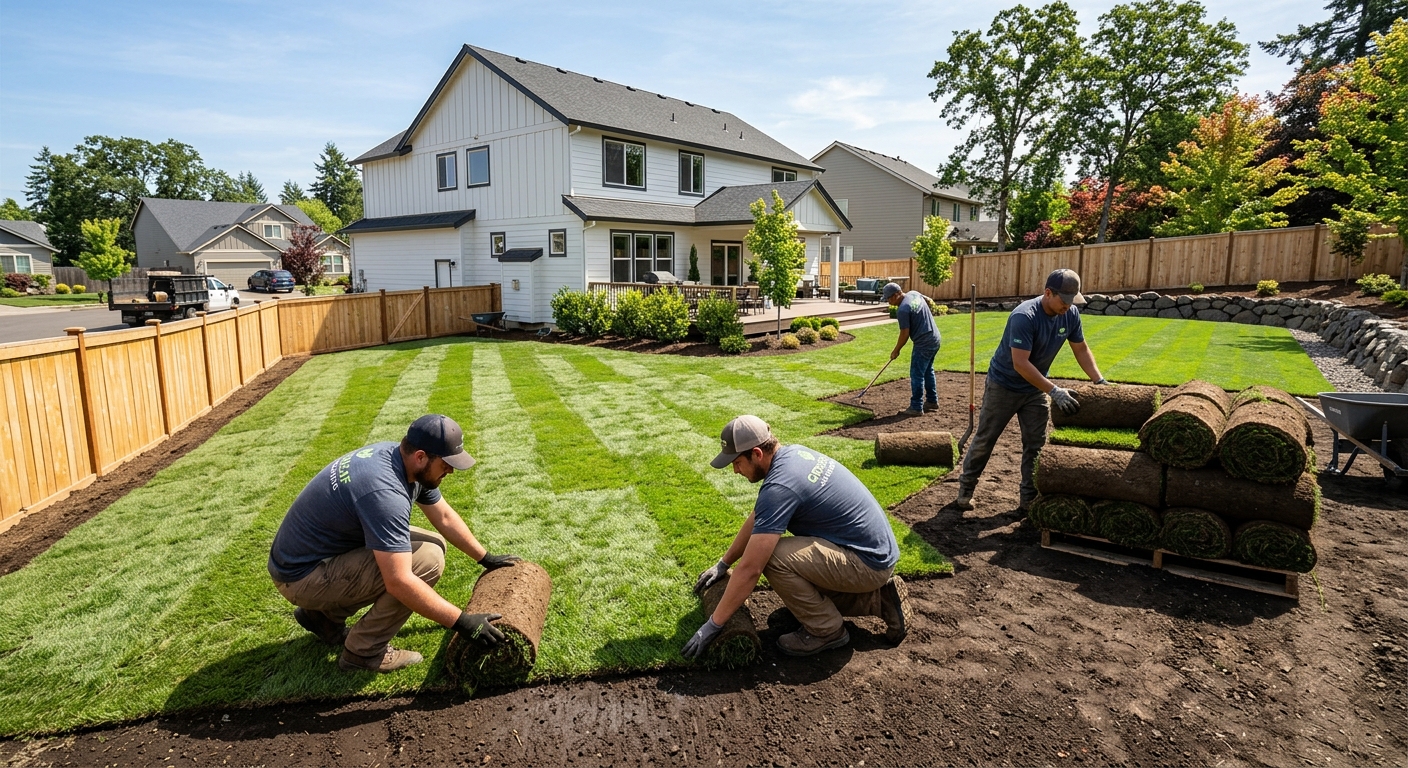
Landscaping options and costs in Lambton Shores
Lambton Shores is a great place to improve curb appeal, especially because most homes here are detached: single-detached houses make up 83.7% of dwellings, and 81.0% of households are homeowner households (Statistics Canada, 2021 Census). That ownership mix matters—when people are investing long-term, they tend to fund bigger upgrades like patios, tree planting, and drainage fixes rather than quick cosmetic touches. In practice, you’ll see the most landscaping demand around the busiest residential areas and commuter corridors, including the Port Franks and Grand Bend-adjacent neighbourhoods, where summer traffic and cottages push homeowners to upgrade hardscapes and walkability.
Pricing is also shaped by the Windsor–Sarnia market and our working season. Lambton Shores sits in hardiness zones 6b–7b, so contractors can usually install most projects from roughly May to October, with a longer window than colder parts of Ontario. That said, freeze–thaw cycles and heavy clay soils in many yards still increase the importance of proper grading, base preparation, and drainage—especially for interlocking patios and retaining walls—so costs don’t compress as much as they do in milder coastal climates.
If you’re comparing quotes, the easiest way is to start with typical scope ranges: full design-and-install packages are commonly bundled at the higher end, while sod and planting jobs are more “piece-meal.” Use the table below to sanity-check bids for common residential projects.
| Service |
Description |
Season |
Price Range |
| Full landscape design and installation |
Site walk, concept + plan, grading/drainage coordination, plant + hardscape build-out |
May–October |
$8,000–$35,000 |
| Sod installation (supply, grade, lay, roll) |
Topsoil prep, minor grading, engineered base where needed, sod delivery, lay/roll, first watering plan |
April–June (best) / early fall |
$2,500–$9,000 |
| Lawn seeding (grade, seed, starter fertilizer) |
Fine grading, seed selection, starter fertilizer, light covering, watering guidance |
Late April–May / September |
$1,500–$6,000 |
| Interlocking patio or walkway |
Excavation, compacted base, geotextile, interlocking stones, edging, joint sand |
May–October |
$6,000–$18,000 |
| Retaining wall (interlocking block) |
Block wall with proper base, drainage layer, weeping tile optional where required |
May–October |
$6,000–$40,000 |
| Tree and shrub planting |
Soil prep, spacing, amendments, mulch, staking as needed, initial watering schedule |
May–October (or fall planting for select species) |
$1,500–$10,000 |
Prices are estimates only and vary by project scope, site access and material selection.
What affects the price of landscaping in Lambton Shores
In Windsor–Sarnia and across Ontario, it’s common for the same “type” of job to come in 30–50% apart between quotes. The reasons are usually practical: different contractors price risk differently (clay, access, drainage unknowns), and “included items” vary—like disposal, base depth, and whether irrigation is designed up front. Labour availability also shifts with the season; in Lambton Shores we can typically work May–October, so busy weeks can push scheduling premiums for larger installs.
Climate and timing affect cost too. Lambton Shores is in zone 6b–7b, where last spring frost is typically late April to early May and first fall frost is around late October, giving an installation window that’s longer than the Prairie provinces. That said, freeze–thaw still drives base and drainage requirements. In zone-based design, northern styles of gardening don’t translate directly: Prairie regions (zone 2–4) push drought- and wind-tolerant selections and often require deeper frost-safe bases; coastal BC (zone 7–8) may support lush palettes more reliably but still demands strong drainage in heavy-rain areas. Southern Ontario sits in between—moderate seasons with irrigation needed during summer dry spells—so watering systems can add cost, but plant survival is generally good when you choose appropriately for zone 6 or colder.
Two common Lambton Shores cost drivers: (1) yards with heavier clay often need extra grading and drainage work before sod or patio placement, which can move a lawn project toward the upper end of $2,500–$9,000; (2) homes built before 1981 are more likely to have mature trees, older beds, and settled grades, meaning stump grinding, regrading, or foundation-risk grading can add thousands. For wall projects, that frost-driven base requirement is why retaining walls commonly fall within $6,000–$40,000 depending on length, height, and drainage complexity.
| Price Factor |
Why It Matters |
Cost Impact |
| Yard size in sq ft — the primary cost driver for softscape |
More area means more soil/seed/sod, more labour hours, and higher material delivery charges |
Often the biggest swing; can move a project by several thousand dollars |
| Grading and drainage work — slope corrections add significant cost |
Proper pitch prevents pooling and foundation moisture; clay subgrades may require removal and re-build |
Commonly increases costs by 20%–40% for “problem” yards |
| Drainage bed or French drain installation |
Where water tables or runoff concentrate, drainage additions protect landscaping longevity |
Can add $1,500–$6,000 depending on length and tie-in location |
| Plant material tier — native shrubs vs. ornamental vs. mature specimen trees |
Specimens cost more to source, transport, and handle; mature size also changes spacing and soil volume |
Typically shifts planting budgets by $500–$5,000+ |
| Hardscape vs. softscape ratio — walls and patios cost more per sq ft than lawn |
Walls need deep base prep and drainage; patios require engineered layers and compaction |
Hardscape-heavy plans can double total spend vs. plant-only installs |
| Irrigation system design and installation |
Zone-appropriate sprinkler layouts reduce waste and improve establishment; clay drainage issues affect head placement |
Often adds $2,000–$8,000 for multi-zone residential systems |
| Soil amendment and topsoil required |
Heavy clay may need imported topsoil and amendments to support roots and prevent future settling |
Can raise project cost by $800–$4,000+ |
| Tree removal or stump grinding before new planting |
Stumps, roots, and existing tree conflicts affect layout, drainage, and safety; disposal time increases labour |
Commonly adds $500–$3,000+ depending on size and access |
Permits & regulations in Ontario
In Ontario, most residential landscaping tasks—planting, sodding, and the majority of softscape work—typically do not require a permit. That includes seeding, mulching, shrub and tree planting, lawn grading for normal drainage adjustments, and installing patios or walkways at the surface level when they don’t materially change services or drainage requirements.
Where permits often come into play is retaining walls above a municipal threshold, commonly around 1.0 m (3.3 ft) in many areas. Those projects may require a building permit and sometimes engineering details (especially if the wall is supporting a larger retained soil volume or there are drainage complexities). Also, if you change lot grading in a way that affects how water drains toward a neighbour or connects to storm/sewer infrastructure, approvals may be triggered—so it’s not something you want to guess on after work starts.
Before digging for planting holes, irrigation lines, or wall footings, call for utility locates. Step-by-step for Lambton Shores homeowners: (1) ask the contractor for their Ontario business details and confirm the licensing/coverage is current; (2) request a certificate of insurance (liability) listing you as an additional insured if applicable; (3) confirm WSIB/WCB coverage—have them provide proof/clearance documentation; (4) keep copies for your records before work begins; and (5) ensure the quote clearly states who pulls any required permits and whether drawings or engineering are included when needed.
Planning a landscape that thrives in Lambton Shores's climate
To plan a yard that thrives in Lambton Shores, start by working with our zone 6b–7b conditions and freeze–thaw cycle rather than fighting them. Choose plants that tolerate winters reliably—native and zone-appropriate perennials, shrubs, and small trees typically require less winter protection and fewer replacements. Because spring frost usually lands in late April to early May, you can plan planting after thaw and soil readiness, and you can still use fall planting for certain hardy species to strengthen root establishment before winter.
Next, decide whether you want sod or seed. Sod gives instant visual results, but it costs roughly 3–4x more per square foot than seeding once you include prep and installation labour. If your budget is tight, a hybrid approach (seeding larger areas, using sod for high-traffic zones) is often the most cost-effective.
In Windsor–Sarnia, drainage and grading are non-negotiable. Heavy clay and freeze–thaw can create pooling, foundation moisture, and heaving risk. For hardscape—patios and retaining walls—base preparation needs to be built to local frost behaviour, meaning proper excavation depth, compacted layers, and drainage components. This is why wall projects routinely fall into the $6,000–$40,000 range, while a straightforward lawn install might sit around $2,500–$9,000 depending on yard size and site prep.
Finally, build low-maintenance structure: mulch rings, groundcovers, and layered perennials reduce weeds and annual labour without sacrificing curb appeal. Consider rain gardens or smart “xeriscape-lite” zones (drought-tolerant plant clusters + drip irrigation) where watering demand peaks—especially helpful during summer dry spells.
| Element |
Climate Consideration |
Maintenance Level |
Price Band |
| Sod lawn installation |
Best for quick establishment after late April–early May frost; requires steady moisture for roots through summer dry spells |
Medium (watering + first-season care) |
$2,500–$9,000 |
| Native perennial garden |
Zone-appropriate plants for winter hardiness; mulch and spacing help manage freeze–thaw heave risk |
Low to medium (weeding first year, then light upkeep) |
$1,500–$8,000 |
| Mulched shrub border |
Helps control soil temperature swings and improves moisture retention in clay soils |
Low (top-up mulch, occasional pruning) |
$2,000–$7,500 |
| Interlocking stone patio |
Requires frost-aware base, compaction, and proper slope so water sheds away from the house |
Low (annual joint sand top-up as needed) |
$6,000–$18,000 |
| Retaining wall (block) |
Needs engineered-style base depth and drainage layer to resist freeze–thaw movement in clay-heavy sites |
Low (periodic checks of weep drainage if installed) |
$6,000–$40,000 |
| Drip irrigation system |
Zone-appropriate watering improves drought tolerance; reduces waste and helps establishment post-frost |
Low to medium (seasonal controller checks) |
$2,000–$8,000 |
How to choose a landscaping contractor in Lambton Shores
Choosing the right contractor in Lambton Shores comes down to verification and clarity. First, confirm Ontario licensing requirements (where applicable for the work type), then validate liability insurance and WSIB/WCB coverage. How to check: (1) ask for a current certificate of insurance and review the policy dates; (2) request WSIB/WCB clearance documentation (or proof of registration status) before work starts; and (3) match the contractor’s legal business name and address on the documents to what’s on the quote and invoices.
Second, get 2–3 itemised written quotes—not just a lump sum. A solid quote breaks labour and materials separately (base materials, stone quantities, plant list, soil/topsoil, disposal). Make sure exclusions are stated clearly: what’s not included (topsoil over existing subgrade, tree removal, pruning, extra drainage runs), and whether disposal/hauling is included. Ask whether permits are your responsibility or theirs, especially for retaining walls that may cross the permit threshold.
Third, warranty matters. Look for a workmanship warranty length and confirm what product/manufacturer warranties cover. Ask if the warranty is transferable if you sell your home. Finally, payment schedule and timing: never pay more than 10–15% upfront, and hold back part of the total until completion checks are done (final grading, plant establishment steps, and cleanup).
- Request a detailed contract with start date and completion estimate.
- Confirm the plant list (common + botanical names) and quantities.
- Ask for base depth and drainage method for patios/walls (not just “compacted base”).
- Verify disposal/haul-away is included for excess soil and construction debris.
- Ensure utility locates are performed before digging.
- Confirm erosion control and how slope/grade will be stabilized during work.
- Check that irrigation (if included) includes valves, backflow prevention (where required by design), and controller placement.
- Review warranty terms in writing for both workmanship and plant replacement conditions.
- Ask how weeds are addressed during the build phase and whether weed barrier is used where appropriate.
- Get a cleanup standard (final grade, stone sweep, site restoration) spelled out.
- Confirm payment milestones line up with tangible deliverables and inspections.
- Meet the crew leader or foreman—experienced operators reduce rework on clay and drainage.
In Lambton Shores, red flags include: quotes that don’t list plant species or stone sizes, vague drainage promises (e.g., “we’ll grade it”), refusal to provide insurance or WSIB/WCB proof, payment requests above 10–15% upfront, and contracts that don’t specify warranty coverage or disposal responsibilities.
Frequently asked questions — landscaping in Lambton Shores
How much does sodding a yard cost in Lambton Shores?
Sodding in Lambton Shores usually lands in the $2,500–$9,000 range depending on lawn size, how much grading is needed, and whether imported topsoil or drainage corrections are part of the prep. Sod installation cost goes up when yards have low spots or clay subgrades that need reshaping so water doesn’t pond. Because Lambton Shores is in zone 6b–7b with a late-April to early-May spring frost window, contractors often target late spring and early fall for best establishment. For an accurate budget, ask for an itemised quote showing topsoil depth/prep, sod area in square feet, edging, and first-season watering guidance.
How do I prevent weeds in my Lambton Shores garden?
Weed prevention starts before planting. First, control weeds at the site level: remove existing weed growth properly, then ensure the soil is prepped and lightly compacted so new plants don’t heave during freeze–thaw. Next, use mulch correctly—thick enough to suppress weeds but not piled against stems. For shrub borders, a weed-control fabric can help under mulch, but it should be installed with proper cuts around plant crowns so it doesn’t trap moisture incorrectly. Choosing zone-appropriate native plants also reduces “bare gaps,” which weeds use to colonize. In Lambton Shores (Ontario), heavy clay means soil can stay moist; good spacing and drainage reduce the conditions weeds like.
How do I design a low-water yard in Lambton Shores?
A low-water yard in Lambton Shores is achievable with zone-appropriate planting and irrigation design that matches summer drying patterns. Start by grouping plants by water needs (hydrozones) and using deeper-rooting natives and perennials that tolerate our winters without constant replanting. Avoid overly broad turf areas if your lawn doesn’t need to be walked on—switch to a mixed perennial border and groundcovers where possible. If you do keep lawn, use sod selectively for high-use areas and seed or overseed elsewhere. Add drip irrigation or targeted soaker lines rather than broad sprinkling, and install it so runoff doesn’t pool in clay. A design that includes smart irrigation can move you toward the mid-range of typical landscaping projects, while still protecting budgets (for example, lawns often sit in the $2,500–$9,000 band depending on site prep).
How do I find a licensed landscaper in Lambton Shores?
Begin with documentation, not just reviews. In Ontario, ask your contractor for their business identification and confirm they carry liability insurance; request a certificate of insurance and verify policy dates and coverage limits. Next, ask for WSIB/WCB proof or clearance documentation before work starts. Then get an itemised written quote with specific materials and quantities—plant list names, hardscape stone specs, base layers, and disposal. For the contract, confirm who handles permits if you’re installing a retaining wall that could exceed the common 1.0 m threshold in many municipalities. Finally, call past clients where possible and ask about drainage outcomes and warranty handling—this is especially important in Lambton Shores where clay and freeze–thaw can cause issues if base prep is rushed.
How much does landscaping cost in Lambton Shores?
Landscaping cost in Lambton Shores depends on how much work changes your yard, from planting only to full design-and-install. Typical budget ranges for this tier are roughly $8,000–$35,000 for full landscape design and installation, while sod installs commonly fall in the $2,500–$9,000 band depending on grade and prep needs. Retaining walls and major hardscaping are often the biggest swing factor and can run up to $6,000–$40,000 based on wall length, height, and drainage requirements. When you compare quotes, make sure the scope includes base depth, soil amendments, disposal, and any irrigation design—those “hidden” inclusions explain why bids can vary significantly even for similar-looking projects.
What plants thrive in Lambton Shores's climate zone?
Lambton Shores is in hardiness zones 6b–7b, so many plants that tolerate zone 6 or colder succeed with good planting technique. In practice, that includes a wide palette of hardy shrubs, perennials, and small trees that can handle winter cold and spring freeze–thaw. For low-maintenance results, look for zone-appropriate natives and proven garden performers rather than tender ornamentals that require winter protection. In clay-heavy yards, plants with strong root structures plus mulch and good spacing help reduce heaving and drought stress after summer dry spells. If you’re building a border, your contractor should propose a layered mix (groundcovers + perennials + shrubs) that fills space so weeds can’t get footing. A good design usually accounts for Ontario’s late-April to early-May spring frost timing and early fall cold snaps.