Landscaping options and costs in Regent Park
In Regent Park, the right landscaping can instantly improve curb appeal and day-to-day comfort, especially given that the neighbourhood is part of Toronto’s dense housing mix where many properties have meaningful yard space to work with. With a total population of 10,803 (Statistics Canada, 2021 Census), local contractors tend to stay busy because homeowners commonly refresh frontages, soften hard edges, and manage drainage on older lots. Pricing also reflects the reality that Toronto is in plant hardiness zones 6a–7a, where winter lows around –23 to –18°C are survivable for a broad range of woody ornamentals and perennials—but freeze–thaw cycling raises costs for concrete, stone, and retaining walls. If you’re near community-facing streets off Dundas Street East or the Broadview/Regent Park edges, landscaping demand is especially strong during spring and early fall, when frost-free installation windows are most reliable.
Toronto quotes can swing quickly because the same “typical backyard refresh” might include very different site prep. Clay and fill soils often require excavation, soil amendment, and sometimes subdrains so patios and steps don’t heave. On the design side, availability of experienced crews can also tighten during peak periods, which influences labour hours and scheduling. For homeowners comparing options, it helps to anchor decisions to clear scopes—design/build, lawn conversions, or hardscape packages—then weigh long-term maintenance against upfront cost.
Use the comparison table below to estimate budget ranges, then match the season and scope to your yard’s drainage, soil condition, and planting goals.
| Service |
Description |
Season |
Price Range |
| Full landscape design and installation |
Site visit, grading/drainage notes, plant palette, layout, and coordinated installation (softscape + hardscape) |
May–October (best value) / September–early October for partial installs |
$8,000–$40,000 |
| Sod installation (supply, grade, lay, roll) |
Topsoil/grade correction, supply and lay sod, rolling, starter fertilizer, and initial watering setup |
Late April–June; August–early October (weather dependent) |
$2,500–$8,000 |
| Lawn seeding (grade, seed, starter fertilizer) |
Minor grading, seed blend, starter fertilizer, light covering, and establishment care |
April–May; late August–September |
$1,800–$5,500 |
| Interlocking patio or walkway |
Base excavation, compaction, sand/gravel, interlocking stone, edge restraints, and clean drainage tie-ins |
May–October |
$6,000–$30,000 |
| Retaining wall (interlocking block) |
Block wall system, excavation, compacted base/granular backfill, drainage rock, and proper reinforcement |
May–October |
$6,000–$30,000 |
| Tree and shrub planting |
Soil prep, planting, staking as needed, mulch rings, and initial watering plan |
Spring and fall (avoids summer heat stress) |
$800–$6,000 |
Prices are estimates only and vary by project scope, site access and material selection.
What affects the price of landscaping in Regent Park
In Regent Park, two homeowners can receive quotes for “the same job” that differ by roughly 30–50%—usually because the site conditions and scope details are not identical. Toronto’s climate matters: the GTA’s workable window is typically May through October, and freeze–thaw cycles make base prep and drainage non-negotiable for hardscapes. If your yard has clay or compacted fill, contractors may need additional excavation and soil amendment before they can even lay sod, stone, or blocks—raising labour and disposal costs.
Hardiness and frost timing also shape what installers can do when. In Prairie regions (zones 2–4), short seasons and drought push designs toward drought-tolerant, wind-hardy plants, and work often needs a simpler palette. In coastal BC (zone 7–8), longer growing seasons support lush, broadleaf structure, but heavy-rainfall areas still demand drainage design. By contrast, Southern Ontario is more moderate (zone 5–6), yet Toronto still sees summer dry spells that can require supplemental irrigation—so many projects budget for irrigation add-ons if you want reliable establishment.
Here are a few local examples that commonly move cost in Regent Park: (1) If your property has low spots near a foundation, grading and drainage correction can add significant time, especially before an interlocking patio; (2) replacing struggling turf with sod can be faster but costs more per sq ft—often landing in the $2,500–$8,000 range depending on area; (3) a retaining wall is sensitive to base depth and proper back drainage, and that preparation often drives the project into the $6,000–$30,000 band. Older housing stock can also mean deeper, compacted fill layers, meaning more excavation before new planting beds or hardscape bases will perform.
| Price Factor |
Why It Matters |
Cost Impact |
| Yard size in sq ft — the primary cost driver for softscape |
Most materials (topsoil, seed, sod, mulch) and labour scale directly with area. |
Large yards can move a “small refresh” into the high end of the lawn and design bands. |
| Grading and drainage work — slope corrections add significant cost |
Toronto clays and fill can pool water; corrections prevent foundation moisture and turf failure. |
Often a major driver of quote differences across the same neighbourhood. |
| Drainage bed or French drain installation |
Subsurface solutions protect patios/steps from frost-related heave and water migration. |
Adds excavation, pipe, gravel, filter fabric, and testing/adjustment time. |
| Plant material tier — native shrubs vs. ornamental vs. mature specimen trees |
Size and species affect cost and planting complexity (holes, equipment, staking). |
Specimen trees and feature shrubs can substantially raise the planting portion. |
| Hardscape vs. softscape ratio — walls and patios cost more per sq ft than lawn |
Stone, base layers, compaction, and edge restraints are labour- and material-intensive. |
Shifting from lawn to patio/wall can re-anchor the project into higher bands. |
| Irrigation system design and installation |
Zone-based coverage and proper heads protect establishment and reduce waste. |
Can add meaningful cost but often prevents plant loss and repeated rework. |
| Soil amendment and topsoil required |
Clay soils may need amendment to improve drainage and root growth. |
Volume and delivery logistics (and disposal of unsuitable fill) affect price. |
| Tree removal or stump grinding before new planting |
Roots, stumps, and access constraints add labour and scheduling time. |
Removal/grinding can be a decisive add-on for older lots. |
Permits & regulations in Ontario
For most landscaping work in Ontario, permits are not required—especially for planting, sod, and typical softscape tasks like mulching beds, seeding lawns, and installing fences that are within standard property maintenance work. Retaining walls are the most common “maybe” area: many municipalities require a building permit once a wall exceeds a threshold that is typically around 1.0 m (3.3 ft), and engineered drawings may be requested depending on height, condition, and site conditions. Also, if you plan to change lot grading in a way that redirects water toward neighbouring properties or affects how it drains to the storm system, approval requirements can be triggered.
Before any digging, confirm utility locates. Contractors should call to have buried services identified so planting holes, drainage runs, and retaining wall footings don’t damage infrastructure. Homeowners should also confirm local water-use rules for irrigation—these are more top-of-mind in drought years and in jurisdictions across Ontario where outdoor watering restrictions may be tightened.
To verify your contractor in Regent Park, ask for three things and confirm them directly: (1) Ontario licence info (use the contractor’s business details and any posted registration/coverage references); (2) liability insurance—request a certificate of insurance naming you as an additional insured if possible; and (3) WSIB/WCB coverage, where applicable—request proof of clearance or coverage and confirm the policy status. Step-by-step, you want their insurance and coverage documents before work begins, not after a change order.
Planning a landscape that thrives in Regent Park's climate
Designing for Regent Park’s climate means working with zone 6a–7a hardiness and the realities of Toronto’s precipitation and freeze–thaw cycles—especially near foundations and along walkways. Start with plant selection: choose hardy, zone-appropriate native or well-adapted shrubs and perennials that can handle winter lows near –23 to –18°C and bounce back after spring thaw. Where watering is needed, focus on efficient establishment and deep watering rather than frequent shallow irrigation.
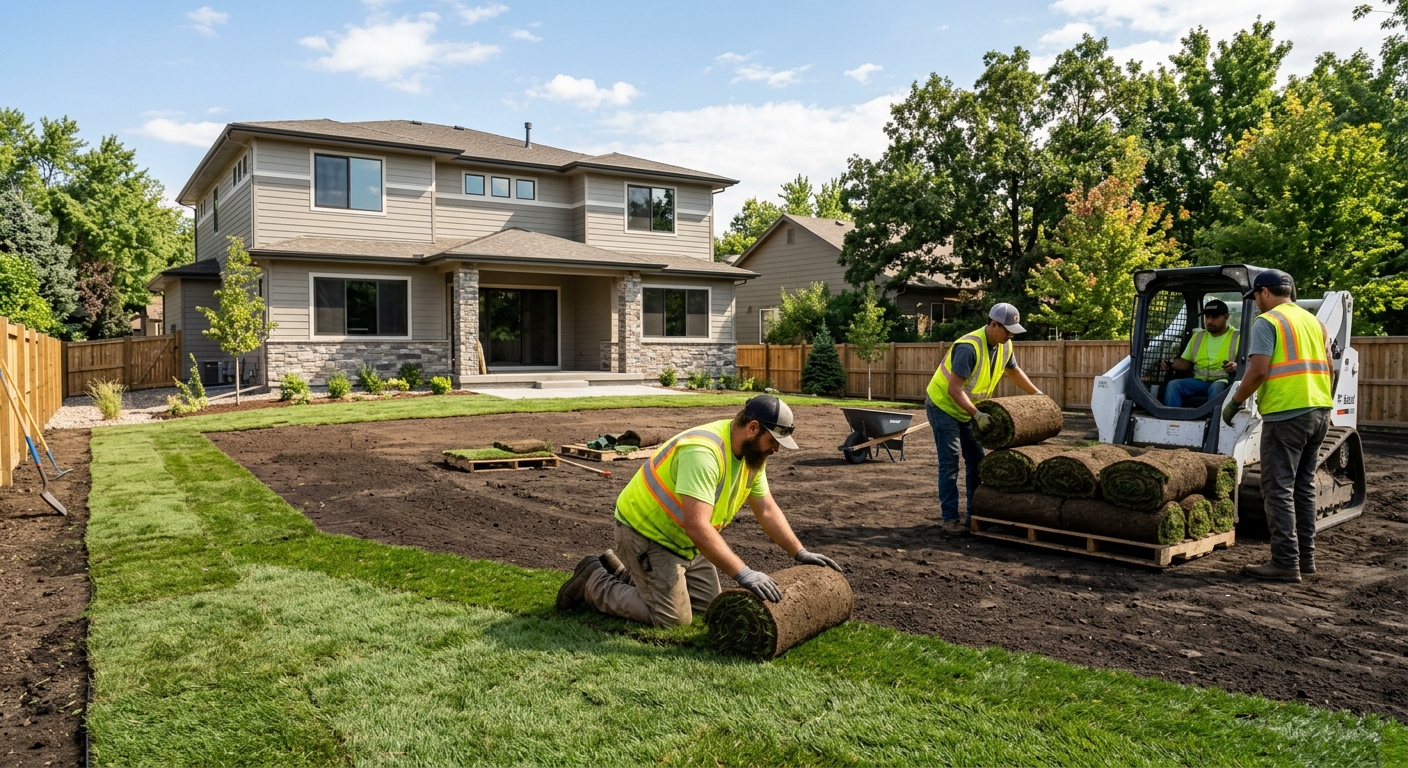
For turf, decide based on speed versus long-term cost. Sod gives instant visual results, but in Toronto it usually costs about 3–4x more per sq ft than seeding because you’re paying for living turf, delivery, and careful base prep. That’s why a sod conversion in the $2,500–$8,000 range can be worth it when you need curb appeal quickly or you have existing bare, eroding areas. If your goal is budget control and you can wait, lawn seeding is often more economical, though it takes longer to thicken.
Drainage and grading are where Toronto projects succeed or fail. Pooling water can kill sod and weaken bases, while poor drainage around patios can trigger heaving. Hardscape base preparation must consider the local frost environment—so proper granular layers, compaction, and edge restraint matter. Finally, low-maintenance design strategies help year over year: mulch, groundcovers, and a repeatable perennial structure reduce weeding and upkeep. Rain gardens and limited-area xeriscape concepts—like drought-tolerant plantings in downspout zones—can work well in Toronto by managing stormwater where it naturally gathers.
When comparing options, it’s often justified to pay for drainage and proper base prep even if it pushes you toward the higher end of the patio or wall bands, because that’s the difference between a surface that settles within a season and one that stays stable for years.
| Element |
Climate Consideration |
Maintenance Level |
Price Band |
| Sod lawn installation |
Needs a well-graded base and reliable establishment before summer stress and winter dormancy. |
Medium (watering period, occasional spot repairs) |
$2,500–$8,000 |
| Native perennial garden |
Hardy selections reduce winter losses and can tolerate Toronto’s freeze–thaw swings. |
Low to medium (spring cleanup, first-year watering) |
$1,800–$6,000 |
| Mulched shrub border |
Mulch buffers soil temperature and helps manage moisture through hot summers and cold winters. |
Low (top up mulch, light pruning) |
$800–$5,000 |
| Interlocking stone patio |
Freeze–thaw demands correct base depth, compaction, and drainage so the patio doesn’t heave. |
Low (seasonal sweeping, occasional joint refresh) |
$6,000–$30,000 |
| Retaining wall (block) |
Back drainage and granular base depth must be built for frost conditions and shifting clay/fill. |
Low (periodic inspection after heavy spring rains) |
$6,000–$30,000 |
| Drip irrigation system |
Toronto summer dry spells benefit from targeted watering that reduces waste and leaf diseases. |
Medium (seasonal checks, winter blowout if required) |
$900–$4,500 |
How to choose a landscaping contractor in Regent Park
Choosing the right landscaper in Regent Park starts with verification, not promises. First, confirm licensing/business status details through provincial resources when available, then request proof of liability insurance and ensure coverage dates match your project timeline. For WSIB/WCB coverage, ask for current proof—typically a certificate/clearance letter or documentation showing the contractor is registered and in good standing (where applicable). If a contractor can’t provide it, assume you’re taking on the risk.
Next, get 2–3 itemised written quotes. The best quotes break down labour and materials separately (excavation, base layers, drainage components, plant counts/sizes, and disposal). Avoid lump sums that don’t explain what’s included. Carefully read the scope: is permit pulling included if a retaining wall triggers requirements, is disposal/haul-off included, and are utility locates part of the job?
Warranty matters too. Ask for a workmanship warranty length (often tied to installation scope) and whether product/manufacturer warranties apply to plants and materials. Clarify whether warranties transfer if you sell the property.
For payment, never pay more than 10–15% upfront. Hold back a portion until the site is cleaned, grading is correct, and installation is fully complete. Finally, ask for a written timeline—start date and estimated completion date—so weather delays and season constraints are managed transparently.
- Provide certificate of liability insurance and confirm policy limits are appropriate for excavation/stonework.
- Show WSIB/WCB proof (clearance/status documentation) before any work starts.
- Use itemised quotes with line-by-line labour and material quantities.
- Explicitly state what’s excluded (topsoil depth, irrigation, stump grinding, disposal/haul-off).
- Confirm whether utility locates are included and who books the locate call.
- Include base/spec details for patios and retaining walls (granular layers, compaction approach, drainage rock).
- Ask what turf establishment steps are included with sod or seeding (fertilizer type, watering guidance).
- Get a schedule that accounts for Regent Park frost timing and realistic rain/wind delays.
- Confirm warranty terms for workmanship and specify coverage duration in writing.
- Agree on a payment schedule: 10–15% max upfront, balance after milestones and final cleanup.
- Require a final site inspection plan so grading and drainage look correct on completion day.
- Ask for photos or references of similar Regent Park-style clay/fill backyards.
In Regent Park, common red flags include: contractors who won’t provide insurance/WSIB documentation, quotes that omit disposal and drainage/base prep, “lowball” pricing that doesn’t match frost-safe base depths for patios/walls, pressure for large upfront deposits, and vague timelines that don’t commit to an installation window.
Frequently asked questions — landscaping in Regent Park
When should I aerate and overseed my lawn in Regent Park?
If your lawn in Regent Park is thinning, aeration and overseeding are most successful when the grass can recover before temperature extremes. Typically, plan aeration and overseeding in late spring (after the soil warms) or in early fall, when nights are cooler but daytime still supports growth. Toronto’s freeze–thaw cycle means spring lawns can look patchy as thaw progresses, but fall establishment usually gives roots time to knit before winter dormancy. Choose seed blends suited to Ontario conditions and ask your contractor about starter fertiliser and whether to topdress with a thin compost/soil layer. If you’re converting bare spots quickly, sod is a faster route, often budgeting around $2,500–$8,000 depending on yard size.
What trees grow best in Regent Park's climate zone?
Regent Park falls within Ontario’s zone 6a–7a range, so many common hardy trees do well when they’re matched to site conditions like sun, soil moisture, and drainage. Good candidates often include serviceberry, eastern white cedar (for structure in smaller yards), and hardy ornamentals like Amelanchier and certain crabapple cultivars that tolerate winter lows and recover well after pruning. For larger spaces, mature-canopy trees can anchor your landscape, but they require correct planting depth and soil prep in clay/fill—especially where drainage is tricky. If your yard has pooling water, address grading or install a drainage solution first, because even “hardy” trees struggle in saturated soil. A tree-and-shrub planting package is commonly budgeted in the $800–$6,000 range depending on number, size, and whether extra soil amendment is required.
How much does sodding a yard cost in Regent Park?
Sodding in Regent Park typically costs based on yard size, how much grading/topsoil correction is needed, and whether the contractor includes disposal and fertiliser. As a planning benchmark for Toronto-area scopes, homeowners often land in the $2,500–$8,000 band for sod supply and installation (grade, lay, roll, and initial establishment). If the existing lawn is struggling due to poor drainage or compacted clay, you may pay more because drainage/grading work comes first. Also, timing matters: late spring and early fall are more forgiving for establishment, while mid-summer heat can increase watering requirements. If you want a lower upfront cost, seeding can be an alternative, but it generally takes longer to fill in compared with sod.
How do I prevent weeds in my Regent Park garden?
Weed control starts before plants go in. In Regent Park and across Toronto, the biggest wins usually come from improving soil health and using proper mulch depth around shrubs and perennials. Before planting, remove existing weeds by hand or with targeted non-damaging methods, then lay down a weed barrier only where appropriate (for example, under mulch layers in non-turf areas). Over time, avoid bare soil by installing dense groundcovers and using a consistent mulch refresh schedule—this blocks light that many weed seeds need to germinate. Make sure the bed has correct edging so soil and grass don’t migrate into the garden. If you’re also working around patios or beds, drainage consistency matters, because soggy areas can encourage weed growth. A maintenance-focused shrub border with mulching is often the most practical long-term strategy.
How do I design a low-water yard in Regent Park?
Low-water yards in Regent Park are best achieved by combining smart placement with drought-tolerant plant selection and efficient watering. Start by grouping plants by water need: keep moisture-lovers closer to downspout/rain garden zones, and place drought-tolerant species on sunnier, faster-draining areas. Add mulch generously to reduce evaporation, and consider a rain garden or a swale in spots where water naturally collects during storms. For irrigation, drip systems target roots directly and reduce waste; they’re usually more efficient than sprinklers for established beds. If your yard needs turf replacement, consider seeding strategies or smaller lawn areas supported by groundcovers. Budget-wise, a drip irrigation system can add to your project cost, commonly in the $900–$4,500 range depending on coverage and complexity. Always align your plan with Ontario watering expectations and any local outdoor watering limitations during dry periods.
How do I find a licensed landscaper in Regent Park?
To find the right landscaper in Regent Park, verify three core items before signing: licensing/business registration details (as applicable), liability insurance, and WSIB/WCB coverage (where the contractor is required). Ask for documentation and confirm it’s current—don’t rely only on a contractor’s word. Next, request 2–3 itemised written quotes that separate labour and materials and clearly state what’s included: site grading, drainage work, disposal/haul-off, and whether utility locates are part of the process. For larger structural scopes like retaining walls, confirm whether a permit is required (many municipalities trigger permits around a 1.0 m wall height) and ensure the contractor accounts for that in the plan. Finally, review warranty terms and payment schedule—avoid paying more than 10–15% upfront. If someone can’t explain why their quote fits the Toronto frost-and-drainage realities, keep looking.