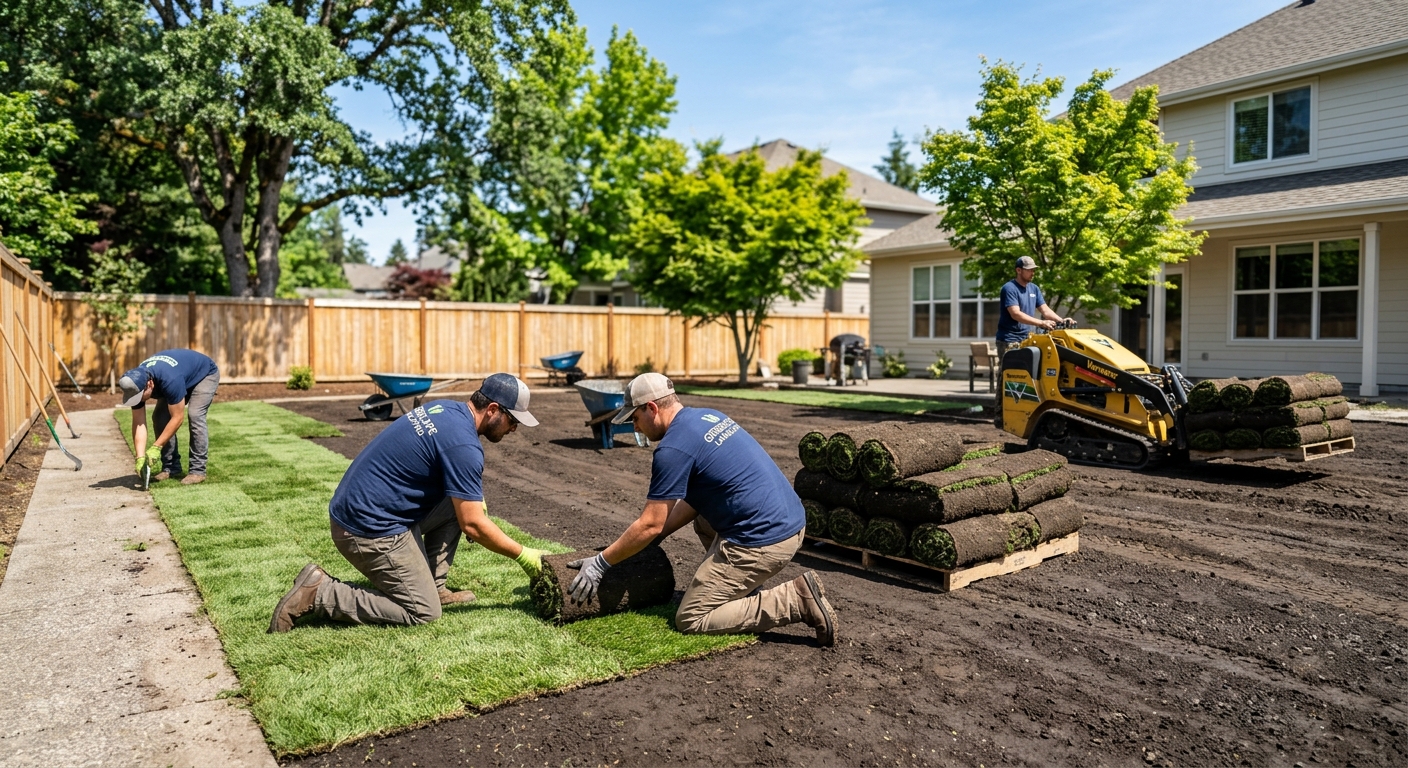
Landscaping options and costs in Chapleau
Chapleau homeowners often start by deciding how much of the yard they want to transform—because in a community of 1,942 people (Statistics Canada, 2021 Census), many properties are detached and come with the space to improve both curb appeal and function. With 71.8% of dwellings being single-detached houses and 77.2% of households owning (Statistics Canada, 2021 Census), it’s common to see longer-term upgrades like new patios, layered planting beds, and mature tree replacements rather than quick cosmetic fixes. In the Northeast market, pricing is shaped by a short planting window and freeze-thaw stress: crews typically mobilize from mid-to-late spring through early fall, and the risk of winter damage pushes contractors to build safer bases and use hardier, better-performing plant stock. Labour availability can also tighten during peak weeks, which is why two similar jobs can price differently depending on when you call. For many homeowners in the more development-focused stretches of town (including areas around Chapleau’s residential core where driveways and front yards are prominent), interlocking walkways and foundation planting are in especially high demand.
Below are realistic budget ranges you can use to compare quotes for common landscaping scopes. Once you choose your priorities (instant turf vs. longer-term seeding, softscape vs. hardscape, or a wall/terrace that changes the grade), the rest of the estimate usually follows.
| Service |
Description |
Season |
Price Range |
| Full landscape design and installation |
Site visit, grading/drainage plan, softscape + hardscape installation, planting layout, and basic project management |
Mid–late spring to early fall |
$8,000–$30,000 |
| Sod installation (supply, grade, lay, roll) |
Existing lawn removal (if needed), soil prep, topdressing, sod laying and rolling |
Late spring to August |
$3,000–$9,000 |
| Lawn seeding (grade, seed, starter fertilizer) |
Raking/aeration where required, seeding, light topdressing, starter fertilizer and initial watering plan |
Spring or early fall |
$1,500–$6,000 |
| Interlocking patio or walkway |
Excavation, base and compaction, edging, interlocking stone, sand setting bed, jointing |
Late spring to September |
$4,500–$18,000 |
| Retaining wall (interlocking block) |
Excavation, engineered base/gravel, block system installation, reinforcement/drainage provisions |
Late spring to September |
$6,000–$25,000 |
| Tree and shrub planting |
Soil prep, amendments, planting, staking (if needed), mulch rings/beds and initial care guidance |
Spring or fall planting windows |
$1,500–$8,000 |
Prices are estimates only and vary by project scope, site access and material selection.
What affects the price of landscaping in Chapleau
In Chapleau, two quotes for what looks like the same job can differ by 30–50% because the hidden work changes: frost depth demands deeper base preparation, soils vary block-by-block, and contractors price for the short, compressed Northeast construction season. Even within Ontario, winter risk and site conditions can push costs up or down. In the Northeast market context, the plant hardiness band and frost dates determine both what can survive and how long crews have to finish planting and hardscape before cold weather. Prairie-like conditions (roughly Zone 2–4 in the broader Northeast cold continental range) also favour drought-tolerant, wind-hardy choices and efficient irrigation zoning—whereas coastal climates with long seasons can keep plant diversity high but still need careful drainage design for heavy rainfall. Southern Ontario (Zone 5–6) typically has a more moderate season and may need less structural base depth, but Chapleau’s freeze-thaw cycles mean retaining walls and paving are more “engineering-forward.” In other words, a job that needs thicker gravel layers and better drainage is not just labour—it’s base aggregate, excavation depth, and added equipment time.
Concrete examples in Chapleau: (1) If you’re moving a slope away from a foundation, grading and drainage can add thousands before any plants go in—often a meaningful portion of an overall $8,000–$30,000 project budget. (2) If you want a patio in a spot that currently holds water, a drainage bed/French drain could shift you toward the upper end of the $6,000–$25,000 hardscape band, because base depth and subgrade prep become non-negotiable. (3) With many homes built before 1981 (83.0% of dwellings), you’ll also see older grading patterns and mature tree roots that may require removal or careful excavation—raising disposal and labour costs.
| Price Factor |
Why It Matters |
Cost Impact |
| Yard size in sq ft — the primary cost driver for softscape |
More area means more materials (topsoil, mulch, seed/sod), more labour hours, and higher maintenance requirements |
Small yards may stay near the lower end; larger yards can push projects toward the mid/high bands |
| Grading and drainage work — slope corrections add significant cost |
Proper drainage prevents pooling and foundation moisture and reduces winter heave risk |
Can add a substantial portion of total cost before planting begins |
| Drainage bed or French drain installation |
Improves water movement in frost-prone soils and protects paved/hardscape bases |
Often shifts a job into a higher hardscape or full-install estimate range |
| Plant material tier — native shrubs vs. ornamental vs. mature specimen trees |
Hardier native options cost less and establish faster; mature specimens cost more to source and install |
Tree and shrub planting may move from lower to upper end of planting budgets |
| Hardscape vs. softscape ratio — walls and patios cost more per sq ft than lawn |
Hardscape requires excavation, base aggregate, compaction, edging, and durable materials |
Higher hardscape % typically increases the quote faster than adding more planting |
| Irrigation system design and installation |
Efficient layouts help establish plants during a short season and respect water-use limits |
Can add meaningful cost if trenching, zoning, and backflow protection are required |
| Soil amendment and topsoil required |
Poor soils need replacement or amendment to support root growth and turf establishment |
More hauling and import materials increases labour and disposal fees |
| Tree removal or stump grinding before new planting |
Root systems complicate excavation; stumps affect grading and planting longevity |
Adds both equipment time and disposal/handling costs |
Permits & regulations in Ontario
In Ontario, most typical yard work—planting trees and shrubs, sodding, seeding, and most softscape installation—usually does not require a permit. However, retaining walls are the big exception: if the wall is above the local height threshold (often around 1.0 m in many municipalities), you may need a building permit and sometimes engineered details or drawings depending on design and loading. Grading changes can also trigger approvals. If your project changes the lot grading in a way that redirects water toward a neighbour’s property or toward a storm sewer connection, confirm requirements first; drainage problems can become a liability issue later.
Before digging planting holes, trenching for drainage, or installing wall footings, call utility locates. Even “small” excavation can hit buried services. Also confirm any local irrigation or water-use rules before installing irrigation components—water restrictions are more common in hotter/drier seasons in other parts of Canada, but it’s still wise to design efficient watering (drip/zone timing) for establishment and to avoid waste.
To verify a contractor in Chapleau, use a simple step-by-step checklist: (1) confirm Ontario licensing/registration where applicable via the appropriate online provincial tools; (2) ask for a certificate of insurance for liability—make sure it lists your address/project; (3) verify worker coverage (WSIB/WCB) by requesting clearance/coverage documentation; and (4) keep copies with your contract. If any of these are missing or unclear, request written proof before work begins.
Planning a landscape that thrives in Chapleau's climate
To plan well in Chapleau, design around a cold continental rhythm: select plants that tolerate winter and wind, detail drainage to handle freeze-thaw, and build hardscape bases for movement without failing. Start with plant selection. In Chapleau’s Northeast climate, you’ll get better long-term results with zone-appropriate natives and hardy shrubs/perennials, then add winter protection only where the species truly needs it. Next, decide sod vs. seed. Sod gives instant coverage, but it typically costs 3–4 times more per sq ft than seeding once you include prep and product; on a similar-size lawn area, that can mean the difference between a mid $3,000–$9,000 sod budget and a lower $1,500–$6,000 seeding budget, depending on labour and soil condition. That difference can be justified when you need quick curb appeal or when erosion control is urgent; it’s not always necessary for backyards where you can establish grass over a season.
Drainage and grading are where Northeast projects succeed or fail. If water pools after snowmelt or summer rains, it will also freeze and expand under paving and around foundations. Ensure runoff directs away from the house, and consider a drainage bed/French drain where the soil stays wet. For patios and retaining walls, proper base preparation matters: excavate to a stable depth, compact correctly, and build with frost movement in mind. Finally, build low-maintenance structure—mulch rings, groundcovers, and grouped perennials reduce annual weeding and help insulate roots. For water-efficient options (and to reduce labour), consider xeriscape principles—using mulch, drought-tolerant plants, and targeted drip where establishment needs support. A rain-garden approach can also work if your site has a controlled spot to capture and slowly infiltrate water.
Example: If you want a front lawn refreshed before summer guests, upgrading to sod and spending closer to the mid-to-upper end of $3,000–$9,000 can be worth it for appearance. If the goal is long-term cost control and you can wait, seeding in the $1,500–$6,000 range often gives better value—provided drainage and soil prep are addressed.
| Element |
Climate Consideration |
Maintenance Level |
Price Band |
| Sod lawn installation |
Requires consistent moisture during establishment; base must be smooth to prevent frost-related heaving |
Medium (initial watering + weed control while rooting) |
$3,000–$9,000 |
| Native perennial garden |
Hardy species handle winter better with less need for heavy winter covers |
Low to medium (spring cleanup and occasional dividing) |
$2,000–$7,500 |
| Mulched shrub border |
Mulch insulates roots and moderates freeze-thaw; wind-hardy shrubs reduce desiccation |
Low (top up mulch seasonally, light pruning) |
$1,800–$6,500 |
| Interlocking stone patio |
Needs correct base and drainage to resist frost movement and salt-related wear |
Low (occasional cleaning and joint sand checks) |
$4,500–$18,000 |
| Retaining wall (block) |
Frozen soils exert pressure; drainage behind the wall is critical to prevent blowouts |
Low (inspect for shifting/gaps; maintain weep/drainage features) |
$6,000–$25,000 |
| Drip irrigation system |
Efficient watering supports establishment during a short season; zones prevent overwatering |
Medium (season startup/shutdown checks, winterization) |
$1,500–$8,000 |
How to choose a landscaping contractor in Chapleau
Start with proof. For Ontario landscaping work, ask for their liability insurance certificate—confirm it’s active and includes your address/project. Next, verify worker coverage (WSIB/WCB) by requesting a current clearance letter or coverage documentation; it should match the company name you’re hiring. If a contractor is vague about insurance or coverage, treat it as a warning sign and move on.
Then get 2–3 itemised written quotes. You want labour + materials broken out (excavation, base aggregate, stone, soil/topsoil, seed/sod, disposal, planting material, delivery, and any irrigation components). Avoid quotes that only list a single “lump sum” without showing what’s included. Read exclusions carefully: Is permit pulling included where needed? Is waste disposal and hauling included? Are utility locates part of the process? Who supplies and spreads topsoil and amendments? Good contractors also specify the warranty and what it covers.
For warranties, ask for two parts: workmanship (how long the installation is guaranteed) and product/manufacturer warranty (what the plant/material supplier covers). Clarify whether warranty coverage is transferable if you sell your home.
Payment schedule matters. Never pay more than about 10–15% upfront. Use a holdback until the job is complete and you’ve received final walkthrough notes and any close-out documentation. Finally, request a start date and a realistic completion estimate in writing—Northeast projects in Chapleau often hinge on weather and frost risk, so timelines should reflect that.
- Provide a certificate of liability insurance and confirm the policy is current.
- Provide WSIB/WCB clearance/coverage documentation in the same name as the quote.
- Have an Ontario contact number/address you can verify (not just a cell phone).
- Give 2–3 itemised quotes with labour and materials lines.
- Include disposal/hauling details for sod removal, stumps, and construction debris.
- Specify who calls for utility locates before digging.
- Confirm whether topsoil, soil amendments, and mulch are included and at what volume.
- List base prep requirements for patios/walks and drainage provisions for walls.
- State planting quantities and plant sizes (e.g., container size) in the scope.
- Clarify irrigation scope (supply lines, timers, zones, and winterisation guidance).
- Write down workmanship warranty length and what triggers service calls.
- Use a payment plan with a holdback until final completion and cleanup.
Red flags in Chapleau: (1) “No need for insurance/WSIB” answers or refusal to provide documents; (2) quotes without itemised base prep, drainage, or excavation scope; (3) payment demands above 10–15% upfront; (4) promises of full-season completion despite weather-sensitive frost risk; and (5) vague plant lists (“assorted evergreens”) instead of named species and sizes.
Frequently asked questions — landscaping in Chapleau
How do I prevent weeds in my Chapleau garden?
In Chapleau, weed prevention is mostly about reducing exposed soil and improving early bed structure. Start with proper bed prep: remove existing weeds and roots, then install a weed-resistant fabric only where it suits (for many shrub borders, it works under mulch, but avoid burying it where you want easy planting later). Use a consistent mulch depth (typically 2–3 inches) and refresh annually; mulch helps moderate freeze-thaw too. For hardscapes or transitions near edges, ensure stone/edging keeps mulch contained so weeds can’t “creep” back in. If your planting beds are near a lawn, consider a clean separation so weed seeds don’t travel. If you’re budget-led, preventing weeds in the design phase usually costs less than repeated spot treatments later—even when your overall landscaping scope is in the $8,000–$30,000 range, the bed labour is often a small fraction.
How do I design a low-water yard in Chapleau?
Even in Chapleau, water efficiency matters because establishment in a short Northeast growing season is where plants need the most attention. Design for targeted watering: group plants with similar moisture needs, then use drip irrigation or soaker lines by zone (rather than broad spray). Choose hardy, zone-appropriate species and prioritize native shrubs/perennials that handle winter and wind better, reducing stress during dry spells. Improve soil so water penetrates and stays available—adding compost and using mulch reduces evaporation and moderates temperature swings. If you’re comparing options, note that seeding a lawn can fit a tighter budget than sod: for many homeowners, moving toward the lower end of $1,500–$6,000 for seeding plus smart mulch and drip can be a better long-term play than paying for sod at $3,000–$9,000 when the goal is lower ongoing water use.
How do I find a licensed landscaper in Chapleau?
Begin by asking for proof before you sign anything. In Ontario, you should receive a current certificate of liability insurance and confirmation of worker coverage (WSIB/WCB clearance/coverage documentation). Next, request that the contractor show clear, itemised scope details—labour and materials—so you can compare like-for-like. For licensing/registration, use Ontario’s online registry tools where applicable and verify the company name matches the quote and invoice. Then check their willingness to document the process: utility locates before digging, base prep specifications for patios and retaining walls, and written timelines that reflect the short working season in the Northeast climate. If they can’t provide insurance/coverage or give you itemised quotes, you’re taking unnecessary risk—especially in older Chapleau neighbourhood pockets where excavation can hit established roots and require extra disposal.
How much does landscaping cost in Chapleau?
Landscaping cost in Chapleau depends on whether you’re mostly doing softscape (planting/lawn) or adding hardscape (patios/walls) and how much grading/drainage work is required. Typical homeowner budgets often land in these ranges: full landscape design and installation is commonly estimated at $8,000–$30,000. For lawn replacement, sod installation budgets around $3,000–$9,000, while lawn seeding and initial fertilizer can be closer to $1,500–$6,000 when the site is prepared well. Interlocking walkways/patios vary widely based on size and base conditions, and retaining walls (especially where drainage behind the wall is needed) often fall in the $6,000–$25,000 range. For planting-only projects, tree and shrub installations are frequently estimated between $1,500–$8,000.
What plants thrive in Chapleau's climate zone?
Chapleau experiences harsh winters and strong freeze-thaw, so the plants that thrive are the ones suited to local cold conditions and wind exposure. In practice, that usually means hardy shrubs, cold-tolerant perennials, and trees selected for survival through winter dormancy. Your best bet is to choose zone-appropriate species and avoid tender ornamentals that require heavy protection. Contractors often focus on resilient foundation shrubs, hardy grasses/perennials, and native species that establish well in your soil type after amendments. If you’re planning planting in an area with drainage issues, plants alone won’t fix it—grading and drainage must come first. Given that most homes were built before 1981 (83.0% of dwellings), you may also inherit older soil conditions, so it’s smart to pair plants with soil amendment and mulch for more reliable establishment during the short Northeast season.
Sod vs seed — which is better for a Chapleau lawn?
In Chapleau, sod is better when you need instant coverage for curb appeal, erosion control, or fast yard usability. It’s also a practical choice when the soil prep is already in good shape. However, sod typically costs about 3–4 times more per sq ft than seeding once you include prep and materials—so sod might land closer to $3,000–$9,000 for many replacement projects, while seeding often fits around $1,500–$6,000. Seed can be the better value when you can wait for establishment and you invest in correct grading and drainage first. For both options, weed suppression and consistent early moisture are critical. If your yard has pooling spots from snowmelt, fix drainage before laying sod or broadcasting seed, or you’ll pay for rework.