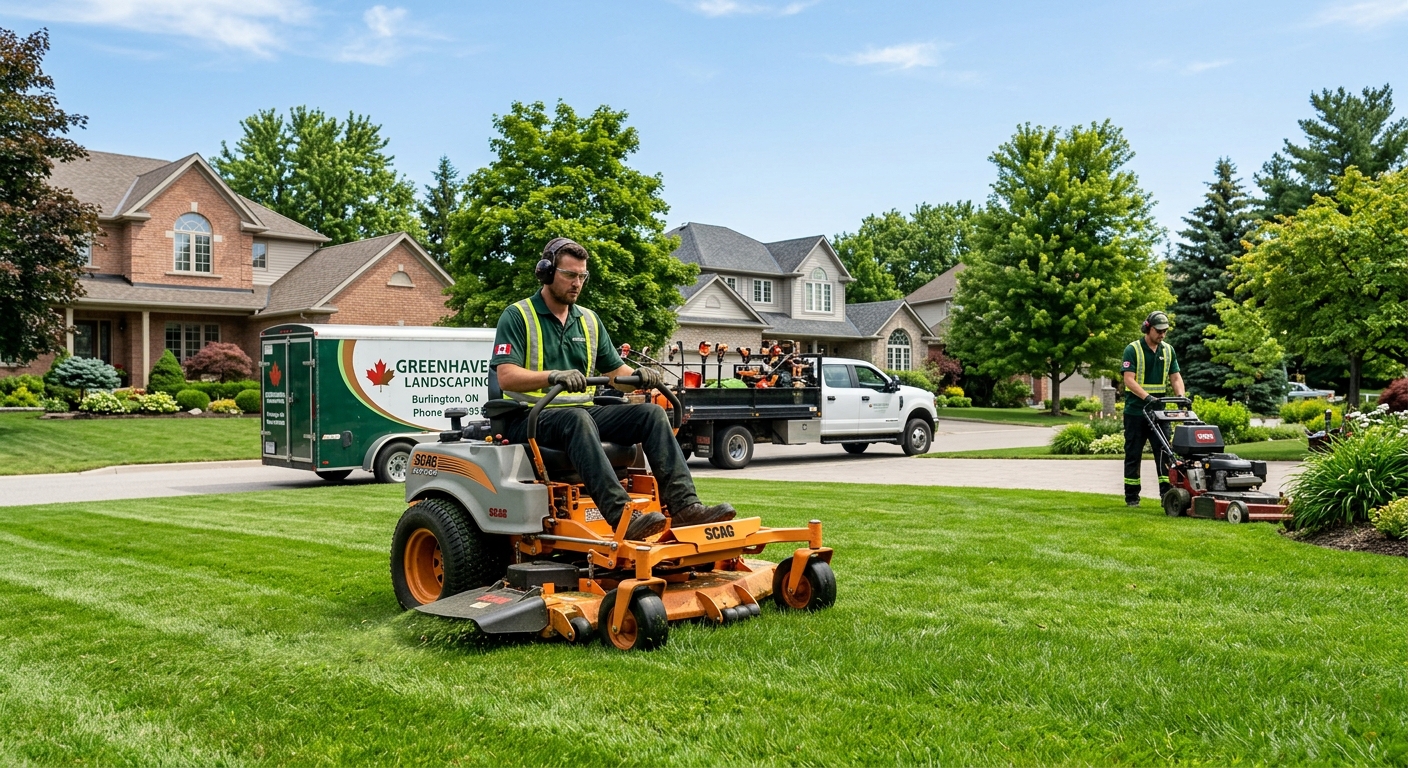
Landscaping options and costs in Grand River North
In Grand River North, landscaping choices often come down to whether you’re optimizing for curb appeal, long-term maintenance, or a faster “finished look.” With a population of 4,765 in the area (Statistics Canada, 2021 Census), many home projects are concentrated around established neighbourhood pockets where homeowners want reliable winter survival and dependable summer performance—especially for lawns and hardscape that take the brunt of freeze–thaw cycles.
Cost is shaped by the Toronto region’s plant hardiness range (roughly zones 6a–7a) and the practical reality of working from about May to October. That season window is long enough for most installs, but the clay-and-fill soils common in Southern Ontario mean more labour for excavation, soil amendment, and drainage bedding than many people expect. Contractor availability can also tighten during peak spring and early fall, which is why timelines and pricing often change after the first frost-free stretches.
Where demand is especially strong—such as around Cambridge Road / Hespeler Road corridor areas (a common home-improvement catchment for landscaping crews)—we see more interlocking, drainage, and planting upgrades as residents update older properties and address yard drainage issues near foundations.
Use the estimate ranges below to compare scope-level options (design + install versus softscape versus hardscape). Then we can narrow the numbers based on yard size, soil condition, and how much grading and drainage are required.
| Service |
Description |
Season |
Price Range |
| Full landscape design and installation |
Site walk, concept + layout, plant list, grading/drainage plan, then full build (softscape + hardscape) |
May–October (spring and early fall) |
$8,000–$40,000 |
| Sod installation (supply, grade, lay, roll) |
Regrade for level, soil prep, sod supply, lay/roll, initial watering plan |
Late April–June and early September–mid October |
$2,500–$8,000 |
| Lawn seeding (grade, seed, starter fertilizer) |
Light regrade, seed selection, starter fertilizer, mulching, and establishment care |
Late April–June and September (weather-dependent) |
$1,800–$6,000 |
| Interlocking patio or walkway |
Excavate, compact base, geotextile, bedding sand, pavers/stone, edge restraints, joint sand |
May–October |
$6,000–$30,000 |
| Retaining wall (interlocking block) |
Wall layout, excavation, compacted base, drainage gravel/weep management, block + cap |
May–October |
$6,000–$30,000 |
| Tree and shrub planting |
Soil amendment, planting layout, staking (if needed), mulch rings, initial watering guidance |
Spring and fall (and select container installs in summer) |
$800–$6,000 |
Prices are estimates only and vary by project scope, site access and material selection.
What affects the price of landscaping in Grand River North
In Grand River North (Toronto-area market), you can see the “same” landscaping scope quoted 30–50% apart because contractors price risk differently—soil conditions, drainage needs, access constraints, and how many trades are required. Two yards can look similar at the street, yet one may have compacted fill or a down-slope that forces additional grading and drainage; that drives labour and materials quickly.
Climate and frost are major cost drivers. Toronto-area planting sits around zones 6a–7a, with frost-free conditions roughly May to October. In Southern Ontario, the season supports a wider plant pallet than many colder regions, but freeze–thaw cycles still affect hardscape longevity and base depth. By comparison, Prairie regions (Zone 2–4) need ultra-hardy, wind- and drought-tolerant species and often face a shorter working season; retaining wall base depth there also needs careful frost consideration. Coastal BC (Zone 7–8) can support lush growth longer, but heavy rainfall and drainage design are critical. Dry BC interior and Alberta water limitations can force drip-first irrigation layouts. In Southern Ontario, we typically plan irrigation for summer dry spells, especially on new sod establishment and during heat waves.
Here are a few concrete examples that raise or lower cost in Grand River North. First, if your yard has clay and low spots near a foundation, drainage work (swales, subdrains, clean-outs) can push a hardscape project above the lower end of the $6,000–$30,000 retaining wall/hardscaping band. Second, swapping ornamental bedding plants for native, zone-appropriate shrubs can keep planting within the $800–$6,000 tree and shrub band while reducing future watering and winter protection labour. Third, older homes often sit on soils that settle—so more base preparation and soil amendment can add thousands to patios even when the patio surface area stays the same.
When quotes come in far apart, it’s usually because one contractor included drainage, soil amendment, and proper base build-up—and the other didn’t.
| Price Factor |
Why It Matters |
Cost Impact |
| Yard size in sq ft — the primary cost driver for softscape |
More area means more grading, seed/sod, mulch, topsoil, and labour hours |
Often the largest swing; can move the total by thousands |
| Grading and drainage work — slope corrections add significant cost |
Fixing pooling, redirecting runoff, and creating proper fall protects foundations and patios |
Can add substantial labour and haul/disposal charges |
| Drainage bed or French drain installation |
Stone beds and pipe systems require trenching, fabric, and clean-out planning |
Common reason quotes differ by 30–50% |
| Plant material tier — native shrubs vs. ornamental vs. mature specimen trees |
Mature stock costs more and often requires specialized handling and staking |
Can shift planting budgets from “small” to “premium” quickly |
| Hardscape vs. softscape ratio — walls and patios cost more per sq ft than lawn |
Pavers/blocks need excavation depth, compaction, restraints, and base materials |
Higher hardscape ratios move the project into upper price bands |
| Irrigation system design and installation |
New zones, backflow prevention, and head placement increase materials and labour |
Can add thousands depending on zone count and wiring |
| Soil amendment and topsoil required |
Clay improvement (compost, screened topsoil) supports rooting and reduces future patching |
Often overlooked; can materially change costs |
| Tree removal or stump grinding before new planting |
Cleanup and stump/grind work adds equipment and labour |
Can be a major “add-on” if not included in the quote |
Permits & regulations in Ontario
In Ontario, most planting and softscape work—like sodding, lawn seeding, mulching, and installing typical garden beds—generally does not require a permit. Tree and shrub planting is also typically permit-free, as long as you’re not undertaking regulated grading that affects drainage patterns.
Where permits can come into play is hardscape and grading. In many Ontario municipalities, retaining walls above a certain height threshold (often 1.0 m or about 3.3 ft, depending on local rules) require a building permit, and sometimes engineered drawings for structural support. If you’re changing lot grading in a way that alters how water flows—particularly if it impacts neighbouring properties or changes discharge toward a storm sewer connection—approval requirements can apply. Also, always call for utility locates before digging for planting holes, trenching for drains, or installing wall footings.
For a homeowner in Grand River North verifying a contractor, do this in order: (1) confirm the contractor is properly licensed where required for landscaping/hardscape trades in Ontario (and that any required classifications match the scope); (2) request liability insurance and verify the certificate is current and aligned to the project address; and (3) confirm worker coverage—WSIB/WCB clearance or proof of coverage—so you’re not left holding risk if an injury occurs on site. Ask for these documents before the contract starts, and keep copies with your paperwork.
Planning a landscape that thrives in Grand River North's climate
To plan a landscape that thrives in Grand River North, design around Toronto-area zone conditions and the freeze–thaw reality—not against them. Our typical hardiness window (about zones 6a–7a) means you can use many woody perennials and hardy shrubs, but they still need winter-appropriate placement, good soil drainage, and mulch protection where necessary.
Start with plant selection. Choose zone-appropriate and, where possible, native species that establish well and tolerate summer humidity without constant watering. For lawns, decide early between sod and seed. Sod gives instant coverage and faster curb appeal, but it’s usually about 3–4x more per sq ft than seeding when you compare installed costs; seeding is slower but often more budget-friendly if you can accept initial patchiness. For example, if your goal is a 500 sq ft front lawn refresh, sod installation commonly lands in the $2,500–$8,000 band, while seeding may fit closer to the lower end depending on prep and weed control.
Next, prioritize drainage and grading. Toronto yards often need micro-slope adjustments so water doesn’t pool near foundations or creep toward basements during spring thaw. Hardscape also needs correct base preparation: patio and retaining wall systems must sit on well-compacted granular layers to resist heaving and movement from freeze depths and seasonal movement.
Finally, use low-maintenance strategies to reduce annual upkeep: mulch (weed suppression + moisture retention), repeating hardy perennials, and groundcovers that fill in rather than leaving bare soil. If you want to improve water resilience, consider rain gardens for downspout capture or a limited xeriscape zone (especially in hot spots) paired with efficient drip irrigation—keeping the rest of the yard more “traditional” for curb appeal.
| Element |
Climate Consideration |
Maintenance Level |
Price Band |
| Sod lawn installation |
Needs dependable establishment before winter; best for May–June or fall windows |
Medium (watering during establishment, first season mowing) |
$2,500–$8,000 |
| Native perennial garden |
Zone-appropriate plants handle freeze–thaw when mulch and soil drainage are right |
Low–Medium (weeding first year; steady thereafter) |
$800–$6,000 |
| Mulched shrub border |
Winter protection via mulch rings reduces stress and improves rooting |
Low (annual pruning + topping up mulch) |
$1,200–$5,500 |
| Interlocking stone patio |
Freeze–thaw demands proper base depth, compaction, and drainage away from house |
Low (occasional joint sand top-up, power washing as needed) |
$6,000–$30,000 |
| Retaining wall (block) |
Base + drainage gravel/weep management protect against water-driven movement |
Low (inspection of drainage and minor repairs over time) |
$6,000–$30,000 |
| Drip irrigation system |
Efficient watering supports humid summers and helps avoid waste; use timers for Ontario conditions |
Low (seasonal controller adjustments, filter checks) |
$1,500–$7,500 |
How to choose a landscaping contractor in Grand River North
Choosing the right landscaping contractor in Grand River North is less about flashy photos and more about proving capacity, compliance, and clear scope. Start with Ontario compliance: ask for (1) liability insurance—verify the policy is active, the coverage is adequate, and the certificate lists your project address or shows the policy applies to the work; (2) WSIB/WCB coverage or clearance documentation—confirm it covers their crew working on your site; and (3) any required licences tied to their trade scope. Where to look: request documents directly, and for licensing/registry items, use the relevant Ontario registry information the contractor references in their proposal and website. Never accept “we’re covered” without a certificate or clearance copy.
Then get 2–3 itemised written quotes that separate labour and materials. You want line items like excavation/base material, pavers/blocks, soil amendment, drainage stone, and disposal—rather than one lump sum. Read exclusions carefully: is permit pulling included (for retaining wall work where applicable), is disposal included for excavated clay/fill, and are utility locates coordinated? Confirm warranty details: workmanship warranty length (for example, movement or settlement issues), product/manufacturer warranties, and whether warranties are transferable if you sell the home.
Payment schedule matters. In Ontario projects, a reasonable approach is to keep upfront payment around 10–15% and hold a balance until completion and cleanup. Finally, get the timeline in writing: a start date window and an estimated completion date, tied to weather—especially for sod and concrete/stone base work.
- Provides proof of current liability insurance (certificate on request)
- Provides WSIB/WCB clearance or coverage documentation
- Quotes are itemised (labour + materials + disposal/base prep separately)
- Includes a site-specific scope: grading targets, drainage approach, and limits of work
- Clarifies whether permits are required and who pulls them
- Specifies soil depth, base build-up, and compaction method for patios/walls
- Lists plant sizes (e.g., container size/gallon or height) and number of plants
- Includes irrigation details if watering is required (zones, heads, timer/controller)
- Provides a warranty in writing (workmanship and product coverage)
- States protection measures for existing plants, walkways, and driveways
- Offers a realistic schedule with weather contingencies
- Keeps deposits reasonable (10–15%) and agrees on a completion holdback
Red flags we see in the Grand River North area include: refusing to provide insurance/WSIB documentation, quoting only with a lump sum and no breakdown, starting work without utility locates or grading plan clarity, offering vague “lifetime warranties” without terms, and pushing for a large deposit (beyond 15%) without signed scope and schedule.
Frequently asked questions — landscaping in Grand River North
How do I find a licensed landscaper in Grand River North?
Start by asking for proof up front: liability insurance (current certificate) and WSIB/WCB clearance or coverage documentation. In Ontario, licensing expectations depend on the contractor’s trade scope, but you should still confirm they’re appropriately registered for the work they’re doing and that their certifications match your project (for example, hardscape work with excavation and base building). For Grand River North homeowners, the practical method is: request certificates and clearance before signing, review the certificate dates and insured parties, and ensure the paperwork applies to your address. Then compare at least two itemised quotes so you can see whether drainage, disposal, and proper base preparation are included. If a contractor avoids documentation or uses vague wording in the contract, that’s a real risk signal.
How much does landscaping cost in Grand River North?
Landscaping pricing in Grand River North depends mainly on scope (softscape vs hardscape), yard size, and whether drainage/soil amendment is required due to clay and freeze–thaw conditions. For many full curb-appeal projects, design + installation commonly falls within $8,000–$40,000. If you’re focusing on hardscape like an interlocking walkway or small patio, many projects land within $6,000–$30,000, especially when base depth and drainage are included. For lawn refreshes, sod installation often sits within $2,500–$8,000, while targeted tree and shrub planting typically fits within $800–$6,000. The fastest way to tighten the estimate is to have a contractor do a site walk and document drainage issues and soil prep needs.
What plants thrive in Grand River North's climate zone?
Grand River North sits in Toronto-area conditions around plant hardiness zones 6a–7a, so choose species that tolerate winter lows near –23 to –18°C and summer heat and humidity. In practice, zone-appropriate deciduous shrubs, hardy perennials, and well-selected evergreens provide year-round structure without excessive winter protection. Native plants generally do well because they’re adapted to local soils and seasonal cycles, and they can reduce watering demands compared with delicate ornamentals. A good contractor should propose a mix based on sun exposure (full sun versus partial shade), soil drainage, and maintenance goals (for example, low-maintenance borders versus cottage-style beds). If your yard has pooling or soggy spots, prioritize plants that tolerate that micro-site and correct drainage—planting alone won’t solve persistent foundation moisture.
Sod vs seed — which is better for a Grand River North lawn?
Sod and seed can both work in Ontario, but “better” depends on how quickly you need coverage and how much prep you can handle. Sod gives instant results and can help stabilize soil and reduce erosion right away, which is valuable if you’re regrading or establishing in a tricky area. However, sod is typically about 3–4x more per sq ft than seeding when installed, and many sod installs fall within $2,500–$8,000. Seed is more budget-friendly but requires patience—germination and thickening depend on timing, watering, and weed control. For Grand River North, seeding is often most successful in late spring to early summer or in early fall, when conditions support establishment without extreme heat. If you want the simplest route to “done,” choose sod; if you can wait and keep up watering, seed can be the smarter value.
How much does a retaining wall cost in Grand River North?
Retaining wall cost in Grand River North varies by wall height, length, block style, base depth, drainage details, and how much excavation/disposal is required. Many interlocking block retaining wall projects commonly fall within $6,000–$30,000. The big swing comes from structural requirements and drainage management: a wall without proper base compaction and drainage gravel can shift over time, especially through Toronto’s freeze–thaw cycles. Permits may also apply once you’re above certain height thresholds (commonly around 1.0 m, depending on local rules), and that can affect scheduling and documentation needs. A professional quote should include excavation, base build-up, drainage provisions, and final backfill—not just the blocks and labour.
When is the best time to landscape in Grand River North?
For Grand River North, the reliable window is roughly May through October, because spring thaw and early fall conditions support plant establishment and base work before winter freeze. Sod is best when the soil is warm enough for rooting—often late April through June—or again in early September into mid October, depending on weather. Planting is usually strongest in spring and fall, when temperatures are moderate and watering is less extreme than mid-summer. Hardscape projects like patios and retaining walls can be installed during frost-free periods, but base compaction and drainage must be built correctly to handle freeze–thaw stress. If you’re planning anything involving drainage trenching, do it early enough to avoid wet, unstable ground. Your contractor should provide a written start/completion estimate that reflects weather contingencies.