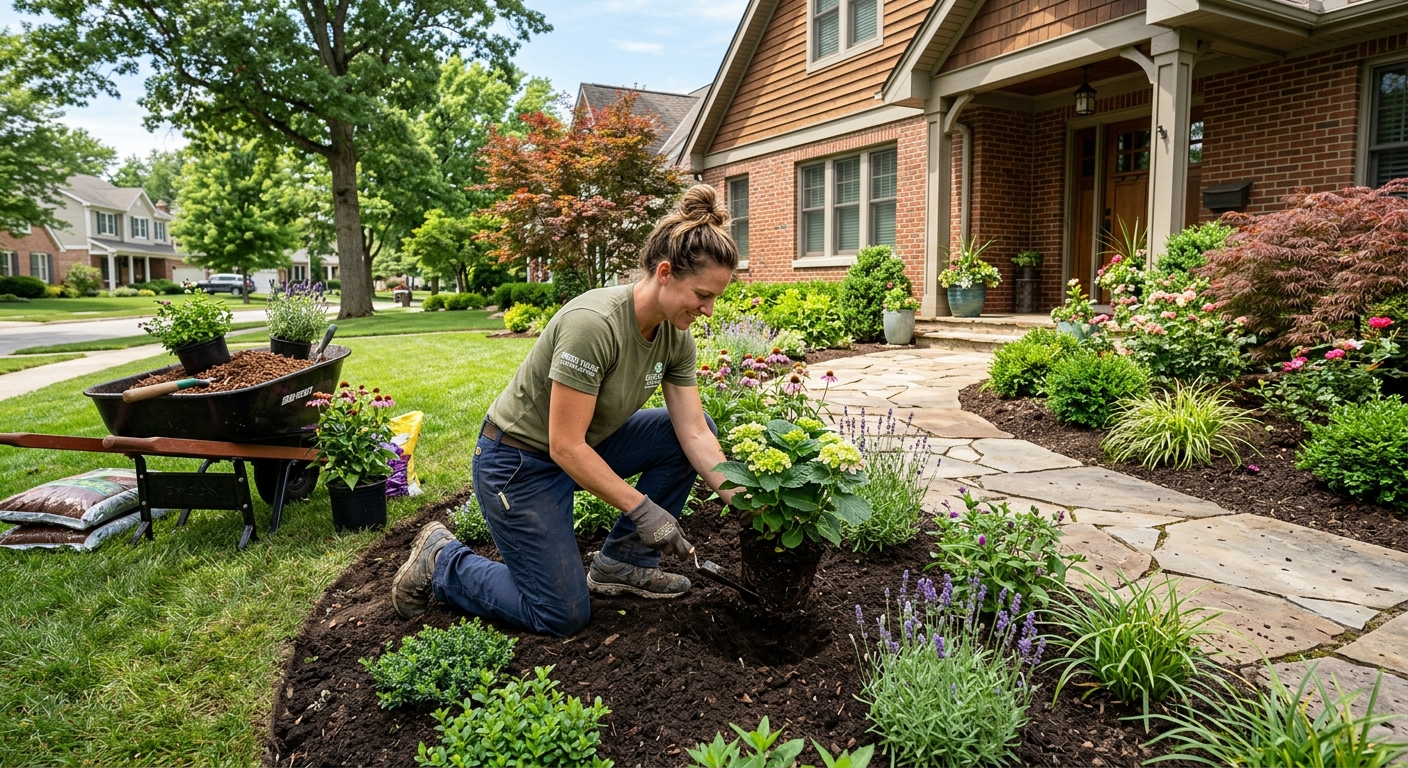
Landscaping options and costs in Hearst
Hearst is a small community where landscaping has to earn its keep—especially when many homes are single-detached (59.2% of dwellings) and homeowner households are the majority (60.7% own). With that ownership mix, it’s common to see repeat upgrades: entryway hardscapes, planting renewals, and practical drainage fixes that keep foundations dry and yards usable through the freeze-thaw seasons.
In the Northeast market conditions that affect Hearst, winters are long and the working season is compressed, so labour scheduling and mobilization premiums can show up in every quote. Freeze-thaw cycling also increases the importance of base prep and drainage detailing, which pushes hardscape and retaining-wall pricing toward the mid-to-upper end of typical bands. Plant availability can be narrower too: designs often need hardy, zone-appropriate choices rather than “showy” species that won’t reliably survive in cold continental conditions.
Contractor availability is often highest in the busier residential pockets around the town core, where driveway and walkway upgrades are common after renovations. If you’re comparing proposals, use a clear scope: turf area, drainage complexity, and whether you’re doing full build-outs (design-to-install) or single trades.
Below is a practical comparison of common landscaping options for Hearst, Ontario, so you can sanity-check your quotes before you book site visits.
| Service |
Description |
Season |
Price Range |
| Full landscape design and installation |
On-site design, layout, soil and grading plan, material selection, planting plan, and installation coordination (softscape + hardscape) |
Mid-late spring through early fall |
$8,000–$30,000 |
| Sod installation (supply, grade, lay, roll) |
Site grading, topsoil/sand amendments as needed, sod supply, installation, and rolling/establishment care |
Late spring to mid-summer |
$3,000–$9,000 |
| Lawn seeding (grade, seed, starter fertilizer) |
Final grade, seed mix, starter fertilizer, light raking, and establishment guidance |
Spring or early fall |
$1,800–$6,000 |
| Interlocking patio or walkway |
Excavation, base and compaction, edging, pavers, jointing sand, and drainage-friendly laydown |
Summer (weather-dependent) |
$6,000–$22,000 |
| Retaining wall (interlocking block) |
Block wall layout, excavate/compact base to frost-suitable depth, drainage stone, geotextile, and weep system |
Summer |
$6,000–$25,000 |
| Tree and shrub planting |
Site assessment, planting holes, amendment, staking where required, watering plan, and mulch |
Spring and early fall |
$1,500–$8,000 |
Prices are estimates only and vary by project scope, site access and material selection.
What affects the price of landscaping in Hearst
In Hearst, you can see the same landscaping project come back 30–50% apart in cost because the Northeast region’s constraints affect both what crews can build and how long it takes. Plant hardiness and frost timing set the working window; once frost protection, freeze-thaw-ready base prep, and drainage detailing are included, pricing swings quickly. In prairie-like cold interiors (often Zone 2–4 conditions), designs favour drought-tolerant, wind-resistant species and efficient irrigation zoning—whereas milder climates allow lush, layered palettes and longer installation seasons. Coastal conditions with a longer growing season can reduce establishment risk, but they still demand strong drainage where rainfall is heavy. Southern Ontario’s Zone 5–6 typically allows a more flexible planting schedule, but summer dry spells can still increase irrigation requirements.
Here are examples that commonly raise or lower cost in Hearst. First, older homes are more likely (72.2% were built before 1981) to have settled grades and buried drainage issues, so “simple” grading can become a drainage redesign. Second, a short frost-free window means crews must compact and protect bases correctly in a tight timeline; delays push labour rates and equipment time upward, especially for patios and blockwork. Third, yard size and scope matter: a modest refresh may land around $6,000–$22,000 for an interlocking walkway, but a full install with hardscape ties and planting can jump into the $8,000–$30,000 range because coordination and materials scale together.
When you compare quotes, insist on the same assumptions: square footage, base depth approach, drainage solution type, and whether irrigation is included. That’s usually where the biggest hidden cost differences come from.
| Price Factor |
Why It Matters |
Cost Impact |
| Yard size in sq ft — the primary cost driver for softscape |
More area means more topsoil, amendments, sod/seed, mulch and labour hours. |
Often the largest swing (linear pricing by coverage + time) |
| Grading and drainage work — slope corrections add significant cost |
Pooling near foundations requires regrading and sometimes structural adjustments. |
Can add major labour and machinery time |
| Drainage bed or French drain installation |
Freeze-thaw longevity depends on moving water away from foundations. |
Medium to high cost add-on depending on runs and tie-ins |
| Plant material tier — native shrubs vs. ornamental vs. mature specimen trees |
Mature trees cost more, take longer to place, and may require staking and protective measures. |
Can move a job from “refresh” into premium pricing |
| Hardscape vs. softscape ratio — walls and patios cost more per sq ft than lawn |
Block and paver systems require excavation, base, and compaction layers. |
High impact when adding patios/retaining walls |
| Irrigation system design and installation |
Cold climates benefit from zoned, efficient layouts; improper design increases failure risk. |
Medium to high, especially with control and zoning |
| Soil amendment and topsoil required |
Poor subsoil may need engineered topsoil blends or amendments for rooting. |
Low to medium, higher when import volumes are significant |
| Tree removal or stump grinding before new planting |
Removal adds equipment, disposal, and time before any base/planting can start. |
Medium to high depending on number and access |
Permits & regulations in Ontario
In Ontario, most landscaping work—like planting trees and shrubs, seeding or sodding, building garden beds, and installing standard softscape elements—typically does not require a permit. However, retaining walls can be the exception. Many municipalities require a building permit when a retaining wall exceeds a height threshold that’s commonly around 1.0 m (3.3 ft); some cases also involve engineered drawings or additional requirements depending on height, location, and soil conditions. If your project involves significant grading changes (especially where water flow will be altered toward neighbouring properties or storm connections), approvals may be required.
Before digging in Hearst, always get utility locates. That includes planting holes for trees, trenching for drainage/French drains, and digging footings or wall bases. It’s a safety and compliance step, and it also helps avoid costly delays if lines are present.
To verify a contractor’s standing in Ontario, follow a simple homeowner process: (1) confirm the contractor’s Ontario business details and credentials through the appropriate provincial tools and any trade-specific listings they provide; (2) request a current certificate of liability insurance—make sure it lists your address/project and the effective dates; (3) ask for proof of WSIB/WCB coverage (or a clear written explanation if they’re not required to carry it due to their situation); (4) get a clearance letter or confirmation documentation if applicable. A reputable crew will provide these quickly, before work begins.
Planning a landscape that thrives in Hearst's climate
To plan a yard that thrives in Hearst, Ontario, work with cold continental conditions—especially hardiness limits, wind exposure, and spring-to-fall frost risk—rather than treating landscaping like a “set and forget” project. Start with plant selection: choose native, zone-appropriate shrubs and perennials that handle winter dieback and recover reliably. In short-season climates (typical of Zone 2–3 performance expectations), winter injury is often the difference between a one-year “wow” and a five-year yard. Group plants by moisture needs and give them consistent mulch depth to moderate temperature swings.
Sod versus seed is another practical decision. Sod gives instant coverage, but it’s more expensive—often around 3–4x per sq ft than seeding—plus it needs correct prep and aftercare to root before cold weather tightens. For example, if you need a small front lawn repair and want fast curb appeal, sod may be justified. If you’re building long runs and can tolerate a slower establishment, seeding typically offers better value.
Drainage and grading are critical in Northeast-style freeze-thaw: keep water moving away from foundations to prevent pooling and basement dampness. For hardscape, base preparation must be built for the local frost line logic—thicker aggregate layers, proper compaction, and jointing materials that won’t heave. Finally, use low-maintenance strategies like groundcovers, mulched shrub borders, and durable perennials to reduce annual weeding and replanting while still looking intentional. In this water context, xeriscape-style designs (efficient irrigation zoning, drought-tolerant plants, and mulched beds) can reduce watering demands, and rain-garden pockets can help manage stormwater without expensive “overspray” watering.
| Element |
Climate Consideration |
Maintenance Level |
Price Band |
| Sod lawn installation |
Needs reliable establishment before early cold; grading and watering schedule are crucial in short seasons. |
Medium during first season; lower after rooting |
$3,000–$9,000 |
| Native perennial garden |
Durable in colder zones when planted with correct spacing and mulch for winter protection. |
Low after establishment; occasional spring cleanup |
$2,000–$7,500 |
| Mulched shrub border |
Mulch insulates roots from freeze-thaw; wind-hardy shrubs reduce winter burn and breakage risk. |
Low; simple topping once or twice per year |
$1,800–$6,000 |
| Interlocking stone patio |
Requires frost-ready base and drainage to prevent heaving and water trapping. |
Low; periodic joint sand checks |
$6,000–$22,000 |
| Retaining wall (block) |
Freeze-thaw stresses need a properly drained base and weep components behind the wall. |
Low; visual inspections and drainage performance checks |
$6,000–$25,000 |
| Drip irrigation system |
Zoning and efficient water delivery support drought-tolerant plans and reduce freeze-related stress from overwatering. |
Low once winterized; periodic line checks |
$1,200–$6,500 |
How to choose a landscaping contractor in Hearst
When hiring a landscaper in Hearst, start with compliance and coverage—then move to scope clarity. For Ontario licensing, ask for proof of registration/credentials relevant to their trade activities (and whether they subcontract specialized work like excavation or masonry). Request a certificate of liability insurance with the effective dates and confirm your project address is covered. Next, verify WSIB/WCB coverage: ask for proof (or a written, clear explanation when coverage isn’t required for their situation). A straightforward contractor will provide documentation without hesitation.
For pricing, get 2–3 itemised written quotes, not lump sums. You want labour and materials broken out: excavation and base materials, drainage components (geotextile, stone, pipe), pavers/block, topsoil/amendments, and planting costs. Read what’s excluded: disposal/haul-away, utility locates, tree removal, winter protection, irrigation winterization, and whether stump grinding is included. Ask whether permits (when required for retaining walls or significant grading) are handled by the contractor or by the homeowner.
Warranty matters in cold climates: confirm workmanship warranty length and whether it covers base settlement and water issues. Also ask about product/manufacturer warranty for plants and materials, and whether it’s transferable to you. Payment schedules should be conservative—never more than 10–15% upfront, and hold a portion until the job is complete and cleaned. Finally, request a start date and completion estimate in writing, along with a weather contingency plan.
- Ask for current insurance certificate and verify dates before signing.
- Confirm WSIB/WCB coverage (or documentation showing it’s not required).
- Require an itemised quote: labour, materials, equipment, and disposal.
- Get measurements in writing (sq ft for turf/stone, wall length/height, plant counts/species).
- Specify drainage approach (French drain vs. grading only) and tie-in location.
- Confirm base build-up details (aggregate depth, compaction method) for patios/walls.
- Ask about topsoil source and quality (import vs. existing material assessment).
- Clarify sod/seed timeline and responsibility for establishment watering.
- Ask who provides utility locates and when they’re done.
- Review the warranty terms for workmanship and materials separately.
- Check payment schedule: 10–15% max deposit; holdback until completion.
- Ensure cleanup and debris removal are included in the quote.
Common red flags in Hearst include contractors who won’t provide insurance/coverage documentation, quotes that are not itemised (no base depth, no drainage details, no disposal notes), vague start dates with no written timeline, requests for large deposits upfront, and promises of “anytime” planting or hardscape installation without accounting for frost-risk and weather windows.
Frequently asked questions — landscaping in Hearst
How do I prevent weeds in my Hearst garden?
Weed prevention in Hearst (and across Ontario) starts with the foundation: good soil prep and smart bed edging. In cold climates with a short growing season, you don’t want weeds to establish before mulch and planting fill in. First, remove existing weeds with root removal or controlled pulling before planting. Next, use a weed barrier only where appropriate (for example, under rock features) and rely on mulch in planting beds—typically 2–3 in. deep—so you still get oxygen and don’t trap moisture against plant crowns. Choose dense, hardy groundcovers to reduce bare soil. If you’re renovating turf areas, seeding or sod should be installed on proper grade; thin or uneven lawns invite weed pressure. For a practical budget reference, a basic tree and shrub planting typically falls around $1,500–$8,000, which is often enough to refresh bed structure so mulch stays effective year after year.
How do I design a low-water yard in Hearst?
A low-water yard in Hearst should be designed around drought-tolerant, wind-hardy plants, efficient irrigation zoning, and protecting soil moisture with mulch. Because cold regions can still have dry stretches and windy exposure, aim for a layered layout: mulched shrub borders, hardy perennials, and a few “structure” plants that don’t require constant water. Add compost and correct grading so water soaks in instead of running off. If you use irrigation, drip is usually more efficient than spray and lets you target root zones. Plan irrigation by zone: separate turf from beds, and avoid watering paths and hardscape. In Northeast-style conditions, efficient layouts matter because establishment failures happen quickly when the working season is short. Many homeowners pair this approach with either seeding for large areas or sod only where instant coverage matters most—sod projects commonly land around $3,000–$9,000 depending on area and prep.
How do I find a licensed landscaper in Hearst?
In Hearst, the best approach is to hire a contractor who can prove coverage and credentials before you sign anything. Ask for a certificate of liability insurance (with your address/project noted if possible) and verify that it’s current. Next, request proof of WSIB/WCB coverage—either a confirmation document or written clarification if they’re not required to carry it in their specific situation. Then, request an itemised written quote so you can compare apples to apples: labour, materials, drainage components, base prep details, and disposal. You should also ask whether they handle permits if a retaining wall triggers a threshold (commonly around 1.0 m in many Ontario municipalities). For safety, make sure they include utility locates before digging. Finally, check reviews and references, but don’t stop there—documentation and clear scope are the real indicators of a reliable landscaping contractor.
How much does landscaping cost in Hearst?
Landscaping costs in Hearst typically vary widely based on yard size, drainage complexity, and how much hardscape you add. For reference, a full landscape design and installation often lands in the $8,000–$30,000 range when grading, planting plans, and multiple components are included. Sod installation commonly ranges from $3,000–$9,000 depending on square footage and site prep. Interlocking patios and walkways usually fall around $6,000–$22,000 when excavation and proper base work are required. Retaining walls built with interlocking block are commonly $6,000–$25,000 because they need deeper, frost-suitable base preparation and proper drainage behind the wall. Tree and shrub planting projects typically sit around $1,500–$8,000 depending on the plant count and whether mature specimens are involved. If you want accurate pricing, ask for 2–3 itemised quotes with the same scope and measurements.
What plants thrive in Hearst's climate zone?
For Hearst, focus on hardy, cold-tolerant plants that can handle winter exposure and recover after freeze-thaw cycles. In Northeast cold-continental conditions (often performing like Zone 2–3), dependable choices usually include wind-tolerant shrubs and hardy perennials, plus trees suited to colder zones rather than tender “coastal” varieties. Aim for native or locally proven selections: they tend to root better with less fuss and are more resistant to long winters. Use mulch to moderate soil temperatures and protect root zones. When selecting trees and shrubs, match them to site conditions—sun vs. shade, wind exposure, and moisture level—rather than buying only by appearance. If you want a practical starting point, many homeowners budget $1,500–$8,000 for a well-planned tree and shrub planting, which allows enough variety to create structure while still keeping winter survival priorities front and centre.
Sod vs seed — which is better for a Hearst lawn?
In Hearst, sod is best when you need instant coverage and can commit to correct establishment care. It’s usually more expensive—often about 3–4x the per sq ft cost of seeding—because you’re paying for supply and full installation. Sod also requires the grade and soil base to be correct; otherwise it can lift or thin where water pools or where the subsoil is poor. Seeding is typically more budget-friendly and can work very well if your grade is right and the seed mix matches your conditions. In short-season climates, the key is timing: seeding in spring or early fall (as conditions allow) and watering consistently during establishment. If weeds are an ongoing issue, sod can help reduce bare spots quickly. As a pricing guide, sod projects commonly fall in the $3,000–$9,000 range, while seeding projects are often lower, especially for larger areas.