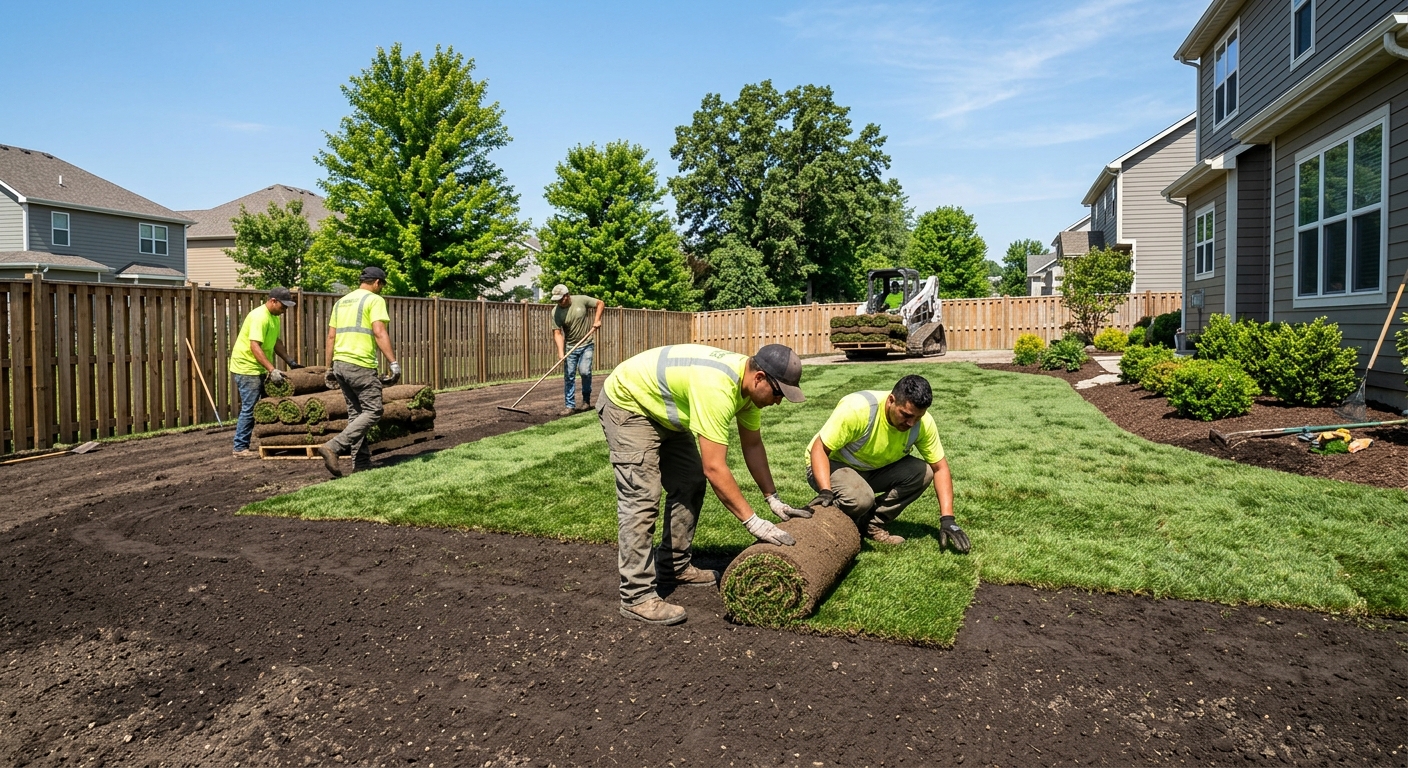
Landscaping options and costs in Richmond
Richmond, Ontario homeowners typically have a broad range of landscaping choices, from basic lawn refresh to full-yard redesigns with interlocking stone, drainage, and new planting. With a population of about 4,055 people (Statistics Canada, 2021 Census), the local market is smaller than Ottawa’s core, so demand often concentrates around established neighbourhoods and older housing pockets where yards need renewal. In many Richmond homes, the backyard is a key part of day-to-day living, which is why many owners invest in upgrading patios, walkways and plant beds rather than treating landscaping as “cosmetic.”
Pricing is shaped by Ottawa-area winter conditions (plant hardiness zones 4b–5a) and a pronounced freeze–thaw cycle that makes construction details—like granular base depth and drainage—cost more than you’d see in milder climates. Your working window is roughly May to October, and soil that’s too wet can delay sod, grading and any excavation. Contractors are also busier in the short season, so access, site preparation and how quickly materials can be delivered can swing the final figure.
In Richmond, trade demand is especially noticeable around older, mature home areas where foundations and walkways need reworking after years of spring pooling or uneven steps—commonly near the downtown core and along the residential streets feeding into main arterials. Below is a practical way to compare common scopes before you request itemised quotes.
| Service |
Description |
Season |
Price Range |
| Full landscape design and installation |
Concept + layout, grading/drainage plan, soil amendment, planting plan, hardscape and final install coordination |
May–October |
$15,000 – $45,000 |
| Sod installation (supply, grade, lay, roll) |
Site prep, topsoil/compaction, sod delivery and installation, rolling and initial watering guidance |
Late April–June (best) or early fall |
$2,500 – $7,500 |
| Lawn seeding (grade, seed, starter fertilizer) |
Minor grading, seed and starter fertilizer, light raking, and establishment care |
May–early July; also early September |
$1,500 – $5,500 |
| Interlocking patio or walkway |
Excavation, geotextile, granular base, leveling sand, edging and paving stones |
May–October |
$4,000 – $30,000 |
| Retaining wall (interlocking block) |
Block system, excavation, compacted granular base, drainage stone and weeping provisions |
May–October |
$6,000 – $28,000 |
| Tree and shrub planting |
Plant selection, soil amendment, digging, staking, mulching, and basic establishment care |
Spring and fall (spring preferred for establishment) |
$800 – $10,000 |
Prices are estimates only and vary by project scope, site access and material selection.
What affects the price of landscaping in Richmond
In Richmond and across the Ottawa region, it’s common to see quotes for the “same” landscaping job vary by 30–50%. The reason usually isn’t markup—it’s that each property has different constraints: soil condition, how far equipment must travel, how much drainage repair is actually required, and how much of the work can be done within the short frost-free window (roughly May to October). Labour availability also tightens in peak months, especially for hardscaping where crews are booked on multiple projects at once.
Our plant hardiness range (zones 4b–5a) and local frost dates drive both what can survive and how quickly work must be executed. Prairie regions (Zone 2–4) often need drought-tolerant, wind-hardy plant palettes and very specific soil preparation; coastal BC (Zone 7–8) can extend the growing season, but heavy rainfall makes drainage and base design still critical. In southern Ontario like Richmond, we have a moderate season with humid summers—plus occasional dry spells that increase irrigation planning costs, even when local water restrictions are less severe than in the drier BC interior.
Two examples that regularly change budgets here: first, clay-rich soils that hold water can force deeper base and more granular drainage than the homeowner expected, pushing interlocking and retaining wall budgets toward the mid-to-upper bands (for example, interlocking projects commonly sit in the $4,000–$30,000 range once proper base is included). Second, a lawn replacement can be cheaper with seeding ($1,500–$5,500), but if grading and compaction corrections are heavy, sod installation can become the better value choice because you’re buying speed and uniform coverage—often landing in the $2,500–$7,500 range depending on area and prep.
| Price Factor |
Why It Matters |
Cost Impact |
| Yard size in sq ft — the primary cost driver for softscape |
More square footage means more labour hours, soil, seed/sod, mulch, and materials |
Higher scope can move the job from low to mid price bands quickly |
| Grading and drainage work — slope corrections add significant cost |
Fixing ponding near foundations or walkways requires excavation, shaping, and re-compaction |
Often increases project cost by adding equipment time and granular material |
| Drainage bed or French drain installation |
Helps control subsurface water that contributes to soft soils and frost movement |
Can add major cost, especially where access is tight |
| Plant material tier — native shrubs vs. ornamental vs. mature specimen trees |
Hardiness, size at planting, and root-ball requirements vary widely in cost |
Switching tiers can double planting material budget in the same layout |
| Hardscape vs. softscape ratio — walls and patios cost more per sq ft than lawn |
Patios and retaining walls require deeper bases, block/paver costs, and more skilled labour |
Even a modest patio addition can shift totals toward mid-five-figure work |
| Irrigation system design and installation |
Design must suit clay soils, summer humidity, and practical controller coverage |
Typically adds cost, but can prevent plant loss and reduce seasonal rework |
| Soil amendment and topsoil required |
Cold-season performance depends on structure and drainage, not just “more topsoil” |
Bulk delivery and labour can raise costs substantially in clay-heavy yards |
| Tree removal or stump grinding before new planting |
Disposal, stump grinding time, and restoration of grades affect the whole plan |
Can add a standalone cost line and affect timeline |
Permits & regulations in Ontario
In Ontario, most typical landscaping and softscape work does not require a permit—planting beds, sodding, and most lawn work are generally handled under homeowner contracting rather than municipal permitting. For Richmond homeowners, the bigger “permit triggers” tend to come from hardscape and grading changes. Retaining walls above a height threshold—commonly around 1.0 m (3.3 ft) in many municipalities—often require a building permit and sometimes engineered drawings, particularly if site conditions are challenging or the wall is supporting significant soil loads. Also, changes to lot grading that alter how water drains toward neighbouring properties or storm sewer connections may require approval because drainage affects neighbouring lots.
Before digging for planting holes or wall footings, always ensure utility locates are completed. In practice, this means confirming where underground services run, so your contractor excavates safely and avoids service damage and delays.
To verify a contractor in Richmond (and anywhere in Ontario), do this step-by-step: (1) check Ontario licensing status and any applicable trade registration where required by the contractor’s work; (2) request a Certificate of Insurance for liability coverage and confirm it matches the project scope; (3) ask for WSIB/WCB coverage documentation if their work typically falls under those requirements; (4) verify the company’s clearance letter (where available) for the policy status; and (5) ensure the quote and contract show who is responsible for disposal and any required approvals.
Planning a landscape that thrives in Richmond's climate
Designing for Richmond means working with our zone 4b–5a realities: winter wind, deep ground freeze, and humid summers with spring saturation. The goal is a yard that looks full quickly, drains correctly after snowmelt, and stays intact after freeze–thaw cycles. Start with plant selection. Choose zone-appropriate, hardy species and build a layered structure of shrubs, perennials, and groundcovers so you’re not relying on only delicate plants. If you’re budgeting for establishment, native and proven performers usually require less long-term watering and less winter protection than marginal cultivars.
For turf, decide between sod and seeding based on time and condition. Sod gives instant coverage but costs about 3–4x more per sq ft than seeding because you’re paying for live product, transport, and careful installation. Seeding is budget-friendlier, typically aligning with the $1,500–$5,500 lawn band when grading is minor, while sod often lands around $2,500–$7,500 once you include prep.
Drainage and grading are what protect foundations and prevent pooling. In Ottawa-area clay soils, even small slope mistakes can cause soggy zones that weaken grass and increase frost heave around steps and patios. That’s why hardscape base prep matters: retaining walls and patios need deep, compacted granular bases that extend below the vulnerable frost zone and include proper drainage. For low maintenance, use mulch, select tough perennials, and add rain-garden pockets or xeriscape-style elements where you can capture runoff—especially near downspouts—to reduce future irrigation demands without sacrificing curb appeal.
A concrete example: if you’re deciding between seeding ($1,500–$5,500) and sod ($2,500–$7,500), the extra spend is justified when you need quick stabilization to handle foot traffic this season or when bare patches would otherwise turn into mud tracking after spring melt.
| Element |
Climate Consideration |
Maintenance Level |
Price Band |
| Sod lawn installation |
Installs quickly within May–October; needs reliable establishment watering through summer humidity |
Medium (initial watering, first-cut timing, weed watch) |
$2,500 – $7,500 |
| Native perennial garden |
Zone-appropriate survival through winter; adapts to spring saturation better than tender ornamentals |
Low to medium (spring cleanup, mulching, occasional dividing) |
$1,500 – $6,500 |
| Mulched shrub border |
Mulch insulates roots during freeze–thaw and improves moisture stability in clay soils |
Low (weed suppression, periodic replenishment) |
$1,000 – $7,000 |
| Interlocking stone patio |
Requires deep, well-compacted base to resist frost heaving and settling |
Low (occasional leveling checks and joint maintenance) |
$4,000 – $30,000 |
| Retaining wall (block) |
Needs drainage behind the wall to prevent water pressure and freeze damage |
Low (inspection and minor joint maintenance) |
$6,000 – $28,000 |
| Drip irrigation system |
Delivers targeted water during humid summers and helps control watering after dry spells |
Low to medium (seasonal adjustments, filter checks) |
$1,200 – $6,000 |
How to choose a landscaping contractor in Richmond
Choosing the right contractor in Richmond starts with verification. First, confirm Ontario licensing for the type of work they actually perform, and don’t rely on verbal assurances—ask for the credentials and check them online if the trade has a public registry. Next, require proof of liability insurance and verify the policy certificate aligns with the project address and dates. For coverage, ask whether they hold WSIB/WCB coverage where applicable; reputable contractors can provide a clearance letter or documentation showing active status. This protects you if a worker is injured or if damage occurs during excavation for drainage, patios, or retaining wall footings.
Get 2–3 written quotes that are itemised—not lump sums. You want a labour and materials breakdown, including what’s included for soil disposal, excavation depth, geotextile, drainage stone, compacted base thickness, and finishing. Scope clarity matters: ask if permits are included (when required), whether topsoil and amendment are specified by depth and quantity, and who handles debris hauling. A good warranty should cover workmanship for a defined length (for example, base and settling issues) and clearly separate product/manufacturer warranties. Also check if warranties transfer when you sell the home.
Payment schedule should be conservative. Avoid paying more than 10–15% upfront, and request a holdback until the job is complete and touch-ups are finished. Finally, insist on a start date and completion estimate in writing—Ontario’s freeze–thaw means crews sometimes finish in phases, so you need a clear timeline.
- Ask for at least two references from Ottawa-area or Richmond-area projects with similar scope.
- Request an itemised quote showing excavation, base materials, drainage components and finishing.
- Confirm liability insurance and verify the certificate details match your address and project dates.
- Provide WSIB/WCB documentation or a clearance letter where applicable.
- Make sure turf and planting specs are written (seed type, sod variety, topsoil depth, amendment plan).
- Confirm grading targets and drainage intent (how water will move away from foundations).
- Verify what’s included for hauling/disposal and whether extra dump fees are billed.
- Ask how winter protection is handled for newly planted material if work extends into late fall.
- Ensure a workmanship warranty is stated for base work, settling, and installation defects.
- Check product warranties for terms and whether they’re claimable through the manufacturer.
- Keep payment structured: 10–15% upfront maximum, with holdback until final acceptance.
- Get start/completion dates and understand weather-related schedule contingencies in writing.
Concrete red flags I see around Richmond: (1) quotes that don’t specify base depth/compaction or drainage components for patios and retaining walls; (2) “cash discount” offers that avoid paperwork, warranties, or proof of insurance; (3) very low pricing compared with two other itemised quotes without an explanation of reduced scope; (4) vague timelines with no written start/completion estimate; and (5) no clarity on who pulls permits when retaining walls or grading changes require approvals.
Frequently asked questions — landscaping in Richmond
What is xeriscaping and does it suit Richmond?
Xeriscaping is a water-wise landscaping approach that reduces irrigation demand by using drought-tolerant plants, efficient layouts, and soil/planting practices that retain moisture where needed. In Richmond, it can suit the yard—especially in high-sun areas near driveways—because summer humidity doesn’t always prevent dry spells, and clay-heavy soils can still become uneven (wet then dry). The key is not to copy arid-climate plant lists; instead, select hardy zone-appropriate plants for zones 4b–5a and combine them with good drainage and mulching. If you’re comparing options, a low-maintenance rain-garden or mulched planting zone is often a smart middle ground within typical planting budgets like $800 – $10,000, depending on plant size and site prep.
How do I plan a low-maintenance yard?
For Ontario yards in Richmond, low maintenance comes from preventing repeat problems: poor drainage, weak soil structure, and plant choices that struggle in cold winters. Plan for layered planting (shrubs + perennials + groundcovers) so weeds don’t have bare soil to colonize. Add a consistent mulch strategy (replenish a couple times per season cycle) and use edging to keep grass from invading beds. For turf, seeding can be less labour-intensive in the short term, but sod reduces ongoing patch repair when the site is already messy; that trade-off often shows up in budgets where seeding falls around $1,500 – $5,500 and sod around $2,500 – $7,500. Finally, consider smart irrigation zoning (or drip for beds) so you only water where plants need it—especially after spring melt when saturation is high.
How deep should a retaining-wall base be for local frost?
For a retaining wall in Richmond, the base needs to be set with frost protection in mind, but depth isn’t one-size-fits-all—it depends on wall height, soil conditions, and how drainage is handled behind the wall. In our climate with freeze–thaw cycles, a reputable contractor will excavate to an engineered or system-recommended depth and then install a compacted granular base (plus drainage stone and proper weeping provisions where required). The “why” is simple: water behind the wall and insufficient base compaction can lead to movement during winter freeze. If your wall is nearing or exceeding the typical permit height threshold (often around 1.0 m / 3.3 ft in Ontario municipalities), confirm permit and engineered requirements early so the foundation/base depth is designed correctly rather than guessed.
How much does professional landscape design cost?
Professional landscape design costs vary depending on how detailed the plans are (concept-only vs. full design package with planting and hardscape details). In the Ottawa region, overall design and installation commonly lands in a broad range, and comprehensive projects are frequently within $5,000 – $50,000 when you include design, materials, and installation coordination. If you’re planning only a layout refresh—like beds, tree/shrub selection, and basic grading direction—you may see the design portion separate, but many Richmond homeowners roll design into the full build so the installer can match the plan to site constraints and drainage needs. Ask for a written scope: what the drawings include (dimensions, plant quantities, hardscape elevations) and how changes are priced once work starts.
How do I compare landscaping quotes?
To compare quotes fairly in Richmond, insist on itemised scopes and consistent specs. A “low bid” is often only low because it omits base preparation, drainage, soil depth, or disposal. Compare: excavation depth, geotextile use, base material type and compaction, drainage provisions (especially for patios and retaining walls), topsoil and amendment quantities, and whether irrigation is included. Also compare what’s excluded: permits (when required), stump grinding, grading corrections, and how changes are handled. If you want an easy benchmark, check whether the hardscape portion sits within local expectations like $4,000 – $30,000 for an interlocking patio/walkway, and planting sits within $800 – $10,000. Finally, confirm warranty language and the payment schedule so you’re not left paying for work that isn’t properly finished.
How long does a landscaping project take in Richmond?
Timelines in Richmond are driven by the frost-free working window (roughly May to October) and by how much excavation and base-building is required. Smaller projects like tree and shrub planting can often be done in a day to a few days, depending on access and quantities. Sod installs can be quick once grading is ready, but they’re sensitive to moisture and weather. Hardscaping and retaining-wall work usually takes longer because base prep, compaction, drainage installation and curing/settling checks all add time; a patio can take several days of production plus extra time if base materials need adjustment. For comprehensive projects (design + grading + planting + multiple hardscape elements), plan on multiple phases across weeks. A written start date and completion estimate is essential because rain delays can push excavation and soil work.