Landscaping options and costs in Port Rowan
Port Rowan is a small community on Lake Erie with plenty of backyards where you can actually enjoy the work—especially when homes are spaced in a way that leaves room for softscape. With a population of 1,102 (Statistics Canada, 2021 Census), there’s less contractor competition than in larger cities, so scheduling can matter as much as price. At the same time, Southern Ontario’s housing stock is often mature enough that many yards need regrading, edging repairs, and refreshed planting beds before anything “looks new.”
In the Toronto economic region, landscaping costs are shaped by freeze–thaw cycles and the clay/fill soils common around the Great Lakes. Those conditions increase labour and material demands for patios, steps, and retaining walls: you’re typically paying for deeper granular bases, better compaction, and drainage detailing to keep everything stable over multiple winters. The growing season is still workable—roughly May to October—but plant selection must tolerate winter lows around –23 to –18°C (hardiness zones 6a–7a), and crews plan around wet ground in spring to avoid rutting.
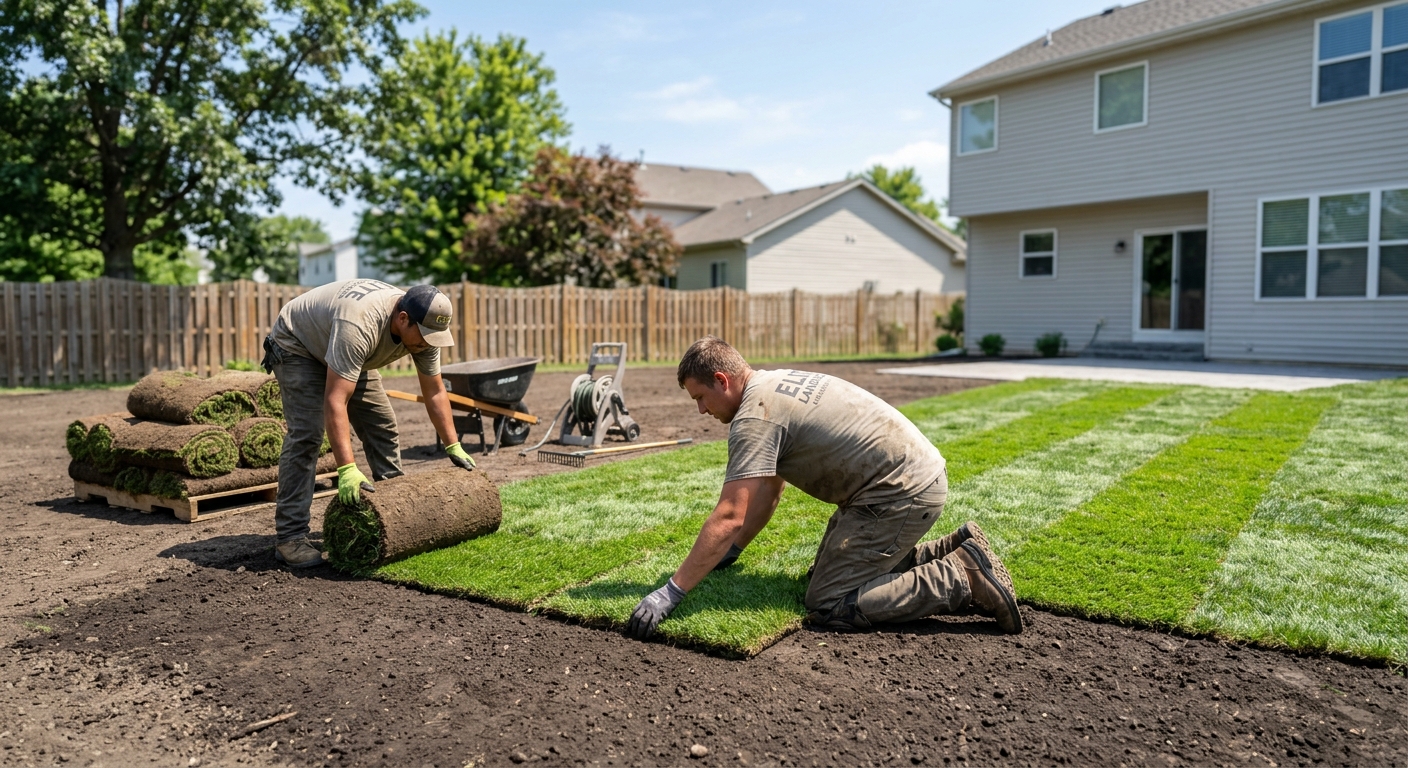
In Port Rowan, trade activity is especially common around the core residential streets where lots are older and lots of properties are due for curb upgrades—think along the main commercial/residential approach roads near the harbour area. If you’re comparing options, it helps to anchor expectations with current price bands before you talk to a designer or installer.
Below is a practical snapshot of typical ranges to help you compare quote line-items.
| Service |
Description |
Season |
Price Range |
| Full landscape design and installation |
Site walk, concept + grading/drainage plan, plant palette, hardscape layout, installation of softscape and hardscape in one project |
May–October (design often scheduled earlier) |
$8,000–$40,000 |
| Sod installation (supply, grade, lay, roll) |
Light grading/leveling, soil prep, topsoil or compost amendment, sod supply and installation, starter fertilizer, roll and first watering plan |
Late April–October (best results mid-spring to early fall) |
$2,500–$8,000 |
| Lawn seeding (grade, seed, starter fertilizer) |
Final grading, seed/soil contact, starter fertilizer, seed application, light topdressing if required |
April–early July and late August–September |
$1,800–$5,500 |
| Interlocking patio or walkway |
Excavation, geotextile, compacted base, leveling sand, edge restraints, interlocking brick/pavers, cutting and finishing |
May–October |
$6,000–$30,000 |
| Retaining wall (interlocking block) |
Footing/granular base, block system, drainage stone + weep holes where needed, backfill compaction, landscape re-levelling |
May–October |
$10,000–$28,000 |
| Tree and shrub planting |
Soil loosening, planting, staking as needed, mulch rings/beds, first-season care guidance |
April–June and September–October |
$800–$6,000 |
Prices are estimates only and vary by project scope, site access and material selection.
What affects the price of landscaping in Port Rowan
In Port Rowan, quotes for the same “looking” job can swing by 30–50% because the scope that drives cost is often hidden until crews start measuring and digging—especially with freeze–thaw soils, drainage needs, and how many existing features must be removed or rebuilt. Toronto-area work is priced around a longer list of field requirements: granular base depth, compacted subgrades, and drainage detailing that protects both foundations and hardscape. When you compare bids, ask what each contractor is including for excavation, drainage, and soil prep—not just the visible stones and plants.
Climate and season constraints also change what’s feasible. In Southern Ontario (zones 6a–7a), hardy trees and perennials can succeed, but installation windows still depend on wet clay and spring ground conditions. By contrast, Prairie regions (zone 2–4) push designs toward drought-tolerant, wind-hardy plants and simpler palettes because the working season can be shorter. Coastal BC can support lush planting palettes with fewer winter casualties, but heavy rain means drainage still matters—often more for staying dry than staying warm. In Port Rowan, heavy freezes create structural cost drivers: retaining walls, patios and steps need deeper, stable bases and proper drainage to prevent movement and failure.
Two concrete examples: (1) if your yard needs regrading to fix pooling near a garage or foundation, excavation and import topsoil can quickly add thousands—often moving an “$8,000 landscape refresh” toward the higher end when drainage beds are included. (2) if you’re switching from seeding to sod for instant coverage, the lawn portion alone commonly lands in the “$2,500–$8,000” band depending on square footage and site prep. Local housing age matters too—older lots with compacted fill may require more topsoil and subgrade correction before anything settles, adding cost without changing the “look” in photos.
| Price Factor |
Why It Matters |
Cost Impact |
| Yard size in sq ft — the primary cost driver for softscape |
More area means more topsoil prep, edging, seed/sod quantity, and labour hours |
Often drives the biggest variance across quotes |
| Grading and drainage work — slope corrections add significant cost |
Pooling or poor runoff forces excavation and re-laying of grades for foundations and walkways |
Can add several thousand dollars on clay sites |
| Drainage bed or French drain installation |
Subsurface drainage protects patios, walls, and plant roots during spring melt |
Material + labour increases typically noticeable in total bid price |
| Plant material tier — native shrubs vs. ornamental vs. mature specimen trees |
Mature stock is heavier, more expensive, and may require bigger equipment |
Can move a planting job from a lower to mid range quickly |
| Hardscape vs. softscape ratio — walls and patios cost more per sq ft than lawn |
Pavers/block systems require excavation, base, compaction and careful finishing |
Raises costs when patios/retaining walls dominate the scope |
| Irrigation system design and installation |
Even simple zones require trenching, backflow protection considerations, and head layout |
Adds cost but can reduce maintenance and plant losses |
| Soil amendment and topsoil required |
Clay fill and compacted subgrade often need compost/topsoil for root establishment |
Importing material is a common “quote difference” |
| Tree removal or stump grinding before new planting |
Stumps affect planting locations and require disposal/landscape clearing |
Often increases scope beyond what homeowners expect |
Permits & regulations in Ontario
In Ontario, most garden and yard work—like planting beds, sodding, seeding, mulching, and typical softscape installation—generally does not require a permit. Where permits can come into play is with structural changes or drainage/grading impacts. For example, retaining walls above a height threshold (commonly around 1.0 m / 3.3 ft, depending on the municipality) often require a building permit and sometimes engineered drawings. Also, significant changes to lot grading that alter how water drains toward a neighbour or a storm connection can trigger approvals.
Before any digging (even for small planting holes or wall footings), contractors should arrange utility locates so you don’t hit buried lines. And while Port Rowan follows Ontario water-use rules, it’s still smart to confirm any local irrigation or water-use bylaws for your specific property—especially during drought periods in Southern Ontario summers.
To verify a contractor properly, Port Rowan homeowners should do this step-by-step:
- Ask for proof of business registration and confirm they operate as required for landscaping contracting in Ontario (you can also verify through the relevant business registry listings).
- Request a current certificate of insurance (liability) showing adequate coverage and your address/property listed as applicable.
- Confirm they carry WSIB (for workers) and be able to show clearance or account documentation as applicable.
- For work involving heavy grading or excavation, confirm whether their crew provides equipment and disposal and that it’s included in the quote.
- Get everything in writing: scope, exclusions, warranty terms and schedule.
Planning a landscape that thrives in Port Rowan's climate
Planning for Port Rowan’s climate means choosing plants and building details that work with winter cold, humid summers and spring melt. Your hardiness zone (6a–7a) supports a wide range of hardy trees and perennials, but the yard still has to handle freeze–thaw movement. That’s where drainage and soil prep matter as much as what you plant.
1) Plant selection: focus on native and zone-appropriate species that tolerate cold snaps and return reliably. Layer in mulch and add winter interest with shrubs that hold structure. 2) Sod vs. seed: sod gives instant results, but you’ll pay a premium—often roughly 3–4x per sq ft compared to seeding once you include proper prep. For a small “front step to curb” touch-up, sod can be justified if you need quick curb appeal; for a larger lawn rebuild, seeding usually stretches budget better.
3) Drainage and grading: Toronto-area clay and fill often hold water, so grading toward a safe outlet plus clean drainage detailing helps prevent pooling and foundation moisture. 4) Hardscape base preparation: patios and paths need properly compacted granular layers designed for the local frost environment to reduce settlement and heaving.
5) Low-maintenance strategies: groundcovers, mulched borders, and durable perennials reduce annual upkeep. For water-smart options, consider rain gardens in low spots and xeriscape-inspired planting (grouping drought-tolerant species) where summer dry spells are common in Southern Ontario.
As a dollar example: if you’re deciding between a seeding approach and a sod approach, the lawn portion typically sits in the $2,500–$8,000 range for sod depending on area and prep. If your yard is already well-drained and level, seeding can often be the better value; if you need immediate coverage for curb appeal during a busy home-selling season, sod is easier to justify.
| Element |
Climate Consideration |
Maintenance Level |
Price Band |
| Sod lawn installation |
Needs consistent moisture establishment through warm periods; avoids thin winter lawns when laid in suitable windows |
Medium (watering/monitoring first season) |
$2,500–$8,000 |
| Native perennial garden |
Hardy in zone 6a–7a; tolerates winter cold when mulched and planted in well-drained soil |
Low (weeding and seasonal trimming) |
$1,200–$5,500 |
| Mulched shrub border |
Mulch buffers freeze–thaw and reduces moisture swings in clay soils |
Low to medium (refresh mulch, prune) |
$900–$4,000 |
| Interlocking stone patio |
Freeze–thaw requires correct base and compaction to reduce heaving |
Low (occasional joint maintenance) |
$6,000–$30,000 |
| Retaining wall (block) |
Backfill compaction and drainage behind the wall protect against winter water expansion |
Low (inspection after heavy winters) |
$10,000–$28,000 |
| Drip irrigation system |
Improves water efficiency during summer dry spells; supports deep watering for perennials |
Medium (seasonal adjustments/checks) |
$1,800–$7,500 |
How to choose a landscaping contractor in Port Rowan
Start by verifying insurance and worker coverage before you compare pricing. In Ontario, reputable landscaping contractors can provide documentation quickly: ask for their liability insurance certificate and ensure coverage is current and includes your address or notes “certificate holder” if applicable. For workers on site, confirm WSIB coverage and request a clearance letter or proof of account status (contractors should be able to show this upon request). For any excavation-based work—especially retaining walls and patio bases—confirm they’re prepared for proper site protection and that their equipment and crew are covered.
Next, request 2–3 itemised written quotes, not just a lump sum. The best quotes break labour and materials line-items: excavation depth, base materials, drainage components, plant list with sizes, sod/seed quantity, and disposal. Carefully read what’s excluded—often, one contractor will say “includes removal” and another leaves it out, or one will include topsoil and the other only includes grading.
Make sure warranties are clear: ask for the workmanship warranty length, whether it covers rework for settlement/heaving, and whether plant replacement is included for the first season. Also ask about the product/manufacturer warranty and whether it’s transferable to you as the homeowner.
For payment schedule, don’t pay more than 10–15% upfront. Hold back the balance until completion and walk-through. Get the timeline in writing, including the start date and expected completion window, since Port Rowan spring ground can delay crews.
- Provide WSIB proof and a current liability insurance certificate.
- Give a detailed plant/material list with sizes and quantities.
- Itemize excavation, base depth, and drainage components (not just “prep”).
- Confirm disposal/removal of excess soil and old material in writing.
- State the warranty terms for workmanship and plant replacement.
- Use a clear payment schedule with a small upfront deposit.
- Include a start date and completion estimate in the contract.
- Show how they handle changes (change orders with pricing).
- Confirm utility locate responsibility and timing before digging.
- Clarify what “seasonal care” or first-season watering is included.
- Ask how they prevent weed regrowth before planting beds (fabric/mulch approach).
- Share before/after photos of similar Port Rowan yards (clay/drainage experience).
Red flags to watch: vague scope with “allowances” only, missing insurance/WSIB paperwork, refusal to provide an itemised quote, asking for large deposits up front, and promises that ignore frost-proof base requirements for patios/steps in Southern Ontario.
Frequently asked questions — landscaping in Port Rowan
What trees grow best in Port Rowan's climate zone?
In Port Rowan and across Southern Ontario, you want trees that tolerate zone 6a–7a winter lows (often around –23 to –18°C) and handle humid summers. Common, reliable choices in our work include serviceberry (Amelanchier), white pine (Pinus strobus) for structure, and smaller ornamental options like Japanese tree lilac (Syringa reticulata types) where space allows. For shade and longevity, many homeowners do well with hardy selections such as sugar maple or other cold-hardy maples (subject to your soil and drainage), plus disease-tolerant options that fit your yard’s sunlight. If you have heavier clay or frequent pooling, focus on planting location and drainage first—watering stress in summer can cost more long-term than the difference between tree tiers (Statistics Canada, 2021 Census).
How much does sodding a yard cost in Port Rowan?
Sodding in Port Rowan typically falls into the $2,500–$8,000 range, depending mostly on lawn square footage and how much prep the site needs. If your yard has decent grade and soil, the job stays closer to the lower end. If you’re dealing with compacted fill, low spots, or drainage corrections, costs rise because the contractor must excavate, amend soil, and re-grade before the sod goes down. Timing also matters: spring and early fall reduce establishment risk compared with deep summer heat. For a yard that needs quick curb appeal, sod is often worth it; for larger areas, seeding can be a budget-friendly alternative when you can wait for full density.
How do I prevent weeds in my Port Rowan garden?
Weed prevention is 80% site prep and 20% maintenance. In Port Rowan’s clay soils, the key is to remove existing weeds properly (including root systems), loosen and amend the bed so plants establish quickly, and avoid leaving bare soil exposed. A good approach is landscape fabric only where appropriate (and not over deep planting areas where it can hinder future plant growth), then use a thick mulch layer—often 2–3 inches—renewed each season. Spacing matters too: crowded plants shade out weeds. If you’re replacing an old bed near a lawn edge, install edging to stop grass encroachment. Finally, plan one annual spring weeding session before perennials fully leaf out—this prevents weeds from setting seed.
How do I design a low-water yard in Port Rowan?
You can design a low-water yard in Port Rowan by focusing on planting choices and how you manage moisture in summer. Even though Southern Ontario isn’t as dry as the Prairie provinces or dry interior BC, irrigation needs can still spike during hot, humid stretches. Start with zone-appropriate perennials and shrubs, grouped by sun and drainage so plants don’t “compete” for water. Add 2–3 inches of mulch to reduce evaporation from clay-based yards. Where you have a low spot that holds water in spring but dries in summer, a rain garden with properly designed soil mix can help manage runoff and reduce watering losses. If you want the biggest payoff, consider targeted drip irrigation for beds instead of sprinkler coverage. This keeps costs predictable during installation and helps plants establish more consistently through the season.
How do I find a licensed landscaper in Port Rowan?
When hiring in Port Rowan, verify more than just experience—confirm insurance and worker coverage before you sign. Ask for a current certificate of liability insurance and confirm it covers your property/address. Then request proof of WSIB coverage (or a clearance letter/account documentation as applicable). You should also check that the contractor’s business details are verifiable (a reputable firm won’t hesitate to share administrative information). For the best comparison, ask for 2–3 itemised written quotes with labour and materials breakdowns, and confirm what’s included for disposal, topsoil, drainage work, and any permit needs. For structural items like retaining walls above common municipal thresholds (often around 1.0 m / 3.3 ft), the contractor should explain whether a building permit is required and who pulls it.
How much does landscaping cost in Port Rowan?
Landscaping costs in Port Rowan generally land within the broader Toronto-market bands, but your site conditions can push the final number up or down. A full landscape design and installation is commonly estimated in the $8,000–$40,000 range depending on whether you’re mainly updating planting beds, adding a patio, or rebuilding grading and drainage. Lawn-only work like sod typically sits in the $2,500–$8,000 range. Retaining walls and more intensive hardscaping tend to be priced from mid-range to higher depending on wall length, base depth, and drainage behind the wall. If you have clay fill and freeze–thaw exposure near foundations, budget for proper excavation and drainage detailing—this is usually what protects your investment through winter.