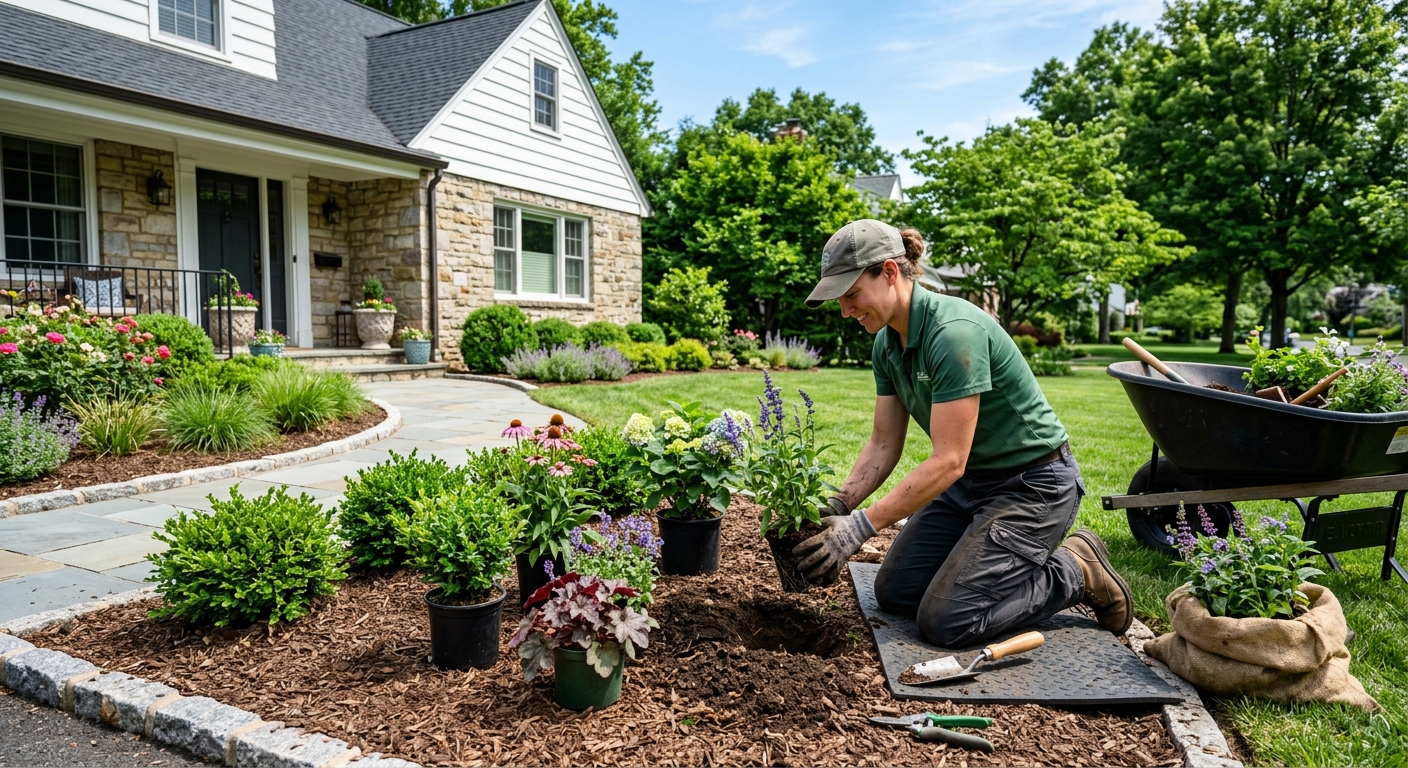
Landscaping options and costs in Petrolia
Petrolia homeowners typically have a lot to consider before they pick materials and lock in a schedule, especially with the town’s housing mix and yard sizes. In Petrolia, single-detached houses make up 82.3% of dwellings, which usually means you’re working with meaningful ground area (and often older property infrastructure) when you upgrade landscaping. Just as important, 79.1% of households are owner-occupied (Statistics Canada, 2021 Census), so many clients are willing to invest upfront for curb appeal, durability, and lower long-term maintenance. Median household income in the area is about $86,000 (Statistics Canada, 2021 Census), which strongly influences how most projects are scoped—more often focused on “high-impact” zones like entryways, drainage correction, and small hardscape features rather than trying to rework everything at once.
In Windsor–Sarnia (Petrolia’s broader economic area), hardy plant choices matter because conditions typically sit in Canadian hardiness zones 6b–7b. You get a practical planting window from about May to October, with frost settling in late October—long enough for most installations, but not so long that companies can ignore frost-heave prevention. Freeze–thaw cycles still stress retaining wall bases and hardscape bedding, so engineered base prep and proper drainage add cost, especially where clay soils hold water. Contractor availability is also steadier than in shorter-season regions, so you may see tighter pricing when projects are scheduled in late spring; demand is often higher around curb-appeal seasons in neighbourhoods such as the downtown and residential corridors where many older, pre-1981 homes still need foundation-area drainage and refresh planting.
Below is a quick comparison of common landscaping options in Petrolia to help you benchmark your quote before you request itemized pricing.
| Service |
Description |
Season |
Price Range |
| Full landscape design and installation |
Site walk, grading/drainage plan (if needed), plant layout, sod/seed, mulch/bed prep, and hardscape where applicable |
May–October |
$8,000–$35,000 |
| Sod installation (supply, grade, lay, roll) |
Topsoil/grade correction, base prep, sod supply, laying, rolling, starter fertilizer |
Late April–September |
$2,500–$9,000 |
| Lawn seeding (grade, seed, starter fertilizer) |
Light grading/seedbed prep, blend selection for sun/shade, starter fertilizer, covering as needed |
April–October |
$1,400–$5,500 |
| Interlocking patio or walkway |
Excavation, base stone, compaction, edging, interlocking stone or pavers installation |
May–October |
$6,000–$18,000 |
| Retaining wall (interlocking block) |
Excavation, engineered base/blocks (where required), drainage system behind wall, wall caps if applicable |
May–October |
$6,000–$40,000 |
| Tree and shrub planting |
Bed shaping, amendments, plant supply (size/species), staking, mulch ring, watering plan |
April–October |
$1,500–$10,000 |
Prices are estimates only and vary by project scope, site access and material selection.
What affects the price of landscaping in Petrolia
In Petrolia and across the Windsor–Sarnia area, two homeowners can receive quotes that differ by 30–50% for what sounds like the “same” landscaping scope. The gap usually comes down to site conditions (especially clay and drainage), the frost-resistant construction needed for hardscapes, and how much labour it takes to prepare a stable base. Even with Ontario’s solid contractor availability during the May–October installation season, crews price risk—if excavation uncovers poor soil, the base requires more stone, or drainage work needs more tie-in options, costs rise quickly.
Hardiness zone 6b–7b and the late April/early May typical last frost matter because they define what can be installed reliably and when. In Prairie regions (Zone 2–4), shorter seasons force more drought- and cold-tolerant plantings and tight scheduling; retaining wall bases often must be deeper and more robust to survive harsher freeze–thaw. By contrast, coastal BC (Zone 7–8) can support broader palettes and longer growing windows, but heavy-rain drainage design becomes the big cost driver. In the dry interior of BC and in parts of Alberta, water restrictions push irrigation and plant choices toward efficient systems. In Southern Ontario like Petrolia (Zone 6–7), you still need summer irrigation planning during drier spells, but you’re balancing it with winter durability and reliable establishment.
Two concrete Petrolia examples: (1) A small grade correction near a driveway might add $1,000–$3,000 if we need to rework drainage and bring in proper base material; (2) upgrading from sod to seed can dramatically change the bill—sod in the $2,500–$9,000 band may cost far more per sq ft than seeding, but it can be justified if you need “instant coverage” before a busy summer or if weed pressure is already high. Also, many homes in Petrolia were built before 1981 (55.1% of dwellings), which often means mature trees, older drainage patterns, and sometimes foundation-area grading challenges that increase excavation and plant protection time. When the scope is broad enough to enter the full-project bracket—often around $8,000–$35,000—design work and sequencing (what to install first, and how to stage equipment access) becomes a major part of the price.
| Price Factor |
Why It Matters |
Cost Impact |
| Yard size in sq ft — the primary cost driver for softscape |
Most costs scale directly with area: excavation, topsoil, sod/seed, mulch, and plant spacing |
Higher area can move you into the $8,000–$35,000 full-landscape band |
| Grading and drainage work — slope corrections add significant cost |
Fixing pooling or redirecting water away from foundations and walkways requires time and material |
Can add thousands if excavation and hauling are needed |
| Drainage bed or French drain installation |
Clay soils in many areas hold water; proper drains reduce long-term heaving and plant loss |
Typically increases the project total more than many homeowners expect |
| Plant material tier — native shrubs vs. ornamental vs. mature specimen trees |
Larger nursery stock and rare cultivars cost more and require extra labour for proper placement |
Mature trees can push the job upward within the $1,500–$10,000 planting range |
| Hardscape vs. softscape ratio — walls and patios cost more per sq ft than lawn |
Patios and retaining walls need base stone, compaction, edging, and sometimes engineered considerations |
Shifts estimates toward the $6,000–$40,000 retaining/hardscaping band |
| Irrigation system design and installation |
Zones, water sourcing, trenching depth, and controller hardware affect labour and parts cost |
Often adds significant cost but reduces watering effort and plant failures |
| Soil amendment and topsoil required |
Poor structure or contaminated/compacted soil requires amendments, organic matter, and sometimes removal |
Can raise costs if multiple truckloads are needed |
| Tree removal or stump grinding before new planting |
Access and root/soil disturbance can require additional excavation and disposal |
May re-tier the whole project scope and timeline |
Permits & regulations in Ontario
In Ontario, most typical residential landscaping work—like planting, seeding, and sodding—typically does not require a permit. Softscape tasks (mulching, grading for gardens, adding garden bed soil) usually fall under general property maintenance, not building permits. However, retaining walls above a common municipal threshold of about 1.0 m (3.3 ft) typically require a building permit and sometimes engineering drawings, depending on height, location, and site conditions.
Another area that can trigger approvals is lot grading. If you plan to change drainage so water is directed differently toward a neighbour’s property or toward a storm connection, the municipality may require review to prevent harm or flow issues. Also, any digging—whether for planting holes or for wall footings and drain lines—should start with utility locates. In practice, your contractor should coordinate locate requests before excavation, and you should confirm that this is included.
To verify your contractor properly in Petrolia, start with their Ontario licence status (if applicable to the work they’re doing), and always request proof of liability insurance and evidence they have coverage through the appropriate workplace insurance system (WSIB/WCB). Step-by-step: (1) ask for certificates of insurance and check dates and limits; (2) request the clearance letter or status confirmation for workplace coverage; (3) confirm they have the right coverage for crew members involved on your site; and (4) ensure their scope references any permits that apply (for example, retaining wall permit work) before construction begins.
Planning a landscape that thrives in Petrolia's climate
Designing for Petrolia’s climate is mostly about working with zone 6b–7b conditions, managing freeze–thaw impacts, and preventing the “slow failures” that show up after winter—like pooled water, heaved edges, and winter-burn in poorly sited plants. Start with plant selection: choose hardy, zone-appropriate trees, shrubs, and perennials that can handle Ontario winters without constant protection. Native and well-adapted species usually establish with less watering once rooted. For lawn, decide early whether you want sod or seed. Sod gives instant results, but it costs roughly 3–4x per sq ft compared with seeding when you factor in supply and labour.
Drainage and grading are critical in the Windsor–Sarnia market because clay soils can hold moisture against foundations and sidewalks. Before you add expensive stone or retaining blocks, ensure the yard slopes away from the house and that downspouts have a plan. For hardscapes, base preparation matters: proper excavation depth, compacted base layers, and frost-aware bedding reduce heaving and cracking over time. When you build a patio or walkway, you’re paying not just for stone—it’s the labour and compaction that keep it stable.
For low-maintenance curb appeal, layer mulch, groundcovers, and perennials with clear spacing and weed-suppressing bed edging. Consider rain-garden style planting in depressed areas where water naturally collects, and use xeriscape principles—like drought-tolerant plants, mulch, and drip irrigation—in sun-exposed zones to reduce summer water demand. If your goal is a “green right away” front lawn, sod can be justified; if not, seeding often makes more sense financially.
Example: if a 500 sq ft lawn replacement lands in the sod installation band of $2,500–$9,000, seeding a similar area may be substantially less (often thousands lower), and you can reinvest the savings into a better drainage bed or upgraded edging—work that improves long-term performance rather than only speed.
| Element |
Climate Consideration |
Maintenance Level |
Price Band |
| Sod lawn installation |
Needs solid establishment through late spring into summer; watch for freeze–thaw heave at edges in fall |
Medium (watering during establishment, mowing, edge checks) |
$2,500–$9,000 |
| Native perennial garden |
Zone-appropriate plants handle winter well; choose varieties that tolerate Ontario’s wet/dry swings |
Low to medium (weeding first season, then mulch + spring tidy) |
$2,000–$8,000 |
| Mulched shrub border |
Mulch moderates soil temperature and reduces winter stress; spacing helps air flow and disease resistance |
Low (occasional pruning, top up mulch) |
$1,500–$6,500 |
| Interlocking stone patio |
Frost-aware base preparation prevents settling and cracking during freeze–thaw |
Low (sweeping, occasional joint re-leveling) |
$6,000–$18,000 |
| Retaining wall (block) |
Needs a drainage layer and a robust base to handle clay pressure and winter movement |
Low (inspections, ensure drainage stays clear) |
$6,000–$40,000 |
| Drip irrigation system |
Zone 6b–7b supports drip for perennials while limiting winter-wet foliage; plan seasonal shutoff |
Medium (set-up, seasonal checks, occasional adjustments) |
$2,000–$8,500 |
How to choose a landscaping contractor in Petrolia
Choosing the right contractor in Petrolia starts with verifying coverage and credibility—not just pricing. First, confirm they have the correct Ontario licensing/eligibility for the type of landscaping they’re offering (especially if they’re doing hardscape and any work that can require permits). Next, ask for liability insurance and proof of workplace insurance coverage (WSIB/WCB). How to check: request the certificate of insurance and look for the policy type, coverage limits, and valid dates; then ask for the clearance letter/status confirmation for workplace coverage. If they can’t provide these documents up front, treat that as a serious issue.
Then get 2–3 itemised written quotes. The best estimates break down labour and materials (for example: excavation, base stone, interlocking, geotextile, drainage rock, topsoil, sod/seed, edging, and disposal). Avoid quotes that are vague or “lump sum” without explaining what’s included. Read exclusions carefully: is permit pulling included for retaining walls above common height thresholds? Is yard waste disposal included? What about site protection for lawns, driveways, and landscaping not being replaced?
Warranty matters. Ask for the workmanship warranty length and what it covers (settlement, material defects, and drainage performance). Separate that from manufacturer warranties on products. Ask whether warranty coverage is transferable if you sell your home. For payment schedule, never pay more than 10–15% upfront; hold back payment until job completion and walk-through. Finally, insist on a written timeline with a start date and realistic completion estimate—especially in May–October when rain or frost impacts can change staging.
- Ask for proof of liability insurance with your name/address listed correctly.
- Request WSIB/WCB clearance/status documents before work starts.
- Get 2–3 itemised quotes with labour/material lines—no “mystery allowances”.
- Confirm whether utility locates are included and who orders them.
- Clarify topsoil source, soil amendment type, and whether testing is proposed.
- For hardscapes, require base thickness and compaction method in writing.
- Confirm drainage plans: slope direction, outfall/connection, and drain rock.
- Ask what happens if rain delays installation (sod/seed protection and reseed policy).
- Check warranty duration for workmanship and whether it covers settlement/heaving.
- Verify product/manufacturer warranties and how claims are handled.
- Use a payment schedule: 10–15% upfront max; progress payments only with milestones.
- Get an itemized completion list and photos of key stages (before backfill and base covering).
In Petrolia, avoid these red flags: contractors who won’t provide insurance/WSIB evidence, quotes that don’t specify grading/drainage details, vague sod/seed timelines with no establishment plan, refusing to include permit responsibility where retaining walls exceed typical thresholds, and demanding large upfront payments or cash-only arrangements.
Frequently asked questions — landscaping in Petrolia
What trees grow best in Petrolia's climate zone?
Petrolia sits in Canadian hardiness zones 6b–7b, so the best-performing trees are typically those hardy to colder winters and tolerant of Southern Ontario’s freeze–thaw. Common “safe bets” include small to medium native or hardy ornamentals such as serviceberry, Kentucky coffeetree (in suitable sites), and hardy ornamental cherries, along with shade options like sugar maple or other region-appropriate maples depending on soil and spacing. For a yard that needs reliable structure with less fuss, focus on trees that match your mature size, don’t plant too close to foundations, and consider the drainage pattern around your home. Since many homes were built before 1981 (55.1% of dwellings, Statistics Canada, 2021 Census), older grading and foundation drainage can be inconsistent—tree selection and placement should account for where water collects. A licensed contractor can also recommend whether staking, root flare depth, and watering schedules should differ for your site.
How much does sodding a yard cost in Petrolia?
In Petrolia, sodding pricing depends mainly on square footage, how much grading is required, and whether drainage corrections are needed first. As a practical benchmark, sod installation typically falls within the $2,500–$9,000 band for residential projects in the Petrolia/Windsor–Sarnia tier. If you only need to replace an existing lawn with minor prep, costs usually land toward the lower half. If excavation, removal of poor topsoil, or regrading is required to fix pooling or slope issues, the price climbs. Also, the season matters: while sod can be laid during the warm installation period (late spring through summer), missed establishment watering increases failure risk, which can lead to reseeding or re-sodding costs. Ask for an itemised quote showing topsoil/grade correction, sod type, and how edge settling will be handled.
How do I prevent weeds in my Petrolia garden?
Weed prevention in Petrolia starts before you buy plants. Begin with bed prep: remove established weeds and roots, then install a properly sized edging so mulch doesn’t get washed over grass. Use 2–3 inches of quality mulch and refresh it annually, because consistent coverage blocks light and slows weed germination during summer. Choosing denser plantings—native perennials and groundcovers that fill space—also reduces open soil where weeds take hold. For gardens near foundations, keep soil amendments matched to existing conditions; if clay stays compacted and wet, weeds and weak turf recover faster. If you’re using irrigation, drip should target plants rather than watering surrounding turf. In older yards common to Petrolia (many homes pre-date 1981), hidden weed problems sometimes come from poor drainage and compacted topsoil—fixing drainage can be more effective than repeated spot-weeding. Finally, expect the first growing season to be your “cleanup phase,” then maintenance becomes much lighter.
How do I design a low-water yard in Petrolia?
Even though Petrolia isn’t in the driest parts of Canada, low-water design helps cut summer watering demands—especially during drier stretches in Ontario. Start by designing around zones: place thirsty plants closer to downspouts and drip zones, and move drought-tolerant perennials and grasses to sun-exposed areas. Use mulch aggressively (it reduces evaporation), and consider drip irrigation instead of sprinklers; drip delivers water directly to roots and limits overspray. Plant selection matters: choose hardy, zone-appropriate natives that are resilient through Ontario winter and can handle summer variability. Xeriscape principles also mean improving soil structure with amendments so it holds water longer, while still draining well enough to avoid pooling near foundations. Where you have natural low spots, a rain-garden style bed can absorb and slow runoff. If you’re comparing options, you might trade higher immediate cost for long-term savings—for example, shifting part of a sod project in the $2,500–$9,000 band into a drip-ready bed layout can reduce the need for repeated lawn replacement. The key is making irrigation and drainage work together.
How do I find a licensed landscaper in Petrolia?
To find a reliable landscaping contractor in Petrolia, start by requesting documentation—not just a verbal promise. Ask for proof of liability insurance and confirmation of workplace coverage (WSIB/WCB) before any work begins, and check that the certificates are current. For the licensing piece, confirm they meet any applicable Ontario requirements for the type of work they’ll do (especially hardscapes and any permit-related tasks). Then get 2–3 itemised written quotes with labour/material breakdowns so you can compare apples-to-apples. A good contractor will clearly explain what’s included: utility locates, disposal, topsoil/soil amendments, grading direction, base thickness and compaction for patios, and drainage details behind walls. In Petrolia, many properties have older grading patterns; watch for contractors who skip drainage discussion. For retaining walls, ask who handles permits and engineered drawings when needed. Finally, verify their workmanship warranty terms and payment schedule—never agree to large upfront payments beyond a small deposit.
How much does landscaping cost in Petrolia?
Landscaping cost in Petrolia depends on scope, yard size, and how much site work is required. For budgeting, you can use the common local bands: full landscape design and installation often ranges from $8,000–$35,000, sod lawn projects commonly fall within $2,500–$9,000, and retaining walls/hardscaping commonly land in the $6,000–$40,000 range depending on height, base prep, and drainage needs. Tree and shrub planting typically sits around $1,500–$10,000 depending on size and quantity. Homes in Petrolia were frequently built before 1981 (55.1% of dwellings, Statistics Canada, 2021 Census), so older yards can mean more excavation and drainage correction—those details are what move prices upward. If you’re seeing a large difference between quotes, ask for an itemized breakdown of grading/drainage, base preparation (for patios/walls), and the plant material tier. That’s usually where the real cost drivers are hiding.