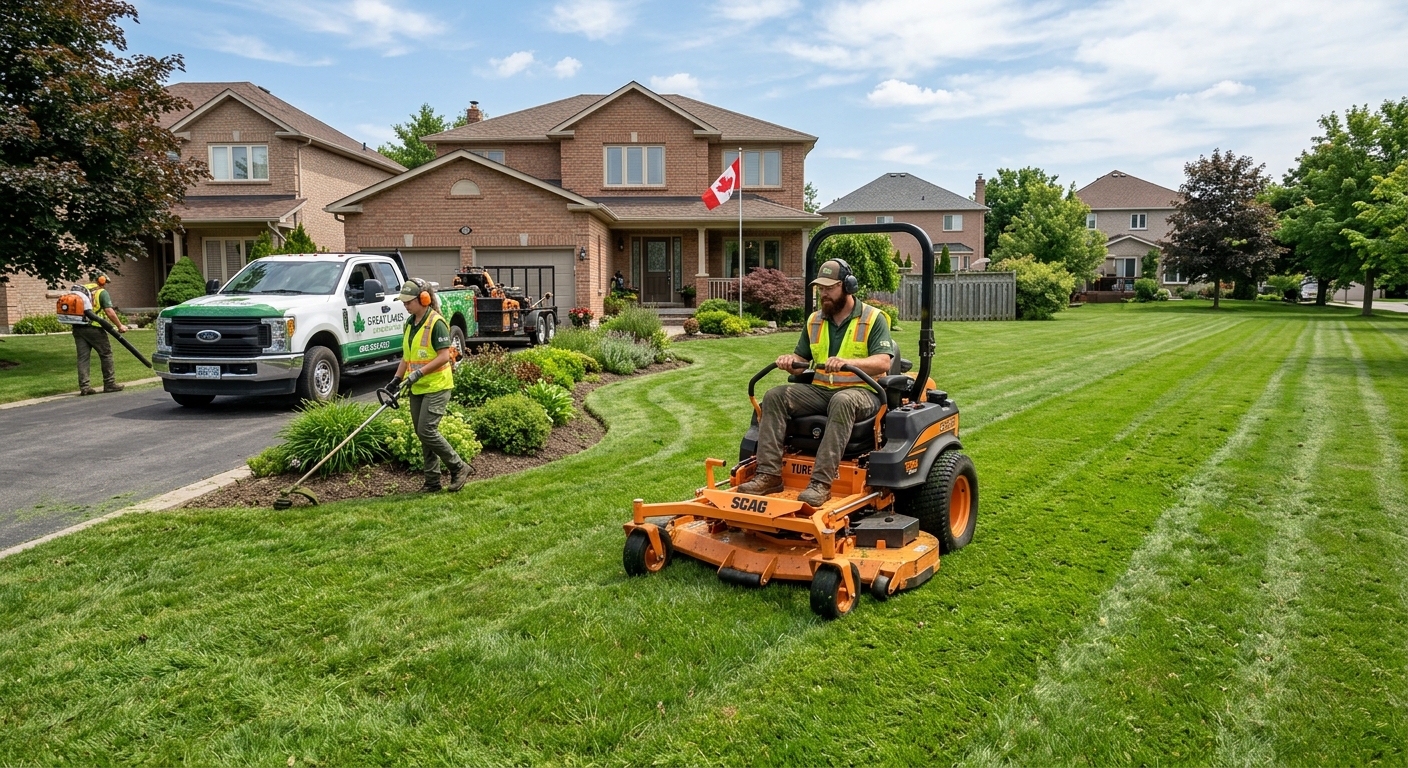
Landscaping options and costs in Plantagenet
Plantagenet homeowners typically start with a simple question—“what will this cost?”—but the real answer depends on site conditions, the level of design, and how much hardscape you want to add. With a population of 9,680 (Statistics Canada, 2021 Census), Plantagenet is small enough that good contractors may book quickly during the May-to-October installation window. Just as importantly, many local properties include enough yard space to justify investing in a long-term plan; across the broader Toronto economic region, the housing stock is often family-oriented with detached driveways and landscaped front yards that create steady demand for patios, planting beds, and curb appeal upgrades.
In the GTA (including Plantagenet), landscaping pricing is strongly influenced by freeze–thaw cycles and often-clayey soils. We design around winter lows roughly in the –23 to –18°C range (hardiness zones 6a–7a) and plan for structural items like steps and retaining walls to have properly compacted, deeper granular bases. Access and excavation requirements can also add cost—especially when we need soil amendment, subdrains, or geotextile separation.
Demand tends to be highest in the more established residential pockets along main corridors where homeowners want to modernize curb appeal—such as the areas near downtown Plantagenet—particularly for interlocking walkways, small retaining blocks, and refreshed shrub beds. From there, costs move quickly once you add drainage, irrigation, or more labour-intensive hardscape.
Use the comparison table below as a realistic starting point for budgeting different landscape approaches.
| Service |
Description |
Season |
Price Range |
| Full landscape design and installation |
On-site design + layout, grading notes, plant plan, materials, and labour for complete refresh (softscape + hardscape) |
May to October |
$8,000–$40,000 |
| Sod installation (supply, grade, lay, roll) |
Light grading, soil prep, sod supply and delivery, lay/roll, and initial watering guidance |
Late April to June (or early fall) |
$2,500–$8,000 |
| Lawn seeding (grade, seed, starter fertilizer) |
Weed/light core prep as needed, topdressing (if required), seed blend, starter fertilizer, and erosion control |
Late April to June (and early fall) |
$1,800–$6,500 |
| Interlocking patio or walkway |
Base build (granular layers/geotextile), edging, sand setting bed, laying, and jointing |
May to September |
$6,000–$30,000 |
| Retaining wall (interlocking block) |
Excavation, compaction, wall blocks/stone, drainage gravel and weep provisions where required |
May to September |
$6,000–$30,000 |
| Tree and shrub planting |
Plant supply (2 to 6 varieties), planting holes, amendments, staking as needed, and mulch ring setup |
May to October (best planting windows vary) |
$800–$6,000 |
Prices are estimates only and vary by project scope, site access and material selection.
What affects the price of landscaping in Plantagenet
In Plantagenet and across the Toronto-area market, quotes for what sounds like the same job can swing by about 30–50% because the “hidden work” changes: excavation depth, drainage strategy, soil condition, and the amount of material hauling and base preparation required. Even the plant palette shifts cost—ornamental shrubs and larger caliper trees cost more, but the bigger driver is often whether we can install successfully within the frost-and-freeze–thaw timeline without rework.
Hardiness zone and frost timing directly shape both labour capacity and which plants can go in with confidence. In southern Ontario (zone 5–6), we have a moderate growing season and most work is planned for the May-to-October window; irrigation is often needed after planting during summer dry spells. In Prairie regions (zone 2–4), shorter seasons, colder winters and frequent drought push designs toward drought-tolerant, wind-hardy species and simpler layouts; construction schedules can be tighter. Coastal BC (zone 7–8) supports longer growing seasons and lush planting palettes, but heavy-rainfall locations require strong drainage detailing. In the dry BC interior and parts of Alberta, water restrictions drive drip irrigation design and xeric planting, adding design and installation steps.
Concrete examples that raise or lower costs in Plantagenet: (1) a small slope correction for proper runoff can add several truckloads of topsoil plus extra grading labour; (2) clay soils that stay saturated often mean we build a drainage bed/French drain, which raises the project—yet it can prevent long-term settlement and foundation moisture issues; and (3) switching from seeding to sod can justify the premium when you need instant curb appeal, but it won’t be the best value if you’re comfortable waiting for establishment.
These are the reasons a “refresh” that might sit around the $8,000–$40,000 design-and-install band can climb quickly once you add a patio base, drainage, or a retaining wall in the $6,000–$30,000 range.
| Price Factor |
Why It Matters |
Cost Impact |
| Yard size in sq ft — the primary cost driver for softscape |
More square footage means more labour hours, topsoil amendments, and turf/plant materials |
Often changes the total by the largest margin across quotes |
| Grading and drainage work — slope corrections add significant cost |
Correct slope prevents pooling and protects foundations during Toronto-area freeze–thaw cycles |
Can add thousands if excavation and re-compaction are required |
| Drainage bed or French drain installation |
Weeping/aggregate systems reduce water pressure behind walls and in low spots |
Typically a major line-item increase versus “no drainage” designs |
| Plant material tier — native shrubs vs. ornamental vs. mature specimen trees |
Mature specimens cost more to source, handle, and often require staking and larger excavation |
Can shift pricing noticeably within the tree/shrub planting band |
| Hardscape vs. softscape ratio — walls and patios cost more per sq ft than lawn |
Patios/walls require deeper bases, compaction, edging, and stone block installation |
Raises the job into the retaining-wall/hardscape price range quickly |
| Irrigation system design and installation |
Zone mapping, heads, backflow prevention needs, and trenching add complexity |
Often adds substantial cost beyond planting alone |
| Soil amendment and topsoil required |
Clay-heavy soils may need amendment depth, compost, and proper layering |
Increases hauling and material costs when base soils are poor |
| Tree removal or stump grinding before new planting |
Stump grinding changes excavation and can affect grading for new beds |
May add days and extra disposal/haul-away charges |
Permits & regulations in Ontario
In Ontario, most planting, sodding, and typical softscape landscape work (like adding mulch, laying sod, installing garden edging, or planting trees/shrubs) usually does not require a permit. Homeowners can generally proceed with these upgrades without municipal approvals, as long as the work doesn’t involve major structural changes and you’re not altering utilities or lot drainage in a way that conflicts with local requirements.
Where permits commonly come into play: retaining walls above a height threshold—typically around 1.0 m (3.3 ft) in many municipalities—often require a building permit and sometimes engineered drawings, especially if there’s risk to structural stability or nearby structures. Also, changes to lot grading that redirect runoff toward neighbouring properties or storm sewer connections can trigger approval requirements, since drainage management is a public-safety issue.
Before you dig in Plantagenet or anywhere in Ontario, call for utility locates. Even “just for planting holes” and wall footings can cross buried services. For irrigation, confirm local water-use bylaws and restrictions during drought conditions—Ontario municipalities may tighten rules during dry periods.
How homeowners verify a contractor’s coverage and credentials (step-by-step): (1) check the contractor’s Ontario business credentials/registry listing (where applicable) and ensure they are actively in good standing; (2) request a certificate of insurance showing general liability with adequate limits; (3) confirm WSIB coverage (or WCB coverage where applicable) for workers; (4) ask for clearance letters/endorsements where possible; and (5) keep copies of everything with the signed contract.
Planning a landscape that thrives in Plantagenet's climate
Plantagenet yards succeed when you design for the zone and the realities of southern Ontario weather—rather than trying to “force” plants through winter. In this region (hardiness zones 6a–7a), winter lows and freeze–thaw cycles can heave poorly built bases and expose shallow-rooted plants. A practical plan starts with plant selection: choose native, zone-appropriate shrubs and perennials that tolerate winter cold and bounce back after spring thaw with minimal winter protection. Second, decide turf strategy. Sod delivers instant coverage, but it’s typically about 3–4x more per sq ft than seeding once you include prep and supply costs. Seeding can be the smarter budget move if you’re okay with a slower, more gradual “fill-in.”
Drainage and grading are where Toronto-area projects often win or fail. If you’re fighting pooled water near foundations, you may need regrading plus a drainage bed or French drain. And for hardscape—patios, steps, and interlocking block retaining walls—base preparation must be built for frost: proper excavation depth, geotextile separation, granular layers, and thorough compaction prevent movement over time.
Low-maintenance design strategies keep curb appeal without constant upkeep. Groundcovers, mulched shrub borders, and layered perennial beds reduce weeding and stabilize soil. If you want to manage water more efficiently, consider rain-garden areas in low spots (designed to absorb runoff) or targeted xeriscape-style plantings in the drier sections of the lot—while still keeping most plants winter-hardy for Ontario.
Dollar example: if you’re spending around $2,500–$8,000 for sod on a typical lawn area, that cost can be justified when you need immediate appearance for a listing or a big family event. If you’re improving drainage anyway and can wait through establishment, seeding often saves money and still gives you a strong lawn by the following season.
| Element |
Climate Consideration |
Maintenance Level |
Price Band |
| Sod lawn installation |
Needs careful watering during hot/humid weeks; freezes stabilize once roots knit, but initial establishment is time-sensitive |
Medium (watering + first mow schedule) |
$2,500–$8,000 |
| Native perennial garden |
Zone-appropriate plants handle –23 to –18°C winters; mulch helps reduce heaving and moisture swings |
Low to medium (seasonal pruning/weeding) |
$800–$6,000 |
| Mulched shrub border |
Winter protection is built-in with mulch; drought tolerance improves once roots are established |
Low (top-up mulch yearly, light trimming) |
$1,200–$5,500 |
| Interlocking stone patio |
Freeze–thaw demands correct base depth, drainage, and compaction to prevent settlement |
Low (occasional joint sand/cleaning) |
$6,000–$30,000 |
| Retaining wall (block) |
Backfill/drainage gravel reduces hydrostatic pressure; depth and compaction matter for winter movement |
Low (periodic inspection of weep areas) |
$6,000–$30,000 |
| Drip irrigation system |
Helps during summer dry spells; zones reduce waste and protect new plantings from stress |
Medium (season start-up checks, winter blowout plan) |
$1,500–$7,500 |
How to choose a landscaping contractor in Plantagenet
Start by verifying the contractor’s Ontario coverage and credentials—because your landscape includes hardscape foundations and softscape plantings that must survive multiple winters. Ask for a current certificate of insurance naming you (or your property) as appropriate, and confirm general liability is active. For workers, request proof of WSIB clearance/coverage (or WCB coverage where applicable) so you’re not stuck with liability if someone is injured on site. Also request the company’s business documentation and make sure the contractor answers clearly about who will be on your property and who is responsible for specific tasks (excavation, base prep, and planting).
Next, get 2–3 written quotes that break labour and materials instead of one lump sum. A good quote lists what’s included: excavation depth, base materials, soil amendments, plant sizes, and any drainage elements. Confirm whether permits are included (when required), whether disposal/haul-away is included, and what happens if additional excavation is needed because of buried debris or unexpected clay layers.
Look for warranty terms. Ask for a workmanship warranty length (for patios, wall base performance, and planting), and separately ask what manufacturer warranties cover for plants/materials. Clarify whether the warranty is transferable if you sell the property.
For payment schedule, never agree to large upfront deposits beyond roughly 10–15%. Use a holdback until key milestones are completed (base inspections, major hardscape completion, and final grading/cleanup). Finally, request a written timeline: an estimated start date and completion estimate tied to weather and access.
- Ask for proof of insurance and current WSIB/WCB coverage before work begins.
- Confirm the crew size and who supervises excavation and base preparation.
- Require an itemized quote: labour, materials, and disposal/haul-away.
- Check that drainage/grading details are included if you have slope or pooling.
- Verify plant sizes (height/spread) and what “approved substitutions” are.
- Ask whether geotextile, compaction testing approach, and base layers are specified.
- Confirm replanting and settlement responsibilities after the first season.
- Clarify warranty length for workmanship vs. product/manufacturer coverage.
- Insist on a written start date and weather contingency plan.
- Limit upfront payment to 10–15% and hold back until close-out.
- Ask who pulls permits if your retaining wall meets the typical threshold.
- Confirm irrigation winterization/blowout if you add a system.
Red flags I see in Plantagenet: (1) quotes that don’t mention drainage or base depth for patios/walls; (2) no written warranty or only vague “as good as new” statements; (3) contractor requests a large deposit up front without milestone completion; (4) unclear plant sizing or refusal to provide an itemized breakdown; and (5) no proof of insurance/WSIB/WCB coverage when asked.
Frequently asked questions — landscaping in Plantagenet
How deep should a retaining-wall base be for local frost?
For Plantagenet (southern Ontario), the key is that your retaining wall must be founded on a properly compacted granular base that accounts for winter freeze–thaw movement. In practice, depth isn’t “one number for every job” because it depends on wall height, soil type, and whether the wall is freestanding or holding back soil against a lawn. That said, I typically expect a contractor to excavate down to a frost-stable base with adequate granular layers, compaction, and separation (geotextile where appropriate), plus drainage gravel behind the wall. The quote should explicitly describe the base build and drainage provisions. If someone only mentions block size and skip the base/drainage details, you’re likely under-budgeting risk. For many homeowners, retaining walls are commonly budgeted in the $6,000–$30,000 range, and the “base work” portion is where good contractors invest for long-term stability.
How much does professional landscape design cost?
Professional design cost in Plantagenet depends on whether you want a concept-only plan or a full design-and-install package. Many homeowners choose design included with installation so the design budget effectively rolls into the construction scope. In the Toronto-area market, the broader full landscape design & installation budget is often around $8,000–$40,000, especially when grading, drainage, and hardscape are part of the plan. If your project is smaller—say, a refreshed planting plan with minor grading—design fees can be less, but you’ll still want a proper site layout (sun/shade, drainage direction, and plant spacing). Always ask whether the design includes a materials list, plant sizing/specs, and whether the contractor provides a revised plan if you change scope. For Ontario homeowners, a well-scoped plan can reduce change orders during construction, which is a common reason totals climb.
How do I compare landscaping quotes?
To compare quotes in Plantagenet fairly, insist they use the same scope and level of detail. Put every quote side-by-side for: (1) labour vs. materials breakdown; (2) excavation depth and base layers for patios/walls; (3) grading and drainage inclusions; (4) topsoil/soil amendment requirements; (5) disposal/haul-away; and (6) plant sizes (height/spread) and any substitution policy. Quotes can vary by 30–50% in the GTA because one contractor includes drainage beds or better soil prep and another doesn’t. Also check the “season” assumptions: if the work requires sod laying or base work that can’t wait, schedule matters. Finally, verify the contractor coverage (insurance and WSIB/WCB) so you’re comparing real professional capacity, not just price. A project that looks similar on paper can land in very different totals—especially once you move from lawn-only work to hardscape that falls in the $6,000–$30,000 band.
How long does a landscaping project take in Plantagenet?
Typical timelines in Plantagenet depend on size, weather, and how much excavation or drainage work is needed. Softscape planting jobs can often be completed in a day to a few days (especially if you’re only adding shrubs and perennials). Sod installations usually take less than a week end-to-end, but prep time (grading, soil prep) and weather windows matter. Interlocking patios, walkway projects, and retaining walls usually take longer because of base excavation, granular layers, compaction time, curing/settling windows, and attention to drainage. If your project includes design, materials procurement, and permit steps (often relevant for larger retaining walls), you should plan additional lead time. In the GTA, crews generally work May through October to avoid issues with deep frost and schedule disruptions from freeze–thaw cycles. If you’re budgeting around $8,000–$40,000 for a full design-and-install, it may span multiple weeks on-site depending on complexity and access.
What is the best grass type for a Plantagenet lawn?
In Ontario lawns like those in Plantagenet, the “best” grass is usually a blend or selection engineered for cool-season performance—because we have cold winters and a growing season roughly May to October. Many homeowners do well with tall fescue blends or tall fescue–dominant mixes because they establish well, handle Ontario heat better than some alternatives, and stay green through summer dry spells when watered properly. If you seed, the seed blend selection should match your sun exposure (full sun vs. shade) and your soil drainage. If your lawn area is compacted or has drainage issues, the grass choice won’t fix the root cause—grading and aeration matter. For an immediate look, sod can be laid, but the budget is typically higher, commonly in the $2,500–$8,000 range depending on area and prep. If you’re installing under tough conditions, ask your contractor for a soil prep and starter fertilization plan that matches your grass seed mix.
When should I aerate and overseed my lawn in Plantagenet?
For Plantagenet and the broader southern Ontario climate, the most reliable window for aeration and overseeding is usually spring after the ground thaws and temperatures stabilize, or in early fall when evenings cool down but soil moisture is still supportive. Aerate first so seed-to-soil contact improves and existing turf can be renovated rather than only “over-covered.” If you’re overseeding over compacted clay or thin turf, consider adding topdressing or soil amendment after aeration so the new seed can germinate. Avoid overseeding during deep summer heat if you can’t commit to watering—new seedlings can fail quickly under hot, humid conditions. Also plan around foot traffic: give the seed a chance to establish before heavy use. If your lawn is patchy and you want a faster green-up, some homeowners compare seeding vs. sod; sod is often in the $2,500–$8,000 range, while overseeding can be a more budget-friendly way to rebuild lawn density over time.