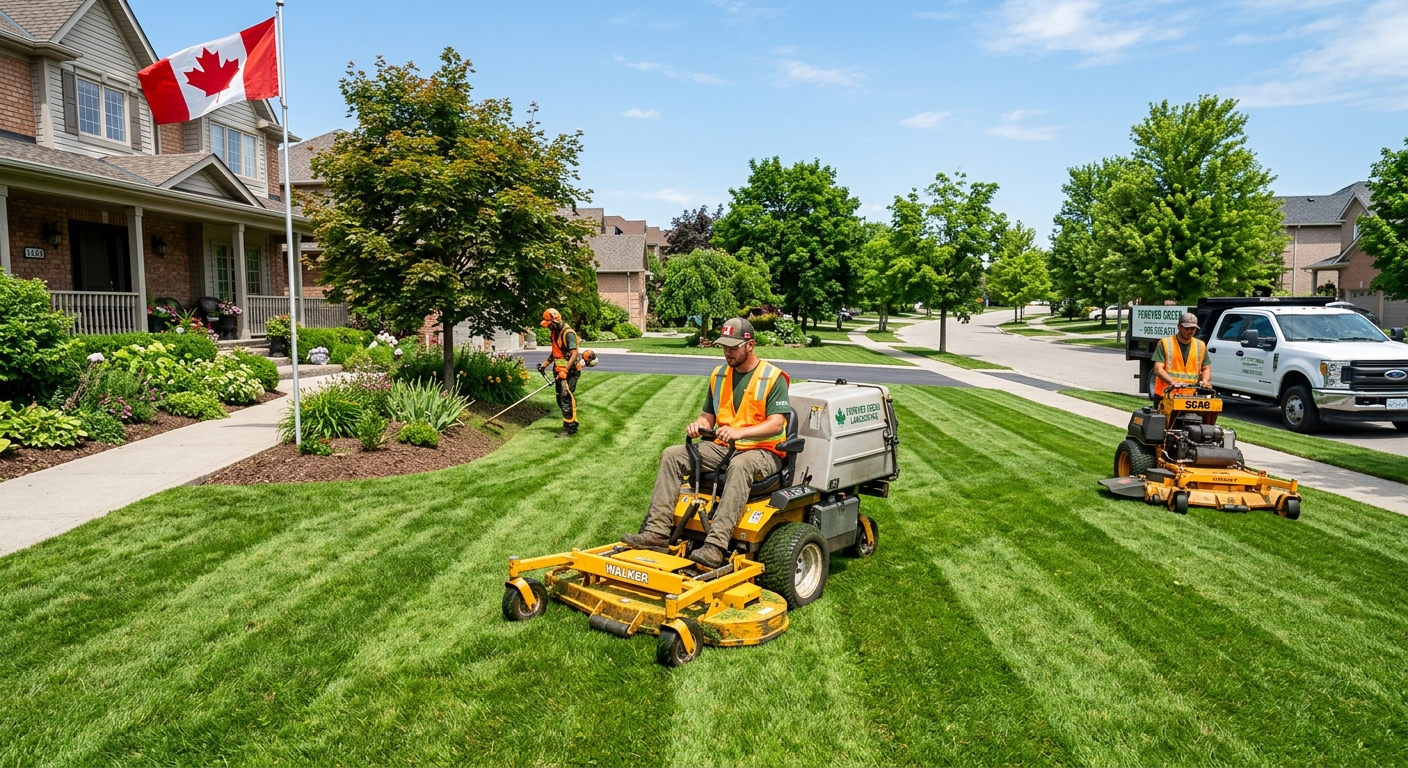
Landscaping options and costs in West End
In West End, landscaping choices usually start with what your property can accommodate—yard depth, access for trucks, and how much sun and drainage you have. With a local profile population of 4,142 (Statistics Canada, 2021 Census), you still get the full Toronto-area mix of older neighbourhood lots and newer builds, and that matters because many detached properties bring enough outdoor space to justify bigger “softscape + hardscape” packages. It’s also common to see homeowners invest more in curb appeal when they’re planning to stay for years, especially in pockets with lots of mature trees and established gardens where replacement planting, pruning, and regrading are frequent.
Toronto-area climate is a cost driver. We’re typically working in hardiness zones 6a–7a, with winter lows around –23 to –18°C and hot, often humid summers. That combination supports robust plants, but it also creates freeze–thaw cycles that increase labour and material requirements for patios, steps, and retaining walls. Add common West End soil realities—often clay-heavy or mixed fill—and you’ll see excavation, soil amendment, and drainage solutions showing up in more bids than in milder regions.
In West End, demand is especially high around areas like Bloor–St. Clair, where many homes have narrower frontage and need careful staging for deliveries and equipment. Once we know your goals—lawn replacement, interlocking, drainage, or plant refresh—we can compare typical scopes and budgets in the table below.
| Service |
Description |
Season |
Price Range |
| Full landscape design and installation |
Site walk, grading/drainage plan, planting layout, sod/seed, mulch beds, and hardscape/edges as applicable |
Spring–early fall (best planting window) |
$8,000–$40,000 |
| Sod installation (supply, grade, lay, roll) |
Excavate/grade, soil base preparation, sod supply and installation, rolling and starter watering plan |
Late spring to mid-summer; early fall for re-sod |
$2,500–$8,000 |
| Lawn seeding (grade, seed, starter fertilizer) |
Fine grading, seed mix, starter fertiliser, light topdressing and establishment care |
Spring and early fall |
$1,500–$5,000 |
| Interlocking patio or walkway |
Base excavation, compacted granular base, geotextile/geogrid where needed, edging, pavers, jointing sand |
Spring–fall (avoiding wet spells for best compaction) |
$6,000–$25,000 |
| Retaining wall (interlocking block) |
Excavate and compact, reinforced base/appropriate footing depth, drainage gravel and weeping provision |
Spring–fall |
$6,000–$30,000 |
| Tree and shrub planting |
Soil prep, planting, staking as required, watering-in, and mulching around established beds |
Spring or fall planting windows |
$800–$6,000 |
Prices are estimates only and vary by project scope, site access and material selection.
What affects the price of landscaping in West End
In the Toronto area, the same “simple” landscaping job can land 30–50% apart between quotes, mainly because West End projects often include different amounts of grading, soil repair, and drainage—items you can’t always see from the curb. Labour rates, disposal fees, and material tiers also vary, especially when contractors must mobilize trucks for narrow streets or staged access around mature trees.
Climate and frost schedule play a direct role in scope. In our zone 6a–7a conditions, plant selection and installation timing are designed for survival through winter lows near –23 to –18°C and then fast growth in summer. In prairie regions (Zone 2–4), shorter seasons and frequent drought push designs toward drought-tolerant, wind-hardy species and simpler palettes; retaining wall base depth must reach below the frost line even more aggressively because ground movement is harsher. Coastal BC (Zone 7–8) can support lush planting palettes, but heavy rainfall and drainage details can still raise costs. Dry BC interior municipalities often need drip irrigation and low-precipitation design. Here in Southern Ontario, we typically have a moderate growing season with irrigation needed during summer dry spells, which influences how much we invest in proper soil conditioning and water management.
Concrete examples from West End that commonly raise or lower budgets: (1) If your front yard is uneven, grading corrections can add significant labour and truckloads of topsoil and compaction (often shifting a job toward the higher end of the $8,000–$40,000 design/install band). (2) If clay soils require a drainage bed or French drain, you’ll usually see costs move closer to the upper $6,000–$30,000 range for retaining walls/hardscaping because the wall must be built with proper sub-drainage to prevent frost heave and water pressure. (3) Mature tree removals or stump grinding prior to new planting can add time and equipment—especially on older lots where roots extend under walkways.
| Price Factor |
Why It Matters |
Cost Impact |
| Yard size in sq ft — the primary cost driver for softscape |
Larger areas require more labour, soil preparation, and plant/sod/seed materials |
Can swing total cost by multiple $1,000s |
| Grading and drainage work — slope corrections add significant cost |
Toronto clay and mixed fill often need regrading so water sheds away from foundations |
Frequently adds 10–25% to project labour/material |
| Drainage bed or French drain installation |
Captures subsurface water to reduce pooling and frost pressure |
Often pushes jobs upward into higher hardscape bands |
| Plant material tier — native shrubs vs. ornamental vs. mature specimen trees |
Size, pot/ball size, and hard-to-source specimens change pricing and install time |
May double the planting line item |
| Hardscape vs. softscape ratio — walls and patios cost more per sq ft than lawn |
Pavers/block require excavation, base materials, and compaction quality |
Commonly the difference between “mid” and “upper” project totals |
| Irrigation system design and installation |
Reliable watering reduces winter losses and summer stress |
Can add several thousand dollars depending on zones and turf area |
| Soil amendment and topsoil required |
Improves root establishment and helps lawns/plantings perform through freeze–thaw |
Increases hauling, material, and labour time |
| Tree removal or stump grinding before new planting |
Roots and stumps affect grading, drainage, and planting layout |
Adds equipment time and disposal/clean-up costs |
Permits & regulations in Ontario
For most homeowners in West End, typical planting, sodding, and softscape work generally does not require a permit. That usually includes things like mulching, planting beds, seeding, sod installation, garden bed edging, and routine grading when it doesn’t affect drainage patterns toward neighbouring properties.
Where permits often come into play is hardscape and significant drainage-related changes. Retaining walls above the common threshold of 1.0 m (3.3 ft) in many Ontario municipalities typically require a building permit, and sometimes engineered drawings depending on height, location, and soil conditions. Also, any project that changes lot grading in a way that directs water toward a neighbouring property or connects to/affects storm drainage may trigger approval requirements.
Regardless of permit status, do these steps before digging: (1) request utility locates—especially for fence lines, wall footings, and planting holes near services; (2) confirm whether any irrigation work requires compliance with local water-use rules (Ontario towns sometimes tighten restrictions during drought periods); and (3) ask the contractor to show how they’ll protect nearby foundations during excavation.
To verify a contractor in Ontario, confirm the company holds appropriate liability insurance and has WSIB/WCB coverage if they employ workers. Then ask for a clearance letter or proof of account status. You should also check the contractor’s registration/licence status via the relevant provincial/industry registry pages and compare the certificate of insurance dates to your project start. Finally, ensure the quote clearly states what the contractor covers: disposal, site protection, and whether permits (if required) are included.
Planning a landscape that thrives in West End's climate
Planning in West End works best when you design around our climate rather than fighting it. With typical hardiness zones 6a–7a and freeze–thaw cycles, the biggest “do it right once” wins are drainage and plant selection that can handle both winter lows near –23 to –18°C and humid summer growth. Start with (1) plant selection: use native and zone-appropriate shrubs and perennials sized for mature growth, so they need less watering and less winter protection. (2) Decide sod vs. seed strategically: sod gives instant curb appeal, but it costs about 3–4x per sq ft compared to seeding once you account for prep and material. (3) Prioritize drainage and grading: Toronto yards commonly pool where clay holds moisture, so slope corrections, mulch depth, and sub-drainage (when needed) protect foundations and reduce winter heaving. (4) For hardscape, base preparation matters: patios, steps, and retaining walls should be built on properly compacted granular bases to perform through the local frost line movement. (5) Choose low-maintenance design strategies: groundcovers, mulched beds, and well-spaced perennials reduce annual upkeep without sacrificing texture.
For water-smart options, consider a rain-garden in low spots (where downspouts can be directed safely) and xeriscape-style beds using drought-tolerant perennials and deeper-rooted shrubs. In Toronto’s summers, you’ll still water to establish plants, but you’ll dramatically reduce long-term irrigation.
A practical example: if you’re redoing a 400 sq ft lawn, sod often pushes you into the $2,500–$8,000 band, while seeding is usually far lower (commonly in the $1,500–$5,000 range for similar prep). The price difference is justified when you need immediate use (kids/pets, quick curb appeal), but if you can wait a season, seeding is the better value.
| Element |
Climate Consideration |
Maintenance Level |
Price Band |
| Sod lawn installation |
Established quickly before winter; must be installed when soil temps are supportive to root |
Low after establishment; more watering in first 2–4 weeks |
$2,500–$8,000 |
| Native perennial garden |
Better long-term survival in zone 6a–7a; more resilient to humid summers and winter dieback |
Moderate; seasonal pruning and mulching 1–2 times/year |
$800–$6,000 |
| Mulched shrub border |
Mulch buffers freeze–thaw and protects roots; helps manage Toronto clay moisture swings |
Low; topping mulch and light pruning |
$1,200–$7,500 |
| Interlocking stone patio |
Requires frost-stable base and proper drainage so joints don’t heave |
Low; occasional joint sand and surface cleaning |
$6,000–$25,000 |
| Retaining wall (block) |
Footing depth and drainage gravel are essential to handle water pressure and freeze–thaw movement |
Low; periodic inspection and weed control at base |
$6,000–$30,000 |
| Drip irrigation system |
Delivers water efficiently during establishment and dry spells; adjustable for seasonal needs |
Low to moderate; seasonal adjustments and filter checks |
$1,500–$6,500 |
How to choose a landscaping contractor in West End
Choosing the right landscaping contractor in West End starts with proof. First, verify Ontario work coverage: ask for their liability insurance certificate (and check coverage amounts and policy dates). If they employ workers, confirm they have WSIB/WCB coverage and request a clearance letter or current proof of account status. Then verify licensing/registration status through the appropriate Ontario registry or industry listing for their specific business type, and ensure the quote is issued in the company’s legal name.
Next, don’t accept “lump sum” promises without line items. Get 2–3 itemised written quotes that separate labour and materials (excavation/base, pavers/block, sod/seed/soil, drainage components, disposal, and protection). Read exclusions carefully: What’s not included for disposal? Is permit work included if a retaining wall needs it? Are taxes included? Is topsoil screened and how deep?
Warranty matters. Ask for a workmanship warranty length (for base compaction, settlement issues, drainage performance, and installation failures), plus the manufacturer warranty for products like irrigation parts or paver/block systems. Confirm whether warranties are transferable if you sell your home.
On payment schedule: never pay more than about 10–15% upfront. Hold back a meaningful portion until completion and walk-through sign-off. Finally, get a start date and a completion estimate in writing, including weather contingencies common to Southern Ontario (rain delays for compacting and base prep).
- Request proof of liability insurance and confirm policy dates cover your installation window.
- Ask for WSIB/WCB clearance/coverage proof if they have employees.
- Confirm who pulls permits (if needed) and whether permit fees are included.
- Get itemised labour/material costs—no vague “labour and materials” lines.
- Clarify site protection: tarping/plastic for shrubs, foundation protection, and debris control.
- Confirm disposal inclusion (soil and old sod removal) and how waste is hauled.
- Ask about base spec: thickness, compaction method, geotextile/geogrid use where required.
- For lawns, specify soil prep, seed type/sod variety, and fertiliser/starter plan.
- Check drainage details: grading targets and whether French drain materials are included.
- Get an irrigation scope in writing if you’re installing sprinklers or drip.
- Require warranty terms for workmanship and product warranties, in plain language.
- Set payment milestones tied to completed inspections and final cleanup.
Red flags in West End: (1) refusing to provide a certificate of insurance or WSIB/WCB proof; (2) quoting without measuring or discussing drainage/grading; (3) starting work without a written scope and timeline; (4) “too-good-to-be-true” pricing that omits base prep or disposal; and (5) pressuring you to pay most of the cost upfront instead of holding a completion holdback.
Frequently asked questions — landscaping in West End
How much does sodding a yard cost in West End?
In West End, sodding typically lands in the $2,500–$8,000 range depending on lawn size, site access, and how much grading/topsoil work is needed. Toronto lots with clay-heavy soil often require extra prep so the sod roots properly and doesn’t settle during freeze–thaw cycles. If your yard has slope issues or drainage problems, that can push costs higher because you’re paying for base correction and compaction, not just grass. For best value, ask for an itemised breakdown: soil amendment depth, sod type, edges, starter fertiliser (if included), and disposal of old turf. Timing also affects price—spring installs can be busy, and early-fall re-sod sometimes schedules well. (Statistics Canada, 2021 Census)
How do I prevent weeds in my West End garden?
Weed prevention in Ontario works best when you combine soil readiness with the right bed covering. For West End gardens, start with a proper base: remove existing weeds/roots, loosen compacted soil, and add quality compost/topsoil where needed so plants fill in faster. Use a weed-suppressing fabric under mulch only when the plant spacing suits it; in many shrub/perennial beds, better results come from well-laid mulch plus consistent edging to keep grass from creeping in. Mulch depth matters—aim for a thicker layer around shrubs (not piled against stems). If you’re seeing a lot of annual weeds, it can be a sign of thin mulch, low plant density, or soil compaction. Once installed, regular seasonal weeding in spring and a light refresh mid-season reduces weed seed carryover. Also, avoid over-watering: wet soil invites weed germination.
How do I design a low-water yard in West End?
A low-water yard in West End usually means designing for establishment first, then reducing irrigation demand long-term. Since Toronto sits in hardiness zones 6a–7a with humid summers, you’ll still need watering to get plants rooted, but you can cut ongoing use by choosing native, drought-tolerant perennials and deeper-rooted shrubs that handle summer dry spells. Consider a rain-garden or swales where downspouts can drain safely—this helps manage pooling and reduces wasted watering. For turf, keep only what you truly use and consider partial replacement with groundcovers in side yards. If you add irrigation, prefer drip or targeted soaker lines over broad sprinkling, and zone it by sun exposure. During Ontario dry periods, irrigation practices may be restricted, so having an efficient system helps you stay compliant and avoid fines. Build the soil with compost so it holds moisture; that alone can reduce summer irrigation needs.
How do I find a licensed landscaper in West End?
To find a reliable landscaping contractor in West End, verify credentials before you sign. First, request their liability insurance certificate and confirm the coverage dates match your job timeline. If they have employees, ask for WSIB/WCB proof and a clearance letter or current status. Then confirm they’re properly registered/licensed for the services they’re doing in Ontario through the appropriate registry or industry listing relevant to their business type. After that, evaluate quotes: you should get itemised labour and material breakdowns, not a vague lump sum. Make sure the scope addresses grading/drainage, disposal, and whether any permits are included if a retaining wall exceeds the common threshold (often 1.0 m in many Ontario municipalities). A final check: read the warranty terms—workmanship and product warranties should be stated clearly.
How much does landscaping cost in West End?
Landscaping costs in West End typically range widely based on whether you’re doing softscape only, adding hardscape, and how much drainage and excavation is involved. For a common full-service project, many homeowners fall into the $8,000–$40,000 band for design and installation. If you’re focusing on lawn replacement, sod usually sits around $2,500–$8,000, while tree and shrub planting is often $800–$6,000 for material and labour. Interlocking patios/walkways and retaining walls are often priced under the hardscaping band (commonly overlapping $6,000–$30,000 depending on size and base prep). Toronto’s freeze–thaw cycles and frequent foundation-protection grading needs can add cost versus milder climates, especially if clay soils require drainage beds or sub-drains. Always compare itemised quotes so you’re comparing the same base spec, not just the final total.
What plants thrive in West End's climate zone?
West End typically aligns with hardiness zones 6a–7a, so plants need to tolerate winter lows near –23 to –18°C and then grow through humid summers. In practice, this means selecting native shrubs and perennials that are zone-appropriate, plus hardy woody structure plants. Many homeowners do well with native-type selections such as serviceberry, smooth hydrangea (carefully sited for your soil), and layered perennial borders with coneflower, black-eyed Susan, asters, and ornamental grasses for texture. For shade pockets, choose understory options suited to your light levels and soil moisture—Toronto’s clay can stay wet longer in low spots. If you’re installing near foundations, make sure plants aren’t competing with downspout runoff or frozen drainage patterns. Your best results come from matching plants to sun and moisture, then using mulch and proper spacing to reduce winter dieback and summer stress.