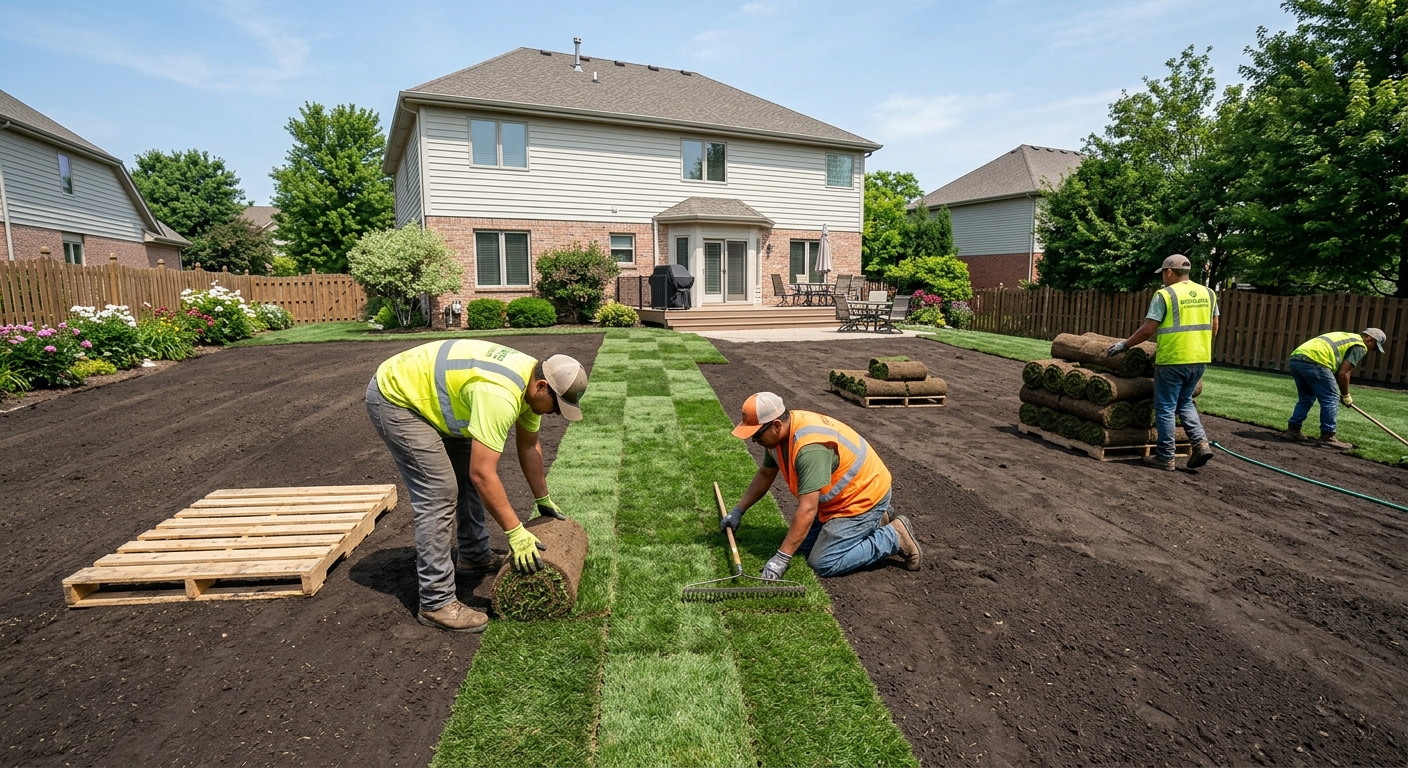
Landscaping options and costs in Russell
Landscaping in Russell is a practical investment—especially for homeowners, because detached properties make up a large share of local homes (79.0% of dwellings are single-detached), and that extra yard space naturally invites upgrades. With 6,070 homeowner households (84.0% of households own), you’ll also see a strong “do-it-right” mindset for curb appeal and long-term maintenance planning. In the Ottawa economic region, costs tend to sit in the same mid-range bands because reputable crews need enough seasonal volume to stay busy through spring and early fall, and Russell’s freeze–thaw cycle affects nearly every job type from bases under patios to frost-protected wall footings.
In Russell, our plant hardiness conditions are typically in the Zone 4b–5a range, with a frost-free growing season roughly May to October. That shorter working window pushes labour schedules into a tighter timeline, and it also means contractor availability can tighten in late spring. At the same time, spring saturation on clay-rich soils increases the importance of proper grading and drainage; when those elements aren’t accounted for, failures like heaving, ponding near foundations, and soft turf development can add rework costs. Retaining walls, steps, and interlocking stonework are especially in demand in established neighbourhood pockets like central Russell and along the older residential stretches where many homes were built earlier (21.6% of homes were built before 1981). Those yards often need soil correction, drainage tuning, and hardscape refinishing to match today’s expectations.
Below are typical Russell cost ranges so you can compare options before you request quotes.
| Service |
Description |
Season |
Price Range |
| Full landscape design and installation |
Site walk, concept + grading plan, planting, lawn/seed/sod, and hardscape coordination |
May–October (some stonework scheduling into September) |
$5,000–$50,000 |
| Sod installation (supply, grade, lay, roll) |
Soil prep, topsoil, lime/fertilizer, sod placement, rolling and starter care |
Late April–June and early September |
$1,500–$8,500 |
| Lawn seeding (grade, seed, starter fertilizer) |
Minor grading, seed selection, starter fertilizer, light covering and first cut guidance |
May–June and early fall window (cooler soil helps germination) |
$900–$6,500 |
| Interlocking patio or walkway |
Excavation, geotextile + compaction, base + levelling, pavers, edging, finishing |
May–October |
$4,000–$20,000 |
| Retaining wall (interlocking block) |
Base excavation, granular backfill, proper drainage behind wall, block installation |
May–September |
$6,000–$30,000 |
| Tree and shrub planting |
Plant supply, soil amendment, digging, staking (as needed), mulch and initial watering plan |
May–October (with watering support in summer) |
$800–$10,000 |
Prices are estimates only and vary by project scope, site access and material selection.
What affects the price of landscaping in Russell
In Russell, the same general landscaping scope can come in 30–50% apart across Ottawa-area quotes because pricing isn’t just “materials plus hours”—it’s also how much site work is needed to survive freeze–thaw. The local plant hardiness zone (Zone 4b–5a) and frost timing affect what contractors can install reliably in a given month, which directly changes labour scheduling and sometimes the type of equipment used. In practice, Prairie-style drought/wind concerns don’t drive Russell budgets the way they do in Zone 2–4, but our winters are real and our freeze–thaw cycle is a cost driver: retaining wall bases, steps and patios must be built on deep, well-compacted granular layers and with drainage that prevents trapped water from cycling through ice expansion.
Region-to-region comparisons show why quotes vary. Coastal BC’s long growing season (Zone 7–8) can reduce the urgency of timed planting, but heavy rainfall still demands drainage competence. The dry BC interior and Alberta can push irrigation design costs higher due to water strategies. Southern Ontario (Zone 5–6) like ours in the Ottawa corridor usually means a moderate season—still with irrigation needs during summer dry spells—plus more unpredictable spring saturation on clay soils that increases grading and soil amendment time. Your Russell property age also matters: older yards (notably those on lots with more than about two decades of settlement or with pre-1981 landscaping layouts) often need more base correction and cleanup before new sod or pavers can sit properly.
Two quick examples: (1) upgrading from lawn seeding to sod may feel like “just grass,” but soil prep and handling time make sod one of the costliest options for a given area; many Russell projects land in the broader lawn bands that start around $1,500–$8,500. (2) a modest interlocking walkway can stay closer to $4,000–$20,000 if there’s easy access and minimal excavation, but if a drainage correction is required, the same walkway becomes a “base + drainage” job and labour climbs fast.
| Price Factor |
Why It Matters |
Cost Impact |
| Yard size in sq ft — the primary cost driver for softscape |
More area means more topsoil, amendments, labour hours and materials volume |
Often the biggest swing; can change totals by 20–60% |
| Grading and drainage work — slope corrections add significant cost |
Freeze–thaw performance depends on directing water away from foundations |
Commonly adds several thousand dollars when regrading is required |
| Drainage bed or French drain installation |
Prevents water pooling and reduces heaving and soft turf in spring |
Can double site-work time on tricky properties |
| Plant material tier — native shrubs vs. ornamental vs. mature specimen trees |
Mature trees cost more to source and require heavier equipment and staking |
Specimens can raise planting budgets quickly |
| Hardscape vs. softscape ratio — walls and patios cost more per sq ft than lawn |
Stone, base materials, and proper compaction drive higher unit pricing |
Shifts the project toward the retaining wall/hardscaping bands |
| Irrigation system design and installation |
Controls summer dry-spell stress and supports healthy establishment |
Costs vary widely with zones, piping length and controls |
| Soil amendment and topsoil required |
Clay-rich soils often need imported topsoil/compost and correct pH/structure |
Can add significant disposal and truck-load costs |
| Tree removal or stump grinding before new planting |
Access and root removal affect what can be planted or paved afterward |
Often pushes the job into a higher labour/material tier |
Permits & regulations in Ontario
In Ontario, most routine landscape work—planting, sodding, seeding, and typical softscape installation—does not require a permit. Where things change is when the work becomes “structural” or materially changes drainage and water flow. Retaining walls above a local height threshold (often 1.0 m / 3.3 ft in many municipalities) typically require a building permit, and some walls may need engineered drawings depending on height, soil conditions and design. Also, if you plan grading changes that alter how runoff drains toward a neighbouring property, or that affects connections to a storm sewer, you may need approval before excavation.
For Russell homeowners, a smart workflow is: (1) confirm utility locates before any digging—planting holes, trenching for French drains, and wall footings must be done after locating buried services; (2) for retaining walls near/over the height threshold, ask the contractor whether permits and engineering are included and request the permit number after submission; (3) check local irrigation and water-use bylaws for summer compliance, even though severe restrictions are not always like the dry interior of BC or parts of Alberta—still, rules can tighten during dry spells.
To verify a contractor’s legitimacy in Ontario: check the Ontario licence/registration status via the appropriate online registry for the trade they operate under (contractors should be able to quote you their business registration details), request a current certificate of liability insurance, and confirm WSIB coverage (or the appropriate exemption documentation if they qualify). If you need proof of clearance, ask directly for a WSIB clearance letter before work starts.
Planning a landscape that thrives in Russell's climate
To plan landscaping that thrives in Russell, you design with our Zone 4b–5a conditions and a freeze–thaw cycle that punishes poor drainage. Start with plant selection: use hardy, zone-appropriate shrubs and perennials that can handle winter exposure and spring saturation. This matters because spring is not “dry and sunny” on clay—so selecting plants that tolerate wet feet for short periods reduces replacement risk. Next, choose sod versus seed based on time and budget. Sod gives instant visual coverage and reduces erosion on slopes, but it costs about 3–4 times as much per square foot as seeding once you include preparation and labour. If you want the “fast finish” look, sod is often worth it on front lawns and entry paths; if you can wait a season, seeding is the better value. In Russell, seeding also pairs well with aeration and a soil amendment strategy, especially for older lawns laid without proper topsoil depth.
Drainage and grading are the difference between a patio that lasts 10+ years and one that shifts after a harsh winter. Any patio or walkway base must be built with well-compacted granular layers, and retaining walls need correct drainage behind the block so freeze water doesn’t build up. For low-maintenance design, focus on mulched shrub borders, groundcovers, and perennials that don’t require constant replanting—layering helps you maintain curb appeal with less annual labour.
If you’re dealing with wetter low points, consider a rain garden or a drainage swale with hardy native grasses and perennials. Where it’s drier or sun-baked, you can blend xeriscape-style drought-tolerant plants and mulch to reduce watering cost.
One practical price example: If a modest front lawn project is estimated at $1,500–$8,500 for sod, but seeding would land closer to the lower end of the grass-install band, you’re paying mainly for speed and immediate coverage. That trade is justified when you need erosion control or you’re preparing the yard for seasonal use; otherwise, seeding plus amendments is usually the smarter spend.
| Element |
Climate Consideration |
Maintenance Level |
Price Band |
| Sod lawn installation |
Instant cover helps manage spring saturation and erosion during thaw cycles |
Medium (watering/rolling period, mowing schedule) |
$1,500–$8,500 |
| Native perennial garden |
Hardy perennials tolerate Zone 4–5 winters and rebound after spring wetting |
Low (annual cleanup, light mulching) |
$1,200–$6,500 |
| Mulched shrub border |
Mulch buffers temperature swings and reduces freeze-burn stress on roots |
Low to medium (weeding control and refresh mulch) |
$800–$4,500 |
| Interlocking stone patio |
Requires deep, compacted base to resist frost heaving |
Low (annual joint brushing/weed control) |
$4,000–$20,000 |
| Retaining wall (block) |
Needs drainage behind wall and stable base below frost influence |
Low (inspection of drainage and minor joint maintenance) |
$6,000–$30,000 |
| Drip irrigation system |
Targets root zones during summer dry spells while reducing waste |
Medium (seasonal blowout/turn-off, occasional repairs) |
$1,200–$7,000 |
How to choose a landscaping contractor in Russell
Choosing a contractor in Russell comes down to proof, not promises. Start by verifying Ontario licensing/registration for the trade they operate under and request proof of liability insurance with the effective dates clearly shown. Ask for WSIB coverage confirmation; if they’re exempt, they should provide exemption documentation. You can then compare the job plan against what their paperwork supports: a contractor who installs drainage and hardscape should be comfortable answering technical questions and standing behind workmanship.
Next, get 2–3 itemised written quotes with a breakdown of labour and materials—not just a lump sum. Your quote should identify quantities (how much topsoil, base stone, pavers, block units, and plant counts) and include what happens during site prep: excavation volume, disposal, and any geotextile/compaction steps. Ask whether permits are included for retaining walls when required, and confirm if disposal/recycling is included or billed separately. Also request the warranty details: workmanship warranty length, whether product warranties apply to plant material or specific manufacturers, and whether the warranty is transferable to you if you sell the home.
For payment schedule, never pay more than 10–15% upfront. A practical holdback is often kept until completion and final grading/cleanup is confirmed. Require a timeline in writing with a target start date and estimated completion based on seasonal conditions (Russell jobs are typically busiest May through September).
- Check insurance and WSIB/clearance status before work begins.
- Ask for their Ontario registration/licence details and confirm trade scope.
- Require a site visit and measurements, not a “sight-unseen” quote.
- Use itemised quotes: materials quantities, labour hours, and allowances.
- Confirm grading/drainage responsibilities (who corrects slopes and to what standard).
- For hardscape, ensure base build-up and compaction steps are written in scope.
- Ask how they handle freeze–thaw risk: drainage behind blocks, correct base depth.
- Verify plant list: cultivar names and expected mature sizes, not generic “evergreens.”
- Confirm soil amendment plan (topsoil source, compost amount, and depth).
- Get a start and completion estimate in writing, plus weather contingency.
- Ask what’s included in cleanup and disposal (and what isn’t).
- Review warranty terms for both workmanship and products; get it in writing.
Common red flags in Russell include: quotes that omit drainage and base prep details, “one price covers everything” wording with no quantities, refusal to provide insurance/WSIB documents, pushing for large upfront payments beyond 10–15%, and vague timelines that don’t acknowledge the frost-season working window.
Frequently asked questions — landscaping in Russell
How much does landscaping cost in Russell?
Landscaping cost in Russell depends mainly on yard size, how much grading/drainage is needed, and how much of the job is hardscape versus planting. For a full design and installation, many Ottawa-area Russell projects land broadly in the $5,000–$50,000 range depending on scope. If you’re focusing on just the lawn, sod installation budgets often start around $1,500–$8,500 because soil prep and handling labour add up—especially on clay soils that need drainage corrections. Tree and shrub planting typically sits in the $800–$10,000 band depending on counts and whether you’re adding mature specimens.
What plants thrive in Russell's climate zone?
In Russell and the Ottawa corridor (often treated as Zone 4b–5a), choose plants proven for cold winters and seasonal swings. Hardy shrubs like serviceberry, hydrangeas suited to Zone 4/5, and well-selected native perennials tend to perform well with proper soil prep and mulch. For trees, select species that mature well in our conditions and confirm root hardiness rather than assuming any “evergreen” will survive harsh exposure. Because spring thaw can bring short periods of wet ground, avoid designs that place moisture-sensitive plants right next to downspouts or low points without drainage planning. Your contractor should also specify mature sizes so plant spacing supports airflow and reduces disease.
Sod vs seed — which is better for a Russell lawn?
Sod is usually better when you need fast results, want immediate curb appeal, or you’re addressing erosion on sloped turf while the ground settles. In Russell, sod can be the right choice if you’re renovating an area quickly during the May–June or early September window. However, sod is typically more expensive than seeding—often around $1,500–$8,500 for installation depending on yard size and prep. Seeding is often the better value if you can manage the longer establishment time and you’re willing to do thorough grading and soil amendment. A solid approach is seeding for the bulk of the lawn with sod only on high-visibility strips or problem areas.
How much does a retaining wall cost in Russell?
Retaining wall costs in Russell depend heavily on height, length, access for equipment and the drainage system required behind the wall. Interlocking block walls commonly land within the $4,000–$30,000 range across Ottawa-area quotes, but many realistic Russell installs land closer to the middle to upper end once you include excavation, a properly compacted granular base and drainage bedding. Freeze–thaw makes drainage non-negotiable: when contractors skip drainage or use insufficient base material, you risk settlement and heaving that can turn a “wall project” into a rework situation.
When is the best time to landscape in Russell?
The most reliable working window in Russell is typically May through October. Spring is best for grading, drainage improvements, and planting after conditions allow equipment access; early fall is excellent for lawn work and planting too, because soil temperatures can support establishment while summer heat eases. For hardscaping and base-dependent work (interlocking stone patios/walkways and retaining wall bases), contractors prefer drier stretches so compaction and stone bedding can be built correctly. If you plan to seed or sod, timing matters: aim for periods when the weather is cool enough for germination and when you can water consistently through establishment.
Do I need a permit for a retaining wall in Ontario?
In Ontario, many landscaping tasks don’t need permits, but retaining walls can. In Russell, a retaining wall above a common local threshold (often around 1.0 m / 3.3 ft in many municipalities) typically triggers a building permit requirement, and some designs may require engineered drawings depending on height, soil and structure. Changes to lot grading that affect how water drains toward neighbouring properties or storm connections can also trigger approval requirements. Before digging, confirm utility locates, and ask your contractor whether they will pull the permit or provide documentation so you can verify compliance. Always request the permit number and inspection expectations in writing for clarity.