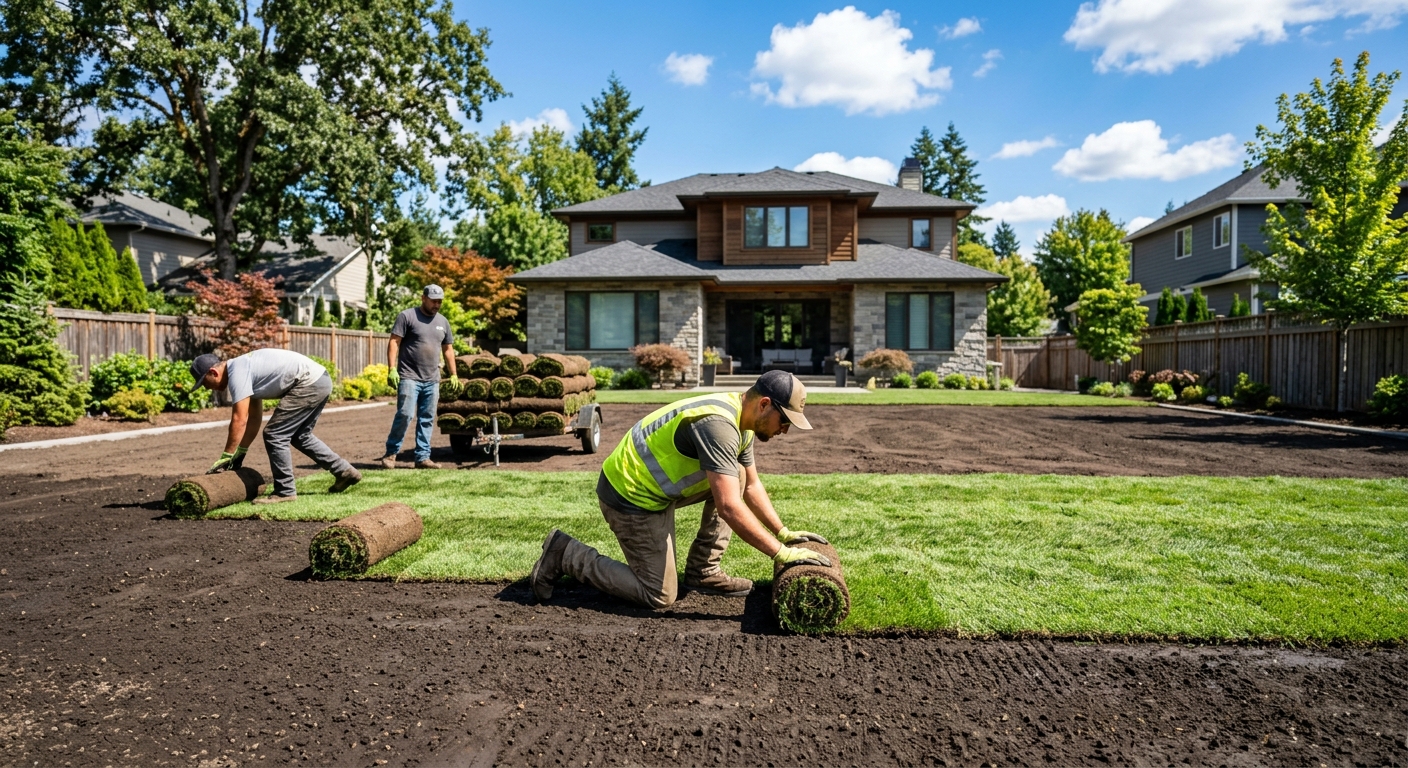
Landscaping options and costs in Schreiber
Schreiber homeowners typically have room to invest in exterior upgrades because most dwellings are single-detached (85.4% of local housing), and most households are owner-occupied (81.6% ownership). That combination usually means you’ll see steady demand for curb appeal work—especially in neighbourhoods where properties sit closer to the shoreline and the wind exposure is noticeable. In Schreiber and the wider Northwest region, landscaping costs are shaped by colder winters, earlier fall freeze-up, and a shorter working season, so contractors often build projects around fast, durable installs rather than long, delicate timelines. Plant choice also matters: work that looks “simple” on paper—like planting beds, sod, or grading for drainage—can take longer when the ground is frozen early or the thaw is inconsistent.
Labour availability can tighten in the spring start-up window, and base preparation for hardscape costs more because excavation and compaction have to be planned around frost risk. That’s one reason quotes for the same general scope can land anywhere from the lower end to the upper end of local bands—especially when the job mixes softscape (lawn/planting) with hardscape (patios, walkways, retaining walls). If you’re comparing approaches—design plus install versus “install-only,” or sod versus seeding—use the table below as a practical starting point for Schreiber planning.
| Service |
Description |
Season |
Price Range |
| Full landscape design and installation |
Site walk, concept plan, grading/drainage strategy, material take-off, labour for softscape and hardscape (as scoped) |
Late spring to early fall (freeze-safe sequencing) |
$5,000–$18,000 |
| Sod installation (supply, grade, lay, roll) |
Light grading, soil prep, sod delivery and installation, rolling, initial watering guidance |
Late spring to early fall |
$1,500–$6,000 |
| Lawn seeding (grade, seed, starter fertilizer) |
Grading, seed blend, starter fertilizer, seeding and light cover as recommended |
Spring (best) or early fall |
$900–$4,000 |
| Interlocking patio or walkway |
Excavation, compacted base (frost-aware), interlock laying, cutting, edge restraint, jointing |
Late spring to early fall |
$4,000–$20,000 |
| Retaining wall (interlocking block) |
Wall layout, excavation, base and drainage layer, block placement, backfill and finish |
Late spring to early fall |
$4,000–$20,000 |
| Tree and shrub planting |
Soil prep, planting holes, amendment, staking where needed, mulch rings, watering plan |
Spring (and select fall installs) |
$800–$4,500 |
Prices are estimates only and vary by project scope, site access and material selection.
What affects the price of landscaping in Schreiber
In Schreiber and across Ontario’s Northwest, the same landscaping job can swing by 30–50% because conditions change what’s “included” in practice: how long excavation takes, whether drainage needs rebuilding, and how much base depth is required to survive frost cycles. In northern Ontario, spring startup and fall wrap-up are compressed by earlier freezes, so contractors often price for faster production and careful protection of newly installed turf and beds. The plant hardiness zone and frost dates also define both what can reliably grow and how deep footings, retaining wall bases, and compacted layers must go to reduce heaving and settlement.
To put it in context, Prairie regions with shorter growing seasons often need drought-tolerant, wind-hardy species; that reduces plant failures but can increase planning time. Coastal BC (with a longer growing season) supports lush palettes, but drainage design can dominate costs due to heavy rainfall patterns. Dry BC interior and Alberta climates push irrigation design and winterization—so irrigation systems and winter access can affect price. In southern Ontario (a more moderate season with summer dry spells), lawns often need targeted watering during the hottest weeks, which can change seeding/sod choices and ongoing maintenance.
Back in Schreiber, two concrete cost examples come up often. First, an older home landscape (many homes here are built before 1981; 78.6% in the local profile) typically means more hidden roots, uneven grading, and sometimes deeper base prep—so walkway or patio work can climb toward the upper local ranges (for instance, interlocking projects commonly align to the $4,000–$20,000 band depending on excavation and base). Second, if you’re moving from seeding to sod for a quicker curb-ready result, you may pay several thousand dollars more within the $1,500–$6,000 sod band—yet the schedule benefit is most noticeable when you want instant coverage and can commit to early watering.
| Price Factor |
Why It Matters |
Cost Impact |
| Yard size in sq ft — the primary cost driver for softscape |
Larger areas increase material quantities (seed/sod/topsoil/mulch) and labour time |
Low to high: can move the total by several thousand dollars |
| Grading and drainage work — slope corrections add significant cost |
Proper slope prevents pooling, foundation moisture, and turf failure |
Often adds noticeable cost; can account for a major portion of the variability |
| Drainage bed or French drain installation |
Controls groundwater and redirects subsurface flow away from structures |
Can push projects from “mid-band” into upper-band pricing |
| Plant material tier — native shrubs vs. ornamental vs. mature specimen trees |
Mature specimens cost more and require careful handling, staking and planting depth |
Low-cost native borders stay budget-friendly; specimens drive the high end |
| Hardscape vs. softscape ratio — walls and patios cost more per sq ft than lawn |
Excavation, base compaction and interlock installation are labour-intensive |
Shifts totals upward faster than turf-only projects |
| Irrigation system design and installation |
Spray/drip spacing, routing and timers must be sized for short growing windows |
Can add materially, especially with controller and zoning |
| Soil amendment and topsoil required |
Poor native soil often needs amendment to support seed, sod root take and shrubs |
Costs rise with hauling and import depth |
| Tree removal or stump grinding before new planting |
Roots and stumps complicate planting holes and turf prep |
Often increases scope and disposal/cleanup time |
Permits & regulations in Ontario
In Ontario, most planting, sodding and typical softscape work does not require a permit. That generally includes laying sod, seeding lawns, installing mulch beds, and planting trees and shrubs. Retaining walls are the common exception: many municipalities require a building permit for retaining structures above a height threshold—often around 1.0 m (3.3 ft), though you should confirm with your local office for the exact trigger in your area.
Also watch for approval needs when you change lot grading in a way that affects drainage toward neighbouring properties or toward municipal storm connections. If the work involves altering how water flows during storms, a permit or site plan review may be required. Even when a permit isn’t required, it’s still smart to document the drainage intent (photos, grade measurements) so you can show the drainage direction and swale locations in case issues arise.
Before any digging—whether for planting holes or wall footings—call for utility locates and have them marked. This matters because landscaping often involves shallow trenches for drainage and irrigation. For your contractor verification in Schreiber, ask for proof of Ontario licence/registration where applicable for their work scope, and request liability insurance and WSIB/WCB coverage (coverage should be current for the labourers doing the install). You can verify licensing through Ontario’s public contractor/licensing resources, then ask for a certificate of insurance and look for the policy effective dates and insured parties. If they say a clearance letter applies, ask to see it. Don’t start work until you have these documents in hand.
Planning a landscape that thrives in Schreiber's climate
To plan a landscape that thrives in Schreiber, you want to work with the yard’s frost behaviour and winter stress, not against it. Start with plant selection: choose zone-appropriate, cold-hardy species and favour native plants or proven Ontario performers that can handle freeze-thaw cycles with less winter protection. Next, make a deliberate sod-versus-seed choice. Sod gives instant coverage and helps visually “finish” a front yard, but it costs more and requires good timing and early watering for root take. Seeding costs less upfront, yet it needs a stable start and can take longer to establish—an important consideration in a shorter northern growing window.
Drainage and grading are the make-or-break elements in Northwest yards. Even a beautiful planting plan can fail if water pools near foundations or if runoff is directed poorly during spring melts. Plan hardscape base preparation with frost-aware compaction depth so patios and walkways don’t heave. Finally, lean into low-maintenance design: mulch, groundcovers, and perennial structures reduce annual upkeep compared to constant mowing and re-seeding. If you’re aiming for lower water use, a xeriscape-style approach can still work in Ontario’s Northwest by combining mulch, hardy shrubs, and efficient drip irrigation where needed.
Here’s a practical dollar example: if sod is priced in the $1,500–$6,000 band for your lawn area, it may be worth it when you want fast curb appeal and can commit to early-season watering. If you’re extending a budget, seeding can be the better value, particularly where you can accept a longer “fill-in” period.
| Element |
Climate Consideration |
Maintenance Level |
Price Band |
| Sod lawn installation |
Best when installed during frost-safe weather; needs consistent early moisture |
Low to moderate (mowing plus monitoring early root take) |
$1,500–$6,000 |
| Native perennial garden |
Cold-hardy species survive winter stress; reduced risk of plant die-back |
Low (seasonal tidy-up, occasional weeding) |
$800–$4,500 |
| Mulched shrub border |
Mulch buffers freeze-thaw and helps retain moisture during short growing windows |
Low (mulch refresh and minimal pruning) |
$800–$3,500 |
| Interlocking stone patio |
Requires frost-aware base prep and proper edge restraint to reduce movement |
Low (occasional joint sand refresh) |
$4,000–$20,000 |
| Retaining wall (block) |
Backfill and drainage layer must be designed for freeze-thaw performance |
Low (periodic inspection for settlement) |
$4,000–$20,000 |
| Drip irrigation system |
Efficient watering during a shorter season; supports targeted moisture for new plants |
Moderate (winterization and seasonal checks) |
$1,200–$4,500 |
How to choose a landscaping contractor in Schreiber
Choosing the right contractor in Schreiber starts with documentation and then scope clarity. First, verify Ontario licensing/registration as applicable to their work (especially for trades involved in drainage or any structural components). Ask for a certificate of liability insurance that names you as the certificate holder or confirms the project site coverage. For worker protection, request proof of WSIB/WCB coverage—your contractor should be able to provide it before work begins. If they can’t supply documentation quickly, treat that as a red flag.
Next, get 2–3 itemised written quotes. You want labour and materials breakdown, not one lump number. For each quote, ask: is disposal included? Is permit work included if required (for example, some retaining walls may require a permit if they exceed common height thresholds)? What exactly is excluded—topsoil hauling, sub-base rebuild, drainage upgrades, irrigation hookups, tree/stump removal, or extra excavation for rock?
Warranty matters in northern conditions. Ask for a clear workmanship warranty length for grading, turf installation, hardscape base compaction, and planting. Also confirm product/manufacturer warranties (plants, sod material) and whether they’re transferable. Payment schedules should protect you: never pay more than 10–15% upfront; hold back until the job is complete and inspected. Finally, insist on a start date and completion estimate in writing, with notes about weather-related pauses due to frost risk.
- Confirm the exact scope in writing (square footage, quantities, and layout).
- Ask for a frost-aware base plan for patios/walkways and wall footings.
- Request insurance documents before any deposit is taken.
- Verify WSIB/WCB coverage for installers working on your property.
- Ensure drainage direction is described (where runoff goes and how pooling is prevented).
- Get disposal included or clearly priced as an add-on.
- Ask how they protect sod/seed during weather changes and delivery delays.
- Confirm plant sizes (e.g., container size) and whether substitutions require your approval.
- Clarify irrigation responsibility (install only vs. layout design vs. winterization guidance).
- Have them list exclusions: rock removal, stump grinding, ledge excavation, and utility markings.
- Ask about project sequencing and who supplies materials (delivery times can shift schedules).
- Review the warranty terms in plain language, including what triggers service calls.
In Schreiber, a few red flags I see too often: (1) quotes that don’t mention drainage/grading responsibilities, (2) reluctance to provide insurance or WSIB/WCB proof, (3) large upfront deposits beyond 10–15% without a detailed schedule, (4) “guaranteed” sod or seed results with no discussion of soil prep and watering, and (5) vague contracts with no square footage, material types, or disposal details.
Frequently asked questions — landscaping in Schreiber
What is the best grass type for a Schreiber lawn?
For Schreiber and much of Northwest Ontario, homeowners usually do best with a cold-tolerant lawn approach rather than a “southern” grass mix. In practice, contractors commonly recommend hardy perennial ryegrass blends or blends designed for cooler climates, because they stay green when summers are short and winters are long. That said, the “best” choice depends on your sun exposure and soil condition—especially if your yard has standing water after spring melt. If you’re pricing a quick update, sod can land around $1,500–$6,000 for typical front-yard areas, but turf success still depends on grading and early watering. Ask your contractor to include soil amendment and a plan for frost-safe establishment, not just turf type.
When should I aerate and overseed my lawn in Schreiber?
In Schreiber, timing is about working with the frost calendar and avoiding stress during the coldest stretches. Aeration is typically best in spring after the ground thaws and before peak heat—when the lawn can recover quickly. Overseeding follows right after aeration, with a light application of starter fertilizer and a watering routine that keeps the top layer moist (not soggy) until seedlings establish. In many northern yards, early fall can also work for overseeding if there’s enough frost-free time before freeze-up; your contractor should confirm dates based on your site’s drainage and sun. Aeration without fixing drainage is a common mistake, so if your lawn has patchy wet areas, address grading first—this is often more cost-effective than re-seeding repeatedly.
What trees grow best in Schreiber's climate zone?
Schreiber homeowners generally do best with cold-hardy trees that can handle freeze-thaw cycles and wind exposure. While exact “best” species depends on your soil and site conditions, landscaping pros in this region commonly steer toward native and well-proven Ontario performers rather than delicate ornamentals. Look for trees suited to northern Ontario conditions (and not those that require mild winters). Also consider size at maturity and spacing from foundations, sidewalks, and drainage—older homes (many built before 1981 in the area) often have older utility runs and tighter setbacks. If you’re planning new trees as part of a broader upgrade, tree and shrub planting typically fits the $800–$4,500 range depending on the number and sizes. A good contractor will match root ball size to the planting hole depth and recommend staking where needed.
How much does sodding a yard cost in Schreiber?
Sod pricing in Schreiber depends mostly on yard area, how much grading/topsoil correction is required, and whether drainage work is needed before installation. In the Northwest Ontario market, sod installation commonly falls within $1,500–$6,000 for many residential front-yard scopes. If your yard is uneven or has low spots, the cost may move toward the upper end because contractors must correct grade for proper root take and to reduce pooling. Access also matters—if the job requires hauling soil through tight gates or over rough ground, labour and time increase. Ask for an itemised quote that separates sod supply, site prep/grading, base amendments, and disposal so you can compare options fairly.
How do I prevent weeds in my Schreiber garden?
Weed control in Schreiber is mainly about prevention layered over time. Start with proper bed preparation: remove perennial weeds at the root and avoid burying heavy weed mat or rhizomes under fresh topsoil. Then add a weed-suppressing mulch layer with adequate thickness (enough to block light) and keep planting tight enough that soil isn’t exposed. For shrub borders, choose species that will form coverage rather than leaving bare gaps. A drip irrigation approach can help too, because targeted watering reduces the damp “ring” that encourages weed seedlings. If you add groundcovers and native perennials, maintain early-season weeding until plants knit together. If your beds keep getting weeds despite good mulch, check drainage—standing moisture often leads to weedier conditions and can undermine plant health, causing more bare soil.
How do I design a low-water yard in Schreiber?
Even in Ontario’s Northwest, a low-water yard is mostly about efficiency and plant choice—less about “no watering at all.” Start with cold-hardy, zone-appropriate shrubs and perennials that require minimal supplemental water once established. Use thick mulch, add groundcovers, and keep turf limited to areas that truly need mowing. For establishment, irrigation can be efficient with drip lines and well-placed emitters rather than broad spray coverage. If you’re installing irrigation as part of a refresh, the system can materially affect your budget, often influencing overall landscape totals. The key is to size watering for a shorter growing window and to reduce evaporation using mulch and correct bed depth. If you’re also balancing hardscape, remember frost-safe base prep reduces future settlement—so you’re not re-digging for repairs and re-watering the same areas.