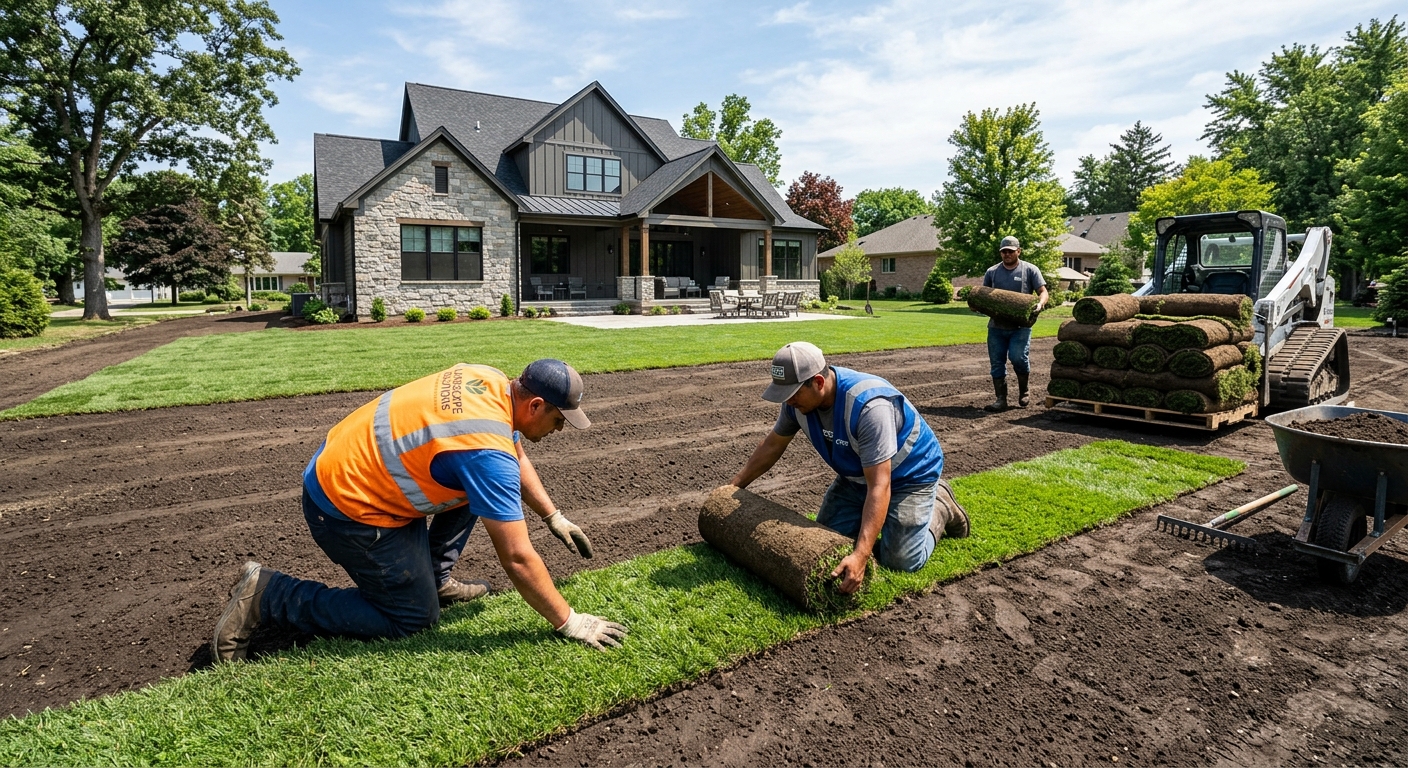
Landscaping options and costs in Vanier
Landscaping in Vanier is shaped by the fact that many properties here are detached or semi-detached, and that yard space is part of why homeowners often invest in curb appeal and outdoor living improvements. In the Ottawa economic region, Vanier’s population was about 17,000 in 2021 (Statistics Canada, 2021 Census), and that size supports a steady demand for local design-build crews—especially around peak spring and early-fall installation windows. Our hardiness reality is Zone 4b–5a, with a real freeze–thaw cycle that makes basing, drainage, and planting timing major cost drivers rather than “nice extras.”
Because frost-free growing time is roughly May to October, you’ll typically see compressed scheduling in spring (soil work, base prep, sod/planting) and another rush in September (tree/shrub planting and cleanup). That timing affects contractor availability and can shift pricing modestly—especially for full-coverage projects that include interlock bases, retaining-wall excavation, and soil amendments. Neighbourhood demand is especially noticeable around older housing pockets near Vanier Parkway, where foundations, driveways, and backyard drainage often need upgrades at the same time as aesthetic refresh.
The result: two quotes for similar square footage can differ depending on whether the job is mostly softscape, mostly hardscape, or truly a full “make-it-work” package that handles grades and drainage. Use the comparison table below as a realistic starting point for typical Vanier budgets across seasons.
| Service |
Description |
Season |
Price Range |
| Full landscape design and installation |
Site walk, concept + grading/drainage plan, soil amendments, planting plan, and installation of lawn/planting and hardscape where needed. |
May–October (with best weather windows in late May–June and September) |
$5,000–$50,000 |
| Sod installation (supply, grade, lay, roll) |
Re-grade/level as required, topsoil and starter fertilizer as needed, then sod laid and rolled with watering schedule. |
Late April–June (or early September) |
$1,500–$8,500 |
| Lawn seeding (grade, seed, starter fertilizer) |
Light topdressing or grading touch-ups, seed blend selection, starter fertilizer, and establishment maintenance. |
Early May–June (or fall seeding depending on temperature) |
$1,200–$5,200 |
| Interlocking patio or walkway |
Excavation, compacted granular base, bedding sand, pavers/interlock, edge restraint, and jointing. |
May–October |
$4,000–$30,000 |
| Retaining wall (interlocking block) |
Trench/excavation to stable depth, geo-fabric, compacted base, drainage stone and weep measures, block + caps. |
May–October (best before deep freezes) |
$4,500–$28,000 |
| Tree and shrub planting |
Plant selection for Zone 4–5, soil prep, planting holes, staking (as required), mulching, and follow-up watering instructions. |
May–June and September (best survival) |
$800–$10,000 |
Prices are estimates only and vary by project scope, site access and material selection.
What affects the price of landscaping in Vanier
In Vanier, even when homeowners describe the “same” landscaping idea, two quotes can land 30–50% apart because the hidden work differs: excavation depth, drainage complexity, base preparation requirements for freeze–thaw, and how much soil amendment is actually needed once we probe clay and existing grades. In Ottawa and across Ontario, labour availability also matters—contractors can have multiple full-yard projects running at once during the May–June and late-summer windows, so schedule pressure can change labour efficiency and material ordering.
Our Zone 4b–5a conditions influence costs in practical ways. Frost dates define the working season, which affects everything from concrete/interlock bases to planting survival. Prairie regions (Zone 2–4) often need ultra-drought-tolerant species and wind-hardy options, while retaining-wall base depth must reliably reach below the frost-impacted zone—an expensive but non-negotiable detail. Coastal BC (Zone 7–8) can support lush palettes longer, but heavy rainfall means drainage and soil-structure work is still a must. Unlike dry BC interior and parts of Alberta, southern Ontario generally avoids strict water restrictions in most years; however, irrigation design still changes installation cost and long-term labour.
Two concrete examples that commonly move a Vanier price upward: (1) clay-rich soil that requires more topsoil amendment and better drainage bedding, and (2) patios or steps built without a deep, well-compacted granular base—contractors then have to correct base issues before heaving becomes visible. If your plan shifts from seeding to sod across a larger lawn area, it can jump into the mid-range where full yard projects often begin—while a well-detailed retaining wall can push budgets toward the $4,000–$30,000 interlock/retaining band even before adding plantings.
| Price Factor |
Why It Matters |
Cost Impact |
| Yard size in sq ft — the primary cost driver for softscape |
Larger areas require more material, more labour hours, and more topsoil grading to get a consistent finish. |
Low to moderate for small refreshes; can become the majority of budget on full-lot projects |
| Grading and drainage work — slope corrections add significant cost |
Freeze–thaw in Ottawa punishes poor slopes; water pooling near foundations can force more excavation and rework. |
Often increases overall cost by a noticeable margin (commonly one pricing “step” higher) |
| Drainage bed or French drain installation |
Subsurface drainage reduces heaving risk and keeps planting beds from staying saturated in spring. |
Can add thousands depending on length, outlet location, and soil conditions |
| Plant material tier — native shrubs vs. ornamental vs. mature specimen trees |
Zone-correct nursery stock and mature trees cost more upfront and may require additional labour for positioning and staking. |
Small plantings may stay near $800–$2,000; larger installs can reach the $5,000–$10,000 bracket |
| Hardscape vs. softscape ratio — walls and patios cost more per sq ft than lawn |
Interlock and wall systems require excavation, base materials, and compaction for long-term performance. |
Shifting even a modest area to interlock can move you into the $4,000–$30,000 hardscape band |
| Irrigation system design and installation |
Even without extreme water limits, irrigation improves establishment and reduces rework when summers are humid. |
Adds cost, but can reduce maintenance and replanting failures |
| Soil amendment and topsoil required |
Clay-rich Ottawa soils often need targeted amendment to improve drainage and root development. |
Increases costs materially where deeper changes are required |
| Tree removal or stump grinding before new planting |
Unexpected removals add equipment time and may require careful staging for driveways and fences. |
Can significantly affect the schedule and add thousands if extensive |
Permits & regulations in Ontario
In Ontario, most routine landscaping and softscape work—like planting, sodding, and standard lawn seeding—typically does not require a permit. Where homeowners should pay closer attention is structural or grading work. Retaining walls above a municipal threshold (commonly around 1.0 m or 3.3 ft in many municipalities) often require a building permit and, depending on height and conditions, may call for engineered drawings. Also, changes to lot grading that alter drainage paths—especially toward neighbouring properties or toward a storm sewer connection—can trigger review requirements because of water management and runoff responsibilities.
Before anyone digs, call for utility locates. Even for planting holes and wall footings, locates reduce risk and help prevent costly disruptions. For irrigation, confirm any local water-use bylaw practices (more common during drought conditions in other provinces, but it’s still smart to follow local guidance in Ontario).
To verify a contractor in Vanier step-by-step: (1) confirm the company’s Ontario licence/registration information through the relevant provincial online resources for licensed trades (if applicable to their scope), (2) ask for a current certificate of insurance for liability (and ensure the coverage is active for the project dates), (3) request proof of WSIB/WCB coverage where required for workers, and (4) look for a clearance letter when they provide it. Then, verify the permit responsibility in writing: who pulls it, what’s included, and the timelines if approvals delay the start.
Planning a landscape that thrives in Vanier's climate
Planning for Vanier’s climate (Zone 4b–5a) means working with frost, not against it. Start with plant selection: choose hardy, zone-appropriate trees and shrubs and layer in native perennials where possible. These usually need less watering once established and are better equipped for winter desiccation. For lawn, understand the trade-off: sod gives immediate curb appeal but costs more—often around $1,500–$8,500 depending on area—while seeding is typically a lower upfront option if you can commit to proper preparation and early-season maintenance.
Drainage and grading are the make-or-break pieces in Ottawa. If your backyard sits low or near a foundation, spring saturation can cause pooling that keeps roots wet and increases freeze–thaw stresses. For interlocking patios and steps, base preparation must be deep, well-compacted granular work to reduce heaving during cold cycles. Retaining walls also need proper drainage behind the wall (drainage stone, fabric, and weep provisions) so hydrostatic pressure doesn’t force movement.
Low-maintenance design helps here too. Use mulch-backed shrub borders, groundcovers, and perennials for a stable “year-round” look without constant trimming. If you want a water-wise angle, consider a rain-garden or a planted swale that slows runoff and improves infiltration—especially useful on lots where downspouts discharge toward lawns. As a cost example: if you’re deciding between sod and seeding on a moderate lawn area, paying for sod can be justified when you need instant results for a fall event or when weed pressure is high—but if you can tolerate establishment time, seeding often provides better value.
| Element |
Climate Consideration |
Maintenance Level |
Price Band |
| Sod lawn installation |
Establishment is best when soil temps rise (late April–June and early September) to reduce winter-kill risk. |
Medium (watering schedule for establishment; mowing as it roots) |
$1,500–$8,500 |
| Native perennial garden |
Better tolerance of Ottawa winters and spring saturation patterns; fewer replanting cycles. |
Low to medium (spring cleanup, seasonal weeding, occasional dividing) |
$800–$5,500 |
| Mulched shrub border |
Mulch moderates soil moisture and temperature swings during freeze–thaw. |
Low (mulch refresh, light pruning) |
$900–$6,000 |
| Interlocking stone patio |
Needs deep, compacted granular base and good edge restraint to resist heaving. |
Low (occasional joint refresh; sealing optional) |
$4,000–$30,000 |
| Retaining wall (block) |
Freeze–thaw requires proper base depth and drainage behind the wall. |
Low (periodic inspection after heavy winters) |
$4,500–$28,000 |
| Drip irrigation system |
Direct watering to roots helps during humid summers while minimizing evaporation and runoff. |
Medium initially (setup/zone tuning), then low ongoing |
$1,200–$6,500 |
How to choose a landscaping contractor in Vanier
Choosing the right contractor in Vanier starts with verifying coverage and professionalism. First, ask whether they’re operating under applicable Ontario trade licensing for their scope. Then request liability insurance—get a certificate of insurance with the project dates and verify the company name matches the quote. For worker coverage, ask for WSIB/WCB proof where required; a legitimate crew won’t hesitate to provide documentation. If they claim they’re “not required,” ask to confirm in writing what they’re covered for under their business structure.
Next, get 2–3 itemised written quotes. A good quote breaks down labour and materials (base rock, bedding sand, sod/seed quantities, drainage stone, soil amendment, and disposal). Watch for vague language like “landscaping materials” without quantities. Read exclusions carefully: is permit pulling included (if needed for a retaining wall)? Is disposal of excavated material included? Will they handle topsoil delivery and grading to final grade? Also confirm warranty terms: a workmanship warranty (often at least 1 year for installation items) and whether product warranties apply to the plants or are only the nursery’s responsibility. Finally, payment schedule matters—never pay more than 10–15% upfront, and hold back a portion until job completion and walkthrough.
Ask for a timeline in writing: target start date, estimated duration for each phase (site prep, base, planting/sod), and contingency if weather delays work. In Ottawa’s frost calendar, a missed window can mean re-mobilization costs.
- Valid liability insurance certificate that matches the quoting company
- WSIB/WCB proof (or clear written explanation of coverage status)
- Itemised quote with quantities and unit rates (not just lump sums)
- Written scope that names what’s included: excavation, base depth, drainage, disposal
- Permit responsibility clarified for retaining walls above threshold heights
- Product list: plant sizes (e.g., caliper/height), sod type, and paver specs
- Soil plan: how they assess clay conditions and what amendment/topsoil is used
- Base construction details for interlock: granular layers, compaction, edge restraint
- Workmanship warranty length and what it covers (settling, heaving, plant survival policies)
- Payment schedule with 10–15% maximum upfront and a completion holdback
- Project schedule in writing with weather buffer expectations
- References or photos from similar Vanier/Ottawa Zone 4–5 installs
Red flags in Vanier include: (1) no itemised quote or no breakdown of base and drainage layers for interlock/walls, (2) pushing for large upfront payments, (3) refusing to provide insurance/WSIB/WCB documentation, (4) promising “one-size-fits-all” plant lists without considering clay and pooling, and (5) vague warranty language that’s limited to “materials only” with no installation coverage.
Frequently asked questions — landscaping in Vanier
What plants thrive in Vanier's climate zone?
In Vanier and most of Ottawa (Zone 4b–5a), you want hardy, cold-tolerant plants that handle winter desiccation and spring saturation. Homeowners usually do well with locally proven shrubs and perennials such as hardy hydrangeas (where appropriate for the cultivar), evergreen foundation plantings, and native perennials that re-establish reliably after winter. If your yard stays wet in spring, choose plants that tolerate short periods of saturation and build beds with proper drainage (mulch and amended soil help, but drainage solutions matter). For taller structure, plan for conifers and hardy deciduous trees suited to Zone 4–5. If your current beds are shaded or windswept near driveways off Vanier Parkway, we’ll tailor spacing and species to improve survival and reduce replanting costs.
Sod vs seed — which is better for a Vanier lawn?
For a Vanier lawn, sod is usually the better choice when you need fast results and stronger early coverage—especially if your current lawn is patchy, weeds are active, or you’re trying to get the yard presentable quickly. The trade-off is cost: sod installation commonly lands in the $1,500–$8,500 band depending on square footage and how much grading/topsoil work is required. Seeding is often more budget-friendly, but it depends heavily on proper prep, seed selection, and consistent early watering. With Ottawa’s freeze–thaw, we also prefer scheduling that allows grass to root before deep cold returns—typically late spring or early fall windows. In short: sod for speed and immediate uniformity; seeding for value if you can manage establishment.
How much does a retaining wall cost in Vanier?
Retaining wall pricing in Vanier depends on height, length, excavation access, and whether drainage behind the wall is included (it should be). For most interlocking block retaining walls, you’ll commonly see budgets in the $4,500–$28,000 range in the Ottawa market tier, but taller walls or difficult access can push toward the upper end. Freeze–thaw also matters: proper base depth and compacted granular materials are non-negotiable, and shortcuts can lead to movement and costly rebuilding. If your wall is tied to new stairs or a patio, the overall project can shift toward the broader hardscaping band. When you request quotes, compare base build-up details, drainage components, and how they handle soil removal and disposal—those are where real cost differences show up.
When is the best time to landscape in Vanier?
The best time in Vanier is May through October, because our frost-free growing season is roughly May to October. Planting and soil work are commonly scheduled for late May–June (when plants can root) and again in September (when temperatures cool but the soil still supports growth). Interlock patios and retaining-wall builds are also typically done in this window so the base materials can compact and set correctly before deep winter. If you’re planning sod, late spring or early fall is ideal; mid-summer installs can succeed but require tighter irrigation and monitoring. The freeze–thaw cycle means we generally avoid rushing critical base prep late in the season. For homeowners, the practical takeaway is to book early if you want specific crews around peak demand in neighbourhoods like the Vanier Parkway area.
Do I need a permit for a retaining wall in Ontario?
Often, yes—depending on height and municipal requirements. In Ontario, many landscaping tasks like planting or sodding typically don’t require a permit, but retaining walls above a height threshold (commonly around 1.0 m / 3.3 ft in many municipalities) may require a building permit and sometimes engineered drawings. Changes to lot grading that affect drainage toward neighbouring properties or storm connections can also trigger approvals. The easiest way to confirm for your address is to ask your contractor what permit pathway applies and then verify with the municipality if needed. Before digging wall footings, make sure utility locates are called. In your quotes, demand clarity: who pulls the permit, what documents are needed, and how that affects the start date and timeline.
How do I improve drainage in my yard?
In Vanier, improving drainage usually starts with identifying where water goes during spring melt and after heavy rain—then fixing the flow path and subsurface conditions. If water pools near your foundation or stays in low spots, grading correction and adding a drainage bed or French drain are common solutions. We also often check soil structure because clay-rich soils can hold water and amplify freeze–thaw stresses. A practical approach is to combine surface management (slopes away from the house, clean downspout discharge strategies) with subsurface improvements (perforated pipe and drainage stone where appropriate). If you have interlock, patio, or a retaining wall involved, the base and drainage layers must be built to handle Ottawa’s winter cycles—otherwise you may see settlement or heaving. For most homeowners, the best next step is a site assessment so you don’t pay for drainage that targets the wrong problem.