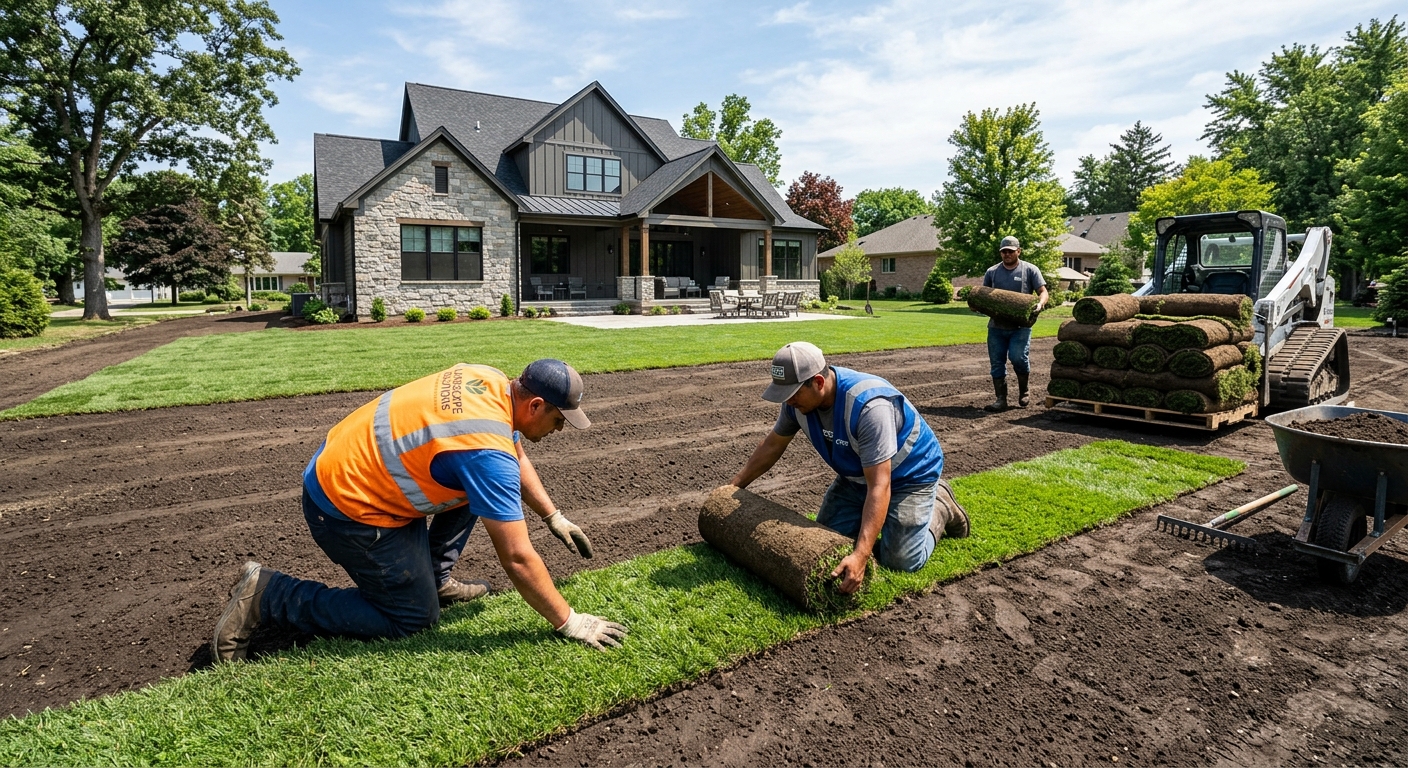
Landscaping options and costs in York University Heights
York University Heights is where homeowners often want a yard that looks sharp but doesn’t become a weekly maintenance project—and with 27,593 residents in the area (Statistics Canada, 2021 Census), there’s real demand for reliable contractors. Most properties here have some outdoor space to work with, which is a big reason landscape upgrades (new walkways, sod, planting beds) show up quickly after purchase or major renovations. Toronto’s market also means labour and scheduling can move fast, especially in family-focused neighbourhoods around Bayview Village and the York University corridor, where curb appeal tends to matter.
Cost is shaped heavily by local conditions: the GTA typically sits in hardiness zones 6a–7a, with winter lows around –23 to –18°C and repeated freeze–thaw cycles. Those cycles raise the bar for patios, retaining walls, and steps—proper granular base depth, drainage, and sometimes geogrid/footer design are what prevent heaving and settling. Many lots in this part of Toronto also involve clay and fill soils, so expect excavation, soil amendment, and drainage work to be common “hidden” line items. Because of this, two homes that look similar from the street can end up with very different totals.
Below is a practical price comparison for common projects in York University Heights, so you can line up quotes and scope before you commit.
| Service |
Description |
Season |
Price Range |
| Full landscape design and installation |
On-site assessment, concept plan, grading/drainage review, plant plan, and installation of softscape and hardscape where applicable |
Mid-April to October (spring/fall planting; hardscape best in warmer windows) |
$8,000–$40,000 |
| Sod installation (supply, grade, lay, roll) |
Site grading, topsoil/soil amendment as needed, sod supply, laying, rolling, and starter watering plan |
Late April to mid-June; late August to early October |
$2,500–$8,000 |
| Lawn seeding (grade, seed, starter fertilizer) |
Fine grading, seed selection, starter fertilizer, light raking and seed coverage; typically follow-up watering recommended |
April to June and early September |
$1,500–$5,500 |
| Interlocking patio or walkway |
Excavation, base (granular layers), compacting, edging, jointing sand, and installation pattern |
May to October |
$6,000–$30,000 |
| Retaining wall (interlocking block) |
Layout, wall base prep, drainage provisions (weep holes/drainage layer), block installation, and backfill |
May to October |
$6,000–$30,000 |
| Tree and shrub planting |
Plant selection, excavation, soil prep and amendment, planting, staking (if required), and mulch |
Spring (April/May) and fall (late August/September) |
$800–$6,000 |
Prices are estimates only and vary by project scope, site access and material selection.
What affects the price of landscaping in York University Heights
In Toronto-area communities like York University Heights, you can see the same landscaping scope come back with wildly different numbers—often a 30–50% spread—because the quote is really a reflection of risk management and site complexity, not just “materials.” Two contractors may both quote for a patio, but one prices in the deeper base, drainage layer, and clay excavation that freeze–thaw cycles demand; another may assume simpler conditions. That’s also why design and installation often falls within a broad band of $8,000–$40,000 when the scope includes grading, plant strategy, and hardscape.
Climate matters in a very practical way. In the GTA’s zone range (6a–7a), frost depth and freeze–thaw cycles define how much base, compaction, and drainage a contractor must build in. Compare this with Prairie regions (zone 2–4): shorter seasons and drought push designs toward simpler, drought-tolerant palettes and often simpler site work to keep costs down when timelines are tight. Coastal BC (zone 7–8) typically supports lush planting, which can reduce winter protection, but still requires strong drainage practices in heavy rain areas—similar to Toronto, just for different rainfall patterns. Dry BC interior demands efficient irrigation design due to water restrictions; Southern Ontario offers a moderate season, but summer dry spells still influence watering plans and seed/sod choices.
In York University Heights specifically, local clay and fill soils can raise costs by requiring excavation and soil amendment, and slopes near foundations can trigger additional drainage work. For example, moving from lawn seeding to sod can feel “just cosmetic,” but sod is an instant-results method and commonly lands in the $2,500–$8,000 range once grading and soil prep are included. Similarly, a retaining wall isn’t only block material—proper base prep and drainage provisions often determine whether a wall performs for the long term.
| Price Factor |
Why It Matters |
Cost Impact |
| Yard size in sq ft — the primary cost driver for softscape |
More area means more labour hours, more product (topsoil/seed/sod), and more time to prepare/finish edges |
Low to high (often the biggest swing in the quote) |
| Grading and drainage work — slope corrections add significant cost |
Toronto lots often need re-sloping away from foundations to prevent pooling and foundation moisture |
Medium to high |
| Drainage bed or French drain installation |
Freeze–thaw and saturated clay can break down poorly drained yards; drains protect both lawn and hardscape |
Medium to high |
| Plant material tier — native shrubs vs. ornamental vs. mature specimen trees |
Tree size and pot/bale/wrap type affect price, labour, and establishment requirements |
Low to high |
| Hardscape vs. softscape ratio — walls and patios cost more per sq ft than lawn |
Hardscape needs excavation, base layers, compacting, and edging/patterning for proper long-term stability |
High |
| Irrigation system design and installation |
Spray head/zoning decisions, pipe runs, and controller setup determine both performance and install time |
Medium to high |
| Soil amendment and topsoil required |
Clay and poor fill often need amendment for turf establishment and root performance |
Low to medium |
| Tree removal or stump grinding before new planting |
Roots, stump size, access for equipment, and disposal add time and equipment costs |
Medium to high |
Permits & regulations in Ontario
For most homeowners in York University Heights, the good news is that planting, sodding, and most typical softscape work usually do not require a permit in Ontario. Replacing a lawn, adding mulch beds, planting shrubs, laying sod/seed, and installing walkways that don’t change structural grading in a major way are generally treated as landscaping rather than construction.
The work that often does require a permit is retaining-wall construction above the local threshold—commonly around 1.0 m (3.3 ft) in many municipalities—because it can affect safety and structural considerations. Also, if you’re making major lot-grading changes that redirect runoff toward a neighbouring lot, a storm connection, or materially alter drainage patterns, you may need approval. If a contractor is proposing any footing-like base changes under a wall or major hardscape regrading that affects drainage, ask them to confirm permit responsibility before work begins.
Before digging near utilities, arrange for utility locates (before planting holes, trenching for drains, or wall footings). Finally, confirm water-use rules with your local authority if you’re adding irrigation, particularly because Toronto-area summer dry spells can lead to watering restrictions discussions. (While those restrictions are more pronounced in dry BC interior and parts of Alberta, it’s still smart to plan conservatively here.)
To verify an Ontario contractor: check their licence/registration status through the appropriate online business/contractor registry, review liability insurance (request a certificate of insurance showing your address as an additional insured if available), and confirm WSIB/WCB coverage. Ask for clearance letters or proof documents in writing before any excavation starts.
Planning a landscape that thrives in York University Heights's climate
Designing for York University Heights means choosing plants and materials that can handle winter cold (often around –23 to –18°C), rapid shoulder-season swings, and Toronto’s frequent freeze–thaw cycles. Start with plant selection: favour zone-appropriate, native and naturally hardy species that need less watering and less winter protection once established. For softscape, decide early between sod and seed. In this market, sod gives instant curb appeal, but it usually costs 3–4x more per sq ft than seeding once you include proper grading and soil prep. Seeding is slower to fill in, but it’s often the better value when you can commit to watering and follow-up.
Drainage and grading are where Toronto projects win or fail. Pooling near foundations is a common complaint on clay-filled lots, so I typically build plans around directing runoff away from the house, adding swales where needed, and using a drainage bed/French drain when the site demands it. For hardscape like patios, retaining walls, and steps, base preparation must account for frost movement: deep, well-compacted granular layers and correct subgrade stabilization help prevent settlement and heaving.
For low maintenance, layer groundcovers, mulch, and perennials for seasonal interest without constant weeding. If you want a water-wise option, consider a rain-garden pocket (with appropriate soil mix and underdrain where required) that captures roof or downspout runoff, or a xeriscape-style planting bed using hardy, drought-tolerant plants—though true “no-water” xeriscaping is rare here in practice because of humid summers and winter freeze, so we still design for efficient watering rather than zero irrigation.
Example: If you want a lawn area repaired quickly, sod may land in the $2,500–$8,000 band. If your priority is long-term value and you can wait for establishment, seeding can be a better fit—especially when drainage is fixed first.
| Element |
Climate Consideration |
Maintenance Level |
Price Band |
| Sod lawn installation |
Needs good base and timely establishment around spring/fall temperatures to reduce winter damage |
Moderate (watering during establishment; then seasonal mowing) |
$2,500–$8,000 |
| Native perennial garden |
Zone-appropriate plants handle winter cold better and return reliably after freeze–thaw |
Low to moderate (mulch top-ups, occasional weeding and deadheading) |
$1,200–$6,000 |
| Mulched shrub border |
Mulch buffers soil temperature swings and helps prevent heaving around root zones |
Low (refresh mulch and check plant structure seasonally) |
$900–$5,000 |
| Interlocking stone patio |
Requires frost-resistant base build-up to prevent settling and movement over winter cycles |
Low (occasional joint sand top-up) |
$6,000–$30,000 |
| Retaining wall (block) |
Wall performance depends on drainage provisions to manage water during freeze periods |
Low (periodic inspection of drainage outlets and surface stability) |
$6,000–$30,000 |
| Drip irrigation system |
Efficient watering supports perennials and borders during hot humid summers with less waste |
Low to moderate (winterizing/blow-out and seasonal checks) |
$1,500–$6,500 |
How to choose a landscaping contractor in York University Heights
Choosing the right landscaping contractor in York University Heights is mostly about verification and documentation. First, confirm Ontario licensing/registration where applicable for the contractor type and trade activity. Next, ask for liability insurance—you should receive a current certificate of insurance showing coverage limits and the project address where feasible. Third, confirm WSIB/WCB coverage. In Ontario, you want proof that the contractor has workers’ compensation in place; ask for a clearance letter or current coverage document before the crew shows up. If they can’t provide it, that’s a stop sign.
Then get 2–3 itemised written quotes rather than one lump sum. A solid quote separates labour and materials, and specifies key items like excavation depth for hardscape bases, drainage provisions, disposal fees, and soil amendment/topsoil quantities. Read exclusions carefully: for example, is permit pulling included where required for a retaining wall, is demolition included (old steps, old sod), and is yard waste hauling/disposal covered?
Warranty matters. Ask for a workmanship warranty length in writing and whether product warranties apply to plants/materials (and how they’re handled if plants fail from improper watering). Also ask if the warranty is transferable if you sell the home.
For payments, never pay more than 10–15% upfront. Use a holdback until completion and walk-through are done. Finally, demand a written timeline with a clear start date and estimated completion—especially because Toronto weather can shift installation windows quickly.
- Request their insurance certificate and verify it’s current before any excavation.
- Confirm WSIB/WCB clearance for the people doing the work (ask for documentation).
- Get a written, itemised scope (labour + materials), not just a total price.
- Ask who pulls permits if a retaining wall exceeds the local threshold (often around 1.0 m).
- Confirm disposal/hauling is included (e.g., sod removal, excess soil, debris).
- Verify hardscape base specs (granular layer depth and compaction) for patio/walkways.
- Ask how they handle drainage so runoff is managed away from the foundation.
- Check plant list quality: size at install (e.g., gallon size), spacing, and replacement terms.
- Confirm grading and topsoil amendment quantities in sq ft or cubic yards, not vague promises.
- Clarify start-to-finish schedule and how weather delays are managed.
- Set a payment schedule that keeps a holdback until final acceptance.
- Get a written workmanship warranty and what it covers (settling, heaving, improper drainage).
In York University Heights, red flags include contractors who: (1) won’t provide proof of WSIB/WCB or liability insurance, (2) quote hardscape without base depth/compaction details, (3) lump grading and drainage into “allowance” numbers with no explanation, (4) demand large upfront payments (well beyond 10–15%), or (5) avoid specifying what’s included (permit, disposal, soil amendment, warranty terms).
Frequently asked questions — landscaping in York University Heights
How do I improve drainage in my yard?
In York University Heights, drainage problems often show up as pooling near foundations or consistently soggy lawn patches—especially on clay or fill soils. The first step is diagnosing where water is coming from: downspouts, surface runoff from higher spots, or a low area that naturally collects water. A contractor should evaluate grading and slope, then recommend fixes like re-sloping (surface grading), adding a drainage bed or French drain where water gathers, and installing proper outlets that don’t discharge toward a neighbour’s property. If you’re doing softscape alongside drainage, it’s smart to plan it together—otherwise new sod or seed can fail in the same low spot. As a practical budget reference, drainage-related work can be part of a broader landscape plan in the $8,000–$40,000 range when grading and hardscape are included.
What is xeriscaping and does it suit York University Heights?
Xeriscaping is a water-wise approach that reduces irrigation by using drought-tolerant plants, efficient mulch coverage, and targeted watering methods like drip lines. In Ontario, including York University Heights, it can absolutely fit—particularly for front borders, side yards, and areas that bake in summer sun. However, the GTA’s freeze–thaw winters mean you still need winter-hardy plants and good soil preparation, not just “dry” species. A realistic strategy is “efficient watering” rather than zero watering: combine mulch, groundcovers, and native perennials with drip irrigation so you’re only watering where plants need it. If you’re budget-conscious, start with one bed or one zone—then expand once the plants establish. For irrigation systems, many homeowners see pricing move within typical landscape bands (often $1,500–$6,500 for drip in a standard setup), which can be cheaper than replacing failing sod.
How do I plan a low-maintenance yard?
A low-maintenance yard in York University Heights comes from reducing “jobs,” not just adding plants. Start with durable grading and drainage so you’re not fighting standing water or erosion every spring. Then choose zone-appropriate, hardy plants (often native shrubs and perennials) that survive our winter lows and return reliably after freeze–thaw cycles. Mulch is your friend: a consistently mulched shrub border reduces weeds and moisture stress. For grass, consider whether you truly need sod everywhere—sod gives instant results, but seeding can be more cost-effective if you’re okay with slower establishment. In Toronto-area pricing, sod projects commonly land in the $2,500–$8,000 band, while seeding is usually lower but requires good watering during establishment. Finally, use simple repeating planting pockets rather than many tiny beds, and plan for seasonal cleanup once or twice rather than weekly weeding.
How deep should a retaining-wall base be for local frost?
For a retaining wall in York University Heights, the base depth needs to be designed around stable subgrade, drainage, and frost movement. There isn’t a one-size number that fits every site because soil condition and wall height matter, but the principle is consistent: excavation and base build-up must extend through soft or unstable material and include properly compacted granular layers, with drainage provisions to prevent water pressure behind the wall. Freeze–thaw cycles in Southern Ontario make good compaction and drainage non-negotiable; water trapped behind a wall can expand and compromise the structure over time. If your wall is near or above the local permitting threshold (often around 1.0 m), you should treat it like a structural project: ask for the contractor’s base and drainage build-up details in writing. That’s one reason retaining walls often fall into the broader $6,000–$30,000 price band.
How much does professional landscape design cost?
Professional landscape design in York University Heights can vary a lot depending on whether you need a simple layout/planting plan or a full design that coordinates grading, drainage concepts, and hardscape drawings. In many Toronto-area projects, homeowners package design into the overall “design and installation” scope, and those projects often land within the $8,000–$40,000 range because design time is bundled with installation labour, materials, and site work. If your project is smaller—say a planting refresh or a short garden bed update—design costs may be lower, but you’ll still want a clear plan for spacing, plant maturity, soil amendments, and how drainage will be handled. When comparing quotes, don’t just compare totals: ask what the design includes (concept plan, final planting plan, revisions, and whether drainage/grading assumptions are specified) and whether the contractor carries the plan into installation.
How do I compare landscaping quotes?
To compare landscaping quotes in York University Heights, insist on itemised line items and apples-to-apples scope. Ask each contractor for a breakdown of labour and materials: excavation quantity, base build-up specs for patios/walkways, topsoil and amendments, plant sizes, irrigation components (if included), and disposal/hauling. Check what’s excluded—common exclusions include permits, demolition, subdrain hookups, and follow-up watering during establishment. Next, verify the contractor’s insurance and WSIB/WCB coverage before they start, and confirm the timeline in writing so you can judge scheduling risk. Finally, compare warranty terms: workmanship warranty length and how plant replacements are handled if winter survival is an issue. If one quote only gives a lump sum and the others are detailed, you’re not comparing fairly—and you may see cost drift once freeze–thaw site realities are uncovered.