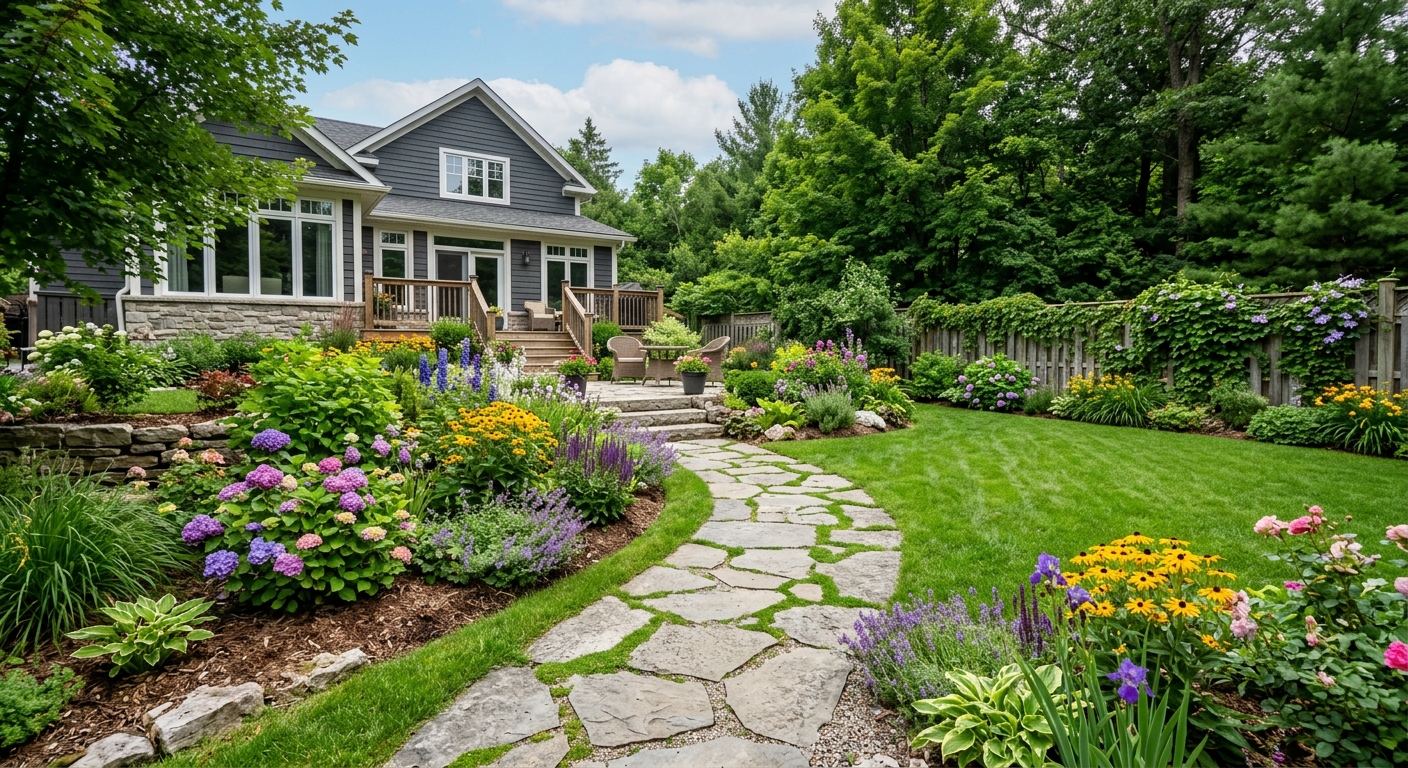
Landscaping options and costs in Yorkdale-Glen Park
Yorkdale-Glen Park homeowners often start planning landscaping with one big question: what will it cost for the look you want. With a population of 14,804 in Yorkdale-Glen Park (Statistics Canada, 2021 Census), there’s steady local demand from both established neighbourhood streets and newer infill pockets where people want curb appeal that holds up through Toronto’s freeze–thaw winters. Because many households are more likely to invest in their detached or single-family property outdoors, landscape improvements can show up quickly as soon as contractors gear up for the spring install season. In practical terms, Toronto’s landscaping pricing is shaped by the region’s hardiness zones 6a–7a, plus deep frost and frequent freeze–thaw cycles that push up the cost of patios, steps, and retaining walls. It’s also a labour-and-logistics market: when crews are busy from May through early October, availability can tighten, affecting both scheduling and installation efficiency.
In Yorkdale-Glen Park, the trade is especially in demand around the Yorkdale / Glen Park corridor where older yards often have drainage challenges and older walkways show lifting or settling. If your goal is to upgrade walkways, add structure, or replace tired lawn areas, the scope typically determines the biggest price swings—materials, excavation, and base preparation are usually where you’ll see the most variation. Use the comparison below to align expectations before you request itemised quotes.
| Service |
Description |
Season |
Price Range |
| Full landscape design and installation |
On-site consultation, site walk, design plan, soil/grade plan, material selection, full installation of softscape and hardscape where applicable |
Spring to early fall (typically May–September) |
$8,000–$40,000 |
| Sod installation (supply, grade, lay, roll) |
Site prep, grading, topsoil amendment as needed, sod supply and installation, rolling and light irrigation setup |
Late spring to early fall (best results May–June and early September) |
$2,500–$8,000 |
| Lawn seeding (grade, seed, starter fertilizer) |
Grading/leveling, seed blend, starter fertilizer, light raking and installation of a seed-safe erosion control layer where required |
Spring or fall (often April/May and late August–September) |
$1,200–$5,000 |
| Interlocking patio or walkway |
Excavation, compaction, base layers, geotextile/geogrid as needed, edging, paver installation and final leveling |
Late spring to fall (concrete/stone work is weather sensitive) |
$6,000–$30,000 |
| Retaining wall (interlocking block) |
Layout, excavation and base/gravel layers, drainage layer, block installation, backfill and final grading |
Spring to early fall |
$6,000–$30,000 |
| Tree and shrub planting |
Plant supply, soil prep, planting holes, amendment, mulch ring, staking (if required), initial watering plan |
Late spring to early fall (with weather checks) |
$800–$6,000 |
Prices are estimates only and vary by project scope, site access and material selection.
What affects the price of landscaping in Yorkdale-Glen Park
In Yorkdale-Glen Park and across the Toronto market, it’s common to see the same “basic” landscaping idea land 30–50% apart between quotes. The difference usually isn’t the look—it’s the hidden site work: excavation depth, drainage solutions, soil condition, base preparation for pavers, and how much labour is required to make everything stable through winter. Toronto crews are also scheduling against short weather windows. When contractors have tight availability, efficient crews can still price competitively, but slower or more complex site conditions often shift the total upward.
First, the region’s plant hardiness zones 6a–7a and frost pattern determine both what survives and how long we can install reliably. In Prairie regions (Zone 2–4), the shorter season and drought pressure push designs toward ultra-hardy, drought-tolerant species and can reduce the working season by several weeks—so designs can be simpler and more repetitive. Coastal BC (Zone 7–8) may support lush palettes, but heavy rainfall makes drainage design a non-negotiable cost item. Southern Ontario sits in the middle: a moderate season with summer dry spells that still require irrigation planning for lawns and establishment. In your Yorkdale-Glen Park yard, local clay or fill may need more topsoil and amendment, and freeze–thaw cycles drive deeper structural base requirements for hardscape.
Two concrete examples: (1) If your interlocking walkway needs deeper base layers to address soft spots after spring melt, the job can move toward the upper end of the $6,000–$30,000 band. (2) If you choose sod for an instant curb effect, sod can run close to the top end of the $2,500–$8,000 lawn band, especially when grading and removing compacted soil are included. Lastly, local housing stock plays a role: many established yards were built for older grading patterns, so correcting drainage can add labour and disposal costs even when the visible “landscaping” looks modest.
| Price Factor |
Why It Matters |
Cost Impact |
| Yard size in sq ft — the primary cost driver for softscape |
Larger areas require more topsoil, seed/sod, labour hours, and materials per square foot |
High: increases both labour and coverage costs |
| Grading and drainage work — slope corrections add significant cost |
Proper slopes and grading prevent pooling and foundation moisture problems |
Medium to High: excavation and rework drive totals |
| Drainage bed or French drain installation |
Captures and redirects groundwater in clay/fill sites |
Medium to High: trenching, pipe, gravel, and routing |
| Plant material tier — native shrubs vs. ornamental vs. mature specimen trees |
Size and species affect supply price, staking, and labour per plant |
Medium: can escalate quickly with large trees |
| Hardscape vs. softscape ratio — walls and patios cost more per sq ft than lawn |
Concrete/stone base prep and compaction are labour-intensive and structural |
High: hardscapes typically dominate budgets |
| Irrigation system design and installation |
Timers, zones, trenching, and head placement improve establishment |
Medium: adds components plus installation time |
| Soil amendment and topsoil required |
Clay and compacted fill often need improved structure and fertility |
Medium: depends on how much is being replaced |
| Tree removal or stump grinding before new planting |
Root balls and stump removal affect how soon other work can begin |
Medium to High: safety, access, disposal, and machinery |
Permits & regulations in Ontario
In Ontario, most typical landscape work—planting, sodding, laying sod, and most softscape projects—usually doesn’t require a permit. However, retaining walls above a threshold often do. In many municipalities the common trigger is retaining walls around 1.0 m (3.3 ft) in height, which can require a building permit and, in some cases, engineered drawings depending on the situation (soil conditions, drainage, and wall design). Also, changes to lot grading that affect how water drains toward neighbouring properties or the storm system may trigger approvals because drainage changes can create downstream impacts.
Before any excavation for planting holes, tree work, or wall footings, you should ensure utility locates are done. That’s a safety and compliance step—not just good practice. If your plan includes underground drainage ties-in or any irrigation trenches, confirm irrigation rules and water-use bylaws (especially during drought conditions, which are more common across Ontario when summers run dry).
How to verify a contractor in Yorkdale-Glen Park: (1) Check the contractor’s Ontario business licensing where required (your contractor’s registration info should be provided on request). (2) Ask for a current certificate of insurance for liability and confirm it matches the job scope. (3) Request proof of WSIB coverage and/or the WCB equivalent documentation when applicable, and ensure the clearance/coverage letter is current. A legitimate contractor will provide these documents quickly and clearly before signing.
Planning a landscape that thrives in Yorkdale-Glen Park's climate
Planning for Yorkdale-Glen Park means working with Toronto’s hardiness zone conditions (zones 6a–7a), seasonal precipitation swings, and freeze–thaw cycles—not fighting them with plants that need pampering. Start with plant selection: choose hardy, zone-appropriate perennials and woody plants, ideally with a mix of native or locally adapted options that establish well in Ontario soils. This typically reduces watering needs after the first establishment period and lowers the risk of winter dieback that can happen when plants are marginally hardy.
Sod vs. seed is another big decision shaped by timing. Sod gives instant coverage, but it’s usually about 3–4 times more per sq ft than seeding when you compare typical lawn approaches. In your budget, that difference can be justified when you need quick curb appeal, have heavy foot traffic, or want a fast erosion control cover. If you can wait for results, seeding is more economical and can still produce a strong lawn—especially if you seed in spring or fall when temperatures are favourable.
In Toronto, drainage and grading are often the difference between a yard that looks great for a few months and one that stays stable for years. Fixing slope and managing runoff prevents pooling, foundation moisture, and repeated winter heaving. For hardscape—especially patios and retaining walls—base preparation must be engineered for frost movement with proper granular layers and compaction. Finally, low-maintenance design strategies like mulched shrub borders, groundcovers, and layered perennials reduce annual upkeep while keeping the yard visually full.
If water is a concern during dry stretches, consider a rain-garden planting area in a downspout collection zone and mulch-forward beds to reduce evaporation. For a practical example: choosing sod near the top of the $2,500–$8,000 band can make sense when you need immediate coverage, but if your priority is long-term value and you’re already budgeting for grading and drainage, seeding plus focused planting can deliver similar curb appeal for less.
| Element |
Climate Consideration |
Maintenance Level |
Price Band |
| Sod lawn installation |
Faster establishment through Toronto’s short frost-free window; requires careful watering until rooted |
Low to Medium (initial watering/monitoring) |
$2,500–$8,000 |
| Native perennial garden |
Hardiness alignment for zone 6a–7a; better tolerance of winter lows near –23 to –18°C |
Low (annual spring cleanup, occasional dividing) |
$1,800–$7,500 |
| Mulched shrub border |
Mulch buffers soil temperature swings and helps manage freeze–thaw stress |
Low (mulch refresh and light pruning) |
$1,200–$6,000 |
| Interlocking stone patio |
Needs proper base thickness and drainage to resist heaving during winter freeze–thaw cycles |
Low (occasional weed control and joint maintenance) |
$6,000–$30,000 |
| Retaining wall (block) |
Backfill and drainage layer are essential in clay/fill soils to prevent hydrostatic pressure |
Low (periodic inspection after spring melt) |
$6,000–$30,000 |
| Drip irrigation system |
Targeted watering improves establishment and reduces waste during humid summers and dry spells |
Medium (seasonal checks, winter blowout if required) |
$1,500–$6,500 |
How to choose a landscaping contractor in Yorkdale-Glen Park
Choosing the right landscaping contractor in Yorkdale-Glen Park starts with verifying the basics before you ever talk price. First, licensing and insurance: ask for their Ontario business registration details where applicable, and require proof of liability insurance that covers the scope you’re hiring for. Next, confirm WSIB/WCB coverage: request a current clearance letter or coverage documentation and make sure it’s not expired. Don’t accept “we’re covered” without paperwork—any reputable contractor will provide certificates and clearance documents on request.
Second, get 2–3 itemised written quotes rather than one lump sum. You want labour and materials broken out—excavation, base materials, geotextile/geogrid if used, plant quantities, topsoil/soil amendment, drainage components, disposal, and any equipment access. Carefully read what’s excluded: for example, is disposal included, are utility locate costs included, and will the contractor haul away excess soil and concrete/stone debris? If a permit is required for a retaining wall, confirm whether the quote includes permit pull and plan requirements, or if that’s on you.
Third, verify warranty terms. Ask for a workmanship warranty length (how long they stand behind installation) and what the manufacturer warranty covers for plant material or hardscape products. Also ask whether the warranty is transferable if you sell your home. For payment, avoid large upfront deposits—never pay more than 10–15% upfront, and hold back funds until key milestones are complete. Finally, get a start date and completion estimate in writing, including weather-sensitive allowances for Toronto’s spring melt and fall frosts.
- Provide a site visit and written scope that matches what you discussed.
- Confirm utility locates are arranged before digging.
- Demand itemised labour/materials (not “miscellaneous supplies”).
- Check liability insurance certificate dates and coverage amounts.
- Verify WSIB/WCB clearance letter is current and matches the contractor entity name.
- Confirm drainage work details (where water goes) and not just “we’ll grade it.”
- Specify base depth/compaction approach for pavers and patios.
- Ask for geotextile/geogrid usage where needed for stability.
- Clarify disposal: hauling away topsoil, concrete, and excess excavated material.
- Put warranty terms in writing (workmanship and plant/product coverage).
- Agree on milestones and keep retainage until final cleanup and walk-through.
- Get the timeline and weather contingency plan in writing.
Concrete red flags in Yorkdale-Glen Park: (1) Quote comes as a single lump sum with no breakdown of base, drainage, or disposal. (2) They won’t show insurance/WSIB documentation promptly. (3) They promise sod/seed or hardscape installation “no matter the weather” without a plan for Toronto’s freeze–thaw timing. (4) They avoid discussing grading and drainage direction, especially if your yard slopes toward a foundation or neighbour. (5) They request more than 15% upfront or refuse to place milestones/warranty terms in the written contract.
Frequently asked questions — landscaping in Yorkdale-Glen Park
When is the best time to landscape in Yorkdale-Glen Park?
The best time to landscape in Yorkdale-Glen Park is typically from late April/May through September, when the soil is workable and frost risk is lower. Planting and lawn work are usually most reliable after spring soil temperatures warm up, and many installers aim for the second peak window in early September for healthy root establishment before winter. For hardscaping like patios and retaining walls, we prefer late spring to early fall so base layers can be compacted properly and freeze–thaw stress doesn’t disrupt curing or settling. Because Toronto sees frequent freeze–thaw cycles, rushing into early spring can increase the chance of settlement or heaving. If you’re comparing budgets, many homeowners schedule sod or full installations—often within the $8,000–$40,000 design-to-install range—around these windows to avoid costly rework.
Do I need a permit for a retaining wall in Ontario?
In Ontario, many landscaping projects don’t need permits, but retaining walls often do—especially when they exceed a height threshold that’s commonly around 1.0 m (3.3 ft) in many municipalities. That threshold can vary depending on location and how the wall is constructed, but the key point for Yorkdale-Glen Park homeowners is that a larger wall can require a building permit and sometimes engineered drawings. Changes to lot grading that affect how water drains (toward neighbouring properties or storm connections) may also require approval. Your contractor should confirm whether a permit is needed before excavation and should describe who is responsible for permit pull. If you’re getting quotes, ask whether permit handling is included or excluded so you’re not surprised by additional time and costs.
How do I improve drainage in my yard?
Drainage improvements in Yorkdale-Glen Park usually start with observing where water goes after rain or melting snow. If you’re seeing pooling, soggy lawn areas, or water migrating toward foundations, the fix often involves both grading and a drainage system—such as a French drain or drainage bed—installed where water naturally collects. Toronto-area clay and fill soils can hold water and exacerbate freeze–thaw movement, so proper excavation and disposal of poor soils is frequently part of the solution. In quotes, look for itemised steps: grading correction, underdrain location, filter fabric, clean gravel, and how the discharge point is handled. A drainage-focused portion can change the overall budget considerably, sometimes moving a project toward the higher end of hardscape or full design bands (for example, $6,000–$30,000 for wall/hardscape components).
What is xeriscaping and does it suit Yorkdale-Glen Park?
Xeriscaping is a landscaping approach that reduces water use by using drought-tolerant plants, mulch, and efficient irrigation or rain-garden capture methods. In Yorkdale-Glen Park, it can suit many yards—especially where you want to reduce watering during summer dry spells—because the region still experiences periods of lower rainfall. That said, xeriscaping doesn’t mean “no watering.” Newly planted areas still need establishment watering, and soil preparation (amending and mulching) matters. A practical blend for Ontario yards is combining hardy perennials and shrubs with mulch-forward beds, plus targeted drip irrigation for plant zones rather than whole-lawn watering. If you’re keeping lawn, a smaller sod or seeded area with xeric beds around it can be a balanced compromise. For homeowners comparing options, note that adding irrigation design often increases costs, but it can protect plant health and reduce long-term water waste.
How do I plan a low-maintenance yard?
A low-maintenance yard in Yorkdale-Glen Park is usually designed around fewer, stronger “layers”: mulch beds, reliable groundcovers, and perennials that survive winter well in zones 6a–7a. Start by focusing on structure—shrubs and hardy perennials—then use mulch to suppress weeds and stabilize soil through freeze–thaw cycles. If you’re choosing lawn, consider whether sod or seeding best fits your schedule and tolerance for ongoing care during establishment. Sod gives instant coverage but requires initial monitoring and watering until rooted; seeding spreads costs differently and often supports a gradual, resilient lawn. For hardscape, proper base preparation reduces future problems like lifting and uneven settling, which also lowers maintenance later. If your budget is tight, it can be smarter to spend toward drainage and a simple patio/walkway (often within $6,000–$30,000) and put the rest into hardy planting and mulch.
How deep should a retaining-wall base be for local frost?
For a retaining wall in Ontario, the base depth should be designed to be stable through frost and freeze–thaw cycles. In practice, that means the contractor must excavate below the area that experiences seasonal heaving and build a properly compacted granular base with drainage layers behind the wall—because water pressure plus frost movement can cause failure. The exact depth depends on wall height, soil conditions, and engineering design (and may be affected by whether a permit/engineered drawings are required). A good quote will explain the base layers, compaction approach, and drainage backfill—not just the wall blocks. If you’re comparing bids, ask how they determine the excavation depth and whether geotextile/geogrid and a drainage layer are included. For many homeowners, retaining wall projects can land anywhere in the $6,000–$30,000 range depending on these technical site requirements.