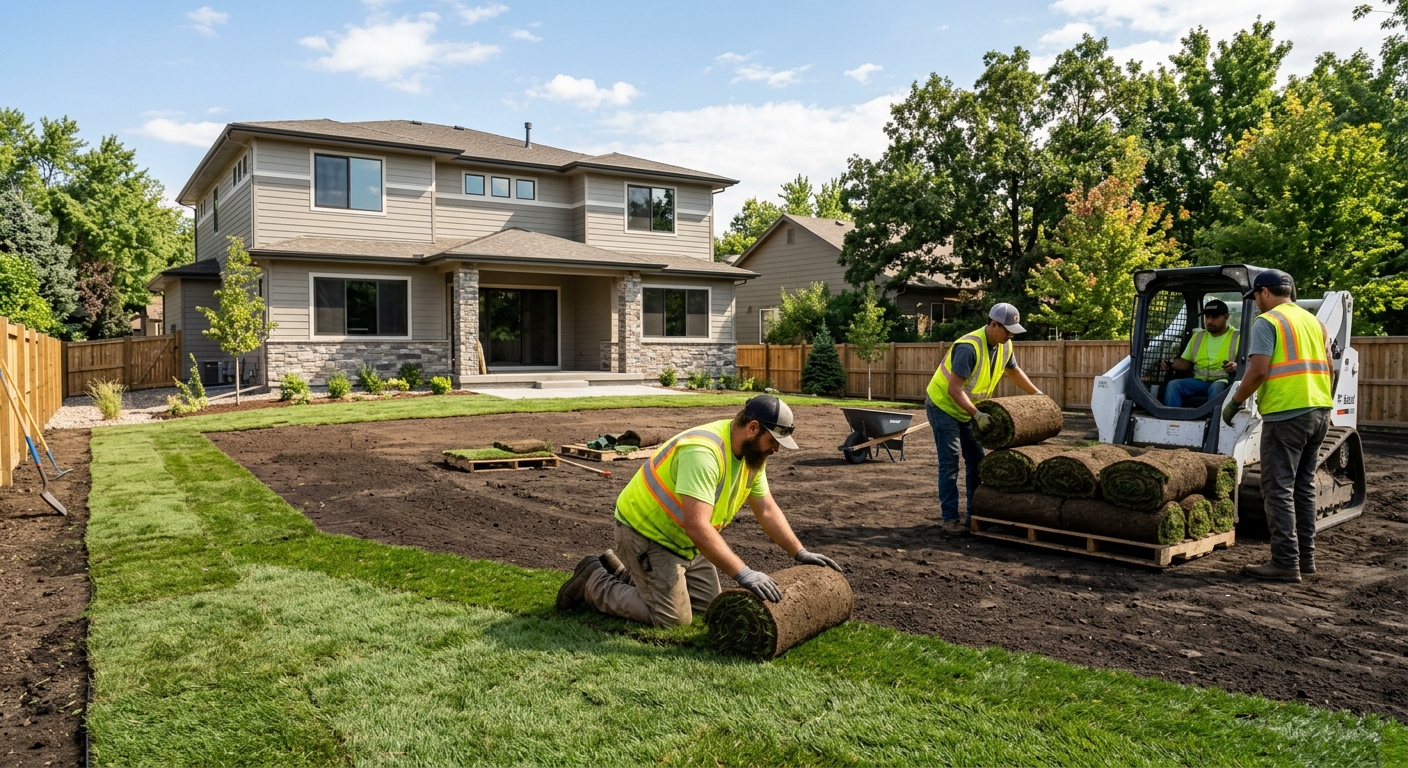
Landscaping options and costs in Pincher Creek
Pincher Creek homeowners typically have more yard to work with than multi-unit neighbourhoods—especially since 81.9% of dwellings in the area are single-detached homes. That housing mix, combined with the fact that 77.0% of households are homeowners, is one reason you’ll see frequent upgrades: new lawns, refreshed front entries, and added trees or privacy screening. In a town of 3,622 people (Statistics Canada, 2021 Census), trades can still be busy during the short May–September window, so scheduling and rush labour can affect final totals.
For the Lethbridge–Medicine Hat region (Canadian hardiness zone 4b), costs are shaped by prairie freeze–thaw cycles and the compressed planting season. Average winter lows around −31.7°C to −28.9°C mean excavation and base prep for pavers, patios, and retaining walls need extra depth and proper drainage to prevent heaving and movement—work that often pushes projects toward the upper end of the typical price bands. Contractor availability also concentrates in peak weeks, so spreading tasks (design in spring, planting after frost risk, hardscape after base settle time) can reduce change orders and re-mobilization fees, particularly in high-demand pockets like downtown edges and along the main residential corridors near the creek valley.
Below is a realistic comparison of common landscape projects and what Pincher Creek pricing usually looks like.
| Service |
Description |
Season |
Price Range |
| Full landscape design and installation |
Site visit, layout plan, plant/stone selections, grading/soil amendments as needed, installation of softscape and hardscape components |
May–September |
$8,000–$35,000 |
| Sod installation (supply, grade, lay, roll) |
Minor grading, base shaping, soil amendment, sod supply and installation, starter fertilizer, final roll/cleanup |
May–early July (best establishment) |
$4–$8 / sq ft |
| Lawn seeding (grade, seed, starter fertilizer) |
Light raking, seed blend selection for prairie conditions, starter fertilizer, light cover and first watering plan |
Late April–June |
$3–$6 / sq ft |
| Interlocking patio or walkway |
Excavation, compacted base (frost-safe depth), geotextile, interlocking stone, leveling sand, edging and cleanup |
May–September |
$120–$300 / sq ft |
| Retaining wall (interlocking block) |
Wall layout, excavation, block installation with proper drainage layer, weeping provisions where required, backfill and compaction |
May–September |
$120–$300 |
| Tree and shrub planting |
Soil prep, amendment, hardy stock selection, staking where needed, mulch ring, first-season care instructions |
May–June or late August–September |
$500–$8,000 |
Prices are estimates only and vary by project scope, site access and material selection.
What affects the price of landscaping in Pincher Creek
In Pincher Creek and the wider Lethbridge–Medicine Hat region, two quotes for the “same” yard can differ by 30–50% because pricing responds to risk: short seasons, deep frost requirements, and how much extra work is needed to make the base and drainage last. Contractors also price for labour mobilization during peak weeks in May–September, especially when they’re scheduling excavations, deliveries, and planting in the same stretch.
Hardiness zone 4b and local frost timing define both what grows and what can be installed when. Prairie conditions usually call for drought-tolerant, wind-tolerant plants, and retaining wall bases must be built to frost-protected depth. That’s different from coastal BC (zone 7–8), where you often get longer growth periods and more lush palettes, but drainage and heavy-rain management drive costs. Dry interior BC also pushes irrigation design toward efficient drip systems, while southern Ontario (zone 5–6) has a moderate season where irrigation is often needed mainly during summer dry spells. In Pincher Creek, you pay attention to efficiency, but the bigger cost driver is freeze–thaw: deeper, well-compacted aggregate layers, plus proper drainage outlets.
Concrete cost examples: (1) A small patio can jump in price if the site needs more excavation because the existing subbase is clayey or poorly drained; the added base and geotextile can move you from a lower to higher end of the paving band (think roughly $120–$300 per sq ft). (2) Homes built before 1981 are common—69.2% of dwellings fall into that age group—so older drainage patterns and mature root zones may require extra soil amendment, careful grading, or stump work before you can lay new turf. (3) Choosing sod generally costs more than seeding because sod is labour- and material-intensive; in Alberta, sod is often priced around $4–$8 per sq ft, so a full-yard lawn can justify itself when you need fast curb appeal, not just long-term greening.
| Price Factor |
Why It Matters |
Cost Impact |
| Yard size in sq ft — the primary cost driver for softscape |
More area means more topsoil, amendment, labour hours, and (for sod) more turf rolls and installation time |
Low to very high; can swing the project total dramatically |
| Grading and drainage work — slope corrections add significant cost |
Even small pooling issues require regrading to direct water away from foundations and into functional drainage points |
Often adds substantial labour and excavation costs |
| Drainage bed or French drain installation |
Freeze–thaw fails quickly when water is trapped in base layers |
Usually a mid-to-high cost add-on |
| Plant material tier — native shrubs vs. ornamental vs. mature specimen trees |
Mature trees cost more, may require professional rigging, and can demand larger holes and stronger backfill |
Low for native seedlings; high for mature specimens |
| Hardscape vs. softscape ratio — walls and patios cost more per sq ft than lawn |
Stonework relies on excavation depth, compacted base, and accurate leveling |
Can shift a “lawn job” into a “hardscape” budget quickly |
| Irrigation system design and installation |
Efficient watering (often drip) reduces waste but adds design, valves, trenches and controller setup |
Mid-range to high depending on zone count and complexity |
| Soil amendment and topsoil required |
Clay-heavy or compacted soils need amendment for root establishment and turf longevity |
Moderate; can escalate if haul-away and import quantities are large |
| Tree removal or stump grinding before new planting |
Roots, stumps and hidden voids affect excavation and planting success |
Moderate to high depending on size and access |
Permits & regulations in Alberta
In Alberta, most routine landscaping activities—like planting trees and shrubs, sodding, topsoiling, and most softscape work—typically do not require a permit. That’s the “usual” expectation for homeowners in Pincher Creek: if the work is mainly soil cover, mulch, seeding, and planting, you generally won’t be dealing with a permit process.
Where permits can come in is retaining walls above the local height threshold. Many municipalities commonly require permits when a retaining wall is around 1.0 m (3.3 ft) or more, and sometimes you may also need engineered drawings depending on the design. Another permit-trigger is grading that changes drainage patterns—especially if it directs runoff toward a neighbouring property or toward a storm sewer connection in a way that differs from the existing surface flow.
Before digging for any planting holes, footings, or drain runs, have utility locates completed so you don’t hit buried services. Also confirm irrigation and water-use rules for drought conditions; while Pincher Creek’s restrictions are not typically as stringent as parts of the BC interior, you still want an efficient setup (drip where practical) to protect your investment.
To verify a contractor in Alberta, do it step-by-step: (1) check their business licence status and any required provincial registration (if applicable to their trade scope); (2) request a Certificate of Insurance for liability—verify it covers landscaping/hardscape work and that the policy is current; (3) ask for proof of WSIB/WCB coverage (or a clearance letter where applicable) so you’re not stuck with liabilities if a worker is injured. Finally, ensure their quote references who is responsible for locates, disposal, and any permit work that is required.
Planning a landscape that thrives in Pincher Creek's climate
Planning in Pincher Creek starts with working with zone 4b conditions—cold snaps, hot dry stretches, wind, and frequent freeze–thaw—rather than trying to force tender plants that need heavy protection. For plant selection, lean on prairie-hardy, drought-tolerant and wind-tolerant species, plus natives where possible. These choices reduce winter dieback and cut your watering demand after establishment, which matters because even efficient irrigation designs are still an ongoing cost.
On turf, sod gives instant visual results, but it’s usually more expensive than seeding and can be a poor fit if you’re not ready to water correctly during the first establishment period. A common budget reality in Alberta is sod at about $4–$8 per sq ft, while seeding is typically far less per square foot because you’re paying for grading, seed, and starter fertilizer rather than rolls. In a short May–September window, sod can be justified when you need curb appeal quickly (for example, before a home sale), but if your priority is long-term value, seeding often wins.
Drainage and grading are critical. In the Lethbridge–Medicine Hat market, we often see pooling from older grading or clay soils; correcting slopes and adding drainage beds or French drains prevents foundation moisture and reduces base failure under patios. Hardscape also has to be built with base prep designed for frost: excavate, compact correctly, and include the right drainage layers so your patio or retaining wall doesn’t heave over winter cycles.
For low maintenance, use groundcovers, mulched shrub borders, and durable perennials that don’t require constant replanting. Xeriscape elements—like drought-tolerant grasses and layered rock mulch—can reduce annual upkeep while still looking intentional. A rain-garden style planting area can also manage runoff naturally, but it must be designed for your soil infiltration and grading direction so water actually moves where it should.
If you’re deciding between lawn options, here’s the practical lens: replacing seeding with sod might cost several times more per square foot (for instance, an area that’s $4–$8/sq ft for sod versus a lower seeding band). That price difference is usually justified only when you need faster results or have tight timelines—otherwise, invest that budget into grading/drainage and hardy planting structure.
| Element |
Climate Consideration |
Maintenance Level |
Price Band |
| Sod lawn installation |
Needs reliable establishment watering in a short prairie season; exposed areas can dry quickly under wind |
Medium during first 4–8 weeks, then lower |
$4–$8 / sq ft |
| Native perennial garden |
Zone-appropriate plants handle cold winters and dry spells better than many ornamentals |
Low to medium (weeding in year one) |
$500–$8,000 |
| Mulched shrub border |
Mulch moderates temperature swings and reduces moisture loss; shrubs tolerate wind |
Low (seasonal pruning and topping mulch) |
$500–$3,500 |
| Interlocking stone patio |
Base depth and drainage must be frost-safe to reduce heaving from freeze–thaw cycles |
Low (occasional joint sand/top-off) |
$120–$300 / sq ft |
| Retaining wall (block) |
Requires proper drainage backfill and frost-protected base to prevent movement |
Low (inspection after major thaws/springs) |
$120–$300 |
| Drip irrigation system |
Efficient watering for drought tolerance; helps during hot, dry stretches and reduces waste |
Medium (seasonal checks and winter shut-down) |
$1,500–$7,500 |
How to choose a landscaping contractor in Pincher Creek
Choosing the right contractor in Pincher Creek is mostly about verifying coverage and getting quotes that are truly comparable. First, confirm they’re properly licensed for their scope and can provide current liability insurance. Ask for the Certificate of Insurance and verify the policy is active and that landscaping/hardscape activities are included. Next, request proof of WSIB/WCB coverage (or a clearance letter where that applies). Don’t accept “we’re covered” verbally—ask to see documents and confirm the effective dates.
Then, get 2–3 itemised written quotes. You want a breakdown of labour and materials, not just a lump sum. For example, if sod is part of the plan, ask whether the quote includes grading, soil amendment, disposal, and starter fertilizer, and what happens if the base settles or drainage is worse than expected. If hardscape is included, make sure the quote specifies base depth approach, geotextile use, edging, compaction, and joint sand. Also clarify exclusions: permit pull included or not (for retaining wall thresholds), disposal of removed material, and whether old turf removal is included.
Warranty matters in freeze–thaw climates. Ask for (1) workmanship warranty length, (2) product/manufacturer warranty details for paving materials and plants, and (3) whether warranties transfer if you sell the home. For payment schedule, never pay more than 10–15% upfront; hold back a portion until the job is substantially complete and you’ve inspected key items like drainage grading, line/grade, and plant establishment steps. Finally, request the start date and completion estimate in writing so you can plan around the short season.
- Provide proof of liability insurance with current effective dates
- Provide WSIB/WCB proof (or clearance letter) and keep it on file
- Use itemised quotes (labour vs materials) and list quantities
- Specify soil amendment/topsoil amounts and where they’re sourced from
- Detail excavation depth, base materials, and compaction approach for patios/walls
- Confirm drainage and grading direction (away from foundation) in writing
- List disposal/haul-away costs or confirm it’s included
- Clarify irrigation responsibility (design, controller, trenching, winter shut-down)
- Include plant sizes/species and a substitution policy if stock is unavailable
- State workmanship warranty duration and what it covers (and doesn’t)
- Confirm payment schedule (max 10–15% upfront) and holdback process
- Provide a written timeline with start date and completion estimate
Red flags in Pincher Creek include: quoting only one vague total with no measurements or quantities, refusing to show insurance/WSIB/WCB documents, excluding disposal and then adding “surprise” dumping charges later, promising “anytime in fall” installs despite frost risk, and giving no written warranty terms or timeline.
Frequently asked questions — landscaping in Pincher Creek
How much does landscaping cost in Pincher Creek?
In Pincher Creek, landscaping cost usually depends on how much of the yard is being changed (softscape vs hardscape) and how much grading/drainage is needed. For a full design and installation, many projects land in the $8,000–$35,000 range, especially when freeze–thaw requires deeper base work and careful drainage. If you’re focused on just turf, sod often runs about $4–$8 per sq ft installed (supply, grade, lay and roll), while seeding is generally lower per square foot but takes longer to fully knit in. Tree and shrub planting commonly starts around $500 and can reach $8,000+ depending on sizes. Because most yards are on single-detached properties, homeowners often have enough area to build a meaningful plan, but that also means costs scale quickly with square footage.
What plants thrive in Pincher Creek's climate zone?
Pincher Creek sits in the Lethbridge–Medicine Hat region (zone 4b), so you want plants that can handle winter lows around −31.7°C to −28.9°C and also survive hot, dry stretches. Prairie-friendly, drought-tolerant choices tend to do best: hardy shrubs, native perennials, and wind-tolerant grasses that don’t require heavy protection. For trees, choose cold-hardy species suited to Alberta conditions and give them space for root development—older neighbourhoods often have compacted soils, so adding soil amendment at planting matters. In areas where you’re exposed to wind, consider layered planting: taller shelter first (where appropriate), then mid shrubs and groundcovers to reduce evaporation. A contractor who works regularly in southern Alberta will typically plan around these hardiness realities instead of relying on tender ornamental palettes.
Sod vs seed — which is better for a Pincher Creek lawn?
For a Pincher Creek lawn, sod and seed can both work, but “better” depends on your timeline and watering readiness. Sod gives instant curb appeal and visual coverage, but it’s typically much more expensive—often about $4–$8 per sq ft installed—because you’re paying for product plus careful laying/rolling and the early establishment period. Seeding costs less per square foot and can be a strong value when you can commit to proper grading and starter fertilizer; however, results take longer to fully fill in. In zone 4b, your real constraint is the short May–September growing window: whichever option you choose, you need a plan for first-season watering and protection from wind and heat. If your main goal is quick results (like before an event or listing), sod may be justified. If your goal is long-term value, seeding plus good drainage and soil prep usually performs well.
How much does a retaining wall cost in Pincher Creek?
Retaining wall pricing in Pincher Creek commonly falls into the broader hardscape band of about $120–$300 for typical installed pricing references, but the true total depends on wall height, length, excavation depth, and how much drainage backfill is required for freeze–thaw durability. Longer walls and walls needing deeper frost-protected base preparation usually cost more because compaction, base aggregate, and drainage components increase labour and materials. Also confirm permitting: in Alberta, walls above a typical threshold (often around 1.0 m / 3.3 ft) frequently require a permit and sometimes engineered drawings depending on the situation. If you’re comparing quotes, make sure they specify the drainage layer and backfill approach—those details are what protect a wall from shifting over winter cycles.
When is the best time to landscape in Pincher Creek?
For most landscaping in Pincher Creek, the practical working season is roughly May–September due to freeze–thaw and frost risk. Early spring (late April to May) is often best for lawn seeding because soil can be prepared and seed can establish during warming days. Sod installation is usually strongest in late spring to early summer when temperatures support root take without drying too fast—typically May through early July in many southern Alberta schedules. For planting trees and shrubs, many homeowners do well with May–June or again in late August–September so plants can root before winter. Hardscape projects like patios and retaining walls are usually planned for mid-summer where weather supports compaction and base stability. A reputable contractor will confirm an exact start date and completion estimate in writing so you can align materials deliveries and weather windows.
Do I need a permit for a retaining wall in Alberta?
In Alberta, you usually don’t need permits for typical planting and softscape work like sodding and landscaping. Retaining walls are different: permits are commonly required once a wall is above a local height threshold—often around 1.0 m (3.3 ft)—and some designs may require engineered drawings depending on conditions. Changes to lot grading that affect drainage patterns toward a neighbouring property or storm connections can also trigger approvals. For your project in Pincher Creek, the best approach is to ask the contractor to confirm whether your proposed wall height and design likely require a permit, and to state clearly in the quote whether permit pulling is included. Also make sure utility locates are completed before digging wall footings or trenching drainage so the work proceeds safely.