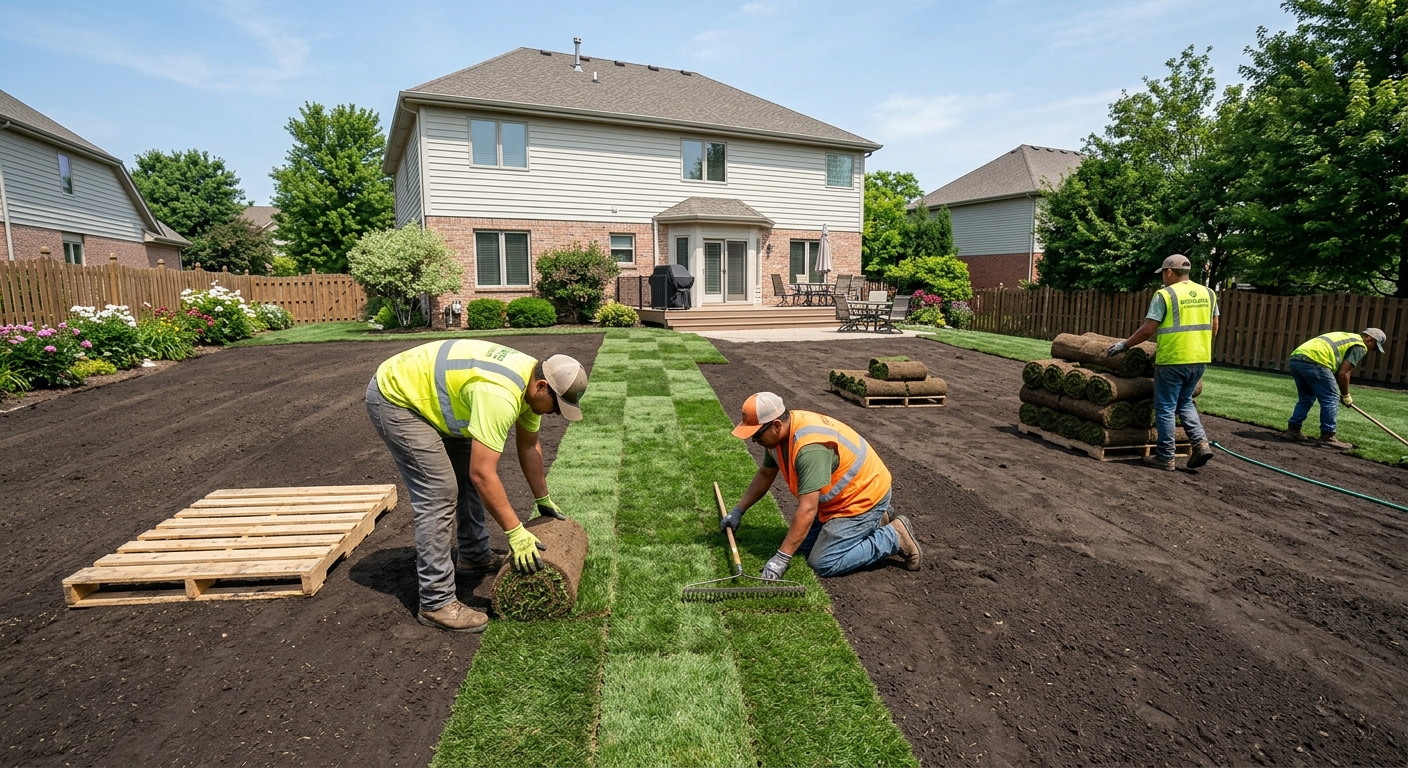
Landscaping options and costs in Crestwood
Crestwood, Alberta is a great place to upgrade curb appeal, and most homeowners here choose landscapes that can handle prairie freeze–thaw cycles without constant rework. With a population of 2,063 in the 2021 Census, Crestwood is small enough that contractor capacity matters—when multiple projects overlap in spring, scheduling and labour rates can move quickly (Statistics Canada, 2021 Census). Most properties sit in a single-family, yard-forward housing pattern, so you’re more likely to see larger softscape areas and meaningful hardscape footprints, which is why integrated plans (grading + drainage + planting + patios) often end up being the best value rather than doing everything in separate phases.
In Calgary’s semi-arid climate, the growing window is shorter than coastal regions, and late-spring frosts plus early fall cold snaps shape what contractors recommend and when they can install. Severe freeze–thaw means patios, walkways, and retaining walls need deep, well-compacted bases and proper drainage to prevent heaving and settlement. That same climate also rewards drought-tolerant, cold-hardy selections and efficient irrigation design—especially when watering rules tighten during dry stretches.
Because of that, demand is particularly strong around newer infill and mature trees areas where homeowners want both structure and long-term stability—commonly in pockets of Crestwood that border established green space and where wind exposure is noticeable in late winter. Below is a practical price comparison you can use as a starting point before you request itemised quotes.
| Service |
Description |
Season |
Price Range |
| Full landscape design and installation |
Site walk, CAD/plan options, grading/drainage plan, planting layout, hardscape scope, irrigation outline, then installation of the full scope |
Late April to October (weather-dependent) |
$12,000–$45,000 |
| Sod installation (supply, grade, lay, roll) |
Minor grading, soil conditioning, sod supply, lay/roll, starter fertiliser, first watering and light top-dressing as needed |
May to early September |
$2,500–$6,000 |
| Lawn seeding (grade, seed, starter fertilizer) |
Final grading, seed blend, starter fertiliser, light raking/covering, watering guidance |
Late April to mid-June and again in August |
$1,500–$4,200 |
| Interlocking patio or walkway |
Excavation, base (crushed stone + compaction), geotextile where needed, edging, pavers, joint sand, and clean finishing |
May to October |
$8,000–$28,000 |
| Retaining wall (interlocking block) |
Wall layout, excavation, compacted drainage backfill, weep holes/aggregate drainage as required, base course, block placement, cap and finishing |
May to September |
$10,000–$40,000 |
| Tree and shrub planting |
Soil prep, planting layout, staking as required, mulch rings, watering plan support, and early care recommendations |
Late April to early October |
$1,200–$12,000 |
Prices are estimates only and vary by project scope, site access and material selection.
What affects the price of landscaping in Crestwood
In Crestwood and the broader Calgary region, you can see the same “simple” landscaping concept come back 30–50% apart from one quote to the next. The biggest drivers are usually how much excavation and base prep is required, how detailed the drainage plan is, and what level of product quality is included. Two contractors may both be “building a patio,” but one may price only the pavers, while the other includes the deep, well-compacted base needed to survive Alberta’s freeze–thaw cycles and prevent long-term settlement.
Climate and hardiness play directly into cost. Calgary sits in prairie hardiness zones 3–4 with late spring frosts and early fall cold snaps—so planting schedules and labour windows are tighter than in warmer areas. Prairie regions also need drought-tolerant, wind-hardy plants, and retaining wall base work must reach below frost depth with proper drainage backfill to avoid heaving and wall movement. Coastal BC clients typically enjoy a longer growing season (Zone 7–8) and lush planting options, but they still pay attention to drainage due to heavier rainfall—whereas Calgary’s semi-arid conditions make soil improvement and efficient irrigation design more important than high-water turf. Southern Ontario (Zone 5–6) offers a more moderate season, but summer dry spells still require irrigation planning; in Alberta, the urgency is often tied to freeze readiness and winter survival.
Concrete examples in Crestwood: (1) If your grade directs runoff toward the foundation, adding a drainage bed or French drain can turn a “planting-only” job into a mid five-figure drainage + hardscape project—often moving you from the $5,000–$10,000 band into the $10,000–$40,000 hardscaping range. (2) Choosing sod can raise costs because sod installation is labour- and material-intensive compared to seeding; as a rule of thumb, seeding typically lands nearer the $1,500–$4,200 range, while sod usually comes in closer to $2,500–$6,000 depending on area and prep.
Finally, many Crestwood homes include established yards or older landscaping that needs removal and rebuild. When you account for yard re-grading tied to foundation risk, the price difference is often measured in thousands of dollars, even before you buy a single plant.
| Price Factor |
Why It Matters |
Cost Impact |
| Yard size in sq ft — the primary cost driver for softscape |
More area means more soil prep, seed/sod, mulch, labour time, and long-term watering needs |
Can change the total by $2,000–$12,000+ depending on square footage |
| Grading and drainage work — slope corrections add significant cost |
Fixing slopes prevents pooling near foundations and keeps water moving to safe discharge points |
Often adds $1,500–$8,000 to the base scope |
| Drainage bed or French drain installation |
Sub-surface drainage protects walls, patios, and planting beds through freeze–thaw |
Commonly adds $2,000–$10,000+ for excavation, pipe, and backfill |
| Plant material tier — native shrubs vs. ornamental vs. mature specimen trees |
Hardier natives and younger stock cost less; larger/more mature plants cost more and need extra labour/staking |
Can swing $800–$15,000+ depending on plant sizes and quantities |
| Hardscape vs. softscape ratio — walls and patios cost more per sq ft than lawn |
Pavers, block systems, edging, and deep bases require heavier materials and more skilled labour |
Shifts projects upward by $4,000–$25,000+ as coverage increases |
| Irrigation system design and installation |
Zoned heads, pressure regulation, and winter-ready components help prevent freeze damage |
Typically adds $1,200–$6,500+ depending on zones and controls |
| Soil amendment and topsoil required |
Clay-heavy or compacted soils need amendment for root development and stable drainage |
Usually adds $500–$4,000+ depending on depth and haul |
| Tree removal or stump grinding before new planting |
Removal/disposal and grinding create space for proper base prep and prevent regrowth issues |
Can add $600–$4,000+ depending on access and size |
Permits & regulations in Alberta
In Alberta, most landscaping and softscape work doesn’t require a permit. Typically, planting, sodding, seeding, mulching, and the installation of garden borders are generally handled as straightforward site improvements with no permit. Regular patio and walkway projects also often proceed without a permit, provided they don’t change major drainage patterns or involve significant structural work.
Where permits do come up is mainly with retaining walls and drainage-altering work. Retaining walls above a municipal height threshold—commonly around 1.0 m (3.3 ft) in many municipalities—often require a building permit, and sometimes engineered drawings for taller or more complex conditions. Also, if you’re changing lot grading in a way that redirects drainage toward neighbouring properties or ties into storm sewer connections, approval may be triggered because it impacts stormwater management.
Utility locates are another step that protects you and the crew: before digging any planting holes, trenches for drains, or wall footings, confirm utility locations. Call for locates to avoid underground service strikes.
To verify a contractor in Crestwood, Alberta, confirm three things before work begins: (1) licensing/registration where applicable for the contractor category in your area; (2) liability insurance—ask for a current certificate of insurance showing sufficient coverage; and (3) WSIB/WCB clearance or coverage status, if they employ workers. Where to look: the contractor’s business listing/registry entry, their certificate of insurance document (expiry dates included), and a WCB/clearance confirmation letter from the insurer/board. If a contractor can’t provide documents on request, treat that as a serious red flag.
Planning a landscape that thrives in Crestwood's climate
Designing for Crestwood means working with Alberta’s prairie hardiness conditions—zones 3–4, late spring frost risk, and early cold snaps. Start with plant selection: choose cold-hardy, wind-tolerant species and prefer native and proven performers that handle dry stretches and don’t require constant winter protection. This isn’t just about survival; it also reduces annual upkeep because shrubs and perennials that fit the climate naturally need less intervention.
Next, match your lawn approach to your goals and timeline. Sod gives instant curb appeal, but in Alberta it’s typically more expensive because of material volume and prep requirements. Seeding costs less and can work very well when you manage moisture during germination, but it won’t “look finished” right away. For many Crestwood lots, the difference is noticeable in your budget: sod installation often falls into the $2,500–$6,000 range, while seeding commonly fits closer to $1,500–$4,200 depending on grading and area. That’s where the price difference is justified if you want an immediate look for a house sale or a specific event.
Drainage and grading are the make-or-break items in Calgary. Even a beautiful bed can fail if water pools and expands during freeze–thaw. Plan for proper slope away from the house, and consider a drainage bed or French drain where soils stay wet. For hardscape like patios and retaining walls, base preparation matters: deep, well-compacted aggregates help resist heaving and settlement.
Finally, build a low-maintenance design: use mulch, groundcovers, and grouped perennials to reduce weeding, and consider a xeriscape or rain-garden element where appropriate. In Crestwood, a zoned drip irrigation layout plus soil amendment often outperforms “always-on” sprinkling—saving water while improving plant reliability across seasons.
| Element |
Climate Consideration |
Maintenance Level |
Price Band |
| Sod lawn installation |
Needs careful watering establishment and frost-safe transition in shoulder seasons |
Medium (watering window + first-season care) |
$2,500–$6,000 |
| Native perennial garden |
Zone-appropriate plants handle cold and dry conditions with less supplemental watering |
Low to medium (spring clean-up + occasional weeding) |
$1,500–$6,000 |
| Mulched shrub border |
Mulch insulates roots and helps reduce moisture loss during dry spells |
Low (light pruning and top-ups) |
$1,200–$5,500 |
| Interlocking stone patio |
Freeze–thaw requires deep, compacted base and proper drainage |
Low (occasional joint sand refresh) |
$8,000–$28,000 |
| Retaining wall (block) |
Backfill drainage and frost-ready base prevent movement and wall failure |
Low (inspection + cleaning as needed) |
$10,000–$40,000 |
| Drip irrigation system |
Zoned drip supports drought-tolerant planting and reduces freeze risk with proper winterisation |
Medium (seasonal adjustments) |
$1,200–$6,500 |
How to choose a landscaping contractor in Crestwood
Choosing the right contractor in Crestwood starts with verification. First, ask about Alberta licensing/registration for the work they perform and confirm they’re operating as a legitimate business. Next, request liability insurance and verify the certificate is current (and that the coverage is adequate for the size of your project). If they employ workers, confirm WSIB/WCB coverage status—ask for a clearance letter or confirmation document, not just a verbal statement.
Then get 2–3 itemised written quotes. You want a labour + materials breakdown, including excavation scope, base depth assumptions, drainage components (pipe, gravel, geotextile), disposal, and product grades. Avoid “lump sum only” pricing if you can—itemisation makes it easier to compare apples to apples and protects you when conditions change on site. Read the scope carefully: is disposal included? Is permit pulling included (where applicable)? Are utility locates included? Who supplies and installs edging, joint sand, and topsoil—or are those excluded?
Warranty matters too. Ask for the workmanship warranty length and what it covers (settlement, re-laying pavers, plant replacement timelines). Separate that from product/manufacturer warranties, and clarify whether any warranty is transferable if you sell your home. For payment, use a schedule that doesn’t front-load risk: never pay more than about 10–15% upfront, and hold a final holdback until the job is complete and cleaned up. Lastly, demand a written timeline with both start date and an estimated completion date that acknowledges weather delays in prairie season.
- Provide insurance certificate with expiry date and coverage amount
- Provide WSIB/WCB clearance or proof of coverage for workers
- List crew size and who performs which parts (excavation vs. planting vs. hardscape)
- Include itemised base and drainage details (geotextile, pipe, backfill type)
- Confirm disposal/haul-away is included if roots, sod, or concrete are removed
- Specify soil depth and amendments (topsoil and/or soil conditioning) if grading is required
- State plant warranty/replacement policy for trees and shrubs
- Detail irrigation components by zone and include winterisation steps
- Explain how they protect seeded/sodded areas during wind and cold snaps
- Include a start date, target completion date, and weather-delay approach in writing
- Limit upfront payment to 10–15% and set a defined holdback amount
- Use a written contract with scope, exclusions, and total price tied to the work description
Red flags to watch in Crestwood: quotes that don’t mention drainage or base prep depth for patios/walls; “no problem” promises about working during frozen ground; missing or expired insurance/WSIB documents; unclear warranties with vague wording like “best effort”; and proposals that won’t provide a detailed, itemised breakdown for labour, materials, and disposal.
Frequently asked questions — landscaping in Crestwood
Do I need a permit for a retaining wall in Alberta?
In Alberta, many landscaping tasks don’t require permits, but retaining walls are the common exception. If your block wall is above a height threshold—often around 1.0 m (3.3 ft) in many municipalities—expect that a permit may be required, and in some cases engineered drawings are requested depending on height, soil conditions, and design complexity. In Crestwood, the practical move is to confirm the wall height you’re planning and whether drainage details (backfill, weep holes, proper grading away from the house) are included in the design, because drainage impacts can influence approval decisions. Before signing, ask your contractor whether they’ll pull the permit (if applicable) and provide the documented proof once the process is complete.
How do I improve drainage in my yard?
Drainage improvements in Crestwood usually start with a site check: where does water run after a heavy rain and where does it collect after thaw? Because Calgary’s freeze–thaw cycles can push moisture and soil expansion, drainage isn’t cosmetic—it affects foundation moisture and long-term hardscape stability. Common solutions include re-grading to direct runoff away from the home, adding a drainage bed, or installing a French drain where soils stay wet. If you already have a patio or retaining wall, drainage work often costs more because excavation is deeper and more base material is required—projects can shift into the hardscaping ranges like $8,000–$28,000 depending on the scope. For best results, pair drainage with proper base compaction and clean outflow points.
What is xeriscaping and does it suit Crestwood?
Xeriscaping is landscaping designed to reduce water use by matching plants to local conditions and using smart soil, mulching, and irrigation methods. In Crestwood and the Calgary region (prairie zones 3–4), xeriscaping often makes sense because hot, dry stretches and periodic watering restrictions push homeowners toward drought-tolerant, wind-hardy plants and efficient irrigation. That doesn’t mean “no greenery”—it means fewer high-water turf areas and more native perennials, hardy shrubs, and structured beds with mulch. A well-designed drip system and soil amendment can help plants establish reliably through summer and survive winter with less maintenance. If you’re doing lawn changes, a switch from sod to seeding can also lower upfront cost; seeding often fits nearer $1,500–$4,200 while sod is commonly closer to $2,500–$6,000.
How do I plan a low-maintenance yard?
A low-maintenance yard in Crestwood comes from planning structure first: drainage, grading, mulch, and then plant grouping. Start by reducing bare soil (mulched borders and groundcovers) so weeds have less room to establish. Choose zone-appropriate, cold-hardy plants and cluster them by watering needs to avoid overwatering some areas and underwatering others. For lawns, many homeowners either use sod where they need instant coverage or seed where timing and maintenance tolerance allow—seeding usually costs less than sod, with typical ranges around $1,500–$4,200 for seeding versus $2,500–$6,000 for sod depending on prep and area. Finally, build in efficient irrigation design (zoned drip, winterisation plan), and keep hardscape bases properly compacted so you’re not redoing patios or walkways after heaving.
How deep should a retaining-wall base be for local frost?
Retaining-wall base depth is driven by frost protection and wall design, but the common principle in Calgary-area work is that the wall’s foundation/base and drainage layers must be built to resist freeze–thaw movement. That means excavating to an appropriate, frost-resistant depth, then using compacted aggregate base and properly drained backfill (often with weep holes and aggregate drainage layers where required). In practice, a contractor determines the depth based on wall height, soil conditions, and engineered requirements when permits/design are involved. Because this is structural and drainage-related, I recommend treating retaining walls differently from simple garden borders: get a written wall spec from your contractor and ensure it addresses frost and drainage. If your wall falls into the permit-required height range, insist the quote explicitly includes the compliant base and drainage system; otherwise you risk costly rework.
How much does professional landscape design cost?
Professional design pricing in the Calgary market varies based on how detailed the drawings are and how much work you want done, but many homeowners notice design becomes cost-effective when it prevents re-grading mistakes and wrong material choices in Alberta’s freeze–thaw conditions. If you’re doing a full landscape, design may be bundled into the project budget that commonly lands in the mid five-figure range when grading, hardscape, planting, and irrigation are included. In Crestwood terms, you can often expect full landscape projects in the broader $12,000–$45,000 range depending on scope and site access. If you’re working smaller—like a patio or planting refresh—request a separate design option or a plan that matches your budget, and ensure the scope specifies drainage grading assumptions and plant hardiness selections.