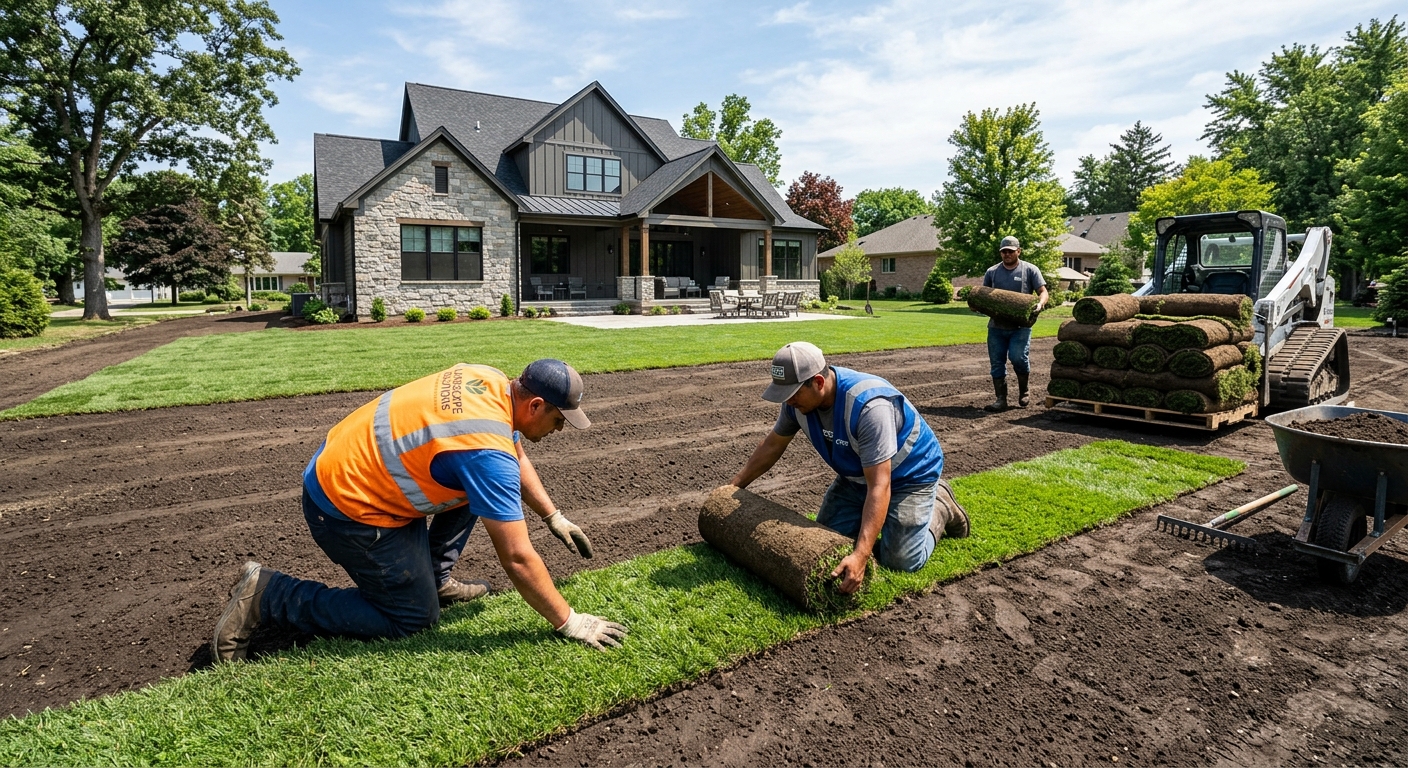
Landscaping options and costs in Secord
Secord, Alberta is where homeowners often want a yard that looks sharp right away but survives Prairie swings—late spring frosts, early fall cold snaps, and severe freeze–thaw cycles. With 3,171 residents (Statistics Canada, 2021 Census), the community is smaller than Calgary proper, so the best crews can book up around peak season. In many Secord neighbourhoods, housing stock tends to include detached properties with yard space, and that extra room is a common reason people choose full projects rather than small “refresh” work. Local landscape demand is especially strong in the newer pockets where lots are still finishing grading and first plantings.
In the Calgary economic region, pricing is shaped by what contractors can realistically install within the workable window in Zones 3–4. Freeze–thaw drives up the importance of deep, well-compacted bases for patios, walkways and retaining walls, while drainage detail prevents heaving and foundation moisture issues. Labour typically represents 40–60% of a full project, so access, regrading depth, and how quickly a crew can move materials across the site can shift quotes noticeably. If you’re comparing options, it helps to start with the three biggest cost buckets: base preparation, hardscape footprint, and plant/soil quality.
Below is a practical comparison of common landscaping scopes you’ll see for Secord homeowners—use it to frame what your quote should include before you compare contractor line items.
| Service |
Description |
Season |
Price Range |
| Full landscape design and installation |
Site visit, concept + planting plan, grading notes, hardscape base prep, planting, and installation coordination |
Spring to early fall (typically mid-April to October, weather permitting) |
$5,000–$50,000 |
| Sod installation (supply, grade, lay, roll) |
Remove/prepare existing lawn, grade for drainage, soil amendments, supply and lay sod, roll and initial watering setup |
Late spring to early fall |
$1,500–$6,000 |
| Lawn seeding (grade, seed, starter fertilizer) |
Grade corrections, seed mix suited to Prairie conditions, starter fertiliser, light topdress if required |
Spring (preferred) or early fall |
$900–$3,800 |
| Interlocking patio or walkway |
Excavate, compacted base layers, bedding sand, pavers, edge restraint, slope to drain away from house |
Spring to fall (best before freeze-set) |
$8,000–$28,000 |
| Retaining wall (interlocking block) |
Setback + reinforcement as needed, compacted engineered-style base, drainage gravel/weep provisions, blocks and cap |
Spring to fall |
$10,000–$40,000 |
| Tree and shrub planting |
Soil prep, amendments, planting layout, stakes/guys where needed, mulch rings, watering plan |
Spring and early fall |
$800–$15,000 |
Prices are estimates only and vary by project scope, site access and material selection.
What affects the price of landscaping in Secord
In Secord and across the Calgary area, two quotes for the “same” landscaping idea can differ by 30–50% because the scope people describe is often missing the hard parts: base preparation depth, drainage correction, how much haul-off is needed, and the quality tier of plants and soil. In Zones 3–4, labour productivity drops during wet or freezing shoulder weeks, and contractors must plan around freeze–thaw cycles to keep bases stable. That labour reality is why comprehensive projects commonly land in the mid five-figure range once grading, hardscape, planting, and irrigation are included.
Calgary’s semi-arid conditions also push design choices. Compared with coastal BC (Zone 7–8) where a longer growing season supports lush broadleaf palettes, Secord needs cold-hardy, drought-tolerant species and more efficient irrigation. Water restrictions and smarter watering design are still part of the decision-making here—smart controllers and zoned drip systems are common add-ons, especially when sod is limited.
Two concrete examples explain the cost swings. First, if your patio or walkway base needs deeper excavation to reach firm, well-compacted material, the cost can climb into the higher end of the interlocking band (for example, $8,000–$28,000), even with the same patio size. Second, sod vs. seed differences are predictable: sod tends to be “instant,” but it usually costs far more per square foot than seeding, so homeowners often start with seeding and then thicken with targeted planting to manage budget within a $5,000–$50,000 full-project plan.
Finally, local lot conditions matter. Newer neighbourhood grading and changes in slope toward the yard or house can require added topsoil and compaction work—sometimes adding thousands—while older lots with established roots or uneven soils may require extra soil amendment and careful drainage corrections to avoid future heaving.
| Price Factor |
Why It Matters |
Cost Impact |
| Yard size in sq ft — the primary cost driver for softscape |
More square footage means more soil prep, seed/sod quantity, labour hours, and edging |
Can significantly change total cost (often the largest variable) |
| Grading and drainage work — slope corrections add significant cost |
Correcting slope affects runoff direction and reduces pooling and foundation moisture risk |
Commonly adds thousands when regrading is substantial |
| Drainage bed or French drain installation |
Helps manage saturated zones and prevents washouts and winter heave |
Often a major add-on for problem areas |
| Plant material tier — native shrubs vs. ornamental vs. mature specimen trees |
Hardier, locally proven species cost less and fail less; larger stock and rare varieties raise material cost |
Can swing plant budget widely, especially with trees |
| Hardscape vs. softscape ratio — walls and patios cost more per sq ft than lawn |
Pavers and blocks require excavation, base materials, and compaction layers |
Shifts the project into the higher five-figure band more quickly |
| Irrigation system design and installation |
Zoning, drip lines, controllers and trenching add labour/material and can reduce long-term water stress |
Can be a mid-project add-on or a major line item |
| Soil amendment and topsoil required |
Prairie soils and construction debris need amendment for root establishment and to support sod/seeding |
Costs rise with poor native soil or deeper rebuilds |
| Tree removal or stump grinding before new planting |
Clearing affects turnaround time and impacts base preparation and planting layout |
Often adds noticeable labour and disposal cost |
Permits & regulations in Alberta
In Alberta, most planting and routine softscape work typically does not require a permit. That usually includes tasks like sodding, lawn seeding, shrub and tree planting, mulching, and installing low-height retaining features that stay below the municipal threshold. For Secord homeowners, that means your “make it look finished” work is often straightforward—permits become relevant mainly when the project affects structural elements, drainage direction, or utility-safe digging.
Work that typically does require a permit can include retaining walls above the common threshold of about 1.0 m (3.3 ft) in many municipalities, especially if engineering is required due to height and surcharge conditions. Also, changes to lot grading that significantly influence drainage toward neighbouring properties or toward storm sewer connections may trigger approvals. Additionally, utility-locates are a must before digging: call for locates before planting holes and especially before trenching for irrigation lines or wall footings.
To verify a contractor, Secord homeowners should do three checks in sequence. First, confirm the contractor’s Alberta licence/registration details where applicable (and confirm the legal entity matches the quote). Second, request a certificate of insurance and read it for liability coverage limits that fit your project scope; keep it on file. Third, ask for proof of WSIB/WCB coverage (as applicable) and a clearance letter or status confirmation.
Finally, confirm water-use expectations for irrigation installation and operation during dry spells—designing zoned systems and soil improvement is often the practical way to stay compliant while keeping plants healthy through Prairie summers.
Planning a landscape that thrives in Secord's climate
Planning a yard that thrives in Secord starts with working with the realities of Prairie Zones 3–4: cold-hardy plants, wind-tolerant layouts, and drainage that survives freeze–thaw. For plant selection, prioritise native and zone-appropriate species that establish quickly and need less summer water, with winter protection where winter burn or desiccation can occur. For lawn, choose sod only where you need instant coverage and can support consistent watering during establishment; seeding often fits better for cost control and long-term resilience when your base is properly graded.
Drainage and grading are non-negotiable in Calgary’s climate. Pooling water and foundation-edge moisture can turn into freeze damage or heaving over time, so we design slopes to drain away from the house and build bases with deep, well-compacted layers for patios, walkways and retaining walls. For hardscape, base prep depth matters because freeze activity expands moisture in poorly compacted material. Low-maintenance design strategies help homeowners enjoy curb appeal without weekly upkeep—think mulch, groundcovers, perennial structure, and seasonal accents rather than high-turnover bedding.
Xeriscape and rain-garden style solutions work well when they’re done with soil amendment and correct runoff routing. A practical budget example: if a 400 sq ft area is a priority for quick coverage, sod may move you toward the higher end of the sod band ($1,500–$6,000 depending on prep and access). But if you’re willing to accept a slower “fill-in,” seeding plus targeted shrubs can keep you closer to the mid-range of softscape spending, leaving more budget for drainage corrections and a durable patio base.
| Element |
Climate Consideration |
Maintenance Level |
Price Band |
| Sod lawn installation |
Needs proper grading and consistent establishment watering through Prairie heat swings; avoid laying into damp/soft bases |
Medium during first season (watering + initial mowing), then lower long-term if maintained |
$1,500–$6,000 |
| Native perennial garden |
Better tolerance of drought cycles and winter conditions with less ongoing irrigation once established |
Low to medium (spring cleanup, occasional weeding) |
$2,000–$12,000 |
| Mulched shrub border |
Mulch stabilises soil temperature and reduces moisture loss in freeze–thaw and windy Chinook periods |
Low (weeding control, topping up mulch) |
$1,500–$9,000 |
| Interlocking stone patio |
Requires deep, well-compacted base and slope to drain away from the home to prevent heaving |
Low (occasional joint sand/top-up and cleaning) |
$8,000–$28,000 |
| Retaining wall (block) |
Needs robust base below frost-influenced zones and drainage gravel/weep details to manage hydrostatic pressure |
Low (inspection of drainage, occasional repairs) |
$10,000–$40,000 |
| Drip irrigation system |
Supports water-efficient delivery for drought-tolerant planting and helps manage watering during restricted periods |
Low once set (seasonal adjustments and checks) |
$2,000–$9,000 |
How to choose a landscaping contractor in Secord
Choosing the right contractor in Secord means verifying coverage and scope clarity before you compare prices. First, confirm Alberta licensing/registration (if applicable to the contractor’s work) and check liability insurance—ask for a current certificate of insurance and ensure it matches the company name on the contract. Second, confirm WSIB/WCB coverage: request proof and a clearance letter or status confirmation so you’re not exposed if a worker is injured on your property. Don’t accept “we’re insured” without documentation.
Next, get 2–3 itemised written quotes, not lump sums. A solid quote breaks out labour vs. materials, excavation and disposal, base prep depth, drainage components, and planting quantities. Ask whether a permit is included if a retaining wall exceeds the typical height threshold, and whether contractor fees cover any required engineering or drawings when applicable. Also confirm if topsoil and soil amendments are supplied, what plant sizes are being installed (container size or height), and what “site conditions” allow for changes.
Warranty matters in freeze–thaw climates. Ask for the workmanship warranty length and whether product/manufacturer warranties apply to plants and irrigation components. Confirm if the warranty is transferable to the homeowner. For payment scheduling, avoid large upfront deposits—typically no more than 10–15%—and hold back a portion until completion and cleanup are confirmed. Finally, insist on a written timeline: start date, staging plan, and realistic completion estimate based on weather windows.
- Request proof of Alberta licensing/registration (if applicable) and match it to the contract name.
- Verify liability insurance on the certificate and confirm it covers the job scope.
- Confirm WSIB/WCB clearance/status before work begins.
- Get an itemised quote: excavation, base materials, drainage, labour hours, and disposal.
- Ask what’s excluded (haul-away, permits, irrigation, replacement of failed sod, stump grinding).
- Confirm soil prep specs: amendment type and depth, and compaction expectations.
- Confirm base requirements for hardscape (layer thickness and compacted base depth).
- Specify plant sizes and quantities (not just plant names).
- Request a drainage plan in writing for low spots near the house.
- Ask for a detailed watering/establishment plan for sod and new plantings.
- Review warranty terms for workmanship and materials; ask if warranties are transferable.
- Use a payment schedule with a holdback until final grading, cleanup, and handover are done.
Red flags in Secord: a quote that doesn’t describe base prep depth for patios or walks; vague wording like “we’ll handle drainage” without specifics; refusing to provide insurance/WSIB/WCB proof; asking for a large upfront payment (well beyond 10–15%); and starting work before utilities are located for any digging or trenching.
Frequently asked questions — landscaping in Secord
What trees grow best in Secord's climate zone?
In Secord (Calgary area) you want cold-hardy, wind-tolerant trees suited to Prairie hardiness conditions (Zone 3–4). Common reliable choices include small to medium trees like Saskatoon serviceberry (where appropriate as a tree-form), Manitoba maple selections, and hardy conifers such as black spruce or compact spruce forms depending on your site. For curb appeal, many homeowners also choose columnar or dwarf evergreen options that hold colour in winter and reduce wind-blown soil loss. Because freeze–thaw and dry Prairie winds stress trees, we also pay attention to planting depth, watering during the first season, and protecting the root zone with mulch. If you’re budgeting, a tree planting scope often sits within the $800–$15,000 band depending on how many trees and their mature size.
How much does sodding a yard cost in Secord?
Sodding cost in Secord typically depends on how much prep is required: removing old turf, correcting grade for drainage, adding soil amendments, and the amount of edging or topsoil rebuild. In the Calgary market, sod projects are commonly estimated in the $1,500–$6,000 range for typical residential yard sections, with higher costs when access is tight, haul-off is needed, or drainage/grading is more involved than expected. If your lawn area has low spots near the foundation, you may also need drainage work before sod so it doesn’t fail in the first freeze–thaw season. A reputable contractor should break down labour, base/grade work, sod type, and installation time in an itemised quote.
How do I prevent weeds in my Secord garden?
Weed prevention in Secord starts before planting. On new beds, we recommend proper soil preparation (including addressing construction debris and uneven grade), then using a weed-suppressing mulch layer—typically thick enough to limit light. Dense planting helps too: spacing plants correctly reduces gaps where weeds take hold. For shrub borders and perennial gardens, a pre-plant weed control step can be built into the project, but always follow the contractor’s recommended products and application timing to suit Alberta conditions. Freeze–thaw can heave thin soil layers, so solid edging and stable bed borders help keep mulch in place. If you’re doing sod-to-bed transitions, installing edging first prevents grass creep. Many homeowners find that spending more on soil amendment and bed prep reduces long-term weeding time versus “top dressing only.”
How do I design a low-water yard in Secord?
A low-water yard in Secord works best when you choose plants that match the Prairie climate and plan irrigation efficiently. Start with native or cold-hardy drought-tolerant species and group them by water needs, then avoid high-maintenance thirsty lawns except where you truly want the grass feel. For many homeowners, mixing a smaller sod lawn area with planted borders is the sweet spot. We often recommend soil amendment and a mulch strategy to reduce evaporation, and drip irrigation with zoned controls so you don’t overwater. Even when watering rules are not as strict as in some dry interior regions, smart controllers and zoned drip help manage water use during Alberta dry spells. If you’re comparing budgets, a drip install can be an add-on, but it supports better establishment and long-term health, often priced within the $2,000–$9,000 range depending on zones and trenching.
How do I find a licensed landscaper in Secord?
In Secord, the best approach is to verify credentials and protections up front. First, ask for the contractor’s Alberta licence/registration details (where applicable) and make sure the legal company name matches your contract and invoice. Second, request a current certificate of insurance and confirm the coverage aligns with the work (excavation, hardscape base prep, and irrigation trenching). Third, confirm WSIB/WCB clearance/status before work starts—this is a key safety and liability requirement. Then ask for itemised written quotes so you can compare labour and materials separately. During the project, a professional contractor should also plan for utility locates before digging. If you see vague scopes, no proof of coverage, or pressure to pay a large deposit early, treat it as a serious warning sign and keep shopping.
How much does landscaping cost in Secord?
Landscaping cost in Secord usually depends on how much you’re changing: base prep and drainage correction, hardscape footprint, planting volume, and whether irrigation is included. For a full design and installation project, many Calgary-area comprehensive jobs land in the $5,000–$50,000 range once grading, planting, and hardscape are accounted for. If your goal is narrower—like sod or a small planting refresh—you may fall closer to smaller bands such as $1,500–$6,000 for sod installations or $800–$15,000 for tree and shrub planting depending on quantities and sizes. The biggest price drivers in Secord are deep base preparation for freeze–thaw stability and drainage work. That’s why two similar-sounding quotes can differ by 30–50% if one includes proper drainage and the other doesn’t.