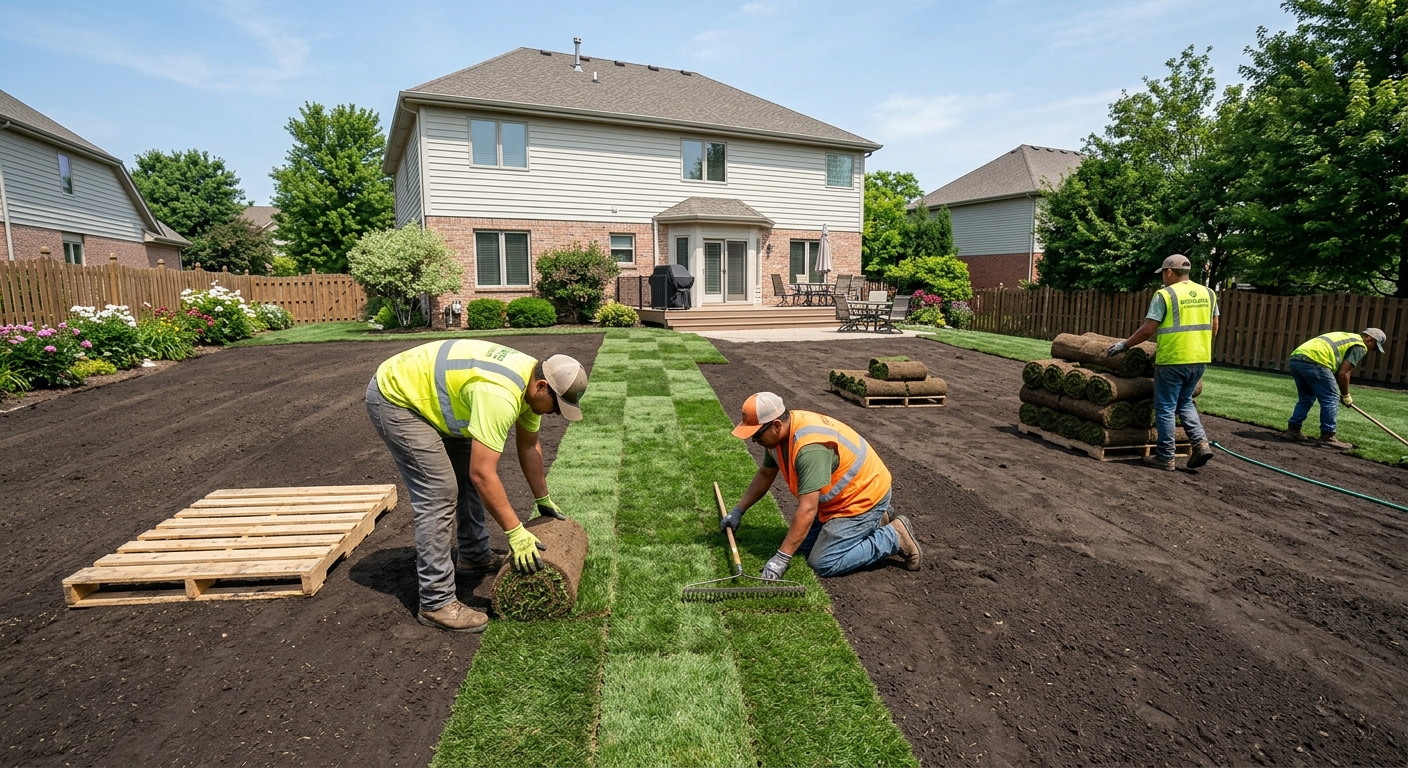
Landscaping options and costs in Vista Heights
Vista Heights, Alberta homeowners typically choose landscaping that can handle Prairie plant hardiness zones 3–4, where late-spring frosts and early fall cold snaps shorten the effective growing window. With a town population of 2,300 (Statistics Canada, 2021 Census), the local market is tight-knit, and contractors who are reliable with grading, hardscape bases, and irrigation setups tend to book quickly—especially around peak install months. Most Vista Heights properties are detached homes with the yard space to invest in curb appeal and functional drainage, which is why full projects (design to finish) are a common spend category for families planning to stay put. In the Calgary region, labour usually represents about 40–60% of total project cost, so scheduling, equipment access, and crew availability can shift your quote by thousands even for similar scopes.
Costs here are shaped by severe freeze–thaw cycles. Patios, walkways, and retaining walls need deep, well-compacted bases and proper runoff control to avoid heaving or settlement. Compared with coastal BC’s long, mild season (more forgiving for lush planting palettes), southern Alberta demands cold-hardy, drought-tolerant species and smarter irrigation (zoned systems, soil improvement, and efficient controller settings). If you’re in demand for work near larger arterial access routes and busier pockets of Vista Heights, planning ahead helps you lock in better availability and pricing.
Below are typical price bands Vista Heights homeowners use to compare options, from design-and-install to the most common lawn and hardscape upgrades—so you can see what fits your budget before you talk to a contractor.
| Service |
Description |
Season |
Price Range |
| Full landscape design and installation |
Site visit, concept and layout, grading plan, irrigation basics (if included), plant palette, sod/seed/hardscape coordination, and full installation |
Late spring to early fall (best window for planting and base work) |
$10,000–$45,000 |
| Sod installation (supply, grade, lay, roll) |
Grading/levelling, topsoil prep, sod supply and installation, light starter fertiliser, and initial watering guidance |
May to mid-September, before heat stress |
$2,200–$6,000 |
| Lawn seeding (grade, seed, starter fertilizer) |
Minor grading, seed blend, starter fertiliser, mulch/temporary coverage, and establishment watering plan |
Early spring or fall seeding for best germination |
$1,500–$4,500 |
| Interlocking patio or walkway |
Excavation, geotextile, deep base, compaction, edging, stone installation, joint sand, and final clean-up |
May to September (material and curing dependent) |
$8,500–$28,000 |
| Retaining wall (interlocking block) |
Excavation and engineered-style base prep, drainage rock and weep provisions, block installation, and backfill compaction |
May to September (workability and drainage) |
$12,000–$35,000 |
| Tree and shrub planting |
Soil amendment, planting holes, staking where needed, mulch, and initial watering plan |
Spring and early fall |
$1,200–$12,500 |
Prices are estimates only and vary by project scope, site access and material selection.
What affects the price of landscaping in Vista Heights
In Vista Heights and across the Calgary region, it’s common to see quotes for the “same job” land 30–50% apart. The biggest reason is that landscaping scope isn’t truly identical: base depth, drainage strategy, soil improvement, and the plant list can look similar on paper but perform very differently in freeze–thaw conditions. If one quote includes a deeper, well-compacted base and a proper drainage bed while another relies on shallower prep, you’ll feel that difference in both durability and cost—especially when you compare softscapes in the $5,000–$50,000 design-and-install band to more focused upgrades like an interlocking patio or walkway.
Prairie hardiness zones 3–4 and Calgary’s frost dynamics dictate what can be planted and how early crews can work. In southern Alberta, short seasons mean contractors need efficient site-ready conditions—grading and base work may start earlier than planting, but only if soil is workable. Retaining wall footings and base prep must reach below the frost line to reduce heaving risk; that’s why wall projects usually land in the mid-range of the retaining wall & hardscaping band ($8,000–$40,000). By contrast, in coastal BC (zones 7–8), the longer growing season can make plant palettes broader, but heavy rain areas still require strong drainage and soil structure—often changing the irrigation and base prep approach rather than removing it. Meanwhile, the BC interior’s watering restrictions push xeriscaping and drip systems; Calgary still faces periodic moisture limits, so efficient controllers and zoned drip or smart timers can affect both labour and materials.
Two concrete Vista Heights examples: (1) a 20–30% increase in excavation depth and compaction time for a patio—done right to resist heaving—can raise costs by several thousand; (2) a drainage bed with French drain rock and cleanouts often costs more upfront, but it prevents repeated settlement and standing water that can otherwise force rework. Even with similar yard size, older lots or homes can require additional soil correction and more backfill work, and those extra truckloads frequently show up as $2,000–$8,000 swings depending on access and distance.
| Price Factor |
Why It Matters |
Cost Impact |
| Yard size in sq ft — the primary cost driver for softscape |
More area means more material (topsoil, sod/seed, mulch) and more labour time to grade and prep |
Usually the largest line-item swing; can change total by $2,000–$15,000+ |
| Grading and drainage work — slope corrections add significant cost |
Fixing ponding and directing runoff away from foundations reduces frost-related movement and long-term failures |
Often adds several thousand dollars depending on cut/fill complexity |
| Drainage bed or French drain installation |
Captures groundwater and relieves saturated subgrades that cause heaving and settlement |
Commonly increases cost by $1,500–$10,000 based on length and discharge method |
| Plant material tier — native shrubs vs. ornamental vs. mature specimen trees |
Mature specimens cost more and require larger root volumes, stronger staking, and additional labour |
Can shift pricing by $800–$7,000 for the same “number of plants” |
| Hardscape vs. softscape ratio — walls and patios cost more per sq ft than lawn |
Stone, base materials, and compaction time typically exceed turf or planting labour |
May push projects toward the mid five-figure range faster |
| Irrigation system design and installation |
Zones, pressure regulation, backflow prevention (where applicable), and efficient head layout change labour and hardware cost |
Often adds $1,200–$8,000 depending on complexity and coverage |
| Soil amendment and topsoil required |
Clays or compacted soils need structured amendments and proper topsoil depth for roots |
Frequently adds $700–$5,000 based on haul distance and soil condition |
| Tree removal or stump grinding before new planting |
Grinding, debris removal, and patching around roots increase labour and equipment requirements |
Can add $300–$6,000 depending on size and access |
Permits & regulations in Alberta
In Alberta, most planting, sodding, and softscape work typically does not require a permit. However, retaining walls can trigger permitting depending on height and local requirements—commonly, walls above about 1.0 m (3.3 ft) are where municipalities often expect a building permit, and sometimes engineered drawings depending on conditions. Another common trigger is lot grading: if your contractor’s plan changes drainage patterns so water flows toward neighbouring properties or connects in a way that affects stormwater direction, approvals may be required. If you’re planning changes near property lines, it’s smart to confirm drainage intent early to avoid late-stage redesign.
Before any digging—planting holes, French drains, or wall footings—arrange utility locates. Even a “small” garden improvement can hit buried services when bases and drainage trenches are installed. Also confirm water-use bylaws for your irrigation plan, particularly during drought conditions (and keep in mind Calgary-area watering rules can tighten temporarily). While the exact bylaw details can vary by local practice, the safest approach is designing efficient irrigation: zoned controllers, drip where possible, and smart scheduling that matches weather and soil infiltration.
To verify your contractor is set up correctly in Vista Heights/Alberta, start with: (1) their Alberta business/contractor registration (where applicable) via the appropriate online registry; (2) certificate of insurance showing general liability with landscaping coverage; and (3) WSIB/WCB coverage for workers—ask for current clearance documentation or proof of account status and ensure the names match the crew who will be onsite. Then confirm who pulls permits if a wall or grading change requires one, and get that commitment in writing.
Planning a landscape that thrives in Vista Heights's climate
To plan landscaping that thrives in Vista Heights, work with Calgary’s hardiness zone 3–4 realities: shorter growing windows, wind exposure, and freeze–thaw cycles that can lift poorly built edges. Start with plant selection—choose cold-hardy, drought-tolerant options that establish quickly and don’t need constant watering or winter protection. Native perennial gardens and hardy shrub borders generally cost less over time than high-maintenance ornamentals, because they tolerate Alberta conditions better and reduce replacement risk after harsh winters.
For lawns, the choice between sod and seeding affects both budget and results. Sod gives instant cover and faster erosion control, but it typically costs about 3–4x more per sq ft than seeding in practice. If you want fast appearance for an upcoming event or you’re battling bare soil erosion, sod in the $2,200–$6,000 range can be justified. If you’re planning longer-term recovery, seeding is often the better value—especially with fall seeding for cooler germination conditions—landing in the $1,500–$4,500 band depending on prep.
Drainage and grading are the make-or-break items in Calgary. Pooling water around foundations accelerates freeze expansion and can lead to settlement. Make sure patios and walkways have deep, well-compacted bases sized for local frost movement, and that retaining wall backfill includes drainage rock and proper weep provisions. For low-maintenance design, blend groundcovers, mulch, and perennials to cut annual upkeep while keeping curb appeal. Xeriscape and rain-garden concepts can work well here: use soil amendment and targeted planting to manage runoff, then irrigate only what needs it with zoned drip and efficient controllers.
To illustrate the decision: a basic seeded lawn may fall around $1,500–$4,500, while a sod installation can land closer to $2,200–$6,000 for similar area. That difference is most justified when you need immediate cover or faster erosion control—otherwise, seeding plus soil correction usually delivers a strong long-term result.
| Element |
Climate Consideration |
Maintenance Level |
Price Band |
| Sod lawn installation |
Requires consistent early watering to root through Alberta’s drying winds; protect from late-spring frosts |
Medium (watering and first-cut schedule) |
$2,200–$6,000 |
| Native perennial garden |
Cold-hardy plants handle Zone 3–4 winters; deeper roots improve drought resilience after chinooks |
Low (spring clean-up, occasional division) |
$2,500–$9,500 |
| Mulched shrub border |
Mulch buffers freeze–thaw at the root zone and reduces evaporation in semi-arid conditions |
Low to medium (weeding and mulch refresh) |
$1,800–$7,500 |
| Interlocking stone patio |
Needs deep base and proper drainage to resist heaving and shifting under freeze–thaw |
Low (sweep joints, periodic sand top-up) |
$8,500–$28,000 |
| Retaining wall (block) |
Backfill drainage and frost-aware base prep are critical to prevent blowouts and movement |
Low (inspection of drainage and minor joint upkeep) |
$12,000–$35,000 |
| Drip irrigation system |
Zoned drip supports drought-tolerant plantings and keeps watering efficient during restrictions |
Medium (seasonal checks and winter blowout/adjustments) |
$1,200–$8,000 |
How to choose a landscaping contractor in Vista Heights
Choosing the right contractor matters more in Vista Heights because freeze–thaw failures are often tied to base prep, drainage details, and how well workmanship matches the local conditions. Start with Alberta verification: request proof of their liability insurance certificate showing landscaping-related work and limits that protect your property. For worker coverage, ask for WSIB/WCB status clearance (or equivalent current proof) so you know the installer who’s on your property is covered. If you see a contractor who can’t provide current documentation quickly, that’s a strong signal to keep searching.
Next, get 2–3 itemised written quotes—not just a lump sum. You want labour and material breakdowns, including excavation depth for patios/walkways, whether a geotextile is used, how drainage rock is specified, and what plant/stone grades are included. Confirm whether permits are included (if needed for a retaining wall), and whether disposal (topsoil haul-off, debris transport) is part of the price. A quote that doesn’t mention disposal often leads to surprise costs mid-project.
Warranty should be in writing. Ask for a workmanship warranty length and what it covers (for example, settlement related to base prep). Also clarify manufacturer warranties for products like paving stones, retaining wall blocks, and irrigation components—and whether they’re transferable to you as the homeowner.
Payment scheduling is another key area: never pay more than about 10–15% upfront. Use holdback—keep a portion due until the final walkthrough and completion items are done. Finally, insist on a start date and a completion estimate in writing, with weather contingency language since spring and fall can swing quickly in Calgary.
- Ask for insurance certificate and verify coverage names match the business/crew.
- Request WSIB/WCB clearance or current proof before work begins.
- Get 2–3 itemised quotes with labour and materials listed separately.
- Confirm who pulls permits if a retaining wall or grading change requires it.
- Ensure base prep details are explicit (excavation depth, compaction method, geotextile).
- Ask how drainage is handled (French drain, daylighting, discharge approach).
- Confirm disposal is included (debris/topsoil haul-off, site clean-up).
- Require a plant list with scientific names and sizes (not just “assorted shrubs”).
- Ask for irrigation design specifics if included: zones, controller, and coverage map.
- Review warranty terms: workmanship duration and exclusions.
- Set payment terms: 10–15% max upfront and holdback until completion.
- Get a written schedule with start and target completion dates.
In Vista Heights, common red flags include: crews starting excavation before utility locates are done; quotes that don’t specify base depth or drainage provisions for patios and walls; “allowance-only” plant pricing with no clear substitutions list; missing disposal cleanup language; and warranties that are verbal only or don’t clearly cover workmanship after freeze–thaw movement.
Frequently asked questions — landscaping in Vista Heights
Do I need a permit for a retaining wall in Alberta?
In Alberta, many homeowners don’t need permits for typical planting or sodding, but retaining walls can be different. In many municipalities, walls above roughly 1.0 m (3.3 ft) commonly trigger a building permit, and engineered drawings may be requested depending on site conditions. In Vista Heights, if the wall is part of a grading change that affects how water drains toward a neighbouring property or storm connection, approvals may also come into play. The safest way to confirm is to ask your contractor whether the wall height and proposed design require a permit, then get that in writing. If a permit is required, the contractor should tell you what’s included (application, drawings, inspections) rather than assuming you’ll handle paperwork yourself.
How do I improve drainage in my yard?
Most drainage problems in Vista Heights come down to two issues: runoff direction and saturated subgrades. Start by checking where water pools after a rain and whether it’s travelling toward your foundation. A proper solution often includes grading corrections and—when needed—a drainage bed or French drain with cleanouts for maintenance. In Calgary-area freeze–thaw cycles, saturated soils expand and contract, which can lift patios and destabilise soil around roots, so “quick fixes” usually don’t last. If your landscape quote includes a drainage bed, expect it to add significant line-item cost (often thousands) compared with basic topsoil-only work, but it can prevent rework. Plan drainage early so it can be coordinated with patios, retaining walls, and irrigation placement.
What is xeriscaping and does it suit Vista Heights?
Xeriscaping is a water-wise approach that uses drought-tolerant plants, efficient irrigation, and soil improvements to reduce watering needs—an approach that suits Vista Heights well. Because Calgary’s semi-arid conditions and wind can dry soil quickly, xeriscaping helps plants survive without constant irrigation, especially during seasonal restrictions and dry stretches. In practice, it often pairs well with drip irrigation and smart controllers rather than relying on broad turf. If you’re comparing budgets, turf replacement can be cheaper long-term, but installation still depends on grading and soil prep. You may see total landscaping that shifts toward the mid range of the design-and-install band (for example, $10,000–$45,000 for a coordinated yard), especially if irrigation zoning and stonework are included.
How do I plan a low-maintenance yard?
A low-maintenance yard in Vista Heights starts with good structure: healthy soil, correct grading, and plant choices that are cold-hardy and drought-tolerant. Build around mulch and groundcovers to suppress weeds, and choose perennials and shrubs that don’t require constant replanting. Combine that with “right-sized” hardscape—like an interlocking patio built on a deep, well-compacted base—so you’re not constantly repairing edge settlement from freeze–thaw. For lawns, seeding can be a more practical, lower-cost entry point than sod, with many projects landing in the $1,500–$4,500 range depending on prep. If you want instant coverage, sod can still be low-maintenance once rooted, but it costs more up front (often $2,200–$6,000). Finally, specify drip irrigation (or targeted watering) so you aren’t maintaining a full-coverage sprinkler system during the shortest season.
How deep should a retaining-wall base be for local frost?
For Vista Heights and the Calgary region, retaining wall base depth should be designed to resist frost movement. As a rule of thumb, you don’t want shallow “surface” footings—freeze–thaw can lift and shift poorly prepped bases. Professional contractors typically excavate to a depth that supports a stable, well-compacted base and places drainage materials correctly behind the wall, rather than relying on guesswork. The exact depth depends on wall height, block system, soil conditions, and drainage details, which is why a good contractor will specify excavation depth and backfill compaction in the quote. Because permits may apply above about 1.0 m in many Alberta municipalities, get the wall design and base spec confirmed early so the installation matches local frost-risk realities.
How much does professional landscape design cost?
Professional landscape design in the Calgary region is usually priced in one of two ways: included with installation for full projects, or charged separately for design-only work. In Vista Heights, when design is tied to installation, you’ll generally see budgeting move into the landscape design & installation range of $5,000–$50,000 depending on scope—grading, irrigation, planting quantities, and hardscape. For smaller upgrades like planting refreshes, costs can be far lower, often starting around $800–$15,000 for tree and shrub planting depending on plant sizes and counts. The key is what design includes: a real site plan, soil and drainage recommendations, and a planting palette that’s suitable for zones 3–4. Ask your contractor to clarify whether the design fee is credited toward the build if you proceed.