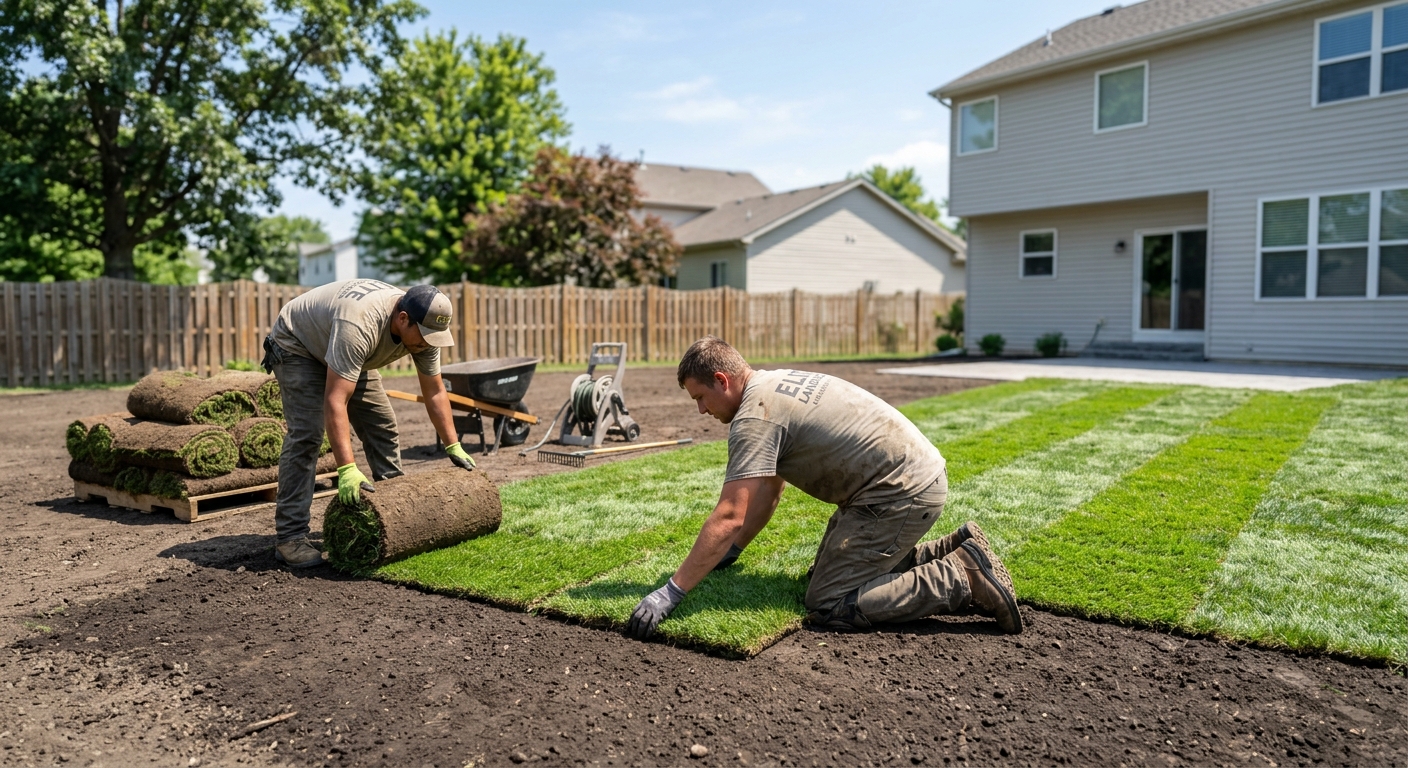
Landscaping options and costs in Suder Greens
Suder Greens, Alberta is a community where homeowners want their yards to look polished year-round—but the Prairie climate makes durability and smart base prep just as important as curb appeal. With a population of 2,811 (Statistics Canada, 2021 Census), the area has a steady flow of owner-occupied homes that invest in updates as new neighbourhood streets settle and yards mature. In practical terms, landscape improvements are especially in demand in the newer pockets of Suder Greens where driveways, walkways, and grading are being refined.
In Calgary’s Zone 3–4 conditions, late-spring frosts and early fall cold snaps affect both what plants survive and when contractors can safely install sod, hardscape, and drainage. Freeze–thaw cycles are severe, so patios, retaining walls, and walkways require deep, well-compacted bases with proper drainage to avoid heaving or failure. Because labour typically represents 40–60% of a full project, access (tight gates, long haul distances, or heavy equipment restrictions) can shift the total cost even for the same scope. Contractors also plan around chinooks and dry spells—an efficient irrigation design and soil improvement can reduce rework and help lawns establish.
Below is a simple way to compare common options and budget ranges in Suder Greens, then we’ll break down what drives the final quote.
| Service |
Description |
Season |
Price Range |
| Full landscape design and installation |
Site visit, grading plan, plant palette, hardscape/softscape build, and cleanup |
Late spring–early fall (weather-dependent) |
$5,000–$50,000 |
| Sod installation (supply, grade, lay, roll) |
Minor grading, topsoil/soil amendment, sod laying, rolling, and initial watering setup |
May–September (avoid cold snaps) |
$1,500–$6,000 |
| Lawn seeding (grade, seed, starter fertilizer) |
Fine grading, seed blend, starter fertilizer, light rake/rolling, and establishment plan |
April–June and early fall seeding where feasible |
$900–$3,500 |
| Interlocking patio or walkway |
Excavation, base (crushed rock), edge restraints, pavers, and jointing sand |
May–September |
$8,000–$28,000 |
| Retaining wall (interlocking block) |
Block wall system with granular backfill, drainage layer, and reinforcement as needed |
May–September (footings must be buildable) |
$10,000–$40,000 |
| Tree and shrub planting |
Soil preparation, planting, staking (when required), and mulch beds |
Late spring–early fall |
$800–$15,000 |
Prices are estimates only and vary by project scope, site access and material selection.
What affects the price of landscaping in Suder Greens
In Suder Greens and the wider Calgary region, you can often see the same “type” of landscaping swing by 30–50% between quotes. The usual reasons aren’t style—they’re logistics and foundation-level details: base depth, drainage provisions, excavation volume, hauling distance, and how much labour is required to meet Calgary’s freeze–thaw performance expectations. The market also has limited windows to work outside safely, so scheduling and crew availability can affect pricing, especially for comprehensive projects that include grading, hardscape, planting, and irrigation.
Calgary sits in Prairie hardiness zones 3–4, where late frosts mean contractors must time installs carefully. That same climate also shortens the growing season, which pushes costs toward cold-hardy, wind-tolerant, drought-resistant species and smart irrigation controllers. Retaining wall base depth typically must extend below the frost line to help prevent heaving; that requirement alone can change a quote substantially versus “surface” projects. By contrast, coastal BC’s long, mild season (Zone 7–8) supports lush growth and broader palettes, but heavy-rain drainage design becomes the main cost driver. In the dry BC interior, irrigation design is constrained by water rules, which encourages drip and zoned systems. Southern Ontario (Zone 5–6) has a moderate season, so the main lawn cost difference is often summer dry spells rather than frost-related installation limits.
Concrete examples in Suder Greens: (1) A 300 sq ft sod lawn that’s mostly flat often lands near the $1,500–$6,000 range, but if grading requires major re-lining of slopes and extra topsoil, the quote moves upward quickly. (2) A small interlocking patio can stay near the $8,000–$28,000 band, but if the base needs deeper excavation for frost protection or drainage corrections, costs climb because labour and crushed rock volumes increase. Housing age also matters—newer builds sometimes require more initial grading and soil improvement, which shows up in the dollars early and often.
| Price Factor |
Why It Matters |
Cost Impact |
| Yard size in sq ft — the primary cost driver for softscape |
More area means more topsoil, seed/sod, mulch, and labour time |
Often the largest swing (tens of thousands for full installs) |
| Grading and drainage work — slope corrections add significant cost |
Freeze–thaw performance depends on water moving away from the home |
Can add 20–40% on “flat yard” projects |
| Drainage bed or French drain installation |
Reduces pooling and helps prevent foundation moisture issues |
May double excavation-related line items |
| Plant material tier — native shrubs vs. ornamental vs. mature specimen trees |
Mature specimens cost more and require larger excavation and protection |
Can change totals by several thousand dollars |
| Hardscape vs. softscape ratio — walls and patios cost more per sq ft than lawn |
Pavers/blocks demand base, edging, and compaction |
Hardscapes usually pull pricing into higher bands |
| Irrigation system design and installation |
Zoned heads and smart controllers improve efficiency in Alberta climates |
Typically adds thousands depending on complexity |
| Soil amendment and topsoil required |
Better soil improves establishment and reduces re-seeding/sodding failures |
Frequently increases costs by 10–25% |
| Tree removal or stump grinding before new planting |
Removal creates disposal, stump grinding, and sometimes additional hauling |
Can add notable one-time charges |
Permits & regulations in Alberta
In Alberta, most planting and softscape work typically does not require a permit. That usually includes sodding, lawn seeding, mulching, planting shrubs/trees, and installing many forms of garden edging and walkways—provided you’re not making significant changes that affect drainage to neighbouring properties. Most “garden-scale” grading adjustments are also commonly handled without a permit, but you should still confirm details with your municipality if you’re redirecting water.
Where permits can be required is retaining wall construction above a height threshold—commonly around 1.0 m (3.3 ft) in many municipalities. Larger retaining walls, walls near property lines, or walls that need engineered design may require a building permit and sometimes engineered drawings. Also, if you plan changes to lot grading that meaningfully affect stormwater flow toward a neighbouring property or storm sewer connection, you may need approval before excavation begins.
Before any digging (planting holes, footing trenches for walls, or drain trenches), always arrange utility locates. Then, for your Suder Greens project, verify your contractor properly: check their Alberta business registration/licence details where applicable, request a current certificate of insurance (general liability), and confirm WSIB/WCB clearance (coverage for workers). Your contractor should be able to provide certificates on request and explain how they’ll handle site safety, excavation, and cleanup.
Planning a landscape that thrives in Suder Greens's climate
To design a yard that thrives in Suder Greens, plan around Alberta’s hardiness zone 3–4, winter freeze–thaw, and the reality that spring and fall weather can interrupt installation. Start with plant selection: choose zone-appropriate, cold-hardy, wind-tolerant species and prioritize native or Alberta-proven shrubs and perennials. These choices usually need less watering once established and require less winter protection than tender ornamentals.
Next, decide on sod vs. seed based on your timeline and site conditions. Sod gives instant results, but in Calgary-area conditions it costs about 3–4x more per sq ft than seeding because you’re paying for product delivery and installation labour. Seeding can be the more cost-effective route when you can accept a slower, phased “finish.” As a practical example: if a 400 sq ft lawn is trending toward the $1,500–$6,000 sod band, a comparable seeding strategy might fall substantially lower, leaving budget for drainage fixes or soil amendments that reduce the chance of patchy lawn failure.
Drainage and grading are critical. Avoid pooling near foundations by shaping slopes so surface water sheds away. For hardscape, patios and walkways need deep, well-compacted bases sized for Calgary’s frost environment. Low-maintenance design strategies can still look premium: use mulched shrub borders, groundcovers, and hardy perennials to reduce mowing and annual upkeep. Xeriscape concepts—like smart zoned drip irrigation and rain-garden-style drainage beds—are well suited to Calgary’s semi-arid pattern and periodic watering restrictions.
| Element |
Climate Consideration |
Maintenance Level |
Price Band |
| Sod lawn installation |
Establish during frost-safe weather; manage irrigation carefully through establishment |
Medium (early watering, then typical mowing) |
$1,500–$6,000 |
| Native perennial garden |
Zone-appropriate plants handle cold snaps with less winter loss |
Low (annual pruning/refresh, mulch top-ups) |
$1,500–$8,500 |
| Mulched shrub border |
Wind- and drought-tolerant shrubs reduce replanting risk |
Low to medium (weeding first year, then minimal) |
$800–$5,500 |
| Interlocking stone patio |
Needs deep base and drainage to resist heaving in freeze–thaw cycles |
Low (occasional joint sand refresh) |
$8,000–$28,000 |
| Retaining wall (block) |
Granular backfill and drainage layer help prevent washout and movement |
Low (periodic inspection of drainage) |
$10,000–$40,000 |
| Drip irrigation system |
Zoned, efficient watering fits semi-arid conditions and reduces waste |
Low (seasonal checks; smart controller setup) |
$2,000–$12,000 |
How to choose a landscaping contractor in Suder Greens
Choosing a contractor in Suder Greens comes down to proof and process. First, verify Alberta coverage and credentials: ask for a current certificate of insurance (general liability) and confirm WSIB/WCB coverage for their workers. If they can’t provide these quickly or their certificates show gaps, treat it as a major risk. Also request their business information and confirm they’re properly set up to operate in Alberta. For landscaping, that matters because excavation, base work, and hardscape installation involve real liabilities—especially when freeze–thaw performance depends on correct installation.
Next, request 2–3 itemised written quotes, not just a lump sum. You want a labour + materials breakdown (excavation/base, drainage components, pavers/blocks, soil amendments, plant quantities, irrigation parts, and disposal). Read the scope line-by-line: what’s excluded (topsoil haul-in, disposal of excess spoil, removal of old turf, utility locates, permit handling if required for a wall), and what’s included (grading to match swales, drainage provisions, edging, jointing sand, initial watering plan).
Warranty is another separator. Ask for the workmanship warranty length and what it covers (settlement, shifting, plant replacement timelines). Clarify whether manufacturer warranties apply directly to you or are only handled through the contractor.
Payment matters in Alberta projects with weather windows. Never pay more than 10–15% upfront; hold a completion-based balance until the job is finished, debris is hauled, and final walk-through items are completed. Get a written start date and completion estimate so winter interruption costs don’t quietly become your burden.
- Provide certificate of insurance and WSIB/WCB clearance before signing.
- Use itemised quotes with quantities (sq ft, linear ft, tree/shrub counts).
- Show drainage and base specifications (depth, materials, compaction approach).
- List disposal/haul-away costs separately (and confirm included or excluded).
- Confirm utility locates are arranged before digging.
- Include a start date and contingency plan for late frosts.
- Specify warranty terms for workmanship and product/manufacturer coverage.
- Detail soil amendment/topsoil requirements for seeding or sod establishment.
- For retaining walls, include backfill and drainage layer details.
- State irrigation design approach if any planting needs controlled watering.
- Define what “cleanup” means (site sweep, leftover material removal).
- Keep payment schedule conservative—10–15% max upfront.
Red flags to watch for in Suder Greens: (1) quotes that avoid base-depth and drainage details, (2) refusal to provide insurance/WSIB/WCB proof, (3) payment requests that exceed 10–15% upfront, (4) “all-in” pricing with no itemised breakdown of disposal or grading, and (5) vague timelines like “spring/soon” without written dates and weather contingency planning.
Frequently asked questions — landscaping in Suder Greens
How much does a retaining wall cost in Suder Greens?
In Suder Greens (Calgary area), retaining wall costs depend heavily on wall height, length, and the amount of excavation and drainage work required for freeze–thaw durability. For an interlocking block retaining wall, many homeowners budget around the mid range of $10,000–$40,000, with the lower end often tied to shorter, simpler runs and well-behaved access. If the wall requires deeper footings below frost depth, significant re-grading, or a proper drainage layer and backfill system, pricing commonly trends toward the higher end. When you request quotes, ask how they’ll handle base preparation, granular backfill, and whether a drainage bed/French drain is included—those items strongly affect performance and final cost.
When is the best time to landscape in Suder Greens?
For most landscaping in Suder Greens, the best window is late spring through early fall, because crews need workable soil conditions and frost-safe timing. Sod and detailed grading typically perform best when daytime temperatures are stable and you can maintain irrigation during establishment; planting can also succeed in warmer stretches. Calgary-area freeze–thaw cycles are severe, so contractors generally avoid footings, base compaction, and paver bedding if the ground is still frozen or unstable. If you’re planning a retaining wall, base work needs conditions that allow proper compaction and drainage installation. For best results, book early for summer scheduling, and confirm the contractor’s plan for late-spring frosts and early-fall cold snaps in Suder Greens and nearby Calgary communities.
Do I need a permit for a retaining wall in Alberta?
Often, small landscaping and planting work doesn’t require a permit, but retaining walls are where regulations become more specific. In many Alberta municipalities, retaining walls above about 1.0 m (3.3 ft) typically require a building permit, and certain situations may need engineered drawings. You may also need approval if your wall project significantly changes lot grading and affects drainage toward neighbouring properties or storm connections. For Suder Greens, confirm the threshold and approval process before work starts—especially if excavation is involved. A reputable contractor should tell you whether permits are typically required for your wall size, and whether they handle it, include it in the scope, or leave it as your responsibility.
How do I improve drainage in my yard?
Improving drainage in Suder Greens usually starts with correcting grading so water sheds away from the home and doesn’t pool in low spots that freeze and heave. The next step is often adding or upgrading a drainage bed or French drain where water collects. If your issue is surface runoff, shaping the slope plus reworking swales can reduce pooling quickly. If the problem is subsurface saturation, you’ll typically need granular drainage layers that help move water safely. In quotes, ask what the contractor includes: excavation limits, base depth, filter fabric, and discharge routing. Because Suder Greens is in Calgary’s Zone 3–4 freeze–thaw zone, drainage solutions that aren’t built for winter performance can fail prematurely.
What is xeriscaping and does it suit Suder Greens?
Xeriscaping is a water-wise approach that uses drought-tolerant plants, efficient irrigation (often drip), and soil strategies like mulch and compost to reduce watering needs. In Suder Greens and the broader Calgary area, it generally suits homeowners well because the climate is semi-arid and the growing season is shorter, so the yard benefits from plants that can handle dry spells and cold snaps. Xeriscaping doesn’t mean “no plants”—it means using zone-appropriate species and smart design so you’re not forcing thirsty turf. If you still want a lawn, consider a smaller turf area paired with xeriscape borders. In practice, homeowners may spend more upfront on design and irrigation, but it can reduce ongoing watering and replacement costs.
How do I plan a low-maintenance yard?
A low-maintenance yard in Suder Greens is planned around fewer, tougher plantings and less annual labour. Start with hardy, zone-appropriate shrubs, native or proven perennials, and thick mulched beds that suppress weeds and protect soil during freeze–thaw. Add groundcovers where appropriate to reduce weeding and mowing. For turf, sod can be quicker visually but costs more; seeding is often less expensive if you can accept slower establishment. If your budget is tight, many homeowners start by focusing on high-impact areas like an entry walkway or a mulched shrub border, then expand later—patio or walkway projects often fall in the $8,000–$28,000 range depending on scope and base prep.