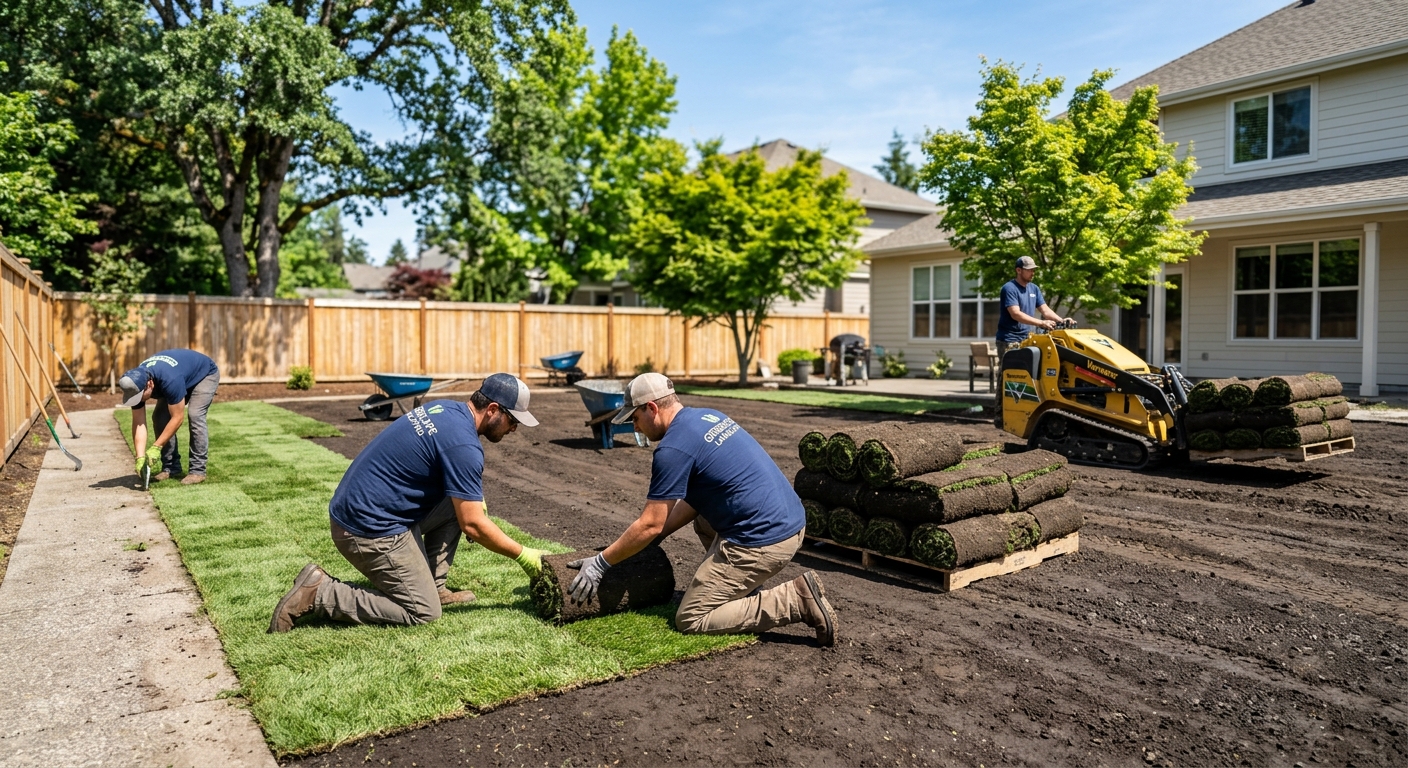
Landscaping options and costs in Tipaskan
Tipaskan, Alberta is a great place to invest in landscaping—especially when you match plants and hardscape to the local freeze–thaw reality. With a 2021 population of 2,901 people (Statistics Canada, 2021 Census), Tipaskan is small enough that word-of-mouth matters, and contractor availability can tighten during peak installs. Most households also have the yard space that makes improvements feel worthwhile; in Calgary’s housing market, single-detached homes make up a meaningful share of the neighbourhood fabric (Statistics Canada, 2021 Census), so homeowners commonly budget for walkways, trees, and irrigation.
In the Calgary region, you’ll typically see Prairie plant hardiness zone 3–4 conditions, meaning late spring frosts and early fall cold snaps can shorten the planting window. Severe freeze–thaw cycles also drive base-prep requirements for patios, walkways, and retaining walls—deep, well-compacted bases plus drainage are non-negotiable to avoid heaving and future settlement. Labour often represents 40–60% of a full project, so the schedule your contractor can realistically staff matters. In demand areas in the broader Tipaskan-to-Calgary growth corridor often see the highest interest for front-yard curb appeal work—particularly around newer subdivisions where driveways, grading, and topsoil are still being established.
Below is a practical cost comparison to help you frame your budget before you request itemised quotes for Tipaskan.
| Service |
Description |
Season |
Price Range |
| Full landscape design and installation |
Site walk, concept plan, grading direction, hardscape/softscape layout, supply and install (including base prep and plant install) |
Mid-spring to fall (best results: May–September) |
$10,000–$45,000 |
| Sod installation (supply, grade, lay, roll) |
Minor grading, soil prep, sod supply, rolling and initial watering setup |
Late spring to early fall |
$2,000–$6,500 |
| Lawn seeding (grade, seed, starter fertilizer) |
Top dressing, seed selection, starter fertiliser and establishment watering guidance |
Spring or early fall |
$1,500–$4,500 |
| Interlocking patio or walkway |
Layout, excavation, deep base, geotextile, compaction, pavers, edging and joint sand |
Generally spring to fall |
$8,000–$28,000 |
| Retaining wall (interlocking block) |
Excavation, engineered-style base/compaction approach, block install, drainage gravel and weeping considerations |
Generally spring to fall |
$12,000–$36,000 |
| Tree and shrub planting |
Soil amendment, planting, staking where needed, mulch ring, initial watering plan |
Spring and fall (with weather permitting) |
$900–$15,000 |
Prices are estimates only and vary by project scope, site access and material selection.
What affects the price of landscaping in Tipaskan
In Tipaskan and across the Calgary economic region, it’s normal to see quotes for the “same” landscaping scope vary by 30–50%. The main reason is that real jobs rarely match the drawings: soil condition, access for trucks and skid steers, the amount of grading required, and the depth of base prep for patios and retaining walls all swing labour and material use quickly. In addition, Calgary-area contractors move between residential and commercial work, so timing and crew availability can change what you pay.
Climate and working season are also pricing drivers. Prairie plant hardiness zones 3–4 mean the growing window is shorter: frost can delay planting, and freeze–thaw cycles force base work to be built for stability now, not “later.” For Tipaskan, that typically means drought-tolerant, wind-hardy species and efficient irrigation design rather than water-hungry turf. Retaining walls must be founded on deep, well-compacted bases that reach below the frost line; shallow excavation or poor drainage becomes an expensive fix down the road.
To put it in dollars, two common examples are sod versus seeding and base complexity. For instance, a small sod conversion can run in the mid range of $2,000–$6,500 depending on grading needs, while lawn seeding might land closer to $1,500–$4,500 for similar coverage. Another example: if your walkway requires significant regrading and deeper compaction due to existing low spots, hardscape quotes within a typical $8,000–$28,000 band can climb toward the upper end.
Finally, housing age matters. Many older Calgary-area lots and some newer builds still have compacted subsoil or inconsistent topsoil depth—both increase soil amendment and compaction effort before you can install turf, perennials, or any wall footings.
| Price Factor |
Why It Matters |
Cost Impact |
| Yard size in sq ft — the primary cost driver for softscape |
More area means more topsoil/seed/sod, more edging and more time for prep and establishment |
Large lots can add thousands quickly; expect meaningful swings within typical lawn bands |
| Grading and drainage work — slope corrections add significant cost |
Small grade changes affect runoff, pooling, and foundation moisture; poor drainage can force rework |
Can push a mid-range lawn or patio into the upper portion of the price band |
| Drainage bed or French drain installation |
Intercepts groundwater and reduces freeze–thaw damage under hardscape |
Often increases costs several thousand depending on linear feet and outlet requirements |
| Plant material tier — native shrubs vs. ornamental vs. mature specimen trees |
Mature stock costs more and requires heavier equipment and careful root-ball handling |
Can double material costs on planting-only scopes; total project price follows |
| Hardscape vs. softscape ratio — walls and patios cost more per sq ft than lawn |
Pavers, base layers, and labour intensity increase with hardscape coverage |
Shifts totals toward the retaining wall/patio bands (often mid five-figure territory when combined) |
| Irrigation system design and installation |
Zoned design and freeze-aware components prevent winter damage and uneven watering |
Can add substantial cost but reduces plant loss during short Calgary summers |
| Soil amendment and topsoil required |
Compacted soils need aeration, amendment, and adequate depth for roots |
Minor upgrades cost less; replacing poor topsoil can add thousands |
| Tree removal or stump grinding before new planting |
Clearing affects excavation effort, disposal, and how soon you can prep bases |
Typically adds cost and time; can also change drainage and planting layout |
Permits & regulations in Alberta
In Alberta, most routine softscape work—like planting, sodding, seeding, mulch placement, and most grading for gardens—usually does not require a permit. The work that more often triggers permitting is typically retaining-wall construction when it exceeds common municipal thresholds. In many municipalities, retaining walls around or above 1.0 m (3.3 ft) often require a building permit, and some situations may call for engineering details depending on height, soil conditions, and loading. Also pay attention to grading: if your contractor’s plan changes lot grading in a way that impacts drainage toward neighbours or storm connections, approvals may be required.
No matter the scope, you should have utility locates done before digging for planting holes, trenches, and wall footings. In Tipaskan and the Calgary region, it’s also smart to confirm local irrigation rules and water-use bylaws—especially if you’re designing drip irrigation or timed systems to align with seasonal restrictions and drought-conscious practice.
Here’s a straightforward homeowner verification process:
- Ask for the exact contractor trade/labour coverage used on your job (and confirm it matches the work you’re hiring for).
- Request WSIB/WCB status documentation (for eligible trade work) and keep it in your file.
- Verify liability insurance: obtain a current certificate of insurance naming you/your property as required (if your contract states it).
- Check the contractor’s business listing and any relevant registrations online before work starts.
- Require written proof of utility locates for all excavation and trenching.
Planning a landscape that thrives in Tipaskan's climate
To plan a landscape that thrives in Tipaskan, start by designing for the zone 3–4 reality: late-spring frosts, early fall cold snaps, and severe freeze–thaw cycles. Your best plant palette is zone-appropriate and drought-tolerant, with wind-ready structure so shrubs don’t desiccate and new transplants aren’t set back by abrupt temperature swings. Prioritise native and hardy cultivars, and pair them with a proper mulch layer to buffer soil moisture and moderate ground temperatures.
Sod versus seed is often the biggest decision. Sod gives instant visual coverage, but it costs roughly 3–4x more per sq ft than seeding once you include prep, rolling, and establishment watering. In Tipaskan, seeding can be the more forgiving route for budget and long-term root establishment—especially when you seed at the right time and manage watering until germination. If you’re working within a typical sod band of $2,000–$6,500, that premium is justified when you need quick curb appeal for a short listing window or when you have an area that soils are ready for immediately.
Drainage and grading are the backbone of Calgary performance. Avoid pooling near foundations by matching slopes away from your house and building proper sub-base layers. For patios and retaining walls, base preparation must be deep, compacted, and designed for frost movement—especially around edges where water can infiltrate.
For low maintenance, think in layers: groundcovers and mulch (weed suppression), perennials (seasonal colour without weekly work), and structural shrubs (winter interest). Xeriscape and rain-garden concepts also fit Calgary well: they reduce watering demand while managing runoff, provided you install the right soil and drainage paths from day one.
Dollar example: If you’re choosing between a seeded lawn around $1,500–$4,500 and sod around $2,000–$6,500, you may accept seeding when the timeline isn’t urgent. But if you need immediate coverage for a patio-adjacent area where bare soil isn’t acceptable during early season, sod’s added cost can be justified.
| Element |
Climate Consideration |
Maintenance Level |
Price Band |
| Sod lawn installation |
Short growing season; sod requires reliable early establishment and protection from late frost and dry wind |
Medium (watering/establishment attention for the first weeks) |
$2,000–$6,500 |
| Native perennial garden |
Zone-appropriate plants handle cold snaps better and establish deeper for drought resistance |
Low to medium (mulch refresh and seasonal pruning) |
$1,200–$7,000 |
| Mulched shrub border |
Mulch buffers freeze–thaw and reduces evaporation in semi-arid conditions |
Low (occasional weeding at edges and watering during establishment) |
$900–$6,000 |
| Interlocking stone patio |
Base and drainage must withstand frost heave and chinook-driven thaw cycles |
Low (occasional joint sand top-up and cleaning) |
$8,000–$28,000 |
| Retaining wall (block) |
Requires deep, compacted base and proper drainage gravel to prevent water pressure and movement |
Low (periodic inspection of drainage outlets and weep holes) |
$12,000–$36,000 |
| Drip irrigation system |
Zoned, freeze-aware delivery reduces water use and improves survival during dry spells |
Medium (seasonal winterisation/checks) |
$2,000–$9,000 |
How to choose a landscaping contractor in Tipaskan
Choosing the right contractor in Tipaskan is mostly about verification and clarity. Start with Alberta licensing/coverage: ask the contractor to provide evidence of liability insurance (a current certificate of insurance for your project), and confirm WSIB/WCB coverage where it applies to the trades performing work. For licences and business status, look up the contractor using reputable online registries and cross-check that the business name, address, and contact details match what’s on the estimate and invoice.
Next, get 2–3 itemised written quotes rather than a single lump-sum. You want a labour and materials breakdown so you can compare base depth, geotextile use, drainage components, soil amendment quantities, and whether removal/disposal is included. Read what’s excluded: permit pull included or not, dumpster/disposal costs, topsoil quantity, and whether irrigation wiring/connection is part of the scope. For hardscape and retaining-wall work, ask about how they manage drainage behind the wall—French drain or drainage gravel, weep considerations, and compaction methodology.
Warranty matters. Ask for a workmanship warranty length (and what it covers), and confirm the product/manufacturer warranty for materials like pavers, block, or trees. Also ask if warranties are transferable if you sell your home.
For payment, avoid heavy upfront payments. A common best practice is no more than 10–15% upfront, with the remainder tied to progress and a holdback until completion and final cleanup. Insist on a start date and a completion estimate in writing so weather delays and crew changes don’t become surprises.
- Confirm liability insurance certificate is current and project-specific.
- Verify WSIB/WCB coverage for applicable labour.
- Require proof of contractor business registration and contact details matching the quote.
- Ask for 2–3 site-relevant references (Tipaskan/Calgary area preferred).
- Get itemised labour/material quantities (not just “assorted plants” or “base”)
- Clarify excavation scope: topsoil removal depth, sub-base depth, and compaction targets.
- Require drainage plan details in writing for patios, walkways, and walls.
- Confirm whether utility locates are arranged before digging.
- Check disposal/dumpster inclusion and where material will be taken.
- Review warranty terms for both workmanship and materials.
- Use a payment schedule tied to milestones, with a holdback until final punch list.
- Get a written schedule and who communicates changes if weather impacts timelines.
Red flags to watch in Tipaskan: (1) quotes without base preparation or drainage details, (2) “too-low” pricing that skips soil compaction or drainage gravel, (3) vague scope language like “standard” materials with no quantities, (4) demanding more than 10–15% upfront without a signed contract, and (5) no proof of insurance/coverage when you request it.
Frequently asked questions — landscaping in Tipaskan
When is the best time to landscape in Tipaskan?
The best time in Tipaskan (and the wider Calgary area) is typically mid-spring through fall, when soil is workable and plants have time to root before cold snaps. Spring can still bring late frosts in zone 3–4, so many contractors schedule planting after the risk window and focus on hardy stock first. Sod and seeding both need establishment moisture—sod is sensitive early on, while seeding is more flexible if watering is managed correctly. If you’re planning a hardscape like an interlocking patio or walkway, crews generally prefer stretches when excavation won’t be repeatedly stalled by frost. Budget-wise, mid-season scheduling can reduce labour premiums, which matters when you’re comparing options like seeding around $1,500–$4,500 versus sod around $2,000–$6,500.
Do I need a permit for a retaining wall in Alberta?
In Alberta, many projects that involve planting and typical softscape work don’t require permits, but retaining walls can be different. As a general rule of thumb used in many municipalities, retaining walls around or above 1.0 m (3.3 ft) often require a building permit, and some situations may need engineered input depending on soil and height. Also consider grading: if the work changes how water moves across your lot or affects drainage toward neighbours or storm sewer connections, you may trigger approval requirements. Before hiring, ask your contractor to confirm whether your wall height and design likely fall under permitting. If your contractor can’t clearly explain the permit pathway, that’s a sign to slow down and get it confirmed in writing for your Tipaskan address.
How do I improve drainage in my yard?
In Tipaskan, drainage problems usually show up as pooling near foundations, soggy lawn patches, or water that freezes and thaws repeatedly under hardscape. The most reliable fix starts with site assessment: identify where water is coming from (roof downspouts, slope, groundwater seepage) and where it’s going. Common solutions include re-grading to slope away from the house, installing a drainage bed or French drain, and ensuring hardscape base layers include proper drainage pathways. If you’re adding a patio or walkway, base preparation should include deep, well-compacted layers so frost movement doesn’t heave the surface. A good contractor will describe the drainage route in their proposal and show how it ties into outlets. If you’re also adding irrigation, they should coordinate trenching plans to avoid conflicting lines.
What is xeriscaping and does it suit Tipaskan?
Xeriscaping is a landscaping approach designed to reduce water demand by using drought-tolerant plants, efficient irrigation (often drip), and smart soil improvements like mulch and amendment. In Tipaskan’s semi-arid, windy Prairie conditions with zone 3–4 winters, xeriscaping is often a strong fit because it aligns with how plants actually survive here: deeper roots, less evaporation, and fewer watering hours. It also helps reduce stress during shorter growing seasons when plants are establishing. That said, “xeriscape” should still look intentional—mix hardy shrubs, perennials, and groundcovers rather than leaving bare rock everywhere. If you pair this with drainage-focused grading, you can manage runoff and water use together, which is especially important during freeze–thaw cycles. Many homeowners find it’s more cost-effective than high-water turf, particularly when seeding around $1,500–$4,500 can be complemented by low-water borders.
How do I plan a low-maintenance yard?
A low-maintenance yard in Tipaskan starts with reducing the number of “high-work” zones. Build structure first: use mulch beds with shrubs suited to zone 3–4, add native perennials for seasonal interest, and keep turf areas sized reasonably so mowing and spot re-seeding aren’t constant. Groundcovers and well-laid edging reduce weed invasion, and adding a 5–8 cm mulch layer helps moderate soil temperature through freeze–thaw swings. For hardscape, properly compacted bases and correct drainage prevent settlement that often leads to repeated repairs. If you want quick results without constant watering, consider sod only for targeted areas and plan seeded or no-till transitions elsewhere. For example, a sod lawn at roughly $2,000–$6,500 may be worth it near a front entrance, while most borders can be handled with hardy shrubs and a curated planting plan to keep annual upkeep lower.
How deep should a retaining-wall base be for local frost?
For retaining walls in Alberta—especially in Tipaskan with severe freeze–thaw—base depth should be built to resist frost movement and provide stability. In practice, that means excavating to suitable material depth and installing a properly compacted base layer below the frost-affected zone, while also including drainage gravel behind the wall to relieve water pressure. The exact depth can vary with soil conditions, wall height, and design, so you shouldn’t rely on a single one-size number. Instead, ask your contractor to explain their excavation depth, base structure layers, compaction method, and how they handle drainage behind the wall. If your wall height likely triggers permitting (often at or above 1.0 m (3.3 ft)), the permit process may require more formal details. A properly planned base is a key reason retaining wall quotes often land in bands like $12,000–$36,000 depending on soil and drainage complexity.