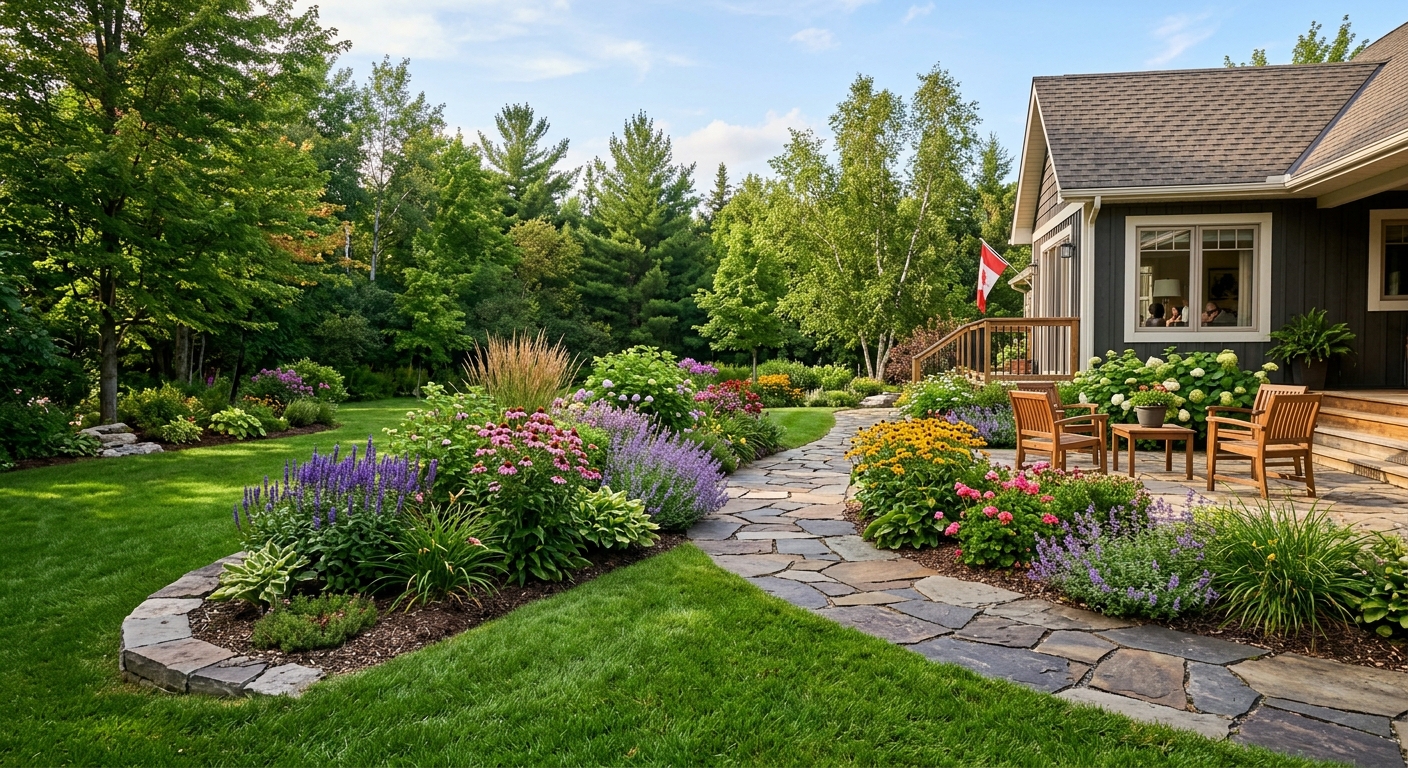
Landscaping options and costs in Ormsby Place
Ormsby Place, Alberta is a community where homeowners tend to invest in their yards because detached properties typically come with the space to make real curb-impact improvements. With a population of 5,314 (Statistics Canada, 2021 Census), local contractors can be busy during peak spring and fall windows, so timing and access often influence price. Calgary’s housing mix and buyer expectations also affect demand for “show-ready” front yards—especially in areas like NE Calgary style growth corridors where neighbourhoods see steady turnover and landscaping upgrades.
In Prairie plant hardiness zones 3–4, late-spring frosts and early fall cold snaps shape both what survives and how long we can work on site. Freeze–thaw cycles are severe, so patios, walkways, and retaining walls need deep, well-compacted bases and reliable drainage to avoid heaving and settlement. That means labour and base-prep costs can be higher than what many homeowners expect from a “simple” refresh.
At the same time, the market in Calgary and surrounding communities can deliver strong value when projects are sequenced well—rough grading and drainage first, then base work, then planting and irrigation. In many comprehensive backyards and front-yard makeovers across the Calgary region, the total commonly lands in the mid five-figure range once grading, hardscape, planting, and irrigation are included—your final scope will decide where you fall within the $5,000–$50,000 design and installation band.
Below is a practical comparison of common options and typical price ranges for Ormsby Place, so you can align your budget to the outcome you want.
| Service |
Description |
Season |
Price Range |
| Full landscape design and installation |
Site visit, grading concept, plant plan, hardscape layout, irrigation plan, then build-out (softscape + hardscape + base prep) |
Late spring to early fall (weather permitting) |
$15,000–$45,000 |
| Sod installation (supply, grade, lay, roll) |
Fine grading, soil testing/topsoil as needed, sod supply and installation, rolling and initial watering plan |
May–September (cooler weeks preferred) |
$2,500–$6,000 |
| Lawn seeding (grade, seed, starter fertilizer) |
Light grading/raking, seed blend, starter fertilizer, mulching (optional), first watering schedule |
Early spring or early fall |
$1,200–$3,500 |
| Interlocking patio or walkway |
Excavation, deep compacted base, edge restraints, interlocking units, joint sand, regrading tie-ins |
May–October |
$8,000–$25,000 |
| Retaining wall (interlocking block) |
Footing depth, drainage layer (weeping tile/gravel), geotextile, block system, backfill compaction |
May–September |
$12,000–$35,000 |
| Tree and shrub planting |
Soil improvement, proper spacing, staking (if needed), mulch ring, watering plan and establishment care |
Spring or fall |
$2,500–$12,000 |
Prices are estimates only and vary by project scope, site access and material selection.
What affects the price of landscaping in Ormsby Place
Even when you’re comparing the “same” landscaping idea in Calgary, Alberta quotes can differ by 30–50% because the hidden cost drivers are usually site-specific: excavation depth, drainage challenges, how much soil improvement is required, and whether the contractor needs to rebuild base structures for frost protection. In Ormsby Place, where zones 3–4 mean severe freeze–thaw cycles, “quick fixes” like thin base prep tend to fail—so strong contractors price the work that prevents heaving and long-term settling. Labour typically represents 40–60% of many full projects, so crew time and access constraints also move the number.
Prairie climates also compress the working window. Late spring frosts and early fall cold snaps affect when we can install sod, finish grading, and fully complete base and drainage. By contrast, coastal BC (zones 7–8) often allows longer planting periods but can create heavier-rain drainage requirements. Southern Alberta homes still see periodic watering restrictions, so design in this market often prioritizes efficient irrigation design (zoned systems and smart controllers) rather than high-water turf.
Two concrete examples from Ormsby Place: first, if you’re adding an interlocking patio tie-in that requires deep, well-compacted bases, you’ll typically spend in the hardscaping band of $8,000–$40,000, not because the blocks are expensive, but because proper excavation and compaction is labour-intensive. Second, planting costs swing based on material tier—native shrubs may fit within a $800–$15,000 planting range, while larger caliper trees and multiple screen layers push you toward the upper end.
Finally, yard age and foundation proximity matter. Many established lots in the Calgary region have mature landscaping and older grading patterns that need correction; correcting drainage and improving topsoil can add several thousand dollars—especially where the work must extend below the frost line for a retaining wall base and tied drainage system.
| Price Factor |
Why It Matters |
Cost Impact |
| Yard size in sq ft — the primary cost driver for softscape |
More area means more topsoil/top dressing, seed/sod, mulch, and labour time |
$1,000–$15,000 |
| Grading and drainage work — slope corrections add significant cost |
Pooling near foundations and freeze–thaw moisture infiltration require regrading |
$1,500–$12,000 |
| Drainage bed or French drain installation |
Proper outlets and gravel beds reduce winter heave and summer saturation |
$2,000–$10,000 |
| Plant material tier — native shrubs vs. ornamental vs. mature specimen trees |
Specimens cost more up front and need time for planting and staking/handling |
$800–$12,000 |
| Hardscape vs. softscape ratio — walls and patios cost more per sq ft than lawn |
Excavation depth, base, and units/retainers drive hardscape pricing |
$3,000–$25,000 |
| Irrigation system design and installation |
Zoning, controller programming, and head placement reduce water waste and winter risk |
$1,200–$7,500 |
| Soil amendment and topsoil required |
Calgary soils can be variable; soil improvement impacts rooting and lawn density |
$500–$6,000 |
| Tree removal or stump grinding before new planting |
Waste hauling, grinding time, and restoration tie-ins add cost |
$400–$6,500 |
Permits & regulations in Alberta
In Alberta, many typical landscape tasks—like planting, sodding, seeding, mulching, and most routine softscape work—usually do not require a permit. The work that more often triggers permitting relates to engineered structures and changes that affect drainage and services. In most municipalities, retaining walls above about 1.0 m (3.3 ft) typically require a building permit and may need engineered drawings. That’s the big one to ask about early, because the permit process can affect your start date.
Also watch for approvals tied to grading. If your plan changes lot grading in a way that alters drainage patterns toward neighbouring properties or toward storm sewer connections, it can trigger requirements or review. Before any digging, confirm utility locates—calling for locates helps avoid hitting buried services for irrigation lines, power, gas, or telecom.
To verify an Alberta contractor properly in Ormsby Place, follow a clear checklist: (1) request the contractor’s Alberta licensing details (and ensure the scope matches what they’re licensed/authorized to do), (2) obtain a current certificate of liability insurance that names you as an additional insured where applicable, (3) verify WSIB/WCB coverage if they use workers—ask for clearance or proof documentation, and (4) keep everything in writing (quote, scope, and any permit responsibility). A reputable contractor won’t hesitate to provide these documents before mobilizing to site.
Finally, confirm local water-use expectations for irrigation scheduling, especially when restrictions tighten during dry conditions.
Planning a landscape that thrives in Ormsby Place's climate
Designing a landscape that performs in Ormsby Place means working with zone 3–4 realities—short seasons, deep winter cold, chinook swings, and freeze–thaw cycles that punish poor drainage. Start with plant selection: choose hardy, zone-appropriate species (and in many cases native or well-adapted cultivars) that can handle winter wind and limited moisture. Winter protection is also part of the plan—mulch depth, proper spacing, and avoiding “wet feet” around crowns. When homeowners choose drought-tolerant plants and efficient irrigation, maintenance drops and plant survival improves.
Sod vs. seed is another decision shaped by Alberta’s schedule. Sod gives instant curb appeal but costs more—often 3–4x the per sq ft of seeding once you include grade prep and labour. Seeding is more budget-friendly, especially in early spring or early fall, but it needs consistent moisture during germination. If your goal is “usable lawn this season,” sod is usually justified. If your goal is “build it right over time,” seeding plus soil improvement can stretch your budget.
Drainage and grading are critical in Calgary. Pooling water near foundations can lead to moisture intrusion in spring and winter heave problems. For patios and retaining walls, base preparation must be built for frost—deep excavation, correct base layers, and tight compaction. Low-maintenance strategies help too: mulch rings, groundcovers, perennials, and thoughtful bed edging reduce annual upkeep without sacrificing visual quality. Where watering is a concern, consider xeriscape elements (gravel, structural groundcovers) or rain-garden style pockets that accept downspout runoff and drain safely.
As a price example: if sod for a front lawn refresh lands around $2,500–$6,000, and a seeding option can fit around $1,200–$3,500, you can often redirect the savings toward improved drainage or a small interlocking walkway base—which is where Alberta’s freeze–thaw risk makes money well spent.
| Element |
Climate Consideration |
Maintenance Level |
Price Band |
| Sod lawn installation |
Needs correct grade and moisture management during germination; freeze–thaw requires stable base prep |
Medium (watering and monitoring early, mowing thereafter) |
$2,500–$6,000 |
| Native perennial garden |
Cold-hardy roots establish better; mulch protects crown and reduces winter burn |
Low to medium (spring tidy, occasional weed control) |
$2,000–$9,500 |
| Mulched shrub border |
Wind-hardy shrubs and deep mulch help reduce desiccation in winter swings |
Low (mulch refresh and pruning as needed) |
$1,800–$7,500 |
| Interlocking stone patio |
Base must be deep and well-compacted to prevent heaving; edge restraints keep lines tight through freeze cycles |
Low (periodic joint sand/top-up) |
$8,000–$25,000 |
| Retaining wall (block) |
Requires frost-aware footing and a drainage layer to stop water pressure and movement |
Low once built correctly |
$12,000–$35,000 |
| Drip irrigation system |
Zoned control reduces water waste; helps protect establishment in dry spells while managing winter shut-down |
Low (seasonal checks and winterization) |
$1,200–$7,500 |
How to choose a landscaping contractor in Ormsby Place
Choosing the right contractor in Ormsby Place starts with proof, not promises. First, verify Alberta licensing for the work they’re quoting (especially anything structural like retaining walls above typical thresholds). Second, ask for a current certificate of liability insurance—make sure it covers the work at your address and is not expired. Third, confirm workers’ coverage under WSIB/WCB: request documentation such as clearance/coverage proof, and ensure it matches your project scope if subcontractors are involved. If a contractor can’t provide documentation readily, treat that as a red flag.
Next, request 2–3 itemised written quotes. You want a breakdown of labour and materials (excavation, base materials, drainage components, block/stone, topsoil, planting, and irrigation supplies if included). Watch for what’s excluded: disposal/haul-away, permit fees (if applicable), utility locates, restoration of sod/grass in work zones, and whether irrigation includes wiring/controller programming or only the piping.
Warranty matters in a freeze–thaw climate. Ask how long their workmanship warranty lasts and whether it covers base settlement and drainage performance. Also ask for manufacturer/product warranties for plant material and any hardscape systems. Payment schedule should be conservative: avoid paying more than about 10–15% upfront, and hold back a portion until the job is complete and inspected. Finally, get a written start date and a completion estimate—weather-dependent work should still have a realistic window and a communication plan if delays occur.
- Confirm licence/authorization for the specific scope (especially retaining walls and any structural work).
- Request an up-to-date certificate of liability insurance and verify your address is covered.
- Get WSIB/WCB proof or clearance documentation for workers.
- Ask for references from similar Ormsby Place-style yards and request photo examples.
- Get itemised quotes (labour vs materials) rather than lump sums.
- Verify disposal/haul-away is included or explicitly excluded.
- Confirm utility locates are included before digging.
- Ask who is responsible for permits (if a retaining wall threshold is exceeded).
- Request written specs for base depth, compaction method, and drainage components.
- Clarify irrigation scope (zoning, controller programming, winterization) if included.
- Review warranty length for workmanship and what it covers in winter freeze–thaw conditions.
- Use a payment schedule with a small deposit and a holdback after completion.
Red flags to watch for in Ormsby Place: a contractor who won’t provide proof of insurance or workers’ coverage; quotes that omit excavation/base/drainage specifics for patios or retaining walls; pushing for large upfront payments; vague scopes that don’t state whether disposal, utility locates, and permit responsibilities are included; and refusal to put start/completion timing and warranty details in writing.
Frequently asked questions — landscaping in Ormsby Place
How long does a landscaping project take in Ormsby Place?
Timelines in Ormsby Place depend heavily on weather and how much of the job requires excavation and base preparation. For example, a smaller planting refresh or shrub border may be completed in 1–3 days, while an interlocking patio often takes about 1–2 weeks including excavation, base work, and cure/settling time for joints and drainage tie-ins. Full projects that include grading, drainage, hardscape, irrigation, and planting typically range from a few weeks to a few months when scheduled across the late-spring to early-fall window. Calgary’s late-spring frosts and early cold snaps can pause work, especially if soils are wet or frozen. A good contractor will book realistically, protect areas if weather changes, and provide a written start date and sequencing plan.
What is the best grass type for a Ormsby Place lawn?
For Ormsby Place and the Calgary region (zones 3–4), the “best” lawn is usually a cold-hardy, disease-tolerant blend designed for Prairie conditions—look for turfgrass types that perform in short growing seasons and bounce back after frost. In practice, many homeowners do well with Kentucky bluegrass or blends that include it because it forms a dense stand and holds colour through cooler periods. If your yard sees wind exposure, a denser blend generally helps. Your best outcome also depends on soil prep and watering discipline during establishment rather than grass type alone. For budget comparisons, if you’re starting from bare grade, seeding commonly fits around $1,200–$3,500, while sod is often in the $2,500–$6,000 band.
When should I aerate and overseed my lawn in Ormsby Place?
Aeration and overseeding are typically most successful in Ormsby Place during early fall or early spring—when temperatures are moderate and the lawn can recover before harsh weather. In Calgary-area freeze–thaw cycles, early fall (before cold snaps) often helps because roots keep growing while the lawn avoids midsummer heat stress. Early spring can work too if the soil is workable and not frozen wet. The key is to aerate lightly (core removal is better than just scratching) and follow with seed-to-soil contact plus proper watering during germination. If you have heavy thatch or compaction near the walkway where foot traffic is constant, you may need a second pass the next season. A contractor can also recommend whether soil amendment is needed to support germination.
What trees grow best in Ormsby Place's climate zone?
In Ormsby Place (Prairie zone 3–4 conditions), cold-hardy trees that can handle winter wind and chinook swings usually perform best. Many homeowners choose options like compact or semi-dwarf varieties of spruces and pines for structure and evergreen cover, and hardy deciduous trees for seasonal colour and shade. When selecting, prioritize mature hardiness, expected mature height (to protect foundations and sidewalks), and salt/wind tolerance if your yard is exposed. Also consider the “right tree for the right spot”—well-drained soil matters as much as species. If you’re building a screen or privacy layer, pairing faster-growing shrubs with a few strategically spaced trees often delivers results sooner and costs less than planting only mature specimens. For tree-and-shrub refreshes, typical landscaping budgets often fall around $2,500–$12,000 depending on size and quantity.
How much does sodding a yard cost in Ormsby Place?
Sodding in Ormsby Place usually costs more than seeding because it includes the sod material plus careful grading, installation labour, rolling, and an establishment watering plan. For typical small-to-mid lawn areas in the Calgary region, sod installation often lands around $2,500–$6,000. Your final number depends on yard size, how much topsoil or soil amendment is needed, whether there’s drainage correction, and how many edges/tie-ins exist around gardens and hardscape. If your base is already close to perfect grade, you’ll pay less. If drainage needs fixing to avoid pooling during spring melt, you’ll pay more—but that’s also what prevents future lifting or patchy areas through freeze–thaw cycles.
How do I prevent weeds in my Ormsby Place garden?
Weed prevention in Ormsby Place works best with layered strategies: healthy soil, correct mulching, and early intervention. Start by preparing beds thoroughly—remove established weeds with roots, loosen compacted soil, and add compost/topsoil to improve structure. Apply mulch at the right depth and keep it off plant crowns to reduce rot risk and give the right weed barrier. Use a groundcover strategy where appropriate instead of leaving bare soil, because exposed soil invites weed seeds. Edging also matters: a clean boundary around lawn-to-bed helps stop runners from entering. If you’re adding new planting beds, a good contractor can incorporate weed suppression by using geotextile in suitable areas (not under all plant types). During drier periods, maintain consistent watering so stressed plants don’t create gaps for weeds to take hold. In Alberta, smart irrigation zoning helps you water what matters most.