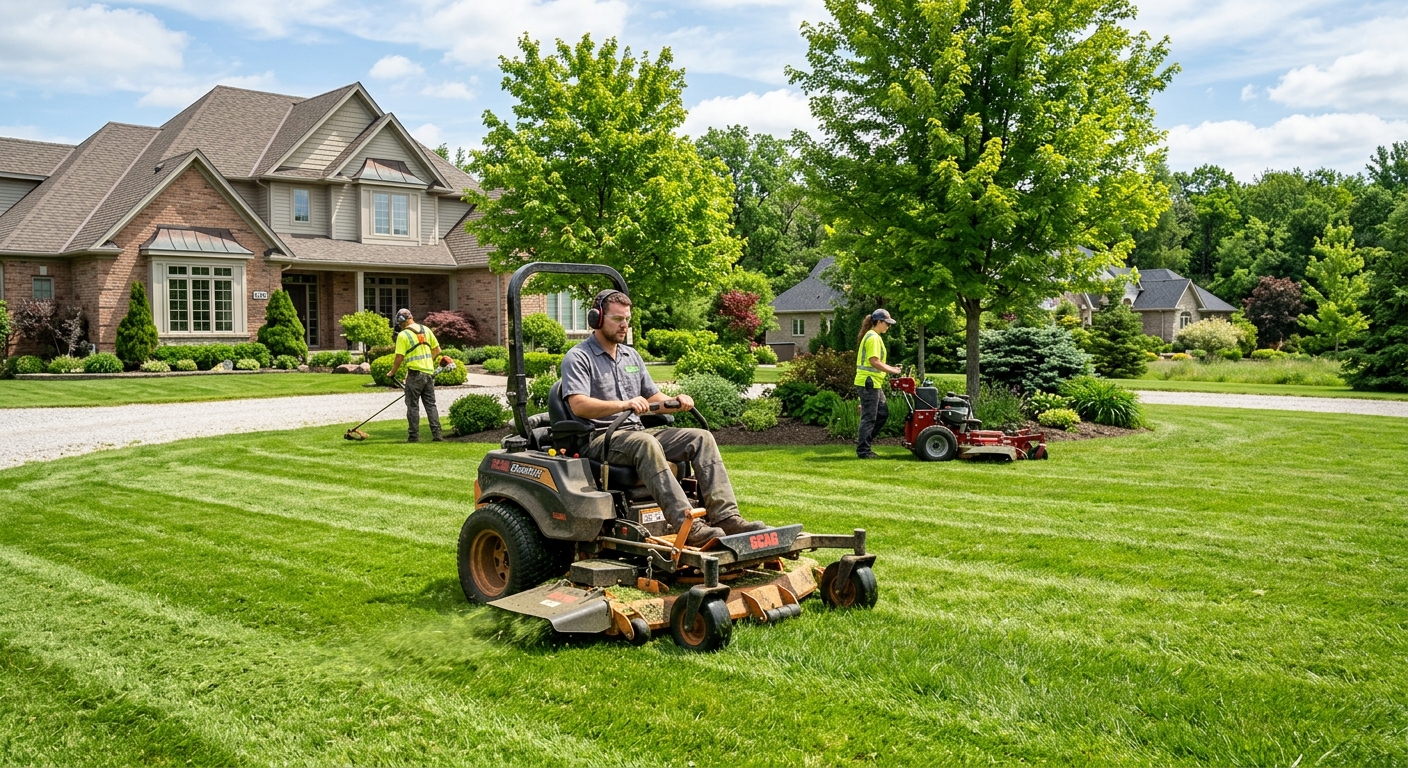
Landscaping options and costs in Cape Horn
Cape Horn is a great place to invest in landscaping because yards here tend to be usable year-round, and homeowners often want curb appeal that stays attractive through the wet winter months. With a population of 12,680 people (Statistics Canada, 2021 Census), the Lower Mainland–Southwest has enough active demand that you can typically find capable crews—especially around residential pockets like Tsawwassen and nearby shoreline neighbourhoods where property upgrades are frequent. In practice, your total budget is shaped by what you’re improving: softscape (planting and turf), hardscape (patios/walkways/walls), and site services like grading and drainage. Even the same “front yard refresh” can land very differently depending on access for compactors, whether soil needs amendments, and how much regrading is required.
In the Lower Mainland–Southwest (plant hardiness zones 7–8), winters are mild and wet, and first fall frost often doesn’t arrive until November, so crews can work longer and plants establish more reliably than in colder prairie regions. That said, coastal rain and freeze–thaw cycles can still increase costs for structural items: retaining-wall bases and patio foundations must be installed with proper drainage and compaction to reduce frost heave and wall movement on sloped sites.
To help you compare quotes fairly, the table below shows realistic Cape Horn price bands for common landscape scopes—from full design-build packages to turf, paving, walls, and planting—so you can move into the detailed cost drivers with clear expectations.
| Service |
Description |
Season |
Price Range |
| Full landscape design and installation |
Site walk, concept + planting plan, grading/drainage coordination, soil prep, labour for installation (softscape + hardscape) |
Spring–Fall (design in late winter) |
$5,000–$50,000 |
| Sod installation (supply, grade, lay, roll) |
Soil grading and base prep, sod supply and installation, starter fertilizer and edge finishing |
Late March–October (avoid the wettest weeks) |
$2,000–$8,000 |
| Lawn seeding (grade, seed, starter fertilizer) |
Topdressing/grade correction, seed blend, starter fertilizer, light raking and initial watering plan |
March–May or late Aug–Sept |
$1,200–$4,000 |
| Interlocking patio or walkway |
Excavation, compaction, base, levelling sand, interlocking stone, edging, finishing |
Spring–Fall |
$10,000–$45,000 |
| Retaining wall (interlocking block) |
Layout, wall base and drainage, block installation, weep/gravel pipe as required, backfill and compaction |
Spring–Fall |
$10,000–$80,000 |
| Tree and shrub planting |
Plant selection, digging, soil amendment, staking (if needed), mulching, initial watering guidance |
Most of the year (best in mild windows) |
$1,000–$15,000 |
Prices are estimates only and vary by project scope, site access and material selection.
What affects the price of landscaping in Cape Horn
In Cape Horn and the wider Lower Mainland–Southwest, it’s common to see the “same” landscape idea quoted 30–50% apart because contractors price risk differently—especially for drainage, slope correction, and how much labour is needed to prep a site for lasting results. Across British Columbia, the plant palette and the working season change what’s possible. In prairie zones (2–4), short growing seasons and harsh winter exposure mean more emphasis on drought-tolerant, wind-hardy species and tighter construction windows. In coastal BC (zones 7–8, including Cape Horn), you get a longer, more reliable planting and installation window, which often supports lush layered designs; however, you still pay for correct drainage and base preparation because heavy rain and coastal soils can stay saturated.
For Cape Horn specifically, typical cost swings come from two things: (1) how much grading is needed so water drains away from foundations and (2) whether freeze–thaw cycles require deeper, properly compacted bases for patios and retaining walls. A sloped front yard that needs regrading can push a project upward into the mid-range of the $10,000–$80,000 retaining-wall band. Conversely, a flat lot with stable access and minimal soil correction may keep hardscape closer to the $5,000–$50,000 design-and-install expectations for a cohesive plan.
Concrete examples you’ll see on Cape Horn jobs: replacing compacted clay with imported topsoil and amendments adds both material and delivery cost; removing an existing dead hedge and replacing it with 10–15 larger shrubs and 2–3 trees in the $1,000–$15,000 planting band increases labour because of larger root balls and more careful placement. If you’re working on a more established property built decades ago, we also often encounter uneven subgrades and older drainage that need correction—those “hidden” site issues are where budgets most often expand.
| Price Factor |
Why It Matters |
Cost Impact |
| Yard size in sq ft — the primary cost driver for softscape |
More square footage means more excavation/soil prep, plants, mulch, turf materials, and labour hours |
Small changes in area can move you several thousand dollars (especially for sod and planting beds) |
| Grading and drainage work — slope corrections add significant cost |
Correct drainage requires careful slope, topsoil thickness, and compaction to avoid pooling and foundation moisture |
Often the biggest reason quotes vary by 30–50% |
| Drainage bed or French drain installation |
Drain systems require trenching, gravel, filter fabric, pipe runs, and discharge planning |
Can add substantial labour and material cost beyond planting/hardscape |
| Plant material tier — native shrubs vs. ornamental vs. mature specimen trees |
Higher tiers cost more per unit and require better soil support, staking, and careful handling |
Mature specimens can shift the job upward quickly within the planting bands |
| Hardscape vs. softscape ratio — walls and patios cost more per sq ft than lawn |
Stone, base materials, excavation, and skilled placement raise unit costs |
Replacing lawn with patio/walkway can double the cost per square foot |
| Irrigation system design and installation |
Drip vs. spray, controller/smart timing, and zone planning affect material and installation time |
Efficient systems cost more upfront but reduce long-term water waste |
| Soil amendment and topsoil required |
Poor native soil or previous construction fill often needs imported topsoil, compost, and amendments |
Delivery and labour for spreading/leveling can raise budgets noticeably |
| Tree removal or stump grinding before new planting |
Tree work adds specialized equipment time and disposal considerations |
Can add a one-time spike to otherwise “simple” planting projects |
Permits & regulations in British Columbia
In British Columbia, most typical landscaping work—planting, sodding, and the majority of softscape installs—usually does not require a permit. That includes things like planting shrubs/trees, laying sod or seed, mulching, installing garden beds, and building standard ground-level walkway surfaces. Where permits commonly come into play is for structural retaining walls: if the wall is above the local threshold (often around 1.0 m or 3.3 ft in many municipalities), you should expect a building permit and, in some cases, engineered drawings.
Also watch for regulatory triggers related to lot drainage. Changes to lot grading that meaningfully alter how water flows—particularly if you’re directing runoff toward neighbouring properties or connecting in a way that affects storm sewer systems—may require approval. Before any digging for planting holes, drainage trenches, or wall footings, arrange utility locates so you don’t hit buried services. In addition, confirm irrigation and water-use bylaws. While Cape Horn won’t face the same routine ban style as the drier BC Interior, councils still tighten rules during drought periods, so a well-designed drip system with smart controls is often the safest direction.
To verify your contractor in Cape Horn, request and review three items: (1) a copy of their licence/registration details (as applicable) and any business number information they provide, (2) a current certificate of insurance with liability coverage, and (3) confirmation of worker coverage (WSIB/WCB) if they have employees. Where possible, check the contractor’s references and ask for the clearance/coverage confirmation documents—then keep them on file for your records.
Planning a landscape that thrives in Cape Horn's climate
Planning for Cape Horn’s climate means working with hardiness zones 7–8, coastal moisture, and a frost calendar that supports much longer growth than many parts of Canada. Start with plant selection: choose native and zone-appropriate species, and favour plants that tolerate wet winters and cooler shoulder seasons without constant intervention. Lower Mainland–Southwest yards also benefit from soil management—amended beds and properly drained turf reduce disease pressure and help roots survive saturated periods.
Second, decide between sod and seed. Sod gives instant visual results and faster functional use, but it’s typically more expensive—often about 3–4x the cost per square foot compared with seeding—because you’re paying for harvested turf and higher installation labour. Seed is a better choice for restoring larger areas on a budget, especially if you can manage consistent watering in the establishment window.
Third, get drainage and grading right. Pooling water near foundations is one of the fastest ways to create long-term maintenance headaches. In coastal BC, even where winters are mild, freeze–thaw cycles still matter for structural bases: patios and retaining walls need proper base preparation and drainage layers to prevent frost heave and wall movement.
Finally, use low-maintenance design strategies: mulch, groundcovers, layered perennials, and a controlled plant palette reduce annual upkeep without sacrificing curb appeal. If water costs rise or restrictions tighten, rain gardens and smart-drip zones can help you capture roof and yard runoff while keeping plantings healthy.
Example: if a 400 sq ft lawn area would cost roughly $2,000–$8,000 for sod depending on site prep and variety, seeding may fit closer to the lower end of the seeding band while you save for drainage corrections that protect foundations. In Cape Horn, that “spend where it matters” approach usually pays off more than adding extra turf.
| Element |
Climate Consideration |
Maintenance Level |
Price Band |
| Sod lawn installation |
Establishes quickly in zone 7–8; still needs careful watering during mild dry spells and avoidance of the wettest install windows |
Medium (early watering and first mow schedule) |
$2,000–$8,000 |
| Native perennial garden |
Handles cool summers and wet winters better when planted in improved soil; reduces winter loss risk with zone-appropriate species |
Low to Medium (seasonal pruning/cleanup) |
$1,500–$12,000 |
| Mulched shrub border |
Mulch buffers soil moisture during shoulder seasons and suppresses weeds in rainy-to-mild transitions |
Low (weed control and occasional topping up) |
$1,000–$8,000 |
| Interlocking stone patio |
Requires base compaction and drainage to handle coastal freeze–thaw effects and recurring heavy rainfall |
Low (sweeping/spot cleaning) |
$10,000–$45,000 |
| Retaining wall (block) |
Backfill and drainage are critical for wet-season stability; base depth must account for frost movement |
Low (periodic inspection) |
$10,000–$80,000 |
| Drip irrigation system |
Efficient watering for zone 7–8 plantings; smart controllers help manage municipal restrictions and variable rainfall |
Low (service checks a couple times per season) |
$1,800–$6,500 |
How to choose a landscaping contractor in Cape Horn
Choosing the right contractor in Cape Horn starts with verifying credentials the same way you would verify a builder: confirm they’re legally operating, properly insured, and able to work safely. For British Columbia, ask for documentation for (1) liability insurance (you should see a current certificate of insurance naming the insured party), and (2) worker coverage for employees (WSIB/WCB). If the contractor provides subcontractors, they should still show proof of coverage for their people and explain how labour is managed on-site. Don’t rely on “we’re covered” statements—ask to see the certificates and check that dates are current. If they claim a licence or registration applies to their work type, request the proof and verify it through the relevant online registry where available. Keep copies for your records.
Then get 2–3 itemised written quotes. Ideally, you’ll see labour and materials broken out: excavation and disposal, base materials, stone or sod pricing, plant material quantities, soil amendments, and whether irrigation controllers and lines are included. Read exclusions carefully—common items that get missed are permit handling (if required for a retaining wall), utility locates, topsoil delivery, and disposal of removed material. Warranty terms matter too: ask for a workmanship warranty length and whether product warranties are manufacturer-based and transferable if you sell your home.
Finally, use a sensible payment schedule. Avoid large deposits—aim for no more than 10–15% upfront and request a holdback until the job is complete and walk-through items are finished. Get the start date and an estimated completion timeline in writing, especially because Cape Horn installs can pause during the wettest periods.
- Ask for insurance and worker coverage documents before work begins; verify coverage is current.
- Confirm who pulls utility locates and when; never schedule digging “blind.”
- Get a site-walk written assessment (grading/drainage notes should be included, not just plant lists).
- Request itemised quotes with quantities (sq ft, linear ft, number of plants) and unit rates.
- Clarify exclusions: disposal, trucking, topsoil/compost volume, and edge finishing.
- Confirm whether permits are needed and who handles them for retaining walls above the typical threshold (around 1.0 m).
- Ensure base prep details are written: excavation depth, compaction requirements, and drainage layers.
- Ask for product specs: sod type, seed blend, block size, and plant sizes (e.g., caliper/heights).
- Confirm irrigation scope (drip vs spray, number of zones, controller type, smart features).
- Review warranty: workmanship duration, what triggers it, and what’s not covered.
- Set payment milestones tied to completed phases; avoid paying full amounts upfront.
- Require a written schedule with rainy-season contingencies and cleanup standards.
Red flags specific to landscaping contractors in Cape Horn include: refusing to provide proof of liability/worker coverage, quoting a “lump sum” without drainage/grading details, starting excavation without confirming utility locates, offering no written warranty for workmanship, and rushing payment terms (asking for a large upfront deposit) without a clear completion walkthrough.
Frequently asked questions — landscaping in Cape Horn
Sod vs seed — which is better for a Cape Horn lawn?
In Cape Horn and the wider Lower Mainland–Southwest (zones 7–8), both sod and seed can work well because the growing season is long and winters are mild. The decision is mostly about timeline and your site prep. Sod gives faster results and helps stabilize the grade immediately, but it usually costs more—often falling within the $2,000–$8,000 band depending on your lawn size, access, and soil correction. Seeding is typically more budget-friendly (especially for larger areas), but it requires consistent watering and good contact with properly graded soil during germination. If your yard has drainage problems or compacted areas, correcting grade and installing proper topsoil first is what prevents patchiness, regardless of sod or seed choice.
How much does a retaining wall cost in Cape Horn?
Retaining wall pricing in Cape Horn usually sits in the $10,000–$80,000 range for typical block-wall installations, depending on height, length, site access, and how much drainage and base work is required. The biggest cost drivers are excavation volume, engineered base preparation for freeze–thaw stability, and the drainage system behind the wall (often gravel, filter fabric, and weeps/pipe). On sloped sites common in coastal yards, you may also need more backfill handling and compaction to prevent movement over time. A clear quote should spell out block type, wall dimensions, drainage components, and backfill/compaction details—otherwise two contractors may be pricing very different scopes.
When is the best time to landscape in Cape Horn?
For landscaping in British Columbia near Cape Horn, the best balance of weather and plant establishment is typically spring through early fall. You can often plant and do softscape work during mild stretches, and the mild winter conditions can support some installations, but the wettest periods can slow scheduling and increase soil disruption risk. For turf, sod and seeding are usually timed to establish roots before the most challenging winter conditions and before the hottest dry spells. Hardscaping like patios and retaining walls should account for freeze–thaw cycle concerns: crews plan base prep and drainage so the wall or pavement remains stable through colder snaps. Ask your contractor for a start window in writing and for how they’ll manage excess rain days.
Do I need a permit for a retaining wall in British Columbia?
In British Columbia, softscape work like planting and sodding typically doesn’t require a permit, but retaining walls are different. Many municipalities require a building permit when a retaining wall exceeds a certain height threshold—often around 1.0 m (3.3 ft)—and sometimes require engineered drawings depending on wall height and site conditions. Grading changes that impact how water drains, especially toward neighbouring properties or storm connections, can also trigger approval requirements. For your Cape Horn project, ask your contractor to confirm whether the wall height triggers a permit and who handles the submission. Also ensure utility locates are completed before any wall footings or drainage trenches are dug.
How do I improve drainage in my yard?
In Cape Horn, drainage improvements usually start with observing where water pools after a heavy rain and checking whether runoff is moving toward your foundation. In Lower Mainland–Southwest conditions, simple changes like adding mulch won’t fix saturated ground or foundation moisture; you typically need grading corrections and sometimes a dedicated drainage system. A common solution is a French drain or drainage bed installed below the affected area, paired with proper backfill and filter fabric to keep fines from clogging. Your contractor should also verify slope toward lawful discharge points and ensure downspouts and surface runoff are directed correctly. A good quote will include the depth of excavation, disposal, and how the drainage will be tied into a safe outlet, not just “we’ll improve grading.”
What is xeriscaping and does it suit Cape Horn?
Xeriscaping is a landscaping approach designed to reduce water use by choosing drought-tolerant plants, improving soil, and using efficient irrigation like drip. In Cape Horn and the Lower Mainland–Southwest, it can still be a smart strategy because water costs and municipal restrictions may apply during dry periods—even if coastal BC isn’t under constant drought bans like parts of the Interior. However, true xeriscaping isn’t about “no water ever”; it’s about matching plants to real conditions and watering efficiently. Many coastal yards do well with a hybrid: rain gardens to absorb runoff, mulched borders, and selective drought-tolerant plantings paired with smart drip zones. If you’re replacing a struggling lawn area, it can be cost-effective, but correcting drainage first is usually the key step to success.