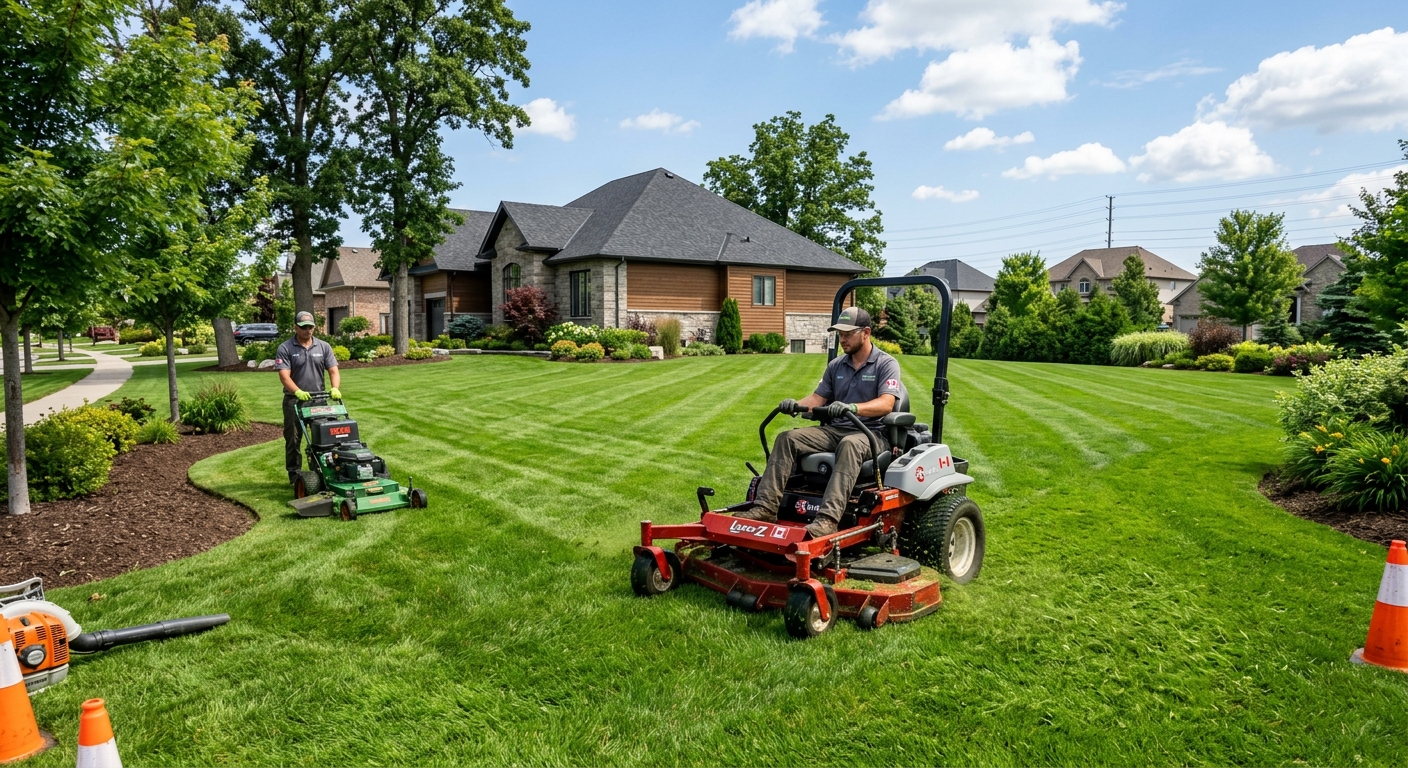
Landscaping options and costs in Coquitlam Town Centre
In Coquitlam Town Centre, homeowners often want curb appeal that looks lush in spring but still holds up through wet winters and cool, long-growing summers. With a population of 24,282 (Statistics Canada, 2021 Census), there’s steady demand for landscaping services—especially in neighbourhoods with lots of family households and frequent property upgrades. Coquitlam Town Centre also has a housing mix where many detached homes feature usable yard space, so landscaping tends to be budgeted alongside renovations. In the Lower Mainland–Southwest (plant hardiness zones 7–8), contractors benefit from an extended working window—last spring frost is typically early March to early April near the coast—so you can plan installation earlier than many other parts of Canada.
That said, coastal BC pricing isn’t just about season length. Freeze–thaw cycles still matter for patios and retaining walls, so bases often need extra depth and drainage layers to reduce frost heave and movement on sloped sites that are common in hillside pockets. Labour availability can also influence quotes: when multiple crews are busy around spring thaw, scheduling and mobilisation fees can move upward, especially for projects that require hardscape trades and coordinated planting.
For a clearer comparison, here are realistic cost ranges for common options in Coquitlam Town Centre, from full design-and-install packages to smaller refresh jobs.
| Service |
Description |
Season |
Price Range |
| Full landscape design and installation |
Site assessment, layout/design, material selection, grading/drainage coordination, planting plan, irrigation recommendations, and installation |
Mar–Dec (softer winter weeks only) |
$5,000–$50,000 |
| Sod installation (supply, grade, lay, roll) |
Spot grading/levelling, soil prep, sod supply, laying, rolling, and initial watering guidance |
Mar–Oct |
$2,000–$8,000 |
| Lawn seeding (grade, seed, starter fertilizer) |
Fine grading, seed selection, starter fertilizer, light topdressing, and establishment care |
Mar–Jun and Sep–Oct |
$900–$4,500 |
| Interlocking patio or walkway |
Excavation, base compaction, geotextile, interlocking stones/pavers, edging, and final sand |
Apr–Nov |
$8,000–$35,000 |
| Retaining wall (interlocking block) |
Block wall layout, excavation, base and drainage gravel, weep system (as needed), and cap/finishing |
Apr–Nov |
$10,000–$80,000 |
| Tree and shrub planting |
Soil amendment, planting layout, labour for planting, staking (if required), and initial mulching |
Mar–Nov |
$1,000–$15,000 |
Prices are estimates only and vary by project scope, site access and material selection.
What affects the price of landscaping in Coquitlam Town Centre
In Coquitlam Town Centre, you can see the same landscaping scope come in 30–50% apart across the Lower Mainland–Southwest and British Columbia because the quote isn’t only about materials—it’s about what the contractor has to fix to make everything work long-term. Coastal BC (zones 7–8) supports a longer planting and growing window, which usually helps schedules, but it also encourages more layered, lush designs. As a result, labour may shift toward planting complexity, soil prep, and drainage detailing, not just “putting in plants.”
Where pricing diverges most is the mix of frost management and drainage. Even though last spring frost near the coast is typically early March to early April, freeze–thaw cycles still affect hardscape bases: retaining wall footings and patio sub-bases often must be built deeper and drained correctly to prevent frost heave and wall movement on sloped sites. If your yard needs heavy grading, that can add cost quickly; slope correction plus proper drainage can push a project toward the higher end of the retaining wall and hardscaping price bands (commonly within $10,000–$80,000 for block walls and $8,000–$35,000 for patios/walkways). Conversely, a flatter, better-drained lot may fall closer to the lower end.
Here are concrete examples of what changes your cost in Coquitlam Town Centre: (1) mature trees—if removal or stump grinding is needed before new planting, that can add labour and disposal time, which shifts your tree-and-shrub planting toward the upper band ($1,000–$15,000); (2) installing a French drain or drainage bed in a damp yard can add materials, trenching and fabric/base stone; (3) sod vs seeding impacts both labour and ongoing watering strategy—sod installation often lands within $2,000–$8,000, while seeding is typically less expensive for the same square footage but takes longer to establish.
| Price Factor |
Why It Matters |
Cost Impact |
| Yard size in sq ft — the primary cost driver for softscape |
More area means more topsoil/seed or sod, labour hours, and maintenance materials |
Large lots can increase total cost by 20–40%+ depending on scope |
| Grading and drainage work — slope corrections add significant cost |
Correct slopes prevent pooling, foundation moisture, and premature plant failure |
Can add several thousand dollars on average; often the biggest variable |
| Drainage bed or French drain installation |
Trenches, perforated pipe, gravel, geotextile and tie-ins are labour/material intensive |
Commonly shifts a project toward the higher end of the hardscape/planting budget |
| Plant material tier — native shrubs vs. ornamental vs. mature specimen trees |
Mature specimens cost more and may require careful handling, staking, and larger holes |
Can swing tree/shrub planting totals by several thousand dollars |
| Hardscape vs. softscape ratio — walls and patios cost more per sq ft than lawn |
Stone and base construction are more expensive than turf/planting per square foot |
High hardscape designs often exceed mid-range budgets quickly |
| Irrigation system design and installation |
Efficient layouts (often drip zones) reduce water waste and improve plant survival |
Can add thousands, but may prevent failed plantings and rework |
| Soil amendment and topsoil required |
Coastal soils can vary; poor drainage or compacted fill often needs amendment |
Often determines whether plants thrive or struggle, affecting long-term value |
| Tree removal or stump grinding before new planting |
Clearing affects access, hole depth, soil disturbance and disposal |
Can raise the planting budget noticeably and change the timeline |
Permits & regulations in British Columbia
In British Columbia, most planting and softscape work—like sod installation, lawn seeding, mulch and shrub borders, and typical garden bed planting—typically does not require a permit. Homeowners can usually proceed without municipal permits for activities such as installing topsoil, planting trees/shrubs, laying sod, and building small garden features that don’t materially change structural support. However, retaining walls are different: walls above a common height threshold of about 1.0 m (3.3 ft) in many municipalities typically require a building permit, and sometimes engineered drawings depending on height, construction method and site conditions.
Grading is another area that can trigger approval. If your project involves changes to lot grading that affect drainage toward a neighbour’s property or toward storm sewer connections, the municipality may require review. Before any digging for planting holes, footing excavations, or drainage lines, your contractor should arrange utility locates to confirm where services run. This is especially important in denser parts of Coquitlam Town Centre where underground services are common and access is tight.
To verify your contractor in British Columbia step-by-step: (1) ask for their licence information (and check their business details through provincial/regulatory listings where applicable); (2) request a certificate of liability insurance showing the effective dates and whether you’re named as an additional insured for the work; (3) confirm worker coverage—on the documentation, look for proof consistent with WCB/worker protection clearance letters for the specific project timeframe. If they can’t produce current paperwork quickly, that’s a practical red flag.
Planning a landscape that thrives in Coquitlam Town Centre's climate
To plan a landscape that thrives in Coquitlam Town Centre, design with zones 7–8 in mind rather than fighting the yard’s natural moisture and temperature swings. Lower Mainland–Southwest winters are mild and wet, but your landscaping still needs protection from pooling water and the freeze–thaw impacts that affect hardscape bases. Start with plant selection: choose zone-appropriate species and, where possible, native or naturally adapted plants that handle coastal conditions with less watering and less winter damage. In this climate, you can build lush layered beds using long-blooming perennials and broadleaf evergreens, while still keeping maintenance reasonable with mulch and groundcovers.
Next decide sod vs seed. Sod gives instant coverage, but it typically costs about 3–4 times more per square foot than seeding because you’re buying established turf plus more labour for handling and installation. For a small “curb refresh,” that premium can be worth it; for example, a lawn refresh budget of $2,000–$8,000 for sod can be justified if you need fast visual impact before a listing or event. If you can wait for establishment, seeding is usually the more budget-friendly path.
Drainage and grading are critical. In the Lower Mainland, heavy rain events can expose weak slopes and compacted soils, leading to foundation moisture and plant loss. Ensure your contractor corrects grading, installs proper outlets, and prepares bases deep enough for local frost-related movement. Finally, keep upkeep down with a low-maintenance layout: mulched shrub borders, repeated plant groupings, perennial “anchors,” and selective groundcovers to reduce weeding and bare soil.
| Element |
Climate Consideration |
Maintenance Level |
Price Band |
| Sod lawn installation |
Establishes quickly in coastal zone 7–8; needs careful watering during establishment despite mild winters |
Medium (establishment), then low |
$2,000–$8,000 |
| Native perennial garden |
Adapted to local conditions; tends to handle coastal wet/dry swings better and supports year-round structure |
Low to medium |
$1,500–$10,000 |
| Mulched shrub border |
Mulch protects soil temperature and helps reduce evaporation and weed pressure in a wet-but-variable season |
Low |
$1,000–$6,500 |
| Interlocking stone patio |
Freeze–thaw cycles mean proper base compaction and drainage layers; correct cross-slope prevents standing water |
Low |
$8,000–$35,000 |
| Retaining wall (block) |
Soil movement risks require a drainage gravel zone and correct footing depth below frost impacts |
Low |
$10,000–$80,000 |
| Drip irrigation system |
Improves efficiency during any water-cost periods and supports targeted watering for beds while reducing lawn waste |
Low after setup (seasonal checks) |
$3,000–$12,000 |
How to choose a landscaping contractor in Coquitlam Town Centre
Choosing the right contractor in Coquitlam Town Centre starts with verification. First, ask for proof of British Columbia licensing where applicable for the scope (especially for hardscape and any work that may be considered building-related). Next, confirm liability insurance: request a certificate of insurance showing coverage limits, policy effective dates, and that your address/project is covered. Finally, ensure worker protection coverage is in place—look for documentation consistent with WCB clearance or worker coverage letters for the project period. If they won’t provide paperwork or try to delay it until after you sign, move on.
Then get 2–3 itemised written quotes. You want line items that separate labour vs materials (excavation, base rock, geotextile, stone/pavers, plants, soil amendments, irrigation components). Avoid a single lump sum with vague wording. Confirm what’s excluded: topsoil quantity, disposal/haul-away, utility locates, any permit coordination, and whether there’s an allowance for unexpected drainage issues.
Warranty matters too. Ask for workmanship warranty length and whether plant material carries a separate manufacturer or nursery guarantee. Also ask if warranties are transferable if you sell the home. For payment, never pay more than 10–15% upfront; hold back a portion until the job is complete and clean. In the Lower Mainland, ask for a start date and a completion estimate in writing so you’re not left waiting through weather windows.
- Provide a detailed scope with measurements (sq ft, linear ft, wall height, and drainage outlet plan).
- Show insurance certificate and confirm additional insured status (if applicable).
- Confirm worker coverage/WCB clearance documentation for the project timeframe.
- List disposal/haul-away included vs extra cost.
- Clarify utility locate responsibility and timing before digging.
- Specify base thickness, compaction method and drainage layers for patios/walls.
- Include soil amendment and topsoil quality/type, not just “topsoil.”
- Provide plant lists with quantities, pot sizes, and botanical names.
- State who supplies and installs irrigation controllers, valves, and backflow protection (if applicable).
- Confirm sod/seed specs (seed mix, fertilizer type, sod thickness/grade).
- Give a written schedule that accounts for rain days and cure/settling time.
- Write warranty terms clearly: workmanship duration, exclusions, and claim process.
Red flags in Coquitlam Town Centre include contractors who: (1) quote without site measurement and then can’t explain drainage/grading assumptions; (2) avoid providing insurance or worker coverage proof; (3) promise “permit not needed” for a retaining wall without checking the wall height and design; (4) ask for large upfront payments (well above 10–15%); or (5) provide a vague quote that doesn’t list materials and quantities, making change orders almost guaranteed.
Frequently asked questions — landscaping in Coquitlam Town Centre
How do I design a low-water yard in Coquitlam Town Centre?
A low-water yard in Coquitlam Town Centre works best by reducing lawn footprint and targeting irrigation to plants that actually need it. Start with efficient grading to prevent dry pockets and wet pockets—pooling water can paradoxically lead to patchy turf that then requires more watering to “fix” bare spots. Replace some lawn with mulched shrub borders, groundcovers, and zone-appropriate perennials. Even in coastal BC’s mild winters, selective drip irrigation (rather than sprinklers) can cut waste by delivering water directly to roots. A smart approach is to budget for drip zones and add a simple controller so irrigation runs only when needed. If you’re choosing between turf options, remember sod installation often falls around $2,000–$8,000, while seeding costs less but takes longer to establish—seeded lawns can be paired with targeted watering during the establishment period.
How do I find a licensed landscaper in Coquitlam Town Centre?
In British Columbia, begin by asking the contractor what parts of your project require specific qualifications and who is responsible for them (especially for hardscape and any permitting-related work like higher retaining walls). Request documentation: (1) proof of business/registration details relevant to the work, (2) a current certificate of liability insurance, and (3) worker coverage evidence consistent with WCB clearance for the project dates. For practical verification, look up the business details online, then compare the name and address to the certificate of insurance. When you meet them, ask for a project-specific insurance certificate and a written quote with itemised materials. If they can’t provide current documents quickly, that’s a strong signal—particularly in a busy Lower Mainland–Southwest market where reputable crews manage paperwork efficiently.
How much does landscaping cost in Coquitlam Town Centre?
Landscaping cost in Coquitlam Town Centre depends heavily on how much of your yard is softscape (beds and planting) versus hardscape (patios, walls), and on drainage/grading needs. For example, a sod installation project often fits roughly within $2,000–$8,000 depending on square footage and how much prep is required. If you’re adding a retaining wall, interlocking block walls commonly land in the $10,000–$80,000 range, with slope corrections and drainage details being major drivers. For a smaller planting refresh, tree and shrub planting is often around $1,000–$15,000 depending on plant sizes and quantities. If you want everything handled—from design through installation—full design-and-install packages can span $5,000–$50,000, but the final number depends on site access, soil amendments, and irrigation complexity.
What plants thrive in Coquitlam Town Centre's climate zone?
Coquitlam Town Centre sits in plant hardiness zones 7–8, which supports a strong mix of coastal-friendly shrubs, broadleaf evergreens, and long-blooming perennials. To keep maintenance manageable, favour plants that tolerate wet winters and don’t require constant watering once established. Many homeowners do well with layered designs: an evergreen structure for winter presence, mid-layer shrubs for texture, and perennials/groundcovers to fill in. If drainage is uneven, prioritize plants suited to slightly wetter conditions in low spots and use more drought-tolerant selections on raised, well-drained areas. When your contractor builds the planting plan, ask them to explain how each plant matches the yard’s microclimate (sun/shade, slope, and moisture). That approach is often what separates a “pretty for one season” garden from a garden that keeps looking good for years in BC.
Sod vs seed — which is better for a Coquitlam Town Centre lawn?
Sod is better when you need instant coverage and faster visual results. In Coquitlam Town Centre, that usually means you’ll pay more—sod installation commonly falls around $2,000–$8,000, reflecting the cost of established turf plus careful levelling and installation. Seed is usually the better value if you can wait for establishment and you want a budget-friendly approach. Seeding also allows you to adjust after soil prep, drainage correction, and aeration are done. The “best” option depends on your site: if your grade is off or drainage is poor, either sod or seed can fail—so fix grading first. Ask your landscaper to propose a plan that includes soil prep, starter fertilizer, and a realistic watering schedule so you’re not paying twice.
How much does a retaining wall cost in Coquitlam Town Centre?
Retaining wall costs in Coquitlam Town Centre commonly fall in the $10,000–$80,000 range for interlocking block walls, depending on height, length, soil conditions, access, and the amount of drainage work required. In Lower Mainland–Southwest sites, freeze–thaw impacts still affect how walls behave, so proper base depth, compaction, and drainage gravel/weep provisions are important. If your site is sloped and needs significant grading corrections, that can move the price toward the higher end quickly. Also consider regulatory factors: in British Columbia, walls above about 1.0 m (3.3 ft) in many municipalities often require a permit and may require engineered details. A reputable contractor will include drainage design and clarify whether you need a permit based on the proposed wall height and layout.