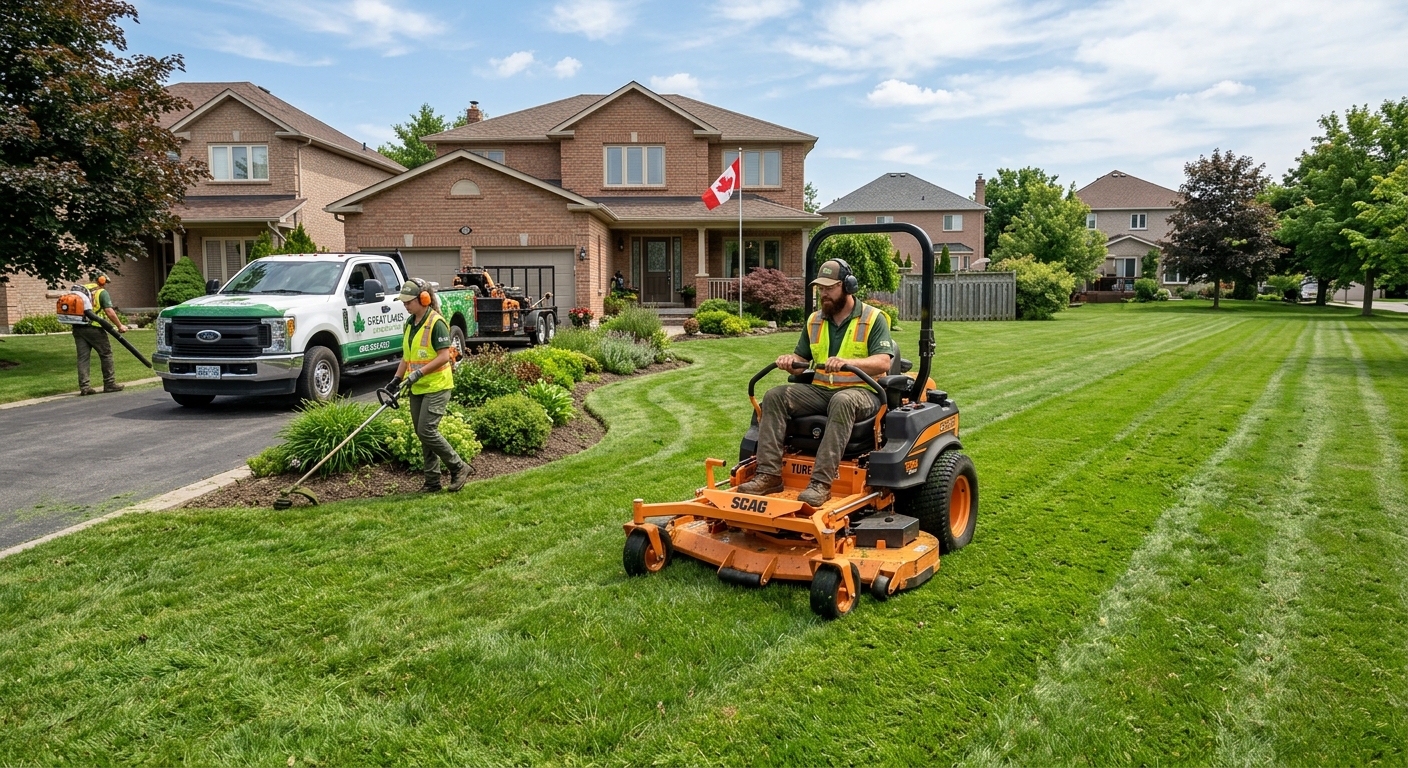
Landscaping options and costs in Royston
Landscaping in Royston is all about making smart use of the long mild season you get in coastal British Columbia. With a population of 1,616 (Statistics Canada, 2021 Census), you’ll notice a close-knit contractor market—fewer crews chasing projects than in the big-city core, but demand still runs high in the nearby Cowichan Valley connection routes and the Valley communities that feed into Royston. Also, in many Royston neighbourhoods you’ll find older housing stock alongside newer builds; detached and semi-detached properties create the yard space that makes homeowners willing to invest in softscape and curb appeal upgrades. That’s why you’ll commonly see layered planting, defined walkways, and drainage improvements rather than “one-off” fixes.
In the Lower Mainland–Southwest region (plant hardiness zone 7–8), labour and materials pricing is shaped by a fairly steady working window—often from early spring through late fall—plus winter wet weather that can pause work during the most saturated weeks. Retaining walls and patios still must be built for freeze–thaw cycles, so excavations, base prep, and drainage layers are priced as real structural work, not just surface finishing. Meanwhile, sod and irrigation installations can cost more because of soil preparation and efficient watering hardware that homeowners ask for, especially when water costs rise and municipal rules tighten during dry periods.
Demand is especially strong around the Royston waterfront / Valleyview Drive area, where slopes and heavy winter rain can make drainage and foundation moisture control urgent. Below is a practical comparison of common landscaping scopes so you can benchmark your quote.
| Service |
Description |
Season |
Price Range |
| Full landscape design and installation |
Site assessment, grading/drainage plan, planting plan, softscape + hardscape build (labour + typical materials allowance) |
Spring to fall (wettest weeks may shift schedule) |
$8,000–$35,000 |
| Sod installation (supply, grade, lay, roll) |
Soil grading, topsoil/compost amendments as needed, sod delivery and rolling, starter fertilizer |
Mid-spring to early fall |
$3,000–$7,500 |
| Lawn seeding (grade, seed, starter fertilizer) |
Light grading, seed/seed blend, starter fertilizer, light raking and mulching (as applicable) |
Spring or early fall |
$1,800–$4,800 |
| Interlocking patio or walkway |
Excavation, base compaction, edging, jointing sand, pattern layout |
Spring to fall |
$6,500–$28,000 |
| Retaining wall (interlocking block) |
Block wall build with proper base depth, drainage rock, weep placement and backfill |
Spring to early fall |
$12,000–$65,000 |
| Tree and shrub planting |
Plant supply and install, staking where needed, mulch ring, watering plan for establishment |
Spring to fall |
$1,500–$14,000 |
Prices are estimates only and vary by project scope, site access and material selection.
What affects the price of landscaping in Royston
In Royston and across the Lower Mainland–Southwest, quotes for the same “job” can differ by 30–50% because the work hidden under the finish is different—especially grading, drainage, and how many skilled hours go into prep. Even within British Columbia, the climate advantage of zone 7–8 (Lower Mainland–Southwest) means contractors can plant and build longer, but coastal wet winters also push more time into earthworks, dewatering, and drainage design. By contrast, Prairie zones (2–4) often compress the working window and push projects toward drought-tolerant planting; and when frost drives deeper base work, retaining wall excavation can rise substantially. Southern Ontario (zone 5–6) has a more moderate season with occasional summer drought spells—so irrigation planning becomes a larger line item than homeowners expect.
Here, the plant hardiness zone and frost calendar define what grows and what can be installed reliably. With typical last spring frost in the early March to early April window near the coast, you can start earlier than inland regions—but you still need a drainage-first approach because heavy rain and saturated soils can delay paving and sod establishment. Concrete examples of cost drivers in Royston: (1) a sloped front yard needing re-grading and soil export/import can swing a project from a basic lawn install into a drainage-and-grading scope; (2) choosing a mature specimen tree or larger-caliper shrubs increases plant cost and labour for proper staking and backfill; (3) if you’re combining a walkway and a retaining wall, hardscape work (base, edging, block, compaction) usually prices higher per square foot than seeding, even though the “visible” area looks similar.
That’s why a modest planting refresh might land in the $1,000–$15,000 planting band, while a comprehensive build with drainage, hardscape, and layered plantings commonly moves into the $5,000–$50,000 design-and-install range.
| Price Factor |
Why It Matters |
Cost Impact |
| Yard size in sq ft — the primary cost driver for softscape |
More area means more topsoil, amendment, labour hours, and material quantities |
Low-to-high (small yards can be disproportionately expensive per sq ft) |
| Grading and drainage work — slope corrections add significant cost |
Fixing pooling and directing runoff toward safe drainage routes requires excavation and re-compaction |
Can add major cost; often the difference between a basic and premium quote |
| Drainage bed or French drain installation |
Includes trenching depth, perforated pipe, gravel sizing, filter fabric and outlet planning |
Moderate-to-high depending on yard complexity and discharge location |
| Plant material tier — native shrubs vs. ornamental vs. mature specimen trees |
Larger sizes cost more and require extra labour (staking, careful handling, wider pits) |
Low for young stock; high for specimen trees and premium evergreen selections |
| Hardscape vs. softscape ratio — walls and patios cost more per sq ft than lawn |
Patios and retaining walls require base prep, compaction, edging, and structural drainage layers |
Often pushes total project budget up quickly |
| Irrigation system design and installation |
Drip zones, timer/controller programming, and head selection add parts plus careful layout |
Moderate; can rise if retrofitting around existing beds and utilities |
| Soil amendment and topsoil required |
Coastal soils often need compost and aeration; poor native soils increase amendment quantity |
Moderate; becomes high if hauling is required from outside the area |
| Tree removal or stump grinding before new planting |
Grinding involves equipment time; disposal and access matter |
Variable; can add noticeable cost to planting projects |
Permits & regulations in British Columbia
In British Columbia, most typical landscaping activities—planting shrubs and trees, sodding, seeding, and most softscape upgrades—generally do not require a permit. The common exceptions are when your project changes drainage in a way that affects neighbouring property or storm connections, or when you build a retaining wall above the height threshold used by many municipalities (often 1.0 m / 3.3 ft). For example, a small landscape retaining feature below that threshold typically falls into “normal hardscape,” but taller block walls are where permits (and sometimes engineered drawings) are more likely.
Before any digging in Royston, you should also ensure utility locates are requested. Even for planting holes or wall footings, call for locates so the contractor can verify where water, gas, and electrical lines run. If you’re altering lot grading so runoff moves toward neighbouring properties or directly toward storm sewer connections, approval requirements can come up.
To verify a contractor’s credentials in British Columbia, start by checking their company listing in the provincial business registry and asking for their licence/permit references if applicable to the scope. Then confirm liability insurance: request a current certificate of insurance showing the policy is active and the work location is covered. Finally, ask about worker coverage (WSIB/WCB depending on their registration) and request documentation that coverage is in place for the crew doing the work. A reputable contractor should provide these items before work begins—no guessing, no last-minute emailing.
Planning a landscape that thrives in Royston's climate
Designing a yard that thrives in Royston means working with the coastal pattern of frequent rainfall, zone 7–8 growth, and a frost calendar that allows planting from early spring through late fall (with weather delays during the wettest weeks). Start with plant selection: choose native and zone-appropriate species that can handle our mild winters without constant winter protection. Pair that with better watering efficiency—because even with fewer watering bans than the BC Interior, water costs and local restrictions still influence how homeowners manage establishment.
Next, decide between sod and seed. Sod gives instant curb appeal and faster functional results, but it typically costs about 3–4x per sq ft compared with seeding once you include prep and the product itself. For instance, if seeding a lawn area lands around the $1,800–$4,800 band, switching to sod may move you into roughly the $3,000–$7,500 range for a similar footprint—worth it when you need quick pet/traffic tolerance or visible payoff before a move-in date.
Drainage and grading are critical here. Plan for water to move away from foundations and not pool near walkways. For patios and retaining walls, proper base preparation matters because freeze–thaw cycles—though milder than inland—can still cause shifting if the base isn’t compacted and drained. Finally, use low-maintenance strategies: mulch, groundcovers, and long-blooming perennials reduce annual cleanup, help suppress weeds, and keep beds looking full without constant re-seeding.
If you want a water-wise angle, add rain-garden planting and overflow routes (aesthetically integrated in beds) rather than “bare” xeriscape. In our region, this approach still looks lush while improving yard performance during wet spells.
| Element |
Climate Consideration |
Maintenance Level |
Price Band |
| Sod lawn installation |
Establishment needs consistent moisture in early season; good drainage prevents rot |
Low to moderate (watering + first-season care) |
$3,000–$7,500 |
| Native perennial garden |
Zone-appropriate plants handle mild winters; adjust spacing for airflow in wet periods |
Low (mulch refresh and seasonal pruning) |
$2,500–$10,000 |
| Mulched shrub border |
Mulch moderates soil moisture swings and reduces weed competition in coastal rain |
Low (edge maintenance and occasional trimming) |
$1,800–$7,500 |
| Interlocking stone patio |
Needs correct base drainage to handle freeze–thaw movement |
Low (periodic joint sand checks) |
$6,500–$28,000 |
| Retaining wall (block) |
Backfill and drainage rock prevent water pressure and block movement |
Low (inspection after winter storms) |
$12,000–$65,000 |
| Drip irrigation system |
Efficient watering during restricted periods; prevents over-wetting foliage |
Low (seasonal controller adjustments) |
$1,200–$6,000 |
How to choose a landscaping contractor in Royston
When you’re hiring a landscaping contractor in Royston, verify three things first: (1) British Columbia licensing/qualifications as they apply to the scope, (2) liability insurance, and (3) worker coverage (WSIB/WCB coverage depending on their registration). How to check: ask for a current certificate of insurance and confirm it includes the work type and your address or at least the work location; request proof of worker coverage for the crew installing your landscaping; and review their online credentials and company profile. Don’t accept “it’s coming later”—you want documents before scheduling starts.
Then request 2–3 itemised written quotes. Look for labour + materials breakdowns rather than one lump sum. A real quote shows excavation/grading time, drainage inclusions (like filter fabric and gravel), base depth/compaction notes for patios and retaining walls, plant quantities and sizes, and irrigation line items if included. Carefully read what’s excluded: disposal, topsoil/compost haul-in, utility locate fees, permit pull (where required), and any site access limits can materially change your final cost.
Warranty matters. Ask for workmanship warranty length (often on install/compaction/plant establishment), product/manufacturer warranties, and whether warranties transfer to you if you sell your home. For payment, never pay more than 10–15% upfront; hold a portion until the job is fully complete and cleaned. Get a written timeline with a start date and completion estimate, and confirm how weather delays in wet winter weeks will be handled.
- Use a written scope that lists dimensions, quantities, and materials (not just “assorted plants”).
- Confirm who supplies topsoil/compost and whether hauling is included.
- Ask for drainage details: outlet route, pipe type, filter fabric, and backfill specs.
- For hardscape, request base prep and compaction method notes.
- Clarify whether utility locates are arranged before digging.
- Check that insurance certs are current and show coverage during the project dates.
- Verify worker coverage documentation for the installing crew.
- Insist on a detailed start/completion schedule and weather-delay communication plan.
- Confirm cleanup and disposal are included (or priced transparently).
- Ask who is responsible for permit applications if a retaining wall triggers requirements.
- Request a plant list with botanical names, sizes, and counts.
- Hold back final payment until punch-list items are finished.
Concrete red flags in Royston: vague scopes (“we’ll handle it”), refusing to itemise labour vs materials, quoting without addressing drainage when your yard has pooling, offering large upfront payments (beyond 10–15%), and starting excavation before confirming utility locates or insurance/coverage paperwork.
Frequently asked questions — landscaping in Royston
How much does a retaining wall cost in Royston?
In Royston and nearby coastal British Columbia sites, an interlocking block retaining wall typically falls around $12,000–$65,000 depending on height, length, soil conditions, and how complex the drainage needs are. The biggest swing factors are excavation depth, base preparation, and whether a proper drainage system (weep placement and drainage rock) is included. Because we still deal with freeze–thaw cycles, the contractor should build the base for long-term stability rather than trying to “surface” the wall on shallow fill. If your site needs significant re-grading or the wall is taller than the common 1.0 m threshold used by many municipalities, permit and engineering-related work can also increase the budget.
When is the best time to landscape in Royston?
The best overall window is spring to early fall. In coastal BC, planting and softscape work can start earlier than inland regions because last spring frost is often in early March to early April near the coast. Sod and seed both do well when soil temps and moisture levels are supportive—sod typically performs best when installed in mild, consistently moist stretches, while seeding is often timed for spring or early fall. The wettest winter weeks can pause earthworks and paving due to saturated ground, so reputable crews will build around forecast and site conditions. If you’re planning hardscape like a patio, aim for dryer weeks to avoid base contamination and ensure proper compaction.
Do I need a permit for a retaining wall in British Columbia?
Often, small retaining features may not need a permit, but in British Columbia many municipalities require permits for retaining walls above a common threshold—typically 1.0 m (3.3 ft). If your wall is near or above that range, expect permit requirements and possibly engineered drawings, depending on height, location, and site conditions. Also watch for approvals related to lot grading: changes that affect drainage toward neighbouring properties or storm connections can trigger review. Because requirements vary by municipality and by site, the best approach is to confirm with your local office and ask your contractor to state whether the permit is included in their quote or whether you’ll need to apply.
How do I improve drainage in my yard?
In Royston, drainage improvements usually start with identifying where water pools during heavy rain. Many successful projects combine surface grading (correcting slope away from the foundation), swales or grading toward safe discharge areas, and subsurface drainage like a French drain where water is trapped in soil. A typical approach includes trenching, installing perforated pipe with filter fabric, using properly sized gravel, and backfilling in a way that stays stable. If you add beds, use breathable soil blends and avoid burying landscape fabric under wet-prone layers. Always pair drainage fixes with a plan for downspouts and runoff pathways—otherwise water will simply relocate after construction.
What is xeriscaping and does it suit Royston?
Xeriscaping is a water-wise landscaping approach that uses drought-tolerant plants, efficient irrigation, and soil strategies to reduce water use. In Royston and the broader Lower Mainland–Southwest (zone 7–8), it can work, but it’s often most successful when adapted for our climate: we don’t want drought plants that struggle in wet winters, and we still need good drainage to prevent root issues. A practical “coastal xeriscape” often blends drought-tolerant structure plants with moisture-tolerant perennials, plus mulch and groundcovers to reduce evaporation. Many homeowners also prefer rain-garden-style planting beds: you gain water control during heavy storms while keeping summer watering manageable if restrictions tighten.
How do I plan a low-maintenance yard?
A low-maintenance yard in Royston usually comes from three decisions: choose zone-appropriate plants, build soil and drainage properly, and simplify how the landscape is “managed” each season. Use mulch consistently, pick fewer plant varieties that are well-suited to wet winters and coastal conditions, and prioritize groundcovers and perennials that don’t require frequent replanting. Consider irrigation with drip zones and a smart controller if you’re managing beds—this supports efficient watering without constant manual adjustments. For lawns, seeding can be easier and cheaper to refresh than constantly replacing sod, while a shrub border with mulch and a tidy edge can reduce upkeep. If you’re investing in hardscape, a well-prepped patio often adds curb appeal with minimal annual work.