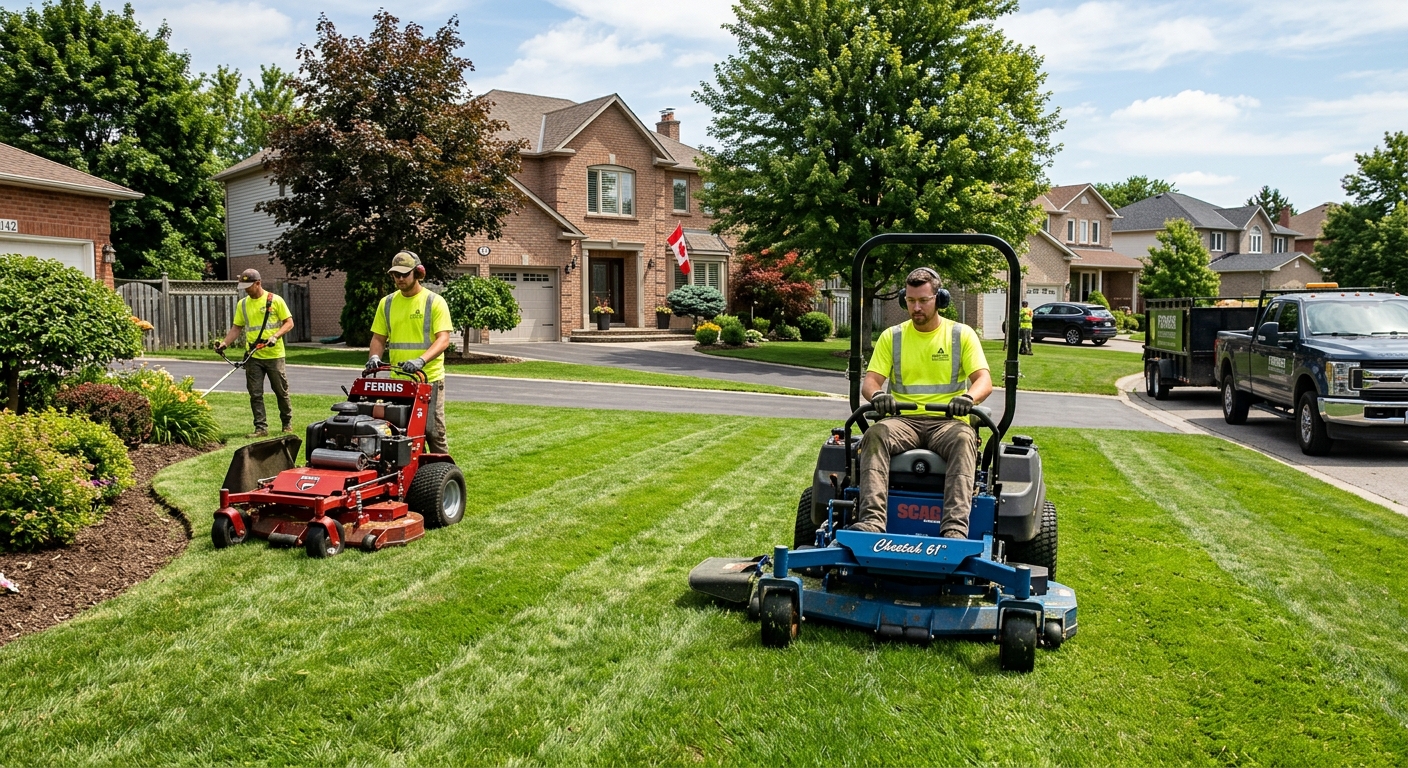
Landscaping options and costs in Douglas
Landscaping in Douglas is shaped by both the amount of space people have and the mild, wet winters that let you build and plant for much of the year. With Douglas at 7,867 residents (Statistics Canada, 2021 Census), demand is steady, especially around established streets and newer subdivisions where homeowners want curb appeal fast. In practical terms, many properties are detached and tend to have enough yard area to justify a full design rather than piecemeal upgrades. Lower Mainland–Southwest conditions also change the economics: winters are usually soft enough to keep contractors working through shoulder months, but the frequent rain and occasional freeze–thaw still mean drainage and base preparation must be done correctly—particularly for patios, walkways, and retaining walls. That’s why you’ll often see mid-range quotes that don’t jump straight to expensive materials; contractors have to balance labour availability, wet-weather scheduling, and the need for proper compaction and drainage to prevent settlement.
In Douglas, areas like the Neighbourhood/Service centre zone near major corridors tend to be where landscaping crews are busiest because homeowners there often do visible upgrades (driveway edges, patios, front borders) before listing or hosting family events. From a pricing standpoint, most projects cluster around common local ranges—full design and installs can run from a modest update to a complete overhaul—so it helps to compare apples to apples before you choose.
Use the table below to set expectations for typical scope and budgeting, then we can narrow it down after we review your yard layout, drainage, and plant goals.
| Service |
Description |
Season |
Price Range |
| Full landscape design and installation |
Site measure, concept plan, plant palette, grading where needed, soil/topsoil, planting, mulch, edging, and softscape/hardscape elements |
Year-round (best results Apr–Oct; wet winter weeks avoidable) |
$5,000–$50,000 |
| Sod installation (supply, grade, lay, roll) |
Remove/de-compact existing turf if needed, bring grade to level/slope, supply sod, lay, roll, and quick-start watering plan |
Apr–Oct (avoid heavy rain windows) |
$2,500–$8,500 |
| Lawn seeding (grade, seed, starter fertilizer) |
Light grading, seed mix selection, starter fertilizer, tackifier where appropriate, and early maintenance guidance |
Mar–May and Aug–Oct |
$2,000–$6,500 |
| Interlocking patio or walkway |
Excavate, compaction, base (granular/crushed stone), edge restraints, pavers, and jointing polymeric sand |
Apr–Nov (best in drier stretches) |
$6,000–$35,000 |
| Retaining wall (interlocking block) |
Excavation, base and drainage gravel, weep/drain pipe where needed, block installation, cap, and backfill |
Apr–Nov |
$12,000–$75,000 |
| Tree and shrub planting |
Soil prep, amendments, staking for trees, mulching, and placement for mature spacing |
Mar–May and Sept–Oct (flexible with weather) |
$1,000–$15,000 |
Prices are estimates only and vary by project scope, site access and material selection.
What affects the price of landscaping in Douglas
Two homeowners in Douglas can receive quotes that differ by 30–50% for what sounds like the “same” job, and it usually comes down to site conditions and how the contractor prices risk. In Lower Mainland–Southwest, the long, wet shoulder season supports year-round labour availability, but crews still avoid the most saturated weeks. Meanwhile, across British Columbia, material pricing and contractor overhead can shift with demand: coastal jobs (often in plant hardiness zones 7–8) can lean into fuller, layered planting palettes, while Prairie regions in zones 2–4 push drought-tolerant, wind-hardy species and often compress scheduling into a shorter frost-free window. Those different calendars can change labour hours and what customers expect to be included.
In Douglas specifically, early March to early April spring frosts and fall frosts often not until November mean you can plant and do softscape more often than in colder provinces, but structural work still has to survive freeze–thaw cycles. That’s why base depth, drainage layers, and compaction are priced in—especially for retaining walls and paver work that must prevent frost heave and wall movement. For example, if your yard needs major grading to fix pooling near a foundation, that can push a project from a typical tree-and-shrub planting budget of around $1,000–$15,000 into a larger design-and-install range of $5,000–$50,000 once haul, drainage, and soil volume increase. Another common cost swing: heavy clay or compacted soils may require a drainage bed and significant soil amendment, adding labour and dump fees.
Two concrete Douglas examples that raise cost are steep-slope access and buried services. Narrow side gates can make equipment staging harder (more hand work), and unknown service locations may require careful excavation around utility corridors. On the flip side, a straightforward, flat front yard with good access can keep your costs closer to the lower end of the local bands.
| Price Factor |
Why It Matters |
Cost Impact |
| Yard size in sq ft — the primary cost driver for softscape |
More area means more excavation, soil, topsoil, seed/sod, mulch, and labour days |
Small front updates can stay near $2,000–$6,500; larger rebuilds often jump into full install budgets |
| Grading and drainage work — slope corrections add significant cost |
Correct slope protects foundations and keeps patios/walls from shifting |
Can add substantial labour and equipment time; common driver of 30–50% quote differences |
| Drainage bed or French drain installation |
In Lower Mainland–Southwest, wet soils saturate quickly and pooling must be managed |
Typically increases hard-to-omit costs beyond simple planting-only scopes |
| Plant material tier — native shrubs vs. ornamental vs. mature specimen trees |
Specimen size, container size, and sourcing affect both price and installation difficulty |
Low-tier borders may fit $1,000–$5,000; mature trees often push toward $8,000–$15,000+ |
| Hardscape vs. softscape ratio — walls and patios cost more per sq ft than lawn |
Pavers and block walls require excavation, base layers, and precise compaction |
A patio or walkway plan can quickly move budgets from “seeding” territory into $10,000–$35,000+ |
| Irrigation system design and installation |
Even with wetter winters, controlled watering supports establishment and protects lawns during restrictions |
Smart controllers and drip zones add upfront costs but reduce ongoing labour and failed turf |
| Soil amendment and topsoil required |
Correct texture and fertility matter for seed germination and long-term plant health |
Haul volume and disposal can meaningfully raise costs on clay-heavy sites |
| Tree removal or stump grinding before new planting |
Removal adds hauling and potential stump excavation; roots can interfere with drainage plans |
Can transform a planting project into a bigger coordinated hard/softscape scope |
Permits & regulations in British Columbia
In British Columbia, most everyday yard work—like planting beds, sodding, seeding, mulching, and most softscape improvements—typically does not require a permit. Where permits commonly come into play is when you’re altering the structural elements of a property, especially retaining walls. In many municipalities, retaining walls above a threshold (commonly around 1.0 m / 3.3 ft) can require a building permit and sometimes engineered drawings, particularly if site conditions suggest higher loads or complex drainage needs. Also, changes to lot grading that affect stormwater flow—such as redirecting drainage toward a neighbouring property or tying into a storm sewer connection—can trigger approvals or review.
A homeowner in Douglas should also call utility locates before digging any planting holes, drainage trenches, or wall footings. That’s not just “nice to have”; it’s part of safe excavation practice on properties where underground services may be present even in older streets.
To verify a contractor in British Columbia step-by-step, start with licensing and the contractor’s trade standing through the appropriate online registry listings (search the company name and the responsible business). Next, request a certificate of insurance showing liability coverage; verify the policy is current and that the company named matches the quote. For workers, confirm WSIB/WCB clearance (or equivalent coverage proof where applicable) by asking for a clearance letter or verification document. If the contractor won’t provide these items before starting, pause and ask for them in writing—good crews can produce proof quickly.
Planning a landscape that thrives in Douglas's climate
To plan a yard that thrives in Douglas, match your design to hardiness zone 7–8 conditions, the Lower Mainland–Southwest rainfall pattern, and a frost calendar that often extends work into spring and late fall. Planting selection should start with zone-appropriate, mostly hardy choices—native and well-adapted shrubs, perennials, and broadleaf evergreens that handle coastal winters with minimal winter protection. Because the region can stay wet for long stretches, design for drainage first: raised beds, properly graded lawns, and saturated-soil tolerant planting reduce root stress and prevent muddy turf cycles.
For turf, decide between sod and seeding early. Sod gives instant coverage, but it costs about 3–4 times more per sq ft than seeding once you factor supply and install labour. For a homeowner who wants results quickly near a front walkway, spending closer to the higher end of sod budgets can be justified—especially if you’re hosting events and need a clean look. If you’re patient and want to control costs, seeding is typically the smarter budget choice and is usually the better fit for problem areas where sod would struggle to establish due to ongoing settling or drainage adjustments.
Hardscape also needs respect for the local frost line and freeze–thaw cycles. Patios and walkway bases must be built with proper excavation depth, compacted granular layers, and edging restraints to prevent movement. Retaining walls require drainage gravel and backfill discipline to avoid water pressure and wall movement over time. For low-maintenance curb appeal, use mulch aggressively, plant groundcovers in drifts, and select perennials that fill gaps—keeping weeds down and reducing annual upkeep. Consider rain-garden style planting pockets or xeriscape-adjacent areas (like drought-tolerant borders on the driest slopes) to balance the yard when watering restrictions tighten during drier periods.
If your priority is a “finished look” this season, a practical approach is to target a patio or key pathway first, then add plant layers. That often prevents you from paying for repeated soil disturbance—an expense that’s usually avoidable when the sequence is right.
| Element |
Climate Consideration |
Maintenance Level |
Price Band |
| Sod lawn installation |
Establishment depends on consistent moisture during early growth; heavy rain can delay laying |
Low to moderate (watering early; mowing and occasional fertilizing) |
$2,500–$8,500 |
| Native perennial garden |
Zone-appropriate species handle coastal winters; good drainage reduces rot in wet periods |
Low (mulch refresh, seasonal trimming, light weeding) |
$1,500–$7,000 |
| Mulched shrub border |
Mulch insulates roots in shoulder freezes and keeps soil moisture steadier |
Low to moderate (weed control and periodic pruning) |
$1,000–$6,500 |
| Interlocking stone patio |
Freeze–thaw demands deep base prep, compaction, and proper edge restraint |
Low (occasional joint sand top-up; cleaning) |
$6,000–$35,000 |
| Retaining wall (block) |
Drainage is essential to prevent water pressure buildup during wet winters |
Low (periodic inspection of drainage outlets and caps) |
$12,000–$75,000 |
| Drip irrigation system |
Helps establish plants efficiently while supporting smart control during restrictions |
Low (set-and-forget monitoring; seasonal adjustments) |
$2,000–$12,000 |
How to choose a landscaping contractor in Douglas
Choosing the right landscaping contractor in Douglas starts with verification, not promises. First, confirm British Columbia licensing/trade standing for the business (look up the company and the responsible contractor online). Next, request proof of liability insurance—ask for a current certificate of insurance before work begins, and make sure the named insured matches the company you’re hiring. Then check WSIB/WCB coverage: ask for a clearance letter or verification document. If you can’t get insurance and coverage proof up front, don’t treat it as a “small delay”—it’s a risk signal.
For pricing, request 2–3 itemised written quotes, not one-page lump sums. The breakdown should separate labour and materials (pavers vs. base rock vs. geotextile vs. topsoil/soil amendments, for example). Read what’s excluded: disposal/haul-away, utility locates, permit administration (if applicable), excavation depth, drainage bed inclusions, and irrigation controller programming. Confirm warranty terms clearly: workmanship warranty length, product/manufacturer warranty details, and whether the warranty is transferable to future owners. For payment, keep upfront to about 10–15% maximum; use holdback (commonly 10% or similar) until the job is complete and cleaned, with final grading and any punch-list items finished. Finally, insist on a start date and completion estimate in writing—especially important in Lower Mainland–Southwest where wet weeks can affect schedule.
- Provide insurance certificate and WSIB/WCB clearance before a contract is signed.
- Use an itemised quote that lists quantities (sq ft, linear ft, tree count, soil volume).
- Clarify what happens if rain delays installation (reschedule terms and protection of turf).
- Confirm disposal/haul-away is included or priced separately.
- Ask who pulls permits (if required for retaining walls above threshold).
- Verify utility locate responsibility before digging.
- Confirm base build-up details (compaction, geotextile, granular layers) for patios/walls.
- Request a planting plan showing spacing for mature growth, not just initial placement.
- Check irrigation design includes controller type and zoning (if you’re adding it).
- Get warranty coverage in writing (workmanship and product specifics).
- Avoid quotes that don’t mention drainage or grading where pooling/foundation risk exists.
- Keep deposits modest; do not pay full amounts before final inspection.
Concrete red flags in Douglas: (1) contractor won’t provide proof of insurance/coverage, (2) only offers verbal scope with no quantities, (3) skips drainage and bases but still quotes “retaining wall” or “patio” pricing as if it’s cosmetic, (4) asks for large upfront deposits beyond 10–15%, and (5) won’t put timelines and warranty terms in writing.
Frequently asked questions — landscaping in Douglas
How much does a retaining wall cost in Douglas?
In Douglas and across the Lower Mainland–Southwest, retaining wall costs typically fall into the range of $12,000–$75,000, depending on wall height, length (linear feet), access, and how much drainage/backfill work is required. Because of local wet winters and freeze–thaw cycles, a properly built wall isn’t just blocks—good pricing includes excavation, a stable base, drainage gravel, and often drainage outlets to reduce hydrostatic pressure. If your yard has poor drainage or steep grading, the quote can move toward the upper portion of the band because grading corrections and soil haul become part of the job. Always ask for what’s included (drainage bed, weep pipe/weep holes, and backfill type) so comparisons are fair.
When is the best time to landscape in Douglas?
In British Columbia’s Lower Mainland–Southwest climate, the best windows are typically spring through early summer and then again in early fall. Near Douglas, spring frost usually runs early March to early April along the coast, and first fall frost often isn’t until November—so you can plan planting and many softscape tasks for longer than in colder provinces. Sod and seed usually do best during calmer, drier stretches within Apr–Oct, while shrubs and trees are commonly installed in spring and fall for steadier soil conditions. Wet winter weeks can slow crews and increase the risk of ruts, so good contractors schedule earthworks and base prep carefully around rainfall. If drainage is a major part of your project, we usually prioritise it earlier in the dry windows to avoid delays.
Do I need a permit for a retaining wall in British Columbia?
Often, most landscaping like planting, sodding, and typical softscape work doesn’t require a permit in British Columbia, but retaining walls are a different category. Many municipalities require a building permit for retaining walls above a common threshold around 1.0 m (3.3 ft), and sometimes engineered drawings are requested depending on conditions. In Douglas, the safest approach is to confirm wall height and the intended impact on grading and drainage before anyone excavates. Also consider that changing lot grading that affects stormwater direction or connections may trigger approval. Ask your contractor whether permit work is included in the quote (if needed) and have them clearly state what documentation they will submit or coordinate.
How do I improve drainage in my yard?
Drainage improvements in Douglas usually start with observing where water pools after rain and how quickly the soil absorbs moisture. The most common fixes are re-grading to direct water away from foundations, adding a drainage bed, or installing a French drain where water collects. Because the Lower Mainland–Southwest can stay wet, simply “adding topsoil” without slope correction often doesn’t solve the problem—so make sure your quote includes grading and soil compaction details, not just materials. If you also plan irrigation, drip zones can help establish plants without oversaturating during rainy periods. If you’re installing a patio or wall, drainage layers and weep outlets are essential to prevent freeze–thaw movement. Your contractor should also include utility locate coordination before digging drainage trenches.
What is xeriscaping and does it suit Douglas?
Xeriscaping is a design approach that reduces water use through drought-tolerant plantings, smart layout, mulch, and efficient irrigation where needed. In Douglas and the Lower Mainland–Southwest (hardiness zones 7–8), you still get plenty of rain in many seasons, so xeriscaping usually works best as a targeted strategy for the driest or most exposed areas—like the top of a slope or hot front-facing sections—rather than converting the entire lawn immediately. It can suit many yards, especially if you combine it with rain-garden style planting pockets that capture runoff during storms. Pricing depends on what you replace: a sod lawn falls in the typical $2,500–$8,500 range, while converting sections to mulched borders and perennials can reduce long-term maintenance even if drainage work still needs to be engineered correctly.
How do I plan a low-maintenance yard?
A low-maintenance yard in Douglas is less about “no effort” and more about smart installation choices that reduce annual labour. Start with a plan: zone-appropriate plants (evergreens, perennials, and shrubs) spaced for mature growth, then mulch thickly to suppress weeds. Where drainage is an issue, fix grading and add drainage before planting, because stressed plants will demand more attention. For turf, seed can be a budget-friendly option, while sod gives quicker results—especially around paths where you need fast curb appeal. If you’re budgeting for a broader upgrade, many homeowners land in the $5,000–$50,000 range for design plus install to get sequencing right (drainage, base prep, planting). Finally, ask for an irrigation approach that’s efficient—drip with smart controllers helps reduce waste and supports the reality of occasional watering restrictions in BC.