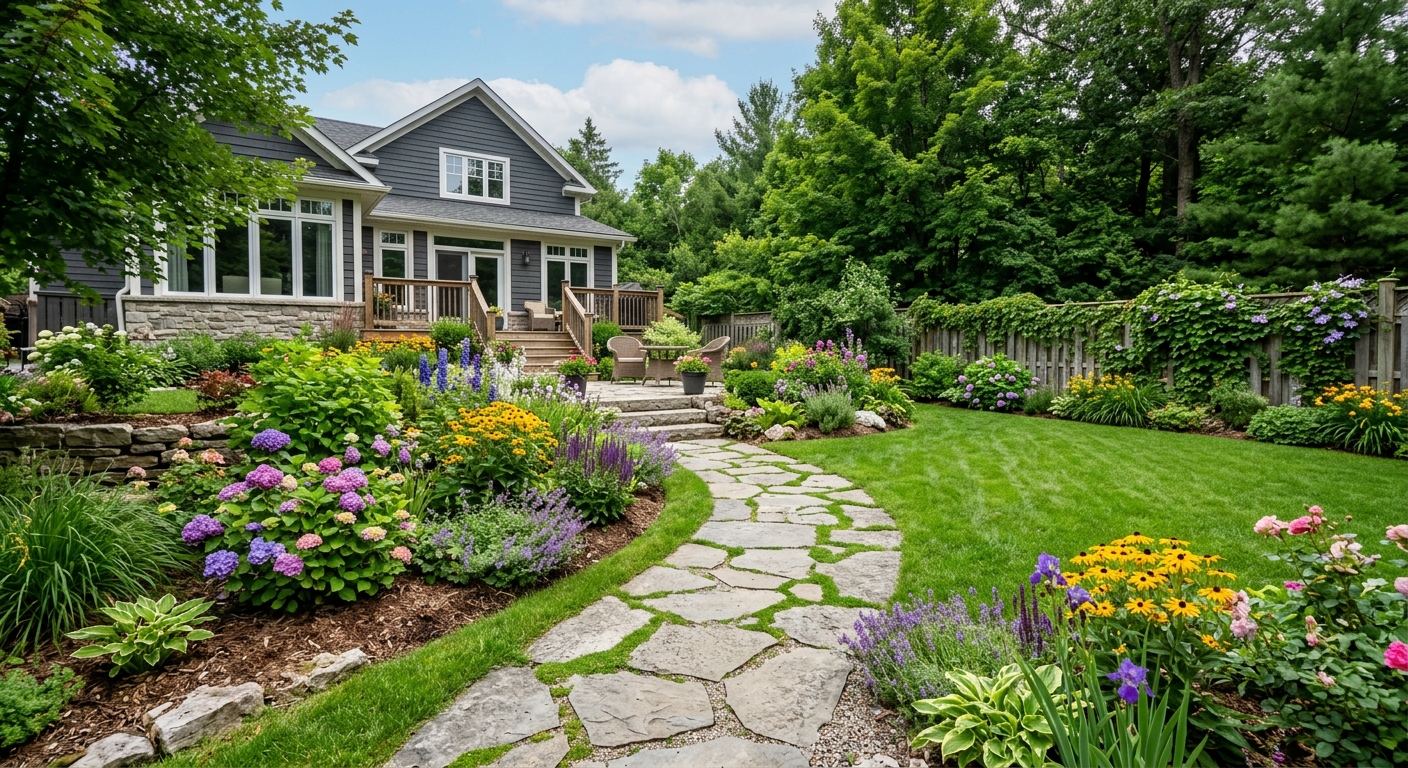
Landscaping options and costs in Coronation Park
In Coronation Park, homeowners typically start with a practical goal—clean curb appeal, better drainage, or a yard that’s easier to maintain—then match the project to the season. With a population of 1,468 (Statistics Canada, 2021 Census), this is a tight, close-knit community where word-of-mouth matters, and crews can be booked up quickly when weather allows. Also, Coronation Park’s housing stock tends to favour detached properties with yard space, which encourages owners to invest in multi-step upgrades rather than “one-off” fixes.
In the Lower Mainland–Southwest, landscaping pricing is shaped by a longer working and growing season thanks to hardiness zones 7–8, with last spring frosts often landing in early March to early April and first fall frosts commonly not until November. That means more planting and softscape can be done for much of the year, but contractors still price in wet-weather management and freeze–thaw movement for structural work. Structural elements like patios and retaining walls require proper drainage, deeper bases, and careful compaction—especially on sloped lots that are common in the region.
Demand is especially steady in the residential areas where lots are tighter and foundation moisture is a concern—many homeowners in the Coronation Park neighbourhood prioritize grading corrections, French drains, and layered planting beds that look full even in cooler months.
Below is a realistic comparison of common services and budget ranges, so you can align quotes to scope before you compare contractor proposals.
| Service |
Description |
Season |
Price Range |
| Full landscape design and installation |
Site assessment, concept + planting plan, grading/drainage allowance, soil prep, planting and/or hardscape build-out |
Spring to fall (with some winter prep depending on scope) |
$5,000–$50,000 |
| Sod installation (supply, grade, lay, roll) |
Final grading, topsoil/soil conditioning, sod supply, lay + roll + starter fertilizer |
Late spring to early fall |
$2,500–$7,500 |
| Lawn seeding (grade, seed, starter fertilizer) |
Light grading, seed blend, starter fertilizer, watering guidance |
Spring to early fall |
$1,500–$4,500 |
| Interlocking patio or walkway |
Excavation, base, compaction, edge restraints, pavers, jointing sand, clean-up |
Spring to fall (dry windows for base works) |
$10,000–$45,000 |
| Retaining wall (interlocking block) |
Wall design/fit, drainage fabric + weep system, block installation, base excavation and compaction |
Spring to fall (plan around wet stretches) |
$12,000–$65,000 |
| Tree and shrub planting |
Digging + amendments, staking (if needed), mulch, watering plan, basic clean-up |
Spring to fall |
$1,500–$14,000 |
Prices are estimates only and vary by project scope, site access and material selection.
What affects the price of landscaping in Coronation Park
In Coronation Park and across the Lower Mainland–Southwest, you can see quote-to-quote differences of 30–50% for the “same” landscaping idea because the cost drivers are rarely identical. Two crews can both say “new drainage and planting,” but one includes proper sub-base, drainage bedding, topsoil import, and a full irrigation design, while another assumes the existing grade works. Labour availability also fluctuates because spring and early-fall weather windows are prized; when the ground is too wet, crews either pause or re-sequence work, which changes total schedule hours and overhead.
Climate and seasonality matter as much as aesthetics. Plant hardiness zones 7–8 and the local frost calendar define both what grows and how long crews can safely work. In Prairie-like zones (2–4), short frost-free windows push projects into tighter timeframes and often favour drought-tolerant, wind-hardy selections; structural work also needs deeper retaining-wall base work to sit below the frost line. In coastal BC like Coronation Park, the long growing season allows lush, layered planting palettes—but heavy rainfall means drainage design has to be right, or foundation moisture and standing water can undo the landscaping.
Here are concrete examples that move price in this area: (1) on sloped lots, correcting grade so water flows away from the house can add significant excavation and re-compaction, often increasing total softscape cost even if the planting list stays similar; (2) switching from lawn seeding to sod can be a “budget cliff” because sod typically runs about 3–4x the per-sq-ft cost—so a smaller sod area paired with seeding elsewhere is a common cost-control move; (3) an interlocking patio might sound comparable to a lawn project, but hardscape base prep and edge restraint mean it usually lands in the $10,000–$45,000 range for many residential footprints.
Finally, housing age affects how much labour is required. Older yards often have compacted soil, root intrusion, or drainage that’s no longer functioning; soil amendments and re-grading can shift a planting project from the low thousands toward the upper end of the $1,000–$15,000 tree-and-garden planting band.
| Price Factor |
Why It Matters |
Cost Impact |
| Yard size in sq ft — the primary cost driver for softscape |
More area means more excavation, soil, labour hours, and product (seed/sod/mulch) |
Small yards can add “minimum job” premiums; large yards increase materials and machine time |
| Grading and drainage work — slope corrections add significant cost |
Correct slopes and tie-ins to existing grades prevent pooling and foundation splashback |
Often one of the largest scope adders; can swing totals by thousands |
| Drainage bed or French drain installation |
Requires trenches, geotextile, aggregate, outlet routing, and sometimes cleanout access |
Can move a “planting-only” budget into a full landscape band |
| Plant material tier — native shrubs vs. ornamental vs. mature specimen trees |
Mature sizes and specialty cultivars cost more to procure and install |
Tree/shrub totals can shift markedly within the $1,000–$15,000 planting band |
| Hardscape vs. softscape ratio — walls and patios cost more per sq ft than lawn |
Hardscape needs excavation, base materials, and compaction for long-term stability |
Projects can jump from lower softscape ranges into $10,000+ hardscape territory |
| Irrigation system design and installation |
Drip lines, zones, backflow protection (as applicable), and controllers increase material and labour |
Routinely adds meaningful cost, but reduces long-term water waste |
| Soil amendment and topsoil required |
Compacted or low-organic soils need amendments to support roots and reduce washouts |
Soil import and labour can add thousands depending on volume |
| Tree removal or stump grinding before new planting |
Stumps require equipment and proper disposal; roots can interfere with drainage lines |
Can add both direct costs and additional excavation time |
Permits & regulations in British Columbia
In British Columbia, most planting and softscape work—like sodding, seeding, mulch, and shrub or tree planting—typically does not require a building permit. Where homeowners get tripped up is structural work. In most municipalities, retaining walls above a height threshold (commonly around 1.0 m / 3.3 ft) generally require a permit, and in some cases engineered drawings. Also, if you’re changing lot grading in a way that affects drainage toward neighbouring properties or ties into storm sewer systems, you may need approval because improper grading can create water and flooding issues.
Before any digging for planting holes, drainage, or wall footings, always call for utility locates. Even in quiet residential areas of the Lower Mainland–Southwest, there can be buried services that contractors must identify and mark to prevent damage.
To verify a Coronation Park contractor properly, do it in this order:
- Licensing: confirm they are correctly registered for their work category through the appropriate BC online registry (contractor listings and business details).
- Liability insurance: request a current Certificate of Insurance naming you (if your municipality/contract requires it) and confirm active coverage limits.
- WCB/WSIB coverage: ask for proof they have WCB coverage for their workers (and that any subcontractors are covered).
- Clearance letter (when required): some scopes or larger projects may require a WCB clearance letter—ask whether it applies to your contract.
- Match quotes to permits: if your plan includes a permit, ensure the quote states who pulls it and what timeline it adds.
Planning a landscape that thrives in Coronation Park's climate
To plan landscaping that thrives in Coronation Park, you want to work with the climate instead of fighting it: zone 7–8 growing conditions, wet winters, long cool springs, and freeze–thaw cycles that can shift poorly built edges and bases. Start with plant selection—choose native and zone-appropriate species that handle cooler weather well and don’t rely on constant watering. Then design your drainage so winter rain doesn’t pool against foundations or saturate beds to the point where roots struggle.
For lawn establishment, understand the real trade-off between sod and seed. Sod gives instant curb appeal, but it’s usually about 3–4x more per sq ft than seeding once you include base preparation. If you’re turning a large lawn area into a greener, low-maintenance space, seeding plus mulch beds can be a smarter value. For example, if a 1,000 sq ft sod lawn budget lands near the $2,000–$8,000 range depending on grade and access, you can often stretch that same budget farther by seeding the majority and using sod only for high-visibility entry lines or slopes.
Next, address drainage and grading—Lower Mainland–Southwest yards commonly need thoughtful slope corrections to keep runoff moving away from the house. For patios and retaining walls, base prep needs to account for frost action: excavation depth, compacted base layers, and proper weep/drainage behind walls protect against movement over time.
Finally, reduce annual upkeep with layered, low-maintenance strategies: mulch, groundcovers, and long-blooming perennials. Where water costs and restrictions can tighten, a small rain garden or xeriscape-inspired planting (drought-tolerant once established) can provide curb appeal without demanding daily watering. In coastal BC, you can still do lush gardens—just be strategic with irrigation zones and soil health.
| Element |
Climate Consideration |
Maintenance Level |
Price Band |
| Sod lawn installation |
Good for quick coverage during long planting windows; grade must drain well in wet months |
Medium (watering early establishment, then reduced) |
$2,500–$7,500 |
| Native perennial garden |
Zone-appropriate selections reduce winter stress and can handle cool, damp seasons |
Low to medium (spring cleanup, occasional dividing) |
$3,000–$10,000 |
| Mulched shrub border |
Mulch moderates soil moisture and helps beds stay stable through wet winters and cool summers |
Low (weed control and light pruning) |
$2,500–$9,000 |
| Interlocking stone patio |
Freeze–thaw protection via proper base depth and compaction; keep surface drainage controlled |
Low (occasional joint sand top-up) |
$10,000–$45,000 |
| Retaining wall (block) |
Needs drainage fabric + weeps and a stable base to handle movement risk from wet cycles |
Low (periodic inspection of drainage outlets) |
$12,000–$65,000 |
| Drip irrigation system |
Efficient watering for zone-appropriate plants; smart controllers help during variable seasons |
Low (seasonal adjustments, checks) |
$1,500–$6,500 |
How to choose a landscaping contractor in Coronation Park
Choosing the right contractor in Coronation Park starts with verification. In British Columbia, confirm they have the appropriate contractor registration for the type of work they’re doing, and request proof of current liability insurance. For worker coverage, ask for WCB/WSIB coverage documentation (and confirm subcontractors are covered too). When you can, ask for a clearance letter or current coverage certificate—this is especially important for labour-heavy projects like retaining walls and drainage work.
Next, get 2–3 itemised, written quotes. You want a breakdown that shows labour and materials separately (e.g., excavation hours, base/gravel volume, stone or block supply, geotextile, soil amendments, plant quantities, irrigation components). Avoid “lump sum only” quotes unless the scope is extremely well-defined. Read the scope carefully: is permit pulling included (if required)? Is disposal of excavated material included? Who protects existing lawns, fences, and shrubs? If irrigation is part of the job, confirm whether wiring, controller setup, and testing are included.
Warranty matters. Ask for the workmanship warranty length for installation and whether it’s transferable if you sell your home. Also confirm manufacturer warranties for plants and hardscape products (and what happens if plants fail due to improper aftercare).
For payment scheduling, never pay more than 10–15% upfront. Use a holdback until the job is complete and cleaned up. Finally, get a start date and completion estimate in writing—especially important in the Lower Mainland–Southwest where wet periods can affect timelines.
- Ask who will do the site visit and whether a foreman will be on-site during critical work.
- Require an itemised proposal (labour + materials + quantities) for every line item.
- Confirm disposal, trucking, and whether soil/topsoil is imported or hauled.
- Verify insurance and WCB coverage before any tools enter your yard.
- Check whether the contractor includes utility locates and how markings are handled.
- For grading and drainage, ask for a simple plan: flow direction and outlet location.
- Confirm base and compaction specs for patios/walls (and whether edge restraints are included).
- Ask about plant substitutions and whether you’ll approve changes before installation.
- Clarify irrigation design details: zones, layout, and controller type (if applicable).
- Review warranty terms in writing, including workmanship and plant replacement conditions.
- Set milestone payments tied to inspection points (rough grade, base, install, final cleanup).
- Ensure permits responsibility is stated clearly for retaining walls and grading changes.
Common red flags in the Coronation Park area include: (1) refusing to provide proof of insurance or WCB coverage, (2) vague quotes that don’t list quantities or removal/disposal, (3) promises to build retaining walls without discussing drainage fabric/weeps and base depth, (4) large upfront payments beyond 10–15%, and (5) no written timeline or start date.
Frequently asked questions — landscaping in Coronation Park
Do I need a permit for a retaining wall in British Columbia?
In British Columbia (including Coronation Park and the Lower Mainland–Southwest), permits are most commonly triggered by retaining walls over a height threshold—often around 1.0 m (3.3 ft) in many municipalities. Because thresholds and requirements can vary, confirm directly with your municipality or ask your contractor to verify before construction. Typically, retaining wall work that includes engineered design (in some cases) and drainage details may require additional review, especially when the wall affects drainage patterns. Your contractor’s quote should clearly state whether they will pull the permit (if needed), and your contract should identify responsibilities for any engineering or additional approvals.
How do I improve drainage in my yard?
Improving drainage in Coronation Park usually starts with correcting grade and directing water away from your foundation. Many yards benefit from adding a drainage bed or French drain, especially where wet winter runoff collects near walls or downspouts. A proper approach includes trenching below the surface water path, installing geotextile and aggregate, and routing the outlet safely. Because Lower Mainland winters are wet and the soil can stay saturated, drainage design is often the difference between a “nice garden” and a yard that holds up. If you’re comparing budgets, drainage work often pushes projects toward the mid-range of full landscape design and installation, not just planting—so it’s reasonable to see totals like $5,000–$50,000 depending on scope.
What is xeriscaping and does it suit Coronation Park?
Xeriscaping is a landscaping approach that reduces water use by using drought-tolerant plants (once established), efficient irrigation (like drip), mulch, and smart grading. In Coronation Park/Lower Mainland–Southwest, xeriscaping can absolutely suit homeowners—especially when you want lower ongoing watering demand and reduced vulnerability during occasional restrictions or higher water costs. That said, the region’s zone 7–8 climate also allows lush planting, so the best results usually come from a “hybrid” design: place moisture-loving plants in naturally wetter spots and use xeriscape-style plantings and groundcovers in drier or high-sun areas. Budget-wise, you may still spend in the $1,000–$15,000 planting range for a layered native garden, while irrigation design (drip + smart controller) can add cost but helps you stay consistent with watering.
How do I plan a low-maintenance yard?
A low-maintenance yard in Coronation Park is mostly about reducing yearly tasks: fewer lawn mowing hours, better weed suppression, and plantings selected for local conditions (zone 7–8). Start by limiting lawn to what truly needs it. Many homeowners do a mix—seeding larger sections and using sod only at key visual points. Then build beds with mulch, stable edging, and groundcovers that close the soil surface, plus long-blooming perennials and hardy shrubs. Drainage and grading also reduce maintenance indirectly: yards that don’t pool or wash out bed edges require less rework. If you’re budgeting, sod projects can land in the $2,000–$8,000 band, while a native perennial or shrub border can stay in the lower thousands if you’re not adding major hardscape.
How deep should a retaining-wall base be for local frost?
For a retaining wall in the Coronation Park area, base depth is not just about “a number,” it’s about proper structural design for stability, drainage, and freeze–thaw movement. Coastal BC still experiences freeze–thaw cycles, so you can’t assume shallow bases will stay stable over time—especially on sloped properties. Most reputable contractors base their excavation depth on wall height, block system requirements, soil conditions, and drainage design (including compacted granular layers). Because the exact depth depends on your wall design and site conditions, ask for the contractor’s base spec in writing (and permit/engineered drawings if required). A correctly built wall with drainage features often outlasts cheaper installs by avoiding movement, bulging, and premature drainage failure.
How much does professional landscape design cost?
Professional landscape design in the Lower Mainland–Southwest is commonly priced based on how much work you need: concept-only planning versus a full package that includes detailed planting palettes, grading/drainage coordination, and installation-ready drawings. For many residential projects in Coronation Park, design+install budgets typically fall into the wider band of $5,000–$50,000 because the plan often ties directly to irrigation, drainage, and hardscape scope. If you’re only updating planting beds, you may be able to keep costs nearer the planting band of $1,000–$15,000. The best way to get an accurate figure is to request itemised proposals that separate design effort from construction scope, so you can compare like-for-like.