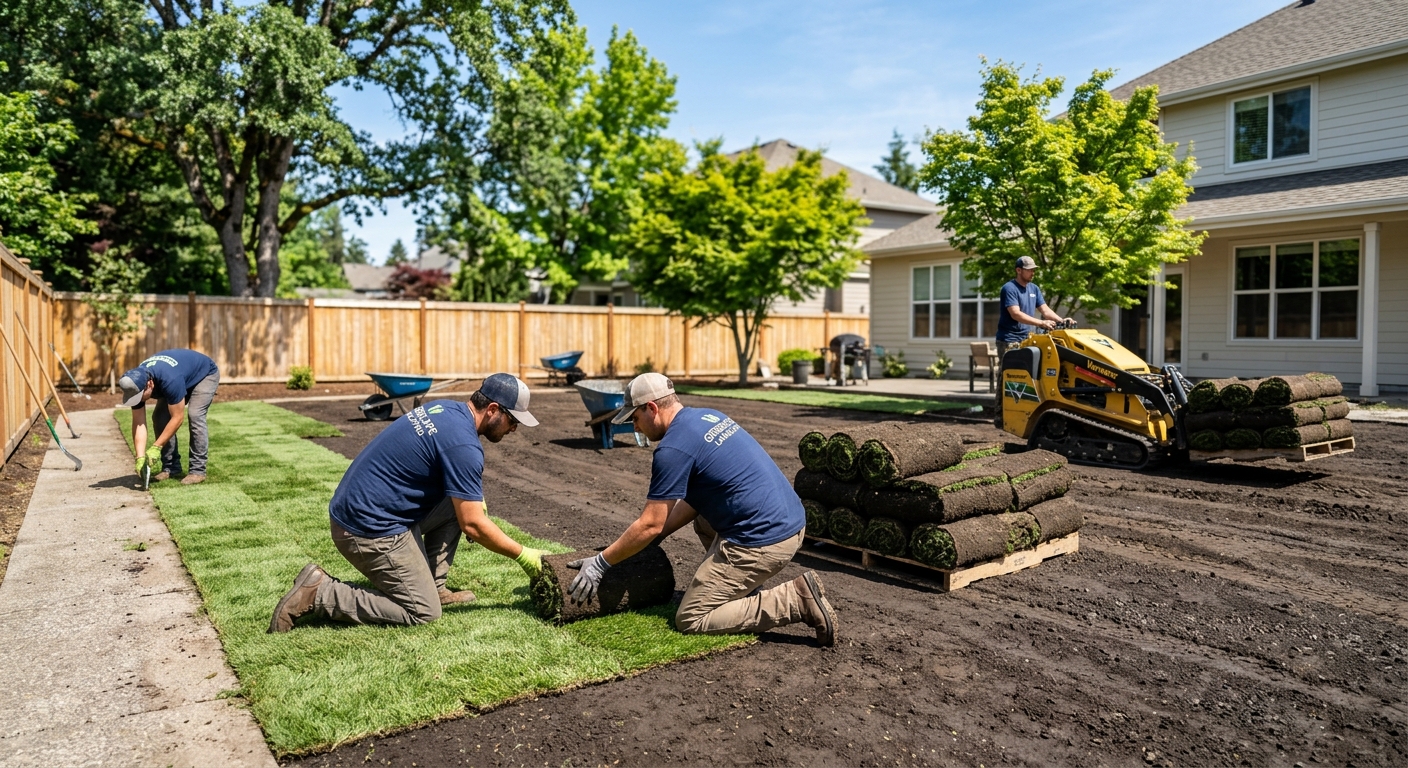
Landscaping options and costs in Eagle Ridge
Eagle Ridge, British Columbia is a great place to invest in your yard because the Lower Mainland–Southwest climate supports broadleaf evergreens, long-blooming perennials and layered planting even outside the traditional “summer only” window. With a community population of 11,004 (Statistics Canada, 2021 Census), you’ll find steady demand for design-and-install crews, especially around the more established residential pockets where homeowners want a polished front entry and better drainage before winter rains. Home improvement decisions here are also tied to property patterns—many detached homes in the region come with enough yard space to justify irrigation efficiency upgrades, new soil, and thicker planting beds versus small, minimal updates.
Pricing in Eagle Ridge is shaped by two competing realities: a longer working and growing season that can keep scheduling flexible, and wet winters that still slow structural work during the soggiest weeks. Retaining walls and patio bases must be built for freeze–thaw cycles (even in coastal BC, foundations and slopes can heave if drainage and compaction are wrong). Labour availability can tighten during spring and early fall, which is one reason some bids spread wider across the $5,000–$50,000 design band.
Below is a practical comparison of common landscape services so you can line up scope with budget before you request itemised quotes.
| Service |
Description |
Season |
Price Range |
| Full landscape design and installation |
Site visit, concept plan, planting plan, grading/drainage coordination, hardscape and softscape install |
Mar–Nov (best for full installs); limited winter work for some prep |
$5,000–$50,000 |
| Sod installation (supply, grade, lay, roll) |
Remove old turf, grade and amend base, install sod, rolling and initial watering plan |
Mar–Oct (avoid waterlogged ground) |
$2,000–$8,000 |
| Lawn seeding (grade, seed, starter fertilizer) |
Light grading, seed selection, starter fertilizer, mulch topdress where needed |
Mar–May and Aug–Sept |
$1,200–$5,500 |
| Interlocking patio or walkway |
Excavate, base (crushed stone), compaction, bedding sand, pavers/edgers and finishing |
Apr–Oct (weather dependent) |
$10,000–$80,000 |
| Retaining wall (interlocking block) |
Block system, drainage gravel and weep provisions, proper base and compaction |
Apr–Oct |
$12,000–$65,000 |
| Tree and shrub planting |
Soil improvement, staking where required, mulching, initial watering plan |
Mar–Nov (avoid frozen/very wet soil) |
$1,000–$15,000 |
Prices are estimates only and vary by project scope, site access and material selection.
What affects the price of landscaping in Eagle Ridge
In Eagle Ridge and across the Lower Mainland–Southwest region, two homeowners can receive quotes for “the same” landscaping concept and still see a 30–50% difference. The gap usually comes down to details: site conditions (slope, soil, drainage), whether the contractor is designing for long-term performance versus quick cosmetic results, and how much labour is needed to install, haul, and dispose of material. Because coastal BC sits in plant hardiness zone 7–8, contractors have a longer growing and working season than Prairie cities, but wet access windows can increase labour time. That time cost shows up in hardscaping and retaining wall excavation—where proper drainage, compaction, and freeze–thaw resistance require deeper bases and more base materials.
Local climate also influences what you can plant and what it costs to establish. In Zone 7–8, you can use a richer palette (more evergreen coverage and layered borders), but it’s still critical to plan for winter wetness. If a yard is being corrected for pooling or foundation moisture, adding drainage work can move a project within the $10,000–$80,000 hardscaping bands quickly. By contrast, the same yard may stay closer to the $1,000–$15,000 tree-and-garden planting range if grading is already adequate and you’re only swapping plants.
Concrete examples from Eagle Ridge pricing patterns include: (1) older yards with compacted soil often require more topsoil and soil amendment before sod or perennials will perform, (2) slopes near fences or garages can increase retaining wall base excavation and drainage gravel volumes, and (3) choosing mature specimen trees increases material cost and installation time for proper staking and root-ball handling. As neighbourhoods mature over time, it’s common to replace worn turf areas and tighten drainage, which can push budgets upward even when the “look” seems similar.
| Price Factor |
Why It Matters |
Cost Impact |
| Yard size in sq ft — the primary cost driver for softscape |
More area means more excavation, soil, turf/seed, mulch, and install labour |
High: often the biggest driver of total cost |
| Grading and drainage work — slope corrections add significant cost |
Correcting drainage direction prevents pooling and foundation moisture issues |
High: can increase both labour and material volumes |
| Drainage bed or French drain installation |
Requires trenching, perforated pipe, filter fabric, gravel, and discharge plan |
Medium–High: frequently adds several thousand dollars |
| Plant material tier — native shrubs vs. ornamental vs. mature specimen trees |
Smaller transplants cost less; larger established plants cost more and take more labour |
Medium–High: can shift budgets materially |
| Hardscape vs. softscape ratio — walls and patios cost more per sq ft than lawn |
Base prep, compaction, and paver/block quantities increase with each sq ft |
High if you add patio/walkway/walls |
| Irrigation system design and installation |
Proper coverage, smart controllers, and heads/drip lines add material and labour |
Medium: can be a noticeable add-on, especially for layered beds |
| Soil amendment and topsoil required |
Heavy clay/compacted fill needs improved texture and nutrients for rooting |
Medium: varies widely by what’s already under the lawn |
| Tree removal or stump grinding before new planting |
Cleanup, disposal, and potential root disruption increases time and risk |
Medium: can add days and extra equipment |
Permits & regulations in British Columbia
In British Columbia, most planting and turf work typically does not require a permit. That usually includes tasks like sodding, seeding, installing perennial or shrub beds, mulching, and standard softscape grading intended to establish plants. Homeowners often can move forward with most of the “green” part of the project after utility locates (especially if you’re excavating for irrigation lines).
Where permits commonly come into play is structural or drainage-related work. A retaining wall above the local threshold—often 1.0 m (3.3 ft) in many municipalities—may require a building permit, and sometimes engineered drawings depending on height, soil conditions, and reinforcement details. Also, changes to lot grading that alter how water moves toward neighbouring properties or storm sewer connections can trigger requirements. Before any digging for wall footings or deep drainage trenches, ensure utility locates are completed.
For Eagle Ridge homeowners verifying a contractor, follow a simple step-by-step check: (1) request the contractor’s business details, then confirm the British Columbia licence/registration where applicable on official listings (use the online registry information the province provides, and match the business name), (2) ask for a certificate of liability insurance showing coverage limits and the effective dates, (3) if they’re subcontracting trades or labour is employed through a payroll structure, confirm clearance/coverage status for work safety obligations (WSBC/WCB coverage where applicable). Don’t sign until you’ve reviewed the documents and the certificate lists your address or project location as the work site.
Planning a landscape that thrives in Eagle Ridge's climate
To plan a yard that thrives in Eagle Ridge, you start by working with zone 7–8 conditions: mild winters, wet precipitation patterns, and cool summers with a long establishment season. Aim for plants that can tolerate winter wetness and shoulder-season temperature swings, then choose irrigation controls that aren’t overly wasteful. Plant selection is the foundation—use native and zone-appropriate species (along with frost-tolerant evergreens) so you need less winter protection and fewer “rescue” replacements after cold snaps.
Second, decide between sod and seed. Sod gives instant curb appeal, but it’s typically about 3–4 times more per sq ft than seeding once you include base prep, rolling, and establishment support. In Eagle Ridge, that premium can be justified if you need a fast visual finish before hosting, or if you’re replacing turf that will see heavy foot traffic right away. If you have time to establish and your base is ready, seeding with a starter fertiliser and proper timing is often the better value.
Third, prioritise drainage and grading. In the Lower Mainland–Southwest, even though ground may not freeze deeply for long, pooling still threatens foundations, creates muddy soils, and weakens roots. For patios and retaining walls, base preparation must account for the local freeze–thaw cycle—meaning deeper excavation, proper compaction, and drainage layers so you reduce frost heave and wall movement on slopes.
Finally, reduce maintenance without sacrificing looks: groundcovers, mulched borders, perennials with staggered bloom, and selective lawn reduction can cut annual upkeep. Rain-garden features (where you can direct overflow safely) and efficient drip irrigation are especially useful in wet seasons and help you handle possible summer restrictions without lawn die-off.
Dollar example: If you’re replacing 1,000 sq ft of turf, sod tends to land in the $2,000–$8,000 band, while a seeding approach usually falls within the lower end of the lawn range (often closer to $1,200–$5,500 depending on prep). If you don’t need the yard “done tomorrow,” the seeding difference can be redirected into soil amendment and a drip-ready planting bed—work that pays back in fewer plant losses over time.
| Element |
Climate Consideration |
Maintenance Level |
Price Band |
| Sod lawn installation |
Instant coverage in a long growing season; avoid laying on waterlogged soil to prevent uneven rooting |
Low–Moderate (initial watering and establishment) |
$2,000–$8,000 |
| Native perennial garden |
Zone-appropriate plants that handle wet winters; choose species with varied bloom for long colour |
Moderate (mulch refresh, seasonal weeding) |
$3,000–$12,000 |
| Mulched shrub border |
Mulch improves soil moisture stability; helps plants tolerate cool seasons and reduces muddy splash |
Low (annual trim and occasional top-up) |
$1,500–$7,500 |
| Interlocking stone patio |
Base must be built for freeze–thaw and drainage so water doesn’t migrate under pavers |
Low (occasional cleaning and joint sand/edging checks) |
$10,000–$80,000 |
| Retaining wall (block) |
Drainage gravel and weep provisions protect the wall during wet seasons; base depth matters for frost heave |
Low (periodic inspection of caps/grade) |
$12,000–$65,000 |
| Drip irrigation system |
More efficient than sprinklers; helps manage watering around occasional municipal restrictions |
Low–Moderate (seasonal programming checks) |
$2,500–$10,000 |
How to choose a landscaping contractor in Eagle Ridge
Choosing the right contractor in Eagle Ridge is less about flashy photos and more about verifying competence, coverage, and how clearly they price your scope. Start with British Columbia licensing/registration: ask for the correct business registration details and confirm them through the appropriate online registry listing. Next, request a certificate of liability insurance (make sure it’s current and shows adequate limits) and review who the policy covers for your job.
For work safety coverage, ask for proof of WSBC/WCB clearance or coverage status as applicable. If they can’t provide documentation promptly, treat that as a risk signal.
Then get 2–3 itemised written quotes. Look for a breakdown that separates labour and materials (excavation, base stone, bedding sand, pavers/blocks, plant quantities, soil/topsoil volumes, drainage pipe and gravel, and irrigation lines). Avoid quotes that only provide a lump sum with no quantities—you can’t compare apples to apples. Confirm what’s included: is disposal included for old turf and soil? Is topsoil screened and tested? Is the permit pull included if a retaining wall threshold applies? Also ask who is responsible for utility locates and how they handle missed locate marks.
Warranty matters: ask for the length of workmanship warranty (often covering settling, workmanship defects, and material installation issues) and the manufacturer warranty for plants/irrigation products where applicable. If a warranty is only “verbal,” move on. Finally, use a sensible payment schedule—never more than about 10–15% upfront, and request a holdback tied to completion and site clean-up. Get a start date and completion estimate in writing, and make sure weather allowances are explained.
- They provide itemised quantities (sq ft/sq m, linear ft, plant counts/sizes).
- They include a drainage/grading plan if your yard slopes or pools.
- They state whether utility locates are booked before digging.
- They list which materials are included (base stone type, bedding sand, block system, topsoil spec).
- They include disposal/haul-away for removed turf, soil, and packaging.
- They show who performs the work (crew vs. subcontract-only).
- They provide a clear timeline with weather contingencies for April–October installs.
- They offer a workmanship warranty in writing (not just “we’ll fix it”).
- They explain irrigation coverage and control type (smart controller vs. manual).
- They don’t pressure you to sign before you receive insurance/warranty documents.
- They confirm whether a retaining wall may trigger permitting based on height and design.
- They keep site clean and protect landscaped areas during construction.
Red flags: (1) a quote that’s much cheaper than the others but lacks base prep details; (2) no certificate of liability insurance or they won’t share it; (3) unclear warranty wording or “lifetime” claims with no terms; (4) asking for most payment upfront (more than 10–15%); (5) refusing to put start dates and completion targets in writing.
Frequently asked questions — landscaping in Eagle Ridge
What is xeriscaping and does it suit Eagle Ridge?
Xeriscaping is a landscaping approach designed to reduce water use by combining drought-tolerant plants, efficient irrigation (often drip), and soil improvements like mulch and compost. In Eagle Ridge, British Columbia, you’re not dealing with the same heat-and-drought extremes as the BC Interior, so xeriscaping should be “water-smart” rather than “no-water ever.” A good design uses zone-appropriate shrubs, perennials and groundcovers that handle cool, wet winters without staying soggy, plus mulch to stabilise moisture. If you’re replacing lawn, you can often reduce maintenance while still keeping a polished look. Budget-wise, lawn conversions often start in the lawn ranges (for example, sod projects typically land in the $2,000–$8,000 band), and you can redirect some of that into drip zones and layered planting for long-term savings.
How do I plan a low-maintenance yard?
Start by reducing the “high upkeep” surface area—lawn and bare soil. In Eagle Ridge, you can keep a smaller sod area for an entry touchdown zone, while using mulched shrub borders and native perennial beds for the rest. Choose plants that are appropriate for zone 7–8 and that naturally tolerate wet-season conditions; this reduces winter losses and spring replanting. For drainage and longevity, make sure grading pushes water away from foundations before you install beds or hardscape. Add a drip irrigation system with smart control so plants get consistent moisture without wasting water during cool weeks. If you’re budgeting, a mixed approach often balances between planting-focused work (commonly $1,000–$15,000 for trees and shrubs) and focused hardscape or patio areas (which can fall within the larger hardscaping bands, depending on scope).
How deep should a retaining-wall base be for local frost?
For Eagle Ridge, you should treat the retaining-wall base as a frost-and-drainage problem, not just “set it on top of soil.” Even though coastal BC doesn’t freeze as deeply as Prairie regions, freeze–thaw cycles still happen and wall performance depends on base depth, compaction, and drainage behind the wall. Exact depth depends on wall height, block system, soil conditions, and whether the design includes geogrid or engineered reinforcement. A reputable contractor will base their excavation depth on the wall manufacturer’s specs and site conditions, and they’ll include drainage gravel and weep provisions so water doesn’t build pressure. If you’re considering a wall near the permitting threshold (often around 1.0 m in many municipalities), get clarity early because engineering requirements may dictate base design details.
How much does professional landscape design cost?
Professional design-and-install pricing varies a lot based on scope, drawing quality, and how much the contractor bundles into a full-service quote. In the Lower Mainland–Southwest, full landscape design and installation is commonly estimated within the larger band of $5,000–$50,000, depending on whether you’re doing a concept plan only or a full package that includes grading/drainage coordination, planting layouts, and installation. If your project is smaller—say, a garden border refresh—you may see costs shift toward the planting band (often $1,000–$15,000) because the design effort is narrower and installation scope is smaller. Ask each contractor to explain what’s included: site survey, concept plan, planting palette, and whether irrigation or drainage is designed or just “added later.”
How do I compare landscaping quotes?
To compare landscaping quotes in Eagle Ridge, line up scope first: ask each contractor to include the same quantities (sq ft for lawn/patio areas, linear feet for borders, and plant counts/sizes). Compare whether they include excavation depth, base materials, and compaction steps—especially for patios and retaining walls where freeze–thaw and drainage determine long-term performance. Check for inclusions you might overlook: topsoil spec, screened vs. unscreened fill, disposal/haul-away, utility locates, and whether the quote includes required permitting if a wall is above the local threshold (commonly around 1.0 m). Quotes that only state “interlocking pavers” without base specs are hard to trust. Use itemised pricing comparisons across the relevant bands (for instance, lawn work around $2,000–$8,000 for sod vs. seeding depending on prep).
How long does a landscaping project take in Eagle Ridge?
Timelines depend on weather windows and the mix of softscape vs. structural work. In Eagle Ridge, British Columbia, planting and most softscape projects can often happen for much of the year, but wettest winter weeks can slow excavation and grading. A typical small planting refresh might take days to a week once materials are on-site, while sod or seeding can take from one to a few days for installation (with additional time for site preparation and establishment). Patios and retaining walls usually take longer because of excavation, drainage layers, base compaction, and curing time, plus scheduling around rain. As a planning guideline, many installs complete within a few weeks, but ask for a written start date and completion estimate that includes weather contingencies.