Landscaping options and costs in Naramata
Naramata homeowners typically have the yard space and long-term pride-of-ownership that make landscape upgrades feel worthwhile—especially with a small local population of 1,625 (Statistics Canada, 2021 Census), where repeat clients and word-of-mouth can drive demand for reliable crews. In the Lower Mainland–Southwest region (plant hardiness zones 7–8), mild, wet winters and long cool summers also mean more months available for installation compared with interior and Prairie markets, which directly affects labour availability and scheduling.
In practical terms, Lower Mainland–Southwest pricing is often shaped by two things: (1) contractors can work more months of the year, so scope creep can happen when designs are added mid-season, and (2) soil and drainage preparation become non-negotiable on sloped, rain-exposed properties—common around Naramata’s hillside streets. Areas along the lakefront and the North Naramata / Steele Road corridor are particularly in demand because slopes and views encourage layered planting, terraces, and retaining solutions.
Because most yards in this zone can support broadleaf evergreens and longer-blooming perennials with lower winter kill risk, quotes often trend higher than “basic lawn fixes” and closer to full design builds—while simple grading-and-planting refreshes may still land near the lower end of common price bands. Use the comparison below as a starting point before you narrow your scope into a written quote.
| Service |
Description |
Season |
Price Range |
| Full landscape design and installation |
Site visit, concept plan, plant/planting layout, grading/drainage review, soil amendments, installation and cleanup |
Year-round (heaviest demand spring–fall; softscape may pause during wettest weeks) |
$7,500–$38,000 |
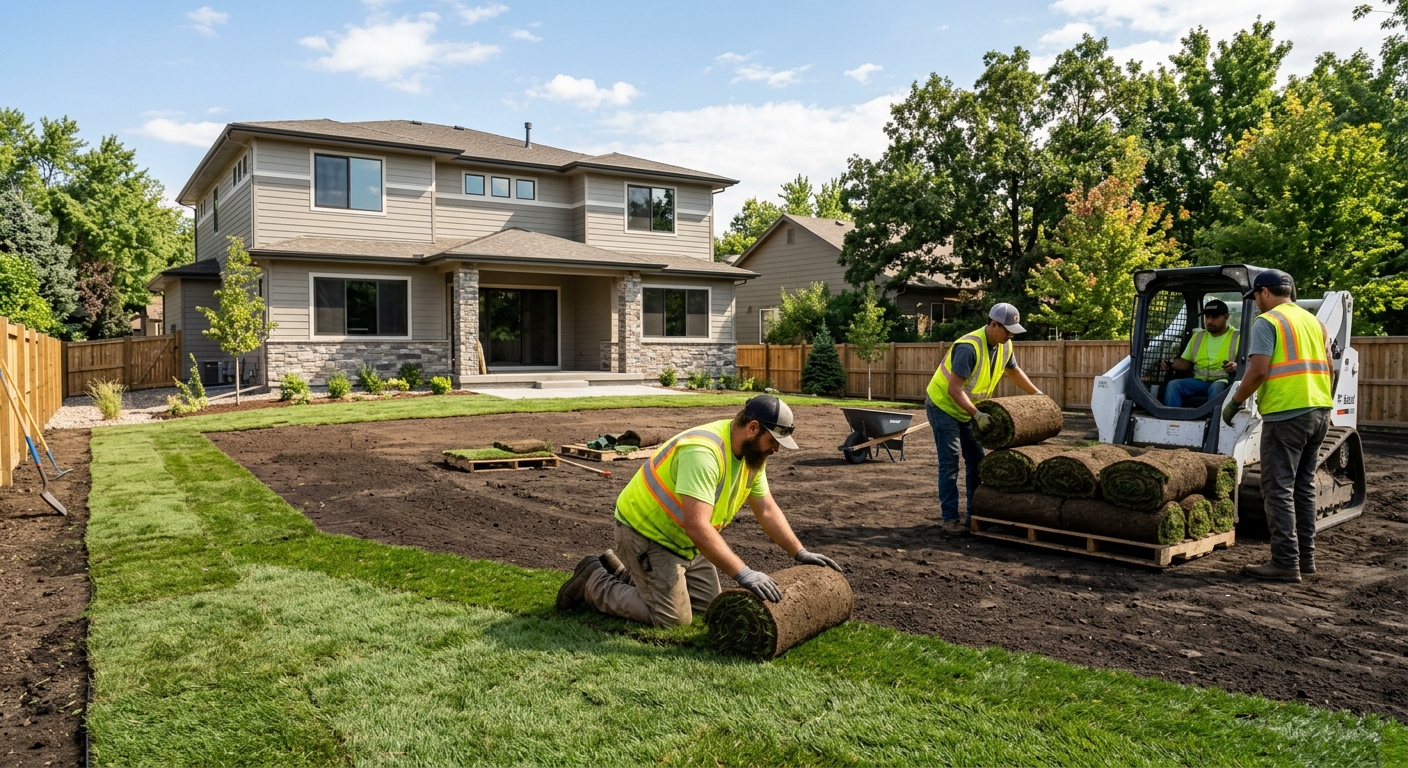
| Sod installation (supply, grade, lay, roll) |
Light grading, topsoil/compaction, sod delivery and installation, starter fertilizer and first watering plan |
Late March–June, and Sept–early Oct |
$3,200–$7,800 |
| Lawn seeding (grade, seed, starter fertilizer) |
Final grading, seed mix, starter fertilizer, raking/light covering, watering schedule |
Early spring and Sept |
$2,000–$5,200 |
| Interlocking patio or walkway |
Excavation, compacted base, edging, pavers, joints and drainage considerations |
Apr–Nov (weather-dependent) |
$12,000–$35,000 |
| Retaining wall (interlocking block) |
Wall base prep, block system install, drainage gravel/weep provisions, backfill, topsoil finish |
Apr–Nov |
$15,000–$60,000 |
| Tree and shrub planting |
Soil amendment, planting layout, watering plan, mulch rings and staking as needed |
Spring and fall (container planting may fit other windows) |
$1,500–$14,500 |
Prices are estimates only and vary by project scope, site access and material selection.
What affects the price of landscaping in Naramata
In Naramata and across the Lower Mainland–Southwest region, quotes for the same “look” can vary by 30–50% because contractors price for risk and labour time, not just the finished appearance. Site conditions—slope, soil type, drainage behaviour, and access for skid steers or delivery trucks—can change a job from a fast install to days of excavation and rework. That range shows up in British Columbia more than many homeowners expect because the working season is longer in coastal zones, so designs evolve and material options broaden, often mid-quote.
Climate drives both what grows and how long crews can safely work. With plant hardiness zones 7–8, Naramata supports fuller, more layered palettes, but retaining wall base preparation still has to be built for freeze–thaw cycles and proper drainage (bases dug deeper and backfilled correctly). In Prairie zones (2–4), short frost-free windows and harsher winters push clients toward drought-tolerant, low-maintenance planting and compress schedules; in southern Ontario (zones 5–6), there’s a moderate growing season with irrigation needed during summer dry spells. The dry BC interior often shapes irrigation scope around water-use limits, whereas coastal BC can support lush designs—yet you still pay for efficient irrigation because water costs and occasional restrictions influence modern system choices.
Two concrete examples from Naramata that commonly raise costs: (1) a sloped front yard that needs drainage correction before sod; this can push a “small lawn” from seeding into a full grading package. (2) upgrading from basic planting to larger specimen trees and taller shrubs; it moves projects toward the tree-and-planting band (often $1,000–$15,000) but with heavier labour for staking, soil amendments and long watering windows. Conversely, if your site is flat, well-drained, and you choose standard evergreen shrubs, a garden refresh can stay closer to the lower end of typical landscape design & installation budgets (for example, toward the $5,000–$50,000 band rather than the top end).
| Price Factor |
Why It Matters |
Cost Impact |
| Yard size in sq ft — the primary cost driver for softscape |
More area means more materials (topsoil, sod/seed), more labour for prep, and more time for watering/establishment |
Often the biggest driver; can swing overall cost by several thousand dollars |
| Grading and drainage work — slope corrections add significant cost |
Fixing slope and eliminating pooling protects foundations and prevents washouts after rain |
Can add substantial excavation, compaction and regrading time |
| Drainage bed or French drain installation |
Managing saturated soils reduces plant failure and reduces wall/fence movement risk |
Frequently one of the largest “hidden” cost add-ons |
| Plant material tier — native shrubs vs. ornamental vs. mature specimen trees |
Wholesale cost, size/availability, and installation time increase with maturity and specialty species |
Mature specimens can dramatically increase the total, especially with multiple trees |
| Hardscape vs. softscape ratio — walls and patios cost more per sq ft than lawn |
Pavers and block systems require deeper base prep, compaction and careful edging/joints |
Shifting from lawn to patio/retaining often moves projects into higher price bands |
| Irrigation system design and installation |
Drip lines, zones, smart controllers and backflow considerations affect labour and parts |
Adds cost but improves plant survival and reduces ongoing watering waste |
| Soil amendment and topsoil required |
Local soils may need organic matter and structural amendments for roots and drainage |
Bulk haul-in and spreading can raise costs quickly on larger properties |
| Tree removal or stump grinding before new planting |
Extra crew time, disposal, and site protection measures |
Can add a meaningful standalone line item before planting begins |
Permits & regulations in British Columbia
In British Columbia, most planting and standard softscape work—like planting trees/shrubs, sodding, seeding and typical garden bed preparation—typically does not require a permit. However, retaining walls above the local height threshold (commonly around 1.0 m or 3.3 ft in many municipalities) often do require a building permit, and sometimes engineered drawings depending on height, soil conditions and how the wall relates to structures or steep grades.
Another area that can trigger approval is lot grading that changes how water drains—especially if it directs runoff toward neighbouring properties or toward storm sewer connections. Before digging, homeowners should also arrange utility locates so you don’t hit buried services during new planting holes, drain work, irrigation trenches or wall footings.
To verify a contractor’s credentials for Naramata projects, do this step-by-step:
- Ask for their proof of liability insurance (certificate of insurance naming you as “additional insured” where possible).
- Confirm they have the required provincial licensing for the scope of work they’re selling (and that it matches the trade activity).
- Check WSBC/WCB coverage for workers (ask for their clearance letter or equivalent proof and verify it is current).
- For hardscape and retaining work, confirm the permit process is handled correctly if needed (and request a written statement of who pulls permits, if any).
Finally, even though Naramata is coastal compared with the drier interior, confirm local irrigation and water-use bylaws—seasonal restrictions and water-cost pressure can influence how a system is designed and operated.
Planning a landscape that thrives in Naramata's climate
For Naramata yards, the goal is to work with zone-appropriate planting and the area’s long cool season rather than fighting it. Lower Mainland–Southwest (zones 7–8) typically sees frost risk early in spring and again later in fall, which supports healthy growth—yet saturated soils and slope-driven pooling still demand good grading. Start with plant selection: choose native and zone-appropriate shrubs and perennials that handle wet winters and cool summers with less winter protection, then layer in mulch and groundcovers to stabilize soil temperature and moisture.
Sod versus seed is where many homeowners get surprised. Sod gives instant visual results, but it’s generally 3–4 times higher per sq ft than seeding because you pay for live material plus installation. If you need quick curb appeal for a specific viewing window, sod can be justified—otherwise seeding is often the better long-term value. As a rough example, a modest lawn rework that might be around $2,000–$5,200 to seed could run around $3,200–$7,800 for sod, depending on grading and total square footage.
Next, plan drainage and grading. In coastal BC, the ground can stay wet for extended stretches, so fix pooling and keep water away from foundations. For patios and retaining walls, base preparation matters: compacted aggregate layers and drainage provisions help manage freeze–thaw effects and reduce heave or wall movement. Finally, use low-maintenance strategies that still look intentional—perennials with staggered bloom, hardy evergreens, and 2–3 in. mulch beds refreshed seasonally. If you want to go further, a rain garden or a xeriscape-inspired approach (where you use drought-tolerant planting in the drier parts of the yard and tighter irrigation zones) can reduce water demand without sacrificing design cohesion.
| Element |
Climate Consideration |
Maintenance Level |
Price Band |
| Sod lawn installation |
Works best in spring/fall weather; needs good drainage so roots don’t stay waterlogged |
Low to moderate (watering establishment window, then routine mow) |
$3,200–$7,800 |
| Native perennial garden |
Zone-appropriate perennials handle cool summers; mulch helps during wetter winters and drying periods |
Moderate (seasonal weeding, pruning and top-ups) |
$2,500–$10,500 |
| Mulched shrub border |
Evergreen and hardy shrubs reduce winter damage risk; mulch improves moisture stability |
Low (refresh mulch yearly, light pruning) |
$1,800–$8,900 |
| Interlocking stone patio |
Base must resist freeze–thaw and runoff; proper drainage joints prevent water pooling |
Low (occasional sweeping and joint maintenance) |
$12,000–$35,000 |
| Retaining wall (block) |
Needs a deep, well-drained base/backfill to prevent movement in sloped, rain-heavy conditions |
Low (future re-leveling should be minimal if built correctly) |
$15,000–$60,000 |
| Drip irrigation system |
Zones and drip placement improve efficiency and reduce waste during occasional restrictions |
Moderate (winterization and quick seasonal checks) |
$1,800–$6,500 |
How to choose a landscaping contractor in Naramata
Choosing a contractor in Naramata comes down to checking credentials, then verifying the quote is detailed enough to be buildable. Start with British Columbia licensing for the scope being installed, then confirm liability insurance: request a current certificate of insurance and ensure coverage amounts are appropriate for hardscape excavation and equipment on-site. Next, verify WSIB/WCB coverage by asking for a clearance letter (or current proof of coverage) and checking that it’s active for the company doing the work—not just the project manager.
Get 2–3 itemised written quotes. The best quotes break out labour and materials (for example: excavation, base rock, pavers/blocks, geotextile, drainage gravel, topsoil, plant material, mulch, irrigation components). Avoid lump-sum statements that don’t show what’s included. Read the scope carefully: is disposal included? Is topsoil/soil amendment included at a specified depth? Is permit pulling included for retaining walls where required? Also ask who handles utility locates if trenches are needed for irrigation or drainage.
Warranty matters. Ask for workmanship warranty length in writing and whether product warranties (plants/irrigation parts/manufacturers) are transferable. Payment should be staged—never pay more than 10–15% upfront. Use a holdback until the job is complete and cleaned up.
Finally, insist on a written timeline with a start date and estimated completion date that reflects weather windows typical to coastal BC—especially for compaction-dependent hardscape and drainage.
- Request and review their current BC licence information for the specific trade scope.
- Get a current liability insurance certificate (and confirm coverage is active for your project window).
- Request WSBC/WCB clearance or proof of coverage before work begins.
- Obtain 2–3 itemised quotes with line items for labour and materials (not just totals).
- Confirm excavation depth, base thickness and compaction method for patios/walkways.
- Clarify grading targets and how drainage will be corrected (including where water will go).
- Ask whether utility locates are booked prior to digging trenches and wall footings.
- Make disposal, dump fees and haul-away part of the written scope (or confirm exclusions).
- Specify soil amendment and topsoil depth, and whether amendments are included in the price.
- Confirm plant sizes/species (and whether failures are covered with replacement terms).
- Discuss irrigation: zones, controller type, and who winterizes the system (if installed).
- Use a payment schedule with a holdback until the final walkthrough is complete.
Red flags I see with landscaping contractors in Naramata: (1) quotes that are only verbal or omit key specs like base thickness, drainage provisions or soil depth; (2) reluctance to provide proof of insurance and WSBC/WCB coverage; (3) “we handle permits” with no written confirmation of what they will actually do; (4) demanding large upfront payments beyond 10–15%; and (5) no warranty details for workmanship or plant replacements.
Frequently asked questions — landscaping in Naramata
Sod vs seed — which is better for a Naramata lawn?
In Naramata and much of coastal BC, both sod and seed can work well, but the better choice depends on timing and how quickly you need results. Sod gives instant coverage and is often the right move if you’re targeting curb appeal for a specific date, because you skip the long establishment period. Seed is usually more budget-friendly and can be a better fit if you can manage watering and keep traffic off the area while it germinates.
Cost-wise, typical ranges differ: seeding projects often land around $2,000–$5,200 while sod installations commonly come in closer to $3,200–$7,800, especially when grading and topsoil are included. Whichever you choose, drainage and soil prep matter as much as the turf itself—pooling in wet winters can cause patchiness and failure.
How much does a retaining wall cost in Naramata?
Retaining wall pricing in Naramata depends mainly on height, length, soil conditions and whether you need drainage provisions and proper base preparation for freeze–thaw cycles. Interlocking block walls often cost more than homeowners expect because you’re paying for excavation, a deep base, gravel backfill/drainage layers, compaction and accurate alignment.
In the Naramata market context, a typical interlocking retaining wall budget commonly falls around $15,000–$60,000. A shorter wall on firm, easily accessed ground can trend lower within that range, while longer walls on sloped yards with added drainage work push higher. If there’s nearby foundation impact or a permit requirement, plan additional time for paperwork and inspections where applicable.
When is the best time to landscape in Naramata?
For Naramata, the best time is usually spring into early summer, plus early fall. Coastal BC’s mild, wet-winters and long cool summers allow crews to work for more months than in interior or Prairie climates, but the wettest weeks can slow equipment use and compaction-based hardscape.
Softscape planting (trees, shrubs, perennials) is commonly successful in spring and fall because soil stays cool and plant establishment is supported by regular rainfall. Sod and seeding are best planned for periods with stable temperatures and manageable rain—typically late March to June for sod, and spring/September for seeding. Hardscape like patios and walkways is usually scheduled from April through November so base prep and drainage can be built correctly.
Do I need a permit for a retaining wall in British Columbia?
Sometimes, yes. In British Columbia, many planting and softscape changes don’t require permits, but retaining walls above the local height threshold—commonly around 1.0 m (3.3 ft) in many municipalities—often do. Whether you need a permit can also depend on wall location, slope stability, how the wall relates to property lines and whether drainage and engineered design are required.
The practical approach for Naramata homeowners: ask your contractor to confirm whether your wall height and design likely fall under permit requirements before work begins. Get the answer in writing. Also remember that changes to grading that affect drainage toward neighbours or storm connections may add regulatory steps. A reputable contractor will be clear about what they pull and what you’re responsible for.
How do I improve drainage in my yard?
Improving drainage in Naramata usually starts with observation and a plan, not just adding gravel. After heavy rain, note where water pools, which direction runoff flows, and whether downspouts or irrigation contribute to saturated spots. If water is staying near foundations or washing down slopes, you typically need grading corrections and sometimes a drainage bed or French drain.
Common improvements include regrading to create gentle slopes away from structures, installing a drainage bed along the lowest point, adding weeping provisions where appropriate, and ensuring surface water is directed safely. Because Lower Mainland–Southwest areas can see prolonged wet periods, addressing drainage is one of the biggest factors in plant survival and in preventing wall or edging movement over time. Discuss the plan with your contractor and ask how they’ll verify fall/flow before installing topsoil and mulch.
What is xeriscaping and does it suit Naramata?
Xeriscaping is landscaping designed to reduce water use by using drought-tolerant plants, efficient irrigation, smart placement, and soil strategies like mulch and improved drainage. In Naramata, xeriscaping can suit parts of your yard—especially sunny exposures, wind-exposed edges, or areas that stay dry after the wet season—but it’s not always the best solution everywhere because coastal BC also has long rainy periods.
A balanced approach often works best: use water-wise planting where it makes sense while still selecting zone-appropriate plants for wetter zones. Many homeowners blend xeriscape-inspired planting with rain-garden features or drip irrigation to handle both heavy rainfall and efficient summer watering. If you’re budgeting, a drip system may be an additional line item within typical installation ranges (often around $1,800–$6,500) but can pay off by improving survival and reducing wasted watering.