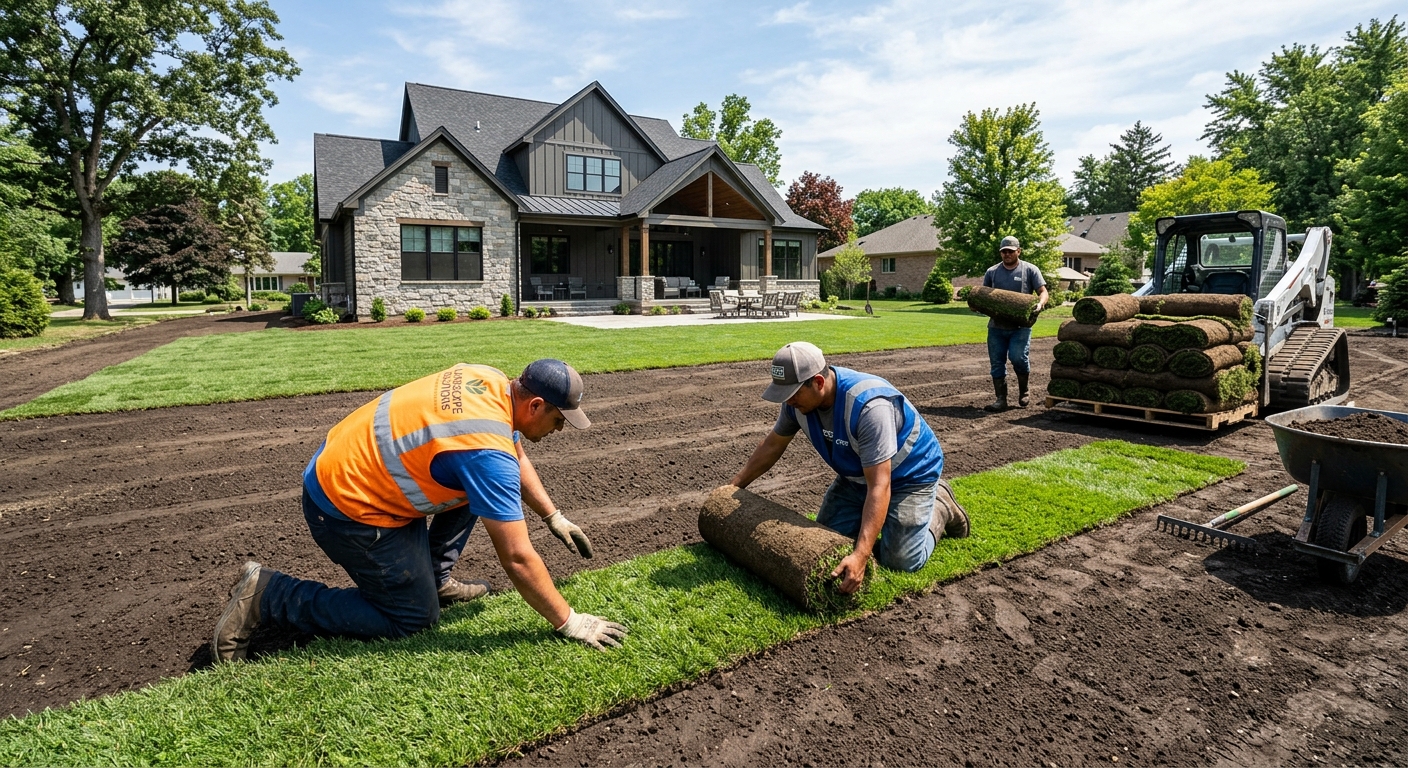
Landscaping options and costs in South Lynnmour
In South Lynnmour, British Columbia, homeowners typically invest in landscaping because the neighbourhood’s lot sizes—especially where single-detached homes provide more backyard room—make it practical to add drainage fixes, plant layers, and hardscape without compromising access. With a local population of 1,367 (Statistics Canada, 2021 Census), there’s enough demand to keep crews busy, but not so much volume that pricing stays “discount.” In the Lower Mainland–Southwest (mostly plant hardiness zones 7–8), the long, cool season supports fuller planting palettes and more frequent scheduling of softscape work, which can help keep design-and-install timelines competitive. That said, our wet winters and freeze–thaw cycles still affect costs for patios and retaining walls: contractor pricing reflects deeper excavation, proper base drainage, and extra compaction work to prevent heave and movement on sloped sites common in the Lynnmour area.
Depending on what you want—quick visual impact with sod, lower-upfront options like seeding, or structural upgrades like interlocking patios and retaining walls—your project will typically land anywhere from “refresh” to “full outdoor renovation.” For many households in Lynnmour North and the surrounding residential blocks near parks, the most requested improvements are layered shrub borders plus a clean walkway to the front entry. Next, compare the typical scopes and price bands in a side-by-side estimate so you can align expectations with the quotes you’ll receive.
| Service |
Description |
Season |
Price Range |
| Full landscape design and installation |
Site assessment, grading concept, planting plan, hardscape/softscape installation, and irrigation coordination |
Spring to fall (wettest weeks excluded for install) |
$5,000–$50,000 |
| Sod installation (supply, grade, lay, roll) |
Minor grading, weed control, soil prep, delivery, and roll-down with proper watering instructions |
Late spring through early fall |
$2,000–$8,000 |
| Lawn seeding (grade, seed, starter fertilizer) |
Grading touch-ups, seed selection, starter fertilizer, and light topdressing |
Spring and early fall |
$1,200–$5,500 |
| Interlocking patio or walkway |
Excavation, base compaction, geotextile, leveling sand, pavers, edging, and drainage detailing |
Late spring to early fall |
$10,000–$35,000 |
| Retaining wall (interlocking block) |
Excavation, reinforced base, drainage gravel, weeper connections (as needed), and block installation |
Late spring to early fall |
$18,000–$65,000 |
| Tree and shrub planting |
Soil amendments, planting layout, staking where needed, mulch rings, and follow-up watering guidance |
Spring and fall (softest soil periods) |
$1,000–$15,000 |
Prices are estimates only and vary by project scope, site access and material selection.
What affects the price of landscaping in South Lynnmour
In South Lynnmour and across the Lower Mainland–Southwest, two quotes for the “same” yard can differ by 30–50% because the scope hidden inside the estimate changes: drainage corrections, soil volume, grading complexity, and whether crews can install during dry windows. Region-to-region, the variance is even bigger. In Prairie zones (roughly 2–4), shorter frost-free windows push costs toward scheduling and drought-tolerant, wind-hardy plants; retaining wall bases also must reach below the frost line to reduce heave. By contrast, coastal BC (zones 7–8, including the Vancouver area) supports a longer growing season and lush layered designs, but heavy rainfall means contractors must prioritize drainage design and soil structure, which costs labour and materials upfront. In the drier BC Interior and in Alberta, water restrictions influence irrigation design and planting choices; in Southern Ontario (zone 5–6), contractors often design around summer dry spells and maintain irrigation-ready layouts.
Local conditions that commonly move the number up or down include: (1) steep or sloped lots around Lynnmour areas, which require more excavation and re-grading before patios and walls—often a major driver before you buy a single plant; and (2) how close your soil sits to foundation drainage—if downspouts or grading need correction, expect additional work before sod, seeding, or beds go in. In many projects, a “softscape-only” install might start near the $1,000–$15,000 planting band, but once drainage, irrigation, and grading are added, it can move toward the $5,000–$50,000 design-and-install range.
| Price Factor |
Why It Matters |
Cost Impact |
| Yard size in sq ft — the primary cost driver for softscape |
More square footage means more soil prep, more labour hours, and more materials (seed, sod, mulch, plants) |
Often the biggest swing; small yards can still be expensive due to mobilization |
| Grading and drainage work — slope corrections add significant cost |
Pooling water and foundation moisture require re-shaping the grade with proper fall away from the house |
Can add substantial labour and disposal; a “simple” refresh becomes a renovation |
| Drainage bed or French drain installation |
Wet winters demand reliable interception and redirection of water, especially in clay-heavy areas |
Material-heavy (gravel, perforated pipe, geotextile) plus trenching time |
| Plant material tier — native shrubs vs. ornamental vs. mature specimen trees |
Mature stock and premium ornamentals cost more and may require larger planting pits and rigging |
Specimen trees can shift costs dramatically within the same planting quantity |
| Hardscape vs. softscape ratio — walls and patios cost more per sq ft than lawn |
Pavers and retaining blocks require excavation, base build-up, compaction, and careful edging |
High hardscape projects tend to align with the $10,000+ hardscaping bands |
| Irrigation system design and installation |
Drip and smart controllers increase efficiency for occasional restrictions and reduce waste |
Upfront cost, but it protects plantings and reduces call-backs |
| Soil amendment and topsoil required |
Quality topsoil, compost, and amendments determine rooting success and long-term maintenance |
Can increase costs when you need to import soil or improve poor native ground |
| Tree removal or stump grinding before new planting |
Stumps and root balls limit planting layouts and often require equipment and disposal |
Adds a separate scope; complexity varies with access and stump size |
Permits & regulations in British Columbia
In British Columbia, most everyday landscaping work—such as planting, sodding, and most softscape installations—typically does not require a permit. For many South Lynnmour projects, that means you can usually proceed with new lawns, mulch and shrub borders, and garden planting without submitting drawings. However, retaining walls above a height threshold (often 1.0 m / 3.3 ft in many municipalities, but you should confirm locally) can require a building permit and sometimes engineered drawings, particularly when loads or site conditions affect stability. Similarly, changes to lot grading that alter how water drains toward neighbouring properties or storm connections may trigger approval requirements—especially if you’re correcting a drainage problem rather than keeping the existing flow pattern.
Before digging planting holes or any wall footings, utility locates are essential. Have a contractor call for locates to avoid surprises with buried lines. Also, confirm water-use bylaws: while South Lynnmour doesn’t typically face the same level of summer bans as the dry BC Interior, efficient irrigation is still widely expected due to municipal policies and rising water costs.
To verify a contractor’s credentials in BC, ask for: (1) proof of the right licence/registration for the type of work they’ll perform (often tied to trades involved); (2) a current certificate of liability insurance listing you as the certificate holder if appropriate; and (3) coverage documentation for workplace injury protection (commonly WSBC/WCB clearance or equivalent proof). In practice, you can check licences and status via provincial online registries, then request the insurance certificate and clearance letter directly, ensuring dates are current and the scope matches your project.
Planning a landscape that thrives in South Lynnmour's climate
To plan a landscape that truly thrives in South Lynnmour, you design around coastal BC conditions: plant hardiness zones 7–8, long cool growing periods, and persistent wet-season rainfall. The goal isn’t just “more growth”—it’s healthy growth without soggy soils or winter damage. Start with plant selection: choose zone-appropriate native and well-adapted species that tolerate our winters and handle our moisture, which reduces the need for heavy winter protection and frequent watering. Next, decide between sod and seed. In our market, sod creates an instant finish and helps suppress weeds quickly, but it costs more: sod installation is commonly in the $2,000–$8,000 band, while seeding and soil prep often comes in lower within the full-landscape scope.
Drainage and grading are where South Lynnmour projects succeed or fail. If water pools near the foundation, even beautiful planting won’t last. For patios and retaining walls, base preparation matters for the local frost line and freeze–thaw cycles: proper excavation depth, drainage gravel where needed, and thorough compaction help prevent settlement and movement. For low-maintenance appeal, use groundcovers, mulch, and long-blooming perennials to limit weeding and keep soil temperatures stable. If you want “low-water” features that still look lush, consider rain-garden style plantings or mixed borders designed to handle occasional heavy rain while reducing irrigation demand.
A simple cost example: if you’re re-establishing a lawn area, sod may land in the $2,000–$8,000 range. Seeding can be meaningfully less, but it requires time and more consistent early watering—so the price difference is justified when you need immediate curb impact or you’re replacing a lawn that’s currently very patchy and weed-prone.
| Element |
Climate Consideration |
Maintenance Level |
Price Band |
| Sod lawn installation |
Fast establishment in wet-spring windows; requires drainage-aware grading to avoid soggy roots |
Low to moderate (watering and first-season mowing) |
$2,000–$8,000 |
| Native perennial garden |
Zone-appropriate selection supports cool, wet winters and reduces winter-protection needs |
Moderate (weeding in year one, then reduced upkeep) |
$3,000–$12,000 |
| Mulched shrub border |
Mulch buffers soil moisture swings; plant spacing supports airflow in damp periods |
Low (occasional pruning and top-ups) |
$2,500–$10,000 |
| Interlocking stone patio |
Freeze–thaw cycles require proper base depth, compaction, and drainage detailing |
Low (periodic joint sand checks) |
$10,000–$35,000 |
| Retaining wall (block) |
Coastal heavy rain means drainage gravel and weeper detailing are non-negotiable |
Low (visual inspection after storms) |
$18,000–$65,000 |
| Drip irrigation system |
Efficient watering supports smart scheduling and reduces waste during municipal limits |
Low (seasonal adjustment and controller checks) |
$1,500–$7,500 |
How to choose a landscaping contractor in South Lynnmour
Choosing the right contractor in South Lynnmour is mostly about verifying coverage and comparing scopes—not just picking the lowest bid. In British Columbia, confirm what they’re legally allowed to do and that they carry current liability insurance. Ask for a certificate of liability insurance (and verify dates) and request documentation for workplace injury protection coverage (commonly WSBC/WCB clearance or proof of registration, depending on how they operate). You should also verify their licence/registration status through provincial online resources, then match the certificate details to the company name on the quote and invoice.
Get 2–3 itemised written quotes with labour and materials breakdowns. You want line items for excavation, base material, paver/sod quantities, topsoil amendments, plant material, and any irrigation components like drip lines and controllers. Read exclusions carefully: is disposal included, is permit work included if required, and does the price cover utility-locate calls or saw-cutting/repairs where relevant? Warranty matters too—ask for a workmanship warranty length for installation and whether product warranties (plants, irrigation parts, paving/manufacturer materials) are included and transferable if you sell the property. For payment scheduling, never pay more than 10–15% upfront; hold back a portion until the job is complete and deficiencies are corrected. Finally, request a written start date and completion estimate, with weather-related contingencies noted for wet winter and soft-soil weeks.
- Confirm licence/registration and verify it matches the quoted company name.
- Request and review a current certificate of liability insurance (active dates, coverage limits).
- Ask for WSBC/WCB clearance or coverage proof and ensure it’s current.
- Get 2–3 itemised quotes (labour + materials), not a single lump sum.
- Demand a scope list: excavation depth, base layers, drainage plan, and disposal.
- Verify whether utility locates are included before digging.
- Check if grading corrections toward storm connections require permits and whether the contractor will handle them.
- Clarify plant substitutions policy (what’s approved, by who, and at what price impact).
- Ask for a workmanship warranty term (e.g., for settlement, installation errors, and plant establishment) in writing.
- Confirm product warranties and whether they’re transferable on resale.
- Use a payment schedule that keeps 80–90% tied to milestones and completion.
- Require a written timeline with a start date and weather pause strategy.
Red flags I often see in South Lynnmour: contractors who won’t provide insurance or coverage proof, quotes that omit disposal and drainage details, “too good to be true” pricing without itemization, vague warranty language (“we guarantee it”) with no term in writing, and crews who pressure you into paying most of the total up front.
Frequently asked questions — landscaping in South Lynnmour
What is the best grass type for a South Lynnmour lawn?
For most South Lynnmour lawns, homeowners usually get the best results with cool-season turf grasses that tolerate our cool, wet winters and the long growing season in coastal BC. In practice, many successful lawns rely on blends of perennial ryegrass with fescues, because they establish reliably and hold up reasonably well through damp periods (as long as drainage and mowing height are correct). If you’re replacing an existing lawn, the biggest factor is often site prep: grading away from the house and soil aeration before you lay new sod or seed. As a budgeting anchor, sod installation in the South Lynnmour market often sits in the $2,000–$8,000 band, and a good grass choice helps you avoid rework after year one.
When should I aerate and overseed my lawn in South Lynnmour?
In South Lynnmour, plan aeration and overseeding around periods when the ground is workable but not waterlogged. Typically, spring work is best from early April onward when temperatures stabilize, and fall overseeding is often successful from late August into September. Because our winters are mild but wet, overseeding too late in fall can slow establishment before growth slows. Also, aerate only when the soil isn’t overly saturated; heavy moisture makes plugs smear rather than creating openings for seed-to-soil contact. Use starter fertilizer that matches your seed type, and keep watering light and consistent until germination—then taper to deeper, less frequent watering. If you’re comparing options, seeding approaches can land lower than sod, but timing and follow-up care drive the outcome.
What trees grow best in South Lynnmour's climate zone?
South Lynnmour sits in plant hardiness zones 7–8, so you can often grow a wide mix of trees that do well in coastal BC conditions. Common “reliable” choices include ornamental cherries, serviceberry (Amelanchier) for a smaller landscape tree, and some varieties of maples depending on your soil and space. For structure and long-term form, many homeowners also choose broadleaf evergreens paired with deciduous options to keep the yard attractive through winter months. The best tree for you depends on available sunlight, yard drainage, and whether you have overhead utilities. Before you buy, verify mature height and root spread so you don’t force future removals—tree removal can be a costly add-on when you’re also planning new planting.
How much does sodding a yard cost in South Lynnmour?
Sodding costs in South Lynnmour generally reflect how much prep your yard actually needs. If the existing lawn is mostly dead but the grade is decent, you may be near the lower end of the band. If you need significant grading, weed remediation, and soil improvement, pricing rises quickly. As a practical anchor, sod installation (supply, grade, lay, roll) commonly falls within the $2,000–$8,000 range for typical homeowner projects in this market tier. Your quote should spell out what’s included: soil prep depth, how edges are finished, and whether irrigation adjustments are required. Getting the grade right matters because coastal BC lawns can stay damp; poor grading leads to uneven turf and additional labour for repairs.
How do I prevent weeds in my South Lynnmour garden?
Weed prevention in South Lynnmour is best handled before planting rather than only after you see them. Start with proper site prep: remove existing weeds (including roots), loosen compacted soil, and correct drainage so plants aren’t stressed and outcompeted. Use mulch correctly—apply a consistent depth and keep it off direct contact with stems to avoid rot while still blocking light. Choose competitive plants: groundcovers and dense perennial borders help shade the soil surface, reducing weed germination. Fabric can sometimes be useful for certain hardscape-adjacent applications, but for living borders we generally rely more on soil health, spacing, and mulching. If you’re investing in a layered design, your long-term cost often drops because fewer call-backs are needed.
How do I design a low-water yard in South Lynnmour?
Even though coastal BC is comparatively wet, “low-water” design is still about using irrigation efficiently and choosing plants that don’t demand frequent watering. In South Lynnmour, start with zone-appropriate native plants and drought-tolerant selections where appropriate, then group plants by water need so you can use drip lines instead of broad sprinklers. Add mulch consistently to reduce surface evaporation, and include rain-garden style areas or engineered drainage beds where water naturally collects—this improves resilience during heavy rain while controlling irrigation demand. For lawns, consider whether sod is truly necessary; in many cases, seeding or reducing lawn area in favour of perennial and shrub beds reduces ongoing water use. If your project needs irrigation upgrades, many homeowners still budget for the broader design-and-install range, and smart controllers can be part of that investment.