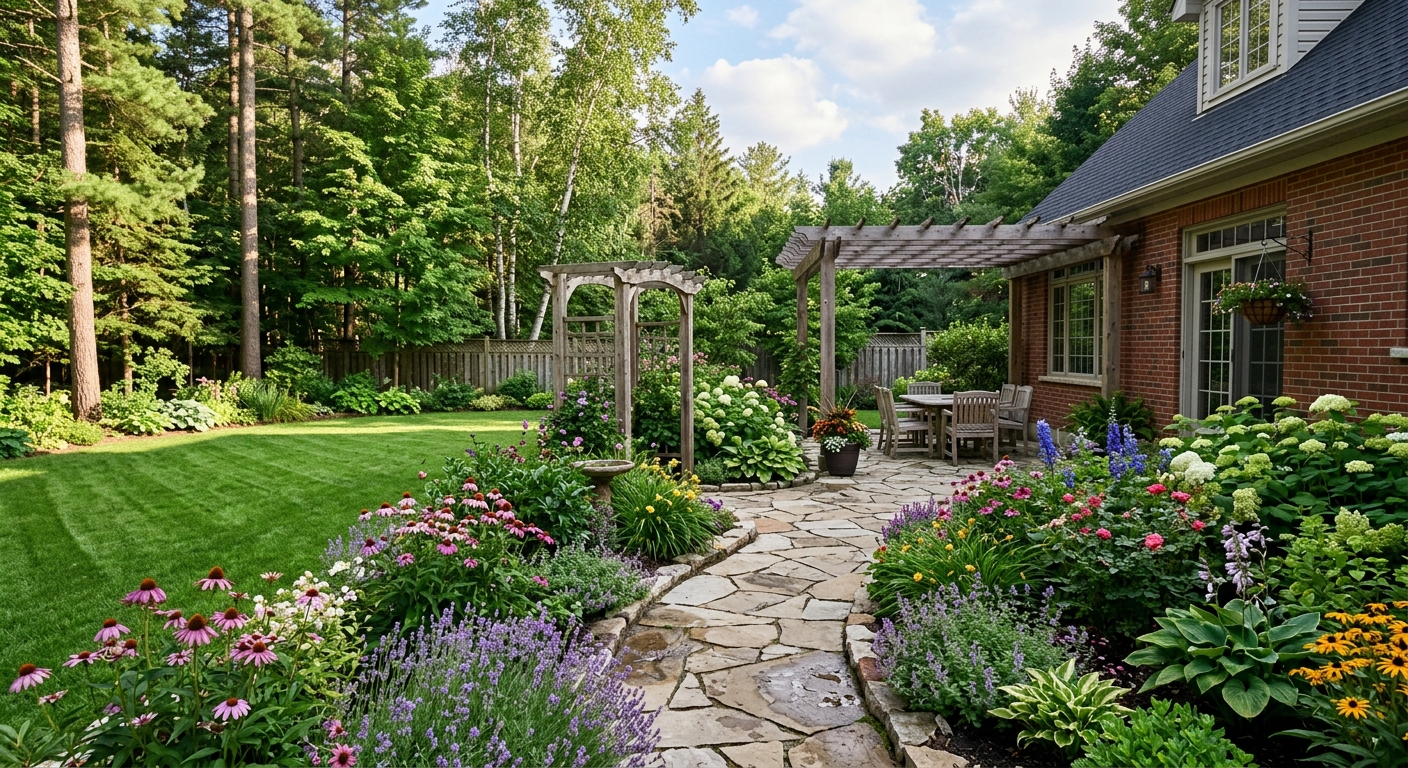
Landscaping options and costs in Glenwood
Landscaping in Glenwood, British Columbia usually starts with a reality check: you’re planning around a long, cool growing season and wet winters, not the short, harsh frost-free windows you’d see farther inland. Glenwood has a population of 11,437 (Statistics Canada, 2021 Census), and that steady demand supports a healthy mix of local crews—especially around the Fraser Valley–style neighbourhood streets where homeowners renovate older lots and add curb appeal.
Because many properties are detached homes, there’s often meaningful yard space to improve, and that affects budgeting: clients commonly choose either a “softscape refresh” (planting and drainage tweaks) or a full hardscape-led transformation (patios, paths, retaining walls). In the Lower Mainland–Southwest (mostly plant hardiness zones 7–8), mild, wet winters mean you can install and plant for much of the year, which helps spread labour availability and can keep costs more predictable than in colder regions. At the same time, freeze–thaw cycles still matter for patios and retaining wall bases, so contractors dig deeper, build proper drainage, and compact more thoroughly to reduce frost heave and long-term wall movement.
In Glenwood, trade demand tends to be especially strong in the older residential pockets where sloped yards and foundation moisture issues are common. Once you’re deciding which scope fits your goals, the next step is comparing typical service packages side by side.
| Service |
Description |
Season |
Price Range |
| Full landscape design and installation |
Site assessment, concept + planting plan, grading/drainage concept (if needed), hardscape/softscape build-out, cleanup |
Late winter through fall; busiest spring to early summer |
$12,000–$45,000 |
| Sod installation (supply, grade, lay, roll) |
Existing soil prep, grading/roll, topsoil amendment where required, sod supply and install, starter fertilizer |
Typically spring to early fall (avoid extreme wet periods) |
$3,000–$7,500 |
| Lawn seeding (grade, seed, starter fertilizer) |
Soil raking/loosening, grading for drainage, seed mix, starter fertilizer, light topdressing |
Early spring or fall; best germination windows |
$1,800–$4,800 |
| Interlocking patio or walkway |
Excavation, base/gravel, edge restraint, sand setting bed, blocks/pavers, compacting and final levelling |
Spring through fall; structural work weather-dependent |
$8,000–$35,000 |
| Retaining wall (interlocking block) |
Reinforced block system, compacted base, drainage layer/weep system, geotextile fabric, backfill |
Spring through fall (avoid prolonged wet ground) |
$15,000–$55,000 |
| Tree and shrub planting |
Planting layout, soil amendments, staking where needed, mulching and establishment watering plan |
Most of the year; best results in mild stretches |
$2,000–$12,500 |
Prices are estimates only and vary by project scope, site access and material selection.
What affects the price of landscaping in Glenwood
In Glenwood and across the Lower Mainland–Southwest, quotes for the “same” landscaping job can differ by 30–50% because scope is rarely identical: one quote may include drainage corrections, soil prep, proper base depth, and removal/disposal—while another may only cover surface-level installs. This variation shows up across British Columbia because contractors price around climate-driven labour time, equipment needs, and the materials required to get reliable results in the province’s different hardiness zones.
Here’s how the local climate drives both what grows and what crews can build. In coastal BC (largerly zones 7–8), you get a longer growing and working season, so planting palettes can be more lush—but contractors still must manage drainage and foundation moisture because winter rain can saturate soils. The frost dates (often early March/early April last spring frost near the coast and first fall frost in November) mean structural work must account for freeze–thaw cycles: patio and retaining wall bases need deeper excavation and improved compaction. By contrast, Prairie regions (zones 2–4) often face shorter growing seasons and harsher winters, leading to compressed schedules and a heavier focus on drought- and wind-tolerant plantings. In the dry BC Interior and Alberta, water restrictions push irrigation design toward efficient systems; in Southern Ontario (zones 5–6), summer dry spells can drive higher irrigation demand.
Concrete examples that raise or lower cost in Glenwood: (1) correcting a sloped lawn that drains toward the house can add significant grading and drainage labour, often shifting a lawn refresh from a few thousand dollars toward a larger portion of the $5,000–$50,000 design-and-install range; (2) upgrading from basic shrub planting to mature specimen trees can move a planting scope toward the upper end of $1,000–$15,000 because of handling, equipment, and warrantyed establishment. (3) Older properties may have compacted fill, meaning soil amendment and topsoil delivery become unavoidable.
| Price Factor |
Why It Matters |
Cost Impact |
| Yard size in sq ft — the primary cost driver for softscape |
More area means more labour hours (prep, planting, turf coverage) and more materials (topsoil, mulch, seed/sod) |
Often the biggest swing; doubling area can increase cost roughly proportionally (sometimes more due to mobilization) |
| Grading and drainage work — slope corrections add significant cost |
Proper drainage reduces pooling and foundation moisture; it requires excavation, reshaping, and verification |
Can add thousands; commonly pushes projects toward the mid-to-upper $5,000–$50,000 band for full installs |
| Drainage bed or French drain installation |
Installs include trenching, perforated pipe, gravel, geotextile, and tie-ins to existing systems |
Higher than “surface fixes”; frequently a key driver in coastal wet-season projects |
| Plant material tier — native shrubs vs. ornamental vs. mature specimen trees |
Mature stock costs more and may require larger root balls, staking, and sometimes equipment |
Can raise planting scope toward the upper portion of $1,000–$15,000 |
| Hardscape vs. softscape ratio — walls and patios cost more per sq ft than lawn |
Hardscapes need deeper base prep, compaction, edging, and precise levelling |
Shifting from lawn to patio/walls often moves budgets into $10,000–$80,000 territory for retaining/hardscaping |
| Irrigation system design and installation |
Efficient zoning, drip vs. spray selection, and smart controllers affect both water use and establishment success |
More than “one hose bib upgrade”; can materially change total cost on larger beds |
| Soil amendment and topsoil required |
Compacted or poor native soil often needs amendment and properly sourced topsoil |
Delivery/handling adds cost, especially where hauling or regrading is required |
| Tree removal or stump grinding before new planting |
Access, root structure, and disposal requirements change the job’s labour and equipment needs |
Can add several thousand depending on size and disposal complexity |
Permits & regulations in British Columbia
In British Columbia, most planting, sodding, and typical softscape work does not require a permit. That generally includes: installing sod, laying seed, planting shrubs and trees, adding mulch and groundcovers, and most small garden edging. Homeowners typically also don’t need permits for routine lawn grading on a small scale, as long as drainage patterns are handled responsibly.
Work that often does require a permit (and sometimes engineered input) includes retaining walls above the municipal height threshold—commonly around 1.0 m (3.3 ft) in many municipalities—plus any structural changes that affect drainage in a way that impacts neighbouring properties or storm connections. Also, if you’re changing lot grading to direct water improperly toward neighbours, approvals may be triggered.
Step-by-step for Glenwood homeowners: first, ask the contractor what scope triggers permits and who will pull them. Second, verify utility locates before any digging (planting holes, drain trenches, and wall footings). Third, confirm current irrigation and water-use bylaws—while Glenwood is coastal and typically avoids the harsh, frequent bans seen in the BC Interior, rules can still tighten during dry spells and affect how contractors design timers and watering schedules.
Licensing and coverage checks should be done before signing: (1) confirm the contractor’s business/registration and any required trade licensing via the appropriate provincial/business registry listing; (2) request a current certificate of insurance showing liability coverage that matches the contract value; (3) ensure workers are covered under WCB; in many cases, you can obtain a clearance letter from the contractor or have it referenced on the certificate paperwork. Then, keep copies for your records.
Planning a landscape that thrives in Glenwood's climate
To plan a landscape that thrives in Glenwood, British Columbia, you want to “work with” hardiness zone 7–8 conditions—cool, long summers, wet winters, and frost that typically arrives around November—rather than trying to fight standing water or winter saturation. Start with plant selection: choose zone-appropriate, hardy species (and wherever possible, native or well-adapted plants) so you rely less on winter wrapping and frequent watering. Many homeowners also benefit from designing in layers—evergreen structure plus long-blooming perennials—because winter damage risk is lower than in colder regions.
Next, decide between sod and seed. Sod gives instant results, but in the Lower Mainland it often costs about 3–4 times more per sq ft than seeding once prep and establishment are included. Seeding is a great budget move when you’re not under a tight “move-in” deadline and you can manage early germination conditions.
Drainage and grading are the foundation of success here. In coastal BC, soils can stay wet; if water pools near foundations, you’ll see long-term problems. For structural work like patios and retaining walls, base preparation still has to respect freeze–thaw cycles: dig deeper than a shallow “paver base,” include proper drainage layers, and compact correctly to reduce frost heave and movement.
For low-maintenance design, use mulch, groundcovers, and strategically placed perennials to reduce weeds and annual labour. A rain garden or bioswale-style planting bed can capture downspout runoff and improve appearance while reducing soggy zones. On pricing, consider a concrete example: if a sod install lands near $3,000–$7,500 for a typical refresh, choosing seeding might keep you closer to the $1,800–$4,800 range—and you can put the savings into drainage improvements or a drip system where it matters most.
| Element |
Climate Consideration |
Maintenance Level |
Price Band |
| Sod lawn installation |
Needs good prep to avoid rot in wet winter soil; best when temperatures support rooting |
Low-to-moderate during establishment, then moderate season-to-season |
$3,000–$7,500 |
| Native perennial garden |
Zone-appropriate plants handle cool wet winters and establish better for spring growth |
Low after year one; occasional weeding and cutback |
$2,500–$10,000 |
| Mulched shrub border |
Mulch buffers wet/dry swings and suppresses weeds during long growing season |
Low; simple seasonal trimming and topping up mulch |
$2,000–$9,000 |
| Interlocking stone patio |
Must be built for freeze–thaw cycles with proper base depth and drainage |
Low; occasional joint sand top-ups and power-wash as needed |
$8,000–$35,000 |
| Retaining wall (block) |
Backfill and drainage layers prevent water pressure in wet months |
Low; periodic inspection for settling or drainage performance |
$15,000–$55,000 |
| Drip irrigation system |
Efficient watering supports establishment without wasting water; helpful in seasonal dry spells |
Moderate to low once tuned; seasonal checks and adjustments |
$1,200–$6,500 |
How to choose a landscaping contractor in Glenwood
Choosing the right landscaping contractor in Glenwood, British Columbia starts with verification and documentation. First, confirm licensing/registration requirements for landscaping and any specific trade scopes (for example, if they’re doing work that would fall under additional trades or structural scopes like engineering referrals). Next, verify liability insurance: ask for a current certificate of insurance showing general liability coverage and the effective dates. For worker protection, ensure they have WCB coverage—then ask for a clearance letter or have WCB status shown in the documentation package you receive with the quote. Don’t rely on verbal claims; paperwork matters.
For pricing, get 2–3 itemised written quotes. A good quote breaks labour and materials apart (excavation/base prep, drainage components, paver/sod quantities, plant list, soil/topsoil and amendments). It should also state what’s excluded: permit pulling, disposal, extra trucking, unexpected rock/roots, and any homeowner responsibilities like access arrangements.
Warranty is another differentiator. Ask for the workmanship warranty length (and what triggers it), plus product/manufacturer warranties for materials like irrigation parts or plant replacement terms. Also confirm whether warranties are transferable if you sell your home.
Payment schedules should be conservative: never pay more than 10–15% upfront, and request a holdback tied to substantial completion (for example, base inspections, final grading, and cleanup). Finally, get a start date and estimated completion timeline in writing, including weather contingencies common to coastal winter wet weeks and spring frost timing.
- Provide an itemised quote (quantities, unit rates, and line-item totals) instead of a single lump sum.
- List included services clearly: permit pull (if needed), disposal/hauling, and topsoil source or specification.
- Require utility locates before digging (especially drainage trenches and wall footings).
- Show evidence of liability insurance and WCB coverage with dates on documents.
- Include a written workmanship warranty and the specific exclusions.
- Confirm plant substitutions in writing (what happens if a species is unavailable).
- Ask how they handle drainage: grade plan, drainage bed/French drain details if required.
- For hardscape, confirm base specs: excavation depth, compacted base layers, and edge restraints.
- For turf, confirm seeding/sod type and establishment care (watering schedule and timing).
- Get a site access plan: parking/equipment path, fencing protection, and protection of your home.
- Request a soil amendment plan (what they add and why) rather than “we’ll add some topsoil.”
- Keep payment milestones aligned to measurable steps; avoid large upfront payments.
Concrete red flags I see around Glenwood: (1) they can’t produce insurance/WCB paperwork on request; (2) “we’ll take care of permits” with no details on who pulls them and what’s covered; (3) vague quotes with no quantities, no disposal notes, or no turf/plant specifications; (4) base depth and drainage details missing for patios or retaining walls; and (5) demanding more than 20–30% upfront or refusing to hold back until final completion.
Frequently asked questions — landscaping in Glenwood
What is the best grass type for a Glenwood lawn?
For Glenwood and the Lower Mainland–Southwest climate (zone 7–8), homeowners typically do best with a cool-season lawn mix that stays dense in cool, moist periods and can handle occasional dry spells. Many contractors recommend blends that include tall fescue for durability and recovery, often paired with Kentucky bluegrass for colour and density. If you’re looking at sod, your contractor should match the sod type to sun exposure (full sun versus partial shade near homes) and your drainage conditions—sod over poorly drained soil struggles. Pricing varies by prep and size, but a typical sod refresh can land around $3,000–$7,500 depending on access and how much grading is required. (Statistics Canada, 2021 Census)
When should I aerate and overseed my lawn in Glenwood?
In Glenwood, plan aeration and overseeding around early spring or fall, when temperatures support germination and the lawn can root without being stressed by winter wet. Aerate when the soil isn’t waterlogged (after the wettest stretches) so plugs actually loosen the root zone, then overseed with a compatible seed mix and add starter fertilizer. If your lawn is thin due to shade or foot traffic, overseeding in the fall often helps the grass establish before winter while still avoiding the harsh stress you’d see in colder regions. If you’re doing it as a full service, seeding scopes often sit around $1,800–$4,800 based on grading and seed quantity. Adjust timing year to year based on your actual weather and drainage.
What trees grow best in Glenwood's climate zone?
With Lower Mainland–Southwest hardiness conditions (zone 7–8), many homeowners succeed with broadleaf trees that handle cool wet winters and spring growth well. Common reliable picks in coastal BC gardens include flowering cherry varieties, serviceberry (Amelanchier), and some crabapple selections for pollinator value and seasonal blooms. For structure and shade, maples can work depending on site conditions, but your contractor should consider mature size and whether your yard experiences persistent wetness near foundations. If you’re near downspouts or have a drainage issue, planting placement matters as much as species. Tree installation budgets vary; tree and shrub planting often falls in the $2,000–$12,500 range when you factor in soil amendment and establishment care. Always confirm the final tree size so you don’t outgrow the space in a few years.
How much does sodding a yard cost in Glenwood?
In Glenwood, sod costs depend heavily on how much prep is required (grading, topsoil, removal of dead turf, and how much weed control you need before laying). For a typical lawn refresh, many projects land around $3,000–$7,500. If the site needs more drainage correction—such as improving slope away from the foundation—or if access is tight for hauling topsoil, the price can move toward the upper end. For comparison, seeding plus soil prep is often less expensive, frequently closer to $1,800–$4,800 because you’re paying less per sq ft for turf establishment. A good contractor will also outline establishment watering and mowing height to help your sod root during coastal weather swings.
How do I prevent weeds in my Glenwood garden?
Weed prevention in Glenwood works best when you stack multiple layers: smart plant spacing, soil prep, mulch depth, and consistent early-season control. Before planting, remove established weeds with proper soil work (and don’t just cover them—persistent roots will regrow). After planting, apply mulch evenly (typically enough depth to suppress light) and keep mulch off the crown of plants to reduce rot risk in wet months. Choose dense groundcovers and healthy shrub borders so weeds don’t have open soil to colonize. If you’re using drip irrigation, avoid overwatering in small areas, since constant wet soil encourages weed germination. For larger beds, a mulched shrub border plan is often one of the more cost-effective ways to reduce annual maintenance within the $2,000–$9,000 type range.
How do I design a low-water yard in Glenwood?
Even in coastal BC, “low-water” doesn’t mean zero watering—it means targeting water where it’s needed and preventing waste. In Glenwood, design around zone-appropriate plants, deeper mulching, and efficient irrigation (drip for shrubs and beds, with smart controllers that can adjust schedules). Build the yard so it drains correctly first; a yard that stays soggy can look “watered” but still harms plant roots and forces you into extra corrective watering later. Add rain-garden-style beds or downspout capture where you get runoff, especially if you’re dealing with pooling near foundations. When lawns are part of the plan, select turf types that recover well and reduce high-traffic watering loss. If you’re upgrading to drip irrigation, budgets commonly fall within $1,200–$6,500 depending on zones, layout complexity, and controls.