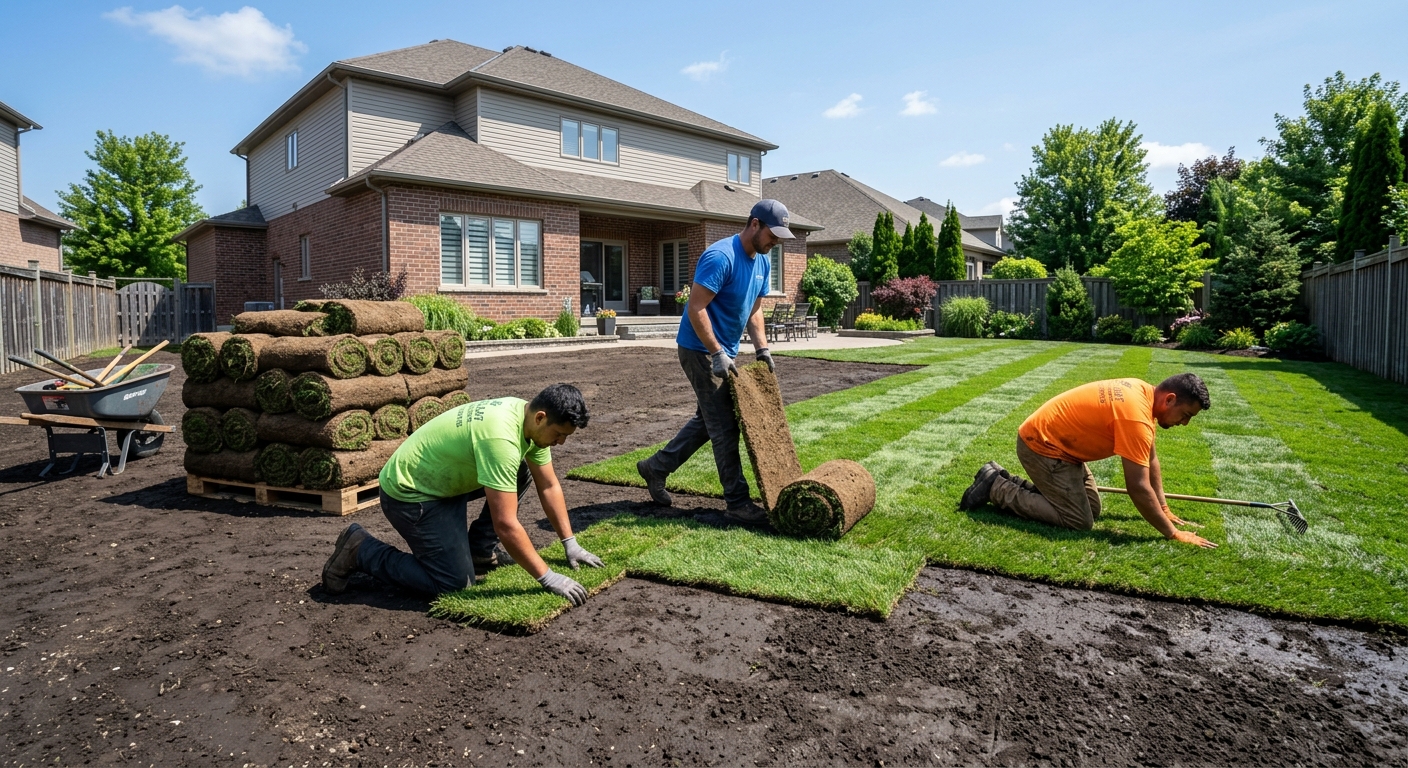
Landscaping options and costs in Norgate
Norgate is where “good bones” landscaping pays off quickly—many homeowners have the yard space to invest and the local demand supports a steady roster of crews. With a population of 3,035 (Statistics Canada, 2021 Census), work is concentrated in established pockets where access, lot grades, and existing plantings make projects repeatable and efficient. You’ll also see strong interest from detached homeowners who want privacy screens, layered planting beds, and usable outdoor living areas rather than just grass.
In the Lower Mainland–Southwest (hardiness zone 7–8), mild winters and long cool growing seasons mean we can install and establish plants for more months of the year than in much of Canada. That said, prices still reflect how wet weather and freeze–thaw cycles affect hardscaping: patio bases and retaining wall footings must be dug to stable depth, with proper drainage and compaction to reduce movement. Labour availability and material lead times can also swing costs—especially for interlocking, block, and larger-calibre plant material—because demand is steady from nearby areas like Ladner Village and Steveston-adjacent neighbourhoods.
If you’re comparing upgrades, it helps to think in categories. Design and softscape tend to budget as a range, while hardscaping and retaining walls usually tighten when you know slope and drainage needs. Below is a practical cost snapshot for common projects in Norgate—then you can match it to your scope.
| Service |
Description |
Season |
Price Range |
| Full landscape design and installation |
Site visit, concept through install (grading, drainage checks, planting plan), contractor install of softscape and select hardscape |
Mar–Nov (peak May–Sep) |
$5,000–$50,000 |
| Sod installation (supply, grade, lay, roll) |
Topsoil/leveling, soil prep, sod supply, laying, rolling, and starter fertilizer |
Apr–Jun; Sep–Oct |
$2,000–$8,000 |
| Lawn seeding (grade, seed, starter fertilizer) |
Fine grading, seed mix, starter fertilizer, light raking, and coverage |
Apr–May; Sep–Oct |
$1,200–$4,500 |
| Interlocking patio or walkway |
Excavation, base, compaction, edging, interlocking stone, jointing and finishing |
Apr–Nov |
$10,000–$35,000 |
| Retaining wall (interlocking block) |
Terraced or straight block wall with base prep, drainage gravel, weep considerations, and caps |
Apr–Nov |
$15,000–$65,000 |
| Tree and shrub planting |
Plant supply and installation, mulching, staking as required, basic soil amendment |
Mar–Nov |
$1,000–$15,000 |
Prices are estimates only and vary by project scope, site access and material selection.
What affects the price of landscaping in Norgate
You can get two “similar” landscaping quotes in the Lower Mainland–Southwest that differ by 30–50%—even when the design looks close on paper. The reason is that the labour steps and the materials requirements shift with site conditions, drainage, and the working window. Coastal BC (zones 7–8) gives a long growing season, so more crews chase more projects, and that can tighten scheduling and increase labour demand. In the same Canadian timeframe, Prairie cities (zones 2–4) deal with a short frost-free window and typically need drought-tolerant, wind-hardy planting and compressed schedules; in many cases, that changes what gets installed and how crews stage work. Southern Ontario (zone 5–6) has a moderate season with dry spells that often demand irrigation planning, while coastal BC still requires careful drainage and soil structure because winters are mild but wet.
In Norgate specifically, two factors commonly push costs upward: (1) slope corrections and (2) drainage solutions. For example, moving water away from a foundation often means adding grading work and a drainage bed or French drain—those added excavation and disposal hours can move a $5,000 softscape plan toward the $10,000–$20,000 range. On the hardscape side, freeze–thaw cycles require bases prepared for stability; patio and walkway projects commonly land in the $10,000–$35,000 band depending on base depth and stone options.
Concrete examples we see on local lots: a heavier clay or “hold-water” area can require more soil amendment and deeper base correction; a narrow driveway with limited access may force smaller equipment and more manual labour. Also, many neighbourhood homes are older, with established trees and compacted soils—tree and shrub planting budgets can climb when we add root pruning, soil aeration, or stump grinding before new beds go in.
| Price Factor |
Why It Matters |
Cost Impact |
| Yard size in sq ft — the primary cost driver for softscape |
More square footage increases labour hours, soil volumes, and material quantities (sod/seed/topsoil and amendments) |
Often the biggest swing; can double the total cost from small to medium lots |
| Grading and drainage work — slope corrections add significant cost |
Lower Mainland lots often need re-sloping to prevent pooling near foundations |
Can add thousands due to excavation, re-compaction, and rework |
| Drainage bed or French drain installation |
Better water management protects walls and reduces long-term settlement and plant loss |
Often increases the hardscape/softscape budget noticeably |
| Plant material tier — native shrubs vs. ornamental vs. mature specimen trees |
Specimens cost more upfront and require careful handling, staking, and sometimes larger excavation |
Can shift a planting project from the $1,000s toward the $10,000+ range |
| Hardscape vs. softscape ratio — walls and patios cost more per sq ft than lawn |
Interlocking and block walls need base prep, edging, and more material per square foot |
Typical drivers for moving projects into $10,000–$80,000 territory |
| Irrigation system design and installation |
Drip and smart controllers improve efficiency, especially if you want to tolerate occasional restrictions |
Can add meaningful cost, but reduces future watering labour and plant stress |
| Soil amendment and topsoil required |
Improves drainage/structure for root development in wet coastal soils |
More bags/trucks and labour; increases costs when existing soil is compacted or poor |
| Tree removal or stump grinding before new planting |
Removal access, disposal, and grinding depth determine how quickly beds can be installed |
Often adds a separate line item that can materially change totals |
Permits & regulations in British Columbia
In British Columbia, most planting and softscape work generally does not require a permit—so tasks like planting shrubs/trees, sodding a lawn, and installing new flower beds are typically straightforward. Retaining walls are the usual exception: walls above a municipal threshold—commonly 1.0 m (3.3 ft) in many jurisdictions—often require a building permit and sometimes engineered drawings depending on height, design, and the site. Another area that can trigger approval is lot grading: if changes to drainage will direct water toward a neighbour’s property or tie into storm infrastructure incorrectly, a review may be required to ensure runoff is handled properly.
For any excavation—like planting holes, footings for a walkway base, or wall drainage trenches—utility locates are critical. A homeowner in Norgate should also confirm local irrigation and water-use bylaws; even in coastal areas with milder winters, municipalities and utilities enforce restrictions during dry periods, and watering rules affect how a contractor schedules irrigation startup and seasonal adjustments.
To verify a contractor before work starts, do this in order: (1) licence/registration check (if applicable for their trade scope) and business listing online; (2) insurance certificate—ask for liability coverage details, and confirm coverage limits match the project scale; (3) workers’ compensation coverage—request evidence of WSIB/WCB clearance or account status, and ensure it’s current for the date of the job. If they can’t provide documents quickly, treat it as a red flag and request it in writing.
Planning a landscape that thrives in Norgate's climate
Designing for Norgate means working with hardiness zone 7–8, the Lower Mainland’s frequent wet weather, and a frost calendar that stays workable for much of the year. Start with plant selection: choose zone-appropriate and preferably native species that tolerate winter moisture without constant protection. Use mulch and seasonal layering so beds don’t stay soggy in winter and don’t dry out too fast in summer wind.
For turf, pick the right approach. Sod gives instant curb appeal and fast erosion control, but in practice it costs roughly 3–4x more per square foot than seeding because you pay for sod rolls and more handling. For example, if you’re restoring a worn 500 sq ft lawn patch, sod can push you toward the $2,000–$8,000 band quickly, while seeding and starter fertilizer typically stays lower and is easier to expand over time. Choose sod where you need immediate function—like before events—or where erosion risk is high.
Drainage and grading are non-negotiable in the Lower Mainland–Southwest. Aim to keep water moving away from foundations with correct slopes, and consider a drainage bed or French drain where pooling occurs. For hardscape such as patios and block retaining walls, bases must be prepared for stability through freeze–thaw cycles: correct depth, compaction, and drainage gravel reduce movement and long-term cracking.
Low-maintenance strategies that still look rich include groundcovers, layered perennials with staggered blooms, and well-edged mulch borders. If you want to reduce watering, consider a rain garden in low spots (where water naturally collects) or xeriscape zones using drought-tolerant plants and drip irrigation—well-designed drip can also help you respect water-cost concerns and temporary watering limits without killing lawns.
| Element |
Climate Consideration |
Maintenance Level |
Price Band |
| Sod lawn installation |
Instant coverage before summer growth; establish in spring/early fall while soil moisture is reliable |
Low once established, moderate in the first 4–8 weeks |
$2,000–$8,000 |
| Native perennial garden |
Zone-appropriate plants tolerate wet winters; good ground cover reduces weed pressure |
Low to moderate (spring tidy and light division as needed) |
$3,000–$12,000 |
| Mulched shrub border |
Mulch manages winter moisture and summer evaporation; layered shrubs suit coastal conditions |
Low (weeding spot checks first season, then minimal) |
$2,500–$10,000 |
| Interlocking stone patio |
Base prep must handle freeze–thaw and frequent wetting; proper drainage prevents settling |
Low (occasional joint re-sanding, cleanout) |
$10,000–$35,000 |
| Retaining wall (block) |
Footings and drainage are essential to resist movement on sloped lots common in the area |
Low after completion if drainage is correct |
$15,000–$65,000 |
| Drip irrigation system |
Efficient water delivery supports drought-tolerant plantings and works around temporary restrictions |
Moderate (seasonal adjustments and periodic checks) |
$2,000–$7,500 |
How to choose a landscaping contractor in Norgate
Choosing a contractor in Norgate comes down to proof, not promises—especially because excavation and installation quality affect drainage, plant survival, and wall/patio performance over years. First, verify British Columbia licensing/registration as applicable to their trade scope, then request liability insurance documentation and confirm it’s current. For workers’ compensation, ask for WSIB/WCB clearance or account evidence and check that coverage applies to the people assigned to your job. If they give you excuses or only send a partial certificate, pause the process.
Next, get 2–3 itemised written quotes. Ideally, each quote breaks down labour and materials (for example: excavation hours, base materials, stone quantity, drainage components, and plant counts). A lump-sum quote can hide differences that later become change orders—especially for drainage bed depth, soil amendment volumes, or whether disposal is included. Carefully read the exclusions: Is permit work included if required? Is disposal/haul-away included? Are utility locates scheduled by them or by you? Will they remove existing sod or just lay over?
For warranty, ask for a workmanship warranty length and what it covers (settling, cracking, plant replacement, irrigation functionality). Confirm product/manufacturer warranties and whether they’re transferable to you. Payment matters too: never pay more than 10–15% upfront; use a holdback until the final inspection and cleanup. Finally, insist on a written start date and an estimated completion timeline, so weather windows in coastal BC don’t become “schedule gaps.”
- Provide current insurance certificate (liability) and confirm coverage limits
- Request WSIB/WCB clearance or evidence applicable to your project start date
- Get itemised quotes: labour hours, materials list, and estimated quantities
- Confirm who pulls permits if retaining walls or grading approvals apply
- Clarify disposal/haul-away for sod, soil, and construction debris
- Verify utility locates are arranged before digging
- Ask for a drainage plan in writing where pooling exists
- Check that topsoil, compost/soil amendment, and base depth are specified
- Request warranty terms in plain language (workmanship and plant replacement)
- Use a payment schedule with a 10–15% maximum upfront deposit
- Hold back final payment until cleanup and walkthrough are complete
- Ensure the schedule includes weather realities for Lower Mainland–Southwest wet weeks
Red flags in Norgate: (1) contractor won’t provide insurance/WSIB/WCB documentation; (2) quotes lack drainage/grading details yet assume fixed hardscape outcomes; (3) they ask for large deposits early; (4) no written timeline or vague “ASAP” start dates; (5) they avoid specifying material tiers or quantities (especially for block walls, interlocking base materials, and plant sizes).
Frequently asked questions — landscaping in Norgate
When should I aerate and overseed my lawn in Norgate?
In Norgate (Lower Mainland–Southwest), the best timing is usually spring or early fall, when the soil is working and growth is steady. Many homeowners aerate and overseed in April to May, or in September to early October, so grass can establish before the wetter winter pattern settles in. Because winters are mild but damp, avoid seeding right before long cold, wet stretches—seed can rot in saturated areas. If your lawn is thin, consider overseeding into an aerated core bed rather than only broadcasting on topsoil. If you’re starting fresh or repairing a patch, seeding typically costs less than sod; for reference, sod installation commonly falls in the $2,000–$8,000 range depending on size, while seeding is often a budget-friendlier way to rebuild.
What trees grow best in Norgate's climate zone?
With Norgate sitting in hardiness zone 7–8, you can grow a wider range of broadleaf trees than colder Canadian regions, and winter injury risk is lower. Popular options include ornamental cherries, maples (where soil and spacing fit), and flowering trees such as magnolia in protected spots. For privacy, many homeowners also choose columnar or upright forms, but it’s important to match mature width to your yard lines—overcrowding increases maintenance and disease pressure. If you have damp or heavy-soil areas, ask about species that tolerate wet winters but drain well in summer. Local planting success also depends on site exposure: wind corridors near open yards can dry plants out even in coastal weather, so we typically pair trees with mulch rings and a good irrigation plan for the first season.
How much does sodding a yard cost in Norgate?
Sodding costs in Norgate depend mainly on yard size, how much grading is required, and whether the contractor includes soil prep and fertilizer. In the local market, sod installation is commonly budgeted in the $2,000–$8,000 range for typical residential portions, assuming standard access and reasonable soil conditions. If your lawn area is uneven, compacted, or has drainage issues, you may see higher pricing due to extra topsoil, amendment, and labour—especially in wet spots where we need slope correction. Compared with seeding, sod delivers instant coverage and faster usability, which can be worth it if you need quick curb appeal. If you’re unsure, ask for an itemised quote so you can see how much of the price is sod versus grading and prep.
How do I prevent weeds in my Norgate garden?
Weed prevention works best when you combine soil prep, weed barriers correctly (or not at all), and good planting density. In British Columbia’s damp coastal conditions, weeds can establish quickly where soil is bare or where mulch is thin. For beds, we recommend removing existing weeds and roots, then topping with a consistent mulch depth and adding a layer of groundcover or properly spaced shrubs/perennials so light can’t reach germinating weed seeds. Over time, compost and soil amendment can improve competition by supporting healthy plant growth. The first season is critical: plan for a few targeted hand-weeding visits, then maintenance usually drops. If you’re adding a new border, ask your contractor whether they’ll include soil conditioning and edging—clean edging reduces grass intrusion and makes ongoing control easier.
How do I design a low-water yard in Norgate?
Even though Norgate has milder winters, low-water design still makes sense due to rising water costs and the likelihood of temporary watering limits. Start with “right plant, right place”: use zone-appropriate plants, include drought-tolerant choices where sun is strong, and avoid high water demand in exposed corners. Add efficient irrigation—drip lines and smart controllers deliver water to roots instead of wasting it on paths and wind-exposed surfaces. Use mulch and groundcovers to reduce evaporation; they also help keep weeds down. If you have a low area that collects runoff, a rain garden can manage water naturally while reducing irrigation needs elsewhere. Budget-wise, many homeowners start with planting and mulch borders, then add drip later if needed—drip systems often come in a separate line item and can be a strategic upgrade compared with expanding lawn area.
How do I find a licensed landscaper in Norgate?
In Norgate, the safest approach is to verify documentation before you ever sign. Ask the contractor for their current business/licence details as applicable, plus a certificate of liability insurance showing coverage limits appropriate for your project size. Request evidence of workers’ compensation coverage (WSIB/WCB clearance or account status) so you know the crew is covered while they work on excavation, block walls, and planting install. Then compare itemised quotes: look for labour + materials breakdown, disposal/haul-away details, whether permits are included if retaining walls or grading approvals are triggered, and a clear start/completion timeline. Finally, get a written workmanship warranty in plain language. A good contractor will answer quickly and provide certificates without pushing you to rush payment.