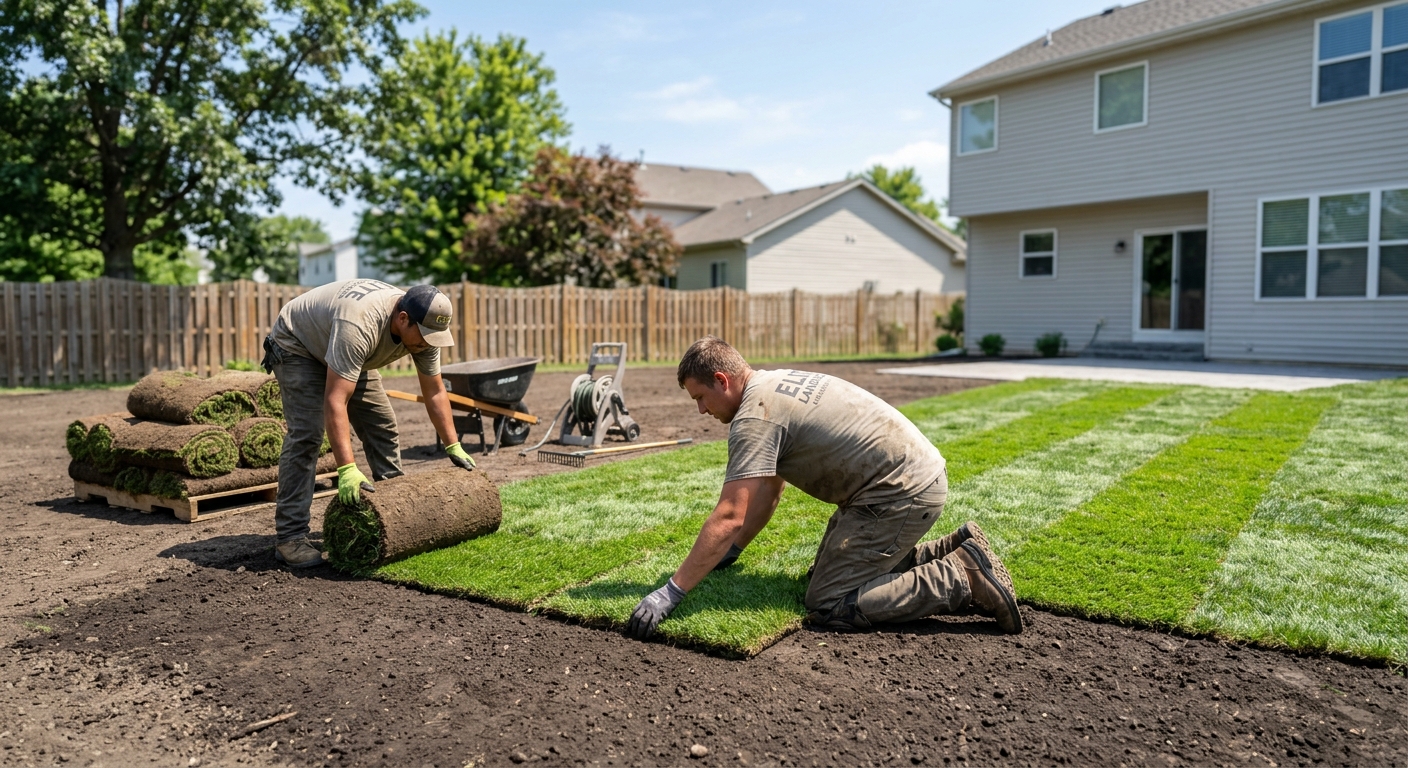
Landscaping options and costs in Government Road
In Government Road, landscaping tends to feel like a “year-round project,” because Lower Mainland–Southwest conditions are gentle compared with much of the province—so your yard can be improved in phases instead of waiting for a short frost-free window. That matters for pricing because contractors can schedule softscape and planting more consistently, while structural items still require careful planning around freeze–thaw cycles. Government Road has a mix of home types, and locally most detached properties have the yard space to justify full upgrades (Statistics Canada, 2021 Census). With a population of 2,325 people (Statistics Canada, 2021 Census), demand is steady enough that reputable crews usually book several weeks ahead during peak season.
In plant hardiness zones 7–8, homeowners often choose layered planting palettes—broadleaf evergreens, long-blooming perennials and tidy groundcovers—without the same winter-damage fear you see farther inland. Labour availability is generally better than in colder regions, but costs can still swing because supply and access vary street to street, and because grading/drainage work is common on sloped lots. If your property sits near neighbourhood pockets with heavy renovation activity (for example, areas closer to established commercial corridors where curb appeal matters), you’ll often see more requests for interlocking patios, walkways, and “front-yard makeovers.”
Use the ranges below as a budgeting starting point, then compare options in the table against how you want your yard to function.
| Service |
Description |
Season |
Price Range |
| Full landscape design and installation |
Site visit, concept + layout, plant/softscape plan, grading/drainage coordination, planting and hardscape as selected |
Mar–Nov (with limited winter prep) |
$10,000–$50,000 |
| Sod installation (supply, grade, lay, roll) |
Soil prep, base/topsoil blend, sod delivery and rolling, starter fertilizer |
Mar–Oct |
$3,000–$8,000 |
| Lawn seeding (grade, seed, starter fertilizer) |
Light grading, seed selection, starter fertilizer, straw/mulch where needed |
Mar–May and Aug–Sep |
$2,000–$6,000 |
| Interlocking patio or walkway |
Excavation, compacted base, edging, interlocking stone installation, leveling |
Mar–Nov (best before wettest periods) |
$10,000–$45,000 |
| Retaining wall (interlocking block) |
Block wall with proper drainage layer, geotextile, backfill and compaction |
Mar–Nov |
$12,000–$65,000 |
| Tree and shrub planting |
Soil amendments, planting, staking (when needed), watering guidance and mulch rings |
Mar–Oct |
$1,500–$15,000 |
Prices are estimates only and vary by project scope, site access and material selection.
What affects the price of landscaping in Government Road
In Government Road and across the Lower Mainland–Southwest, you can see the same landscaping scope land 30–50% apart between quotes, even when both contractors promise “quality materials.” The biggest drivers are (1) how much site preparation is truly required, (2) what level of plant maturity and hardscape detail you choose, and (3) whether the crew is working around rain-wet weeks and job-site access constraints. These swings are common across British Columbia because climates and working conditions differ dramatically from region to region—Lower Mainland–Southwest (zones 7–8) supports longer schedules, while Prairie regions (zones 2–4) often face short growing seasons and wind/drought stress that push clients toward tougher, low-maintenance planting. Structural items also change: in places with deeper freeze lines, retaining wall bases often have to be dug and built differently to resist frost heave, which increases excavation and base material cost.
Coastal BC’s long growing season can reduce “idle time,” which helps keep softscape moving—so full design & installation may still fit comfortably in the $10,000–$50,000 band when drainage and plant selections are straightforward. By contrast, heavy soil, pooling near foundations, or complex slope corrections can pull costs toward the top end of that band. In Government Road, freeze–thaw cycles still matter for patios and wall footings, so base preparation isn’t something to cut. A practical example: upgrading from seeding to sod can add several thousand dollars, and sod is often the fastest way to improve appearance, but it’s not always the best value if grading is extensive or if you’re budget-conscious. Another example is drainage: adding a proper French drain or drainage bed can cost noticeably more upfront, but it prevents recurring foundation moisture and rework.
Housing age plays a role too. Many older properties have established drainage patterns and compacted fill—if you need more soil amendment and re-grading, labour can climb because excavation and disposal are added line items, not “included by default.”
| Price Factor |
Why It Matters |
Cost Impact |
| Yard size in sq ft — the primary cost driver for softscape |
More area means more soil prep, materials, labour hours, and often more watering/maintenance during establishment |
Often determines the majority of total cost; small lots can be disproportionately expensive per sq ft |
| Grading and drainage work — slope corrections add significant cost |
Fixing low spots and redirecting surface water prevents pooling and protects foundations |
Can add substantial excavation and compaction time; commonly pushes budgets upward |
| Drainage bed or French drain installation |
Requires trenching, geotextile, pipe, gravel, and clean-out planning |
Moderate to high added cost, but usually cheaper than repeated repairs |
| Plant material tier — native shrubs vs. ornamental vs. mature specimen trees |
Size at install changes transplant success and labour; mature stock costs more |
Can swing the planting portion dramatically, especially for larger trees |
| Hardscape vs. softscape ratio — walls and patios cost more per sq ft than lawn |
Interlocking and retaining walls need base layers, edging, and precise leveling |
High; patios/walkways typically move budgets toward the upper ranges |
| Irrigation system design and installation |
Drip lines, emitters, controllers, and zoning increase material + labour, but improve efficiency |
Low to high depending on system complexity and number of zones |
| Soil amendment and topsoil required |
Heavy clay or poor topsoil may need imported topsoil, compost, and conditioning |
Moderate; increases truckloads and labour for spreading/leveling |
| Tree removal or stump grinding before new planting |
Access, debris hauling, and stump size influence equipment time |
Can add meaningful cost and scheduling time |
Permits & regulations in British Columbia
In British Columbia, most softscape work—planting, sodding, topdressing, and the typical backyard garden refresh—generally does not require a permit. In Government Road, homeowners commonly schedule planting and lawn work without permits, assuming they are not changing lot drainage in a way that affects neighbours or storm connections. The work that does often require a permit is retaining wall construction above the municipal height threshold (commonly around 1.0 m or 3.3 ft, depending on the municipality), particularly where structural stability, engineering, or detailed drainage plans are involved. Also, significant changes to lot grading or drainage patterns (for example, re-directing runoff toward neighbouring properties or adjusting tie-ins to storm sewer connections) can trigger approvals or conditions.
Before any digging for planting holes, wall footings, or drain trenches, make sure utility locates are completed—this helps avoid costly damage to buried services. For irrigation, confirm local water-use bylaws and any seasonal restrictions. Even though the Lower Mainland–Southwest typically has mild, wet winters, utilities and municipal rules may still tighten usage during drought periods; efficient systems (like drip and smart controllers) reduce risk and waste.
To verify contractor legitimacy in BC: (1) check the contractor’s business details on the provincial/industry registry they reference, (2) request a current certificate of liability insurance and confirm the address/job site is covered for the work described, and (3) ask for proof of coverage for workers. In practice, homeowners should also obtain a written clearance letter or proof of coverage where applicable, and keep all documents in your project file.
Planning a landscape that thrives in Government Road's climate
Planning in Government Road is about working with the local hardiness zone, precipitation pattern, and frost calendar—not fighting them. With Lower Mainland–Southwest in plant hardiness zones 7–8, you can choose a broader palette than in colder parts of BC, but you still need drainage-first thinking because winter rain and spring wet weather can keep soil saturated. Start with plant selection: prioritise native and zone-appropriate species that handle mild winters and cool summers with less winter protection and typically lower watering needs. Use mulch and groundcovers to reduce evaporation and suppress weeds, and group plants by water requirement so you’re not running the whole yard on one schedule.
Next, decide sod vs. seed based on your timeline and budget. Sod gives instant coverage and erosion control, but it’s commonly about 3–4x the per-sq-ft cost of seeding. A concrete way to judge value: if your budget allows only one major “wow” area, sod a smaller front focal zone and seed the broader lawn. That approach often feels better than paying full sod pricing for a large yard, especially where grading is already changing.
Drainage and grading are critical in Government Road to prevent pooling and foundation moisture. For hardscape—patios and retaining walls—base preparation must account for local freeze–thaw cycles. Proper base depth, compaction, and weeping/aggregate layers are what keep stones level and walls stable over time. Finally, build low-maintenance structure: layered perennials, shrub borders, and a defined walkway pattern reduce annual upkeep without sacrificing curb appeal. Where water conservation is a concern, consider rain-garden features or targeted xeriscape pockets using drought-tolerant planting and drip irrigation.
| Element |
Climate Consideration |
Maintenance Level |
Price Band |
| Sod lawn installation |
Best in spring/fall establishment windows; need soil contact and drainage to avoid patchy growth |
Low-to-moderate (establishment watering, then routine mowing) |
$3,000–$8,000 |
| Native perennial garden |
Zone-appropriate perennials handle cool summers and mild winters; group by moisture needs |
Low (seasonal weed control and light pruning) |
$1,500–$7,000 |
| Mulched shrub border |
Mulch buffers wet winters and prevents splash from raising weed seeds; shrubs tolerate periodic rain |
Low (top-up mulch and occasional shaping) |
$2,000–$9,000 |
| Interlocking stone patio |
Requires proper base and drainage to handle wet seasons and freeze–thaw movement |
Very low (sweeping and occasional joint refresh) |
$10,000–$45,000 |
| Retaining wall (block) |
Backfill compaction and drainage layers protect against water pressure and winter heave |
Low (periodic inspection for alignment) |
$12,000–$65,000 |
| Drip irrigation system |
Drip reduces runoff and is efficient during any water-use restrictions; smart controllers help avoid overwatering |
Low (seasonal winterisation and emitter checks) |
$2,500–$12,000 |
How to choose a landscaping contractor in Government Road
Choosing a landscaping contractor in Government Road starts with proof, not promises. In British Columbia, request the contractor’s liability insurance certificate—make sure it’s current and that the certificate shows coverage consistent with the scope (site work, excavation, hardscape installation). If they use sub-trades or have employees, ask how workers are covered and request the appropriate clearance/proof documentation you’re comfortable with; you should also see their general business details on their paperwork. If the contractor offers specialized work (for example, irrigation design or significant excavation), ask whether they carry additional coverage relevant to that task.
Then get 2–3 itemised written quotes. A strong quote breaks costs into labour and materials (base materials, stone/concrete, soil/topsoil, plant quantities and sizes, disposal). Avoid vague “includes all materials” language—especially for drainage, base prep, and excavation, which often determine whether the job stays on budget. Also, read the exclusions: is permit/utility coordination included? Is disposal of excess soil included? Are site protection and site clean-up included at the end of each phase?
Warranty matters: ask for a written workmanship warranty length (often on installation), confirm product/manufacturer warranty terms where applicable, and ask if coverage is transferable to a future owner. For payment, never pay more than 10–15% upfront; hold back a portion until the job is complete, including final grading, cleanup, and plant establishment instructions. Finally, require a timeline with a start date and completion estimate in writing—Lower Mainland–Southwest schedules can shift during wet weeks, but a professional plan should still be clear.
- Ask for the certificate of liability insurance and confirm the name matches the contractor’s legal entity.
- Request proof/clearance of worker coverage appropriate for the province and keep it on file.
- Get 2–3 itemised quotes (labour + materials), not a single lump-sum estimate.
- Confirm what’s included in excavation: topsoil removal depth, base type, compaction standard.
- Ensure drainage details are explicit: French drain components, geotextile, gravel, discharge route.
- Ask who obtains utility locates and how they protect buried services.
- Verify disposal: where soil/stone debris goes and whether dump fees are included.
- Confirm plant quality: species list, container sizes or trunk caliper, and spacing.
- Ask about irrigation: zoning, controller type, and whether there’s a walkthrough on usage.
- Request a workmanship warranty in writing and what it covers (and excludes).
- Use a payment schedule with holdback (commonly 10–15% or more) until completion.
- Get start/completion dates and a weather-impact plan for the wettest periods.
Red flags in Government Road: (1) no written scope or no drainage/base details, (2) a “low” quote that omits excavation or disposal, (3) refusal to provide insurance proof or coverage documentation, (4) pressure for large upfront deposits, and (5) promises that ignore freeze–thaw and proper compaction for patios and wall footings.
Frequently asked questions — landscaping in Government Road
How much does sodding a yard cost in Government Road?
In Government Road and the Lower Mainland–Southwest, sod pricing typically depends on lawn area, site prep, and whether grading/drainage corrections are needed before the rolls go down. For budgeting, many homeowners land in the $3,000–$8,000 range for a standard residential sod install that includes grading, soil preparation and laying/rolling. If your yard has drainage issues, cost can rise because you may need topsoil import, base conditioning and improved run-off control prior to sod. Also consider timing: spring and early summer installs can look great quickly, but establishment requires consistent early watering in cool, wet periods to avoid patchy growth. Ask for an itemised breakdown so you can see whether preparation is included or treated as an “extra.”
How do I prevent weeds in my Government Road garden?
Weed prevention works best when you combine “barriers + smart maintenance,” rather than relying on one trick. Start by removing existing weeds with roots (not just the tops), then install a weed-suppressing layer where appropriate (landscape fabric under mulch is common, but make sure it fits the plant strategy). Use 2–3 inches of quality mulch and keep it off the crowns of shrubs to reduce rot risk in the damp Lower Mainland–Southwest winters. Plant selection matters too: dense groundcovers and properly spaced shrubs reduce open soil where weeds germinate. If you’re laying new garden beds alongside lawn edges, install clean borders so grass doesn’t invade. Finally, set a simple seasonal routine: light weeding in early spring and fall can stop weeds before they seed, especially after wet spells.
How do I design a low-water yard in Government Road?
For low-water landscaping in Government Road, focus on reducing turf coverage, matching plants to the site’s moisture, and using efficient irrigation where you do keep water-hungry areas. Replace part of the lawn with native perennial gardens or mulched shrub borders, which are often easier to maintain and typically use less water once established. If you choose sod, keep it to a smaller “active” zone and seed or plant the rest—seeding is usually far less expensive than sod and can be more forgiving while you refine grading. For irrigation, consider drip lines and a smart controller set to your microclimate; this helps avoid overwatering when rain patterns shift. During drought-adjacent periods (and given regional water-cost concerns), efficient systems reduce the risk of lawn die-off while keeping your beds healthy.
How do I find a licensed landscaper in Government Road?
To find a contractor you can trust in British Columbia, start by asking for proof of liability insurance and confirmation of worker coverage (request a clearance letter or proof documents suitable for the work). Then check whether the contractor is registered/active through the appropriate online registry they provide references for (don’t rely on verbal claims). Next, ask for at least two itemised written quotes with labour and materials separated, so you can compare drainage/base preparation, plant quantities and hardscape specifics. Once you shortlist, request a written scope that includes exclusions (disposal, permits if needed for retaining walls, utility locates, and cleanup). A reliable crew will answer clearly and provide documentation before the work starts.
How much does landscaping cost in Government Road?
Landscaping costs in Government Road vary widely because many yards combine both softscape and hardscape, plus drainage and grading. A common planning “ballpark” for full landscape design and installation often sits in the $10,000–$50,000 range depending on how much patio/walkway work and retaining is included. If you’re focusing on planting and garden refresh only, tree and shrub planting often starts around the $1,500–$15,000 range for a typical residential upgrade. For lawn alone, sod usually lands around the $3,000–$8,000 band, while seeding can be less. Your final quote should reflect site conditions—particularly slopes, soil quality, and whether foundation-water protection work is required. Always compare quotes line-by-line so you’re comparing like-for-like.
What plants thrive in Government Road's climate zone?
Because Government Road falls into plant hardiness zone 7–8 in the Lower Mainland–Southwest, many broadleaf evergreens, long-blooming perennials, and native shrubs can thrive with comparatively less winter protection than colder parts of BC. Great garden strategies include choosing native plants suited to your sun and moisture (some prefer drier spots; others handle wetter soils) and building layers: groundcovers to suppress weeds, mid-level shrubs for structure, and perennials for seasonal colour. If you’re planning around consistent rain and cool summers, look for plants that tolerate wet winters but drain well—so add compost and ensure beds don’t sit in pooling water. Your contractor should help select species based on light exposure and micro-drainage, not just the general climate zone.