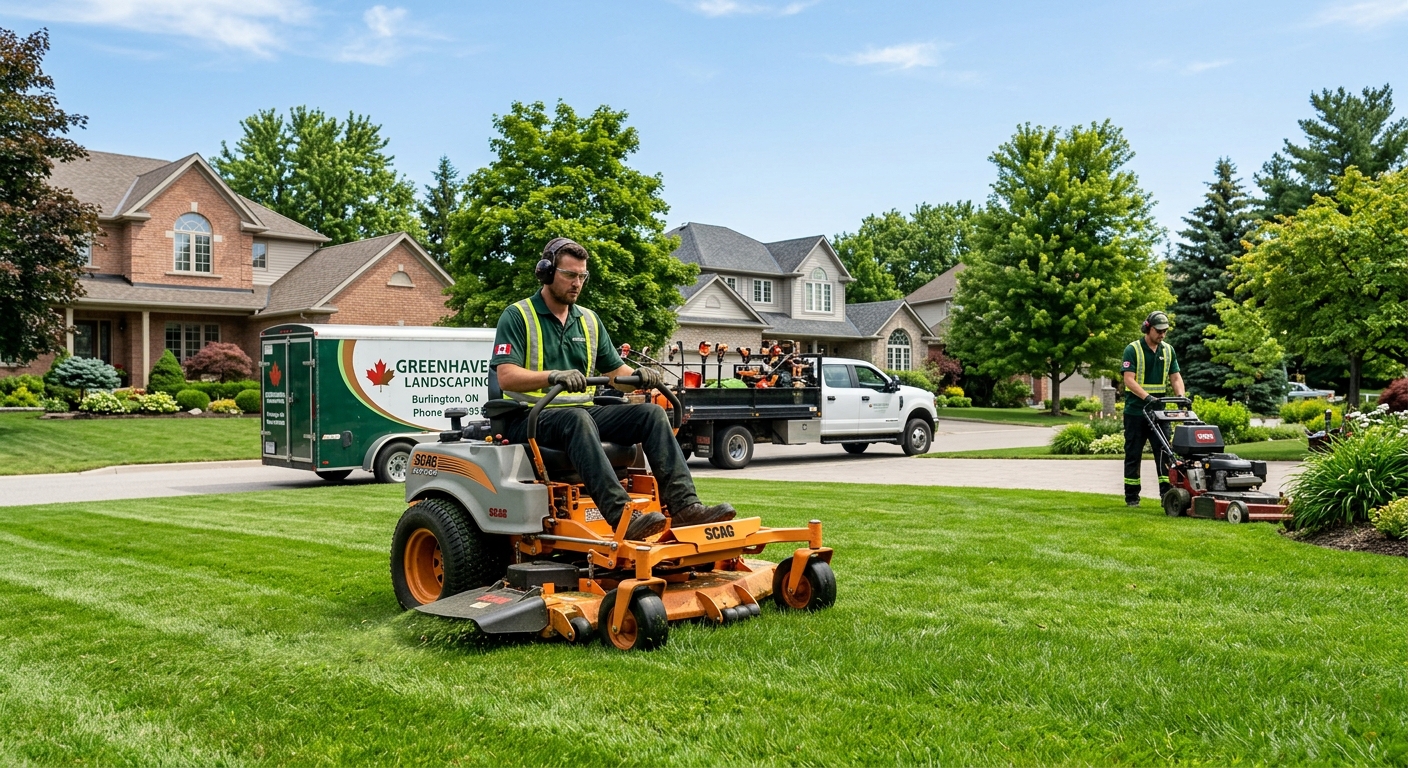
Landscaping options and costs in South Surrey
South Surrey homeowners typically have the yard space to invest in a full makeover—especially as the area’s population is about 77,170 residents (Statistics Canada, 2021 Census). In practice, that demand shows up as busy weekends in neighbourhoods like Grandview Heights and along the Ocean Park area, where layered evergreen planting and curb-facing front patios are common upgrades.
Prices here sit in the Lower Mainland–Southwest range because the climate (plant hardiness zones 7–8) supports a longer working and growing season than much of Canada. That usually helps contractor availability and keeps turnarounds steadier, but it also means more homeowners pursue “finished” looks—so labour demand and material lead times can raise the mid-to-high end of budgets. Winters are mild and wet, yet freeze–thaw cycles still matter for patios and retaining walls on sloped properties; crews price additional excavation depth, drainage, and compaction to reduce frost heave and wall movement.
For homeowners comparing quotes, it helps to think in terms of service bundles: some quotes start with design and include grading, irrigation planning, and layered planting; others focus only on surface finishes like sod or an interlocking walkway. As a reference point, design & installation is often quoted within a broad $5,000–$50,000 band in this city tier, while tree and garden planting commonly lands in the $1,000–$15,000 range depending on quantities and plant sizes. Use the table below to compare common project types and typical seasonal timing in South Surrey.
| Service |
Description |
Season |
Price Range |
| Full landscape design and installation |
Site walk, layout, plant palette, grading/drainage coordination, planting, and hardscape build (patios/paths as applicable) |
Mar–Dec (softscape often continues into late fall) |
$12,000–$45,000 |
| Sod installation (supply, grade, lay, roll) |
Remove existing turf, level/grade, soil prep, supply sod, lay and roll, initial watering plan |
Apr–Jun and Sep–Oct |
$2,800–$7,800 |
| Lawn seeding (grade, seed, starter fertilizer) |
Light grading, weed control, seed mix, starter fertilizer and first watering guidance |
Apr–Jun and Aug–Sep |
$1,800–$4,900 |
| Interlocking patio or walkway |
Base build, compaction, geotextile, paver installation, edging and joint sand |
Mar–Nov (avoid the wettest weeks for base work) |
$8,500–$38,000 |
| Retaining wall (interlocking block) |
Excavation and drainage behind wall, geogrid where required, block install and cap/finish |
Mar–Nov |
$14,000–$62,000 |
| Tree and shrub planting |
Soil improvement, staking, spacing plan, mulch rings, and maintenance watering setup |
Mar–Jun and Sep–Nov |
$1,500–$12,500 |
Prices are estimates only and vary by project scope, site access and material selection.
What affects the price of landscaping in South Surrey
In South Surrey and across the Lower Mainland–Southwest, two homeowners can receive quotes that differ by 30–50% for “the same job” because the scope behind the scenes is rarely identical. A simple example is a “front yard refresh”: one contractor grades and corrects drainage, adds soil amendment, and builds a proper base for new edging, while another simply plants and tops with mulch. In coastal British Columbia, the long planting window and steady demand can also mean higher labour utilisation; crews get scheduled tightly, so missing details (like access constraints) later become change orders.
How plants and hardscape behave in your yard drives cost too. The local plant hardiness zones 7–8 and the frost calendar (last spring frost often early March to early April near the coast, with first fall frost commonly in November) allow lush planting palettes but still require contractors to plan around wet ground and freeze–thaw impacts on structures. In Prairie regions (Zone 2–4), builders must dig deeper for retaining wall bases below the frost line and rely on drought-tolerant, wind-hardy species—costing can rise due to shorter workable weather and different materials. In contrast, coastal BC supports broader leaf evergreen choices and more layered designs, which can make “a full look” feasible within the broader $5,000–$50,000 design & installation band. Meanwhile, irrigation design can still affect the budget: even without harsh drought bans like the dry BC Interior, homeowners increasingly request smart controllers and drip zones to protect landscapes during occasional restrictions.
Concrete South Surrey examples: (1) a sloped front yard that needs regrading and proper downspout tie-ins commonly adds cost before you ever buy plants—sometimes pushing a project toward the upper $10,000–$80,000 hardscaping band for a combined patio plus drainage plan; (2) heavy clay pockets or water pooling near foundations can require a drainage bed or French drain, which is labour-intensive but prevents expensive future replacements; (3) choosing mature specimen trees (larger caliper, more equipment) pushes tree and garden planting toward the $1,000–$15,000 range because of labour, installation time, and plant supply variability.
| Price Factor |
Why It Matters |
Cost Impact |
| Yard size in sq ft — the primary cost driver for softscape |
More area means more labour hours, more materials (topsoil, seed/sod), and longer site time. |
Can move quotes by 20–40% on the same scope |
| Grading and drainage work — slope corrections add significant cost |
Lowering/raising grade changes water flow and foundation moisture risk; it must be engineered to avoid pooling. |
Often adds thousands before planting begins |
| Drainage bed or French drain installation |
Subsurface drainage needs excavation depth, pipe/stone, and tie-in work to be effective. |
Typical “mid-project” add-on of several thousand |
| Plant material tier — native shrubs vs. ornamental vs. mature specimen trees |
Different tiers change purchase price, handling difficulty, and installation time. |
Can swing tree/shrub budgets by 2–5x |
| Hardscape vs. softscape ratio — walls and patios cost more per sq ft than lawn |
Pavers/blocks require base prep, compaction, and careful leveling to prevent future settlement. |
Big effect on total project range |
| Irrigation system design and installation |
Drip lines, zones, backflow prevention requirements, and controller setup influence labour and materials. |
Can add moderate-to-large costs depending on complexity |
| Soil amendment and topsoil required |
Clay-heavy or compacted soils need amendment for root establishment and to avoid patchy turf. |
Often raises costs on older housing sites |
| Tree removal or stump grinding before new planting |
Extra equipment, haul-away, and disposal time increase labour and site scheduling needs. |
Frequently adds a noticeable chunk to the estimate |
Permits & regulations in British Columbia
In British Columbia, most planting and softscape work—such as sodding, lawn seeding, planting shrubs and trees, adding mulch, and installing garden beds—typically does not require a permit. Homeowners generally can proceed with these improvements as part of a landscape project, as long as the work does not interfere with utility infrastructure or approved drainage patterns.
Work that does often require a permit in many BC municipalities includes retaining walls above a height threshold (commonly around 1.0 m (3.3 ft), but thresholds vary by local bylaw). If the wall is large, engineered, or affects site drainage, you may also need engineered drawings. Similarly, significant lot grading changes that alter drainage toward neighbouring properties or storm connections can trigger approval requirements—especially where runoff management is involved.
Step-by-step for South Surrey homeowners: (1) before digging for planting holes or wall footings, request utility locates (a “call before you dig” process) to protect underground services; (2) ask the contractor what permits, if any, they will pull and whether that’s included in the quote; (3) verify the contractor’s business licence status (where applicable), liability insurance and confirm coverage details; and (4) confirm worker coverage through the appropriate provincial system for workplace coverage—request proof and check the clearance/status letter from the insurer database. Keep copies of the certificate of insurance and any clearance documentation with your contract package.
Planning a landscape that thrives in South Surrey's climate
To plan a landscape that thrives in South Surrey, work with the region’s plant hardiness zones 7–8, mild wet winters, and a frost window that typically stretches from early March/early April into November. The goal is to build a yard that drains well in winter rain, roots firmly before the coldest weeks, and doesn’t force heavy watering every summer. Start with plant selection: favour zone-appropriate, native-leaning species and long-blooming perennials that handle cool shoulder seasons and damp weather without constant winter protection.
When choosing sod vs. seed, match the result you need and your tolerance for timeline. Sod gives instant curb appeal, but it costs roughly 3–4x more per sq ft than seeding once labour, supply, and waste are included. Seed is slower but more budget-friendly; in South Surrey’s climate, seeding can still establish well when soil prep and starter fertilizer are done correctly.
Drainage and grading are where projects succeed or fail. Heavy rainfall months can expose weak grading that funnels water toward foundations; crews often add topsoil and drainage corrections before planting. For hardscape like patios and retaining walls, base preparation must account for freeze–thaw cycles: deeper excavation, proper compaction, and drainage layers help prevent frost heave and wall movement.
Low-maintenance strategies that fit the market include mulch rings, groundcovers, and perennial “repeat blocks” that look lush while reducing annual upkeep. If you want to lower irrigation demand, consider rain-garden beds or xeriscape-inspired borders with drought-tolerant plants for the driest pockets—while still planning for coastal moisture swings.
Dollar reality check: if you compare a 1,000 sq ft lawn conversion, seeding often comes in around the lawn seeding band (roughly $1,800–$4,900), while sod can land closer to the sod installation band (roughly $2,800–$7,800). That extra cost is justified when you need instant play/curb appeal or erosion control right away; otherwise, seeding plus smart soil prep usually delivers better value.
| Element |
Climate Consideration |
Maintenance Level |
Price Band |
| Sod lawn installation |
Best planted in shoulder windows (spring/fall) to establish before winter wet and hot summer drying. |
Medium (watering ramp-up and first mow schedule) |
$2,800–$7,800 |
| Native perennial garden |
Zone-appropriate plants handle cool, wet seasons; mulch helps stabilize roots through winter. |
Low (seasonal weeding and cut-back) |
$1,500–$12,500 |
| Mulched shrub border |
Supports even soil moisture and reduces splash-driven weeds in rainy winters. |
Low–Medium (replenish mulch and occasional pruning) |
$3,000–$18,000 |
| Interlocking stone patio |
Requires proper base drainage to manage coastal rain and freeze–thaw movement. |
Low (periodic cleaning and joint sand top-up) |
$8,500–$38,000 |
| Retaining wall (block) |
Needs drainage behind the wall to manage winter saturation and frost movement risk. |
Low (visual checks after heavy winters) |
$14,000–$62,000 |
| Drip irrigation system |
Helps you water efficiently during summer dry spells and tolerate possible restrictions without lawn die-off. |
Low (seasonal adjustments) |
$2,000–$12,000 |
How to choose a landscaping contractor in South Surrey
Start by verifying coverage and credentials the right way—don’t rely on a verbal “we’re insured.” For British Columbia projects in South Surrey, ask for (1) proof of liability insurance (certificate of insurance naming your property/owner as appropriate where required), (2) worker coverage status via the applicable provincial workplace coverage system, and (3) confirmation that the contractor is properly registered/licensed for the scope they’re proposing. Where to look: check the contractor’s registration/record online if your municipality provides a registry, and request documents directly. For insurance, read the certificate for policy limits and effective dates. For workplace coverage, ask for a clearance/status letter so you can confirm it’s active at the time of work.
Next, get 2–3 itemised written quotes—not just a lump sum. You want labour and materials broken out (excavation/base, pavers/blocks, soil, seed/sod, delivery, disposal) and a line for what happens if conditions change (rock, drainage complications, access issues). Read the scope carefully: is permit pulling included if a retaining wall threshold is triggered? Is disposal included (haul-away of turf, old material, and debris)? Is tree removal included or billed separately?
Warranty matters too. Ask for a workmanship warranty length in writing and confirm whether the warranty is transferable if you sell your home. Product/manufacturer warranties should be listed for plants and hardscape materials where applicable.
Payment should stay conservative: never pay more than 10–15% upfront. Keep a holdback until the job is complete and cleaned up. Require a written timeline with a start date and completion estimate, especially since South Surrey’s wet weeks can affect base work scheduling.
- Request itemised pricing (labour, materials, delivery, disposal) rather than one lump number.
- Confirm whether permits are required and who pulls them for retaining walls above the local threshold.
- Ask for utility locate proof/plan before digging any wall footings or planting holes.
- Verify liability insurance—check policy limits and effective dates.
- Request active worker workplace coverage clearance/status letter.
- Get a written scope for grading and drainage—what gets corrected and to what standard.
- Ask how they handle soft ground and rain days (protection, delays, and curing times).
- Confirm sod/seeding warranty and responsibilities for watering the establishment period.
- Ask for base specs for patios/walkways (geotextile, base depth, compaction method).
- Clarify plant sourcing and whether substitutions are allowed and at what price tier.
- Set a clear schedule: start date, estimated completion, and milestones.
- Use a payment schedule tied to deliverables; hold back funds until final walkthrough.
Red flags to watch in South Surrey: vague quotes with no drainage/grading detail; refusal to provide certificates of insurance or clearance/status letters; “we’ll figure out permits later” language for retaining walls; a demand for large upfront payments without a signed scope; and no written warranty terms for workmanship or plant establishment.
Frequently asked questions — landscaping in South Surrey
How do I design a low-water yard in South Surrey?
South Surrey’s coastal conditions are wetter than the BC Interior, but low-water design still makes sense because irrigation costs and seasonal restrictions can affect budgets. Start by planting for zones 7–8 with hardy, drought-tolerant choices and grouping plants by moisture needs. Build drainage first, then add 2–3 inches of mulch to reduce evaporation and suppress weeds. For the driest areas (often the south/west exposure or near walkways), use drip irrigation with smart controllers and separate zones so you’re not overwatering. If you want a “pretty but efficient” approach, consider a rain-garden or bioswale-style bed to capture downspouts during wet seasons, then let it dry down naturally. If you’re planning lawn changes, remember seeding is generally less costly than sod—so you can rework irrigation and planting across the lawn area in phases rather than in one expensive push.
How do I find a licensed landscaper in South Surrey?
For landscaping in British Columbia, “licensed” can mean different things depending on the work involved, so the safest approach is to verify the contractor for the scope you’re hiring: request proof of liability insurance, confirm active worker coverage status, and check their business registration where available. Ask the contractor to provide their certificate of insurance and clearance/status letter before signing. Then compare their quote scope against their paperwork: if they’re pricing a retaining wall above the local threshold, they should be comfortable discussing permits and drainage requirements. You can also ask for references from similar South Surrey projects (front yard patios, layered planting near foundations, or sloped sites in areas like Grandview Heights). A reputable contractor will answer questions clearly, document everything in writing, and won’t rush you into a large deposit.
How much does landscaping cost in South Surrey?
Landscaping costs in South Surrey depend mainly on yard size, grading/drainage complexity, and how much hardscape vs. softscape you’re adding. For many homeowners, a partial refresh like planting and borders may start in the tree and garden planting band around $1,500–$12,500. If you’re doing bigger changes—design plus installation, or a patio with coordinated planting—budgets commonly land in the design & installation range of about $12,000–$45,000 for typical residential scopes. Retaining walls and substantial drainage corrections often push projects higher; interlocking patio or walkway work is often quoted around $8,500–$38,000, and retaining walls in the $14,000–$62,000 range when proper drainage and base preparation are included. Always compare apples to apples: ask whether disposal, permit steps (if needed), and drainage/grading are included.
What plants thrive in South Surrey's climate zone?
South Surrey sits in plant hardiness zones 7–8, which supports a broad palette: long-blooming perennials, broadleaf evergreens, and layered shrubs that look full year-round with less winter dieback risk than colder provinces. In practice, contractors often build gardens around evergreen structure plus seasonal colour using hardy perennials that don’t require constant protection. The best approach is to choose plants suited to your microclimates: wetter spots near downspouts can support more moisture-tolerant selections, while areas that dry quickly near sidewalks prefer drought-tolerant varieties paired with mulch and drip irrigation. A well-designed planting plan also considers frost timing—your last spring frost near early March to early April means you should time establishment work so roots anchor before the wet/cool swings of early spring.
Sod vs seed — which is better for a South Surrey lawn?
Sod is usually better when you need instant results, erosion control, or faster curb appeal—especially if you’re preparing the yard for summer use. Seed is often better when budget matters, you have time, and you can do thorough grade prep. In South Surrey pricing, sod installation is commonly quoted roughly in the $2,800–$7,800 range, while lawn seeding often lands around $1,800–$4,900 depending on area and soil prep. If you do seeding, don’t skip soil amendment and starter fertilizer; patchy lawns often come from uneven grade or poor establishment watering. Either way, plan the work for spring or fall shoulder windows so grass can establish before winter wet and before peak summer drying.
How much does a retaining wall cost in South Surrey?
Retaining wall cost in South Surrey depends on wall height, length, site slope, drainage behind the wall, and whether permit steps apply. Interlocking block retaining walls with proper excavation, drainage stone, and base prep typically fall around $14,000–$62,000 for many residential jobs in this tier. If your yard has heavy clay, poor drainage, or requires significant regrading, the final price increases because crews must build a drainage system behind the wall to handle winter saturation and reduce movement risks during freeze–thaw cycles. Homeowners should also ask whether a permit is required for the planned wall height (often around 1.0 m in many BC municipalities, but thresholds vary) and whether engineered drawings are needed for larger projects. Always compare quotes that include drainage—omitting it can lead to costly repairs.