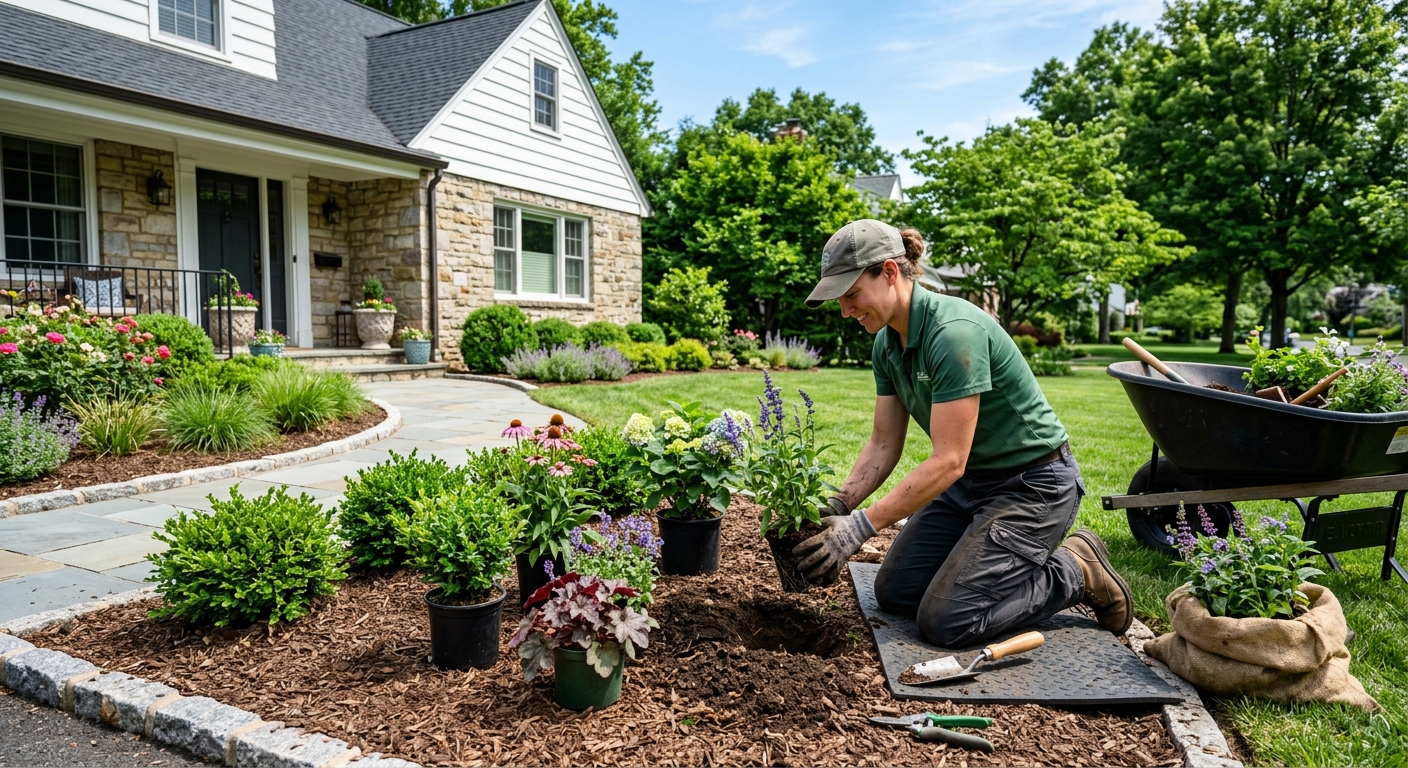
Landscaping options and costs in Kelowna
Kelowna homeowners typically have a wide range of landscaping options—from tidy lawn upgrades to full backyard transformations—because our housing stock includes a mix of older and newer properties, and many yards are designed to be enjoyed year-round. With 42.5% of dwellings being single-detached homes, a lot of people have the yard space for softscape, hardscape, and planting beds that can significantly improve comfort, curb appeal, and resale value. In addition, the region has a strong homeowner base (owner households are 64.7% of all households per the 2021 Census, Statistics Canada), which supports demand for more durable, longer-life landscaping.
In the Thompson–Okanagan (plant hardiness zones ~5–6), costs are shaped by our freeze–thaw cycles, variable soils, and the need for proper drainage under patios, steps, and retaining walls. We also have a shorter, more “spring-and-fall heavy” installation season than coastal BC, so contractors schedule carefully and labour demand can tighten during peak weeks in areas like Upper Mission and Glenmore. That’s why you’ll often see higher per-hour labour charges (and faster procurement turnarounds) when work piles up in April, May, September, and October.
On the softscape side, the dry Interior means irrigation design matters, and labour plus equipment can shift the price band—especially if you’re converting water-hungry turf into drought-tolerant beds. Next, use the comparison table below to benchmark typical project ranges for Kelowna.
| Service |
Description |
Season |
Price Range |
| Full landscape design and installation |
Site walk, concept plan, planting & materials selections, grading/drainage approach, hardscape/softscape install, irrigation coordination (if included) |
Spring (Apr–Jun) or Fall (Sep–Oct) |
$8,000–$40,000 |
| Sod installation (supply, grade, lay, roll) |
Minor grading, soil prep, sod supply, lay/roll, initial watering plan, cleanup |
Spring through early summer (and early fall) |
$6–$14 |
| Lawn seeding (grade, seed, starter fertilizer) |
Grading touch-ups, seed selection, starter fertilizer, light topdressing, establishment watering guidance |
Spring (mid-April/May) or early fall |
$4–$9 |
| Interlocking patio or walkway |
Excavation, base compaction, pavers, edge restraints, leveling, pattern layout |
Spring or Fall |
$12,000–$35,000 |
| Retaining wall (interlocking block) |
Block retaining wall build with base prep, compaction, drainage gravel/weep paths (where applicable) |
Spring or Fall |
$80–$220 |
| Tree and shrub planting |
Soil prep, planting, staking where needed, mulch rings, initial watering setup (with drip tie-in if specified) |
Spring or Fall |
$250–$8,000 |
Prices are estimates only and vary by project scope, site access and material selection.
What affects the price of landscaping in Kelowna
In Kelowna, the same “headline” landscaping project can come in 30–50% apart across the Thompson–Okanagan and other BC markets because crews price risk differently: our soils can be inconsistent, slopes create extra labour, and the working season concentrates installation. Contractors also use different plant tiers, drainage details, and irrigation components—small spec changes can drive big total differences. For example, in plant hardiness zones ~5–6, frost dates and winter lows affect what can be installed successfully and how deep bases and drainage must be. Prairie regions (Zone 2–4) often require extra drought- and wind-tolerant planting strategies and deeper frost-conscious bases, while coastal BC (Zone 7–8) usually has longer planting windows and a broader “lush” palette—but heavy-rain drainage design is a larger cost driver. In the dry BC Interior, water-use expectations and metering push irrigation design toward efficient systems (drip, smart controllers), whereas Southern Ontario (Zone 5–6) typically has a moderate season but still needs irrigation during summer dry spells.
Two concrete Kelowna examples: (1) A backyard that needs slope correction or regrading can jump quickly in labour and disposal—often moving a modest refresh toward the mid-range of the $8,000–$40,000 design/install band. (2) Turning a lawn area into a dry-tolerant garden can reduce ongoing watering and maintenance, but the upfront cost depends on soil amendments and irrigation trenching. Homes built before 1981 (31.7% of Kelowna dwellings) can also have older drainage patterns or established tree roots that complicate excavation; that can add to hardscape base prep and drainage bed work, especially when foundations or steps are nearby. Those “hidden” conditions are why drainage and base prep often become the difference between a $80–$220 block-wall style project versus a higher, fully engineered, drainage-forward build.
| Price Factor |
Why It Matters |
Cost Impact |
| Yard size in sq ft — the primary cost driver for softscape |
Larger areas require more soil, seed/sod, mulch, and labour hours to prep and install |
High; can change total by several thousands |
| Grading and drainage work — slope corrections add significant cost |
Correcting runoff and managing water direction prevents pooling and foundation moisture |
Medium to High; often among the top cost line items |
| Drainage bed or French drain installation |
Improves subsurface flow under patios, retaining walls, and low spots |
Medium; adds trenching, rock, and pipe materials |
| Plant material tier — native shrubs vs. ornamental vs. mature specimen trees |
Mature trees cost more and require heavier handling, staking, and better soil prep |
Medium to High; can swing by thousands |
| Hardscape vs. softscape ratio — walls and patios cost more per sq ft than lawn |
Pavers, base layers, and edge restraints increase material and labour intensity |
High if hardscape is dominant |
| Irrigation system design and installation |
Efficient layouts (drip zones, smart controllers) cost more than basic setups but save water |
Medium to High; depends on zones and add-ons |
| Soil amendment and topsoil required |
Interior soils vary; correct amendments improve establishment and reduce future failures |
Medium; influenced by what’s on site |
| Tree removal or stump grinding before new planting |
Equipment access and disposal add time and cost; roots can affect nearby drainage |
Medium; can add significant labour/equipment charges |
Permits & regulations in British Columbia
In British Columbia, most planting, sodding, and typical softscape work generally does not require a permit. That includes tasks like installing mulch beds, planting shrubs and trees, seeding lawns, and laying sod—provided you’re not changing drainage in a way that affects stormwater flow or neighbouring properties. The work that more often DOES require a permit is retaining-wall construction above a height threshold (commonly around 1.0 m in many municipalities, but you should confirm with the city), especially where design, stability, or engineered drawings are needed.
Also watch grading: if your plan changes lot grades so runoff is directed toward a neighbouring property or ties into storm sewer connections, it may trigger approval requirements. And before any digging—whether for irrigation trenches, planting holes, or wall footings—utility locates are essential. In practice, many contractors will book locates, but homeowners should still verify that locates are completed for the address and scope.
To verify a contractor in Kelowna, start by confirming professional licensing/registration for landscaping trade status where applicable through the relevant provincial online listings (contractors often reference their profile in their proposal). Next, request a current certificate of insurance: you want liability coverage that names you as the beneficiary/insured (as applicable) and proof the contractor carries appropriate coverage for workers. For workplace coverage, ask for documentation that they’re registered and in good standing for workers’ compensation (commonly WCB for employers). Step-by-step, also ask for a clearance letter/confirmation that matches the job period, and confirm the certificate’s effective dates before work starts.
Planning a landscape that thrives in Kelowna's climate
Planning for Kelowna means working with our hardiness zone (~5–6), our dry Interior summers, and our freeze–thaw reality—not against it. Start with plant selection: choose zone-appropriate plants (many native or near-native species do well) and build in drought tolerance so beds don’t struggle in hot weather. In Thompson–Okanagan yards, winter performance also matters; mulch depth and correct spacing help plants survive cold snaps and recover in spring.
When deciding between sod and seeding, the trade-off is mainly speed versus cost and establishment risk. Sod gives instant curb appeal and erosion control, but it’s commonly about 3–4x more per sq ft than seeding once you include supply and labour. Seeding is slower to look “finished,” yet can be a smart choice where budgets need to stretch—especially for larger lawn areas. For example, if you’re spending at the low end of lawn installation pricing, opting for seeding instead of sod can often justify the difference by redirecting budget into drainage fixes or a small drip irrigation upgrade.
Drainage and grading are critical here: pooling near foundations or in low spots increases settlement and can damage steps and patios. That’s why hardscape base prep must account for frost movement—proper excavation depth, compacted base, and drainage materials help prevent heaving. For low-maintenance design, focus on groundcovers, mulched shrub borders, and durable perennials. Add xeriscape or rain-garden elements where appropriate: a well-designed rain garden can manage runoff during wetter shoulder seasons, while drip irrigation zones keep planting established during dry stretches.
| Element |
Climate Consideration |
Maintenance Level |
Price Band |
| Sod lawn installation |
Fast establishment before hot, dry periods; needs consistent early watering |
Low to Medium (after establishment); Medium during establishment |
$6–$14 |
| Native perennial garden |
Better tolerance of zone ~5–6 conditions; often requires less seasonal watering |
Low (mulch and occasional weeding) |
$2,500–$10,000 |
| Mulched shrub border |
Mulch moderates soil temperature and improves moisture retention through freeze–thaw cycles |
Low to Medium (pruning, occasional mulch top-ups) |
$1,500–$7,000 |
| Interlocking stone patio |
Base and drainage must handle frost movement and prevent edge heaving |
Low (routine cleaning; occasional paver leveling) |
$12,000–$35,000 |
| Retaining wall (block) |
Needs a stable base and proper drainage behind the wall for freeze–thaw |
Low (periodic inspection of weep holes/drainage lines) |
$80–$220 |
| Drip irrigation system |
Efficient water delivery supports drought-tolerant planting and dry-summer schedules |
Medium (seasonal adjustment, controller checks) |
$2,000–$8,000 |
How to choose a landscaping contractor in Kelowna
Choosing a Kelowna contractor well comes down to verifying coverage, getting a clear scope, and ensuring the quote pricing matches the complexity of your site. First, verify British Columbia business status and licensing/registration where applicable, then ask for liability insurance proof (a certificate of insurance with effective dates). For workplace coverage, request documentation that they carry workers’ compensation coverage (commonly WCB for employers in BC) and, if provided, a clearance letter or equivalent confirmation that matches your job timeframe. Never rely on verbal confirmation—ask to see the certificates.
Next, get 2–3 itemised written quotes. You want a labour + materials breakdown, not a single lump sum that hides what you’re paying for. Ask whether permits are included (where required for retaining walls above the local threshold or drainage-related approvals), whether disposal/haul-away is included, and what exactly is excluded (topsoil amount, excavation depth, irrigation tie-in, additional rock for drainage beds, and whether walkways are re-leveled after compaction). Warranty matters too: confirm workmanship warranty length (often covering installation defects), product/manufacturer warranties for stone/pavers/irrigation components, and whether any warranties are transferable if you sell your home.
Payment should be structured safely: never pay more than 10–15% upfront; hold back a portion until the work is complete and cleanup is done. Also request a written start date and a realistic completion estimate—spring and fall scheduling in the Thompson–Okanagan can tighten fast due to the shorter active season.
- Provide proof of liability insurance with correct project/address details.
- Provide workers’ compensation coverage documentation (and dates matching your job).
- Show recent Kelowna project photos similar in slope, drainage, or hardscape.
- Quote is itemised: excavation, base materials, drainage components, labour hours.
- Clarify disposal/haul-away for soil, rocks, and old turf/removals.
- Confirm irrigation scope: zones, controller type, backflow/device details (if required).
- State soil/topsoil volumes and amendment plan (not just “add soil”).
- Include compaction specifications and base thickness for patios/walkways.
- Confirm retaining wall drainage method (weep paths, gravel, filter fabric—where applicable).
- Verify warranty terms in writing (workmanship and materials).
- Payment schedule: limit upfront to 10–15% and holdback until completion.
- Timeline includes start date, milestones, and weather contingencies.
Red flags in Kelowna include: insisting on a large upfront payment, providing an unitemised “lump sum” quote, skipping drainage details in a slope or pooling area, promising a retaining wall height without discussing permit requirements, and refusing to provide insurance/coverage documentation or warranty terms in writing.
Frequently asked questions — landscaping in Kelowna
What is xeriscaping and does it suit Kelowna?
Xeriscaping is a landscaping approach designed to reduce water use through plant selection, efficient irrigation, soil preparation, and water-smart layout. In Kelowna and the broader Thompson–Okanagan, it suits many properties because summers are hot and dry and we’re typically working in plant hardiness zones ~5–6. The key is choosing plants that can handle freeze–thaw cycles and seasonal drought, then supporting establishment with targeted drip irrigation. A well-planned xeriscape can replace thirsty turf with mulched planting areas and groundcovers, often lowering ongoing maintenance. If you’re budgeting, you can still include functional turf pockets, but the biggest savings usually come when irrigation and plant beds are designed efficiently. For reference, a full design/install project often lands in the $8,000–$40,000 range depending on scope, and a smaller planting conversion can be a more budget-friendly starting point.
How do I plan a low-maintenance yard?
A low-maintenance yard in Kelowna starts with reducing the things that create weekly work: constant watering, frequent weeding, and soil that fails to drain. Begin by mapping your irrigation zones and choosing drought-tolerant, zone-appropriate plants—mulched shrub borders and native perennial gardens are common “set-and-maintain” solutions in the Interior. Next, design for drainage so water doesn’t pool; proper grading and drainage beds under hardscape reduce future settlement and repairs. For lawns, sod gives fast results, but seeding can be a lower-cost way to establish a maintenance-friendly lawn if you’re careful with establishment watering. If you’re comparing typical costs, sod installation is often priced in the $6–$14 band per square foot, while lawn seeding is commonly lower, freeing budget for irrigation improvements. Finally, use landscape fabric wisely (or rely on mulch) and pick plants with similar sun/shade needs so you’re not constantly adjusting watering or trimming.
How deep should a retaining-wall base be for local frost?
There isn’t one universal depth for every retaining wall in Kelowna, but frost movement and freeze–thaw cycles are exactly why the base and drainage build matters. In practice, reputable contractors excavate to stable material and build a compacted base that’s deep enough to resist heaving—then they include drainage behind the wall (gravel/weep pathways where applicable) so water doesn’t build up and freeze. The correct depth can vary based on wall height, soil conditions, and whether the wall is engineered. If your retaining wall is above the typical ~1.0 m threshold common in many BC municipalities, you should expect permit considerations and possibly engineered drawings. When discussing your quote, ask the contractor to explain their base depth, compaction steps, and drainage method. This is one area where “lowest price” bids can be risky, especially on sloped lots or older properties where drainage patterns can be unpredictable.
How much does professional landscape design cost?
Professional landscape design cost depends on whether you’re getting design-only (concept and plan) or design bundled with installation. In Kelowna, design and installation together often starts from the lower end for simpler makeovers and can climb significantly for full-yard projects with drainage, irrigation, and hardscape. For realistic budgeting, many homeowners treat comprehensive landscape design & installation as a project investment in the $8,000–$40,000 band. If your yard is mainly planting with limited grading, the design portion can be smaller, but if you need regrading, drainage improvements, and patio or wall details, design effort increases because drawings need to match construction realities. A good contractor should also explain what’s included: site survey/measurements, plant lists with quantities, irrigation and lighting coordination (if applicable), and a construction-ready plan. Ask for an itemised breakdown so you understand whether design fees are credited back against installation, and confirm timeline to get approvals or materials ordered during spring/fall demand.
How do I compare landscaping quotes?
To compare landscaping quotes in Kelowna, don’t compare only the total price—compare what you get for that price. Ask for itemised labour and materials: excavation and base prep, drainage bed or French drains (if proposed), soil/topsoil volumes, plant quantities and sizes, mulch type, and whether disposal/haul-away is included. For hardscape, confirm base compaction and paver thickness; for retaining walls, confirm drainage details and whether permit requirements are addressed. Also check irrigation scope: the difference between basic heads and a proper drip/zoned system can change both the price and long-term water bills in the dry Interior. If one quote falls within, say, the $80–$220 retaining-wall style pricing but omits drainage or understates base prep, it may create settlement and future repair costs. Finally, review warranty terms and the payment schedule—legitimate contractors will use a sensible upfront payment (often 10–15%), include clear timelines, and provide proof of insurance/coverage.
How long does a landscaping project take in Kelowna?
Timeline depends on scope, access, and weather, but in Kelowna most installation concentrates in spring and fall because the growing and working season is more limited than coastal BC. A small planting-only project can take a day or two, while sod work and seed establishment vary by lawn size and site prep. Interlocking patios and walkways typically require more time due to excavation, base construction, compaction, and careful layout. Retaining walls take longer when drainage layers and proper base prep are included—and if permits are required, you’ll need to add approval lead time. Seasonal scheduling matters too: contractors are busiest during the April/May and September/October windows, so start dates can shift if multiple crews are booked. When reviewing quotes, ask for a written start date and completion estimate with a weather contingency plan. If your project includes design and material ordering, build in time for plant selection and irrigation parts procurement before work begins.