Landscaping options and costs in Pleasantside
Pleasantside is a small, neighbourhood-focused community (Population: 2,671, Statistics Canada, 2021 Census), which usually means you’ll see more repeat clients and word-of-mouth contractor demand than in larger metro centres. In many Lower Mainland–Southwest streets, the housing stock is dominated by detached homes, and that yard space is a big driver of why families invest in softscaping and curb appeal improvements rather than purely “patch and repair” landscaping. In practice, contractors in the area are busiest in the shoulder months—because spring and early fall weather are workable—but winter rain can slow down excavation access and base prep when sites stay saturated.
Because the Lower Mainland–Southwest sits mostly in plant hardiness zones 7–8, we can build richer, layered designs with broadleaf evergreens and long-blooming perennials compared with drier Prairie climates. The trade-off is that you pay for drainage and proper soil prep more often—heavy rain and high groundwater can turn a “simple lawn job” into a grading-and-subsoil project. On the plus side, with last spring frost typically early March to early April near the coast and first fall frost often not until November, you can schedule planting and most softscape work for much of the year (wetest weeks aside).
In Pleasantside, landscaping demand is especially strong along the more established residential pockets where mature hedging and older lawns need renovation—often around the core streets people walk to school and local amenities. Next, here’s a practical comparison of common services and what they typically cost so you can calibrate quotes before you ask for bids.
| Service |
Description |
Season |
Price Range |
| Full landscape design and installation |
Site walk, design, plant palette, grading notes, soil prep, planting, and hardscape/softscape build where applicable |
Mar–Nov (flexible for planting; patios depend on drainage) |
$5,000 – $50,000 |
| Sod installation (supply, grade, lay, roll) |
Minor grading, soil amendments, supply and install sod, edge finishing, starter fertilizer and watering plan |
Apr–Jun and Sep–Oct |
$2,000 – $8,000 |
| Lawn seeding (grade, seed, starter fertilizer) |
Light regrade, seed selection, starter fertilizer, topdressing/rolling as needed |
Mar–May and Sep–Oct |
$1,500 – $6,000 |
| Interlocking patio or walkway |
Base excavation and compaction, polymeric sand, edging, and pattern installation |
Apr–Nov (avoid saturated base) |
$10,000 – $35,000 |
| Retaining wall (interlocking block) |
Excavation, geo/fabric where needed, block system, drainage gravel, and weeping path |
Apr–Nov |
$10,000 – $80,000 |
| Tree and shrub planting |
Soil amendments, staking where required, mulch rings, and installation of shrubs/trees |
Mar–Nov (best results in spring/fall) |
$1,000 – $15,000 |
Prices are estimates only and vary by project scope, site access and material selection.
What affects the price of landscaping in Pleasantside
If you’re seeing quotes for the “same” landscaping scope that differ by 30–50% in the Lower Mainland–Southwest (and across British Columbia), it’s usually not because contractors are padding numbers—it’s because the invisible work varies. Site conditions (slope, drainage, soil quality), how quickly the schedule can be booked, and what materials are included can all swing labour hours and equipment time. Even within one city, crews may treat a job as either a quick refresh or a full rebuild depending on whether drainage fixes, soil replacement, and edging are required to stop future failure.
Climate and frost timing shape both growth and work windows, and that drives labour costs. In zone 7–8 coastal BC, the longer growing season helps with planting productivity, but freeze–thaw still exists and requires proper base construction for patios and retaining walls. In coastal areas, the yard is rarely frozen for extended periods, so you can sometimes work longer into the year than you would in Prairie regions (zones 2–4), where the frost line and short frost-free window reduce flexibility. By comparison, drought-focused irrigation design in the BC Interior (and water-cost concerns) can add cost there, while Southern Ontario’s (zone 5–6) dry spells often create different irrigation needs. In Pleasantside, you’re balancing mild temperatures with frequent moisture—so drainage and compaction become recurring cost drivers.
Concrete examples from Pleasantside pricing: (1) a lawn job that starts as “sod” can move into the $2,000 – $8,000 band and above if we have to remove waterlogged topsoil and re-grade for drainage; (2) a small interlocking path can quickly rise from entry-level into the higher end if base excavation is deeper for stable frost and water management—especially on sloped yards. Also, older homes (commonly with established foundations and mature landscaping beds) often need soil and edging retrofits; replacing a few yards of topsoil and adding compost can add hundreds of dollars even before plants are installed.
| Price Factor |
Why It Matters |
Cost Impact |
| Yard size in sq ft — the primary cost driver for softscape |
Labour hours and material quantities scale directly with area |
Often determines whether you’re nearer the low or high end of the $5,000 – $50,000 project band |
| Grading and drainage work — slope corrections add significant cost |
Fixing pooling and foundation-water risk requires excavation, re-shaping and compaction |
Can add several thousand dollars on top of basic planting or turf |
| Drainage bed or French drain installation |
Provides an outlet for heavy rainfall and reduces saturated soil |
Material + trenching often pushes hard-to-drain sites toward the higher end of retaining/walkway pricing |
| Plant material tier — native shrubs vs. ornamental vs. mature specimen trees |
Size, sourcing and planting time vary; mature specimens are more labour-intensive and costly |
Shifts the $1,000 – $15,000 planting band significantly |
| Hardscape vs. softscape ratio — walls and patios cost more per sq ft than lawn |
Concrete blocks, base prep, and compaction equipment drive cost |
Can double the budget even if the “visible” area looks similar |
| Irrigation system design and installation |
Even in coastal BC, efficient irrigation helps protect lawns and beds during warmer spells and municipal limits |
Often adds a noticeable premium vs. hand-watering-only plans |
| Soil amendment and topsoil required |
Organic amendments and proper topsoil depth are key for turf rooting and healthy planting beds |
Can add hundreds to thousands depending on how much is imported |
| Tree removal or stump grinding before new planting |
Root systems affect excavation planning and can limit access and planting layouts |
May add a separate disposal and equipment line item |
Permits & regulations in British Columbia
In British Columbia, most routine landscaping work—planting trees and shrubs, sodding, and most softscape installations—typically does not require a permit. What commonly does require a permit is structural retaining wall work above your municipality’s threshold (often around 1.0 m or 3.3 ft, depending on local bylaws) and any projects where engineering/structural drawings are required. Also watch for approval needs when you change lot grading in a way that affects drainage patterns—especially if runoff is directed toward neighbouring properties or connected to storm sewer systems.
A practical step-by-step for Pleasantside homeowners is to verify your contractor’s documentation before they dig: first, confirm you have utility locates booked for any excavation areas (for planting holes, drain trenches, and wall footings). Next, ask for proof of provincial business registration where applicable, and request a certificate of insurance showing liability coverage that fits the work scope. For workers’ compensation, ensure coverage is in place for the contractor’s employees (commonly verified through their workers’ compensation account information and/or clearance documentation you can request from them). Finally, if the retaining wall threshold may be triggered, ask whether they will apply for permits (or have you apply) and whether any engineering letters are part of the scope.
For water-use rules, also confirm local irrigation practices and any restrictions that can be imposed during drought periods—even coastal BC can see temporary conservation measures. That helps avoid a “beautiful plan” that can’t be maintained during dry weeks.
Planning a landscape that thrives in Pleasantside's climate
Designing for Pleasantside means working with a mild, wet-winters and cool-summers climate (plant hardiness zone 7–8) and planning around a frost calendar that typically allows planting from early spring into fall. The goal is to build soil stability first—then choose plants and turf that match local moisture swings. Start with plant selection: favour native or zone-appropriate species and use mulch and groundcovers to reduce evaporation and suppress weeds. This lowers watering needs and improves winter resilience.
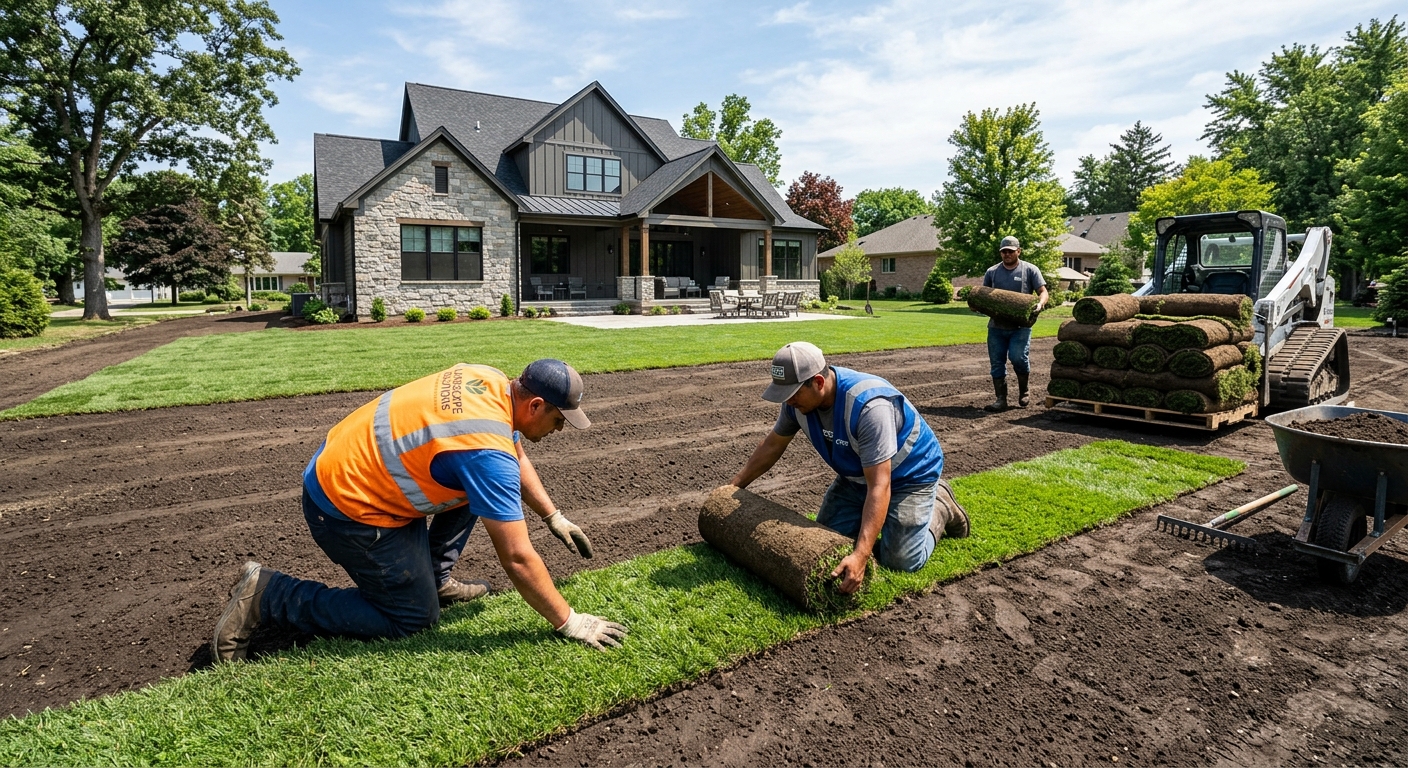
Next, decide between sod and seed. Sod gives instant coverage and helps prevent erosion on freshly graded areas, but it costs roughly 3–4x per square foot compared with seeding because of turf supply, rolling and labour. For example, if a 500 sq ft front lawn renovation lands at the $2,000 – $8,000 sod range due to drainage prep, sod might be justified if you need “curb appeal now” and want faster stabilization. If you’re patient and can protect seedbeds from traffic and washouts, seeding is typically a better value—especially in early spring and fall.
In Lower Mainland–Southwest yards, drainage and grading are non-negotiable. Ensure beds slope away from foundations, and manage downspout discharge so you don’t create chronic damp zones. For patios and retaining walls, proper base prep matters: compacted base layers and correct depth for frost and drainage reduce movement from freeze–thaw cycles. Lastly, low-maintenance design wins long-term—perennials, layered shrub borders, and drought-tolerant accents where appropriate can look full without weekly labour.
If you want to lean into low-water strategies, consider a rain garden or bioswale in a monitored low area, plus drip irrigation on timers. In a coastal setting, you’ll often only need drip for establishment and warmer, drier stretches, which helps budgets stay controlled.
| Element |
Climate Consideration |
Maintenance Level |
Price Band |
| Sod lawn installation |
Establishes quickly in cool, wet coastal conditions; needs good grading to avoid pooling |
Low short-term; moderate during first growing season |
$2,000 – $8,000 |
| Native perennial garden |
Zone-appropriate plants handle winter moisture and cool summers better than generic mixes |
Low to moderate (spring cleanup and seasonal weeding) |
$3,000 – $12,000 |
| Mulched shrub border |
Mulch buffers winter temperature swings and reduces weed germination in damp yards |
Low (occasional edging, top-up mulch) |
$2,500 – $9,000 |
| Interlocking stone patio |
Requires compacted base and drainage slopes to prevent water retention and movement |
Low (occasional cleaning and sand re-top up) |
$10,000 – $35,000 |
| Retaining wall (block) |
Drainage behind wall is critical in heavy rainfall; freeze–thaw can stress poorly drained bases |
Low (periodic inspections for alignment) |
$10,000 – $80,000 |
| Drip irrigation system |
Efficient delivery supports establishment and adapts well to occasional watering restrictions |
Low to moderate (seasonal checks, controller settings) |
$1,500 – $7,500 |
How to choose a landscaping contractor in Pleasantside
In Pleasantside and across British Columbia, start by confirming coverage and credentials. Ask the contractor for (1) proof of liability insurance (certificate of insurance naming you as additional insured may be available depending on the contractor), (2) workers’ compensation coverage status for their crews, and (3) evidence they’re operating as a legitimate business (business registration and contact information matching their estimate and invoices). For workers’ compensation, you’re looking for a clearance letter or equivalent confirmation they can provide for the project—don’t rely on verbal assurances. If anything is unclear, ask before signing.
Then get 2–3 itemised written quotes that break labour and materials down: excavation and base prep, soil import, drainage components, plant quantities and sizes, turf/seed varieties, and hardscape materials like pavers, base rock and jointing sand. A proper quote clearly lists what’s excluded—like tree disposal, stump grinding, permit fees (if applicable), and the scope of grading and topsoil replacement. If they mention “engineering” for retaining wall permitting, ask to see how that’s included. Also check warranty details: ask for workmanship warranty length, product/manufacturer warranty terms, and whether warranties are transferable if you sell the home.
Finally, don’t pay a large deposit. For landscaping builds, I recommend keeping upfront payment around 10–15% and holding back the remainder until key milestones are verified (final grade, plant establishment steps like staking, and hardscape jointing/sanding). Request a written timeline with a start date and estimated completion window—especially important in coastal BC where rain can delay base work.
- Verify liability insurance certificate and project-specific coverage.
- Confirm workers’ compensation coverage status and request a clearance letter/equivalent.
- Ask for an itemised scope: materials, quantities, and labour lines.
- Check soil and base depth assumptions (especially for patios and retaining walls).
- Make sure drainage solutions are explicitly listed (not “as needed”).
- Clarify disposal: soil haul-away, green waste removal, and stump grinding.
- Confirm whether utility locates are arranged before any digging.
- Review plant lists with sizes (e.g., container sizes) and botanical names.
- Ask about edging details and weed barrier policy (and what’s excluded).
- Request start date and completion target in writing.
- Confirm warranty: workmanship period and manufacturer warranty documentation.
- Keep payment schedule reasonable: 10–15% upfront, holdback at milestones.
Red flags in Pleasantside include: (1) quotes that are “lump sum” with no quantities, (2) no mention of drainage or grading changes despite a wet/slope site, (3) refusal to provide insurance/coverage proof, (4) deposits exceeding about 30% without a signed schedule, and (5) vague timelines that ignore rain-access realities common in the Lower Mainland–Southwest.
Frequently asked questions — landscaping in Pleasantside
What is the best grass type for a Pleasantside lawn?
For Pleasantside (coastal BC, hardiness zone 7–8), the best-performing lawns are usually cool-season turf grasses that handle cool, damp stretches without getting thin. Many homeowners do well with a fine fescue blend for shade-tolerant areas and overall durability, especially where yards stay moist. In sunnier zones, a perennial ryegrass component can help with faster establishment, but it can be more sensitive in heavy shade compared with fescues. The biggest factor isn’t only grass type—it’s soil depth, grading for drainage, and consistent early watering after installation. If you’re comparing options, sod often falls within the $2,000 – $8,000 band for typical residential areas, while seeding can be a lower-cost path if you can wait for germination and protect the bed from washouts during wet weeks. (Statistics Canada, 2021 Census)
When should I aerate and overseed my lawn in Pleasantside?
In Pleasantside, plan aeration and overseeding for periods when the lawn can recover quickly in the cool, growing season. Typically, late summer into early fall is a strong window because temperatures are mild and grass roots can re-establish before winter wet cycles. A second practical window is early spring, after the ground is workable—often tied to that early March to early April frost timing near the coast. Aerate first to relieve compaction, then overseed with a blend matched to sun/shade conditions, and finish with a light topdressing or compost as appropriate. Don’t overseed right before heavy rain if your grading causes pooling; in those cases, addressing drainage is more effective than adding seed. If you’re considering full turf replacement, compare budgets: sod projects commonly run $2,000 – $8,000, while overseeding is usually less disruptive but requires maintenance discipline for 4–8 weeks.
What trees grow best in Pleasantside's climate zone?
In Pleasantside’s zone 7–8 coastal conditions, many broadleaf trees perform well because winter damage risk is lower than in colder provinces. Homeowners often choose deciduous trees for seasonal colour and structure, plus evergreen options for year-round screening. Good candidates in this region commonly include species like Japanese maple (with proper siting and attention to drainage), Amelanchier (serviceberry), and hardy ornamental crabapples in suitable light. For evergreens, consider options such as western red cedar or hemlock depending on your soil moisture and space. The best “tree” for your yard also depends on foundation distance, overhead utilities, and how wet the site stays after storms. If your plan includes replacing an older, poorly placed tree, budget for the removal and stump grinding as a separate line item before planting—this step can materially change the total planting budget that typically sits in the $1,000 – $15,000 range for trees and shrubs.
How much does sodding a yard cost in Pleasantside?
Sodding in Pleasantside is usually driven by lawn area plus how much grading and soil amendment is needed. In the Lower Mainland–Southwest, pricing commonly lands in the $2,000 – $8,000 range for typical residential yards, but that can move upward if the site is uneven, compacted, or retains water after rain. Sod itself is a premium product because you’re buying the finished turf and paying for delivery, rolling, and tight seam finishing. If the ground needs reworking—like improving drainage, importing topsoil, or correcting slope away from the foundation—expect additional labour and materials. For homeowners with a larger lawn and a flexible timeline, seeding can be a more cost-efficient route. For a fast turnaround and immediate curb appeal, sod may be justified—especially when you want the yard stabilized before summer events, while still accounting for rain-access limitations in the wettest weeks.
How do I prevent weeds in my Pleasantside garden?
Weed control in Pleasantside comes down to three layers: prevention (barriers and coverage), soil preparation, and smart maintenance. Start by removing existing weeds thoroughly, especially perennial weeds with root systems. Then improve soil with proper topsoil/compost so plants establish quickly and can out-compete weeds. For beds, a thick mulch layer (installed consistently and topped up seasonally) suppresses light and reduces weed germination—this is especially important in damp coastal yards where weed seeds can sprout quickly. Use a weed barrier only if the design supports it (for example, avoid burying plants too deeply). Plant density matters: a well-laid shrub border with groundcovers will stay cleaner than widely spaced ornamentals. If you’re doing a border as part of a larger landscape renovation, many homeowners bundle this under broader design and installation work that can land anywhere in the $5,000 – $50,000 range depending on scope and whether drainage upgrades are included.
How do I design a low-water yard in Pleasantside?
A low-water yard in Pleasantside doesn’t mean “no plants”—it means choosing plants and layouts that use water efficiently during warmer spells. Since the area has cool seasons and frequent rainfall, focus on drought-tolerant, zone-appropriate species and build healthy soil so plants handle dry intervals better. Use mulch, group plants by watering needs, and reduce turf area where it’s least functional (like steep slopes or hard-to-reach corners). For a practical pathway, replace some lawn with a native perennial garden or a mulched shrub border and consider a rain garden in a low spot to capture roof runoff. For irrigation, drip systems with smart controllers deliver water directly to roots and reduce waste, and they’re easier to adjust if municipal watering schedules change during dry weeks. If you’re budgeting, drip irrigation may run in the $1,500 – $7,500 range depending on zones and complexity, while full landscape redesign and build can vary widely within the $5,000 – $50,000 band depending on how much softscape and hardscape you’re replacing.