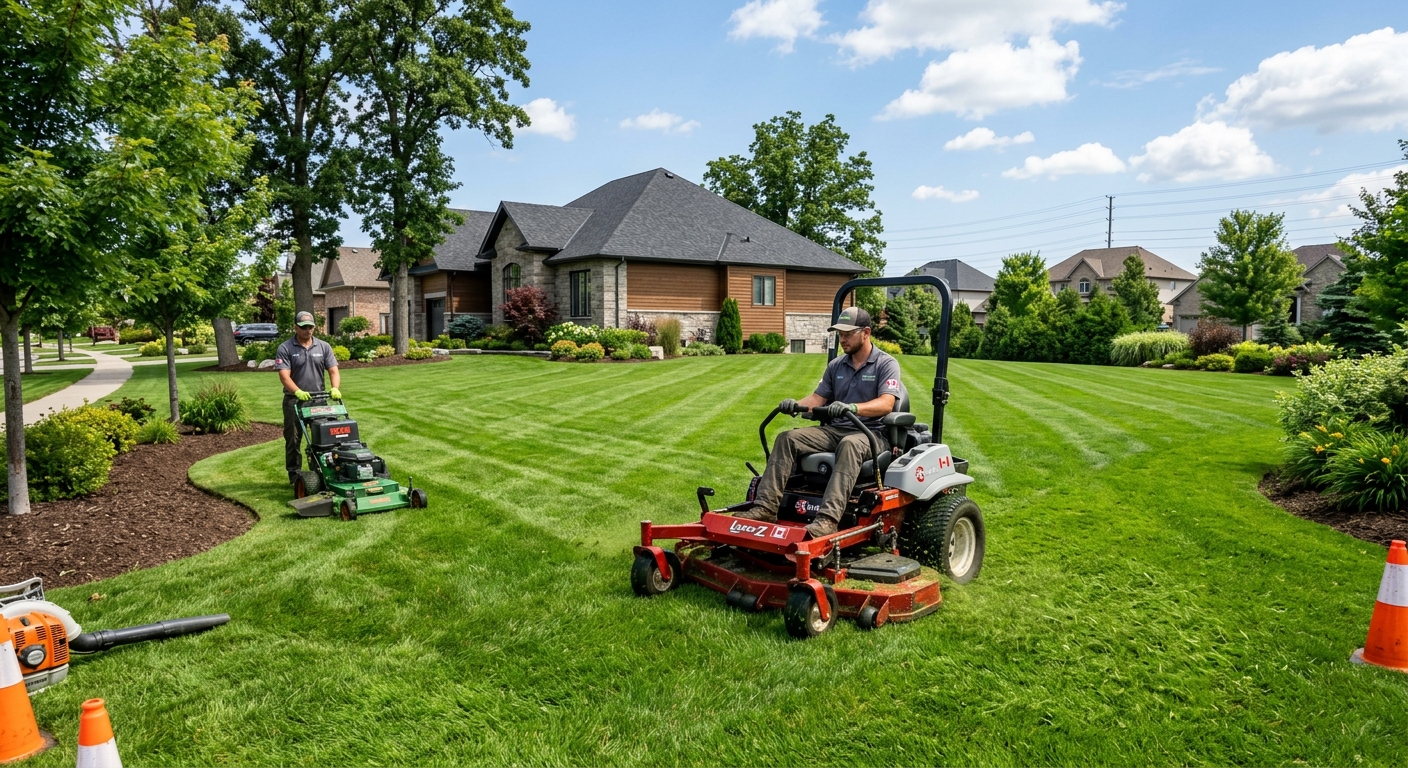
Landscaping options and costs in Smith Creek
Landscaping in Smith Creek is shaped by a lot of yard space—Smith Creek has a population of about 3,500 people (Statistics Canada, 2021 Census), and the housing pattern in the Lower Mainland–Southwest typically means many homes have sufficient outdoor room to justify proper grading, layered planting, and hardscape features. Because it’s common to own single-detached homes in the area, homeowners often see landscape upgrades as “value you can walk through,” not just curb appeal. That’s why you’ll notice strong demand near the more established residential stretches around the town’s central service areas and along commuting corridors, where properties are older and need drainage or replanting to look fresh again.
In the Lower Mainland–Southwest (plant hardiness zone 7–8), mild, wet winters and a long, cool growing season generally keep projects moving longer than in colder regions. Contractors can plant and do softscape work for more of the year, which helps keep scheduling realistic. However, because soils are often heavy and rainfall can be intense, costs rise when we need real drainage correction or when freeze–thaw cycles still affect bases for patios and retaining walls. Labour availability also affects pricing—during spring “rush” windows, crews may prioritise larger installs, while smaller jobs can take longer to book.
Below is a practical comparison of common landscaping scope items and what they typically run in Smith Creek, so you can line up apples-to-apples when you request quotes.
| Service |
Description |
Season |
Price Range |
| Full landscape design and installation |
Site assessment, concept + planting plan, grading/drainage coordination, hardscape + softscape install |
Mar–Nov (best weather; winter drainage/plan prep when conditions allow) |
$12,000–$45,000 |
| Sod installation (supply, grade, lay, roll) |
Remove existing, fine grade, add topsoil if needed, sod supply and install, starter roll-in |
Apr–Jun; Sept–Oct |
$2,500–$7,500 |
| Lawn seeding (grade, seed, starter fertilizer) |
Light grading, seed blend, starter fertilizer, erosion control where needed |
Apr–May; Sept |
$1,800–$4,800 |
| Interlocking patio or walkway |
Excavate, compacted base, interlocking stone setting, edging, finishing + cleanup |
Apr–Nov |
$7,000–$28,000 |
| Retaining wall (interlocking block) |
Block wall with drainage rock, geotextile, compaction and wall reinforcement where required |
Apr–Nov |
$15,000–$55,000 |
| Tree and shrub planting |
Soil prep, planting, staking where required, mulch ring, initial watering plan |
Mar–Nov |
$1,500–$12,000 |
Prices are estimates only and vary by project scope, site access and material selection.
What affects the price of landscaping in Smith Creek
In Smith Creek and across the Lower Mainland–Southwest, two contractors can quote the “same” job and still be 30–50% apart. The gap usually comes from how much of the work is truly included (grading, drainage, soil testing, base depth, disposal) and how the contractor prices risk—especially in yards that don’t drain well or have old topsoil. When you compare the broader provinces, it’s even more pronounced: in coastal BC (zone 7–8) the season is longer and planting palettes are lush, but wet soils can slow excavation and raise disposal/cleanup labour. By contrast, Prairie regions (zone 2–4) often need drought-tolerant, wind-hardy planting and longer-term irrigation planning, while Ontario (zone 5–6) may face more pronounced summer dryness requiring irrigation budgeting.
In Smith Creek specifically, frost dates and freeze–thaw cycles still matter for structural bases. That means retaining walls and patios often need deeper excavation and engineered drainage rock to reduce movement—this is one reason a hardscape plan that starts under a typical $10,000–$80,000 band can climb when you add slope corrections. Another cost driver is plant density and maturity. A layered shrub border with native or adapted material is typically less than installing multiple larger trees; in the field, tree and garden planting commonly lands in the $1,000–$15,000 range, and mature specimens push you toward the higher end because of root-ball size, staking, and handling.
Here are a few concrete examples from yards like yours: (1) If a downspout discharge currently creates a soggy corner, adding a drainage bed or French drain can shift a “simple replant” into a full drainage correction budget. (2) If you’re upgrading a lawn while also fixing low spots, grading can add labour before any sod hits the ground—so the total moves from “lawn-only” numbers into mixed softscape/hardscape territory. (3) If access is tight (rear-yard removals, narrow gates), mobilization and equipment time increase, which is why full design & install scopes (often $5,000–$50,000) can swing noticeably project to project.
| Price Factor |
Why It Matters |
Cost Impact |
| Yard size in sq ft — the primary cost driver for softscape |
More area means more soil amendments, labour hours, and plant/lawn quantity |
Higher sq ft can push projects into the upper part of the $5,000–$50,000 design/install band |
| Grading and drainage work — slope corrections add significant cost |
Fixing low spots and redirecting runoff requires excavation, re-compaction, and often re-mobilization |
Can add major labour; commonly the difference between a $2,000–$8,000 lawn job and a larger full-scope install |
| Drainage bed or French drain installation |
Proper perforated pipe bedding, geotextile, and rock volume prevent future pooling |
Often a key “must do” cost if the yard stays wet after rain |
| Plant material tier — native shrubs vs. ornamental vs. mature specimen trees |
Price rises with nursery size, container/root-ball volume, and transplant labour |
Smaller borders stay near the lower end; mature trees push toward the $1,000–$15,000 planting band ceiling |
| Hardscape vs. softscape ratio — walls and patios cost more per sq ft than lawn |
Stone, base layers, compaction, and edging increase material and labour |
Swings the budget toward the $10,000–$80,000 retaining wall/hardscaping band |
| Irrigation system design and installation |
Drip lines, emitters, backflow prevention planning, and controller setup improve efficiency |
Adds upfront cost but reduces maintenance calls and water waste over time |
| Soil amendment and topsoil required |
Heavy clay or poor drainage soils often need amendment, not just “more seed” |
Can increase per-area costs, especially when you need depth for drainage improvements |
| Tree removal or stump grinding before new planting |
Disposal, equipment time, and prep affect how quickly the crew can start planting |
May add several thousand dollars depending on number and access—especially in established neighbourhood yards |
Permits & regulations in British Columbia
In British Columbia, most landscaping work—planting shrubs/trees, sodding, and typical softscape installs—usually does not require a permit. That said, retaining walls above the local height threshold typically require a building permit, and some municipalities may ask for engineered details depending on the wall height, soil conditions, and whether it’s supporting surcharge loads (like a driveway or deck). As a practical rule of thumb in many BC areas, walls around 1.0 m (3.3 ft) and above commonly trigger permitting.
Also watch for anything that changes how water moves. If you’re altering lot grading so stormwater drainage redirects toward a neighbouring property or storm sewer connection, approvals may be required—especially where there’s potential impact to runoff patterns. Before digging, confirm utility locates (for irrigation lines, power, and any buried services), even for planting holes and wall footings.
To verify a contractor properly in Smith Creek, start with three checks:
- Licence/registration: confirm the applicable BC registration for the contractor (use the online registry and verify the legal entity matches the quote/invoice).
- Liability insurance: request a current Certificate of Insurance; ensure the coverage is active for the project period and listed as a proper business policy (not expired).
- Coverage for workers: confirm workplace coverage documentation (WSIB/WCB as applicable) so you’re not exposed if someone is injured on site.
- Clearance letter (when applicable): ask whether they can provide proof of good standing/clearance for the work scope.
Planning a landscape that thrives in Smith Creek's climate
For Smith Creek yards in hardiness zone 7–8, the winning strategy is to work with the cool, long growing season and wet-winter reality rather than fighting it. Start with plant selection: choose zone-appropriate, locally adapted species and prioritize plants that handle winter wet and spring shoulder conditions. That usually means native and well-performing broadleaf evergreens plus long-blooming perennials, with a plan for mulch rings and drainage-friendly soil.
Next, decide whether you want instant results or a slower-but-lower-cost path. Sod gives a uniform lawn quickly and can stabilize erosion, but it typically costs about 3–4× per sq ft compared with seeding because sod includes the grown product and higher material/installation labour. If your yard needs immediate coverage or you’re transitioning from bare soil right before high-use season, sod can be worth it; if you can wait and manage early weeds, seeding is often the better value.
Drainage and grading are critical in the Lower Mainland–Southwest. Even if winters are mild, heavy rains can pool near foundations and create root stress. Proper grading, compacted base prep, and drainage rock layers help keep moisture from undermining patios and wall systems. For hardscape, plan for freeze–thaw cycles: excavate deeper, compact properly, and ensure base materials are designed to drain.
Finally, use low-maintenance design to reduce annual work: groundcovers where grass won’t thrive, thicker mulch layers, and a layered planting plan so there’s always something attractive. Rain-garden areas (and selective xeriscape-ready zones) can be smart in this region—especially where runoff concentrates—without looking “dry” or out of place.
As a quick cost example: if a small lawn area is pushing you toward the typical sod band of $2,500–$7,500, but you only need partial coverage, seeding from $1,800–$4,800 can free budget for drainage fixes or better planting structure—often the difference between “looks good for a month” and “looks good for years.”
| Element |
Climate Consideration |
Maintenance Level |
Price Band |
| Sod lawn installation |
Establishes quickly in cool spring/fall; needs good drainage to prevent patchy rot |
Low-to-medium (initial watering and monitoring) |
$2,500–$7,500 |
| Native perennial garden |
Handles wet winters and cool summers when mulched and planted in adapted soils |
Low (seasonal weed control and light pruning) |
$3,000–$10,000 |
| Mulched shrub border |
Mulch moderates winter wet and summer cooldown; good for layered curb appeal |
Low (refresh mulch 1–2×/year) |
$1,800–$6,500 |
| Interlocking stone patio |
Requires proper base drainage and compaction to survive freeze–thaw cycles |
Low (occasional weed control at edges) |
$7,000–$28,000 |
| Retaining wall (block) |
Drainage rock and weeper details protect against water build-up behind the wall |
Low (periodic inspection for settling) |
$15,000–$55,000 |
| Drip irrigation system |
Efficient watering for long season reduces waste during any water-cost pressure |
Medium (winter shut-down and seasonal checks) |
$2,500–$9,500 |
How to choose a landscaping contractor in Smith Creek
Choosing the right contractor in Smith Creek starts with coverage and clarity. In British Columbia, you should verify: (1) applicable licensing/registration for the contractor’s trade and business entity, (2) liability insurance with a current Certificate of Insurance naming their company, and (3) workplace coverage documentation (WSIB/WCB as applicable) so workers are protected and you’re not left holding the risk. Ask for these documents before work begins, and confirm dates match your project timeline. If they can’t provide paperwork promptly, that’s a sign to move on.
Next, request 2–3 itemised written quotes—not just a lump sum. A solid quote breaks labour and materials line-by-line (excavation, base materials, stone/sod/seed, soil amendments, plant quantities, disposal, and irrigation components if included). Read the scope for what’s excluded: permit pull (if applicable), utility locate fees, topsoil depth, base depth, cleanup/disposal, and any “unknowns” clause. For warranties, confirm workmanship coverage length, product/manufacturer warranty (and whether it transfers if you sell your home), and what “warranty service” includes—replacement, labour, or only materials.
Finally, talk payment schedule and timing: never pay more than 10–15% upfront. Use a holdback until the job is complete and inspected. Get a start date and completion estimate in writing, along with weather-related pause language.
- Confirm business name on the quote matches the insured legal entity on the insurance certificate.
- Ask for COI for liability insurance and check it’s active for the project dates.
- Confirm WSIB/WCB coverage documentation for workers (and request clearance letter if applicable).
- Get itemised pricing: labour hours, material quantities, and unit costs (per sq ft/sq m).
- Check base specs: patio/stone base thickness, compaction method, and drainage layers.
- Ensure drainage plans are written down (e.g., French drain depth/rock, geotextile use).
- Ask how they handle disposal and whether dump fees are included.
- Verify plant counts/sizes (container size, height) and whether substitutions are allowed.
- Confirm irrigation details: drip line layout, emitter spacing, controller type, and testing.
- Review warranty terms in writing (what’s covered and for how long).
- Confirm payment schedule: maximum 10–15% upfront and remaining due after sign-off.
- Require a start date and completion timeframe in the contract, with weather contingencies.
Red flags we see in Smith Creek include: contractors who won’t provide certificates/coverage details, quotes that omit drainage or base depth specifications, “allowance” pricing without quantities (especially for stone and soil), payment requests that exceed 10–15% upfront, and schedules that are vague with no written start/completion window.
Frequently asked questions — landscaping in Smith Creek
What is the best grass type for a Smith Creek lawn?
In Smith Creek and the broader Lower Mainland–Southwest (zone 7–8), homeowners usually do best with cool-season turf that stays dense in cool, wet winters and handles spring shoulder temperatures. Practically, that often means high-quality mixes that include perennial ryegrass for quick establishment, plus fine fescues for shade tolerance and reduced summer water stress. If your yard is sunny and dries out fairly fast, a rye-forward blend can green up faster after winter. If your lawn sits partly shaded or stays damp after rain, fine fescues are often more forgiving. Either way, the “best” grass also depends on how well the yard drains—patchiness from pooling will defeat even premium seed.
When should I aerate and overseed my lawn in Smith Creek?
For Smith Creek, aeration and overseeding are generally most successful in early spring or early fall when the soil temperature is cool and growth conditions are steady. A typical approach is aerate in April (after the ground thaws and isn’t waterlogged), then overseed lightly with a starter fertilizer and keep the top layer moist until germination. Late summer to early fall (often September to early October) is also a strong window because cooler days support rooting without the stress of midsummer heat. If your lawn is already thin due to shade or compaction, aeration alone won’t fix it—consider a light soil amendment and address drainage or thatch. This is also when crews often provide lawn seeding quotes in the $1,800–$4,800 range for small-to-medium areas.
What trees grow best in Smith Creek's climate zone?
Because Smith Creek sits in hardiness zone 7–8, you can grow a broad palette of trees that handle cool winters and wet periods better than many homeowners expect. Common “reliable” choices include species like Japanese maple varieties (where suitable for your exposure), river birch types (noting they prefer good soil conditions), and several flowering/cherry selections that perform well in the Lower Mainland when planted in well-draining soil. For structure and year-round texture, broadleaf evergreens like magnolia selections (depending on microclimate) can be considered. The key isn’t just the tree’s zone rating—it’s your yard’s drainage and sunlight. If you have a low, wet patch, prioritize soil improvement and avoid planting tall trees into persistent pooling areas.
How much does sodding a yard cost in Smith Creek?
In Smith Creek, sodding cost depends heavily on how much prep is required: existing removal, grading, topsoil depth, and whether the subgrade is compacted or draining poorly. As a realistic planning range, sod installation commonly lands around $2,500–$7,500 for typical residential areas in the Lower Mainland–Southwest tier. If your yard needs significant regrading or drainage correction, sod may become part of a bigger “full install” scope rather than a standalone lawn job. Always ask for clarity on whether they’re including fine grading to finish level, starter topsoil (and depth), and edge detailing at sidewalks/driveways—those line items are often where quotes diverge.
How do I prevent weeds in my Smith Creek garden?
Weed prevention in British Columbia gardens starts before you plant: proper soil prep, correct spacing, and mulching are what reduce long-term problems. In Smith Creek, the best results usually come from installing a 2–3 inch mulch layer (not thin “cosmetic” coverage), using weed-suppressing fabric only where appropriate (and not buried under plants that need airflow), and choosing groundcovers and dense shrubs that leave fewer bare soil gaps. For perennial beds, avoid planting too sparsely—thin spacing invites weeds. After installation, plan on targeted spot-weeding early in the season before weeds establish deep roots. If you see persistent weeds returning quickly, it often signals drainage or soil issues that should be addressed during your next landscaping refresh.
How do I design a low-water yard in Smith Creek?
A low-water yard in Smith Creek doesn’t have to look barren. The trick is to “group by water needs” and reduce turf stress. Start by limiting lawn to the areas you truly use and replacing the rest with mulched shrub borders, native perennials, and groundcovers that thrive in zone 7–8. Where water concentrates (downspouts, slope runoff), consider a rain-garden style planting or a drainage-friendly planting pocket—this improves moisture efficiency and reduces nuisance pooling. For irrigation, drip systems with smart control reduce waste and help you comply with any municipal pressure during dry stretches. If you’re comparing options, note that sod is typically the priciest path for large coverage, while seeding and planted beds can shift your budget toward long-term savings (and often toward the mid-range landscape install band of $12,000–$45,000 when it’s a full design).