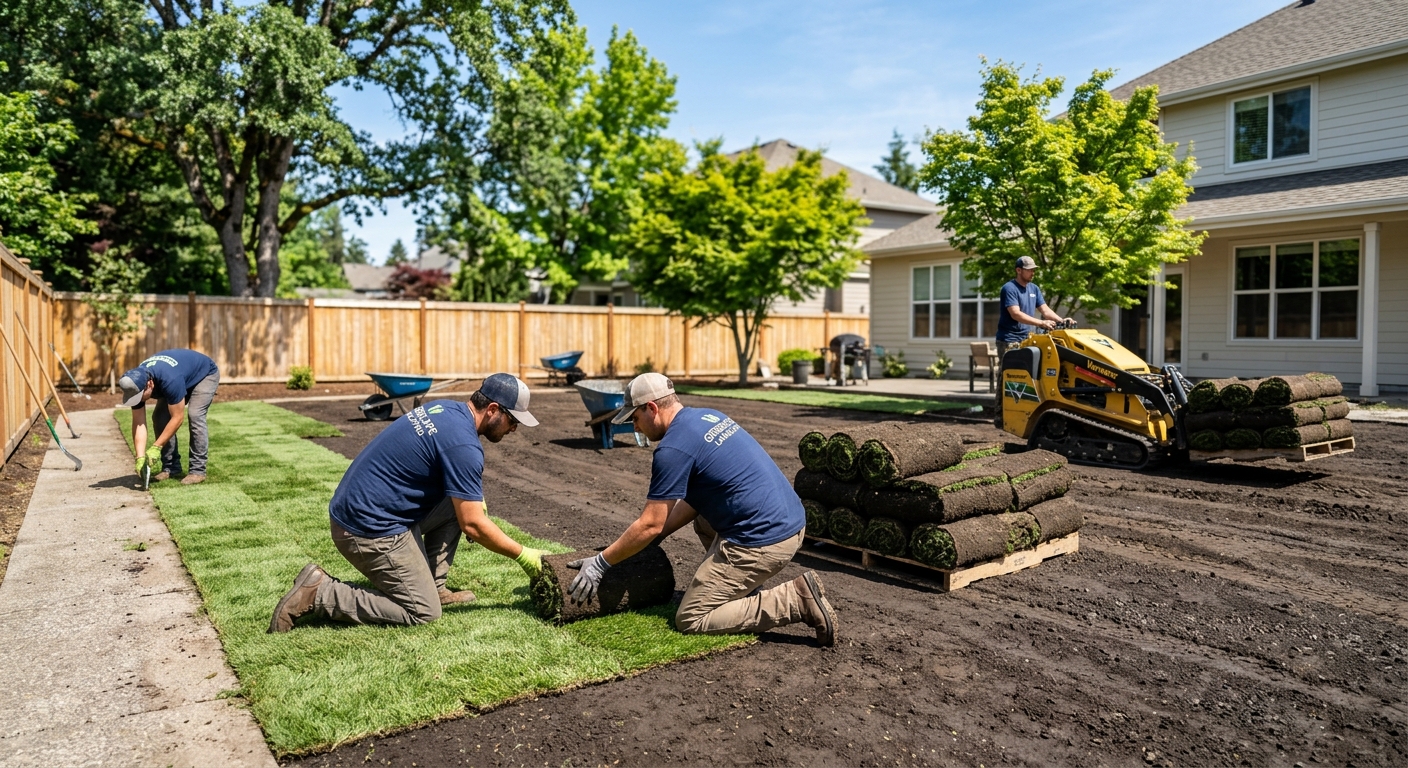
Landscaping options and costs in Quesnel
Landscaping in Quesnel usually starts with how much yard space you actually have. With about 59.6% of dwellings being single-detached homes, many homeowners have the room for proper grading, drainage improvements, and multi-stage planting plans that look good year-round. There’s also a strong homeowner base—homeowner households make up 62.0% of households (Statistics Canada, 2021 Census)—so investing in durable hardscape and low-maintenance planting is common, not an afterthought.
In the Cariboo, pricing is shaped by the freeze–thaw cycle and a shorter working window (roughly May to late September). That affects labour scheduling and means contractors often build in extra time for excavation, compacted bases, and drainage under patios and retaining walls. Labour and equipment costs in BC interior projects can be high because crews run on tight schedules (and material delivery into the interior adds logistics cost). For the same scope, you may see totals shift by thousands of dollars depending on access, soil conditions, and how much drainage correction is required before any stone or sod goes down.
Demand is especially strong in family-focused areas like College Park, where yards are larger and many properties have older foundations that benefit from reworking downspouts, adding French drains, or upgrading walkways for winter traction. Use the comparison below as your starting point, then we can tighten the numbers after a site visit and soil/water assessment.
| Service |
Description |
Season |
Price Range |
| Full landscape design and installation |
Consultation, site measure, concept + planting plan, grading/drainage allowance, hardscape + softscape build (labour and materials as per scope) |
May–late September (best results) |
$8,000–$40,000 |
| Sod installation (supply, grade, lay, roll) |
Minor grading, soil prep/compaction, sod supply and installation, starter fertilizer, watering guidance |
Late May–mid August |
$3,500–$7,000 |
| Lawn seeding (grade, seed, starter fertilizer) |
Surface grading/raking, seed + starter fertilizer, seed-to-soil contact, initial watering plan |
Late April–June (or late summer over-seed) |
$1,800–$5,000 |
| Interlocking patio or walkway |
Excavation, base compaction, bedding sand, pavers, edging, joint sand, simple drainage detailing |
June–September |
$1,500–$10,000 |
| Retaining wall (interlocking block) |
Block wall build with geotextile, drainage gravel, weep provisions (as required), and reinforced base |
June–September |
$3,000–$18,000 |
| Tree and shrub planting |
Soil amendments, planting holes, staking where needed, mulch rings, and initial watering plan |
May–early September (species dependent) |
$300–$8,000 |
Prices are estimates only and vary by project scope, site access and material selection.
What affects the price of landscaping in Quesnel
The same “front yard refresh” can come back with totals that differ by 30–50% across Cariboo communities and other parts of BC because the cost drivers aren’t just cosmetic—they’re structural. In Quesnel, our design choices must handle a freeze–thaw cycle that pushes contractors to build deeper, drain better, and compact properly under patios and retaining walls. We also work within a shorter frost-free window (roughly May to late September), so labour and equipment are scheduled tightly—compression of the season raises overhead and can affect subcontractor availability.
Plant selection is also directly tied to what the yard must survive. In Cariboo (typically plant hardiness zones 3–4), the hardy palette is specific, and a mid-season cold snap can damage marginal species. Retaining-wall pricing reflects this reality: a proper base needs to extend below the active frost zone and include drainage provisions. Compare that to coastal BC (zones 7–8), where you get a longer growing season and broader plant options, but heavy-rain areas can drive drainage complexity. Prairie regions (often zone 2–4) face wind and dry summers, so they tend to need drought-tolerant, wind-hardy species and careful base depth. Southern Ontario (zone 5–6) often has a moderate season, but dry spells can still drive irrigation spend during summer.
Two common local examples in Quesnel: (1) older home sites with yard slopes toward the foundation often require grading plus a drainage bed or French drain—this can shift a “walkway-only” job into a higher-cost site-work scope; and (2) properties with compacted clay or poor infiltration may require more topsoil/soil amendment and careful drainage detailing before sod or seeding. If your base work and irrigation design are done right, you may still decide that a higher upfront spend—such as a larger hardscape package in the $8,000–$40,000 design-and-install band—is justified because it reduces repeat repairs.
| Price Factor |
Why It Matters |
Cost Impact |
| Yard size in sq ft — the primary cost driver for softscape |
More area means more labour hours, soil, seed/sod, mulch, and edging detail. |
Often the biggest swing: small yard refreshes can cost a third less than full-front builds. |
| Grading and drainage work — slope corrections add significant cost |
Fixing ponding and directing runoff away from foundations must be built into the plan. |
Can add thousands when excavation/rock removal is needed before any planting or paving. |
| Drainage bed or French drain installation |
Freeze–thaw movement requires engineered drainage layers under hardscape and near foundations. |
Typically increases cost materially, but it prevents long-term settling and wall/patio failures. |
| Plant material tier — native shrubs vs. ornamental vs. mature specimen trees |
Mature stock costs more, takes longer to install, and may require extra staking and protection. |
Can swing a project by several thousand depending on how many “wow” plants you choose. |
| Hardscape vs. softscape ratio — walls and patios cost more per sq ft than lawn |
Stone bases, compacted sub-base, and block work drive higher material and labour rates. |
Hardscape-heavy designs move totals upward quickly even when the footprint is small. |
| Irrigation system design and installation |
Interior BC watering restrictions make efficient zones and controls essential for survival and cost control. |
Added up-front cost, but often reduces ongoing water waste and plant losses. |
| Soil amendment and topsoil required |
Cold-climate turf and plant roots rely on aeration and nutrition; poor soil needs replacement or amendment. |
Rises quickly with large areas and thick lifts of clean topsoil/compost. |
| Tree removal or stump grinding before new planting |
Root balls, access, and disposal affect excavation time and worker safety. |
Can add a meaningful day-rate cost and change the staging plan for drainage/hardscape. |
Permits & regulations in British Columbia
In British Columbia, most planting and softscape work typically doesn’t require a permit. That usually includes things like sodding, seeding, tree and shrub planting, mulch placement, and most ground-level grading intended for landscape beds. However, retaining walls above a local height threshold (commonly 1.0 m in many municipalities) often require a permit, and sometimes engineered drawings depending on the design and site conditions.
Another area that can trigger approvals is lot grading that changes drainage—especially if it affects how water moves toward neighbouring properties or connects to storm sewer systems. Because Quesnel projects often deal with freeze–thaw and foundation moisture, drainage corrections are frequently part of the work, and the contractor should confirm what’s permitted before digging.
Before any excavation for planting holes or wall footings, always arrange utility locates so you don’t hit underground services. Also confirm local irrigation and water-use bylaws in drought conditions—BC interior municipalities may restrict watering schedules, which directly affects how we design drip/controlled sprinkler zones.
How to verify a contractor’s credentials (Quesnel homeowners): Ask for their British Columbia business/license details (often searchable online), request a current certificate of insurance (liability), and confirm they carry the correct worker coverage (WSIB/WCB documentation as applicable). Make sure those documents match the company name on your quote and that coverage is active for the project dates. For permit work, ask who pulls the permit and whether that cost is included.
Planning a landscape that thrives in Quesnel's climate
To plan a landscape that thrives in Quesnel, we match plant choices and building methods to our climate reality: typically zone 3–4 conditions, a strong freeze–thaw cycle, and a relatively short planting window (roughly May to late September). Start with plant selection: choose native and zone-appropriate trees, shrubs and perennials that can handle cold winters and recover from spring temperature swings with minimal protection. Pair that with better watering design—even when watering restrictions apply during dry spells, efficient drip and properly zoned irrigation help plants establish without overwatering.
Next, decide between sod vs. seed. Sod gives instant curb appeal, but it typically costs about 3–4x more per sq ft than seeding once you include prep and installation. For example, if a seeding approach fits your budget, a lawn refresh may land in the $1,800–$5,000 band for a typical residential area, whereas sod supply + lay often sits closer to the $3,500–$7,000 band. That price gap can be justified when you need fast results for a sell date or heavy foot traffic.
Drainage and grading are non-negotiable in the Cariboo. We build slopes so water moves away from the foundation and use drainage layers under hardscape to avoid pooling and foundation moisture. For patios and retaining walls, base preparation must reach below frost-affected soils with compacted, well-drained layers—this is what prevents heaving and uneven paver movement over time.
Finally, aim for low-maintenance design: use groundcovers, mulched shrub borders, and hardy perennials to reduce annual upkeep. Xeriscape concepts (drought-tolerant groupings) and rain-garden style drainage beds can also fit Quesnel well, especially where water direction and soil absorption are major issues.
| Element |
Climate Consideration |
Maintenance Level |
Price Band |
| Sod lawn installation |
Establishing roots before heat/cold swings; freeze–thaw stability depends on grade and compaction. |
Medium (watering until established, then seasonal care) |
$3,500–$7,000 |
| Native perennial garden |
Cold-hardy growth in zone 3–4; better tolerance of shoulder-season snaps. |
Low to medium (weeding first season, then mulch/trim) |
$1,200–$6,500 |
| Mulched shrub border |
Mulch buffers temperature swings and helps soil moisture retention with efficient watering. |
Low (refresh mulch and light pruning) |
$900–$5,000 |
| Interlocking stone patio |
Needs frost-resistant base and proper drainage layers to prevent settling. |
Low (occasional joint sand and spot leveling) |
$2,000–$12,000 |
| Retaining wall (block) |
Freeze–thaw movement requires engineered base + drainage gravel and weep provisions. |
Low (periodic inspection of drainage and caps) |
$3,000–$18,000 |
| Drip irrigation system |
Interior BC watering limits favour targeted delivery, and drip reduces plant stress during dry spells. |
Medium (seasonal checks and controller settings) |
$1,000–$4,500 |
How to choose a landscaping contractor in Quesnel
Choosing the right contractor matters a lot in Quesnel because the work is partly structural: drainage layers, frost-proof bases, and irrigation design determine whether your yard still looks good after a few winters. Start by verifying British Columbia licensing (where required for the business type) and ask for a certificate of liability insurance—make sure it covers the scope you’re hiring them for and that the dates align with your project schedule.
For worker coverage, confirm WSIB/WCB documentation as applicable in BC. Don’t just accept a screenshot—ask for the current certificate and ensure it names the contracting company that will be on-site. Next, get 2–3 itemised written quotes. You want the labour and materials breakdown, not a single lump sum that hides scope gaps. Confirm line items for excavation, base materials, drainage provisions, disposal, and whether topsoil/soil amendments are included.
Read the scope carefully: is permit pulling included (if your retaining wall height triggers it)? Is disposal included for removed soil and rock? What’s excluded (for example, tree removal, utility locates, or additional drainage repair)? Ask about warranty coverage: the workmanship warranty length, any product/manufacturer warranties for pavers/blocks/turf, and whether those warranties are transferable if you sell the home.
For payment, a common safe approach is to never exceed 10–15% upfront, then hold back until key milestones are complete. Get a written start date and completion estimate so the short Cariboo season doesn’t leave you with half-finished work heading into colder weather.
- Ask for BC business/license proof and confirm it matches the company name on the quote.
- Request a current certificate of liability insurance (and confirm coverage limits).
- Confirm WSIB/WCB worker coverage documentation for the team that will work on your site.
- Get 2–3 quotes with labour + materials itemisation (not just “total price”).
- Ensure excavation depth, base materials, and drainage layers are described for patios/walls.
- Verify whether utility locates are included before digging.
- Confirm disposal/grading haul-away is included or clearly priced.
- Ask who pulls the permit if a retaining wall requires one and whether that cost is included.
- Clarify irrigation scope: controller/timers, zones, and whether drought-friendly design is planned.
- Check warranty terms in writing: workmanship duration and what triggers it.
- Request schedule details: start date, inspection checkpoints, and weather contingencies.
- Agree on a payment schedule with a small upfront deposit and a holdback until completion.
Red flags I commonly see in Quesnel include: (1) quotes that omit drainage or base depth details under pavers and walls; (2) vague scopes like “we’ll level and prepare” without describing what materials are used; (3) no proof of insurance or worker coverage; (4) asking for large upfront payments (well above 10–15%); and (5) refusing to put warranty and timeline terms in writing.
Frequently asked questions — landscaping in Quesnel
Do I need a permit for a retaining wall in British Columbia?
In British Columbia, most planting and softscape changes (like mulch, sod, seeding, and planting) usually don’t require a permit. Retaining walls are different: in many municipalities a retaining wall above about 1.0 m typically needs a permit, and sometimes engineered drawings depending on design and site conditions. In Quesnel, because many yards have slopes and older drainage patterns, walls are often tied to grading changes—those can increase the chance of approval requirements. Your contractor should confirm the height and provide what’s needed before work starts. Ask whether the permit is included in the quote, and if the scope includes any drainage provisions (geotextile, drainage gravel, and weep details) required for freeze–thaw performance.
How do I improve drainage in my yard?
Start with how water behaves during spring melt and after heavy rain: if you see pooling near the foundation or damp areas where downspouts discharge, drainage improvements are usually the most cost-effective first step. In Quesnel’s freeze–thaw environment, you typically want a corrected grade away from the house, plus a sub-surface solution such as a drainage bed or French drain where water is collecting. A well-designed drainage project often becomes part of the larger landscape plan rather than a standalone fix, especially if you’re also adding an interlocking walkway or retaining wall. If you’re budgeting, drainage-related site work can push a project upward into the $8,000–$40,000 design-and-install range when it affects multiple areas.
What is xeriscaping and does it suit Quesnel?
Xeriscaping is a landscaping approach that reduces watering demand by using drought-tolerant plants, smart layouts, and efficient irrigation or water-wise groundcover strategies. In Quesnel and the Cariboo, it suits many yards—especially those with water restrictions during dry spells—because it focuses on plant survivability and soil moisture management rather than constant lawn watering. That said, lawns can still work, but you may choose either reduced-lawn designs or targeted irrigation (often drip) for shrub and perennial beds. If your goal is a durable front yard with less upkeep, native perennial beds and mulched shrub borders can be a practical “xeriscape-friendly” direction. Pricing varies by size and scope, but planting-forward designs often land below full hardscape projects.
How do I plan a low-maintenance yard?
A low-maintenance yard in Quesnel is mostly about choosing the right plants for our zone and building it with drainage and soil health in mind. Prioritise hardy perennials and native shrubs that don’t require constant replacement after winter, then use mulch to reduce weeds and moderate soil temperature swings through freeze–thaw cycles. Consider groundcovers where grass struggles, and keep lawn areas intentional (small, well-drained sections tend to be easier than large uneven turf). If you want instant curb appeal, sod can work, but it usually costs more than seeding and requires careful establishment. As a realistic reference, sod installation often sits in the $3,500–$7,000 band, while lawn seeding may fit within $1,800–$5,000 for many residential refreshes.
How deep should a retaining-wall base be for local frost?
For retaining walls in Quesnel, the correct base depth depends on frost penetration at your site, wall height, and drainage conditions behind the wall. In practical contractor terms, you should expect the base to be built below frost-affected soils and supported on properly compacted granular layers so the wall can resist heaving during freeze–thaw cycles. Many failures come from “shallow and dry” installs where drainage gravel and geotextile are missing or where the base wasn’t excavated and compacted to specification. Because wall design also ties into whether a permit is needed, a qualified contractor should specify excavation depth, base composition, and drainage provisions in writing. If your quote doesn’t clearly describe base and drainage layers, ask for details before signing.
How much does professional landscape design cost?
Professional landscape design pricing varies based on how detailed the plan needs to be and whether installation is included. For many Quesnel homeowners, design becomes part of the overall project budget when you’re doing a full landscape transformation. Full-service landscape design and installation commonly fall in the $8,000–$40,000 band, depending on scope (grading/drainage, patios/walkways, retaining walls, irrigation, and the plant palette). If you’re only planning planting updates or a single feature, you may spend less on design and more on execution. The best way to estimate accurately is to request itemised quotes with a clear breakdown: what the design covers, what’s included in installation, and whether site work and drainage are separate line items.