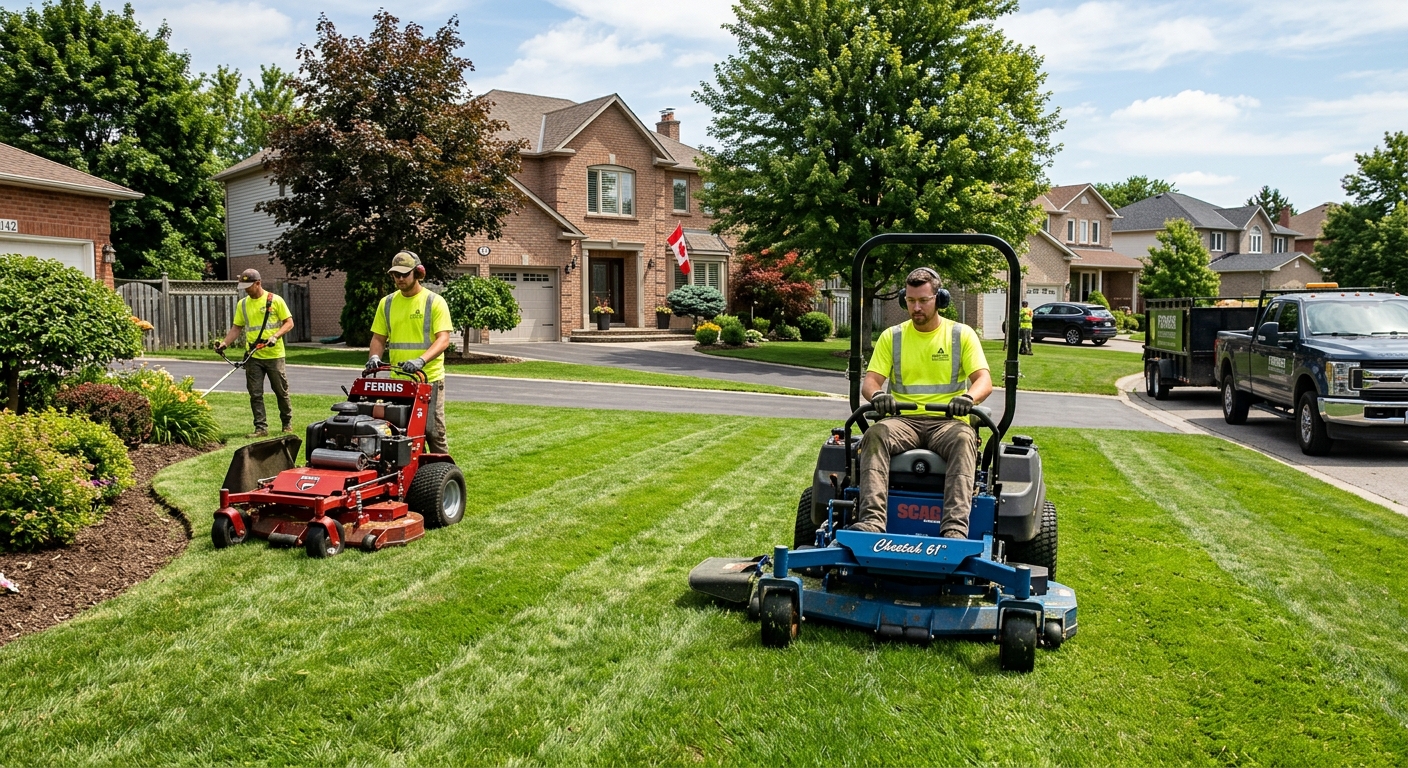
Landscaping options and costs in Bolton
Bolton homeowners typically start their landscaping decisions by weighing curb appeal, maintenance time, and how the yard will handle southern Ontario winters. With a population of 26,795 (Statistics Canada, 2021 Census), Bolton has a lot of owner-occupied homes where yard upgrades are a practical way to add comfort and resale value. In Toronto’s market, many properties are set up for investment—detached and semi-detached neighbourhoods tend to have enough outdoor space to justify full design-build work, not just touch-ups. That’s why you’ll see especially strong demand along established corridors and in family-oriented pockets like the Mayfield Rd / Highway 50 area, where new builds and growing households need quick, durable results.
Costs in the Toronto region are shaped by climate and soil as much as by design taste. Bolton sits in plant hardiness zones 6a–7a, so you can plant a wider range of hardy trees and perennials than colder regions, but you still face deep freeze and frequent freeze–thaw cycles. Those cycles make properly built patio and retaining wall bases non-negotiable, and they push excavation, drainage detailing, and compaction deeper than in milder climates. The local labour market also matters: during peak spring and early summer, scheduling tightens and crews focus on foundational hardscape and drainage first—then softscape installs follow.
Below is a practical cost comparison you can use to sanity-check quotes before you meet a contractor for site measurement and soil assessment.
| Service |
Description |
Season |
Price Range |
| Full landscape design and installation |
Site walk, design options, grading/drainage plan, planting plan, and installation of softscape and hardscape |
Apr–Oct (best for planting and base work) |
$8,000–$40,000 |
| Sod installation (supply, grade, lay, roll) |
Topsoil placement/grade correction, sod delivery and laying, rolling and starter fertilizer |
Late Apr–Jun and early Sep–Oct |
$2,500–$8,000 |
| Lawn seeding (grade, seed, starter fertilizer) |
Light regrading, seed and starter fertilizer, topdressing as needed |
May and Sep (best germination windows) |
$1,200–$5,000 |
| Interlocking patio or walkway |
Excavation, base (granular), geotextile, pavers, edge restraints and joint sand |
Apr–Nov (depending on weather) |
$6,000–$30,000 |
| Retaining wall (interlocking block) |
Wall block, drainage stone/weep path, compacted base, backfill and topsoil restoration |
Apr–Nov |
$7,000–$28,000 |
| Tree and shrub planting |
Plant selection, planting holes, amendments, staking (if required) and initial watering plan |
May–Jun and Sep–Oct |
$800–$6,000 |
Prices are estimates only and vary by project scope, site access and material selection.
What affects the price of landscaping in Bolton
In Bolton and across the Greater Toronto Area, you can see the same “type” of landscaping job vary by roughly 30–50% from one quote to another. The biggest reason is that many projects look similar on the surface—same square footage, similar plants—yet the real cost drivers are below grade and in the details. In southern Ontario, the growing and working season (roughly May to October) determines when crews can install plants, sod, and hardscape, but freeze–thaw still demands deeper, well-compacted granular bases and reliable drainage. That’s very different from Prairie regions, where shorter seasons push design toward ultra-hardier, drought-tolerant choices and simpler layouts; and it’s also different from coastal BC, where plants can be established in a longer window but drainage must be excellent in heavy-rain areas. In the GTA, you balance both.
Two concrete Bolton examples that often move pricing: (1) if your yard has clay or fill soils and needs regrading to fix slope toward a foundation or walkway, excavation plus soil amendment can quickly expand the job. (2) if you need a retaining wall, the drainage stone, weep pathways, and base depth add measurable labour and material—so a wall project typically lands in the retaining wall & hardscaping band of $6,000–$30,000, even before you add extra stairs or an extended patio.
Planting costs also swing based on what you choose. A native perennial garden can sit closer to the $800–$6,000 planting band, while mature specimen trees and more ornamental shrub tiers push toward the top end. Housing age matters too: older Bolton properties often have older drainage patterns and compacted subgrade that require more base preparation and sometimes additional granular layers—each extra stage adds cost.
| Price Factor |
Why It Matters |
Cost Impact |
| Yard size in sq ft — the primary cost driver for softscape |
More area means more labour time, more topsoil/seed or sod, and more maintenance material |
Often the largest driver of the total project number |
| Grading and drainage work — slope corrections add significant cost |
Pooling near foundations and walkways causes long-term failures and must be corrected |
Can add substantial excavation and restoration costs |
| Drainage bed or French drain installation |
Reduces hydrostatic pressure and freeze–thaw movement in damp soil |
Material + labour increases frequently compared to “basic” installs |
| Plant material tier — native shrubs vs. ornamental vs. mature specimen trees |
Hardy natives cost less and establish quickly; mature specimens cost more and require careful handling |
Can shift planting budgets across the full $800–$6,000 planting band |
| Hardscape vs. softscape ratio — walls and patios cost more per sq ft than lawn |
Pavers/blocks require base preparation, edge restraints, and precise compaction |
Moves you toward the $6,000–$30,000 hardscaping band quickly |
| Irrigation system design and installation |
Even drought-tolerant designs in Toronto still benefit from thoughtful watering during establishment |
Can noticeably increase totals, especially for multiple zones |
| Soil amendment and topsoil required |
Clay fill and construction debris need amendment, not just “more grass” |
Adds trucking, spreading, and additional labour days |
| Tree removal or stump grinding before new planting |
Access and disposal time affect scheduling and costs |
Often one of the most variable line-items in quote comparisons |
Permits & regulations in Ontario
In Ontario, most planting and softscape work typically does not require a permit. That includes sodding, seeding, and general landscaping installs such as shrub and tree planting, mulching, and most lawn restoration. However, certain hardscape and grading-related changes can trigger approval requirements—especially where they affect safety, drainage, or neighbouring properties.
What commonly DOES require a permit (and sometimes engineered support): retaining walls above the usual municipal threshold of about 1.0 m (3.3 ft), particularly when they’re retaining a significant amount of grade. Changes to lot grading that alter how water flows—especially if it redirects drainage toward a neighbour or toward storm sewer connections—can also require municipal approval depending on the specifics. Any significant work that impacts drainage patterns or requires excavation near foundations should be discussed before crews start.
Practical step-by-step for Bolton homeowners: first, ask the contractor for their Ontario business/licensing details (and confirm the firm exists and operates under the name on the quote). Next, request a Certificate of Insurance showing general liability with adequate limits, and WSIB/WCB coverage information (or the appropriate exemption/clearance document if applicable). Then, call for utility locates before digging planting holes, French drains, or wall footings—this is essential for both safety and to avoid utility damage. Finally, if irrigation is part of the plan, confirm the applicable water-use rules and any restrictions your area follows during dry periods.
Planning a landscape that thrives in Bolton's climate
Planning a yard that thrives in Bolton means working with zone-appropriate plants and designing for Toronto’s freeze–thaw realities. Bolton falls into the broader GTA bands of plant hardiness zones 6a–7a, so you can use a mix of hardy evergreens, well-chosen deciduous shrubs, and long-lived perennials that tolerate winter lows near –23 to –18°C. But winter success depends on healthy roots and stable drainage: if water sits in clay or fill soils, it can magnify freeze–thaw movement and cause heaving and premature plant dieback.
Start with plant selection: favour native and zone-appropriate species that establish quickly and need less watering after the first season. On lawn, compare sod versus seed honestly: sod gives instant cover and helps erosion control, but it’s typically higher cost—about 3–4 times more per sq ft than seeding in many Toronto-area scenarios. Sod can still be a smart choice when you’re replacing damaged lawn after grading or when you need curb impact for an upcoming listing. For example, a mid-size sod replacement can land in the $2,500–$8,000 band; if budget is tighter and you can accept a slower timeline, seeding can be far more cost-effective.
Drainage and grading are the foundation of a long-lasting Toronto landscape. Ensure downspouts and grading move water away from foundations, and if you’re building a patio or retaining wall, base preparation must be built for the local frost line conditions. For low-maintenance curb appeal, use mulch, groundcovers, and perennial structure to reduce annual weeding and watering, then layer seasonal colour. If you want a lower-water yard, consider targeted xeriscape pockets (where appropriate) and rain gardens in low spots—especially for managing runoff without overburdening municipal storm handling.
| Element |
Climate Consideration |
Maintenance Level |
Price Band |
| Sod lawn installation |
Needs reliable soil prep for establishment through spring and early fall before frost |
Medium during first season; lower after roots establish |
$2,500–$8,000 |
| Native perennial garden |
Better tolerance of GTA winters; designed to handle seasonal rain swings |
Low to medium (weeding and pruning once or twice per year) |
$1,500–$6,000 |
| Mulched shrub border |
Mulch moderates soil temperature and helps plants through freeze–thaw cycles |
Low (top up mulch and light shaping) |
$800–$4,500 |
| Interlocking stone patio |
Base thickness and drainage detailing prevent shifting during freeze–thaw |
Low (occasional joint sand and spot weed control) |
$6,000–$30,000 |
| Retaining wall (block) |
Requires drainage stone and proper backfill to prevent pressure and movement |
Low ongoing maintenance once built correctly |
$7,000–$28,000 |
| Drip irrigation system |
Efficient watering helps establishment during summer dry spells while reducing waste |
Medium (winterization and occasional head adjustments) |
$1,200–$6,000 |
How to choose a landscaping contractor in Bolton
Choosing the right contractor in Bolton comes down to verification first, then details. For Ontario compliance, confirm the contractor’s business licence/registration information (where applicable) and ask for proof of general liability insurance. Next, verify WSIB/WCB coverage: request either a WSIB/WCB clearance letter or proof of registration/coverage, and confirm the documentation matches the company name on the proposal. If they’re insured and properly registered, you’ll have better protection if something goes wrong during excavation, base prep, or hardscape construction.
When you request quotes, don’t accept “one number” only. Get 2–3 itemised, written quotes with a clear labour and materials breakdown, including excavation, granular base, drainage work, pavers/blocks, soil/topsoil, and disposal. Ask what’s excluded: tree removal? utility locating costs? permit pulls (if required)? rock/sod disposal? replacement of damaged areas outside the scope? A good scope makes it easy to compare apples to apples.
Warranty matters for both workmanship and materials. Ask how long the crew provides workmanship coverage and whether manufacturer warranties on plants or materials are included and transferable if you sell. For payment, keep it controlled: never pay more than 10–15% upfront, and hold back a portion until the job is complete and cleaned up. Finally, ask for a written timeline with a start date and completion estimate—weather can affect outdoor work, but professional contractors communicate revisions early.
- Provide proof of insurance and WSIB/WCB clearance/coverage before work begins
- Use a written scope of work with measurements (sq ft / linear ft) and included materials
- Show granular base and drainage details for patios/walls (not “trust us”)
- Clarify disposal: soil removal, excess stone, and wrapping up debris
- Confirm whether utility locates are booked and whose cost it is
- Ask who does the compaction/inspection and what equipment is used
- Confirm plant list with sizes, quantities, and cultivar names where possible
- Get a start date and a realistic completion target in writing
- Ensure warranty terms are in the contract (workmanship and product coverage)
- Require a payment schedule with milestones (not a single upfront payment)
- Check that the quote includes any necessary topsoil/soil amendment volumes
- Ask how they manage freeze–thaw risk during the shoulder seasons
Red flags I see in the Bolton market: contractors who won’t provide proof of WSIB/WCB or insurance; quotes with no drainage/granular base details for patios or retaining walls; “cash discount” offers that skip a proper contract and warranty terms; payment demands over 20% upfront; and vague timelines (“sometime in spring”) without a written completion plan.
Frequently asked questions — landscaping in Bolton
What is the best grass type for a Bolton lawn?
For most Bolton (GTA) lawns, homeowners do best with a cool-season grass blend designed for Ontario freeze–thaw and hot, often humid summers. In practice, many solid lawn results come from a mix that includes Kentucky bluegrass and/or perennial rye, paired with good fertility and mowing height. If your yard is sunny, choose blends that tolerate sun; if you have shade along fences or mature trees, look for shade-tolerant mixes and improve light and soil conditions rather than just “seeding more.” A common way to budget is to compare outcomes: a sod replacement often falls in the $2,500–$8,000 band, while reseeding is usually less expensive but takes longer to fill in. Either way, the best grass type won’t perform without grading that drains away from foundations.
When should I aerate and overseed my lawn in Bolton?
In Bolton, aeration and overseeding work best during your lawn’s active growth windows—typically spring (late April to early June) and early fall (August into September). Aerating helps relieve compaction and allows seed-to-soil contact, which matters on GTA clay and compacted fill soils common around older and newly developed properties. If you’re targeting fall, watch for cooler weather and avoid seeding right before heavy frost weeks. Plan mowing and watering to keep the top layer lightly moist until germination. If your lawn is thin from winter stress or foot traffic, overseeding is often the budget-friendly step before you consider sod. For a fast finish after major grading, sod can land in the $2,500–$8,000 range—overseeding is usually less, but requires patience.
What trees grow best in Bolton's climate zone?
Bolton sits in hardiness zones 6a–7a, so you have good options for hardy, long-lived trees. Popular choices that tend to do well include serviceberry (Amelanchier), paper birch (with proper siting), and hardy ornamental cherries where soil and drainage are suitable. Many homeowners also like layered structure—adding a small understory tree or a hardy shrub near the base of a larger specimen for year-round interest. The “best” tree depends heavily on your site: full sun versus partial shade, soil drainage, and how close the tree is to foundations and underground services. If you’re planting near walkways, remember that Toronto-area winters can stress weak root systems—so planting depth, backfill, and initial watering matter as much as species selection. If you’re budgeting, basic planting projects often fall in the $800–$6,000 band for trees and shrubs, depending on size and quantities.
How much does sodding a yard cost in Bolton?
In Bolton, sod pricing usually depends on lawn area, whether grading and topsoil are included, and access for delivery and rolling. For many typical residential yards, sod supply and installation commonly lands in the $2,500–$8,000 range, which aligns with what most homeowners see in the GTA market when base prep and proper laying are included. If your yard requires more regrading to correct drainage or additional soil amendment, costs can move toward the upper end. Spring and early fall are your best installation windows, and installers often schedule those periods first because freeze–thaw and heavy winter conditions can harm poorly established lawns. A reliable quote should specify whether it includes grade correction, starter fertilizer, and cleanup, not just “laying sod.”
How do I prevent weeds in my Bolton garden?
Weed prevention in Bolton starts with healthy soil and smart ground coverage, not just herbicides. First, address the root cause: if you have poor drainage or bare soil that stays compacted, weeds will always rebound. Use 2–4 inches of quality mulch (maintaining mulch thickness and not piling against stems) to suppress germination and protect soil through freeze–thaw. Then plant densely enough that sunlight doesn’t hit bare patches—native perennials and mulched shrub borders typically outperform “spaced out” beds where weeds can take over. Add weed control fabric only where appropriate (for specific installations), because it can complicate long-term planting changes. If you’re laying in a new bed, take time to remove roots and clean out construction debris. For established yards, targeted weeding before mulch top-ups each spring and fall keeps the problem from scaling.
How do I design a low-water yard in Bolton?
A low-water yard in Bolton works best when it’s designed around efficient watering during establishment and reduced water demand afterward. Start with zone-appropriate, hardy plants in the 6a–7a range and group them by sun and moisture needs—hydric plants in the low spots, drought-tolerant plants on the drier ridges. For water management, improve drainage so you don’t lose water to runoff while also preventing pooling near foundations. Consider rain-garden style planting in shallow depressions and use mulch consistently to reduce evaporation. If you want irrigation, drip systems are often the most water-efficient approach and can be paired with smart controls; a basic drip install often sits in the $1,200–$6,000 band depending on zones and layout. In the GTA, summer dry spells make watering strategy crucial in the first season—then you can dial it back as plants establish.