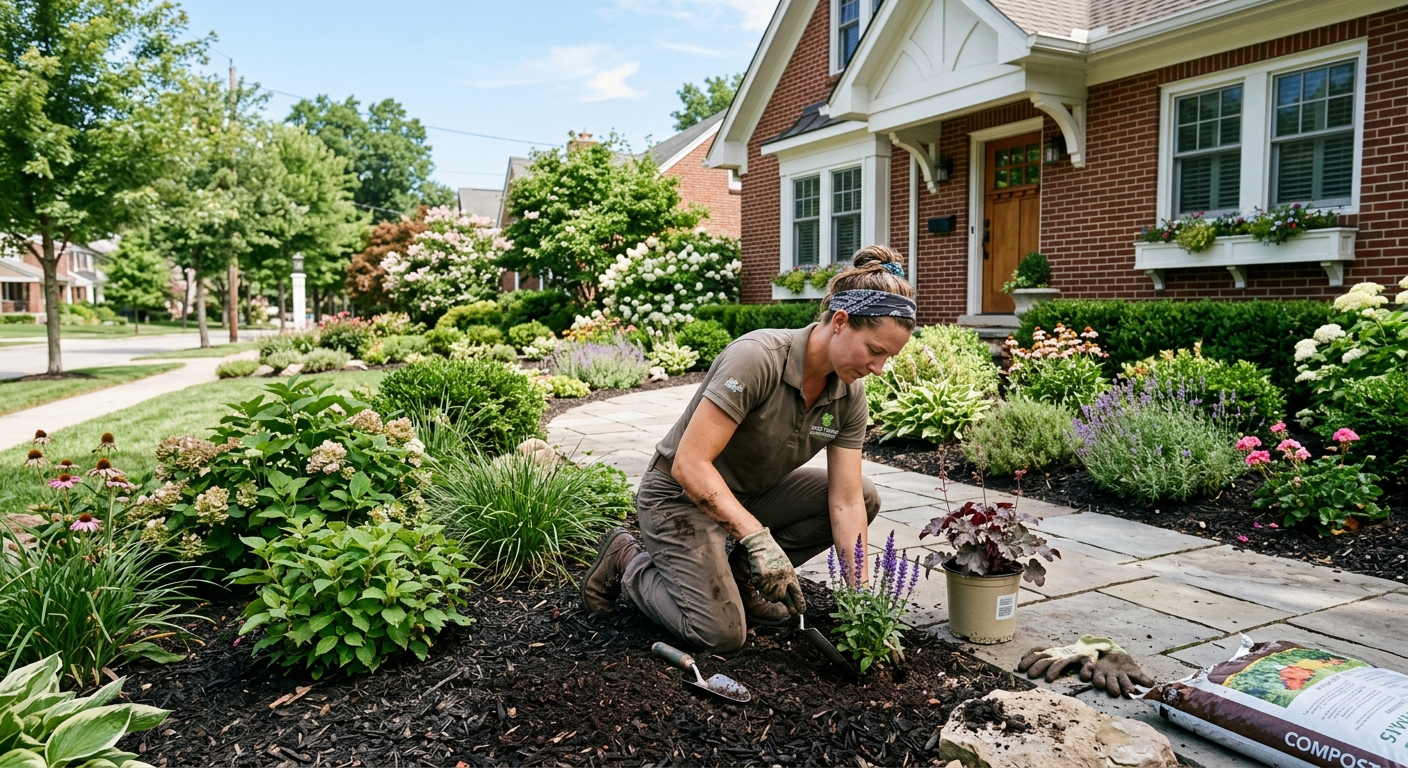
Landscaping options and costs in Mount Olive-Silverstone-Jamestown
In Mount Olive-Silverstone-Jamestown, homeowners typically decide between quick curb-impact projects and longer-term yard makeovers based on how much usable outdoor space they already have. With a population of 32,954 (Statistics Canada, 2021 Census), the area draws steady demand from surrounding GTA neighbourhoods, and that keeps contractor availability fairly good during the spring and early fall install windows. Most properties here are single-detached or similarly spacious lots, so many projects include both softscape (planting, lawn) and hardscape (patios, walkways) to make the yard feel like an extension of the home.
Toronto-area landscaping costs are strongly shaped by climate and soil. We’re working through plant hardiness zones 6a–7a, with winter lows near –23 to –18°C and frequent freeze–thaw cycles that make base preparation and drainage critical for patios, steps and retaining walls. Ground movement and pooling also mean clay and fill soils often need excavation, soil amendment, and sometimes subdrains—so even “standard” jobs can price higher than in milder regions. In practice, that’s why two neighbours with similar yards can still see different totals: one may need more regrading and a deeper structural base, while the other may only need surface-level work.
In Mount Olive-Silverstone-Jamestown, the trade is especially active around the Jamestown and Mount Pleasant-adjacent residential pockets where driveways, walk paths and front-porch curb appeal projects are popular. Use the comparison table below as a starting point for planning your budget and narrowing the scope for your quote.
| Service |
Description |
Season |
Price Range |
| Full landscape design and installation |
Consultation + concept layout, planting plan, grading/drainage direction, supply and installation of selected plants and soft/hardscape elements |
Spring to early fall (most installs complete by October) |
$8,000–$40,000 |
| Sod installation (supply, grade, lay, roll) |
Soil prep, level/grade correction, fertilize starter application, sod delivery and installation with rolling and watering plan |
Late spring to September (best establishment before cold snaps) |
$2,500–$8,000 |
| Lawn seeding (grade, seed, starter fertilizer) |
Minor grading, seed selection, starter fertilizer, light rake/rolling, and establishment watering guidance |
Spring after frost and in early fall |
$1,500–$6,000 |
| Interlocking patio or walkway |
Excavate, compacted base (often deeper where frost impacts apply), geotextile, pavers, edge restraint, joint sand and final grading |
May to October (base work is winter-sensitive) |
$6,000–$30,000 |
| Retaining wall (interlocking block) |
Block wall with proper drainage/weep components, compacted base, geogrid where required, and backfill |
Late spring to early fall |
$6,000–$30,000 |
| Tree and shrub planting |
Soil preparation, planting pits, staking where needed, mulch rings, and post-plant watering plan |
Spring and fall for best root establishment |
$800–$6,000 |
Prices are estimates only and vary by project scope, site access and material selection.
What affects the price of landscaping in Mount Olive-Silverstone-Jamestown
In Toronto and across Ontario, quotes for the same “type” of job can vary by 30–50% because contractors price the risk and effort behind the scenes: how much excavation is needed, whether drainage must be engineered into the plan, and what it takes to install materials to withstand freeze–thaw cycles. Labour rates also differ with how busy crews are in May through September, and what equipment is required for your specific lot.
First, the plant hardiness zone and frost dates define both what survives and what the working season allows. In Mount Olive-Silverstone-Jamestown (GTA area), we typically plan for installs in the May–October window, with winter lows near –23 to –18°C. That’s why full projects often budget deeper base prep for patios and walls, not just “pretty surfaces.” Prairie regions (Zone 2–4) face shorter seasons and more severe drought stress, so designs shift toward drought- and wind-hardy species; those jobs can be cheaper for irrigation but sometimes more expensive for hardening and simplified layouts. Coastal BC (Zone 7–8) supports a lush palette and longer season, but heavy rainfall still demands excellent drainage detailing. Dry BC interior municipalities may impose water restrictions, driving drip irrigation, low-precipitation heads and xeric planting, which changes both material and labour.
Local examples that move costs up or down in Mount Olive-Silverstone-Jamestown: (1) If your property has a clay-heavy grade that pushes runoff toward the house, we may add subdrains or a drainage bed before planting, which increases the hardscape/softscape tie-in cost. (2) If you’re adding an interlocking walkway over an old, unsettled subgrade, the excavation and re-compaction effort can add thousands compared with a site that only needs topsoil and seeding. (3) If your yard needs a mature tree transplant or a larger specimen shrub, labour and material selection can swing totals within the broader bands—for example, pushing a “small planting refresh” (often $800–$6,000) toward a design-style install when paired with drainage and a patio in the $6,000–$30,000 range.
| Price Factor |
Why It Matters |
Cost Impact |
| Yard size in sq ft — the primary cost driver for softscape |
More area means more materials (topsoil/seed/sod/mulch) and more labour hours for prep and install |
Can shift budgets by several thousands depending on whether you’re moving from small beds to full coverage lawn |
| Grading and drainage work — slope corrections add significant cost |
Toronto-area clay and fill often need regrading to stop pooling and protect foundation moisture |
Often adds major scope; can account for a large portion of total project cost on “simple-looking” lots |
| Drainage bed or French drain installation |
Intercepts subsurface water before it undermines pavers, walls, or root zones |
Material + excavation + proper fall to outlet; typically increases hardscape/overall project cost |
| Plant material tier — native shrubs vs. ornamental vs. mature specimen trees |
Hardiness matters in –23 to –18°C winters; larger sizes cost more and require more handling |
Can widen cost by thousands for the same “look” depending on plant sizes and how many are installed |
| Hardscape vs. softscape ratio — walls and patios cost more per sq ft than lawn |
Pavers and retaining walls require deeper, engineered base layers and restraint |
Higher hardscape ratio pushes you toward the upper bands (e.g., patios/walls in the $6,000–$30,000 range) |
| Irrigation system design and installation |
Helps establish lawns and beds; in summer dry spells it protects plant investments |
Added electrical/plumbing and controller setup; can increase total cost, especially for zones and trenches |
| Soil amendment and topsoil required |
Improves root growth in clay/fill soils; may be essential for seeding and long-term planting health |
Fills and amendments can materially increase material hauling and labour time |
| Tree removal or stump grinding before new planting |
Clearing impacts how much you can install and where; roots can damage new bases and drainage lines |
Pricing varies with stump diameter and access; can add a notable add-on to planting budgets |
Permits & regulations in Ontario
In Ontario, most homeowners are surprised that a typical planting day or lawn upgrade usually doesn’t require a permit. Generally, planting, sodding and most softscape work (mulch, shrub borders, walkway landscaping without major grade changes) can be done without a permit. However, retaining walls above a local height threshold—commonly around 1.0 m (3.3 ft) in many municipalities—often do require a building permit and sometimes engineered drawings, depending on the height, soil conditions and how the wall affects neighbouring lots or drainage. Also watch for lot grading changes: if the project alters drainage so runoff is directed toward neighbouring properties or storm connections, approvals may be triggered.
Before any digging, have utilities located (call to mark buried lines). This is especially important when installing drains, irrigation lines, or footing/base work for interlocking patios and retaining walls.
To verify a contractor in Mount Olive-Silverstone-Jamestown, Ontario, use this step-by-step approach:
- Ask for their Ontario business information and confirm credentials on the relevant online business registry (where applicable).
- Request a current certificate of liability insurance and check that the coverage is active for the job’s dates and includes property damage.
- Confirm WSIB coverage for Ontario workers (or request proof of clearance letter/status if they state they’re exempt).
- Get the permit responsibility in writing: who pulls permits, timelines, and what happens if approvals delay the work.
- Ensure site notes are clear: disposal, utility locates, and protection of existing drainage/curbs.
Planning a landscape that thrives in Mount Olive-Silverstone-Jamestown's climate
Designing for Mount Olive-Silverstone-Jamestown means working with Ontario’s winter freeze–thaw reality and the GTA’s zone 6a–7a conditions, not fighting them. Start with plant selection: choose hardy, zone-appropriate varieties with proven tolerance for winter lows around –23 to –18°C. Native and well-adapted perennials usually establish with less fuss, and they reduce the need for heavy winter protection compared with marginal species. Pair them with mulch (usually 2–3 inches, kept off stems) to buffer temperature swings and keep roots steadier.
For lawns, sod vs. seed is mostly about your timeline and acceptance of an establishment period. Sod gives instant visual results and stabilizes soil quickly, but it commonly costs about 3–4 times more per sq ft than seeding once you factor in prep quality and installation labour. A practical example: if you’re budgeting toward the lower end of lawn work (for instance, $2,500–$8,000 for sod on a moderate area), that can be justified when you need a finished look before a summer event or to reduce erosion on a sloped edge. If your goal is cost control, seeding typically fits better into a broader planning budget and can still look great with the right topdressing and watering schedule.
Drainage and grading are where Toronto-area projects win or fail. Pooling and foundation moisture issues aren’t cosmetic problems—they threaten the longevity of both planting beds and hardscape. For patio and retaining wall base prep, we design with frost in mind: properly compacted granular bases, adequate sub-base depth, and proper drainage outlets reduce heaving and movement.
Finally, low-maintenance design strategies can protect your time without sacrificing curb appeal: groundcovers for weed suppression, layered perennial beds, and mulch rings around shrubs. If water management is a concern, consider a rain garden in the downspout path or a more targeted low-water planting strategy (xeriscape-inspired zones using mulch, drought-tolerant perennials and, where feasible, drip irrigation).
| Element |
Climate Consideration |
Maintenance Level |
Price Band |
| Sod lawn installation |
Establishment window aligns with GTA’s spring to early fall; manage watering during hot weeks to prevent drought stress |
Low short-term once established; moderate for first 4–6 weeks |
$2,500–$8,000 |
| Native perennial garden |
Hardiness for winter lows and better resilience in freeze–thaw; mulch buffers root crowns |
Low to moderate (annual cleanup and seasonal refresh) |
$800–$6,000 |
| Mulched shrub border |
Zone-appropriate shrubs hold structure through winter; good mulch reduces moisture swings in clay soils |
Moderate (weeding first year, then minimal) |
$1,500–$7,500 |
| Interlocking stone patio |
Freeze–thaw requires deep, compacted bases and correct drainage to reduce movement |
Low (periodic joint sand and occasional minor adjustments) |
$6,000–$30,000 |
| Retaining wall (block) |
Wall stability depends on frost-safe base depth and proper back drainage behind the block |
Low (inspect weeps/drainage outlet; rare repairs) |
$6,000–$30,000 |
| Drip irrigation system |
Supports efficient water use during summer dry spells; reduces leaf wetness and improves root-zone watering |
Low once tuned; occasional filter/drip checks |
$1,200–$7,000 |
How to choose a landscaping contractor in Mount Olive-Silverstone-Jamestown
Choosing the right contractor is the fastest way to avoid budget surprises in Mount Olive-Silverstone-Jamestown. Start with Ontario coverage checks: request a current certificate of liability insurance (confirm it’s active and lists your address/job) and verify WSIB status for Ontario workers. If they claim clearance or exemption, ask for the appropriate WSIB clearance letter or written proof of their status. Don’t accept “we’re covered” without documentation.
Next, get 2–3 itemised written quotes. You want labour and materials broken out—excavation/haul-away, base materials, drainage components, geotextile, plant list and quantities, and disposal—rather than one lump sum. Compare the scope line-by-line: is permit handling included (when applicable), and who pays for utility locates and disposal? In Ontario, many jobs don’t need a permit, but retaining walls above the local height threshold frequently do, and you should know who pulls it.
Warranty matters. Ask for a workmanship warranty (how long, what’s covered, and whether failures from improper base prep are addressed). Also ask about product/manufacturer warranties for trees/shrubs where offered, and whether coverage is transferable if you sell the property.
Payment schedule should protect you: never pay more than about 10–15% upfront. Use progress payments tied to milestones (excavation complete, base compacted, wall/patio laid, planting installed). Holdback until final cleanup and walkthrough.
Finally, insist on a written timeline: a start date and realistic completion estimate based on weather windows in Ontario.
- Provide proof of liability insurance and WSIB coverage before work begins.
- Use itemised quotes with quantities (sq ft/sq m and number of plants), not vague allowances.
- Confirm disposal/haul-away is included (especially for clay and old base removal).
- Clarify grading goals: where runoff will go and how drainage ties into downspouts or storm services.
- Ask whether geotextile and proper base compaction are included for patios and walkways.
- Confirm retaining wall details: drainage layer, weeps/weep holes, and backfill compaction.
- Request a plant list with sizes (e.g., 2.0 m tall, 5-gallon) and spacing.
- Ask who handles utility locates and how they protect existing lines.
- Verify irrigation work includes controller setup and testing where specified.
- Get warranty terms in writing for both workmanship and plant material replacements.
- Set a milestone-based payment schedule with a holdback until final inspection.
- Confirm site protection (silt control, protection of lawn/driveway) and cleanup standards.
Red flags to watch: (1) offers a low price but won’t itemise labour/materials; (2) avoids proof of WSIB/liability paperwork; (3) promises sod or patio completion regardless of weather/base conditions; (4) doesn’t explain drainage or base prep; and (5) asks for a large upfront payment (well beyond 10–15%) without milestones.
Frequently asked questions — landscaping in Mount Olive-Silverstone-Jamestown
How do I design a low-water yard in Mount Olive-Silverstone-Jamestown?
For Mount Olive-Silverstone-Jamestown, the key is to reduce evaporation and water only where plants actually need it. Start with better soil: add topsoil/compost and use mulch in beds to limit moisture loss during hot weeks. Then choose plants that tolerate GTA winters (zone 6a–7a) and summer stress—native perennials and hardy shrubs usually perform well. For irrigation, consider drip lines targeted to root zones rather than sprinklers over the whole lawn. If you’re dealing with downspouts or pooling after storms, a rain garden or swale can capture runoff and reduce reliance on hoses. Even if you’re still keeping a lawn, shrinking the lawn footprint helps; replacing some turf with mulched borders often lowers overall water demand and maintenance.
How do I find a licensed landscaper in Mount Olive-Silverstone-Jamestown?
In Ontario, “licensed” can mean different things depending on the contractor type, but you should still verify credentials and coverage before hiring. Start by asking for their WSIB status: request a WSIB clearance letter if they say they’re exempt, or proof they’re registered. Then ask for a certificate of liability insurance with your project dates/address. For business legitimacy, ask for their business information and confirm it through the appropriate online registry sources. When you meet them, request an itemised quote and check whether they address Ontario regulatory realities like permits for retaining walls above the local height threshold and utility locates before digging. A reputable contractor in Mount Olive-Silverstone-Jamestown will answer questions clearly and put scope, exclusions, and timelines in writing.
How much does landscaping cost in Mount Olive-Silverstone-Jamestown?
Landscaping costs vary widely based on yard size, grading/drainage needs, and whether you’re adding hardscape. For context, a full landscape design and installation commonly sits in the $8,000–$40,000 range for many GTA-scale projects. If you’re focused on lawn only, sod installation often lands around $2,500–$8,000 depending on area and soil prep. Interlocking patios and walkways and properly built retaining walls typically fall into the $6,000–$30,000 band because freeze–thaw-resistant base preparation is labour-intensive. Tree and shrub planting is usually the most budget-friendly line item (often $800–$6,000) but still varies by plant size. The fastest way to get accurate pricing is an itemised quote that addresses drainage and subgrade, not just visible materials.
What plants thrive in Mount Olive-Silverstone-Jamestown's climate zone?
Mount Olive-Silverstone-Jamestown is in the GTA area’s zone 6a–7a, so you want plants proven for winter lows near –23 to –18°C and capable of bouncing back after freeze–thaw cycles. In many GTA yards, hardy shrubs like serviceberry and hydrangeas (selected cultivars), along with layered native perennials, create strong seasonal interest. For groundcovers, use options that handle cold winters and help suppress weeds under mulch. When selecting trees, opt for species that suit local soil conditions—especially if your site has heavier clay and drainage challenges. Your best approach is to choose a “structure” framework (a few shrubs/small trees) plus perennials for colour, all sized for the space. A good contractor can also recommend mulch depth and spacing so plants don’t heave or dry out during Ontario summers.
Sod vs seed — which is better for a Mount Olive-Silverstone-Jamestown lawn?
Both work in Ontario, but the “better” choice depends on your timeline and the condition of your soil. Sod gives an instant, finished appearance and can stabilize soil quickly, which is helpful if you’re restoring a patchy lawn or dealing with minor erosion. However, sod typically costs about 3–4 times more per sq ft than seeding once prep and installation are included. Seeding is usually more budget-friendly and fits well when you can commit to establishment watering. If you want a price anchor for budgeting: sod installation often lands around $2,500–$8,000 depending on area, while seeding usually fits into a lower overall range. In Mount Olive-Silverstone-Jamestown, we time both methods within the May–October window so young grass can establish before colder weather.
How much does a retaining wall cost in Mount Olive-Silverstone-Jamestown?
Retaining wall costs depend on wall length, height, block type, and—most importantly—how much base and drainage work is required for stability through Ontario’s freeze–thaw cycles. In the GTA, a typical interlocking block retaining wall commonly falls in the $6,000–$30,000 band. You’ll also want to confirm permit requirements: retaining walls above a common threshold of around 1.0 m (3.3 ft) in many Ontario municipalities often need permits and sometimes engineering details. Drainage behind the wall (weep holes, proper granular backfill and sometimes subdrains) is where contractors either build it right—or cut corners. If your yard has clay-heavy soil or drainage issues toward foundations, plan for additional grading and drainage work to protect the wall and the surrounding landscape.