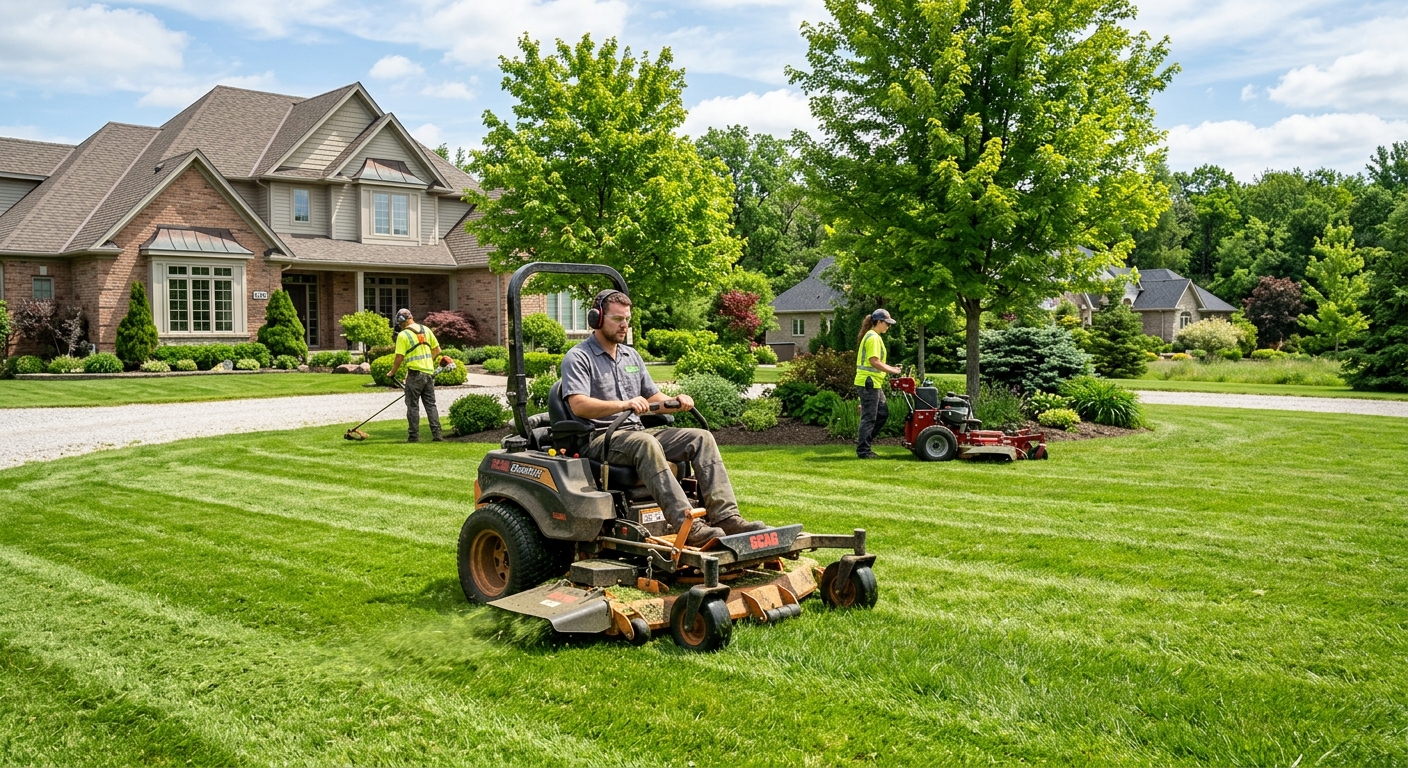
Landscaping options and costs in Bridgeport
Bridgeport, Ontario is a great place to invest in your outdoor space, especially because a lot of homeowners are already thinking in long-term, property-improvement timelines—after all, the area has a population of 5,902 (Statistics Canada, 2021 Census). In neighbourhoods with more detached and yard-friendly homes, you’ll often see higher demand for curb appeal upgrades, privacy planting, and hardscape that looks sharp through winter and spring thaw. In Toronto’s broader housing market, detached properties typically mean more uninterrupted yard coverage, which nudges budgets toward lawn, walkways, and layered planting beds instead of small “front-only” jobs.
Cost in Bridgeport is shaped by the GTA’s freeze–thaw cycles and the local soil conditions—commonly clay and compacted fill—so grading, drainage, and proper bases for patios and walls aren’t optional. Labour and scheduling can also affect your final total: the frost-free installation window is roughly May to October, and crews get booked quickly as lawns, sod, and spring planting demand peaks. If you’re in demand areas such as the Bridgeport Village vicinity, contractors often see higher competition for late-spring dates, which is one reason two bids for the “same” yard can differ meaningfully.
Below is a realistic cost range for common projects, so you can compare apples to apples before you start requesting itemised quotes.
| Service |
Description |
Season |
Price Range |
| Full landscape design and installation |
Site visit, concept + grading plan, soil prep, plant layout, lawn/bed installation, hardscape coordination |
May–October |
$8,000–$40,000 |
| Sod installation (supply, grade, lay, roll) |
Remove debris, fine-grade, compost/topsoil as needed, lay sod, roll + first watering |
Late April–June, early September |
$2,500–$8,000 |
| Lawn seeding (grade, seed, starter fertilizer) |
Scarify/light top dress, seed selection, starter fertilizer, keep-off and water plan |
April–May, August–mid September |
$1,800–$5,500 |
| Interlocking patio or walkway |
Excavation, compacted base, geotextile, interlocking stone, edge restraint, joint sand |
May–October |
$6,000–$25,000 |
| Retaining wall (interlocking block) |
Excavate to stable depth, compacted granular base, block installation, weep/drainage provisions |
May–October |
$6,000–$30,000 |
| Tree and shrub planting |
Plant layout, soil amendments, digging, planting, staking as needed, mulch and initial watering plan |
May–June, September–October |
$800–$6,000 |
Prices are estimates only and vary by project scope, site access and material selection.
What affects the price of landscaping in Bridgeport
In Bridgeport, two contractors can quote the same “headline” project—say, a patio plus new beds—and still land 30–50% apart because the details change: excavation depth, soil conditioning, drainage strategy, plant quality, and how much manual labour is required to achieve proper slopes and clean edges. In the Toronto region, hardscape and grading work is also labour-heavy, and the short frost-free window tends to increase scheduling pressure for crews when spring demand is high.
Climate plays a direct role in what you can install and how long it will perform. The GTA generally falls in plant hardiness zones 6a–7a, where woody structure and perennials must handle winter lows around –23 to –18°C. Those temperatures—and the frequent freeze–thaw cycles—define the thickness of bases and the frost-protection needs for walls, steps, and retaining features. Prairie regions (Zone 2–4) usually push designs toward drought- and wind-tolerant species and simpler planting palettes because shorter growing seasons and harsher winter conditions limit options; retaining-wall bases there often need deeper, more conservative build-ups. Coastal BC (Zone 7–8) supports broader palettes and longer growing periods, but heavy rainfall means drainage design matters differently. Southern Ontario offers a moderate season, yet dry spells still increase irrigation needs in summer.
Concrete local examples: if your yard has clay fill and low spots, correcting slope and adding drainage can push an interlocking project from the lower band of $6,000–$25,000 toward the higher end due to extra excavation and granular base. Or, if you choose a mature specimen shrub or tree in the $800–$6,000 planting range, the higher material price and careful transplant/staking time can add significantly more labour than a standard 2–3 ft shrub install. Housing age can also matter—older properties often need more drainage correction and may have compacted soils that require more amendment and labour before any lawn or bed work will hold up.
| Price Factor |
Why It Matters |
Cost Impact |
| Yard size in sq ft — the primary cost driver for softscape |
More area means more topsoil/seed/sod, more edging, and more time grading |
Softscape can swing widely; lawn-style work often scales fastest with square footage |
| Grading and drainage work — slope corrections add significant cost |
Freeze–thaw highlights poor drainage; correct slopes protect foundations and walkways |
Can add major labour and material—often the difference between “basic” and “full” site prep |
| Drainage bed or French drain installation |
Reduces pooling and redirects subsurface water under hardscape |
Often increases budgets materially because it includes trenching, stone, fabric, and discharge routing |
| Plant material tier — native shrubs vs. ornamental vs. mature specimen trees |
Mature stock costs more and needs more labour for careful placement and staking |
Can shift planting projects across the $800–$6,000 range and beyond for larger trees |
| Hardscape vs. softscape ratio — walls and patios cost more per sq ft than lawn |
Concrete/stone bases, excavation, and compaction drive higher costs |
Increasing patio/wall coverage quickly pushes total into higher price tiers |
| Irrigation system design and installation |
Zone targeting, backflow, and head layout are crucial to prevent winter damage |
Improves long-term performance but adds upfront design + hardware + trenching |
| Soil amendment and topsoil required |
Clay and fill need structure and nutrients for roots; depth matters |
More amendment and hauling raises costs, especially for large bed builds |
| Tree removal or stump grinding before new planting |
Clearing affects access, disposal, and the remaining usable planting footprint |
Can add both equipment time and additional hauling; sometimes changes the whole layout |
Permits & regulations in Ontario
For most residential landscaping in Ontario—including planting, sodding, and the majority of softscape work like garden beds and mulch installation—you typically do not need a permit. The permit conversation usually starts when you change the engineered structure or drainage behaviour of the lot. A retaining wall is the most common trigger: in many Ontario municipalities, walls above a threshold—typically 1.0 m (3.3 ft)—require a permit, and in some cases engineered drawings. Also, if your project involves major grading changes that affect how water moves toward neighbouring properties or storm connections, you may need approval.
Before any digging, homeowners should plan utility locates. Even for planting holes, wall footings, and trenching for drainage or irrigation, call for locates so you don’t hit buried services. Confirm irrigation and water-use bylaws with your local authority during drought conditions—while those rules are stricter in some regions, Ontario municipalities can still limit watering schedules in dry spells.
To verify a contractor in Bridgeport step-by-step, ask for proof of these items and check them before work starts: (1) Ontario licence/registration information via the appropriate online registry linked to the contractor’s legal entity name; (2) liability insurance—request a current certificate of insurance and confirm the policy limits are adequate for landscaping operations; (3) WSIB/WCB clearance (coverage letter/clearance number for the current period). A reputable contractor won’t hesitate to provide documentation with your bid.
Planning a landscape that thrives in Bridgeport's climate
To plan a yard that thrives in Bridgeport, you want to work with the local hardiness conditions (zones 6a–7a) and the realities of Toronto’s frost and thaw. Start with plant selection: choose zone-appropriate and, where practical, native species that can handle winter lows around –23 to –18°C without heavy winter “make-do” protection. Group plants by microclimate—full sun, partial shade, and damp corners near downspouts—so you’re not forcing everything to compete in the same soil and moisture level.
Next, decide between sod and seed. In general, sod gives you instant coverage but costs roughly 3–4x per sq ft compared with seeding because you’re paying for pre-grown turf and tighter installation labour. Seeding is a smart choice when you can maintain watering and weed control through establishment, especially in spring or early fall. In Bridgeport, drainage and grading come third: clay and freeze–thaw will punish low spots, so you should plan for proper slope away from the house and, where needed, a drainage bed or French drain before hardscape goes in.
For hardscape like patios and retaining walls, base preparation is where long-term performance is won or lost—enough granular depth, proper compaction, and correct geotextile separation are essential for stability through freeze–thaw cycles. Low-maintenance strategies help too: mulch, groundcovers, and perennials reduce annual upkeep while maintaining curb appeal. If water is a concern during hot summers, consider rain-garden pockets and xeriscape-adjacent planting—still compatible with Toronto’s climate—paired with a drip-ready irrigation plan.
Dollar example: if you’re covering the same area of lawn, a $2,500–$8,000 sod installation may be justified if you need quick visual results before a listing or event. If timing is flexible and you can water consistently, seeding can often cost substantially less, allowing your budget to shift toward drainage correction and bed build-up, which usually delivers better long-term performance.
| Element |
Climate Consideration |
Maintenance Level |
Price Band |
| Sod lawn installation |
Best installed late spring or early fall to reduce winter stress; needs good grading to prevent winter pooling |
Medium during establishment; lower after roots knit in |
$2,500–$8,000 |
| Native perennial garden |
Zone-appropriate plants handle –23 to –18°C winters with less fuss; mulch improves winter root stability |
Low to medium (weeding first year, then lighter upkeep) |
$1,500–$6,500 |
| Mulched shrub border |
Mulch moderates freeze–thaw impact and reduces soil heaving around shrub bases |
Low (annual refresh and occasional pruning) |
$1,200–$5,000 |
| Interlocking stone patio |
Requires proper base depth and compaction to withstand freeze–thaw; edge restraint prevents spreading |
Low (occasional joint sand/spot cleaning) |
$6,000–$25,000 |
| Retaining wall (block) |
Stable drainage behind the wall and correct footing depth prevents movement during freeze–thaw |
Low (periodic inspection of drainage weep areas) |
$6,000–$30,000 |
| Drip irrigation system |
Good for targeted watering; helps manage summer dry spells while reducing waste; winterisation is key |
Medium initially; low ongoing once tuned |
$1,500–$6,500 |
How to choose a landscaping contractor in Bridgeport
Choosing the right landscaper in Bridgeport starts with verifying the basics and then reading the quote like a contract, not a brochure. First, confirm Ontario licensing/registration tied to the contractor’s legal name, then ask for a current certificate of liability insurance (not expired) with limits that fit the size of your project. Next, require WSIB/WCB clearance for the period your work is scheduled—request the clearance letter or confirmation number so it’s easy to validate. If a contractor can’t provide these promptly, that’s a risk flag for both safety and payment protection.
Get 2–3 itemised written quotes (labour + materials breakdown). Look for line items for excavation, base materials, disposal, soil/topsoil, geotextile/geogrid where applicable, and plant quantities/sizes. A lump-sum-only quote makes it hard to compare who is doing the real work. Read scope exclusions carefully: Is permit pulling included if required? Is disposal included (common when you’re hauling away clay fill or excess material)? Are utilities locates included or the homeowner’s responsibility?
Warranty matters. Ask for the workmanship warranty length and what it covers (settling, drainage failures, paver edge movement, plant replacement terms). Also confirm whether manufacturer warranties for materials are transferable to you. For payment, use a sensible schedule: never pay more than 10–15% upfront, and hold back the remainder until the job is complete and any punch-list items are corrected. Finally, get a written timeline with a start date and estimated completion date, not just “weather permitting.”
- Provide proof of liability insurance and WSIB/WCB clearance before signing.
- Use a written, signed contract with an itemised scope—not just a proposal email.
- Specify plant sizes (height/spread) and the exact quantities.
- Confirm base build details (granular depth, compaction, fabric/geotextile use).
- Ask how drainage will be handled (slope targets, drains, weep provisions).
- Clarify disposal/hauling and whether excess soil/topsoil is included.
- Confirm edging/restraint for pavers and steps.
- Ask who performs utility locates and when trenching begins.
- Request an irrigation plan if you’re watering sod or new beds.
- Get a clear start date, completion estimate, and rain-delay approach.
- Review workmanship warranty terms in writing (duration and conditions).
- Confirm product/manufacturer warranty and whether it’s transferable.
Red flags to watch in Bridgeport: (1) offers only verbal assurances about drainage or frost stability; (2) avoids insurance/WSIB clearance questions or provides outdated documents; (3) skips itemisation and hides assumptions in “allowances”; (4) demands large upfront payments beyond 10–15%; and (5) uses vague timelines like “spring 2026” without dates or completion targets.
Frequently asked questions — landscaping in Bridgeport
Do I need a permit for a retaining wall in Ontario?
In Ontario, planting and most softscape work usually don’t require a permit, but retaining walls are a different category. Many municipalities typically require a permit when a retaining wall is above about 1.0 m (3.3 ft), and they may request engineered support depending on height, soil conditions, and the design. In Bridgeport, the key is how the wall affects stability and drainage—freeze–thaw cycles can stress poorly drained builds. Start by asking your contractor whether they will confirm permit requirements and, if needed, whether permit pulling is included in the quote. For context, retaining walls often fall in the $6,000–$30,000 range; if permitting/engineering is required, that can shift your total and your timeline.
How do I improve drainage in my yard?
Drainage improvements usually mean fixing both the surface slope and the subsurface water flow. In Bridgeport and the Toronto area, clay and fill can hold water, and winter freeze–thaw can worsen pooling that leads to soft ground and shifting hardscape. Start with an inspection: look for damp zones near foundations, water that lingers after rain, and areas where downspouts discharge without a proper splash pad or diversion. Options commonly include regrading (correcting slopes away from the house), installing a drainage bed, or adding a French drain connected to a lawful outlet. If you’re already budgeting for hardscape, fixing drainage before patios or walkways prevents rework. Contractors often bundle drainage into grading projects, which is one reason bids can vary across the $8,000–$40,000 design-and-install range.
What is xeriscaping and does it suit Bridgeport?
Xeriscaping is a water-smart landscape approach that uses drought-tolerant plants, soil improvements, mulch, and efficient irrigation to reduce water use. In Bridgeport (Ontario, zones 6a–7a), it can suit many yards, especially where summer watering is difficult or you want to lower long-term maintenance. That said, GTA winters still include hard freezes, so the “xeric” plant list must still be cold-hardy to survive around –23 to –18°C. A good compromise is xeriscape-inspired beds: thicker mulch layers, resilient perennials, and smart irrigation (often drip) during establishment. If you’re planning lawn upgrades, keep in mind that sod can cost around $2,500–$8,000 for many residential installs, so pairing reduced turf with efficient planting can stretch your budget while maintaining curb appeal through spring and fall.
How do I plan a low-maintenance yard?
A low-maintenance yard in Bridgeport is usually designed around three principles: (1) choose tough, zone-appropriate plants; (2) build healthy soil with proper grading and mulch; and (3) reduce high-effort surfaces like constant-weeding bare ground. Use groundcovers and layered shrub/perennial borders so weeds have less space. Prioritise drainage so plants aren’t sitting in winter-saturated clay, which increases spring dieback. For turf, sod provides instant cover but requires establishment care; seeding is often cheaper but depends on consistent watering. If you want quick visual results while still lowering upkeep, you can keep turf to a defined footprint and spend more on mulched beds and perennial structure. For a typical direction, many homeowners invest in “full design and installation” packages in the $8,000–$40,000 band so grading, planting, and hardscape details are coordinated instead of patched later.
How deep should a retaining-wall base be for local frost?
There isn’t a single “one depth fits all” answer, because the correct retaining-wall footing/base depth depends on wall height, block system requirements, soil type, and local engineering/design. However, in Bridgeport and the GTA, you must account for freeze–thaw movement: water in the soil expands and contracts, so the base must be placed below frost-susceptible conditions and built with proper granular base, compaction, and drainage behind the wall. That’s why drainage components (weep holes, drainage gravel, and proper outlets) are not optional. In practice, a well-detailed installation is planned to remain stable through the winter cycles rather than simply “stacked blocks on topsoil.” If you’re seeing bids that don’t explain footing/base and drainage layers clearly, ask for the base build-up and any system specifications before you proceed.
How much does professional landscape design cost?
Professional landscape design pricing in the Toronto area varies by scope and whether it’s a design-only plan or bundled with installation. Many homeowners in Bridgeport end up spending in the $8,000–$40,000 range for full landscape design and installation when grading, planting, and hardscape are included, especially if drainage fixes are required. Design-only work can be lower, but it still needs a proper survey/site understanding and should reflect hardscape placement, plant layout, and drainage direction. A good quote will explain what’s included: concept + final layout, plant palette recommendations, and any grading/drainage plan. When you request itemised bids, make sure the contractor clearly separates design time from installation labour/materials, so you can compare value without hiding costs in a lump sum.