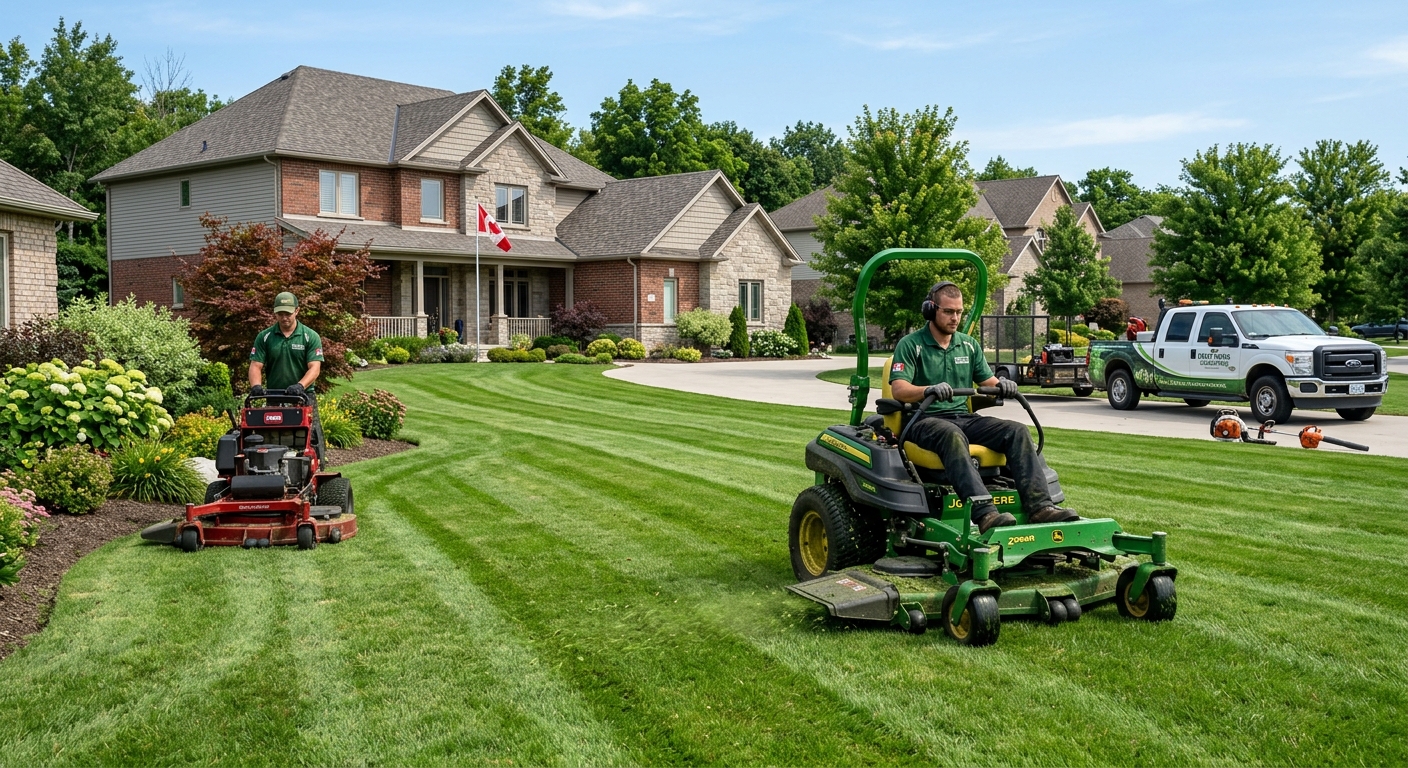
Landscaping options and costs in Chatham
Chatham homeowners usually start landscaping projects with a goal: boost curb appeal, fix drainage, or create usable outdoor space without overpaying. With a population of 43,550 (Statistics Canada, 2021 Census), and lots of detached housing that naturally comes with yard space to work with, the demand for quality design-and-install work is steady around the city. In Windsor–Sarnia (Zone 6b–7b), we get a long-ish planting window compared with colder regions, with typical last spring frost in late April to early May and first fall frost around late October—so most contractors can install softscape and most hardscape during May–October.
Pricing in Chatham still reflects market reality: you’re paying for crews, scheduling, and materials that must hold up through Southern Ontario freeze–thaw cycles. Clay soils in many neighbourhoods can increase grading and drainage prep, and that prep is often where estimates diverge. If you’re in high-demand areas like the west end near the Golfview neighbourhood and surrounding residential pockets (where families invest early in spring planting), you’ll often see faster booking but also more variation in quote detail.
To help you compare like-for-like, the table below summarizes common landscaping scopes and typical Chatham price bands.
| Service |
Description |
Season |
Price Range |
| Full landscape design and installation |
Site visit, design plan, grading/drainage notes, plant palette, hardscape/softscape install (sod, beds, patio, lighting as scoped) |
May–October |
$8,000–$35,000 |
| Sod installation (supply, grade, lay, roll) |
Remove/prepare existing grass, grade to pitch away from house, soil amendment, supply and install sod |
Late April–June / Early September |
$2,500–$9,000 |
| Lawn seeding (grade, seed, starter fertilizer) |
Light grading, soil prep, seed mix, starter fertilizer, initial watering guidance |
May–June / September |
$1,500–$6,500 |
| Interlocking patio or walkway |
Excavation, compacted base, levelling sand, interlocking stone, edge restraints, finishing |
May–October |
$6,000–$30,000 |
| Retaining wall (interlocking block) |
Engineered-style base approach, geotextile/backfill, drainage layer, wall blocks and cap as applicable |
May–October |
$6,000–$40,000 |
| Tree and shrub planting |
Soil preparation, planting, staking where needed, mulch rings, first-season watering plan |
May–October (and some early fall) |
$1,500–$10,000 |
Prices are estimates only and vary by project scope, site access and material selection.
What affects the price of landscaping in Chatham
In the Windsor–Sarnia region around Chatham, it’s common to see quotes for the “same job” land 30–50% apart. The difference usually isn’t the labour crew alone—it’s what’s included in preparation, the level of drainage engineering, how premium the plant material is, and how much hardscape is replacing lawn. Even within Ontario, winter freeze–thaw cycles and soil conditions force contractors to design bases and planting edges correctly, and those details can move a budget quickly. In softer-weather markets the margin can be smaller; here, Southern Ontario’s moderate season still requires proper setup to avoid heaving, settled patios, and premature plant loss.
Climate zone and frost timing drive both product choice and the working season. In Zone 6b–7b, you can reliably use a broader palette than in Prairie provinces (Zone 2–4), so crews can install more variety. But because freezing occurs and repeat cycles stress foundations, retaining walls and hardscapes often require deeper, more robust base construction than many homeowners expect. For example, a modest interlocking patio and planting refresh might sit in the $8,000–$35,000 full-design band when grading and multiple bed areas are included, while a drainage-heavy retaining wall can push closer to the $6,000–$40,000 hardscaping band depending on wall length and backfill requirements. By contrast, simple lawn work stays within the $2,500–$9,000 sod band if the grade is already correct.
Concrete Chatham examples that raise cost: (1) clay-heavy yards that need significant regrading to prevent pooling near a foundation; (2) installing a French drain where water naturally collects, which adds excavation, pipe, and gravel work; and (3) adding mature trees or larger shrubs, which increase both material cost and planting labour. On older homes and established lots, root removal or stump grinding before new beds can also add meaningful cost, sometimes shifting the job from a “planting-only” scope into a design-and-install budget.
| Price Factor |
Why It Matters |
Cost Impact |
| Yard size in sq ft — the primary cost driver for softscape |
More square footage increases soil prep, materials, and installation time |
Often the largest variable—can change total cost by thousands |
| Grading and drainage work — slope corrections add significant cost |
Correct pitch directs water away from foundations and slabs |
Can add substantial excavation and import/haul costs |
| Drainage bed or French drain installation |
Under-drain systems reduce hydrostatic pressure and pooling |
Upgrades a basic landscape to a “water-management” project |
| Plant material tier — native shrubs vs. ornamental vs. mature specimen trees |
Hardier native plants cost less to maintain; mature specimens cost more up front |
Premium plants can raise the tree/shrub line-item significantly |
| Hardscape vs. softscape ratio — walls and patios cost more per sq ft than lawn |
Stone, base materials, and thicker labour-intensive construction increase cost |
Higher hardscape share usually pushes budgets toward the hardscaping bands |
| Irrigation system design and installation |
Zoned watering, proper coverage, and smart controllers improve survival rates |
Adds equipment, trenching, and commissioning time |
| Soil amendment and topsoil required |
Clay can compact and drain poorly; amendments improve rooting conditions |
Import quantities can materially change total costs |
| Tree removal or stump grinding before new planting |
Old lots need clearance for beds and sometimes new grades |
Can add cost and time before planting even begins |
Permits & regulations in Ontario
In Ontario, most everyday soft landscaping work—planting, sodding, seeding, and typical changes to garden beds—usually does not require a building permit. That said, retaining walls are where homeowners most often run into permit requirements. In many Ontario municipalities, retaining walls above a height threshold—commonly around 1.0 m (3.3 ft)—need a building permit, and more complex sites may also require engineering drawings. Also, if you plan grading changes that alter drainage patterns (for example, directing runoff toward a neighbouring property or into storm sewer connections where it wasn’t previously managed), approvals may be triggered.
No matter what the scope is, always call for utility locates before digging planting holes, trenching for drains, or building wall footings. This is one of the quickest ways to avoid expensive delays or safety issues.
To verify your Chatham contractor properly, don’t rely on verbal assurances. Step-by-step: (1) confirm the contractor’s Ontario licence/registration status through the relevant provincial registry the contractor provides; (2) request a current certificate of insurance (liability insurance) naming you as the certificate holder when applicable; (3) ask for WSIB/WCB clearance information—get it in writing (often a clearance letter or current coverage documentation). If they can’t produce these documents quickly, that’s your first “pause and verify” moment before paying deposits.
Planning a landscape that thrives in Chatham's climate
To plan well in Chatham, aim to work with Zone 6b–7b conditions and Southern Ontario’s freeze–thaw reality—especially around foundations and hardscape bases. Start with plant selection: choose zone-appropriate, hardy perennials and shrubs (native where practical) that establish quickly and require less winter protection. For lawns, decide between sod and seed based on your timeline and budget: sod gives instant results but typically costs about 3–4x more per sq ft than seeding once you include prep and installation. If you want “this summer” curb appeal, sod can be justified; if you can tolerate gradual establishment, seeding is the smarter value.
Next, prioritize drainage and grading. In Windsor–Sarnia, yards with clay soils can hold water and lead to foundation moisture, heaving, and plant stress. Make sure the grade pitches away from the house, and consider a drainage bed or French drain where water collects. For hardscape, base preparation matters as much as stone choice: interlocking patios and block retaining walls must be built on properly compacted bases designed for local frost movement. Finally, use low-maintenance strategies: mulch rings, groundcovers, and layered perennial borders reduce annual weeding and watering while still looking full.
If you want to reduce irrigation demand, add xeriscape elements (drought-tolerant plantings and smart mulching) and/or a rain garden where downspout runoff can soak in. For a simple example: if sod vs. seed is the main choice on a front lawn area, spending extra for sod may be worth it to solve a usability deadline, but if the site needs regrading first, that correction can be the better “spend” before you buy any premium turf. In many Chatham projects, that’s where costs move toward the $8,000–$35,000 design-and-install band because grading, soil amendments, and bed creation are bundled together.
| Element |
Climate Consideration |
Maintenance Level |
Price Band |
| Sod lawn installation |
Fast establishment in warm months; still requires correct pitch and frost-safe prep |
Low to moderate (watering during establishment, then regular lawn care) |
$2,500–$9,000 |
| Native perennial garden |
Zone-appropriate plants handle winter swings; deep roots support drought tolerance |
Moderate (seasonal weeding and cutback) |
$3,000–$10,000 |
| Mulched shrub border |
Mulch improves moisture retention and moderates freeze–thaw at root zones |
Low (top-up mulch and light pruning) |
$2,500–$8,500 |
| Interlocking stone patio |
Needs compacted base to resist frost movement and freeze–thaw settlement |
Low (occasional joint sand and cleaning) |
$6,000–$30,000 |
| Retaining wall (block) |
Proper drainage behind wall prevents water pressure during thaw periods |
Low (annual inspection of drainage and seating) |
$6,000–$40,000 |
| Drip irrigation system |
Efficient watering for heat and dry spells while reducing leaf disease risk |
Moderate (winterization and seasonal checks) |
$1,500–$7,500 |
How to choose a landscaping contractor in Chatham
Choosing the right contractor in Chatham starts with verification, not price alone. For Ontario projects, ask for proof of general liability insurance (and confirm it covers the work you’re hiring them for), and request their WSIB/WCB clearance information in writing. How to check: (1) look for a current certificate of insurance that matches the company name on the contract; (2) confirm WSIB/WCB coverage/clearance can be provided before work begins; and (3) verify their Ontario business registration and any applicable trade-related registrations they claim. A reputable contractor should be comfortable sharing documents quickly.
Get 2–3 itemised written quotes instead of one “lump sum” number. Your quote should break out labour and materials—especially for soil haul/topsoil, base materials for patios, drainage components, and plant quantities (trees by size/gallon, shrubs by count, and sod by sq ft). Read the scope carefully: what is excluded (topsoil beyond a certain depth, disposal/hauling, tree removal, extra excavation, permit fees if applicable)? Confirm whether debris disposal and site protection are included. Warranty matters too: ask for workmanship warranty length (common to request at least a season), manufacturer warranties for specific products, and whether coverage is transferable if you sell your home.
For payments, never pay more than 10–15% upfront. Use a holdback until key milestones are completed and confirmed. Finally, insist on a start date and estimated completion date in writing so scheduling changes don’t drift indefinitely.
- Ask for insurance + WSIB/WCB clearance documents before signing.
- Get itemised quantities (sq ft for sod/patio, linear ft for walls, count/size for plants).
- Confirm who supplies soil/topsoil and how much, plus amendment details.
- Require written scope for drainage: pipe size, gravel type, and outfall strategy.
- Make sure base build-up specs are included for patios and retaining walls.
- Clarify disposal/hauling and whether dump fees are included.
- Check whether irrigation ties-in and controller setup are part of the scope.
- Ask about winterization responsibilities if the project runs into fall.
- Confirm product grade: interlocking stone thickness, block type, and soil amendment brand/type.
- Verify warranty terms in writing, including workmanship and replacements.
- Use a sensible payment schedule (small deposit, holdback at substantial completion).
- Get a written timeline with weather-contingency notes.
In Chatham, common red flags include contractors who: (1) won’t provide insurance or WSIB/WCB clearance up front, (2) quote without itemising labour/materials (no quantities or base specs), (3) rush deposits beyond 10–15% or demand full payment early, (4) skip drainage explanations or refuse to address pooling near foundations, and (5) treat frost-proofing as “optional” for patios and retaining wall bases.
Frequently asked questions — landscaping in Chatham
When is the best time to landscape in Chatham?
The best window for landscaping in Chatham is generally May through October, because Windsor–Sarnia’s Zone 6b–7b conditions support installation and establishment during warm months. Late April to early May is usually when crews can get going after the last spring frosts, and early fall (through September/early October) can work well for planting—especially shrubs and perennials—if the soil is workable. Sod is most reliable in spring and early fall, while seeding can be done from May through June and again in September. If your project includes interlocking patios or retaining walls, most contractors prefer late spring to early fall because base compaction and drainage layers perform best when the ground isn’t frozen or waterlogged. (Statistics Canada, 2021 Census)
Do I need a permit for a retaining wall in Ontario?
In Ontario, many landscape activities like planting and sodding typically don’t require permits, but retaining walls are the exception. While rules can vary by municipality, many Chatham-area homeowners run into the common threshold concept: walls around 1.0 m (3.3 ft) or more often require a building permit, and some projects may require engineered drawings depending on height, soil conditions, and design. Also, if your retaining wall changes lot grading or affects how water runs off toward neighbouring properties or storm infrastructure, approval may be needed. Before you dig, ask the contractor to confirm whether a permit is required and whether they include permit processing or only the construction. Always ensure utility locates are called before wall footings go in.
How do I improve drainage in my yard?
In Chatham, drainage improvement usually starts with a correct grade: water should shed away from foundations, not pool near them. If you’re seeing standing water after rain or slow drainage in low spots, consider a drainage bed or French drain. A trench system with proper gravel bedding and an outlet strategy can relieve hydrostatic pressure that otherwise stresses both plants and hardscape. The cost impact can be significant because excavation and backfill are labour-heavy, and it can shift a project toward the higher end of typical landscaping scopes (for example, full landscape installs often fall within $8,000–$35,000 depending on grading and drainage scope). In freeze–thaw conditions, drainage is also what helps prevent heaving and settlement around patios and wall bases.
What is xeriscaping and does it suit Chatham?
Xeriscaping is a landscaping approach that reduces water needs by using drought-tolerant plants, efficient watering methods (like drip), and moisture-conserving practices such as mulching and smart soil amendments. In Chatham and Southern Ontario, it does suit many yards—especially because summer dry spells can still stress lawns and shallow-rooted plants. However, you’re not dealing with the same level of water scarcity as the driest interior regions of British Columbia, so the goal is “less waste” rather than “no watering ever.” You’ll still benefit from well-planned irrigation zones and hardy, zone-appropriate plants (Zone 6b–7b) that handle winter cold reliably. A xeriscape-inspired mix—native perennials, groundcovers, and mulch—can reduce ongoing maintenance while keeping curb appeal high.
How do I plan a low-maintenance yard?
A low-maintenance yard in Chatham usually comes from reducing the number of “repeat tasks.” Start with grading that prevents pooling, then use mulch beds and groundcovers to suppress weeds. Choose hardy, zone-appropriate shrubs and perennials so you’re not constantly replanting after winter stress. Limit lawn area if you don’t need it—switching some turf to mulched borders can cut mowing and watering time. For hardscape, build it correctly on compacted bases so you don’t get early settlement that creates constant repairs. As a budget anchor, many homeowners spend within the $2,500–$9,000 sod band for a smaller lawn renewal, then spend the remainder on evergreen structure planting and mulch for year-round presence. When irrigation is desired, drip systems can reduce leaf wetness issues and improve survival.
How deep should a retaining-wall base be for local frost?
Retaining-wall base depth isn’t one universal number; it depends on wall height, block system, soil conditions, and drainage details. But in Southern Ontario’s freeze–thaw environment around Chatham, the key is that wall bases and patios must be built on properly prepared, compacted material that’s designed to resist frost movement and settlement. Unlike fully coastal climates, you should assume frost can influence the ground seasonally, so contractors typically excavate beyond just “surface depth” and build a stable base with geotextile, drainage/backfill layers, and correct compaction. Ask your contractor to explain their base build-up and how they address drainage behind the wall—this matters as much as depth. If your quote is in the $6,000–$40,000 retaining-wall band, ensure the scope includes the drainage layer and backfill approach, not just block placement.