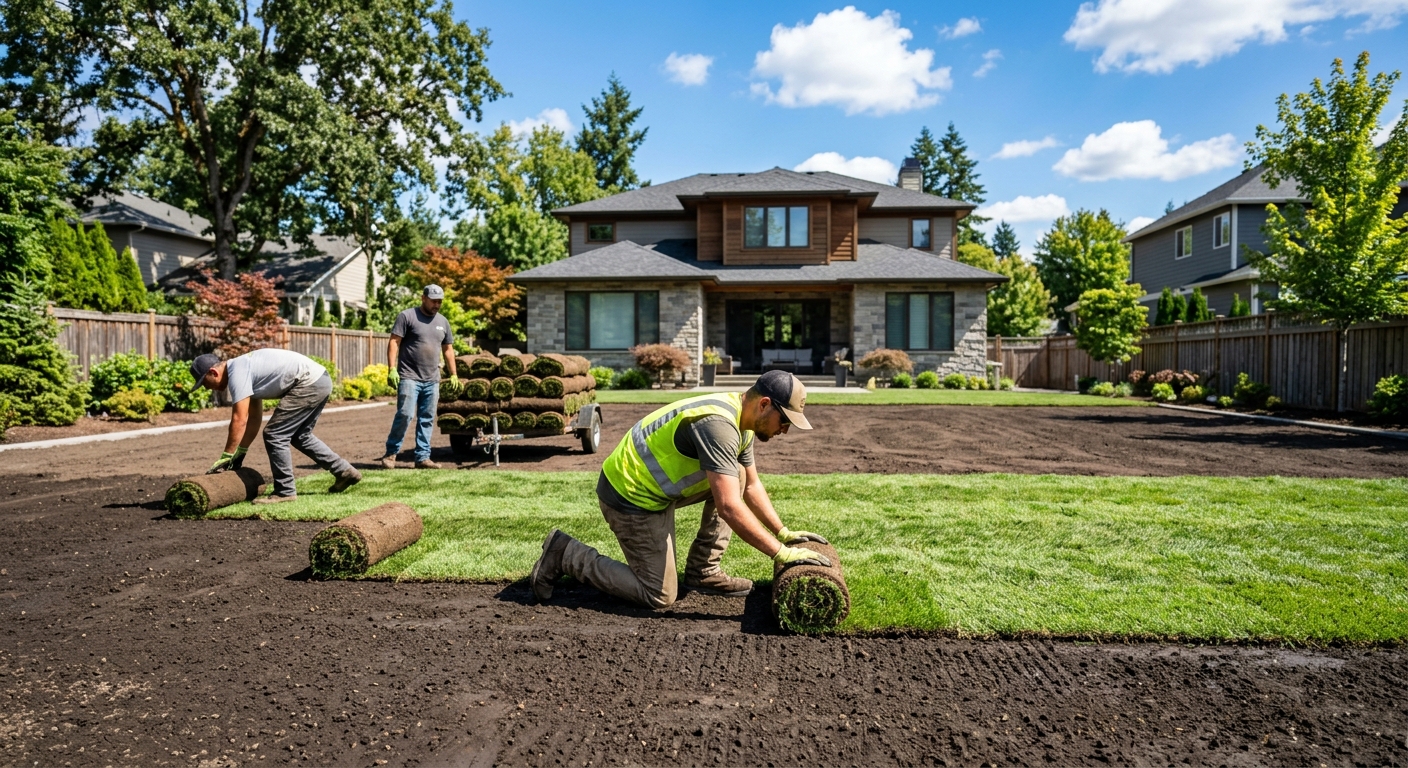
Landscaping options and costs in Markstay-Warren
Markstay-Warren homeowners often ask for one “best” landscaping answer, but the right approach depends on yard size, soil, and the type of upgrades you want. With about 985 homeowner households (88.7% of households own) and 90.1% of dwellings being single-detached homes, most lots have the space to add both softscape (plants, lawn) and hardscape (paths, patios, retaining work) instead of staying limited to small garden beds. That said, Markstay-Warren and the broader Northeast market still feel the cost pressure of a short, workable season and winter freeze-thaw damage risk that contractors must build for.
Because you’re working in a cold continental environment, plant choices and base prep are priced differently than in long-season regions. The working window is typically mid-to-late spring through early fall, so mobilization costs and crew scheduling premiums can show up in your quote. Freeze-thaw cycles also demand thicker, well-drained bases for paving and properly engineered retaining-wall foundations, which is why hardscape can land closer to the upper end of the Northeastern price bands than people expect. In Markstay-Warren, these projects are especially in demand around the residential areas near the downtown core and along the main corridors where curb appeal matters most.
Below are realistic, local price ranges homeowners use as a starting point before we fine-tune your site layout, drainage plan, and plant palette.
| Service |
Description |
Season |
Price Range |
| Full landscape design and installation |
Site visit, grading/drainage plan, planting layout, hardscape scope (as needed), labour and materials coordination |
Mid-late spring to early fall |
$8,000–$30,000 |
| Sod installation (supply, grade, lay, roll) |
Remove old lawn (if needed), rough grade, base/topsoil, sod supply and installation, rolling and initial watering plan |
Late spring to summer (best when soil temps are steady) |
$3,000–$9,000 |
| Lawn seeding (grade, seed, starter fertilizer) |
Fine grade, seed blend, starter fertilizer, light mulch (as appropriate), seed-to-soil contact |
Spring or early fall (when temps are cooler) |
$1,800–$6,000 |
| Interlocking patio or walkway |
Excavation, base course and compaction, edging, interlocking stone installation, jointing sand, clean-up |
Late spring to early fall (weather permitting) |
$6,000–$25,000 |
| Retaining wall (interlocking block) |
Block wall layout, base excavation to frost-safe depth, geotextile, drainage/gravel backfill, caps/finishing |
Spring through early fall |
$7,500–$22,000 |
| Tree and shrub planting |
Soil prep, planting layout, staking (if required), mulch, watering plan, and early-season establishment guidance |
Spring and early fall |
$1,500–$8,000 |
Prices are estimates only and vary by project scope, site access and material selection.
What affects the price of landscaping in Markstay-Warren
In Markstay-Warren and across Ontario’s Northeast-like cold regions, quotes for the “same” landscaping job can vary by 30–50% because the scope hidden in the site conditions often changes: excavation depth, drainage needs, topsoil volume, plant size, and how long the crew must work to complete a safe, frost-resilient base. In practice, one contractor may quote a simpler rebuild while another prices the upgrades required to prevent heaving, ponding, and early plant failure—problems that are costly to repair later.
Climate and hardiness drive both what grows and what’s feasible. In Prairie-style conditions (generally Zone 2–4), only the hardiest trees, shrubs and perennials survive reliably, and the short growing window means we plan for fast establishment and wind/drought resistance. Retaining walls also need bases that extend below the effective frost influence, so base depth and aggregate thickness directly affect cost. Coastal BC (Zone 7–8) allows longer seasons and denser, layered planting palettes, but it commonly requires more attention to drainage during heavy rainfall. In the BC interior and Alberta-type winters, water restrictions push irrigation design toward efficient drip zoning rather than higher-output spray systems. Southern Ontario (Zone 5–6) typically has a moderate season but still needs targeted irrigation during dry spells.
Concrete examples we see in Markstay-Warren: (1) an older home site built before 1981 (66.2% of dwellings) often has compacted subsoil or limited drainage outlets, so grading and drainage work can add thousands to a lawn or patio budget; (2) a small patio over a poor base can end up closer to the top of the interlocking band (toward $25,000) once proper excavation and compaction are included; and (3) upgrading from basic planting to larger, zone-appropriate specimens pushes tree-and-shrub planting toward the upper range (up to $8,000), especially when we include staking and better soil conditioning. For full projects, that’s how a “good-looking” plan near $8,000 can grow toward the $30,000 design-and-install ceiling when drainage, hardscape, and a more robust planting palette are bundled into one coordinated schedule.
| Price Factor |
Why It Matters |
Cost Impact |
| Yard size in sq ft — the primary cost driver for softscape |
Lawn and planting area scales labour time, topsoil/seed needs, and edging |
Can swing a project dramatically; larger areas commonly push totals toward the upper band of $3,000–$9,000 for sod |
| Grading and drainage work — slope corrections add significant cost |
Fixing slopes affects water flow, foundation safety, and long-term stability of paving |
Often adds major labour and equipment days; commonly explains 30–50% quote differences |
| Drainage bed or French drain installation |
Subsurface drainage prevents pooling, frost heave, and recurring wet patches |
Can add a large line item depending on length, outlet location, and piping depth |
| Plant material tier — native shrubs vs. ornamental vs. mature specimen trees |
Material cost and installation time rise with plant size and survival needs |
Moves planting budgets from the lower end (around $1,500–$3,000) toward $5,000–$8,000 for specimens |
| Hardscape vs. softscape ratio — walls and patios cost more per sq ft than lawn |
Paving requires thicker bases, compaction, and more finished labour |
Heavier hardscape often shifts totals toward $6,000–$25,000 for interlocking work |
| Irrigation system design and installation |
Efficient zoning (often drip) reduces waste and supports establishment during dry periods |
Adds cost but can prevent plant loss and reduce ongoing water spending |
| Soil amendment and topsoil required |
Compensates for compacted soils and supports root establishment |
Truckloads and labour can add quickly; poor site conditions push costs upward |
| Tree removal or stump grinding before new planting |
Clearing affects excavation, safety, and what can be replanted |
Often increases both disposal and labour time; can be a major budget driver |
Permits & regulations in Ontario
For most residential landscaping in Ontario, you typically do not need a permit for planting, sodding, or standard softscape work like seeding, mulch installation, and installing garden beds. However, Markstay-Warren homeowners should plan for permits when the work touches structural elements, changes drainage in a way that affects neighbouring properties, or involves utility-related excavation.
Work that often DOES require a permit can include retaining walls above a height threshold (commonly around 1.0 m in many municipalities) and situations where the wall or structure may need engineering or additional documentation. Work that can require approvals includes significant lot grading changes that redirect runoff toward adjacent properties or storm connections in a way that affects drainage. Any excavation for wall footings or planting holes should start with utility locates to confirm where buried services run.
To verify a contractor in Ontario, use a simple, homeowner-friendly checklist. (1) Confirm they hold the appropriate Ontario business/contractor standing for your scope (where applicable) and request their documentation. (2) Ask for a current certificate of insurance showing general liability coverage and the contractor as the insured party for your project dates. (3) Verify WSIB/WCB coverage (or a valid clearance letter if they provide one). (4) Confirm whether permits are included in the quote and who is responsible for pulling them. Finally, get start and completion timelines in writing so approvals and inspections don’t stall the schedule.
Planning a landscape that thrives in Markstay-Warren's climate
To build a yard that thrives in Markstay-Warren, plan for cold-season survival, quick establishment, and strong drainage before you pick plants. While Markstay-Warren’s exact hardiness zoning can vary by microclimate, the Northeast Ontario reality is similar to cold continental conditions: winters are long, and frost can work through the soil with freeze-thaw cycles. That means your planting strategy should favour native and zone-appropriate species that handle winter exposure, and your lawn strategy should match the season you can realistically protect and maintain.
Plant selection should be built around hardiness and winter structure—native perennial gardens, wind-tolerant shrubs, and a few hardy small trees outperform “pretty but tender” additions. Sod vs. seed is a practical trade-off: sod gives instant coverage, but in many installs it costs roughly 3–4x more per sq ft than seeding. That difference is justified when you need fast curb appeal or you’re reseeding an area that’s hard to keep uniformly moist. Drainage and grading are critical: correct slope away from foundations, and consider a drainage bed or French drain where water lingers. For hardscape like patios and retaining walls, base preparation must address the local frost influence—adequate excavation depth, compacted aggregate, and proper outlets prevent heaving and joint failure.
For low-maintenance design, use groundcovers, 2–3 mulch zones, and perennials that don’t require weekly attention. Xeriscape and rain-garden concepts still work even in Ontario because the goal isn’t “no water”—it’s efficient water use and smarter soil capture during wet periods, followed by drought-aware watering during dry spells. A good example: if you’re spending near $3,000–$9,000 on sod to replace a patchy front lawn, it may be more cost-effective to seed elsewhere and reserve sod for a short, high-visibility section where instant results reduce the risk of erosion and mud tracking.
| Element |
Climate Consideration |
Maintenance Level |
Price Band |
| Sod lawn installation |
Needs consistent moisture during establishment and a well-prepped grade to avoid frost-related lift |
Medium (watering schedule first season, then routine mowing) |
$3,000–$9,000 |
| Native perennial garden |
Hardier plants reduce winter kill and bounce back faster in a cold season |
Low to medium (spring cleanup, light weeding) |
$2,000–$7,000 |
| Mulched shrub border |
Mulch buffers freeze-thaw and protects crowns; shrubs should be wind- and cold-tolerant |
Low (annual mulch refresh, occasional prune) |
$1,500–$6,500 |
| Interlocking stone patio |
Base thickness and compaction matter for frost performance and joint stability |
Low (periodic sweep; weed control) |
$6,000–$25,000 |
| Retaining wall (block) |
Foundation depth and drainage backfill prevent settlement and winter heave |
Low (inspection after heavy freeze-thaw) |
$7,500–$22,000 |
| Drip irrigation system |
Targets roots efficiently during dry spells and supports hardy plant establishment |
Low (seasonal adjustments and winterization) |
$2,000–$8,000 |
How to choose a landscaping contractor in Markstay-Warren
Choosing the right contractor in Markstay-Warren comes down to verification and clarity. First, confirm Ontario licensing/business standing where applicable, then ask for proof of liability insurance (certificate of insurance with project dates and your address or site description). Next, verify WSIB/WCB coverage. A reputable contractor should provide either WSIB/WCB details or a current clearance letter—don’t accept “we’re covered” without paperwork.
Second, request 2–3 itemised written quotes. The best quotes break labour and materials into line items (excavation, base aggregate, interlocking units, drainage pipe, topsoil, plants, mulch), and show what you’re paying for—especially for drainage and base prep. Carefully read the exclusions: is debris disposal included, are utility locates included, and who pays if locates require extra scheduling? Check whether permits (when required) are included or separately billed. Also ask about warranty terms: workmanship warranty length, product/manufacturer warranty duration, and whether warranties are transferable if you sell your home.
Third, set a payment schedule that protects you. Never pay more than 10–15% upfront. Hold back a portion until substantial completion and final walk-through. Finally, require a written timeline with a start date and estimated completion window—seasonal weather delays happen, but you should still get a concrete plan.
- Ask for insurance certificate and verify coverage dates match your project.
- Request WSIB/WCB proof or a clearance letter in writing.
- Get quotes itemised by labour and materials (not one lump sum).
- Confirm whether utility locates are included and scheduled before excavation.
- Ask how drainage is handled (grading plan and outlets).
- Verify interlocking base specs: depth, aggregate type, and compaction method.
- Confirm permit responsibility if a retaining wall exceeds local thresholds.
- Ensure plant lists include sizes, varieties, and expected replacements/guarantees.
- Clarify disposal and site clean-up (hauling and landfill fees).
- Review warranty: workmanship length and what triggers service.
- Set payment terms: 10–15% max upfront; holdback until completion.
- Get start/completion estimates in writing with weather-adjustment notes.
Red flags to watch for in Markstay-Warren: (1) no written quote or only a vague scope; (2) refusing to provide insurance/WSIB/WCB paperwork; (3) skipping drainage or stating “we don’t do French drains” without discussing your wet spots; (4) asking for a large upfront deposit beyond 10–15%; and (5) promising unrealistic completion dates in a short season without acknowledging weather risk.
Frequently asked questions — landscaping in Markstay-Warren
Do I need a permit for a retaining wall in Ontario?
In Ontario, many routine landscaping tasks (planting, seeding, mulching, and most softscape) typically don’t need a permit, but retaining walls often do depending on height and local municipal requirements. A common trigger in Ontario is around 1.0 m (3.3 ft), where approvals and sometimes engineered documentation may be required. Also, if your wall project changes lot grading in a way that redirects drainage toward a neighbour or storm connection, you may need approval. The practical step for a Markstay-Warren homeowner is to ask your contractor to confirm the local requirement for your exact height and design, and to state in writing whether permit pulling is included in the quote.
How do I improve drainage in my yard?
Drainage improvements usually start with a grading check: we confirm where water is coming from and where it should go so it can’t pool near foundations or freeze up in winter. In Markstay-Warren, drainage work is often justified because freeze-thaw and heavy spring melt can amplify small grading problems. Common solutions include re-sloping the surface, installing a drainage bed, and adding a French drain with proper outlets. If you’re paving or building a patio, improving subgrade drainage can prevent base saturation and future settling. Costs vary widely by outlet distance and excavation depth, but drainage-focused add-ons often explain why one quote sits closer to the lower or upper end of typical hardscaping ranges like $6,000–$25,000.
What is xeriscaping and does it suit Markstay-Warren?
Xeriscaping is landscaping designed for efficient water use—using drought-tolerant plants, smart soil preparation, mulch, and targeted irrigation (often drip) rather than high-volume spray. In Markstay-Warren and Ontario, it suits many yards because it reduces ongoing water stress during dry spells and helps plants establish through the short growing window. It’s not about “zero water”; it’s about using less and using it at the right time. A good xeriscape-style plan can include native perennials, groundcovers, properly amended soil, and rain-garden elements that absorb runoff when it rains. If your current yard struggles with both wet patches and dry beds, a hybrid approach (drainage + efficient planting) is often the most reliable.
How do I plan a low-maintenance yard?
A low-maintenance yard in Markstay-Warren usually comes from reducing the number of “high-effort” areas: fewer isolated lawn islands, fewer fussy plant selections, and more mulched, grouped planting zones. Start with grading and drainage so you don’t fight mud or pooling each spring. Then choose hardy, zone-appropriate plants that don’t require constant replanting after winter. Mulch borders, groundcovers, and perennial groupings typically cut weeding time and help stabilise soil through freeze-thaw. For lawn, many homeowners choose seeding over sod in less visible areas to manage cost, while reserving sod for key spots. If you want a baseline budget reference, sod installs commonly land around $3,000–$9,000, while garden-focused planting projects are often closer to $1,500–$8,000 depending on plant size and quantity.
How deep should a retaining-wall base be for local frost?
Retaining-wall base depth should be designed for frost influence and site conditions, not guessed. In cold Ontario conditions, adequate excavation and a properly engineered base are critical to prevent settlement and freeze-related movement. The exact depth depends on wall height, block system, soil type, and drainage design (we often include geotextile and free-draining backfill). Because retaining walls can trigger permitting or engineering depending on height, your contractor should provide a plan that matches your wall specification and local requirements. A common contractor approach is to excavate below the frost influence and build a compacted aggregate base, but the “correct” number is always tied to your soil and design details—so ask for the base section in your written scope.
How much does professional landscape design cost?
Professional landscape design costs vary based on whether you’re only getting a plan or full design-and-build coordination. In the Markstay-Warren pricing tier used by local homeowners, landscape design & installation typically ranges from $8,000–$30,000 once the work is included, especially when drainage, hardscape, and plant installation are part of the same project. If you only want design help without installation, many contractors still price it differently than design-and-install because the labour is narrower and the timeline is shorter. To avoid surprises, request a written scope that defines what’s included (site visit, grading/drainage concept, plant list, budget outline, and construction drawings if applicable). That’s the best way to compare quotes fairly in Ontario’s varied seasonal conditions.