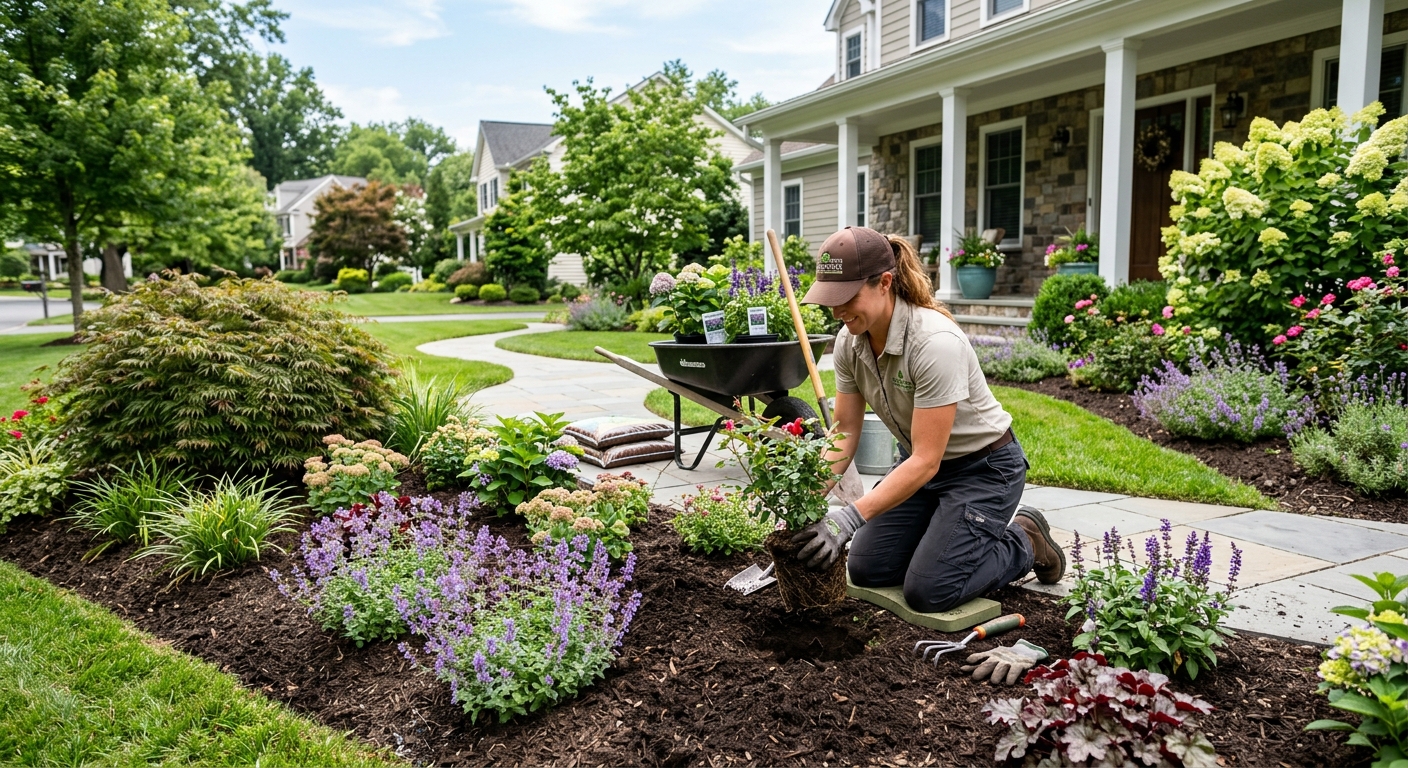
Landscaping options and costs in Port Colborne
Port Colborne is a great place to invest in outdoor upgrades—there’s plenty of backyard space to work with, since single-detached homes make up about 70.6% of dwellings in the city and many owners are planning long-term. In fact, 72.7% of households own their homes (Statistics Canada, 2021 Census), so homeowners often want work that looks sharp now and still holds up through winter freeze–thaw cycles.
In the Hamilton–Niagara Peninsula region (plant hardiness zones 6b–7a), winters are relatively mild compared with many parts of Canada, and the workable growing window typically runs from late April/early May to mid–October. That matters for pricing because it affects contractor schedules, labour availability, and how quickly we can complete prep, grading, softscape, and planting before cold weather sets in. If you’re doing patios or retaining walls, the season length and local frost behaviour also influence base depth and drainage design to help prevent heaving and movement—work that adds cost even when the surface area looks “small.”
In Port Colborne, projects are especially common around the Lake Erie-facing areas and older neighbourhood pockets near the older housing stock (80.5% of homes built before 1981). Those properties often need careful soil assessment and drainage fixes before sod or interlocking is installed.
Use the comparison table below to budget more realistically for your scope and to compare quotes apples-to-apples.
| Service |
Description |
Season |
Price Range |
| Full landscape design and installation |
Site visit, design concept(s), plant/scope plan, grading & drainage coordination, softscape + hardscape install |
Spring to early fall (best results with complete prep and planting window) |
$5,000–$50,000 |
| Sod installation (supply, grade, lay, roll) |
Site prep, grading to level, soil amendments as needed, sod lay and roll, starter fertilizer, light watering guidance |
Late April/early May to mid-September (weather dependent) |
$2–$7 |
| Lawn seeding (grade, seed, starter fertilizer) |
Light grading, seed mix selection, starter fertilizer, raking, seed-to-soil contact, maintenance advice |
Spring (April/May) and early fall (mid-August to September) |
$1,200–$5,500 |
| Interlocking patio or walkway |
Excavation, compacted base, edging, interlocking stone, jointing sand, simple drainage tie-in where needed |
May to October |
$40–$150 |
| Retaining wall (interlocking block) |
Terraced or straight wall layout, excavation, reinforced base, block system, backfill + drainage layer |
May to October |
$3,500–$28,000 |
| Tree and shrub planting |
Planting layout, soil amendments, staking (if required), mulch ring, initial watering plan |
Spring and fall (with watering attention in dry spells) |
$50–$1,500 |
Prices are estimates only and vary by project scope, site access and material selection.
What affects the price of landscaping in Port Colborne
In Port Colborne and across the Hamilton–Niagara Peninsula, it’s common to see the same landscaping idea come in 30–50% apart between two quotes. The biggest reasons are not just “who is cheaper”—it’s scope clarity, site conditions, and how much prep and base work is required for freeze–thaw performance. When older homes (80.5% built before 1981, Statistics Canada, 2021 Census) have unknown soil fill, buried clay layers, or drainage issues, contractors often need more excavation and more base aggregate to do it right.
Season and hardiness directly affect labour and what can be installed. We’re mostly in zones 6b–7a, with frost-free growing from late April/early May to mid–October. In that window, planting is feasible and sod can take hold—but patios and retaining work must still be built for winter movement. For example, base depth and drainage design for patios and retaining walls can push costs into the “hardscaping” band (retaining walls & hardscaping commonly start around $40–$150 per sq ft) even if the finished surface doesn’t look huge.
Local soil and grade make a real difference in Port Colborne. Two concrete examples: (1) If your yard slopes toward the house, correcting grading or adding a French drain can add several thousand dollars, but it can also prevent water pooling that undermines sod or pavers; (2) If your interlocking base needs deeper excavation due to soft subgrade, you pay for extra aggregate and compaction time—often a main driver of cost within the $5,000–$50,000 full design & install range.
Compared with prairie regions that demand shorter seasons and drought-tolerant, wind-hardy choices, Southern Ontario offers broader plant options—but we still plan for winter wind exposure, spring saturation, and freeze–thaw. In the end, a careful design and properly built base are what protect your investment.
| Price Factor |
Why It Matters |
Cost Impact |
| Yard size in sq ft — the primary cost driver for softscape |
More area means more material, labour hours, and haul-away (if soil is replaced) |
Often the largest variable; scaling can change total cost by thousands |
| Grading and drainage work — slope corrections add significant cost |
Proper slope keeps water away from foundations and helps sod and beds establish |
Commonly adds major labour/excavation time when soils are uneven |
| Drainage bed or French drain installation |
Reduces pooling during spring rains and stabilizes saturated soils |
Can noticeably increase project totals vs. surface-level installs |
| Plant material tier — native shrubs vs. ornamental vs. mature specimen trees |
Mature sizes cost more and require proper root-balling, handling, and staking |
Upgrades can shift planting budgets by hundreds to thousands |
| Hardscape vs. softscape ratio — walls and patios cost more per sq ft than lawn |
Pavers, block systems, and base materials require deeper excavation and compaction |
More hardscape pushes budgets toward the upper mid-range of full installs |
| Irrigation system design and installation |
Drip/rotors help during summer dry spells and improve plant survival |
Can add substantial cost but reduces long-term watering effort |
| Soil amendment and topsoil required |
Clay-heavy areas or poor topsoil often need amendments for healthy rooting |
May raise costs if large volumes are required or if subsoil replacement is needed |
| Tree removal or stump grinding before new planting |
Stump disposal affects schedules, equipment needs, and ground preparation |
Often increases totals, especially when machinery access is limited |
Permits & regulations in Ontario
For typical homeowner landscaping in Ontario, most planting and softscape work does not require a permit. Sodding, seeding, planting beds, mulch installs, and installing garden features that do not affect structural drainage typically fall under “no permit” territory. However, retaining walls are where things can change: in many Ontario municipalities, retaining walls above a threshold (often around 1.0 m / 3.3 ft, depending on local rules) require a building permit and sometimes engineered drawings.
Also, changes to lot grading can trigger approvals. If you’re changing slopes so that drainage is redirected toward neighbouring properties or toward a storm sewer connection in a new way, you may need municipal review—especially when water flow patterns are being altered. And before any digging—whether you’re putting in a tree, planting holes, or wall footings—utility locates are essential so contractors can verify where gas, hydro, telecom, and water lines run. In practice, we still recommend homeowners confirm the applicable local bylaws for irrigation and water use (Ontario tends to be less restricted than dry interior regions, but rules can tighten during drought conditions).
How to verify a contractor before they dig: first, ask for their Ontario business details and confirm their licence/registration where applicable (many landscaping contractors operate under general trades/business registration rather than a single landscaping licence, so documentation matters). Next, request a certificate of insurance showing general liability (and request the policy be valid for your project dates). Finally, confirm workplace coverage (WSIB/WCB) if they have employees—ask for the relevant clearance letter/status. For ongoing work, keep copies of these documents with your contract so you’re protected if something goes wrong.
Planning a landscape that thrives in Port Colborne's climate
To plan landscaping that thrives in Port Colborne, design around zone-appropriate plants, local frost timing, and water movement—not just curb appeal. We’re generally in hardiness zones 6b–7a, and frost-free growing typically runs from late April/early May to mid–October, giving you a solid season for planting. That said, freeze–thaw and winter wind can damage shallow-rooted plants, while spring saturation can delay establishment of sod and seed. A successful Port Colborne plan balances winter resilience with drainage and proper base prep.
1) Plant selection: choose zone-appropriate trees, shrubs, and perennials that can handle winter cold snaps and lake-influenced weather swings. Native and hardy species usually need less watering and less winter protection. 2) Sod vs. seed: sod gives instant results, but it costs about 3–4x more per sq ft than seeding and depends heavily on correct grade and soil contact; seed is slower but more forgiving on budget. 3) Drainage and grading: correct slope so water moves away from your home; this is critical on the Hamilton–Niagara Peninsula to prevent pooling and foundation moisture. 4) Hardscape base preparation: patios and retaining walls should be built with appropriate base depth and drainage layers so pavers don’t shift and walls don’t heave. 5) Low-maintenance strategies: use mulch, groundcovers, and layered perennials to reduce weeds and annual upkeep while keeping the yard attractive.
Where water context matters, consider rain gardens and selective xeriscape planting pockets. You don’t have to “go fully xeric” here—our lake-influenced climate supports broader plant choices than drought-prone prairie areas, but summer dry spells still happen. For a simple budget example: swapping a full sod replacement with a seeded approach in a larger lawn section can often move you from the higher sod band (commonly estimated around $2–$7 per sq ft) down into a more manageable seeding budget, while still upgrading beds and adding efficient drainage where it matters most.
| Element |
Climate Consideration |
Maintenance Level |
Price Band |
| Sod lawn installation |
Needs reliable soil contact and moisture in late spring to early fall; protect from drying wind |
Medium (watering early, then routine mowing and occasional aeration) |
$2–$7 |
| Native perennial garden |
Zone-appropriate plants handle winter cold better; mulch helps through freeze–thaw |
Low to medium (weeding in year one; trim back in spring) |
$2,000–$12,000 |
| Mulched shrub border |
Evergreen and hardy shrubs benefit from wind protection and consistent winter mulch |
Low (refresh mulch, seasonal pruning) |
$1,500–$8,500 |
| Interlocking stone patio |
Requires proper base and drainage for freeze–thaw stability |
Low (sweep, occasional joint sand top-up) |
$40–$150 |
| Retaining wall (block) |
Backfill and drainage layer are essential to prevent movement after spring saturation |
Low (periodic inspection of drainage outlets and joints) |
$3,500–$28,000 |
| Drip irrigation system |
Helps through summer dry spells while reducing wasted water |
Medium (seasonal adjustments and winter shut-down) |
$1,200–$6,500 |
How to choose a landscaping contractor in Port Colborne
Choosing a landscaping contractor in Port Colborne comes down to proof and process. Start with insurance: ask for a current certificate of insurance showing general liability for the work you’re hiring them to do. If they have employees, confirm WSIB/WCB coverage by requesting a clearance letter or status documentation. Next, check Ontario business registration/licensing information where applicable—at minimum, the contractor should be identifiable, reachable, and able to provide documentation for their operation.
Then get 2–3 itemised written quotes. You want a breakdown that separates labour vs. materials (base aggregate, interlocking/block, soil/topsoil, excavation, drainage components, sod/seed, delivery, and disposal). Avoid quotes that only give a lump sum without stating what’s included. Carefully read the scope for exclusions: is disposal of surplus soil included? Is material supply guaranteed, or are you exposed to “allowances”? Is the permit pull included where it’s required (for example, certain retaining walls)? If you’re doing grading that affects drainage direction, confirm who assesses site drainage and what the plan includes.
Warranty matters: ask for a workmanship warranty length (how long the contractor stands behind installation), plus the manufacturer warranty on products (pavers, block system, or sod/seed establishment guidance). Confirm whether the warranty is transferable if you sell your home. For payments, keep it sensible—never pay more than 10–15% upfront. Use a holdback until the job is complete and the site is clean. Finally, require a start date and completion estimate in writing so the project schedule matches the planting window.
- Verify insurance certificate (liability) dates match your project timeline
- Confirm WSIB/WCB status (clearance letter or equivalent proof)
- Request itemised quote: labour, materials, equipment/excavation, delivery, disposal
- Ask what’s included in grading and base prep for patios/walls
- Confirm drainage plan details (French drain depth, outlet strategy, tie-ins)
- Get a planting list with quantities and sizes (not vague “shrubs”)
- Check sod/seed specs (variety, recommended application rate, topsoil requirements)
- Require a workmanship warranty statement in writing
- Ask about product warranty and whether it’s transferable to a future owner
- Review payment schedule: small deposit, progress draws, and final holdback
- Ensure crews will be on-site as scheduled during the planting/base-prep critical stages
- Confirm timeline in writing and what weather conditions could pause work
In Port Colborne, red flags to watch for: (1) they won’t provide proof of insurance/WSIB/WCB; (2) quotes that omit base depth, drainage, or disposal; (3) heavy reliance on “allowances” with no numbers attached; (4) insisting on a large upfront payment (beyond ~10–15%); and (5) avoiding written timelines or warranty details.
Frequently asked questions — landscaping in Port Colborne
What trees grow best in Port Colborne's climate zone?
In Port Colborne, you generally have success with trees suited to hardiness zones 6b–7a and the Hamilton–Niagara Peninsula’s winter wind and freeze–thaw pattern. Commonly reliable choices include serviceberry (Amelanchier), sugar maple varieties for ornamental appeal (site-dependent), green ash (where appropriate and depending on your risk comfort with pests), and sturdy street/yard trees like littleleaf linden for many homeowners seeking a manageable size. For smaller yards, consider ornamental cherries or crabapples that handle cold well and add spring colour. Because many homes built before 1981 have mature beds and older drainage patterns, I recommend matching the tree to your soil moisture: if you get spring pooling, prioritize trees that tolerate wet feet and plan drainage before planting.
How much does sodding a yard cost in Port Colborne?
Sodding cost in Port Colborne is commonly budgeted using the per-square-foot range (often estimated around $2–$7 depending on sod type, site prep, and access). The final total usually rises if you need significant grading, soil amendments, removal of old turf, or improved drainage so the sod establishes properly. For example, a straightforward lawn repair on a level grade costs much less than regrading a sloped yard with compacted subsoil or clay-heavy pockets. If your goal is “instant green,” sod is worth it—but if your budget is tight, seeding is typically a cheaper way to rebuild larger areas and use the savings for drainage correction and better beds.
How do I prevent weeds in my Port Colborne garden?
Weed prevention starts before plants go in. In Port Colborne, spring melt and early wet conditions can bring weed seeds to the surface—so proper soil preparation matters. First, remove existing weeds and roots thoroughly, then improve soil to support your chosen plants (healthy shrubs and perennials outcompete weeds). Next, use a layered mulching approach: a consistent mulch depth (often around 2–3 inches) helps suppress germination and protects roots through freeze–thaw. For perennial beds, consider landscape fabric only where it’s appropriate (around larger plants), but we still recommend focusing on mulch and dense planting for long-term success. If you’re installing new hardscaping nearby, ensure edging is tight—paver edges and proper bed borders reduce weed migration from lawn to beds.
How do I design a low-water yard in Port Colborne?
You can design a low-water yard in Port Colborne by combining zone-appropriate plants with smart drainage and targeted irrigation. Even though our winters are relatively mild by Canadian standards, we still see summer dry spells, and new plants need establishment water. Start with hardy shrubs and native perennial gardens that suit zones 6b–7a, then add mulch and groundcovers to reduce evaporation. Where water collects after spring rains, build a rain garden or incorporate a drainage plan that routes water to a planted area rather than letting it sit against foundations. If you want irrigation, consider drip systems designed around plant zones; that tends to use less water than broad sprinklers. For budgeting, some homeowners allocate more toward drainage and a small drip zone, while keeping turf modest compared with sod-heavy plans (sod is often budgeted around $2–$7 per sq ft).
How do I find a licensed landscaper in Port Colborne?
In Ontario, many landscaping services don’t rely on a single “landscaper licence” the way some trades do, so you need to verify the contractor’s legitimacy through documentation. Start by requesting a certificate of insurance (general liability) and confirm WSIB/WCB status if they have employees—ask for the clearance letter or proof of status. Then check that their quote and scope are itemised and written, including base prep and drainage details where relevant. For additional safety, verify their business presence (address/registration, vehicle branding) and ask for references from Port Colborne or nearby Niagara-on-the-Lake/Hamilton–Niagara projects. A solid contractor will also explain what permits are required (for example, certain retaining walls above the municipal threshold) and how they handle utility locates before digging.
How much does landscaping cost in Port Colborne?
Landscaping costs in Port Colborne vary widely based on lawn size, grading/drainage complexity, and how much hardscape is included. For full upgrades, many homeowners fall into the broad design-and-install range of $5,000–$50,000, especially when patios, retaining walls, and drainage work are involved. Sod projects are often budgeted using a per-square-foot range (commonly estimated around $2–$7), but totals increase if you need regrading or drainage correction before sod can establish. Tree and shrub planting can run from tens to more substantial per-specimen costs (often budgeted around $50–$1,500 per plant depending on size). If your home is older (many properties were built before 1981), expect more potential for drainage and soil prep needs, which can be the difference between a “surface refresh” and a full foundation-protecting rebuild.