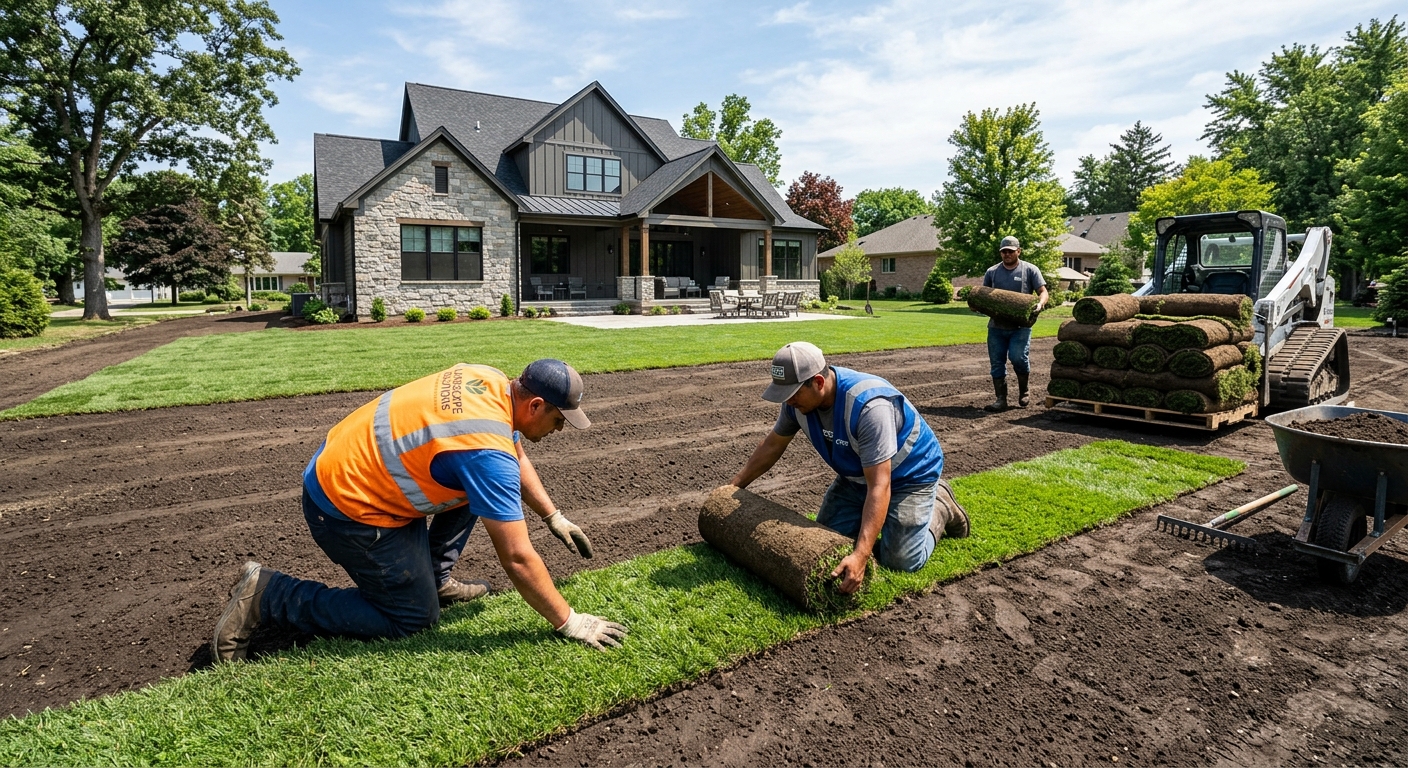
Landscaping options and costs in Pleasant View
Pleasant View homeowners typically have a lot to work with—there are enough single-detached houses in the area to make yard renovations a steady demand, and the broader Toronto market supports more professional installs rather than “weekend DIY” fixes. With a population of 15,818 people in 2021 (Statistics Canada, 2021 Census), the area has enough local activity to keep crews busy from spring through fall, which helps stabilize pricing compared with smaller towns.
In the GTA, landscaping costs are strongly shaped by the freeze–thaw cycle and the zone range of roughly 6a–7a. We choose plants that can handle winter lows near –23 to –18°C and then schedule planting around the frost-free window (roughly May to October). Hardscape also costs more here than in milder climates because patios, steps, and retaining-wall bases need deeper excavation, well-compacted granular layers, and proper drainage to resist heaving over time. On top of that, local clay and fill soils often require excavation, soil amendment, and sometimes subdrains—extra labour and materials that show up quickly in quotes.
Where you’ll see this in Pleasant View most often is the neighbourhood corridor around Leslie Street and nearby collector roads, where curb appeal and drainage upgrades are common for homes built in different eras. If you’re comparing options, the quickest way is to start with the typical price bands below, then match the scope to your site conditions.
| Service |
Description |
Season |
Price Range |
| Full landscape design and installation |
On-site measure, concept + planting plan, grading/drainage direction, and coordinated softscape + hardscape build |
Spring to early fall (best soil work: May–October) |
$8,000–$40,000 |
| Sod installation (supply, grade, lay, roll) |
Site grading, soil prep, sod delivery, installation, rolling, and initial watering guidance |
Late spring to early fall |
$2,500–$8,000 |
| Lawn seeding (grade, seed, starter fertilizer) |
Light topsoil/compost amendment, seed mix, starter fertilizer, raking, and first watering schedule |
Spring and early fall (avoid peak summer heat) |
$1,800–$6,000 |
| Interlocking patio or walkway |
Excavation, base/granular bedding, edge restraint, interlocking stone, jointing sand |
May to October |
$6,500–$24,000 |
| Retaining wall (interlocking block) |
Excavate + compact base, geogrid/footing as needed, drainage layer (weep holes/pipe), cap stones |
May to October (avoid saturated ground) |
$6,000–$30,000 |
| Tree and shrub planting |
Planting pits, amended soil, staking (if required), mulch, and watering plan |
Spring and fall |
$800–$6,000 |
Prices are estimates only and vary by project scope, site access and material selection.
What affects the price of landscaping in Pleasant View
In Pleasant View and across the Toronto region, two quotes for “the same” landscaping job can differ by 30–50% because the cost drivers aren’t just the visible plants or stone—they’re what’s happening under the surface: soil type, drainage, excavation depth, and how much labour it takes to build something that survives Ontario winters. Even the same lawn area can swing widely depending on whether we’re grading for slope, addressing standing water, or replacing compacted fill.
Climate and frost timing control both what grows and how long crews can work. In the GTA’s plant hardiness zone (often 6a–7a), we’re balancing a moderate growing season with freeze–thaw cycles that punish poor base prep. That’s why seasonal windows matter: if grading and drainage need more time (or weather delays push work into shoulder weeks), costs typically rise.
Compared to Prairie regions (Zone 2–4) where shorter seasons and winter cold push simpler, drought-tolerant palettes, Southern Ontario has a bit more flexibility—however, heavy winter frost and local clay still require proper drainage and foundation protection. Coastal BC can support a longer lush season, but heavy rain zones demand excellent drainage design. Dry interior BC often relies on water-restriction-friendly irrigation and xeric planting. In Toronto, we usually don’t face water restrictions to the same degree as those dry interior areas, but we do plan irrigation for summer dry spells.
Concrete examples from Pleasant View: (1) a modest retaining wall often jumps in cost when we have to excavate deeper and include a drainage system (geogrid/footing depth and drainage bedding), (2) replacing compacted clay under a patio base can add labour and granular supply, and (3) adding soil amendment plus proper lawn prep can move you from seeding/patching into the $2,500–$8,000 sod band when you want instant results. Older housing stock also matters—yards built on fill or with buried drainage problems can turn a straightforward refresh into a full “softscape + drainage” solution within the $8,000–$40,000 design/install range.
| Price Factor |
Why It Matters |
Cost Impact |
| Yard size in sq ft — the primary cost driver for softscape |
More square footage increases labour, soil/stone quantities, and base materials |
Medium to high (often the biggest line-item change) |
| Grading and drainage work — slope corrections add significant cost |
Fixing runoff direction prevents pooling and foundation moisture |
High |
| Drainage bed or French drain installation |
Clay soils and freeze–thaw require reliable subsurface drainage |
High |
| Plant material tier — native shrubs vs. ornamental vs. mature specimen trees |
Mature trees and rare ornamentals cost more and require stronger equipment |
Medium to high |
| Hardscape vs. softscape ratio — walls and patios cost more per sq ft than lawn |
Concrete/stone base prep, excavation depth, and material quantities increase cost |
High for patios/walls |
| Irrigation system design and installation |
More zones, controls, and sprinkler heads raise both equipment and commissioning time |
Medium to high |
| Soil amendment and topsoil required |
Toronto clay often needs compost/topsoil and improved structure for roots |
Medium |
| Tree removal or stump grinding before new planting |
Disposal, stump grinding, and root disruption add labour and equipment costs |
Medium to high |
Permits & regulations in Ontario
For most routine yard work in Ontario, you typically do not need a permit: planting beds, sodding, lawn seeding, mulch installation, and most softscape upgrades fall under common homeowner landscaping activity. However, there are important exceptions. A retaining wall above the local height threshold—often 1.0 m (3.3 ft) in many municipalities—usually triggers a building permit, and some projects may require engineered drawings depending on height and soil conditions. Also, any changes to lot grading that affect how water flows toward a neighbouring property or a storm connection may require review, particularly if it alters drainage patterns.
Before digging, plan utility locates: call to have underground services marked so you don’t strike buried lines while installing planting holes, drains, or wall footings. For irrigation, confirm water-use bylaws and restrictions (notably when municipalities implement temporary measures in dry stretches). While those restrictions are more widely discussed in drier regions, Toronto-area summers can still have dry periods where efficient scheduling matters.
To verify a contractor in Pleasant View, follow these steps: (1) ask for proof of Ontario licensing/registration where applicable for the work type, (2) request liability insurance (see the certificate of insurance and ensure it names your property/contract as required), (3) confirm WSIB/WCB coverage—look for the current clearance letter or account confirmation, and (4) review the contract for disposal, drainage modifications, and any permit responsibilities. If they won’t provide documentation, that’s a red flag.
Planning a landscape that thrives in Pleasant View's climate
Designing for Pleasant View starts with working with Ontario’s cold winters and summer humidity—not against them. In the GTA’s zone range (often 6a–7a) and with frequent freeze–thaw, your best strategy is to choose plants that can handle winter stress, then build a yard system that manages water. For plant selection, lean toward native and proven hardy perennials and shrubs that require less watering and less winter protection. Group plants by sun exposure and moisture so you’re not fighting the same problem in multiple spots.
Sod vs. seed is a practical decision tied to timing and expectations. Sod gives instant curb appeal and immediate erosion control, but it’s usually 3–4x the per-sq-ft cost of seeding once you include prep and install. Seeding costs less and works well in spring and early fall when temperatures are kinder.
Drainage and grading are also non-negotiable in Toronto. Pooling water in clay soils can rot roots and undermine foundations. If you’re adding a patio or retaining wall, base preparation matters as much as the surface—granular layers, compaction, and drainage layers should extend to depth considerations that hold up through winter.
For low-maintenance design, use mulch, groundcovers, and repeatable planting “drifts” rather than fragile spot plants. If you want water-wise options, consider a rain garden in low spots (capturing runoff and soaking it into amended soils) or targeted xeriscape pockets using hardy, drought-tolerant species—though in Pleasant View you’ll still plan irrigation for establishment during hot spells.
A dollar example: if your goal is a quick front-yard refresh, sod may land in the $2,500–$8,000 band for typical areas, while seeding might be materially less. That difference is often justified when you need fast erosion control, want reduced weeds sooner, or have small children/pets where bare soil isn’t acceptable.
| Element |
Climate Consideration |
Maintenance Level |
Price Band |
| Sod lawn installation |
Works best in late spring/early fall; establishes quickly before winter freeze |
Medium (initial watering and first mow schedule) |
$2,500–$8,000 |
| Native perennial garden |
Hardy selections tolerate winter lows and return reliably after freeze–thaw |
Low to medium (mulch, occasional weeding, seasonal cutback) |
$1,200–$5,500 |
| Mulched shrub border |
Mulch buffers winter temperature swings and slows moisture loss in summer |
Low (annual refresh, minimal pruning for shape) |
$900–$4,200 |
| Interlocking stone patio |
Requires proper base depth and drainage so it doesn’t shift during freeze–thaw |
Low (periodic joint sand top-up) |
$6,500–$24,000 |
| Retaining wall (block) |
Drainage and footing depth protect against water pressure and winter movement |
Low (inspect weep holes and surface stability) |
$6,000–$30,000 |
| Drip irrigation system |
Helps during summer dry spells; delivers water efficiently with hardy zone-appropriate plants |
Medium (seasonal adjustments and winter blowout) |
$1,800–$7,500 |
How to choose a landscaping contractor in Pleasant View
Start by verifying documentation—good landscaping is built on risk management as much as appearance. In Ontario, ask for proof of liability insurance and confirm coverage amounts are appropriate for hardscape work (excavation, stone, and equipment). For labour compliance, request evidence of WSIB/WCB coverage (typically a clearance letter or current account confirmation). If your contractor is using subcontractors, ensure they’re covered too—don’t assume it’s handled.
Next, get 2–3 itemised written quotes that break out labour and materials. A strong quote lists quantities (sq ft for turf, linear feet for edging, wall height/length, number of trees/shrubs), disposal fees, and allowances for soil/topsoil. Avoid “lump sum only” bids that don’t show how drainage, grading, and base prep are being handled.
Read the scope carefully: what’s excluded (tree removal, stump grinding, existing soil replacement, ledge rock removal)? Is permit pulling included for a retaining wall when required? Who is responsible for utility markouts? Confirm disposal and haul-away is stated if excavation is involved.
Warranty matters: ask for the workmanship warranty length (how many years for settling/installation defects) and whether it applies to drainage components and hardscape joints. For plants, ask about replacement policy for die-off within establishment—product/manufacturer warranties can differ from workmanship coverage and should be clearly described. For payment, never pay more than 10–15% upfront; use a staged schedule tied to milestones and hold back until the job is complete and cleaned.
Finally, insist on a timeline in writing: an estimated start date and completion date range, plus what happens if weather delays work during the wet spring or freeze–thaw shoulder periods.
- Provide a written contract with an itemised scope (not just totals).
- List plant counts, sizes (e.g., tree caliper/height), and warranty terms.
- State base prep specs for patios/walls (granular type, compaction, drainage layer).
- Confirm disposal/haul-away is included if excavation occurs.
- Ask whether utility locates are completed before digging.
- Verify liability insurance and provide the certificate before work starts.
- Verify WSIB/WCB coverage with a clearance letter or current proof.
- Check workmanship warranty duration and what it covers (and excludes).
- Clarify permit responsibility for retaining walls above the local threshold.
- Use a milestone-based payment schedule; keep a holdback until completion.
- Confirm scheduling in writing (start date + completion estimate).
- Request references from recent Toronto-area projects with similar soil conditions.
Common red flags in Pleasant View: contractors who won’t share insurance/WSIB documents, vague quotes that skip grading/drainage details, pressure to pay large deposits immediately, no written timeline, and “cheap” baselines that under-spec excavation depth or drainage for patios and retaining walls.
Frequently asked questions — landscaping in Pleasant View
How much does landscaping cost in Pleasant View?
In Pleasant View, most homeowners typically budget within Ontario’s common price bands, but the final number depends heavily on excavation and drainage needs. For full landscape design and installation, you’ll often see estimates in the $8,000–$40,000 range when patios/walls and a coordinated planting plan are involved. If you’re focusing on lawn only, sod installation commonly lands around $2,500–$8,000 depending on the yard size and soil prep, while seeding is usually less. Toronto-area freeze–thaw and local clay soils can add cost because crews may need more granular base depth, soil amendment, and sometimes drainage work (subdrains/French drains) to prevent pooling and foundation moisture.
What plants thrive in Pleasant View's climate zone?
Pleasant View falls in the broader Toronto area where hardiness is often roughly in the 6a–7a range, meaning you can grow many hardy shrubs and perennials that tolerate winter lows near –23 to –18°C and bounce back after freeze–thaw cycles. In practice, we favour plants that are proven locally: native perennial “workhorses” for sun or shade, hardy shrubs that hold shape through winter, and trees that match your soil conditions (especially if drainage is improved). If your yard has clay or tends to stay damp after rain, we’ll steer you toward more moisture-tolerant species and design a rain-garden or improve drainage rather than forcing everything into a dry spot. When in doubt, a planting plan matched to exposure and moisture usually performs better than a generic plant list.
Sod vs seed — which is better for a Pleasant View lawn?
For Pleasant View lawns, sod is best when you need fast results—curb appeal right away, reduced erosion on slopes, and less time waiting for full coverage. The trade-off is cost and scheduling: sod installation often lands around $2,500–$8,000 for typical residential areas, versus seeding, which is usually less expensive but takes longer to knit in. Seeding works very well in spring and early fall in Southern Ontario because temperatures are friendlier and there’s better establishment timing. If your soil has compaction or drainage issues, either option can fail without proper grading and topsoil amendment—so the “prep quality” matters as much as sod versus seed.
How much does a retaining wall cost in Pleasant View?
Retaining wall pricing in Pleasant View commonly falls within the $6,000–$30,000 band for interlocking block walls, depending on height, length, base excavation depth, and whether we need engineered-style drainage components. The GTA’s freeze–thaw cycle and local clay soils add value to doing drainage correctly: we typically include a drainage layer and proper weep/drainage provisions to reduce water pressure behind the wall. Costs also rise if there’s difficult access for equipment, significant removal/disposal, or if the base must be excavated deeper to meet stability requirements. If your plan involves a taller wall, you may also need a permit (see below), which can affect timing and total cost.
When is the best time to landscape in Pleasant View?
For most projects in Ontario around Pleasant View, the reliable window is roughly May through October for grading, base work, sod, and hardscaping like patios and retaining walls. Spring tends to be best for major installs once the ground isn’t saturated, while early fall is excellent for planting and seeding because plants can establish before winter freeze. In summer, we can still plant, but watering and heat stress become more critical—especially right after installation. Contractors also plan around freeze–thaw shoulder conditions; working on frozen or waterlogged ground can increase the chance of settlement and uneven surfaces. If you’re doing irrigation, we usually coordinate around the installation window and build in winterisation steps to protect lines and components.
Do I need a permit for a retaining wall in Ontario?
Often, yes—depending on height and local requirements. In Ontario, a retaining wall above the common threshold of about 1.0 m (3.3 ft) in many municipalities typically requires a building permit, and sometimes engineered or additional documentation depending on site conditions. Grading changes that direct drainage toward a neighbouring property or storm systems may also require municipal review. For Pleasant View homeowners, the practical approach is to confirm your wall height and propose a drainage plan before construction. A reputable contractor should tell you up front whether permits apply, who is responsible for pulling them, and how utility locates will be handled before excavation.