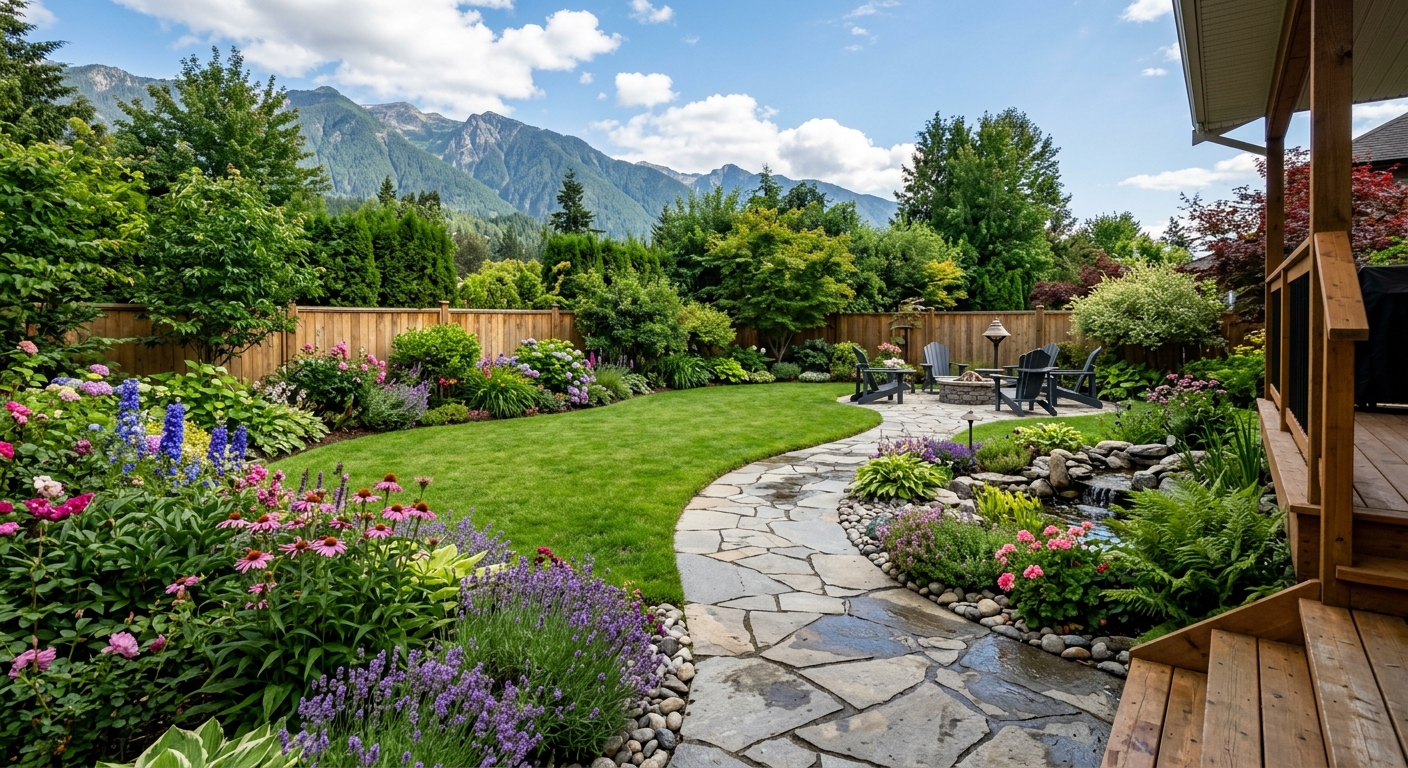
Landscaping options and costs in St. Clements
St. Clements, Ontario is a small community (population 1,240 as of the 2021 Census, Statistics Canada) where many homes sit on detached lots with enough yard space to justify real upgrades—new walkways, planting beds, and tidy lawn areas. In practical terms, the “why” is simple: when a property has room to work with, homeowners are more willing to invest in landscaping that improves curb appeal and day-to-day enjoyment.
Costs here are strongly influenced by the Toronto-region climate: St. Clements falls within hardiness zones 6a–7a, so we can select trees and perennials that handle winter lows around –23 to –18°C while still benefiting from a May-to-October frost-free stretch. That working window supports a healthy supply of local crews, but freeze–thaw cycles add complexity. Concrete/stone and retaining wall projects need deeper granular bases, careful drainage, and properly prepared subgrades to avoid settling over time. Local clay and fill soils can also increase excavation and soil amendment—especially where downspouts, foundation drainage, or grading need corrections.
Trade demand tends to be especially high in and around family-focused neighbourhood pockets near local main corridors where curb appeal matters. If you’re comparing options, think about whether you want “instant impact” (like sod or interlocking) or “best value over time” (like seeded turf and staged planting). Below is a quick baseline comparison of typical services and price ranges, which your quote will refine based on your yard size, site access, and material choices.
| Service |
Description |
Season |
Price Range |
| Full landscape design and installation |
Consultation, grading/planting plan, softscape + hardscape build-out, soil amendments, labour, and cleanup |
Late spring to early fall (best window May–September) |
$8,000–$40,000 |
| Sod installation (supply, grade, lay, roll) |
Topsoil/grade adjustment, sod delivery, laying and rolling, starter fertilizer, light watering plan |
Late spring to early fall (ideal when soil temps are warm) |
$2,500–$8,000 |
| Lawn seeding (grade, seed, starter fertilizer) |
Light grading, seed + starter fertilizer, seed-to-soil contact, mulching as needed |
Spring or early fall (faster establishment in warmer soil) |
$1,200–$6,000 |
| Interlocking patio or walkway |
Excavation, base/granular materials, edging, sand bedding, pavers, levelling and joint sand |
All summer (best when subgrade is dry and stable) |
$6,000–$22,000 |
| Retaining wall (interlocking block) |
Excavate and compact base, geogrid/footings as needed, drainage material, wall blocks, cap/finish |
Summer installation (curing and compaction quality matters) |
$6,000–$30,000 |
| Tree and shrub planting |
Site layout, soil amendment, planting, staking as required, watering plan, mulch and cleanup |
Spring or early fall |
$800–$6,000 |
Prices are estimates only and vary by project scope, site access and material selection.
What affects the price of landscaping in St. Clements
In the Toronto-to-St. Clements area, quotes for the “same” landscaping scope can vary by 30–50% because the real work is in the hidden layers: soil condition, drainage and grading complexity, and how contractors build for Ontario’s freeze–thaw cycles. Two yards with the same patio size can cost very differently if one has stable fill and good drainage while the other has clay that holds water and needs subdrains. Availability also matters—peak summer scheduling can change labour demand and sequencing.
Climate and plant tolerance directly affect both material and labour. St. Clements sits in plant hardiness zones 6a–7a, so we typically have more plant options than Prairie regions (zones 2–4), where shorter seasons, colder winters, and drought push designs toward ultra-hardier species and simpler palettes. Freeze–thaw performance is also a structural cost driver. Retaining-wall bases generally need to extend below frost-impacted zones and include properly compacted granular layers and drainage. In southern Ontario (zone 5–6), the frost-free window is relatively moderate, but summer dry spells still mean you may pay for irrigation design if your yard needs consistent establishment.
Here are a few common St. Clements examples that move the price up or down. First, a bigger yard footprint increases softscape costs—an all-in “full landscape” project can fall within the $8,000–$40,000 range largely due to labour hours and material volume. Second, if your grade needs reworking to prevent pooling near foundation edges, grading/drainage work often becomes the largest single line item. Third, if you want mature trees or denser shrub groupings (versus smaller nursery stock), you’ll usually see the “tree & planting” budget move toward the upper end of the $800–$6,000 band.
| Price Factor |
Why It Matters |
Cost Impact |
| Yard size in sq ft — the primary cost driver for softscape |
More surface area means more topsoil, seed/sod, mulch, and plant material, plus more labour per pass |
Can shift a lawn/planting job by 20–60% |
| Grading and drainage work — slope corrections add significant cost |
Fixing slopes and directing water away from foundations requires excavation and re-compaction |
Often adds thousands on clay-heavy lots |
| Drainage bed or French drain installation |
Sub-surface water control protects hardscape and reduces settlement during freeze–thaw cycles |
Typically a major driver for full landscape builds |
| Plant material tier — native shrubs vs. ornamental vs. mature specimen trees |
Larger stock costs more and takes extra labour for handling, staking, and planting holes |
Mature trees can noticeably push total upward |
| Hardscape vs. softscape ratio — walls and patios cost more per sq ft than lawn |
Pavers, base materials, labour, and disposal are usually higher-cost than seeding or simple planting |
Affects project totals the fastest |
| Irrigation system design and installation |
Zone layout, backflow prevention, and heads sized for coverage add both design and plumbing time |
Can add several thousand, especially for larger yards |
| Soil amendment and topsoil required |
Ontario clay often needs organic amendment and/or screened topsoil for proper root establishment |
Volume hauling and spreading increase costs |
| Tree removal or stump grinding before new planting |
Extra equipment and disposal time; root disturbance impacts excavation scope |
Usually adds cost and may delay planting schedule |
Permits & regulations in Ontario
In Ontario, most planting and softscape work—like sodding, lawn seeding, adding mulch beds, and installing typical garden features—does not require a permit. If you’re just digging planting holes, installing shrubs, or laying sod, you can usually proceed without municipal approval. Retaining walls are different: in many municipalities, retaining walls above a threshold (commonly 1.0 m or about 3.3 ft) typically require a building permit and sometimes engineered drawings, because the structure’s stability matters under Ontario frost and soil pressure conditions.
Changes to lot grading can also require approval when they affect drainage patterns toward neighbouring properties or storm connections. If your project includes re-directing downspouts, creating new swales, or altering the slope near foundations, ask your contractor to clarify whether a permit or plan review is needed before work starts.
Step-by-step verification you can do for St. Clements (Ontario) homeowners: first, confirm utilities locates are ordered before any digging for planting holes or retaining wall footings. Second, verify the contractor’s Ontario business registration and relevant trade coverage where applicable, then ask for a current certificate of insurance showing general liability (and ensure it’s not expired). Third, request proof of WSIB/WCB coverage (or a clearance letter), particularly if labourers are on site performing excavation, hardscape work, or heavy equipment use. Finally, keep a copy of the signed proposal and any permit paperwork (if required) so you know exactly what was planned and approved.
Planning a landscape that thrives in St. Clements's climate
Planning a landscape for St. Clements means working with Ontario’s zone 6a–7a conditions, a frost-stressing freeze–thaw pattern, and rainfall patterns that can leave clay-heavy yards either damp or unevenly drained. Start with plant selection: choose native and zone-appropriate species that can handle winter lows near –23 to –18°C and come back reliably without heavy winter protection. For many properties, that also means fewer “gap-filling” plants and less replacement cost after harsh seasons.
Sod vs. seed is where many homeowners feel price pressure. Sod gives instant visual results, but it’s typically about 3–4x the cost per sq ft compared with seeding when you compare like-for-like yard prep. If your priority is quick curb impact for a photoshoot or an upcoming sale, sod can be justified. If you can wait for establishment, seeding is often the smarter value—especially if drainage and grade are corrected first so seed doesn’t wash or thin.
Drainage and grading are critical in the Toronto market. Proper grading keeps water moving away from foundations and reduces pooling, which lowers the risk of softened subgrades beneath patios or walkway edges. For hardscape, base preparation must be built for frost performance: adequate granular thickness, compaction, and correct drainage layers help patios and retaining-wall blocks stay stable.
For low maintenance, use mulch, groundcovers, and perennial structure that suppresses weeds and reduces annual upkeep. Consider a rain-garden or targeted bioswale in areas that receive downspout runoff; and if irrigation is needed for establishment, design it efficiently rather than over-watering.
Example: if you budget around $2,500–$8,000 for sod, but your lawn area is also prone to patchy growth, investing first in grading/drainage may reduce the “need” for repeated sod repairs. In many St. Clements yards, that one decision protects both softscape and hardscape budgets.
| Element |
Climate Consideration |
Maintenance Level |
Price Band |
| Sod lawn installation |
Soil moisture and establishment timing matter in zone 6a–7a; frost can disrupt poorly prepped grade |
Low to moderate (watering during establishment, then normal mowing) |
$2,500–$8,000 |
| Native perennial garden |
Hardier plants handle winter lows and rebound with less overwinter protection |
Low (mulch, light pruning, occasional weeding) |
$800–$4,500 |
| Mulched shrub border |
Mulch buffers temperature swings and helps moderate moisture in Ontario clay |
Low (seasonal refresh of mulch, minimal watering once established) |
$1,200–$5,000 |
| Interlocking stone patio |
Freeze–thaw demands engineered base thickness, compaction, and drainage layers |
Low (occasional joint sand/top-up) |
$6,000–$22,000 |
| Retaining wall (block) |
Soil pressure plus frost impacts require proper base depth and drainage behind the wall |
Low (periodic inspection of drainage outlets) |
$6,000–$30,000 |
| Drip irrigation system |
Efficient watering during establishment and dry spells; helps protect clay areas from over-saturation |
Moderate (seasonal adjustments and winter blowout if applicable) |
$1,800–$7,500 |
How to choose a landscaping contractor in St. Clements
Choosing the right contractor in St. Clements is mostly about proof: proof they’re insured, proof their scope is clear, and proof you won’t get surprised by permit needs or drainage/disposal costs. Start with Ontario licensing and insurance. Ask for their certificate of insurance (general liability) and confirm it’s current. Then request WSIB/WCB clearance letter or proof of coverage for workers—especially if they’ll excavate, operate equipment, or install hardscape bases. If they can’t provide documentation quickly, that’s a warning sign.
Get 2–3 itemised written quotes instead of a single lump-sum number. A good quote breaks out labour and materials: excavation, base/gravel types, edging, paver or block costs, topsoil/compost quantities, plant counts/sizes, and disposal. Check whether the quote includes permit pull (when applicable), all haul-away, and any utility-locate coordination. Also verify what’s excluded—site damage repairs, tree removal responsibility, or additional drainage if unforeseen soft spots are found.
Warranty matters for both workmanship and materials. Ask for the workmanship warranty length, whether it covers settlement or drainage-related issues, and whether the product/manufacturer warranty applies to the specific items installed. Confirm whether warranties are transferable to a new homeowner.
For payment schedule, use a conservative approach: never pay more than 10–15% upfront. Hold back a portion until the job is complete, inspected, and cleaned up. Finally, insist on a written timeline with an agreed start date and a completion estimate based on weather and materials delivery.
- Insurance certificate provided before work begins (not just “we’re covered”).
- WSIB/WCB proof or clearance letter available on request.
- Itemised quote with quantities (topsoil/compost, paver/block count, excavation depth).
- Written scope that clearly states disposal and haul-away.
- Permit responsibility stated up front if retaining wall thresholds apply.
- Base preparation details for patios/walls (compaction and granular layers).
- Plant list with counts and sizes (avoid “allowance” plants if possible).
- Drainage approach explained (grading, French drain, outlets as needed).
- Warranty details in writing for workmanship and materials.
- Payment schedule aligned to completion milestones, with limited upfront deposit.
- Start date and weather contingency plan documented.
- Post-install maintenance instructions provided (watering schedule, mulch refresh, seasonal tasks).
Red flags to watch for: quotes that are only a lump sum with no breakdown; missing or expired insurance/WSIB documents; refusing to discuss drainage and base preparation for Ontario’s freeze–thaw cycles; vague plant descriptions (“assorted shrubs”) with no quantities; and pressuring you for large upfront payments or skipping a written timeline.
Frequently asked questions — landscaping in St. Clements
How do I plan a low-maintenance yard?
A low-maintenance yard in St. Clements starts with design choices that reduce yearly “busy work.” Prioritise correct drainage and grading so you’re not fighting pooling or dry patches—both increase rework costs later. Then use a layered planting plan: groundcovers to suppress weeds, a mulched shrub border for structure, and perennials chosen for zone 6a–7a hardiness. In southern Ontario summers, consistent establishment matters, but after that you can often scale back watering.
For turf, many homeowners choose seeding if they can wait; sod is faster but usually costs more per sq ft. If you’re budgeting, typical sod installations land in the $2,500–$8,000 range, while a full landscape design & installation is commonly $8,000–$40,000 depending on grading and hardscape scope. The “maintenance” win is usually the groundwork: weed suppression, proper soil prep, and smart plant spacing.
How deep should a retaining-wall base be for local frost?
Retaining-wall base depth isn’t one universal number, because it depends on wall height, soil conditions, block system requirements, and whether geogrid and proper drainage are used. In St. Clements and the wider Toronto area, freeze–thaw cycles and Ontario clay soils mean you should build for frost performance rather than shallow “surface-level” bases.
Practically, a contractor should design the base using the wall manufacturer’s instructions and typical frost-safe construction methods: excavate to stable subgrade, install compacted granular layers to the required depth, include drainage material behind the wall (so water doesn’t build pressure), and follow any geogrid/footing requirements for stability. If the wall exceeds the common permitting threshold (often around 1.0 m / 3.3 ft in many Ontario municipalities), expect more formal documentation. Always ask to see the proposed base build-up and drainage approach in writing.
How much does professional landscape design cost?
Professional landscape design pricing in the Toronto region can vary widely based on whether you’re doing full design + engineering-style grading plans or a simpler planting concept. For many St. Clements homeowners, design is bundled into an “all-in” landscape design and installation project. Those projects commonly fall into a baseline range of $8,000–$40,000 when design, excavation, grading, materials, and labour are included.
If your scope is smaller—like tree and shrub planting only—the cost can be more direct and may fall within the $800–$6,000 band, depending on plant quantities and site prep. The best way to price design fairly is to request an itemised quote that separates “design” from “installation.” That lets you compare whether one company is offering true design work or effectively charging you for changes within the build.
How do I compare landscaping quotes?
When comparing quotes in St. Clements, match scope first, then compare unit costs. Start by confirming each quote includes the same basics: excavation depth, granular base build-up (for patios/walkways/walls), soil amendments/topsoil quantities, edging, disposal/haul-away, and whether drainage work is included. Quotes that simply list “interlocking patio” without base details can hide major differences in stability.
Next, look for itemisation and quantities—plant counts and sizes, sod/square footage, and material allowances. A full landscape design & installation might be quoted within $8,000–$40,000; if one quote is near the low end but includes fewer plants, less grading, or no drainage, it’s not really comparable. Finally, review payment schedule and warranty terms. The lowest price is only a bargain if it protects you against Ontario’s freeze–thaw and drainage issues over time.
How long does a landscaping project take in St. Clements?
Project duration depends on scope and weather, but most work fits within the May–September operational window typical for southern Ontario. Smaller projects like tree and shrub planting can often be completed in a day to a couple of days, assuming site access is clear. Sod installation and seeding projects are usually quicker, but allow time for grade prep and establishment instructions.
Hardscape and drainage work take longer because excavation, base compaction, and curing/setting steps need proper conditions. Interlocking patios and retaining wall builds typically span several days to a couple of weeks depending on wall size, base complexity, and whether additional drainage (like a French drain bed) is required. A full landscape build can take longer because crews may stage soil prep, base work, planting, and finishing tasks. Always ask for a written start date, completion estimate, and a contingency plan for rain or delayed materials.
What is the best grass type for a St. Clements lawn?
In St. Clements (Ontario, zone 6a–7a), the “best” grass depends on sun exposure, traffic, and how you maintain watering and mowing. Most homeowners do well with cool-season turf grasses, because they perform reliably through Ontario winters and grow best in the milder temperatures of spring and early fall.
For many yards, contractors recommend blends that balance density and resilience so the lawn holds up during summer dry spells. If you’re choosing between sod and seeding, sod is usually turf species/variety-specific and provides quick coverage, commonly priced in the $2,500–$8,000 range depending on area and prep. Seeding can be more cost-effective within your lawn installation budget, but it depends heavily on good grading and soil contact. Ask your contractor which specific cultivar blend they plan to use and how they’ll prepare the grade to prevent thin spots.