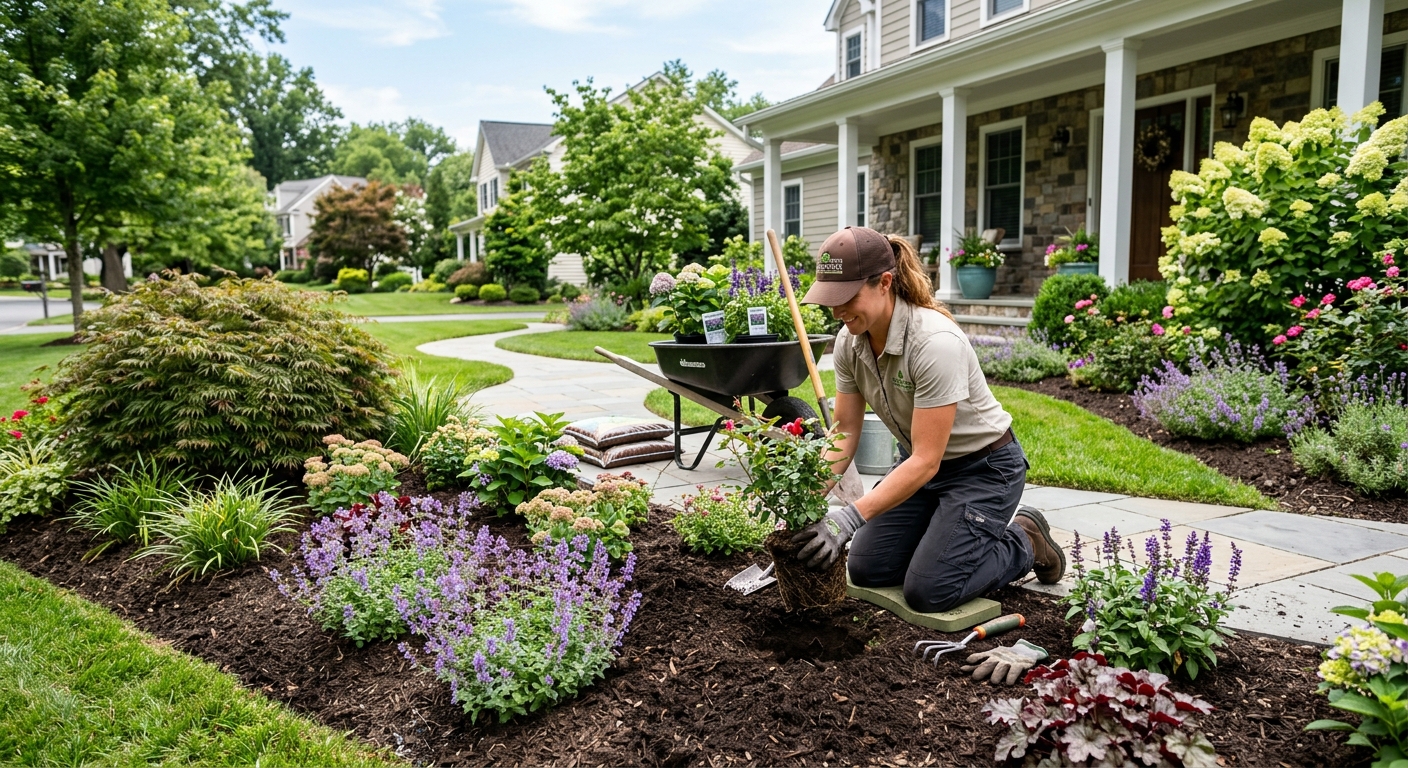
Landscaping options and costs in Tuxedo Park
Tuxedo Park, Alberta has a big “curb appeal” culture, and it shows in how many homeowners invest in new lawns, gardens, and hardscape as their properties age. With a 2021 population of 5,165 residents (Statistics Canada, 2021 Census), the neighbourhood’s housing demand is steady, and that translates into reliable contractor availability—especially for design-build work around Calgary’s core growth corridors. Many lots also benefit from detached-home yard space and long-term ownership priorities, which is why projects like interlocking patios, raised borders, and tree planting are common upgrades. In practice, your costs are shaped by Calgary’s short growing window in Prairie hardiness zones 3–4, severe freeze–thaw cycles, and the need for deep, well-compacted bases and proper drainage to prevent heaving or foundation moisture issues. Late-spring frosts and early fall cold snaps also reduce “workable days,” so skilled crews schedule carefully—and that can tighten availability when multiple projects overlap in the same week.
In Tuxedo Park, trade demand is particularly high in the older-established streets where yards often need grading correction, walkways re-layed, and compacted soil refreshed before new planting. If you’re comparing options, it helps to start with realistic pricing ranges across Calgary-area scope levels. The table below summarizes typical budget bands for common landscaping services—then the sections that follow explain what drives those numbers up or down on your specific lot.
| Service |
Description |
Season |
Price Range |
| Full landscape design and installation |
Site walk, concept + layout, grading/drainage plan (if needed), base prep, planting, sod/seed, and typical hardscape |
Apr–Oct |
$5,000–$50,000 |
| Sod installation (supply, grade, lay, roll) |
Fine grading, topsoil/topdressing as needed, turf supply, installation, rolling, and initial watering setup |
May–Aug |
$1,500–$6,000 |
| Lawn seeding (grade, seed, starter fertilizer) |
Light grading, seed selection for zone 3–4, starter fertilizer, and erosion control |
Apr–Jun or Aug |
$1,000–$4,500 |
| Interlocking patio or walkway |
Excavation, compacted base, sand setting bed, pavers, edging, and jointing sand |
Apr–Oct |
$8,000–$30,000 |
| Retaining wall (interlocking block) |
Block wall with proper drainage aggregate + weep/behind-wall drainage, base excavation, compaction |
Apr–Sep |
$8,000–$40,000 |
| Tree and shrub planting |
Soil improvement, planting, staking (where needed), mulch rings, and first-season care plan |
May–Jun and Sep |
$800–$15,000 |
Prices are estimates only and vary by project scope, site access and material selection.
What affects the price of landscaping in Tuxedo Park
In Tuxedo Park and across the Calgary region, quotes for the “same” landscaping idea can vary by about 30–50% because the real work is driven by what’s under the surface: soil condition, base depth, drainage needs, and how much labour time your site consumes. Calgary’s climate—Prairie zones 3–4 with late spring frost and early fall cold snaps—also compresses the install season. When crews have to work around colder ground, shorter daylight, and freeze–thaw cycling, schedules tighten and production slows, which affects labour costs (labour typically represents 40–60% of many full projects). Neighbourhood competition matters too; communities closer to established residential cores often have more competing bids, while constrained access lots can reduce crew efficiency.
Local conditions directly change scope. For example, poor yard grading that directs runoff toward a foundation may trigger deeper drainage work, raising costs within the $8,000–$40,000 bands for retaining walls and associated drainage. Conversely, a clean, flat lot with good topsoil can keep you closer to smaller-line items like tree and shrub planting around $800–$15,000. The freeze line is another driver: retaining-wall base prep often needs to extend below the frost-affected zone and include compacted, well-draining material, not just “a quick trench.”
Concrete examples from Tuxedo Park include: (1) mature soil compaction after multiple driveways/renos, which requires more excavation to reach stable subgrade; (2) clay-heavy patches that hold water, leading to added subdrains and gravel bedding; and (3) wind exposure on open lots, which can increase staking materials and the need for hardier, wind-tolerant shrubs. Add the fact that many homes here are older, so you may be working around existing patios, utility lines, and sometimes tree stumps—each with disposal and restoration labour that can swing the total.
| Price Factor |
Why It Matters |
Cost Impact |
| Yard size in sq ft — the primary cost driver for softscape |
More area means more topsoil/seed/sod, more edging, and more labour hours |
Low to high (often largest swing) |
| Grading and drainage work — slope corrections add significant cost |
Freeze–thaw and pooling risks require correct slope away from structures |
Medium to high |
| Drainage bed or French drain installation |
Subsurface solutions prevent foundation moisture and heaving |
Medium to high |
| Plant material tier — native shrubs vs. ornamental vs. mature specimen trees |
Higher-tier plants cost more upfront and may need more labour for handling and staking |
Medium |
| Hardscape vs. softscape ratio — walls and patios cost more per sq ft than lawn |
Pavers, base materials, and skilled cutting/edging raise unit cost |
High if coverage increases |
| Irrigation system design and installation |
Zoned systems and efficient heads reduce water waste and winter risk |
Medium to high |
| Soil amendment and topsoil required |
Compacted or poor soil needs restoration for rooting and drainage |
Low to medium |
| Tree removal or stump grinding before new planting |
Extra equipment time and disposal impact schedule and materials |
Medium to high |
Permits & regulations in Alberta
For most typical yard work in Alberta, planting, sodding, and the majority of “softscape” landscaping tasks do not require a permit. That usually includes installing sod or seed, planting trees and shrubs, laying mulch, and building garden borders. Where permits often come into play is with retaining walls above the local threshold height—commonly around 1.0 m (3.3 ft) in many municipalities—because they can affect structural safety and drainage performance. Another trigger is lot grading changes that materially alter how water flows toward neighbouring properties or tie into storm services. Before digging for wall footings, irrigation lines, or planting holes, always arrange utility locates so you don’t hit buried services.
To verify a contractor is ready to work in Tuxedo Park (and Alberta generally), ask for the following and check each item independently:
- Alberta licence/registration: confirm the contractor’s standing through the appropriate online registry for their trade category (ask them what licence class applies to their scope).
- Liability insurance: request a current certificate of insurance showing coverage effective dates and your address named (or listed as an eligible project location).
- WSIB/WCB coverage: verify worker coverage for employees; ask for confirmation/clearance letter or documentation matching the company legal name.
- Site-safe practices: confirm they will do utility locates and will protect nearby foundations during excavation and base prep.
Finally, confirm irrigation and water-use rules relevant to your property and watering windows—especially if Alberta’s weather brings dry stretches that resemble the “restrictions mindset” many other interior regions use.
Planning a landscape that thrives in Tuxedo Park's climate
To design a landscape that survives and looks great in Tuxedo Park, build around Prairie hardiness zone 3–4 realities: cold winters, late-spring frosts, early fall snaps, and aggressive freeze–thaw cycles. Start with plant selection. Choose zone-appropriate, drought-tolerant, wind-hardy species that can handle dry spells and Alberta’s temperature swings with less babysitting. Then decide sod vs. seed based on your timeline and risk tolerance. Sod gives instant visual results and quick ground cover, but it costs about 3–4x more per sq ft than seeding because you’re paying for turf supply and intensive installation. If your lawn needs to be green fast for a family event, sod can be worth it; if you’re planning ahead for curb appeal over the next season, seeding is usually the smarter budget move.
Next, focus on drainage and grading—the part that most often determines whether projects last. In Calgary’s freeze–thaw conditions, you want correct slope away from the home and a properly compacted, well-draining base for patios and walkways so edges don’t heave. Retaining walls also need base preparation that reaches below the frost-affected zone and includes behind-wall drainage, or you risk movement over time.
For low-maintenance beauty, use groundcovers, mulch, and perennials in massed groupings so weeds have less open soil to colonize. Calgary-appropriate xeriscaping concepts also work here: consider drought-tolerant ornamentals plus drip irrigation and mulch to reduce water demand while keeping the yard visually rich. If you’re weighing an upgrade, a real-world example: moving from a basic seeded lawn to sod for the same coverage might jump your budget into the $1,500–$6,000 range, but that cost can be justified when you need immediate coverage and can commit to the first-season watering and care.
| Element |
Climate Consideration |
Maintenance Level |
Price Band |
| Sod lawn installation |
Needs consistent moisture during establishment; timing matters with late-spring frost |
Medium (first season care) |
$1,500–$6,000 |
| Native perennial garden |
Zone-appropriate plants handle cold swings and wind once established |
Low |
$1,200–$8,000 |
| Mulched shrub border |
Mulch buffers freeze–thaw and reduces evaporation in dry spells |
Low to medium |
$800–$6,500 |
| Interlocking stone patio |
Requires deep, well-compacted base to prevent edge heave |
Low |
$8,000–$30,000 |
| Retaining wall (block) |
Base depth and drainage behind wall are critical in freeze–thaw years |
Low |
$8,000–$40,000 |
| Drip irrigation system |
Efficient watering fits semi-arid conditions; good zoning supports drought-minded design |
Medium (winterisation and seasonal checks) |
$2,000–$12,000 |
How to choose a landscaping contractor in Tuxedo Park
Choosing the right contractor is about verifying coverage, comparing like-for-like scope, and protecting yourself with contracts and payment terms—especially in a city where freeze–thaw can punish poor base prep and drainage decisions. In Alberta, you should confirm three key items before signing: (1) licensing/registration for the trade category they operate under, (2) liability insurance, and (3) WSIB/WCB coverage for workers. To check each, ask for current documentation: look for the certificate of insurance showing your project location (or an eligible description), request proof of WSIB/WCB (often a clearance letter or documentation), and verify licensing through the appropriate online registry using the legal business name they provide on the quote.
Next, get 2–3 itemised written quotes. The best bids break pricing into labour and materials (excavation/base, drainage, stone/pavers, plant material, soil amendments, irrigation components, and disposal). Avoid lump-sum only proposals unless the scope is extremely detailed. Read the scope carefully: is permit pulling included if needed for a retaining wall above the local threshold? Is disposal included for sod, soil, and debris? Are utility locates included, and who coordinates them? Clarify workmanship warranty length—commonly provided for installed components—plus the product/manufacturer warranty and whether it’s transferable to future owners.
Payment schedule matters. Never pay more than 10–15% upfront; hold back a portion until completion and walk-through. For timing, ask for a written start date and completion estimate so you can plan around Calgary’s late-spring frost window and early fall cold snaps.
- Ask for an Alberta licence/registration number that matches the company name on the contract.
- Confirm liability insurance limits and effective dates; request a certificate for your project period.
- Verify WSIB/WCB coverage and that it covers the workers who will be on-site.
- Get itemised quotes: labour line items plus material quantities and unit pricing.
- Confirm base prep specs (depth, compaction method, and drainage layer details).
- Ask who handles utility locates and where they begin excavation.
- Clarify disposal: topsoil removal, excess base rock, and construction debris hauling.
- Check whether irrigation is included in the scope and whether plumbing is pressure-tested.
- For walls: require behind-wall drainage aggregate and weep provisions (not “solid backfill”).
- Request a written warranty for workmanship and identify what it covers and for how long.
- Never accept vague dates; insist on start date and completion target in writing.
- Keep deposits low (10–15% max) and schedule final payment after final acceptance.
Red flags to watch in Tuxedo Park: contractors who won’t provide WSIB/WCB confirmation; quotes that skip drainage/base details for patios or retaining work; “too-good-to-be-true” sod pricing that doesn’t mention grading/topsoil; no itemised materials list (especially for pavers, block, and base rock); and pressure for large deposits or verbal-only timelines.
Frequently asked questions — landscaping in Tuxedo Park
Do I need a permit for a retaining wall in Alberta?
In Tuxedo Park and across Alberta, most planting and sodding typically don’t need permits, but retaining walls can be different. In many municipalities, a permit is commonly required when a retaining wall is above a threshold height—often around 1.0 m (3.3 ft)—because the work can have structural implications. Also, if your retaining wall project includes grading changes that affect drainage toward neighbouring lots or storm connections, approval requirements may apply. The best way to avoid surprises is to ask the contractor to confirm whether your specific wall height and design trigger a permit, and to include that in the written scope. If you’re budgeting, retaining-wall projects frequently land in the $8,000–$40,000 range once proper drainage and base prep are included.
How do I improve drainage in my yard?
For yards in Tuxedo Park, drainage fixes need to respect Calgary’s freeze–thaw cycles and prevent pooling near foundations. Start with observation: where does meltwater go in spring and after heavy rains, and are there low spots that stay wet? Many issues come from grading, compacted soil, or missing subsurface drainage. A common solution is a drainage bed or French drain that intercepts water and directs it to an appropriate outlet—built with the right rock and wrapped material so it doesn’t clog quickly. If you’re installing a retaining wall, behind-wall drainage aggregate and weep provisions are essential, not optional. Expect drainage work to meaningfully influence the overall landscape budget; it can push a project toward the higher end of retaining-wall and hardscaping scopes like $8,000–$40,000, especially when excavation and base replacement are required.
What is xeriscaping and does it suit Tuxedo Park?
Xeriscaping is a landscaping approach that reduces water demand through plant selection, soil improvement, and efficient irrigation—often using drought-tolerant species and mulch, plus drip rather than high-volume spray. It suits Tuxedo Park well because Calgary’s semi-arid conditions and Prairie freeze–thaw dynamics favour plants that tolerate stress and because efficient irrigation helps you avoid wasting water. While Alberta doesn’t always mirror stricter interior BC watering rules, homeowners still benefit from zoned irrigation controllers, soil amendments that improve water retention, and deep mulch layers that protect roots through temperature swings. A practical xeriscape design here might include native perennials, a mulched shrub border, and groundcovers—supplemented by drip irrigation for targeted zones. If you’re comparing costs, xeriscaping often shifts budget away from sod toward planting and irrigation design, which can keep you closer to tree and shrub planting ranges like $800–$15,000 depending on the yard size and plant maturity.
How do I plan a low-maintenance yard?
A low-maintenance yard in Tuxedo Park usually comes from reducing exposed soil, choosing zone-appropriate plants, and getting drainage right so you don’t spend weekends fighting wet patches. Design with massed plantings (not single specimens scattered everywhere), use 2–3 inches of quality mulch in beds, and consider groundcovers that fill in over time. For lawns, many homeowners prefer seeding (when timing is right) to avoid the higher ongoing establishment effort of sod, unless they need instant coverage. Hardscape also reduces maintenance: patios and walkways built on deep, compacted bases last longer and don’t create muddy maintenance cycles. If you’re doing a mix, a budget example is comparing seeded lawn work (often below sod cost) against a patio or walkway—patios commonly fall within $8,000–$30,000, so it’s worth placing them where you actually walk and where drainage benefits are clear. Pair that with a simple drip plan for shrubs and perennials to keep upkeep predictable.
How deep should a retaining-wall base be for local frost?
There isn’t a single “one depth fits all” number because wall design, soil type, height, and engineering requirements vary—but the principle in Tuxedo Park is consistent: the base and drainage must extend below the frost-affected zone and be built on stable, well-compacted material. Freeze–thaw in Calgary can cause heaving if the base isn’t deep enough or if drainage aggregate and proper compaction aren’t installed behind and under the wall. This is why good retaining-wall quotes include base excavation depth, compaction method, and behind-wall drainage details, not just block placement. If you’re planning a wall around the common permit threshold height (often about 1.0 m), use a contractor who can demonstrate the base and drainage build-up they propose. Retaining-wall projects typically price in the $8,000–$40,000 range once those frost-safe construction steps are done correctly.
How much does professional landscape design cost?
Professional landscape design in the Calgary area is often priced based on the level of detail you need (concept only versus full drawings, grading/drainage plans, and planting schedules). For full design-build projects in Tuxedo Park, the combined landscape design and installation budgets commonly fall across $5,000–$50,000, depending on how much grading, hardscape, irrigation, and planting are included. If you’re doing just a smaller planting refresh, the costs are usually lower because the scope is narrower—tree and shrub planting often falls around $800–$15,000. Ask your contractor whether design is included in the final installation price, whether they provide a planting layout and plant list suitable for zone 3–4, and how changes are handled. A good design also accounts for Calgary drainage realities so you’re not redoing work after a spring melt.