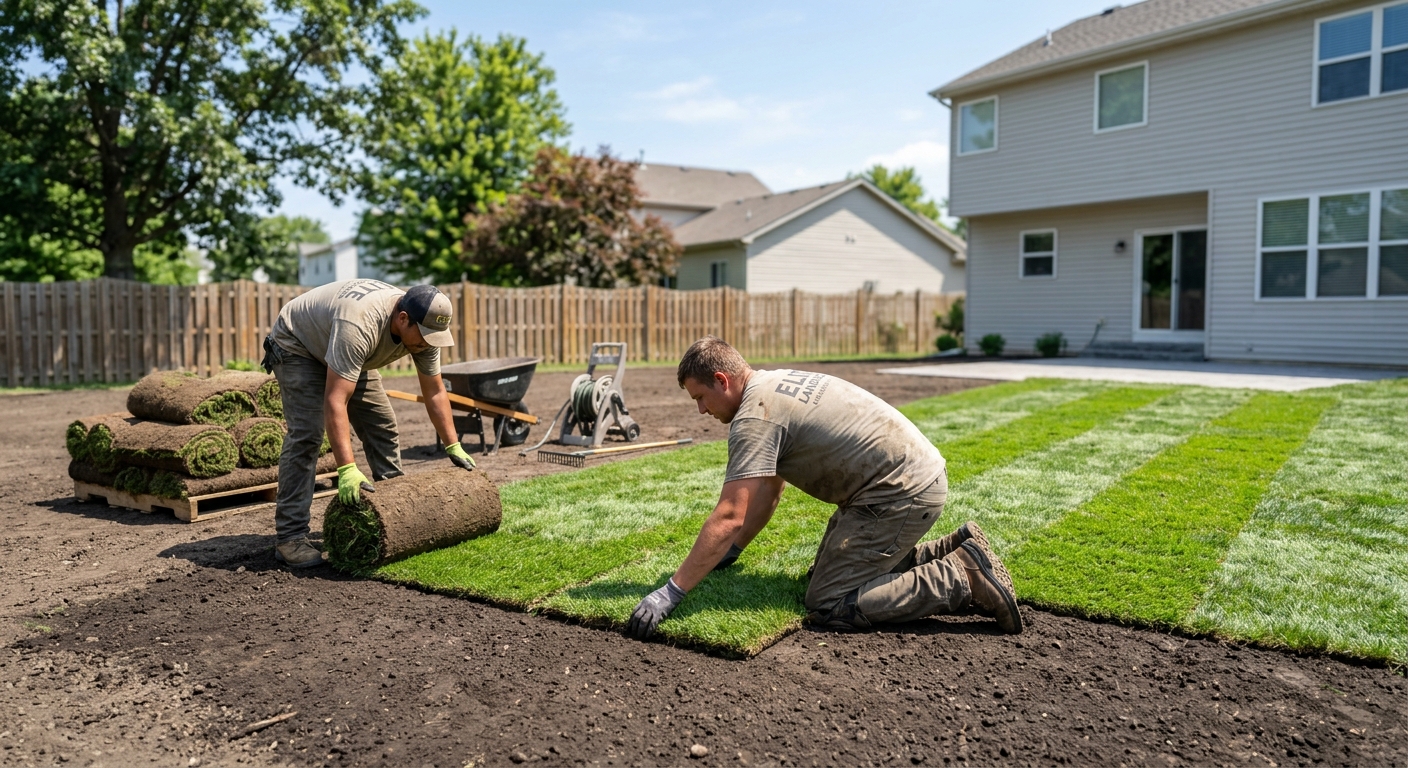
Landscaping options and costs in Ranch Park
In Ranch Park, British Columbia, homeowners typically start by comparing a few core landscaping paths—softscape refresh, hardscape upgrades, or a full front-and-back makeover. With a population of 7,925 (Statistics Canada, 2021 Census), the neighbourhood level of demand stays steady, which helps contractors staff projects and keep material lead times more predictable than in slower regions. Most properties in this area are single-family homes, and that yard space is a big reason people invest in tailored planting beds, drainage improvements, and patios rather than doing only basic lawn work.
The Lower Mainland–Southwest climate (plant hardiness zones 7–8) is a major cost driver. Mild, wet winters mean you can plan and sometimes begin groundwork for patios and drainage long before summer, but freeze–thaw still happens enough that foundations and wall footings can’t be treated like “no-winter” construction. In practice, this makes drainage design, base compaction, and deeper excavations essential—especially on sloped sites where pooling can affect foundations.
Contractor availability is also strongest in highly visible, high-traffic areas like the commercial corridor-adjacent streets and main arterial approaches where curb appeal matters. If you’re updating a driveway edge, front entry walk, or backyard staging area, you’ll often see the most competition for dates—so scoping early can reduce rework and change-order costs.
Below is a practical cost range comparison for common options in Ranch Park, so you can benchmark your next quote before you meet a contractor.
| Service |
Description |
Season |
Price Range |
| Full landscape design and installation |
Site walk, concept + planting plan, grading/drainage coordination, labour and materials for beds, turf, hardscape, and finishing |
Mar–Nov (planning can start year-round) |
$5,000–$50,000 |
| Sod installation (supply, grade, lay, roll) |
Remove existing turf (if needed), fine grade, amend topsoil as required, lay sod, roll, and water-in guidance |
Apr–Oct (best in shoulder seasons for establishment) |
$2,000–$8,000 |
| Lawn seeding (grade, seed, starter fertilizer) |
Light scarify/grade, seed blend suited to the sun/wetness profile, starter fertiliser, and initial care |
Apr–Jun and Aug–Sep |
$1,500–$6,000 |
| Interlocking patio or walkway |
Excavate, compact base, geotextile and leveling sand, jointing sand, interlock install, and edging |
Apr–Oct (structural base prep as weather allows) |
$10,000–$40,000 |
| Retaining wall (interlocking block) |
Layout, excavation, block install, drainage gravel/weep provisions, backfill, and cap/finishing |
Apr–Oct |
$10,000–$80,000 |
| Tree and shrub planting |
Soil prep, plant layout, planting holes, amendments, staking (as needed), mulching, and initial watering setup |
Mar–Nov |
$1,000–$15,000 |
Prices are estimates only and vary by project scope, site access and material selection.
What affects the price of landscaping in Ranch Park
In Ranch Park and across the Lower Mainland–Southwest, quotes for the “same” landscaping job can swing by 30–50% because scope details change how many hours of labour, excavation, and materials are required. A patio with a basic base is one thing; a patio tied into drainage improvements and adjusted for soft subsoil is another. Similarly, a planting plan using mature specimens costs more upfront but can reduce the number of seasons until the yard looks finished—something clients notice quickly when they’re planning for curb-appeal events.
Why the swing is common across British Columbia comes down to two realities: (1) the plant hardiness zone and frost dates, and (2) what the working season allows. In coastal BC (Zone 7–8), the long growing season supports lush, layered planting palettes, so contractors can stage work more efficiently. That said, freeze–thaw cycles still demand proper patio and wall base prep to prevent movement. Prairie regions (Zone 2–4) often need wind-durable, drought-tolerant species and deeper frost-line base work, while coastal BC trades some of that harshness for more frequent rain-driven drainage detailing. Dry BC Interior and Alberta clients can face irrigation redesign pressures during restrictions, while Southern Ontario (Zone 5–6) often sees more summer watering stress after winter establishment.
Concrete examples in Ranch Park: a sloped front yard can add significant grading and drainage labour, pushing a job toward the higher end of the retaining wall band (for instance, $10,000–$80,000) because proper backfill and drainage gravel aren’t optional. Likewise, switching from lawn seeding to sod typically increases turf cost, and many homeowners see the sod line item land closer to the upper range ($2,000–$8,000) once fine grading and topsoil corrections are included. Finally, if your home is older and the soil profile is compacted or undersupplied in topsoil, you may spend additional dollars on soil amendment and topsoil delivery before planting can establish well.
| Price Factor |
Why It Matters |
Cost Impact |
| Yard size in sq ft — the primary cost driver for softscape |
More area means more labour, more soil/seed/sod, more edging, and more material delivery |
Low to very high (commonly the biggest swing) |
| Grading and drainage work — slope corrections add significant cost |
Correcting runoff and preventing pooling protects foundations and reduces long-term failures |
Moderate to high |
| Drainage bed or French drain installation |
Subsurface drainage requires excavation depth, gravel, perforated pipe, and proper outlets |
Moderate to very high |
| Plant material tier — native shrubs vs. ornamental vs. mature specimen trees |
Mature trees and premium ornamentals cost more and may require staging, rigging, and longer labour |
Moderate to very high |
| Hardscape vs. softscape ratio — walls and patios cost more per sq ft than lawn |
Patios/walls involve excavation, base compaction, drainage detailing, and stone quantities |
Moderate to very high |
| Irrigation system design and installation |
Drip lines, smart controllers, filters, and zoning depend on layout and water efficiency goals |
Moderate |
| Soil amendment and topsoil required |
Poor drainage or depleted soils can force additional topsoil/topdressing and compost/conditioners |
Low to moderate (can rise quickly) |
| Tree removal or stump grinding before new planting |
Stump grinding, debris hauling, and root management affect time and disposal costs |
Low to high (site-dependent) |
Permits & regulations in British Columbia
In British Columbia, most planting, sodding, and typical softscape work does not require a permit—so you can usually replace turf, refresh garden beds, and install many landscape features without municipal approvals. The area where homeowners often get caught is structural work: retaining walls above a typical municipal height threshold—commonly 1.0 m (3.3 ft) in many municipalities—often require a building permit and sometimes engineered drawings, especially if the wall is retaining significant soil loads or is near structures.
Grading is another trigger. If your project changes lot grading in a way that redirects drainage toward neighbouring properties or toward storm sewer connections (or changes how surface water flows during heavy rain), it may require approval. Also, before any digging—planting holes, French drains, or wall footings—arrange utility locates. This is essential for safety and for avoiding service damage during excavation.
To verify a contractor’s legitimacy in Ranch Park, ask for these documents before work starts:
- British Columbia licence/registrations (if applicable to the scope): confirm they are listed in the proper online registries and match your contractor name/address.
- Liability insurance certificate (COI): ensure it’s current and shows the correct project address or at least a valid general liability policy.
- Workplace coverage: ask for proof of WCB coverage (or clearance letter/coverage proof) for the workers who will be on-site.
- Written confirmation: get the above provided in writing, not just “we’re covered.”
These checks protect you when crews dig, compact, and install drainage in a coastal freeze–thaw environment where errors get expensive fast.
Planning a landscape that thrives in Ranch Park's climate
To plan a yard that thrives in Ranch Park, British Columbia, design around Zone 7–8 realities: cool, long growing periods, wet winters, and winters that still include freeze–thaw. Start with plant selection: choose native and zone-appropriate species that handle winter moisture and don’t require constant watering. In coastal Lower Mainland–Southwest, layered planting—evergreen structure plus long-blooming perennials—looks lush without forcing you into high-input maintenance.
Next, compare sod versus seed. Sod gives instant results, but it typically costs about 3–4 times per sq ft compared with seeding once you factor in labour for fine grading and rolls handling. Seeding is a better budget path when you can accept a slower “green-up” window and you’re addressing soil quality. For a concrete example: if your turf area lands in the $2,000–$8,000 sod band, replacing that with seeding often brings the turf portion down closer to the lower end of the lawn seeding band ($1,500–$6,000)—but you must keep seedbed moisture consistent during germination.
Drainage and grading are non-negotiable in the Lower Mainland. Even mild wet winters can cause pooling near foundations if the slope is wrong. For patios and retaining walls, base preparation must account for frost heave prevention: excavation depth, geotextile, compacted base, and proper outlet/gravel provisions matter. Finally, keep maintenance low with mulch, groundcovers, and strategic perennials so you reduce weeding and annual replanting.
If you want a water-smart approach that still looks upscale, consider a rain garden in the natural low spots (instead of fighting them) and use drip irrigation where supplemental watering is needed—especially for new plant establishment. This approach aligns well with coastal water contexts while giving you resilience if local watering rules tighten or summer temperatures spike.
| Element |
Climate Consideration |
Maintenance Level |
Price Band |
| Sod lawn installation |
Establishes quickly in cool shoulder seasons; still needs drainage planning to avoid soggy patches |
Low to moderate (early watering/infill for first weeks) |
$2,000–$8,000 |
| Native perennial garden |
Zone-appropriate plants handle coastal winters better; diverse roots improve resilience in wet/dry swings |
Low (mulch refresh and light pruning) |
$1,000–$15,000 |
| Mulched shrub border |
Mulch helps manage moisture through wet winters and cool summers; improves soil structure |
Low (weeding reduced; occasional top-up) |
$2,000–$12,000 |
| Interlocking stone patio |
Freeze–thaw-safe base prep prevents settling; good edge restraint reduces washout in heavy rain |
Low (periodic joint sand top-ups) |
$10,000–$40,000 |
| Retaining wall (block) |
Drainage gravel and weep provisions are critical in wet coastal conditions |
Low (visual inspections for movement) |
$10,000–$80,000 |
| Drip irrigation system |
Efficient watering supports establishment; drip reduces waste in a region where rainfall can be heavy |
Moderate (seasonal checks and filter maintenance) |
$3,000–$12,000 |
How to choose a landscaping contractor in Ranch Park
Choosing the right contractor in Ranch Park comes down to proof and process—not just a nice-looking Instagram photo. For British Columbia projects, verify the scope you’re buying and the coverage that protects you. Start by asking for a recent liability insurance certificate (COI) and confirm the policy is active before any digging begins. If crew members are working on-site, request proof of WCB coverage or a clearance letter (for your contractor’s workers). For licensing/registrations, ask the contractor to point you to the correct online registry entry that matches their legal business name and the work being performed.
Then get 2–3 itemised written quotes. A good quote breaks labour and materials apart (excavation, base materials, stone/seed, drainage components, amendments, and disposal/haul-away). Be strict: avoid lump sums that don’t show what happens if soil conditions are worse than expected.
Read exclusions carefully. Ask: Is the permit pull included where required (for example, larger retaining walls)? Is excavation debris disposal included? Is there allowance for unsuitable subsoil? What about topsoil quality and how grading will be verified?
Warranty matters too. Ask for the workmanship warranty length (and whether it covers drainage failures caused by improper slope/base prep), plus product/manufacturer warranty details for trees, shrubs, or interlock materials. Also ask if warranties are transferable to a new owner.
For payment, use a sensible schedule. Never pay more than 10–15% upfront; hold back a portion until completion and cleanup. Finally, insist on a written timeline: start date, weather contingencies, and estimated completion date.
- They provide a site-measure and walk-through before quoting.
- Quote is itemised (labour vs materials vs disposal).
- Clear scope: what’s included/excluded for grading and drainage.
- Proof of insurance COI and WCB coverage/clearance letter.
- They confirm utility locates before digging.
- They discuss freeze–thaw base prep for patios/walls.
- They specify soil amendment and topsoil depth/quality assumptions.
- They list plant sizes (e.g., gallon size, height, spread) and aftercare.
- They include interlock edge restraint and jointing sand details.
- They provide a warranty in writing, not verbally.
- They outline a payment schedule with a holdback.
- They give an estimated start date and completion window.
Red flags in Ranch Park: (1) quoting only by square footage with no drainage/base details, (2) refusing to show insurance/WCB proof, (3) asking for most payment upfront, (4) vague warranties (“guaranteed” with no duration in writing), and (5) skipping utility locate confirmations before excavation.
Frequently asked questions — landscaping in Ranch Park
How do I prevent weeds in my Ranch Park garden?
Weed prevention in Ranch Park starts before planting: remove existing weeds thoroughly, then correct drainage and soil compaction so plants establish quickly. For beds, use a layered approach—landscape fabric only where appropriate (many contractors prefer a weed-suppressing membrane under rock/gravel sections), then add 75–100 mm of quality mulch and keep it topped up annually. Edge restraint is also critical: if lawn spills into beds, weed pressure rises. When you’re budgeting, it can be worth allocating part of a $1,000–$15,000 planting scope to higher-quality mulch and better bed prep, because it reduces repeat labour. Finally, after installation, do a controlled spring “spot pull” in early growth while weeds are still small, so they don’t seed.
How do I design a low-water yard in Ranch Park?
Even in British Columbia’s coastal Lower Mainland—where rainfall can be frequent—low-water design is about using the right plants in the right places and watering efficiently. Aim for zones: put the most drought-tolerant plants on the sunniest, fastest-draining areas (often front slopes), and use moisture-loving plants only where pooling naturally occurs. Add 5–8 cm of mulch, choose native or zone-appropriate perennials, and reduce lawn footprint when possible. If you want turf, consider seeding for lower cost (often closer to $1,500–$6,000 depending on area) or use sod only for high-visibility sections. For irrigation, drip with a smart controller helps you water deeply and less often; in new plantings, a well-designed drip system can limit wasted watering during cooler, wet weeks.
How do I find a licensed landscaper in Ranch Park?
Start by asking for proof before the first shovel goes in the ground. In British Columbia, request the contractor’s certificate of liability insurance (COI) and proof of WCB coverage or a clearance letter for their workers—this is your safety net on job sites. For licensing/registrations that apply to their business model and scope, ask for the correct online registry listing that matches their legal name. When you meet contractors in Ranch Park, also ask how they handle utility locates before digging (planting holes, drainage trenches, and wall footings). Then compare itemised quotes: labour and materials should be transparent, and the scope should state whether disposal is included and how drainage/base prep will be handled. This combination shows legitimacy and professionalism.
How much does landscaping cost in Ranch Park?
Landscaping costs in Ranch Park generally fall into broad tiers depending on how much of the yard you’re upgrading. A full landscape design and installation is often in the $5,000–$50,000 range, while turf-only projects are typically lower: sod installation commonly comes in around $2,000–$8,000, and tree or shrub planting often sits within $1,000–$15,000. Hardscape-heavy projects trend higher: interlocking patios or walkways and retaining walls usually start around the low five figures once excavation and proper base preparation are included (retaining walls commonly match the $10,000–$80,000 range). Exact pricing depends on yard size, grading/drainage complexity, and how many mature specimens are included.
What plants thrive in Ranch Park's climate zone?
Ranch Park sits in plant hardiness zones 7–8 in the Lower Mainland–Southwest, which supports a wide palette of trees, shrubs, and long-blooming perennials. You’ll often get best results by mixing evergreen structure with flowering perennials and choosing species that match your yard’s moisture pattern—wet areas can handle more moisture-loving plants, while raised or well-drained spots can support tougher selections. Many homeowners choose natives because they adapt well, help reduce ongoing watering, and look natural through coastal winters. Your contractor should base plant spacing and sizes on sun exposure, soil drainage, and the yard’s slope to avoid root stress. A well-planned planting within a $1,000–$15,000 scope can still include higher-impact shrubs or a small tree without overloading maintenance.
Sod vs seed — which is better for a Ranch Park lawn?
Sod is usually the better choice when you want instant curb appeal and you can invest a bit more upfront. In Ranch Park, sod installation typically lands in the $2,000–$8,000 band, because it requires fine grading, proper topsoil depth, and labour to lay and roll rolls correctly for establishment. Seeding can be more budget-friendly (often closer to $1,500–$6,000 depending on area), but it takes longer to look “finished,” and it requires consistent moisture during germination. If your soil drains poorly or you have a low spot, fix grading and drainage first—otherwise either sod or seed can struggle. For many yards, the best value is sod only for high-visibility strips and seeding for less visible areas, balancing cost and appearance.