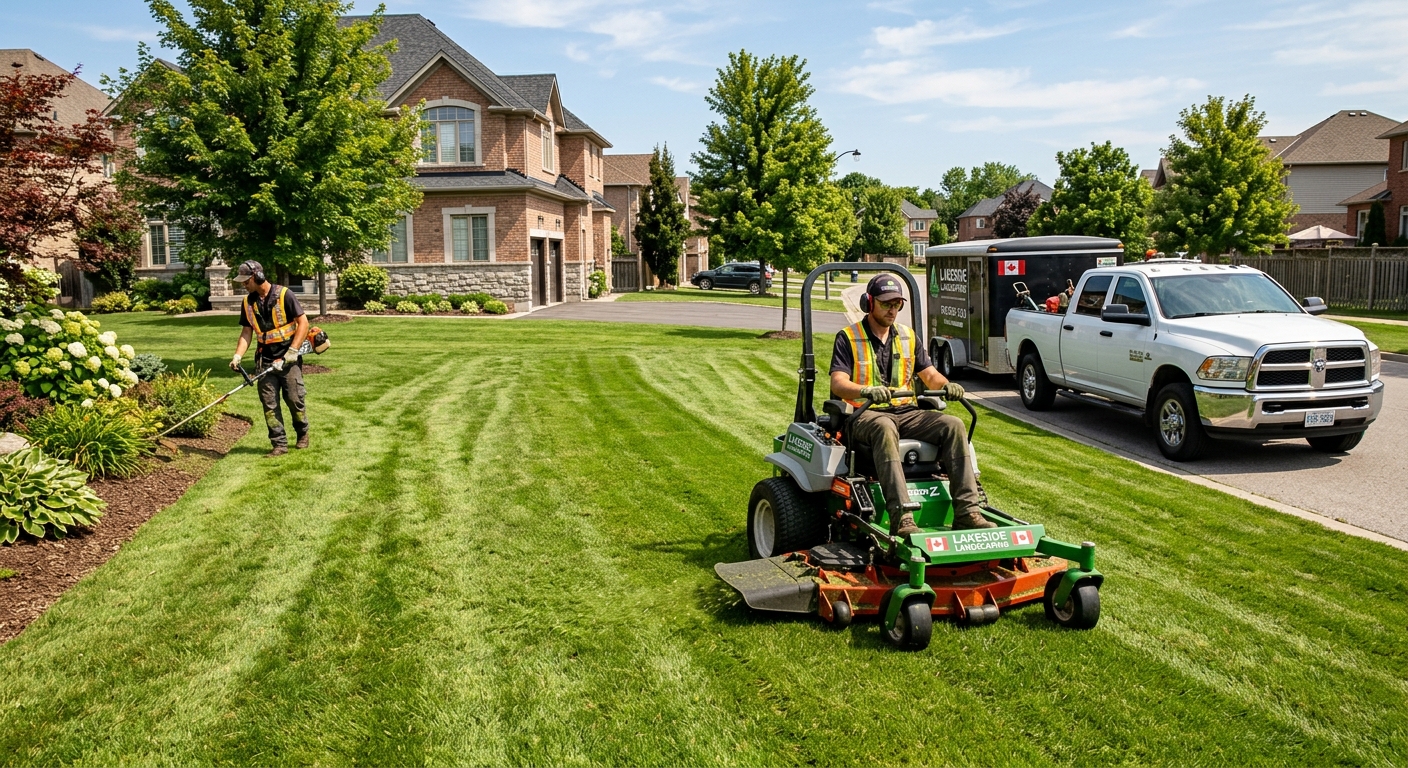
Landscaping options and costs in Halfmoon Bay
Halfmoon Bay is a coastal community where homeowners typically want landscaping that looks lush, stays functional in heavy rain, and doesn’t fall apart from freeze–thaw. With a population of about 2,800 (Statistics Canada, 2021 Census), the local contractor pool is smaller than in big-city Lower Mainland centres—so scheduling and site access (narrow drives, slope, and vegetation clearance) can meaningfully influence your quote. You’ll also see a lot of detached housing patterns that come with yard space and a strong incentive to invest in long-lasting improvements rather than frequent patchwork upgrades (Statistics Canada, 2021 Census).
In the Lower Mainland–Southwest, you’re generally working in plant hardiness zones 7–8 with mild, wet winters and a long, cool growing season. That helps you get reliable survival from broadleaf evergreens and layered perennial planting, and it keeps planting and softscape work moving for more of the year. At the same time, the cost is shaped by moisture management: soils can be saturated for stretches, and proper grading and drainage are what protect foundations, patios, and retaining-wall performance during freeze–thaw cycles. Structural work (like patios and retaining walls) needs deeper bases and compaction to reduce frost heave and wall movement on sloped sites common along the bay.
In Halfmoon Bay, demand is especially steady in the older, hill-and-slope neighbourhoods near Highway 101 / the core village area, where many homes benefit from drainage corrections, tiered planting, and updated walkways. Use the table below to compare typical cost bands before you narrow down scope with a contractor.
| Service |
Description |
Season |
Price Range |
| Full landscape design and installation |
Site visit, concept + planting plan, grading/drainage coordination, material selection, installation of hardscape and softscape |
Spring–Fall (with winter prep for drainage where feasible) |
$5,000–$50,000 |
| Sod installation (supply, grade, lay, roll) |
Soil testing/adjustments, rough + finish grade, sod supply, laying, rolling, and initial watering plan |
Best: late spring–early fall |
$2,000–$8,000 |
| Lawn seeding (grade, seed, starter fertilizer) |
Finish grading, seed mix, starter fertilizer, light raking and establishment watering |
Spring–early summer (and occasionally early fall) |
$1,300–$5,500 |
| Interlocking patio or walkway |
Excavation, base prep, compaction, edge restraints, interlock installation, jointing sand |
Spring–Fall |
$4,000–$28,000 |
| Retaining wall (interlocking block) |
Block wall build with proper base, drainage gravel, and weep provisions where required |
Spring–Fall (best before the wettest stretches) |
$10,000–$80,000 |
| Tree and shrub planting |
Planting layout, soil amendments, staking where needed, mulch ring, and watering guidance |
Spring–Fall |
$1,000–$15,000 |
Prices are estimates only and vary by project scope, site access and material selection.
What affects the price of landscaping in Halfmoon Bay
In Halfmoon Bay and across the Lower Mainland–Southwest, the same “basic” landscaping idea can come back 30–50% different between bids, even when homeowners describe it the same way. The big drivers are scope details (how much grading and drainage is truly needed), labour availability in a smaller local market, and how your site handles moisture. In zones 7–8, you can plant more lush, layered palettes and extend the season, but that doesn’t eliminate structural costs—patios, walkways, and retaining walls still depend on excavation depth, drainage bedding, and compaction to survive freeze–thaw.
Cost comparisons across Canada are often shaped by frost and growing windows. Prairie regions (zones 2–4) need drought-tolerant, wind-hardy planting and face shorter frost-free windows, while retaining-wall bases must reach below the frost line—so construction is both more compressed and sometimes more intensive per week of weather. Coastal BC (zones 7–8), including Halfmoon Bay, usually allows longer planting time and supports broader species selection; however, saturated soils can increase drainage work. In the dry BC Interior and parts of Alberta, irrigation design is influenced by water restrictions—tight controller placement and efficient drip lines add planning time. Southern Ontario (zones 5–6) has a moderate season but can still require irrigation during summer dry spells.
Here in Halfmoon Bay, two concrete examples that frequently raise cost are: (1) adding a drainage bed or French drain when downspouts or foundation runoff are causing pooling, and (2) slope corrections when a yard needs re-grading to keep water off walls. Conversely, costs can drop when your soil is already well-draining and you’re mostly doing planting and light mulch—tree and shrub work is often closer to the $1,000–$15,000 band. Projects that include both hardscape and softscape typically land within the $5,000–$50,000 design-and-install range because design, excavation, and coordination add up quickly—especially if we’re tying drainage improvements into the new patio base.
| Price Factor |
Why It Matters |
Cost Impact |
| Yard size in sq ft — the primary cost driver for softscape |
More area increases labour hours for prep, topsoil/amendments, planting quantity, and mulch coverage |
Low-to-high range swings; often the largest difference between quotes |
| Grading and drainage work — slope corrections add significant cost |
Re-grading must manage stormwater away from foundations and prevent surface pooling |
Can add major excavation/haul-off and machine time |
| Drainage bed or French drain installation |
Needed when soils stay saturated or water routes are unclear |
Material + labour intensive; commonly a top driver for mid-project change orders |
| Plant material tier — native shrubs vs. ornamental vs. mature specimen trees |
Specimen size and sourcing affect both cost and installation complexity |
Can shift total cost by thousands on the same layout |
| Hardscape vs. softscape ratio — walls and patios cost more per sq ft than lawn |
Excavation depth, base compaction, and base materials drive hardscape pricing |
Higher per-square-foot cost when patios/walls dominate |
| Irrigation system design and installation |
Zones, drip layout, backflow prevention, and controller type add planning and materials |
Usually a noticeable add-on, but can protect lawns and beds during restrictions |
| Soil amendment and topsoil required |
Poor soils may need compost, amendments, and proper layer depth for root establishment |
Costs rise when hauled-in soil is required for large areas |
| Tree removal or stump grinding before new planting |
Removals create disposal, stump grinding, and sometimes root-raking or regrading needs |
Can jump pricing quickly if access is tight or roots are extensive |
Permits & regulations in British Columbia
In British Columbia, many typical landscaping activities—like planting beds, sodding, and most softscape work—generally do not require a permit. Most residential projects involving mulch, shrubs, perennials, lawn installation, and common irrigation upgrades can usually proceed without a building permit. Where permits often come into play is when your scope becomes “structural” or involves significant changes to drainage and site servicing.
Work that typically DOES require a permit: retaining walls above the local threshold (often 1.0 m, or about 3.3 ft, in many municipalities), and any retaining wall plans that call for engineering or engineered drawings. Work that may require approval: changes to lot grading that alter how water flows toward neighbouring properties or storm sewer connections, especially if you’re increasing impervious area or redirecting stormwater paths. Work you should always plan carefully before digging: utility locates before trenches for drainage, irrigation, or wall footings—hitting a buried service can create serious delays and costs.
How a Halfmoon Bay homeowner should verify a contractor before work starts (step-by-step): (1) Ask for the contractor’s business details and confirm their licensing/registration status using the appropriate online registry for their trade. (2) Request a current certificate of insurance showing general liability with an adequate limit and ensure it lists you correctly as an interested party where applicable. (3) Confirm coverage for workers—in practical terms, verify they have the required workplace coverage (commonly WSIB/WCB coverage depending on trade/coverage structure) and request proof. (4) For larger scopes, ask for a clearance letter or proof of coverage for the specific period of work. (5) Finally, verify they pull or coordinate any required permits and that the plan matches your site drainage needs.
Planning a landscape that thrives in Halfmoon Bay's climate
To design a yard that thrives in Halfmoon Bay, you need to plan around the fact that you’re in plant hardiness zone 7–8 with wet winters, cool summers, and a frost calendar that—near the coast—allows long planting windows but still includes freeze–thaw. The goal is not just “what plants look good,” but what roots can survive in season-to-season soil moisture while your foundations and patios stay protected.
1) Plant selection: choose native or zone-appropriate species that tolerate coastal humidity and don’t demand constant winter protection. In practice, that means more broadleaf evergreens, reliable perennials, and layered shrubs. The right choices reduce winter losses and cut back on annual cleanup.
2) Sod vs. seed: sod gives instant results, but it’s typically 3–4x the cost per square foot compared with seeding. In a wet-coastal setting, sod can still be excellent—but it requires good base prep and drainage so the lawn doesn’t stay saturated.
3) Drainage and grading: this is the make-or-break item in Lower Mainland–Southwest. Pooling can lead to moss, patchy growth, and foundation moisture. If you’re dealing with a downspout discharge path or a low spot, budget for proper grading corrections and potentially a drainage bed.
4) Hardscape bases and the local frost reality: patios and retaining walls need properly compacted bases and drainage bedding so freeze–thaw cycles don’t lift or shift material. Deeper base prep and correct compaction are what prevent future settlement.
5) Low-maintenance strategies: mulch, groundcovers, and perennials that fill in reliably reduce yearly upkeep without sacrificing curb appeal. Rain-garden concepts (with the right soil mix and overflow plan) can support a “water-smart” landscape in this region’s wet-season pattern.
Where prices make sense: if your lawn area is small and you want fast curb appeal, sod may be justified. For example, moving from seeding to sod on a modest area could shift you from a lawn-seeding budget in the $1,300–$5,500 range up toward sod installation around $2,000–$8,000. If drainage is the real issue, however, paying extra for sod without fixing pooling is usually not money well spent.
| Element |
Climate Consideration |
Maintenance Level |
Price Band |
| Sod lawn installation |
Needs well-draining prep to avoid winter saturation in coastal BC |
Medium (establishment watering and monitoring for the first season) |
$2,000–$8,000 |
| Native perennial garden |
Zone-appropriate plants handle cool summers and mild winters with less winter protection |
Low (mulch refresh and seasonal tidying) |
$3,000–$12,000 |
| Mulched shrub border |
Coastal moisture tolerance with a protective mulch layer to buffer wet winters |
Low to medium (occasional weeding and re-mulching) |
$2,000–$10,000 |
| Interlocking stone patio |
Base prep must manage freeze–thaw and water movement away from the house |
Low (periodic joint sand top-ups if needed) |
$4,000–$28,000 |
| Retaining wall (block) |
Proper base depth and drainage gravel protect against wall movement |
Low (inspect drainage outlets/weep paths periodically) |
$10,000–$80,000 |
| Drip irrigation system |
Efficient watering strategy helps you tolerate occasional restrictions without lawn die-off |
Low (seasonal checks and winterization) |
$1,500–$9,000 |
How to choose a landscaping contractor in Halfmoon Bay
Choosing the right contractor in Halfmoon Bay starts with proof and process—not just price. First, verify the contractor’s British Columbia licensing (where applicable for their specific scope) and ask for a certificate of insurance showing current general liability. If they employ workers, confirm their workplace coverage status (often WSIB/WCB coverage depending on trade coverage structure) and request documentation for the period they’ll be working on your property. Don’t accept verbal assurances—ask for the documents and read the effective dates.
Next, get 2–3 itemised written quotes with a labour + materials breakdown. Make sure the scope is comparable: excavation depth, base thickness, drainage provisions, soil amendments, plant sizes, and whether disposal is included. Watch for vague lines like “lawn supply and install” without quantities or grade/spec notes. A good quote will list the approach and assumptions.
Read the scope carefully for what’s excluded: permit pull, topsoil hauling, tree removal, stump grinding, additional excavation for poor soils, and restoration of disturbed areas. Confirm warranty details: workmanship warranty length, manufacturer/product warranty for items like irrigation controllers or pavers where applicable, and whether warranties transfer to you if you sell the home. Finally, set a sensible payment schedule—never pay more than 10–15% upfront, and hold back funds until the job is substantially complete and cleaned up. In writing, confirm the start date and a completion estimate that accounts for weather windows in coastal BC.
- Provide insurance certificate + verify policy limits and coverage dates.
- Show proof of workplace coverage for workers (WSIB/WCB as applicable).
- Use an itemised quote with labour, materials, and quantities (not lump sum only).
- Confirm disposal/haul-away is included or clearly priced as an add-on.
- Specify base prep thickness and compaction steps for patio/walkway projects.
- For retaining walls, confirm drainage gravel and weep provisions are included.
- Ask who is responsible for utility locates before digging.
- Confirm plant sizes (e.g., height/spread) and whether plants are locally sourced.
- Clarify soil amendment type and volume (compost/topsoil specs).
- Confirm irrigation scope: controller type, number of zones, and winterization plan.
- Request a written workmanship warranty and a clear start/expiry date.
- Agree on a payment schedule with a holdback until completion and cleanup.
Red flags in Halfmoon Bay include: only providing a one-page estimate with no quantities, refusing to show insurance/workplace coverage documents, vague drainage promises (“it will be fine” without grading/drainage details), changing base prep depth after the quote without written approval, and asking for large upfront payments beyond 10–15%.
Frequently asked questions — landscaping in Halfmoon Bay
Do I need a permit for a retaining wall in British Columbia?
In British Columbia, many landscaping tasks don’t need a permit, but retaining walls often fall into a permit-required category once they exceed a height threshold—frequently around 1.0 m (3.3 ft) depending on the municipality. For Halfmoon Bay homeowners, the safest approach is to treat any taller wall as “permit likely” and ask your contractor to confirm the requirement with the local process before they start excavation. Typically, smaller landscape edging and low block borders proceed without permits, but once you’re building a wall designed to retain soil, the rules can tighten. A properly written quote should state whether permit pulling is included and what the contractor will handle. If engineering or drawings are needed, that’s usually reflected in the wall scope and timeline.
How do I improve drainage in my yard?
Drainage improvements in coastal BC usually start with observation: where does water pool after rain, where does it run off, and is it landing near foundations or low spots? For Halfmoon Bay, it’s common to fix the problem by combining re-grading with a drainage bed or French drain where water collects. A good contractor will also consider downspout discharge and how runoff should be directed away from buildings. The next step is soil strategy—adding proper drainage bedding and ensuring topsoil layers aren’t blocking water movement. Depending on the scope, drainage work can be a major cost driver, often pushing projects toward the higher end of typical hardscaping and design bands. For reference, full design-and-install projects often range from $5,000–$50,000 once drainage and re-grading are included.
What is xeriscaping and does it suit Halfmoon Bay?
Xeriscaping is a water-wise landscaping approach that uses drought-tolerant plants, efficient irrigation, and smart ground cover strategies to reduce watering. In Halfmoon Bay, you’re not in a “no-water” environment like some dry BC Interior or prairie climates, so you don’t need only desert plants—but the underlying idea still applies: reduce waste and design for variability. Because you can face wet winters and then periodic summer dry spells, xeriscape-style elements like mulched groundcovers, deeper-rooted shrubs, and drip irrigation can still fit well. It’s especially useful if you’re concerned about future water costs or want the yard to tolerate occasional restrictions without lawn die-off. If you’re replacing lawn, you may shift budgets away from sod costs (often $2,000–$8,000) toward planting and mulch borders that keep maintenance lower.
How do I plan a low-maintenance yard?
Start with the “right plant in the right place” strategy for Halfmoon Bay’s coastal conditions (zone 7–8): choose plants that handle cool, wet winters and don’t require constant winter protection. Then reduce the places weeds and bare soil can take hold—use mulch beds, groundcovers, and thicker planting layouts instead of many small, isolated areas. For lawn, consider whether sod is necessary; sod gives instant cover but can cost more than seeding, while well-planned groundcovers or a native perennial bed can lower long-term upkeep. Finally, build maintenance into irrigation and drainage: a well-designed drip system and proper grading prevent stress and patchiness. When homeowners plan low maintenance correctly, costs are often justified by fewer annual replacements and less labour. For example, a tree and shrub planting scope commonly falls in the $1,000–$15,000 band depending on quantity and plant sizes.
How deep should a retaining-wall base be for local frost?
Retaining-wall base depth depends on the wall height, block system requirements, soil conditions, and drainage design—not just “frost depth.” In Halfmoon Bay and the Lower Mainland–Southwest, you still get freeze–thaw cycles, so contractors typically excavate below the frost-impacted layer and build a compacted, well-drained base so the wall doesn’t shift. Proper drainage gravel behind the wall and correct compaction are as important as depth because saturated soils can increase movement risk. The most reliable answer comes from the specific block manufacturer’s instructions and a site assessment. A quote should include base prep details like excavation depth, base material layers, compaction method, and drainage provisions. Because the wrong base approach can lead to costly rebuilds, don’t select solely on price—especially with retaining walls that commonly fall within the $10,000–$80,000 range for full projects.
How much does professional landscape design cost?
Professional landscape design costs vary, but in Halfmoon Bay most homeowners budget design and installation together if they want a coordinated result. In the Lower Mainland–Southwest, design-and-install packages commonly land within a broad range of $5,000–$50,000, depending on whether you’re adding drainage corrections, multiple planting zones, irrigation design, and hardscape like patios or retaining walls. If you’re only after concept planning and planting layouts, some contractors offer a design-only fee, but many bundling options apply when you proceed with installation. Because Halfmoon Bay has a smaller contractor pool than larger cities, good design that reduces rework and preserves drainage intent can help keep the schedule and costs under control. Ask for an itemised quote that separates design work from installation so you can compare bids on scope, not just totals.