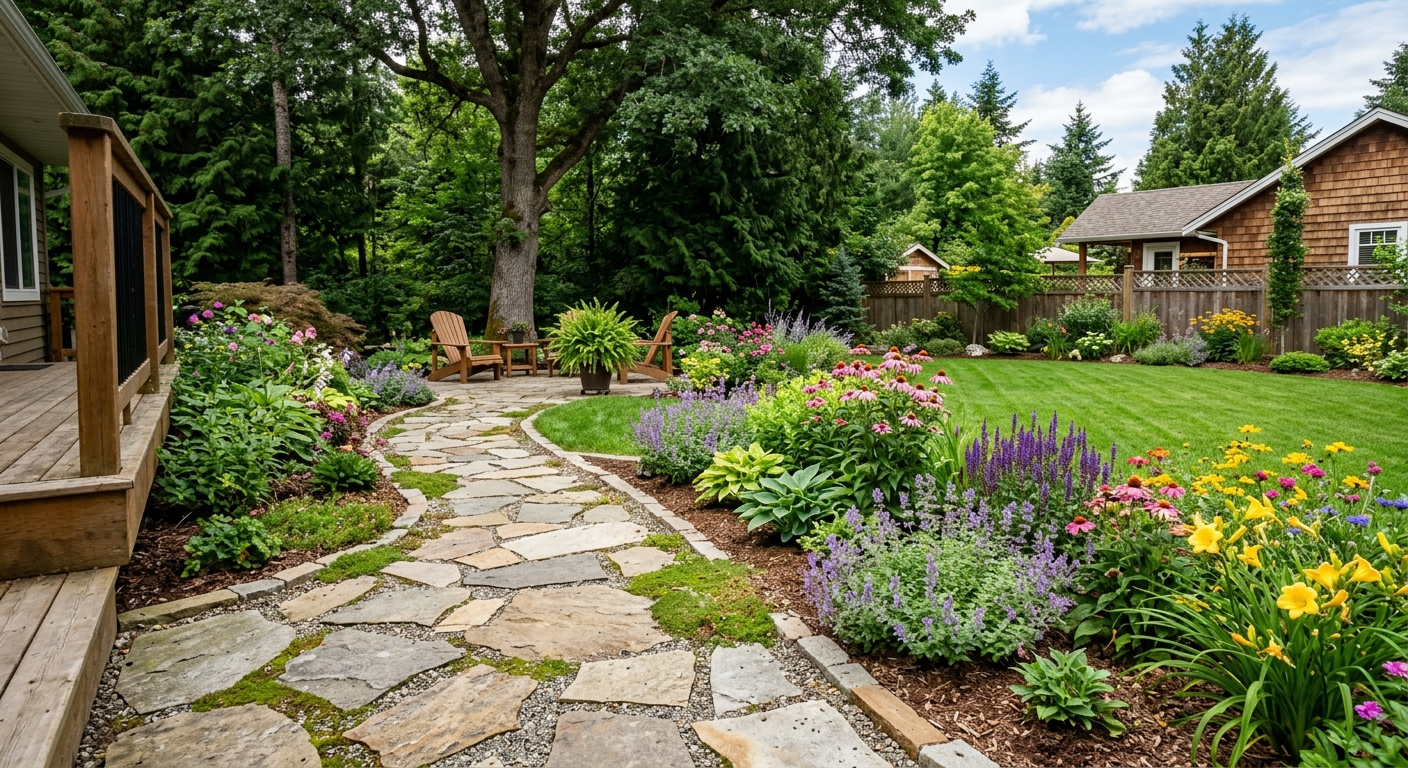
Landscaping options and costs in Victoria
Victoria homeowners have plenty of landscaping options, and costs tend to cluster into a few common “buckets” based on how much softscape versus hardscape you want. On Vancouver Island, detached properties are a key reason yards get upgraded: 13.6% of dwellings are single-detached homes, and with homeowner households representing 39.5% of all households (Statistics Canada, 2021 Census), many families are investing in curb appeal, drainage fixes, and year-round plant structure rather than doing only seasonal touch-ups. Victoria’s housing age also matters—63.6% of homes were built before 1981—so older yards often need grading corrections, refreshed soil, and drainage improvements before new plants will perform.
Because Victoria sits in mild coastal hardiness zones 7–9, the working season is long. Contractors typically plan from early spring through late fall, which can reduce schedule risk compared with colder regions. That said, wet winters and freeze–thaw still demand good base preparation: retaining-wall compaction and drainage layers remain a major cost driver on sloped lots around Saanich, Langford, and Colwood. Water restrictions are less strict than in the BC Interior, but irrigation design still affects budgets—efficient drip lines and smart controllers cost more upfront than basic sprinklers, yet they prevent wasted water and patchy growth on exposed sites.
Below is a practical comparison of typical services and price ranges, so you can map your goals to realistic expectations before you request quotes.
| Service |
Description |
Season |
Price Range |
| Full landscape design and installation |
Site visit, concept to detailed layout, grading/drainage coordination, planting plan, hardscape build, and installation. |
Early spring to late fall |
$5,000–$40,000 |
| Sod installation (supply, grade, lay, roll) |
Light grading, soil prep, sod supply, lay/roll, and initial watering setup. |
Spring to early fall (cooler weeks) |
$1,500–$8,000 |
| Lawn seeding (grade, seed, starter fertilizer) |
Grading touch-ups, seed blend, starter fertilizer, and post-seed care guidance. |
Spring or early fall |
$1,200–$5,000 |
| Interlocking patio or walkway |
Excavation, compacted base, pavers, edging, and joint sand; includes pattern layout. |
Spring to fall |
$4,500–$30,000 |
| Retaining wall (interlocking block) |
Wall design, excavation, base depth/compaction, drainage rock, geotextile, and block installation. |
Spring to fall (weather-dependent) |
$4,000–$60,000 |
| Tree and shrub planting |
Plant supply, soil amendments, planting labour, staking (if needed), and mulch ring installation. |
Spring to fall |
$800–$15,000 |
Prices are estimates only and vary by project scope, site access and material selection.
What affects the price of landscaping in Victoria
In Victoria and across Vancouver Island and the Coast, quotes for the same landscaping goal can differ by 30–50% because contractors price risk and site complexity differently. Even within British Columbia, the working window, soil conditions, and material availability affect labour productivity and logistics. In colder Prairie regions (Zone 2–4), short growing seasons push seeding timing, and drought-stressed conditions require wind- and drought-tolerant species—often with different soil amendment strategies and irrigation design. In coastal BC (Zones 7–8), Victoria’s long installation window supports lush, four-season palettes, but wet winters mean drainage layers and proper grading are non-negotiable.
Two concrete examples where local conditions swing cost in Victoria: (1) a sloped yard in Saanich or Oak Bay can add significant labour and material for retaining-wall base preparation and drainage backfill, quickly moving a project from the $5,000–$40,000 full-design range toward the higher end once excavation and structural base details are included; and (2) replacing a small lawn area with plant beds often looks “simple,” but if the existing topsoil is thin or compacted (common with homes built before 1981), adding compost, topsoil, and proper soil decompaction can be the difference between a hardy garden and ongoing failures.
Water design also changes pricing. While Victoria’s restrictions are generally less severe than the BC Interior, south-facing or exposed sites still benefit from drip systems and smart controllers to protect plants and reduce wasted watering. Finally, hardscape tends to cost more per square foot than softscape: patios and walls typically fall into the $4,000–$60,000 hardscaping band, while tree and garden planting usually sits closer to $800–$15,000. Coastal frost is milder than the Prairies, but freeze–thaw still makes compaction and base depth critical wherever you build or disturb soil.
| Price Factor |
Why It Matters |
Cost Impact |
| Yard size in sq ft — the primary cost driver for softscape |
More area means more labour time, more soil amendments, more plants/grass, and longer watering/maintenance labour during establishment. |
Medium to high (commonly shifts totals by thousands) |
| Grading and drainage work — slope corrections add significant cost |
Victoria yards often need re-shaping to move water away from foundations and keep slopes stable. |
High (can add major excavation and labour) |
| Drainage bed or French drain installation |
Heavy-rain winter periods require engineered-style drainage layers and proper outlet routing. |
High (materials + trenching + disposal) |
| Plant material tier — native shrubs vs. ornamental vs. mature specimen trees |
Specimen size and sourcing influence both material cost and planting labour and equipment needs. |
Medium to very high |
| Hardscape vs. softscape ratio — walls and patios cost more per sq ft than lawn |
Walls and patios require excavation, base prep, compacting, and additional finishing materials. |
High (changes the entire budget profile) |
| Irrigation system design and installation |
Drip and smart controllers raise upfront costs but improve establishment and water efficiency. |
Medium (can be a noticeable add-on) |
| Soil amendment and topsoil required |
Older yards frequently need compost/topsoil and correction of compaction for root performance. |
Medium (especially on larger beds) |
| Tree removal or stump grinding before new planting |
Clearance affects schedule and may require extra equipment and disposal handling. |
Medium to high |
Permits & regulations in British Columbia
In British Columbia, most planting and typical softscape work—such as laying sod, installing new lawn, planting trees and shrubs, and most general landscaping updates—typically does not require a permit. Where permitting starts to matter is when your project becomes structural or affects drainage in a regulated way. In many municipalities around Victoria, retaining walls above a threshold height (commonly 1.0 m / 3.3 ft) generally require a building permit, and more complex conditions may call for engineered drawings. Also pay close attention to any scope that changes lot grading: re-sloping ground so drainage no longer flows to the correct areas, or directing runoff toward neighbouring properties or storm connections, may trigger review or approval requirements.
Before digging for plant holes or wall footings, call for utility locates. Even in gardens, hitting buried services is both costly and dangerous. For water rules, confirm irrigation and water-use bylaws—especially if your design includes irrigation timers, watering schedules, or drip setups that must comply with seasonal restrictions.
To verify a British Columbia contractor before work starts, check three things: (1) licence/registration status via the appropriate BC online registry tools; (2) liability insurance—ask for a current Certificate of Insurance showing your address/project as applicable; and (3) worker coverage—ensure they have WSIB coverage where required, or the applicable WCB clearance documentation for their firm. Request documents before signing, and confirm the coverage is active during your project dates.
Planning a landscape that thrives in Victoria's climate
Designing for Victoria means working with the island’s hardiness zones 7–9, your local precipitation pattern, and the reality of winter wet spells and spring wetness. Start with plant selection: choose species that tolerate mild winters, occasional wind, and wet-season soils. Native and zone-appropriate plants generally need less watering and less fuss, and they also handle winter conditions better than marginal “everywhere” ornamentals. Pair that with a winter-proof structure—evergreen groundcovers and shrubs—so the yard still looks finished when grasses go dormant.
Next, compare sod versus seed. Sod gives instant coverage, but it costs more per sq ft than seeding. In practice, sod can run about 3–4x more than seeding depending on area and preparation needs. If you’re revitalizing an existing lawn and drainage is already solid, seeding can be a smart value. If you need quick curb appeal for an upcoming sale or you’re covering thin turf right away, sod can justify the premium.
Drainage and grading are the differentiator in Vancouver Island and Coast yards. Pooling water can undermine foundations and rot roots, so plan for proper slope and consider drainage beds where downspouts or low spots concentrate runoff. For hardscape and retaining walls, base preparation matters: compaction and base depth should account for freeze–thaw effects so patios and blocks don’t heave or settle.
Finally, use low-maintenance strategies—mulch, perennials, and groundcovers—to reduce annual upkeep without losing curb appeal. If water efficiency is a priority, incorporate rain-garden planting or xeriscape-style groupings in the drier corners of your lot. A real-world example: if a seeding job would land near the lawn end of the $1,500–$8,000 band but sod brings you closer to the top half, investing the saved dollars into a drainage correction or upgraded soil amendment often protects the entire investment and prevents repeat failures.
| Element |
Climate Consideration |
Maintenance Level |
Price Band |
| Sod lawn installation |
Mild winters support establishment, but winter saturation can damage weak grading. |
Low to medium (initial watering and weed control) |
$1,500–$8,000 |
| Native perennial garden |
Zone-appropriate species handle coastal conditions and reduce water demand once established. |
Low (seasonal pruning and mulch refresh) |
$800–$15,000 |
| Mulched shrub border |
Mulch buffers wet-dry swings and helps prevent soil erosion on sloped edges. |
Low (top up mulch and check irrigation/drip) |
$1,500–$12,000 |
| Interlocking stone patio |
Proper base drainage prevents settling during wet winters and spring thaws. |
Low (occasional joint sand/top-up) |
$4,500–$30,000 |
| Retaining wall (block) |
Freeze–thaw is gentler than the Prairies, but base compaction and drainage behind the wall are critical. |
Low to medium (inspection after storms) |
$4,000–$60,000 |
| Drip irrigation system |
Efficient watering supports drought-tolerant choices during dry stretches and reduces waste. |
Medium (seasonal checks and controller programming) |
$1,000–$7,500 |
How to choose a landscaping contractor in Victoria
Choosing the right contractor in Victoria starts with proof—not promises. Verify British Columbia coverage and compliance: ask for their licence/registration details (via BC’s online registry tools), then request a current Certificate of Liability Insurance showing active coverage for your project timeframe. For worker coverage, confirm WSIB/WCB status with clearance documentation appropriate to the firm—don’t rely on verbal confirmation. If they won’t provide paperwork, consider that a serious warning sign.
Next, get 2–3 itemised written quotes. A proper proposal separates labour and materials, even if the contractor’s final total is in line with the $5,000–$40,000 design-and-install range or the $4,000–$60,000 hardscaping band. Look for a breakdown that clearly lists what’s included: excavation depth, base material type and thickness, plant quantities/sizes, irrigation components, and disposal. Avoid lump-sum-only quotes that don’t describe grading and drainage responsibilities.
Read exclusions carefully: is permit pulling included if a retaining wall threshold requires it? Is debris hauling included? Are taxes accounted for? Confirm product warranties (manufacturer) and workmanship warranties (how long they stand behind installation). Ask whether warranties are transferable if you sell.
Payment structure matters. Never pay more than 10–15% upfront; hold back a portion until completion and walk-through. Finally, request a timeline in writing with an expected start date and a completion estimate that reflects Victoria’s wet-weather realities.
- Ask for BC licence/registration information and confirm it matches the legal business name.
- Request a Certificate of Liability Insurance and verify it is current.
- Confirm worker coverage with WSIB/WCB clearance documentation (as applicable) before work starts.
- Require itemised quotes: labour, equipment, materials, and disposal lines.
- Confirm what “site prep” includes: grading, soil amendment depth, and base compaction.
- Ensure drainage responsibilities are defined (who installs French drains, outlets, and tie-ins).
- Check irrigation scope: controller model, dripline layout, and winterisation/off-season handling.
- Clarify plant sizes and quantities (e.g., container size, caliper, or height at install).
- Ask whether tree/stump removal is included and what method (removal vs. grinding).
- Confirm hardscape specs: base course type, thickness, geotextile use, and edging.
- Review warranty terms: workmanship length, what voids coverage, and how service calls are handled.
- Confirm payment schedule and holdback timing (never full payment at start).
Common red flags in Victoria: they won’t provide written, itemised scope; they promise “engineered drainage” without any drainage plan details; they ask for large upfront payments (well beyond 10–15%); they can’t show proof of insurance/coverage; and they begin excavation before utility locates are completed.
Frequently asked questions — landscaping in Victoria
How much does professional landscape design cost?
In Victoria, professional landscape design is often priced as part of a larger “design and installation” contract, especially when your project budget lands in the $5,000–$40,000 range. If you only want design drawings and a planting plan, some contractors charge separately, but the total can still compare favourably to paying for installation that doesn’t match your drainage realities. Given Victoria’s older housing stock (many properties were built before 1981), design that accounts for grading and drainage can prevent expensive rework. When you request quotes, ask whether the design fee is credited toward installation and whether irrigation and drainage concepts are included or treated as an add-on. (Statistics Canada, 2021 Census)
How do I compare landscaping quotes?
Compare Victoria quotes line-by-line, not just on the total. Good quotes separate labour and materials, specify quantities (sq ft of sod, number and sizes of plants, and wall/patio area), and describe base prep and drainage scope clearly. Ask what’s included for disposal and whether topsoil/soil amendment depth is stated. If one quote is close to the $4,000–$60,000 hardscaping band and another is much lower, the cheaper one often omits base thickness, geotextile, or proper drainage behind retaining walls. Also confirm irrigation design: drip lines and smart controllers may cost more, but they’re usually included when efficient water use is needed. Finally, ensure warranties and timelines are written in the proposal.
How long does a landscaping project take in Victoria?
Timelines in Victoria depend on weather, access, and scope, but the coastal season helps: most landscape installs are scheduled from early spring through late fall. A small planting refresh (tree and shrub planting) can be completed in a day to a few days. Sod or lawn work typically takes longer only when grading and soil prep are required. Hardscape projects—like interlocking patios or retaining walls—often take longer because excavation, base compaction, and drainage layers must be built correctly and allowed to settle before finishing. If your project involves drainage beds or significant grading, expect extra time. Ask for a written start date, a completion estimate, and how the contractor handles wet stretches typical in coastal BC.
What is the best grass type for a Victoria lawn?
For most Victoria lawns, the best choice is a cool-season turf blend tailored to coastal conditions and your sun/shade mix. Many homeowners do well with fine fescues for shade and drought tolerance once established, or a blend that mixes perennial rye for traffic tolerance with fescues for performance in coastal weather. The “best” type depends on how much sun your yard receives and whether drainage is corrected first—standing water will defeat even the best seed. If you’re choosing between seeding and sod, remember that sod gives faster visual results but can cost more (often falling within the $1,500–$8,000 band for typical projects), while seeding is usually a better fit if your ground prep is solid and you can wait for establishment.
When should I aerate and overseed my lawn in Victoria?
In Victoria, spring and early fall are usually the best windows for aeration and overseeding because soil temperatures and rainfall support germination without extreme summer heat. If your lawn is showing thinning, compacted soil, or bare patches, aeration helps seed contact the soil and improves oxygen exchange for roots. Aim for moderate weather—avoid fully saturated periods when foot traffic can worsen soil compaction. For older yards (common on pre-1981 properties), soil structure may need extra attention, and compost topdressing can help. If you’re budgeting, compare whether overseeding is part of a broader lawn plan or whether you’re moving into sod replacement; sod often sits in the $1,500–$8,000 range, while overseeding typically aligns with the lower end of lawn renewal costs depending on area.
What trees grow best in Victoria's climate zone?
Victoria’s coastal hardiness zones 7–9 support a wide range of trees, especially those that handle mild winters and damp conditions. Common “safe bets” include ornamental cherries, flowering types suited to coastal zones, and shade trees that tolerate local rainfall patterns. Many homeowners also do well with broadleaf evergreens or smaller ornamental trees where space is limited. The right pick depends on your yard’s sun exposure, soil drainage, and how close you are to foundations and services—an issue on many older properties. Before buying, confirm mature height/spread so roots and canopy won’t create long-term problems. If your project includes tree and shrub planting within the $800–$15,000 band, ask your contractor to match species to your microclimate and to include soil amendment for establishment, especially in areas that stay wet in winter.